The Monitoring Association (formerly Central Station Alarm Association) - Experts & Thought Leaders











Latest The Monitoring Association (formerly Central Station Alarm Association) news & announcements

The Monitoring Association (TMA) named Chris Mahoney, MBA, MS, as its new Director of Certification. In this newly created leadership role, Mahoney will lead the growth and evolution of TMA's certification portfolio, including the Five Diamond, FirstNet, and IQ programs, while developing new credentialing opportunities to support workforce development and professional advancement throughout the professional monitoring and response industry. Supported accreditation initiatives Mahoney brings more than a decade of experience in certification, education, and program management. Most recently, he served as Senior Manager of Program Development for the National Apartment Association, where he oversaw credentialing and training programs serving more than 10,000 professionals annually, launched micro-credential programs, managed exam development, and supported accreditation initiatives. “Chris brings a rare combination of certification expertise, strategic thinking, and program development experience,” said Whitney A. Doll, Chief Executive Officer of TMA. "As our industry continues to evolve, investing in professional development and credentialing is critical to ensuring a strong workforce and maintaining the highest standards of excellence. Chris will play a key role in advancing TMA's strategic vision and expanding the value of our certification programs for both companies and individuals." Expanded certification programs Prior to joining the National Apartment Association, Mahoney served as Director of Career & Program Development for the Apartment Association of Greater Orlando, where he expanded certification programs, built workforce development partnerships, and created career advancement opportunities for industry professionals. “TMA's certification programs are recognized throughout the industry as symbols of excellence and commitment to best practices,” said Mahoney. “I am excited to work with TMA members and industry leaders to strengthen existing programs, develop new credentialing pathways, and help advance the next generation of monitoring professionals.” Standards-based excellence The expansion of TMA's certification programs is a key component of the association's strategic plan to strengthen the professional monitoring and response industry through workforce development, education, and standards-based excellence. By creating new opportunities for professional recognition and career advancement, TMA aims to help member companies attract, develop, and retain talented professionals while reinforcing the industry's commitment to public safety and exceptional service.
The Monitoring Association (TMA) announced that Motorola Solutions has been named a Platinum Communications Partner in support of the Automated Secure Alarm Protocol (ASAP), recognizing the company’s leadership in improving the public safety ecosystem, telecommunicator wellness and modernising digital alarm communication between monitoring centers and public safety agencies. As one of the largest providers of computer-aided dispatch (CAD) systems, Motorola Solutions encourages ASAP adoption among emergency communications centers (ECCs) and works to provide connectivity to ASAP Service within its CAD solutions. Emergency communications workflows In 2025, Motorola Solutions introduced a cloud-based capability to simplify integrating ASAP alarm data into emergency communications workflows. The company recently expanded this capability across its command center software portfolio, including CommandCentral Aware, PremierOne and Flex, to promote seamless ASAP connectivity for its customers. This integration helps public safety agencies deploy the service more quickly and with fewer technical barriers. For ECCs already using Motorola Solutions CAD systems, enabling ASAP becomes a natural extension of their existing infrastructure to help reduce deployment time and cost. Enhanced situational awareness “Seconds can make all the difference in an emergency,” said Todd Piett, senior vice president, Command Center and Cloud Solutions, Motorola Solutions. “By creating a direct digital connection between alarm companies and 911 dispatch software through the ASAP Service, we can help keep emergency lines open for those in need while reducing manual coordination for dispatchers.” The ASAP AWS GovCloud capabilities provide ECCs with a streamlined, secure, resilient and standards-based method to receive alarm data directly into their CAD workflows. For the ECC, this eliminates manual call handling and reduces call-processing times and transcription errors. The result is better-informed responses, faster dispatch times, enhanced situational awareness for field responders and reduced workflow for telecommunicators for them to focus on higher-priority incidents. Time-sensitive emergencies A recent deployment in St. Joseph County, Ind. demonstrates that impact in practice. As the first in the nation to deploy the cloud-based alarm integration, the St. Joseph County 911 Consolidated Communications Center is on pace to save the county’s telecommunicators 350 hours a year that would otherwise have been spent on the phone, helping them keep 911 lines clear for the community's most time-sensitive emergencies. “Working with Motorola Solutions CAD systems enables us to meet agencies where they already are — within their existing CAD environments,” said Karen Carlson, vice president and general manager of ASAP Service. “By integrating directly into the tools ECCs use every day, we make it easier for agencies to adopt ASAP and begin seeing meaningful improvements in call handling and response efficiency.” Motorola Solutions is also actively working with its ECC customers to promote and deploy the ASAP service. The company maintains ongoing collaboration with TMA through regular working sessions to review deployment progress and support the program's continued expansion. This level of engagement and operational coordination reflects the commitment recognized by TMA’s Platinum Partner designation.
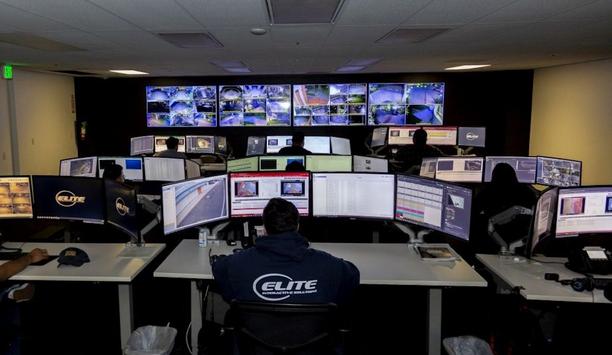
Elite Interactive Solutions, a remote video guarding pioneer using proprietary intelligence and integration to achieve proven, real-time crime prevention, announces the company has been selected The Monitoring Association’s (TMA) 2026 Monitoring Center of the Year. Elite was proclaimed winner of the security monitoring industry’s highest honor during the 20th Excellence Awards presentation, held during TMA’s annual Mid-Year Meeting. According to TMA, the Excellence Awards recognize FM-Approved, Intertek/ETL or UL‐Listed monitoring centers and outstanding personnel who perform in the highest professional manner, thereby making a significant contribution to the betterment of the industry and profession while demonstrating exceptional service to their customers and community. Real-time crime prevention The awards promote the value of monitoring center services; honor those who have made the most significant contributions to the service; and recognize the distinct level of professionalism attained by Nationally Recognized Testing Laboratory (NRTL)-approved monitoring centers. Elite impressed a panel of independent judges in a multitude of ways, including leadership and growth; management and operations; training and personnel; procedures and best practices; technology and innovation; real-time crime prevention; elimination of false dispatches; law enforcement partnerships; and community and industry involvement. During 2025, Elite’s Security Operations Command Center (SOCC) directly prevented more than 71,000 crimes and assisted police in more than 2,300 arrests and detainments. Events escalated to police dispatch resulted in a record 78% apprehension rate. Facilitating optimal support Elite is believed to be the only provider that has an in-house Law Enforcement Advisory Board (LEAB) comprised of former LE command staff and executives. They are fully engaged in the daily activities of Elite’s UL-Listed command center. The LEAB contributes to the training of Elite agents, reviews and ensures calls for dispatch follow best protocols, and communicates and meets with agencies around the country to facilitate optimal support and collaboration. In addition, during 2025 Elite appointed a decorated former military and Los Angeles Police Department sergeant as its chief security officer in charge of SOCC operations. Elite representatives serve as active members of TMA and Security Industry Association (SIA) committees dedicated to developing industry best practices, guidelines and standards. Law enforcement partnerships During 2025, Elite educated the industry and marketplace about remote video guarding, crime prevention, and partnering with police by participating and presenting at numerous events as well as engaging in webinars and publications. In March 2025, Elite spearheaded a historic industry townhall to rally the security channel in the aftermath of the Los Angeles wildfires disaster. “Receiving this prestigious honor has instilled the entire Elite team with elation and pride. It is a testament to their dedication and hard work, and a validation of our operational fortitude and unique approach to stopping crime in real-time,” says Elite CEO Michael Zatulov. “It is gratifying TMA’s judges appreciate our focus on delivering exceptional customer outcomes, advancing AI-powered detection and human intervention, educating and supporting the industry, strengthening law enforcement partnerships, and structuring operations for strategic growth.” Elite, which also captured its third consecutive SAMMY (Sales & Marketing) Award at this year’s ISC West tradeshow, was named as a finalist for TMA’s 2025 Monitoring Center of the Year and recognized by the association in 2024 as winner of the Monitoring Technology Marvel Award.
Insights & Opinions from thought leaders at The Monitoring Association (formerly Central Station Alarm Association)
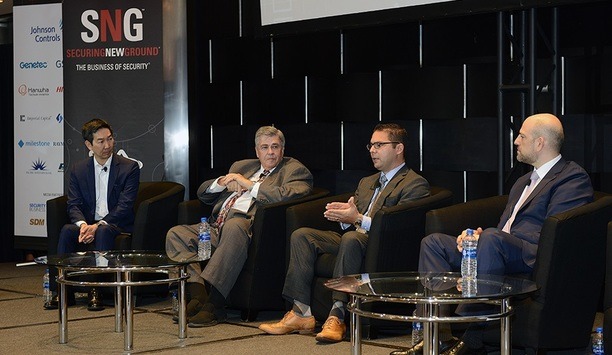
There is a growing trend towards more outsourcing of the monitoring function among security companies. Technology developments are accelerating and increasing the need for monitoring companies to invest. The barriers to entry are higher than ever. These are some of the trends covered in a discussion at Securing New Ground 2019 titled ‘Monitoring: New Models and New Monetization Strategies’. A panel of monitoring company executives addressed topics centered on how the industry is changing and evolving. New entrants in the monitoring space New entrants in the monitoring space face barriers to entry, in particular the need for more investment"“New entrants in the monitoring space face barriers to entry, in particular the need for more investment in infrastructure and expertize,” said Spencer Moore, Vice President of Sales and Marketing, Rapid Response Monitoring. ”Because of the expense of new technologies, more full-service monitoring companies are outsourcing the monitoring function to existing wholesale monitoring companies.” “The cost of entry has gone up, and companies are trying to preserve capital,” agreed Jim McMullen, President/COO at COPS Monitoring. “Larger companies are realizing wholesale monitoring does a better job from a customer service viewpoint. We are more focused on monitoring and the quality of service. It takes a lot of money to keep up with the cyber world,” added McMullen. Wholesale monitoring companies Wholesale monitoring companies are finding that they need petabytes of storage space, among other expensive requirements. “The trend is toward technology evolving quicker, and that often requires investment and training in a monitoring center,” said Daniel Oppenheim, CEO of Affiliated Monitoring. “Because trying out new technology is so important, wholesale monitoring centers often find that they serve as a ‘laboratory’ to experiment with newer technologies. Limited trials often expand later to broader outsourcing of a company’s monitoring services”, said Oppenheim. Automated Secure Alarm Protocol “What people miss out on is that monitoring is quite complex, and there are specialized services and skillsets, and barriers to entry from a regulatory perspective,” said Moore. Adding value to the monitoring function is The Monitoring Association’s ASAP-to-PSAP service Adding value to the monitoring function is The Monitoring Association’s ASAP-to-PSAP service. The national service saves time, improves accuracy and increases efficiency in communications between monitoring centers and public safety answering points (PSAPs). The service uses the Automated Secure Alarm Protocol (ASAP). Public Safety Answering Points Up to 60 PSAPS have joined the program, although the low number is misleading, given that a single PSAP could represent the ‘City of Houston’. (There are an estimated 6,000 total PSAPs nationwide). It has taken six to eight years to develop the program from its genesis to where it is today, when more participation is finally creating a critical mass. Technology is fundamentally changing monitoring companies. “We used to be a services company powered by a little bit of technology, but we’re now moving toward a technology services company,” said Moore. Critical ‘filtering service’ Monitoring provides a critical ‘filtering service’ between public requests for emergency service and those tasked with providing the services. In effect, monitoring centers work with manufacturers to make them more resilient to false alarms. Monitoring companies also provide a human touch in a time of need, and emotional empathy. Today, emergency information is being transmitted to PSAPs electronically, which saves time and money. The current low-taxation environment means there are fewer resources for municipal governments, so cost savings make a difference. Monitoring, a specialized skillset Increasingly, monitoring is becoming a business that requires a more specialized skillset Increasingly, monitoring is becoming a business that requires a more specialized skillset. Regulation, and the need for increasing investment, is driving consolidation. “With a decreasing number of monitoring companies, there are fewer customers for software developers and other tools. Less outside innovation makes it more likely monitoring centers will have to ‘go it alone’ and develop software and other tools internally,” said Oppenheim. Importance of monitoring systems “In effect, consolidation will serve to limit technology choices, and to increase the need to in-source a lot of expertize”, agrees Moore. Tying monitoring systems into other software systems is another continuing challenge. “People want our system tied into their system,” said McMullen. “I have two people who focus full time to tie our systems into other systems. There will be more computers talking to computers.”

Angela White was sworn in as President-elect of ESA at the ESX show in June and will take office July 1 The Electronic Security Association (ESA) wrapped up its annual ESX conference June 8-10 at a new location in Fort Worth, Texas, with keynote speakers, educational sessions, networking events, exhibitions, awards and the installation of new officers. Logging its ninth year, ESX is jointly owned and sponsored by ESA and the Central Station Alarm Association (CSAA). This year’s show hosted some 2,000 security industry companies and personnel as well as central station owners, while some 200 exhibitors participated. Marshall Marinace, outgoing President and Chief Executive Officer of ESA and the President of Marshall Alarm Systems Corp., Yorktown Heights, New York, received one of the association’s highest accolades, named as the 2015 Morris F. Weinstock Person of the Year. ESA Welcomes Four New Board Members In addition, ESA installed Angela White as the 2016-2018 president. White, who is an equity partner and the Executive Vice President of Central 1 Security in Brookfield, Wisconsin, is currently Vice President, President-elect of ESA and will take office July 1. Other board members elected include: Vice President Tim Creenan, Chief Executive Officer of Amherst Alarm, Amherst, New York; Vice President Chris Mosley, President of Complete Security Systems Inc., Marlboro, New Jersey; Vice President G. Thomas Eggebrecht PhD, President and Chief Executive Officer of Bonds Alarm Co., Phoenix; and Secretary Jon Sargent, Industry Relations/Government Affairs, Tyco Integrated Security, Hayward, California. In addition, Ken Nelson, Vice President of OEM sales for Interlogix, Lincolnton, North Carolina, was re-elected to a two-year term as an associate member representative. Marinace will continue to serve on the Executive Committee for two years as immediate past president. “I look forward to focusing on the full deployment and success of the programs and initiatives ESA has embarked upon over the last few years”, commented ESA President, Angela White Impressive Industry Credentials White is a 30-year veteran of the electronic security industry whose background includes positions as installer, service technician, sales, general management and company owner. She also was the founder and previous owner of Pro-Tech Systems of Vermont, where she co-authored state licensing as the president of Vermont ESA. White says no other event comes close to providing the inclusive professional experience of ESX. “ESX remains a personal event that gives dealers direct access to vendors and allows for one-on-one discovery of new products and solutions," says White. "The ESX Innovation Awards and TechVision Challenge have really gained momentum over the last couple of years, and that is evidence of the vibrant ecosystem that the show creates within the channel. I left ESX inspired and excited about where our industry is headed and what that means for my business." As president, White says she will focus on the future of the organization and continuing its legacy. “ESA has an incredibly strong foundation that was constructed by the diligence of those who proceeded me," she adds. "In collaboration with other team members and our professional partners, I look forward to focusing on the full deployment and success of the programs and initiatives ESA has embarked upon over the last few years. Specifically, these include enhancements to the quality training and insurance solutions we provide along with the ESA mentorship program and workforce development project for the industry. "ESA has dramatically raised the bar as it relates to the value delivered to members, and we will continue to do so. This will ensure continued success as the number one trade association in our field. In addition, the inclusion of our rising leaders for new ideas, energy and vision will position them for leadership roles within ESA and our industry and will provide current leaders comfort in knowing that the association will thrive.”

Improved alarm verification standards will help reduce the number of false dispatches of law enforcement officers The verification of alarms continues to progress with more affordable technology as well as an updated industry standard set for release as soon as the end of February 2016. The definition of alarm verification is getting a makeover in the standard, guided by a range of stakeholders including the security industry, law enforcement, associations and other interested groups whose overall mission is to quell false dispatches and make sure residential and commercial alarms are responded to quickly and effectively. The draft Central Station Alarm Association (CSAA)/American National Standards Institute (ANSI) Standard is prepared under direction of the Security Industry Standards Council: CSAA CS-V-01-20XX Alarm Confirmation, Verification and Notification Procedures (DRAFT, Version October 12, 2015). The standard has undergone the comment period and will be sent to ANSI, with its release coming as soon as the end of February, says Lou Fiore, Principal of LT Fiore Inc., Sparta, NewJersey. Fiore chairs the CSAA Standards Committee and also chairs the Alarm Industry Communications Committee (AICC). Fiore says alarm verification as defined in the standard involves video and audio. Confirmation is what the industry commonly refers as two-call verification, in which the central monitoring station contacts two responsible parties on the alarm user’s list before referring to authorities. “Now we have a much stronger standard and a better way to know there is a crime in progress,” Fiore says. “It’s critical to have a standard for alarm companies, and it helps reduce false alarms and increase captures.” (Hold up and panic alarms are generally excluded from verification requirements.) Adding Video To The Verification Mix The topic of verification and especially video has become increasingly important as cities, towns and municipalities burdened with false alarm dispatches require some form of verification or threaten non-response. According to the Security Industry Alarm Coalition (SIAC), Frisco, Texas, fewer than 30 police agencies out of 18,000 have some form of verified response, and that’s because of proactive industry involvement. Ron Walters, Director of SIAC in West Hills, California., says the standard has been an important part of elevating the stature of the technology in the eyes of the industry, law enforcement and users. “It’s important to continue to tweak the definitions and educate people. I think video has found its niche. It’s not part of every alarm system yet, but it has a huge place in commercial specifications,” he says. Video is becoming increasingly integrated with alarm verification, as well as ‘two-call verification’, in which the central monitoring station contacts two responsible parties on the alarm user’s list before referring to authorities Improved Indoor/Outdoor Video Verification According to Keith Jentoft, President of Videofied-RSI Video Technologies Inc., Vadnais Heights, Minnesota, cameras have become much less expensive for both indoor and outdoor video verification applications. “There are two possibilities for video verification. Internet Protocol (IP) cameras, which are becoming cheaper and in which on-board analytics are becoming more common. The other option is Videofied. We are unique in that we don’t need a power cord. The monitoring is also becoming less expensive and with more options. For about $4 per month you can have outdoor monitoring,” he says. Jentoft, who is also the partnership liaison for Partnership for Priority Verified Alarm Response (PPVAR), Henderson, Nevada, adds that consumers are becoming more educated and alarm contractors more aggressive, leading their sales and marketing efforts with video verification. “They see it as a point of differentiation for their services,” Jentoft says. Complying With Law Enforcement Standards The CSAA/ANSI draft standard has adopted the language of law enforcement, through the PPVAR and originally the Texas Police Chiefs Association, agreed upon: “Verified Alarm shall be defined as an electronic security system event in which a trained central station operator using a standardized protocol has determined the presence of humans and the high probability that a criminal offense is in progress.” In addition, it states: “A law enforcement agency having jurisdiction to respond to Verified Alarms has the autonomy and authority to increase the priority of Verified Alarm calls to increase the arrest of offenders and reduce property loss.” Jentoft says the most important thing about the standard is that it reflects the definition law enforcement embraces, instead of one created by the alarm industry.









