
Uri Guterman, Head of Product & Marketing for Hanwha Techwin Europe, shines a light on Wide Dynamic Range and what benefits it brings to video surveillance systems.
The latest generation of HD cameras have raised end-users’ expectations about the quality of images they can expect to capture. The superb ‘need to be seen to be believed’ images delivered by some HD cameras are now way beyond what could have been imagined just a few years ago.
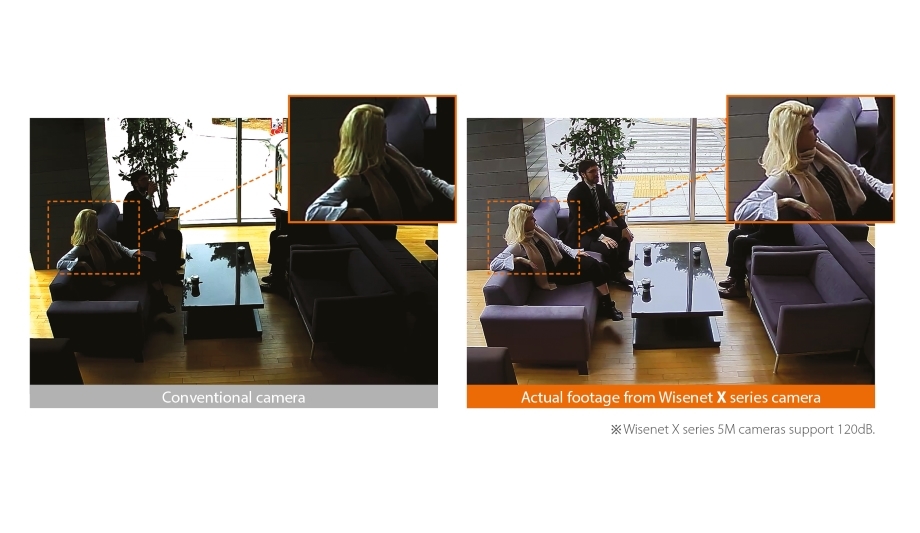
However, the quality of these images can be significantly affected by varying lighting conditions that may exist in a camera’s field of view. Some parts of an image can be very bright, while other sections are extremely dark. This scenario is quite typical in office reception areas and retail store fronts where sunlight shining in through windows differs greatly in its intensity to the internal lighting. The extent of this difference in the lighting levels is described as the dynamic range.
Balancing Out Lighting Differences
WDR is intended to balance out lighting differences and cameras may use one or other of two ways to achieve thisThis is why you are more than likely to see Wide Dynamic Range (WDR) listed among the key features offered by most of today’s cameras. WDR is intended to balance out lighting differences and cameras may use one or other of two ways to achieve this. The first is to take samples of the pixels which make up an image and then use the processing power of a camera’s chipset to automatically make the changes necessary to deliver an image where all areas can be clearly seen.
The second method involves capturing in quick time more than one version of the same image with each at different exposure levels. Almost all cameras which are able to offer WDR do so by capturing just one underexposed and one overexposed frame of the same scene and these are simultaneously processed to produce one optimized image.
Produces Image At Up To 150dB
The advanced form of WDR uses 4 frames to create a more natural image at up to 150dB and at 30 images per secondWisenet X 2-megapixel cameras from Hanwha Techwin have taken this a stage further. Their advanced form of WDR uses 4 frames to create a more natural image at up to 150dB and at 30 images per second. It also incorporates some innovative technology that removes the blurring which can occur when conventional WDR is in use. What has made this possible is the massive processing power of the chipset which is at the heart of the Wisenet X camera models.
While WDR may only be one of many features listed on a camera’s specification sheet, the contribution it can make to the effectiveness of a video surveillance system should not be underestimated.
Indeed, any form of WDR will deliver some benefit, but if you are intending to locate cameras in extremely varying lighting conditions, it will always be wise to take a very close look at what the manufacturer claims it can deliver. Never hesitate to ask for a demonstration if you have any doubts.
From facial recognition to LiDAR, explore the innovations redefining gaming surveillance