TDSi News

High-quality products are the building blocks of successful physical security systems. How they are packaged may sometimes be seen as an unimportant detail or an afterthought. But should it be? Effective packaging can serve many functions, from creating a favorable customer impression to ensuring the product isn’t damaged in transit. Packaging can also contribute to ease of installation. On the negative side, excess packaging can be an environmental concern, especially for customers who ar...

Finding the exact right technology to solve an end user’s problem is challenging, but the rewards are great when an integrator gets it right. A wide range of available product types, price levels and added features increases the likelihood of identifying a technology to solve any problem. But with so many technology and product choices in the marketplace, identifying that one solution can be akin to finding a needle in a haystack. We wondered whether a vast range of product choices is alwa...

Social media is part of our everyday lives, and increasingly it is also part of the security marketplace. Social media can be used for effective marketing and to communicate with customers, and it can be leveraged as a tool to make us all more secure. Communicating information in a crisis is another role social media can play to promote security. To elaborate on social media’s increasingly vital presence in the security marketplace, we asked this week’s Expert Panel Roundtable: What...
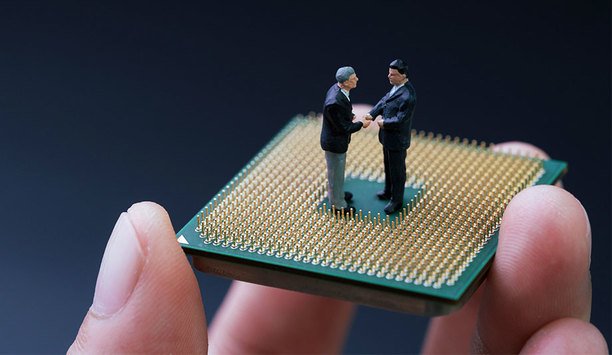
Consolidation – a decrease in the number of companies in a market achieved through mergers and acquisitions (M&A) – has been an important trend among manufacturers in the physical security market for many years. More recently, the trend has also appeared to extend to the integrator market. Larger integrators have been buying up other large integrators; in some cases, they have also been buying up smaller, regional integrators to expand their geographic coverage area. We wondered...

Knowledge shared among peers is often afforded more credibility than information from manufacturers. An approximation of that principle is at work in the use of case studies as marketing tools in the physical security industry. Case studies are aimed at telling real-world success stories – from actual customers – about how various technologies are used to accomplish security goals and make the world a safer place. But how useful are they? We asked this week’s Expert Panel Round...
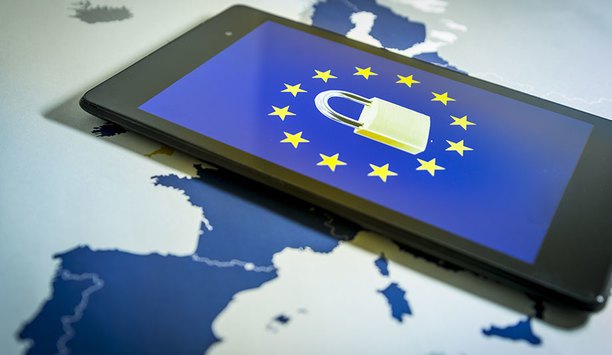
You could say concerns about privacy are “trending” in our increasingly data-driven world. Unease about how Facebook and other high-tech companies use and share data dominates the news, and the full impact of new European Union (EU) regulations is about to be felt around the world. By May 25, companies that collect data on EU citizens will need to comply with strict new rules around protecting customer data, as enumerated in the General Data Protection Regulation (GDPR). But how do t...

The manufacturers behind today’s security technologies are a varied bunch. There are large manufacturers with deep pockets and plenty of resources. And there are smaller manufacturers who are nimble, can react faster to changing market conditions and to whom each customer represents a hard-fought win. There are also plenty of manufacturers in the middle ground. But what impact does the size of a company have on the quality of its products? We took the question to this week’s Expert P...

The way we purchase services and products is changing. The traditional concept of buying and owning a product is giving way to the idea that it is possible to purchase the services it offers instead. This approach has come from the consumer realisation that it is the outcome that is important rather than the tools to achieve it. For example, this approach is evident with the rise of music streaming services as opposed to downloads or physical products. With the physical...

Among its many uses and benefits, technology is a handy tool in the fantasy world of movie and television thrillers. We all know the scene: a vital plot point depends on having just the right super-duper gadget to locate a suspect or to get past a locked door. In movies and TV, face recognition is more a super power than a technical function. Video footage can be magically enhanced to provide a perfect image of a license plate number. We have all shaken our heads in disbelief, and yet, our indus...

How much does a security system cost? We all know that total costs associated with systems are substantially higher than the “price tag.” There are many elements, tangible and intangible, that contribute to the costs of owning and operating a system. Taking a broad view and finding ways to measure these additional costs enables integrators and users to get the most value from a system at the lowest total cost of ownership (TCO). However, measuring TCO can be easier said than done. We...

In tidying up after a year of Expert Panel Roundtable questions and answers, we came across some previously unpublished responses from our panel. These interesting responses address some of the hottest topics in the industry, from robots and deep learning to the “race to the bottom.” Taken together, the varied comments offer their own range of insights into the evolving physical security market. This week, we highlight some of these assorted Expert Panellist comments submitted over t...

Enterprise customers provide a large, and very lucrative, business opportunity for the physical security market. These customers include big global companies with plenty of revenue to spend and employees and facilities to protect. As a group, enterprise customers also tend to be a demanding lot, requiring systems that are large, scalable, that can operate across a wide geographic area, and that provide top-notch system performance. Enterprise customers set the standards of performance for the en...

SourceSecurity.com’s Expert Panel covered a lot of ground in 2017 about a variety of topics resonating in the security market. The most-read Roundtable discussion in 2017 was about a familiar and ongoing debate: What is an open system? Other hot topics that made the Top-10 list of Roundtable discussions included smartphones, buzzwords, standards and product life cycles. Here is a listing of our Top 10 Expert Panel Roundtable discussions posted in 2...

Body-worn cameras are becoming more common every day, driven both by needs of the marketplace and technology developments. However, questions remain about the usefulness of the devices, and their future role in promoting safety and security. We asked this week’s Expert Panel Roundtable: What are the challenges of body-worn cameras for the security industry?

In recent years, information technology (IT) departments at end user companies have often been seen as adversaries of traditional security departments – or, at least, as a thorn in their side. One of the issues is territorial: As physical security products have migrated to use of Internet protocols and the network infrastructure, the IT and security departments have clashed – erm… make that interacted – more and more often. New realities such as cybersecurity have made i...

The threat of international terrorism has changed the way the domestic security industry thinks about protection, just as much as it has for national security services. While violent attacks and terrorism were once predominantly aimed at government, military or political establishments, an uncertain global political climate means the ability to rapidly lock down facilities has risen to the top of any organization’s security wish list. In reality though, just how easy is it for most organi...

It seems there are more “bad things” happening than ever before. We hear news every day of workplace shootings and terrorist attacks, of smash-and-grab thefts and child abductions. Beyond the possible human tragedy involved, such events pose a persistent question to anyone involved in the realm of security: Could we have prevented it? The first step toward prevention is to predict or foresee an event before it happens. Too often, technology enters the picture after the fact, most com...

Industry standards make it possible for systems and technologies to connect and work together. Standards enable today’s integrated systems. But does adherence to standards stifle innovation? Does the necessity to interface using an industry-wide standard slow down the implementation of newer (and possibly not standards-compliant) capabilities? Or do standards eliminate extraneous variables, empower more integration and encourage greater innovation? We asked this week’s Expert Panel R...

They call it “critical” for a reason. The so-called “critical infrastructure” is composed of the basic services that citizens have come to depend on, and which are necessary to support society and ensure national stability. The term includes high-visibility segments such as airports, refineries, transportation, wastewater, nuclear reactors, electric utilities, pipelines, and more. Because these functions are so critical, the stakes of providing security are higher than fo...

Products are the building blocks of systems and solutions. How those products are combined, and where the integration happens, is a variable in the physical security market. Before the advent of open systems, a single manufacturer typically combined his own products, using proprietary connections, into end-to-end solutions for customers. Open systems undermined that paradigm to some degree and made it possible for customers to pick and choose products from multiple manufacturers to be integrated...

Companies in fast-moving industries tend to want half or more of their revenue to come from products released in the last three or so years. The logical extension of that philosophy is the demise of product "cash cows" that remain in a company's portfolio for many years. Where better to witness the shortening life cycles of technology products than in the smart phone market, where most of us buy into the hype of the "latest and greatest?" But does acceleration of new product introductions transl...
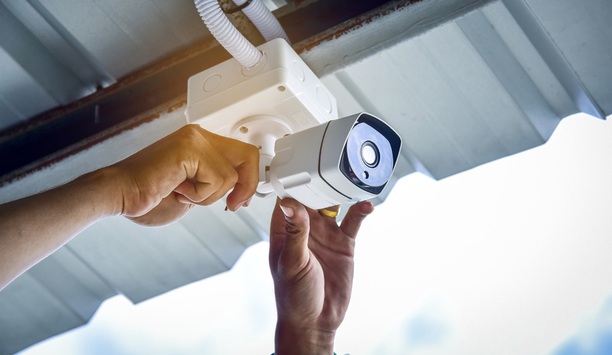
“Don’t try this at home.” It’s a common warning, but how does it apply to security systems? With today’s systems becoming easier to install, and with customers becoming more tech-savvy, there is a growing market for “do-it-yourself” or DIY home security systems. The trend also extends beyond the home security market: Business end users may also think they can forgo a professional installer and handle installation in-house. The customer may save money by...

As the new school term begins, awareness of security at all levels of educational institutions is higher than ever. Technology plays an important role in protecting educational facilities and their students, faculty, staff and visitors. Specific security challenges drive which technologies and other measures are used, and those challenges are evolving, along with the dynamic institutions security is tasked with protecting. We asked this week’s Expert Panel Roundtable: What are the security...

Even the most effective technologies usually require some level of human involvement. What new technologies do, generally speaking, is change the nature of a human’s role. Most jobs in today’s world are vastly different than 50 years ago, in many cases because of the changing role of technology. In the physical security world, what specific impact does technology have on the human element of systems? We asked this week’s Expert Panel Roundtable: Have recent developments in secu...

There’s a huge cloud hanging over the physical security market, but in a good way. Cloud-based systems, whether for video, access control or another category, are on the verge of taking the industry by storm. The benefits of that mythical “cloud” are well-known, or certainly well-touted, in the market. It’s almost as if the word “cloud” has become a buzzword that can mean different things, or at least whatever the customer wants it to mean (as long as they buy...

The obvious reason to buy security systems is to promote greater security. But in some cases, there are more specific and/or immediate motivators that lead to a security purchase. Everybody wants more security in the abstract, but how willing are we to pay for it? Security is sometimes seen as a “grudge purchase,” competing for tight corporate dollars with other investments that may seem more appealing or urgent. But other times an event occurs that moves security to the top of the l...

There has never been closer integration between physical and logical security systems, so there has also never been greater importance when it comes to defining and maintaining the security culture within an organization. Unfortunately, with increasingly complex security protocols required on a daily basis (and used by every employee), a security regime can easily become lax through apathy – which offers the perfect opportunity for potential intruders to take advantage. While securi...

Big data is a buzzword, and data – presumably of all sizes – is a driving force in the physical security market. As systems become more sophisticated and expand their capabilities, the result is more data; in some cases, a lot more data. But a key question is: What do we do with the data? How do we use it to provide value? How do we interpret it, and transform it into useful information and/or intelligence? We presented the topic of data to our Expert Panel Roundtable and came away w...

A busy trade show abounds with new products and expanded features, colorful signage and blinking video screens, all competing for attention from busy attendees. It’s a microcosm of how the security marketplace – or any market, for that matter – sells its products. But what happens if the reality turns out different to the sales pitch? What happens when product or system performance doesn’t quite live up to the claims? Some would call that hype, and it can lead to disillus...

For many years, cybersecurity was the unmentioned elephant in the room. Possible vulnerability of IP-connected devices to a cyber-attack was seldom, if ever, mentioned, and even the most basic measures to prevent such an attack were not implemented. For the last couple of years, however, the physical security industry has begun talking more about cybersecurity, in some cases with an abounding enthusiasm typical of the newly-converted. Have our discussions sufficiently addressed the long-standing...
Browse security news
- By event
- DSEI Germany 2027
- CEDIA Expo 2026
- Identity Week America 2026
- Security Exhibition & Conference 2026
- Fire & Security India Expo (FSIE) 2026
- Secutech Vietnam 2026
- Global Security Exchange (GSX) 2026
- The Emergency Services Show 2026
- Euro Defence Expo 2026
- Security Essen 2026
- International Security Expo 2026
- View more
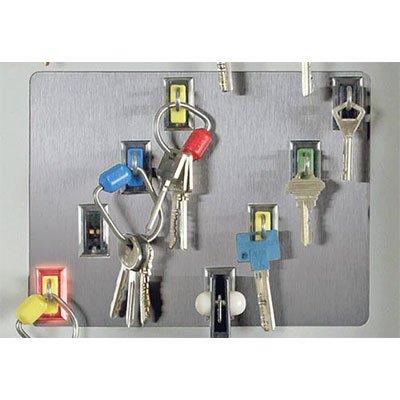
Morse Watchmans KeyWatcher Touch Key Control Modules
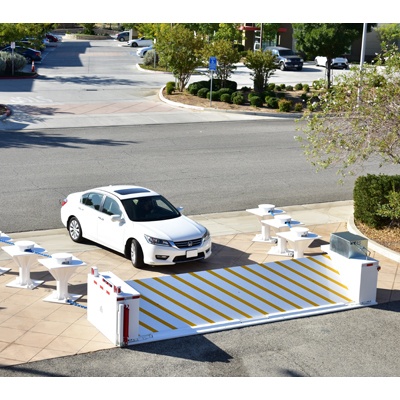
Delta Scientific Rapid Deployment Portable Barrier
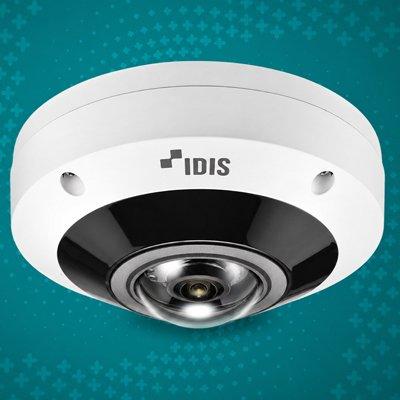
IDIS 12.5MP AI Fisheye Camera with Panoramic Auto-Tracking