Check Out Our Special Report On Casino Security

What Is The Outlook For Physical Security In The Year Ahead?
27 Feb 2025


- AI and mobile devices will drive growth in physical security industry 2025.
- Evolving threat landscape significantly impacts physical security market projections for 2025.
- Multi-factor access control remains a key factor in physical security industry advancements.
Editor Introduction
Technology innovations and an evolving threat landscape will be core factors impacting the physical security market in 2025. Technology elements such as artificial intelligence (AI), multi-factor access control, and mobile devices will continue to drive growth in the greater industry. We asked our Expert Panel Roundtable: What is the outlook for the physical security industry in the year ahead?


I see 2025 as the year that the physical security industry transitions from reactive to proactive. Advancements in AI and cloud technology are transforming security in ways that were hard to imagine just a few years ago. From AI-powered alerts that can monitor and flag specific behavior to search tools that let users use natural language like “person wearing a red baseball hat last Tuesday” to find relevant footage in seconds, these solutions are enabling organizations to shift their focus from only responding to incidents to proactively identifying and preventing potential threats before they occur.

In 2025, the physical security industry will focus on maximizing existing investments to enhance security, improve efficiency, and foster collaboration. At Genetec, we believe hybrid systems will take center stage. End users are looking for deployment options that work best for them, both on-prem and in the cloud. These solutions simplify remote site management, reduce maintenance, and lower costs. Emerging technologies like artificial intelligence (AI) will continue to generate interest in 2025. Organizations are implementing intelligent automation tools to speed up tasks and improve situational awareness. At the same time, they are prioritizing transparency, data privacy, and ethical practices. Collaboration among security, IT, facilities, and human resources departments is gaining interest. Organizations are implementing workforce optimization tools to empower team members to take active roles in security tasks, streamline workflows, and eliminate bottlenecks.

In 2025, interoperability will become an increasingly critical requirement for ecosystems. We will see further integration across intrusion, access control, and video surveillance systems, reducing costs, time requirements, and system vulnerabilities. AI will continue to make this evolution accessible by simplifying expert-level implementation by installers and everyday operation by end-users. Streamlined installation and optimized adaptability will enable seamless integration of sensors, cameras, and control panels. Cameras themselves will be innovated to become proactive sensors that can detect activity, make access decisions autonomously, and mitigate threats.

We believe the physical security industry will see a similar growth in 2025 as we saw in 2024. Due to interest rates, a concerned economy, and the new administration in the USA threatening tariffs, we see many companies continuing to be cautious with their spending on security or upgrades. Most larger companies have budgets and plans, but they are extremely hesitant to move forward at this moment and they could get better or stay the same which is what happened in 2024.

The industry is set for significant acceleration of several key trends in the year ahead. Security practitioners face an increasingly dynamic threat landscape, along with rising stakeholder expectations for the programs they manage. As a result, many will look to modernize their technology and seek more efficient ways to deploy and manage these systems. The rise of AI, cloud computing, IoT architectures, and computer vision is redefining threat detection while promising new insights into business operations. This shift is pushing the industry beyond a product-focused mindset to one that embraces service-based, outcome-focused solutions. Organisations will need to be thoughtful and nimble as they navigate the compliance and contracting implications associated with changes in data security, liability, and privacy. In summary, the year ahead promises to push the boundaries of traditional security integration models — blending advanced technology with service models to deliver both enhanced protection and strategic business value.

The physical security industry is poised for substantial growth in 2025 which is driven by technological advancements and the increase in global security concerns. We have seen in many industries how Artificial intelligence and Machine Learning have transformed systems into intelligent and proactive solutions, and our industry is certainly on the cusp of larger-scale deployment. Cloud-based systems and IoT are furthering connectivity, enabling seamless integration across a multitude of solutions. The continued rise of urbanization and smart buildings is accelerating the demand for innovative security solutions that can cope with complex environments yet remain covert. Cybersecurity is a growing concern and will influence the deployment and development of secure end-to-end encrypted platforms. There will be challenges around regulatory compliance and privacy concerns but also opportunity as business and government prioritize advanced security infrastructure. The outlook is dynamic with innovation driving resilience and efficiency.

Adaptability will be a defining factor. AI is transforming security by automating and streamlining traditionally manual processes, while cloud technologies continue gaining momentum for their scalability and integration capabilities. However, it remains essential for the industry to support organizations that require on-premises solutions due to regulatory compliance or data protection concerns. An effective security solution must provide value regardless of infrastructure preferences. The future of security isn’t about a one-size-fits-all approach — it’s about providing options. Investing in solutions help organizations transition at their own pace. The intrusion detection industry is also undergoing a shift, driven by innovation and evolving security demands. Advances in wireless technology, open platforms, cybersecurity, and mobile solutions are making intrusion systems smarter and more connected. Acre is focused on further developing these technologies within our portfolio. With our recent acquisition of REKS, for example, we are expanding our ability to integrate AI-powered insights into security operations, helping organizations stay ahead of threats and optimize incident response. In the year ahead, we will focus on harnessing technology to answer critical questions like, “How do we better protect data, people, and infrastructure?”

2025 will be a year of focus on the deployment of secure wireless technology in ways that are beneficial to both consumers and businesses. While legacy systems will retain their place in appropriate settings, applications requiring upgraded biometrics, card media, or full wireless integrations will continue to deploy as their user data security is proven and the total cost of ownership proves lower in the long run. Ease of use, coupled with familiar installation techniques and simple corporate-level resources required to support -- make options available even to the small business owner. The need for contactless solutions driven by the recent pandemic will continue to drive user demand to lower-priced, high-quality, and fully secure products from companies like Xthings, who have a full range of products meeting diverse corporate access and time and attendance process needs.

In 2025, edge AI’s role in the security industry will deepen, with advanced algorithms enabling real-time threat detection, on-site learning capabilities, and the beginning of context-aware insights that empower operators to act before incidents occur. Edge processing of AI-based analytics is rapidly transforming the security landscape by enabling systems to move beyond reactive responses to adopt proactive and preventative approaches. The challenge for 2025 will not just be gathering more data but filtering and integrating it effectively. AI will play a critical role by summarizing and contextualizing information, helping operators focus on actionable insights. While AI can suggest courses of action based on data patterns, human decision-makers will remain central to interpreting and applying these insights. As AI capabilities expand, the industry must prioritize ethical practices and robust cybersecurity measures. i-PRO is committed to ensuring that AI applications respect privacy and align with customers’ core values.

In 2024, we saw the widespread adoption of artificial intelligence. As algorithms continue to learn and evolve, AI is developing an understanding of context and locations. For example, in a stadium setting, AI is improving at differentiating a sports-related crowd surge from unusual movements that could indicate a potential security threat. This is exciting because AI will make more accurate predictions, and eventually, can be empowered with decision-making. The ultimate goal of AI in security is to alleviate the workload of human operators in a reliable and consistent way, and I believe that we will see more of this in 2025.
Editor Summary
The impact of AI and Machine Learning is probably the biggest factor mentioned by our Expert Panelists as affecting the year ahead in physical security. They also mention growth in hybrid systems, greater interoperability, and a transition from reactive to proactive response. With the new year well under way, we are already seeing some of the factors in play with many exciting developments to come.
Which emerging trend will have the biggest impact on physical security strategies this year?
Johnson Controls, Inc. products

Johnson Controls, Inc. news

There are many new technologies at ISC West this year. There are also some tried-and-true solutions on display. More mature products have the benefit of being fully vetted and battle-tested, which may make them a more comfortable choice for security customers. I had a couple of discussions on Day 2 of the show about the advantages, and possible drawbacks, of new products. “To a security director, when you say ‘new,’ he translates that into ‘risk,’” says Bill...
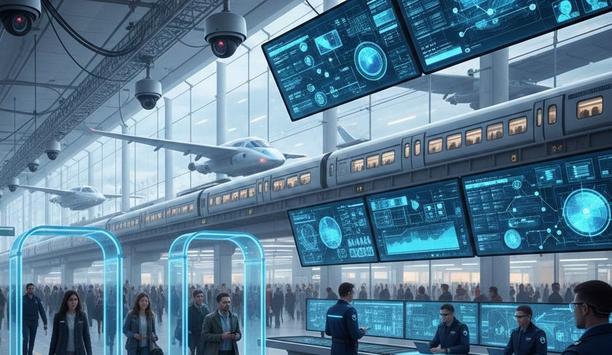
Transportation systems need robust physical security to protect human life, to ensure economic stability, and to maintain national security. Because transportation involves moving large numbers of people and critical goods across vast, often interconnected infrastructure, it presents a highly attractive target for various threats. More threats equate to a greater need for security. We asked our Expert Panel Roundtable: What are the emerging applications of physical security in the transportation...

Installing physical security systems requires integrating diverse technologies (e.g., cameras, access control, alarms) that often use different protocols and must be adapted to a building's unique physical layout and legacy infrastructure. Specialized technical expertise is required for seamless networking and proper configuration. Hopefully, no important factors are overlooked in the installation process. We asked our Expert Panel Roundtable: What is the most overlooked factor when inst...
Johnson Controls, Inc. case studies

Keeping beachgoers, swimmers and surfers safe is all in a day’s work for the team at South Maroubra Surf Live Saving Club, and every second counts when an incident unfolds on the water. One of the most topical issues and threats to those enjoying Australia’s world-renowned beaches is sharks, so for the surf club it made sense to look to smart, new technology to keep those who enjoy the sand and surf safe. Security technology to lifesavers "Since the club wa...
SwiftConnect, a pioneering provider of connected access enablement, is powering easy, secure, and private access using an iPhone and Apple Watch with the Johnson Controls Software House C•CURE 9000 access control system. The SwiftConnect AccessCloud platform integration with the Software House C•CURE 9000 access control system makes it possible for Software House C•CURE 9000 customers to take advantage of the employee badge in Apple Wallet for physical access. Deployments of emp...

It may sound like a small change, but installing security cameras on a property can significantly impact occupant and visitor behavior by enabling more accountability. This is notable for environments such as K-12 schools where occupants are younger and more impulsive. Lack of visibility A public school system on the East Coast faced frequent incidents of bullying, vandalism, and theft among students as well as the harassment of faculty and staff and was struggling to keep its occupants accou...
Johnson Controls, Inc. white papers
Johnson Controls, Inc. videos

Frictionless Access Control: 5 Minutes With Rick Focke Tyco Software House
Video Surveillance Solutions: 5 Minutes With Ryan Hulse from JCI

Roger Williams University, Rhode Island, Secured with Johnson Controls P2000 Security Management System
An Overview Of The Johnson Controls P2000 Security Management System

Johnson Controls Company Profile

Johnson Controls Corporate Profile

Expert commentary
Security beat

Johnson Controls, Inc.
507 E Michigan Street
Milwaukee, WI 53202