Weapon detection





News
ZeroEyes, creators of the multi-analytics weapons detection and threat intelligence platform, announces a partnership with Samson Security Fire & Facilities to expand the availability of ZeroEyes’ visual threat detection capabilities across the United Kingdom. The companies will demonstrate the technology in Booth F61 at the International Security Expo, taking place 29-30 September 2026 at Olympia London. Through the partnership, Samson will offer UK organizations access to ZeroEyes’ proactive AI weapon detection and intelligent situational awareness technology, designed to identify visible firearms and knives through existing CCTV infrastructure. The platform applies analytics to live camera feeds and sends potential detections to trained human analysts for verification before issuing an alert to designated security personnel and first responders. Existing security programmes The partnership combines ZeroEyes’ threat detection technology with Samson’s UK-based security, monitoring and response capabilities. Together, the companies will help organizations add a proactive layer to their existing security programmes without requiring them to replace their current camera systems. “Samson has the experience, relationships and operational capabilities needed to bring our technology to organizations throughout the UK,” said Mike Lahiff, co-founder and CEO of ZeroEyes. “This partnership represents an important step in our international growth and advances our shared goal of helping security teams identify visible threats earlier and respond with actionable intelligence.” Firearm-detection technology ZeroEyes’ platform builds on its proven visual firearm-detection technology, which is deployed across the United States and has generated thousands of verified weapon dispatches, including dozens of alerts that have contributed to arrests. The expanded Analytics Suite adds visual knife detection, intrusion detection, left-behind-object detection, crowd formation and camera-health monitoring across an organization’s existing camera infrastructure. Initial knife-detection deployments are producing promising, actionable results, helping security teams identify potential threats and intervene sooner. The platform also provides public-safety alerts and does not use facial recognition or behavioral tracking. Digital security cameras ZeroEyes’ software layers onto existing digital security cameras. If a gun or knife is identified, images are instantly shared with the ZeroEyes Operations Center (ZOC), the industry’s only U.S.-based, fully in-house operations centre staffed 24/7/365 by specially trained U.S. military and law enforcement veterans. If the threat is determined to be valid, alerts and actionable intelligence - including visual description, weapon type, and last known location - are dispatched to law enforcement and local security teams, often in a matter of seconds from the moment the threat is detected. Protective-security requirements “UK organizations are looking for practical ways to gain more value from their existing CCTV investments and strengthen their ability to respond to developing threats,” said Zara Richards, Principal of Samson Security Fire & Facilities. “By combining ZeroEyes’ analytics and human verification with Samson’s integrated security and response services, we can provide customers with a more complete and proactive approach to protecting people and property.” The partnership comes as UK organizations prepare for the implementation of the Terrorism (Protection of Premises) Act 2025, commonly known as Martyn’s Law. The legislation establishes preparedness and protective-security requirements for certain public premises and events. Although no single technology provides compliance on its own, human-verified threat detection can support a broader, layered approach to security, situational awareness and emergency response.
ZeroEyes, creators of the foremost multi-analytics weapons detection and threat intelligence platform, announced a partnership with Advantech, a pioneer in security integration and controls company in the mid-Atlantic, and the Camden Police Department to deploy ZeroEyes’ AI gun detection and intelligent situational awareness platform at Delaware’s Caesar Rodney School District (CRSD). Advantech has been a partner of CRSD for 30 years, and worked closely with Camden Police Chief Marc Whitney to bring ZeroEyes to the district. Leveraging advanced tools "When I saw a ZeroEyes demonstration at an Advantech symposium, I immediately recognized it as a must-have for the school districts in my jurisdiction,” said Marc Whitney, Chief of Police, Camden Police Department. “By coordinating with the CRSD and Advantech to leverage advanced tools like this, we can respond more quickly to potential threats and ensure a secure learning environment for everyone." Layer of protection to CRSD's safety program The district spans 107 square miles in central Kent County and serves 8,259 students across 15 schools. It is adding ZeroEyes to a multilayered security approach that also includes CEIA metal detectors, the Milestone Video Management solution, armed constables at the high school and middle school, and a Delaware State Trooper on campus. The district also works closely with the Camden Police Department to ensure a safe, seamless experience for students, staff, and families. The adoption of ZeroEyes' AI gun detection technology at Caesar Rodney High School, Fred Fifer III Middle School, and Nellie Hughes Stokes Elementary School adds another critical layer of protection to CRSD’s safety program. "Student safety is our top priority, and we are committed to using every tool available to protect our schools,” said Mark Gaglione, Caesar Rodney School District Safety and Security Coordinator. “Deploying ZeroEyes enhances our multilayered security approach, giving our staff and students greater peace of mind each day." Software details ZeroEyes' AI gun detection and intelligent situational awareness software layers onto existing digital security cameras. If a gun is identified, images are instantly shared with the ZeroEyes Operations Center (ZOC), the industry's only U.S.-based, fully in-house operation center, which is staffed 24/7/365 by specially trained U.S. military and law enforcement veterans. If these experts determine the threat is valid, they dispatch alerts and actionable intelligence — including visual description, gun type, and last known location — to law enforcement and local security teams, often in a matter of seconds from the moment a gun is detected. Authority comments "We’re proud to partner with Advantech and the Camden Police Department to bring our solution to Caesar Rodney School District,” said Mike Lahiff, CEO and co-founder of ZeroEyes. "Advantech’s expertise in evaluating and applying technology to best support their customers is remarkable, and I’m proud that they trust ZeroEyes to help keep schools safe." “We are excited to highlight the collaboration between Camden PD and Caesar Rodney SD in delivering a solution that strengthens a layered approach to student safety,” said Ryne Johnson, Account Manager, Advantech. “This achievement reflects the coordinated leadership of Chief Whitney and would not have been possible without that unified effort. The project underscores the importance of strong partnerships and the use of advanced technology to support proactive responses in security situations.”

Evolv Technologies Holdings, Inc., a foremost security technology company pioneering AI-based solutions designed to create safer experiences, today announced its partnership with Stern Grove Festival, the oldest nonprofit music festival in the country, providing free performances in San Francisco for over 88 years. Evolv Express® weapons detection systems have been installed and were operational in time for the festival’s opening weekend on June 15, 2025. The systems are placed at the venue’s main entrances, allowing attendees to pass through security screenings efficiently in support of visitor safety and improved entry processes. Visitor safety and entrance system The decision to deploy Evolv Express was driven by Stern Grove Festival’s commitment to visitor safety and a desire to improve entry experiences. Previously, festival security relied on traditional walk-through metal detectors and manual bag searches. As a venue where visitors regularly bring in food, beverages, as well as have supplies for picnics, manually searching the vast volume of bags had become challenging, time consuming, and often led to delays. The introduction of Evolv Express aims to allow for quick screenings, improving the overall guest experience. Authority insight “Our goal has always been to keep everyone safe while providing an enjoyable and accessible festival environment,” said Bob Fiedler, Executive Director of Stern Grove Festival. “Evolv helps us maintain the friendly and welcoming atmosphere our visitors expect and enhancing their overall experience while still supporting our safety needs.” “We are proud to partner with Stern Grove Festival, supporting their mission to offer safer, more enjoyable events,” said John Kedzierski, CEO and President of Evolv Technology. “Evolv Express is a strong fit for venues like Stern Grove Festival, where visitor safety and experience are both key considerations.” Public safety Stern Grove Festival, known for its outdoor setting and diverse musical performances, continues to be a highlight of San Francisco’s cultural calendar. The use of Evolv’s technology aligns with the festival’s ongoing commitment to public safety and guest satisfaction.
ZE Government Solutions (ZEGS), a wholly owned subsidiary of ZeroEyes, creators of the multi-analytics weapons detection and threat intelligence platform, announces that it has achieved Federal Risk and Authorization Management Program (FedRAMP) Moderate Ready designation, confirming that ZeroEyes’ AI visual threat intelligence analytics platform has the security capabilities and documentation required to partner with Federal agencies. With this designation, ZeroEyes has passed 3PAO audit and meets Federal security requirements, making ZeroEyes’ industry-pioneer visual weapon detection, verification, and dispatch platform available to federal customers. This is one step closer to full authorization and enables federal agencies to access ZeroEyes on the FedRAMP Marketplace, issue an ATO, and add ZeroEyes’ capabilities to protect Federal infrastructure, employees, and assets. Protecting government locations Federal agencies responsible for protecting government locations, field offices, personnel and national assets benefit with the ability to leverage ZeroEyes’ comprehensive, industry-pioneer threat detection technology without the need for deployment exceptions or legacy workarounds that add operational complexity and increase the risk of noncompliance. “Achieving FedRamp approval shows ZEGS full commitment to supporting the Federal government and the mission to improve public safety,” said Dustin Kisling, Executive Vice President of ZE Government Solutions (ZEGS). “This, in addition to our ISO 27001 certification, SOC 2 Type 2 certification, NDAA and HIPAA compliance, and DHS SAFETY Act Full Designation, allows us to continue to demonstrate our strong commitment to security, compliance, and risk management.”
Security beat
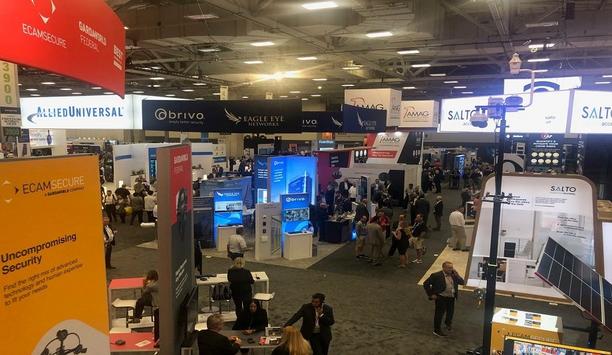
Companies at GSX 2023 emphasized new ways that technologies such as artificial intelligence (AI) and the cloud can address long-standing issues in the security market. Among the exhibitors at the event in Dallas were companies seeking creative ways to apply technology, lower costs, and make the world a safer place. Reflecting on the exhibition, here are some additional takeaways. Expanding AI at the edge i-PRO is a company reflecting the continued expansion of edge AI capability in the security market. Today, more than half of the company’s lineup supports AI at the edge so the customer has a wide choice of form factors when seeking to leverage the feature set. AI processing relay, extended warranty i-PRO is increasing their warranty period from 5 to 7 years, which could be a lifetime warranty in some cases I-PRO also has an “AI processing relay” device that accepts non-AI video streams and applies edge analytics. AI has progressed from a high-end technology to a feature available in a variety of cameras at different price points. i-PRO is also increasing its warranty period from 5 to 7 years, which could be a lifetime warranty in some cases depending on a customer’s refresh schedule and lifecycle management. Active Guard, MonitorCast The company’s video management system (Video Insight) is continuing to build new features including “Active Guard,” an integrated metadata sorter. Their access control platform, MonitorCast, is a Mercury-based solution that is tightly integrated with Video Insight. Their embedded recorders now have PoE built in. “We can move at a faster pace to fill out our product line since leaving Panasonic,” says Adam Lowenstein, Director of Product Management. “We can focus our business on adapting to the market.” Emphasis on retail and other verticals Shoplifting is a timely issue, and retail is a vertical market that got a lot of attention at GSX 2023. “We see a lot of retailers who are primarily interested in protecting employee safety, but also assets,” says Brandon Davito, Verkada’s SVP of Product and Operations. “Shrinkage is a CEO-level priority.” “Retailers are getting more engaged with security posture, instead of letting perpetrators walk,” Davito adds. Intrusion detection Verkada has an intrusion product that will notify a central station if there is an alarm On the alarm side, Verkada has an intrusion product that will notify a central station if there is an alarm, and operators can review videos to confirm the alarm. Other capabilities seeking to discourage trespassers include sirens, strobes, and “talkdown” capabilities. International expansion Verkada continues to expand internationally with 16 offices in all, including Sydney, Tokyo, and London. The core value proposition is to enable customers to manage their onsite infrastructure more simply, including new elements such as PTZ cameras, intercoms, and visitor management. Verkada emphasizes ease of use, including a mobile application to allow access to be managed across the user base. Forging partnerships “We are committed to the channel and industry, and we continue to build relationships and expand our reach,” says Davito. Among the industry relationships is a new partnership with Convergint, which was hinted at during the show and announced later the same day. They are also expanding their partnerships with Schlage, Allegion, and ASSA ABLOY. Working with other verticals They offer new features for K -12 schools, and a new alarm platform is easier to deploy and manage Verkada has also found success across multiple other verticals, notably healthcare, where they integrate with an electronic medical records system. They offer new features for K-12 schools, and a new alarm platform is easier to deploy and manage. They are integrating wireless locks to secure interior doors in schools, looking to secure the perimeter, and installing guest management systems. Transitioning the Mid-Market to the Cloud Salient is squarely focused on the “mid-market,” a large swath of systems somewhere between small businesses and enterprise-level systems. Pure cloud systems are not as attractive to this market, which has a built-out infrastructure of on-premise systems. Adding a camera to an existing system is easier and less expensive than tying it to the cloud. Benefits of cloud It’s a market that may not be ready for pure cloud, but there are benefits to be realized from adding a cloud element to existing systems. “We are continuing to augment our premise-based solutions with added cloud capabilities and flexibility,” says Sanjay Challa, Salient’s Chief Product Officer. The feedback Salient hears from their customers is “I want to own my data.” The hybrid cloud approach offers the right mix of control, flexibility, and unit economics. Cloud add-on capabilities We want to provide the flexibility for customers to go full-cloud as it becomes more economically attractive" Cloud add-on capabilities include bringing more intelligence about system operation to the user via the cloud. Over time, Salient expects to sell more cloud-centric offerings based on feedback from integrators and customers. “We want to provide the flexibility for customers to go full-cloud as it becomes more economically attractive over time,” says Challa. Vaidio AI technology Salient seeks to be a transition pioneer to help customers realize the path to the cloud. Their approach is “crawl, walk, run,” and helping customers make the transition at each stage. Salient has added AI to its product offering, incorporating Vaidio AI technology from IronYun into a powerful suite and broad array of on-premise analytics, which are gaining traction. The seamless approach makes it easy for customers to embrace AI analytics, although Salient remains broadly committed to open systems. Addressing ‘Soft’ Features for Integrators AMAG is in the process of enhancing its product line with the next generation of access control panels. However, “product” is just part of the new developments at AMAG. In addition to “hard” features (such as products), the company is looking to improve its “soft” features, too; that is, how they work with the integrator channel. Integrator channel Rebuilding a process to make your organization more efficient, is relatively easy; it just takes a lot of persistence" “We have the depth of our legacy customer base we can learn from, we just need to close the feedback loop quicker,” says Kyle Gordon, AMAG’s Executive Vice President of Global Sales, Marketing, and commercial Excellence, who acknowledges the value of reinstating face-to-face meetings after COVID. “We are laser-focused on nurturing our integrator channel,” he says. “Developing new features takes time, but rebuilding a process to make your organization more efficient, that’s relatively easy; it just takes a lot of persistence,” says Gordon. More cohesive internal communication is another useful tool, he says. Disrupting the cloud based on price Wasabi is working to make cloud applications less expensive by offering a “disruptive” price on cloud storage, $6.99 per terabyte per month (80% less than hyperscalers). Contending “hyperscalers” like AWS are charging too much for cloud storage, Wasabi is using its own intellectual property and server equipment co-located in data centers around the world. Wasabi sells “hot cloud storage,” which refers to the fact that they only have one tier of storage and data is always accessible. In contrast, a company such as AWS might charge an “egress fee” for access to data stored in a “colder” tier. Cloud storage “We saw that several video surveillance companies had not yet adopted cloud storage, and we saw an opportunity to make it easy to use,” said Drew Schlussel, Wasabi’s Senior Director of Product Marketing. “We just install a little bit of software that allows them to store data in the cloud and bring it back from the cloud.” Performance, protection (cybersecurity), and price Wasabi works with integrators, resellers, and distributors and also integrates with VMS companies Wasabi works with integrators, resellers, and distributors and also integrates with VMS companies such as Genetec and Milestone. Emphasizing performance, protection (cybersecurity), and price, their data centers are certified to SOC 2 and ISO 27001 standards. Faster throughput for weapons detection Xtract One is a young company focusing on weapons detection in a time of accelerated concern about gun issues post-COVID. Founded in Canada and based on technology developed at McMaster University, Xtract One has found a niche in providing weapons detection at stadiums and arenas. These customers already have budgets, and it is easy to shift the money to a newer, faster technology. Madison Square Garden in New York City is among its customers. Cost savings solution Xtract One can increase throughput to 30 to 50 people per entrance per minute (compared to 5 to 6 people per minute when using metal detectors). The solution doesn’t require anyone to empty their pockets and the system alarms on items beyond guns and knives. Using Xtract One allows customers to reduce the number of screening lanes and security staff, providing additional cost savings, all while getting fans through the screening process in half the time. Purpose-built sensors The system uses purpose-built sensors looking for specific characteristics, such as reflective and density properties In addition to stadiums and arenas, Xtract One, formerly Patriot One, is also getting “inbound” interest from schools, hospitals, manufacturers, and other verticals that makeup 50% of their business. “We’re on a rocket ride, mainly because the weapons issues are not going away,” says Peter Evans, CEO and Director at Xtract One. The system uses purpose-built sensors looking for specific characteristics, such as reflective and density properties, all correlated by an AI engine. Providing early warning of violence ZeroEyes is another company focused on weapons detection. Their AI gun detection system works with video images to identify if someone is “brandishing” (carrying) a weapon. In other words, the system does not detect concealed weapons. Identifying someone carrying a weapon provides early warning of a possible violent act. Increased response with AI-enables images Images are identified by AI and sent to a monitoring center where a human confirms the image before contacting first responders. Knowing the location of a shooter enables staff to lock entry points, move people to safety, and direct first responders. The company was founded to leverage existing camera views to stop mass shootings and gun violence by reducing response times.
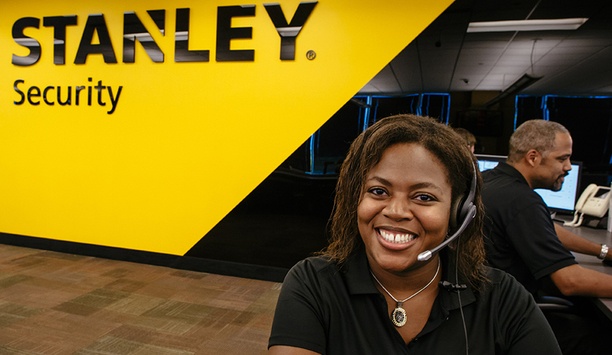
As security embraces IT-centric solutions, it can provide business value over and above security. Now in charge of managing a variety of data – e.g., from video platforms – a company’s security function has access to a range of new metrics. While security may use video to analyze a security event, machine learning can analyze the same data for other business capabilities, such as quality control or when a policy has been breached. “It’s the same camera, but with dual purpose,” says Matt Kushner, President of STANLEY Security. STANLEY Security, one of the largest integrators with a global footprint, has positioned itself at the center of the industry’s transformation by information technology (IT) and the Internet of Things. “Security will become an expanded business partner with corporations,” Kushner comments. In response to the trend, STANLEY is hiring more IT-oriented technicians and salespeople within the IT community and who can “speak at the C-level,” Kushner comments. Sonitrol is the most recognised brand by law enforcement for verified response Data centers, higher education and logistics STANLEY manages very large, multi-national clients. As a consequence, the STANLEY security organization has some of the best and brightest minds for enterprise-class security. To maintain that level of talent, STANLEY is committed to education. “We bring them into the family and focus on education, such as IT and IoT training. That’s critical in a world where unemployment is less than 3%. Finding good people, growing good people, and retaining good people – we do that exceptionally well at STANLEY,” says Kushner. STANLEY’s strong vertical markets including data centers, higher education, and logistics. They are also strong in multi-location installations (such as banking.) STANLEY has a big footprint throughout North America and Europe. PACOM access control and 3xLOGIC cloud-based solutions In addition to STANLEY’s core integrator business, the company also manages several manufacturing brands such as PACOM access control and 3xLOGIC cloud-based solutions. Mergers and acquisitions have been commonplace in the integrator spaceBeyond its company-owned integrator locations under the STANLEY brand, the company also owns Sonitrol, the strongest brand in the market for verified response with 65 franchises in North America. Sonitrol is the most recognized brand by law enforcement for verified response. Mergers and acquisitions have been commonplace in the integrator space, and Kushner says that STANLEY is “open and actively looking for properties that fit our commercial growth strategy.” He notes that STANLEY focuses on the commercial side of the market, where there are good margins and continuing growth. They pay less attention to the residential side which is “being heavily disrupted.” Strong partnerships with manufacturers STANLEY has strong partnerships with several manufacturer partners, through which they bring new breakout technologies to market from emerging companies. An example is Evolv Technology, a manufacturer of gun and bomb detection technology. “We see them as a leading provider of the technology, and they are, in my mind, a very disruptive provider,” says Kushner. STANLEY is also collaborating with a company – to be announced – that provides a unique gunshot detection technology, he says. STANLEY is also cooperating with dormakaba to implement Switch Tech, a Bluetooth wireless core that can replace any standard mechanical lock core. Existing locks can be transformed into electromechanical locks in minutes. STANLEY is also developing a tight integration with Lenel’s mobile credentialing system. STANLEY is also cooperating with dormakaba to implement Switch Tech GSX 2019 and ISC West 2020 At the recent GSX 2019 show in Chicago, Kushner says STANLEY heard a lot about cybersecurity, especially customers wanting to make sure they are investing in cyber-hygiene and who are looking to expand into providing cyber protection. “In concert with cyber-hygiene, they are looking for health monitoring or assurance that network devices are operating properly,” he says. “They want to ensure their security platforms are cyber-secure and up to date with the latest software versions.” STANLEY is also a big proponent of cloud offerings, and Kushner hints at a big announcement at the upcoming ISC West show in Las Vegas of additional cloud offerings and/or partnerships. “There will be a variety of new solutions to be introduced, including hosted solutions and applications that benefit both security and that add new value to businesses overall.”

In addition to providing the Northeast’s largest security trade show, ISC East will include free conference sessions and keynote speeches right on the show floor and several paid workshops. The Nov. 20-21 event at New York’s Javits Center will also include vendor solution sessions from Axis Communications, Hikvision and NAPCO. Wide variety of paid workshops An advantage of the International Security Conference & Exposition in New York is that much of the programming is complimentary to registered attendees, and location of the sessions on the show floor means attendees don’t have to leave the exhibition to take in a session. The paid workshops include technology sessions about cyber terminology for physical security integratorsThe paid workshops include an Active Shooter Workshop and technology sessions about cyber terminology for physical security integrators; and basic installation and configuration of video surveillance solutions. An OSDP (Open Supervised Device Protocol) Boot Camp Short Course will also be offered. As a smaller show, the topics of ISC East conference sessions are broader and of more general interest, rather than organized into focused “tracks” as at ISC West. Attendance at sessions can provide continuing education (CE) credits with organizations that partner with ISC East – one credit for each hour-long session. Attendees can use their Certificate of Attendance from any session to self-report their education hours to relevant industry bodies: ALOA (AEU education credits), ASIS (CPE continuing professional education credits) and NICET (CPD Continuing Professional Development points). An advantage of the International Security Conference & Exposition in New York is that much of the programming is complimentary to registered attendees Keynote sessions at the Main Stage The Main Stage will be the venue for keynote sessions delivered by Deanne Criswell, Commissioner, New York City Emergency Management (on Day 1 – Nov. 20); and Angela Stubblefield, Chief of Staff at the Federal Aviation Administration (FAA) (on Day 2 – Nov. 21). The two SIA Education@ISC East educational theaters on the show floor will be booked up both days with a variety of interesting topics. A new session covers penetration testing for physical security, presented by Michael Glasser of Glasser Security Group. A session on LiDAR (Light Detection and Ranging) sensors will be presented by Frank Bertini, UAV and Robotics Business Manager, Velodyne LiDAR. Another popular topic is Safe Cities, and FLIR will present a session on moving from secured to smart cities with intelligent, connected systems. New addition is Active Shooter Workshop The Active Shooter Workshop is a new addition to the ISC East program. It has been a popular session at ISC West for three years now. At ISC East, presenters of the workshop will be David LaRose, System Director Public Health, Lee Health; and Ben Scaglione, Director of Healthcare and Security Programming, Lowers and Associates. At the end of the workshop, an additional hour of programming will be the “Stop the Bleed/Save a Life” session presented by Jerry Wilkins, Co-Owner of Active Risk Survival. The Main Stage will be the venue for keynote sessions delivered by Deanne Criswell, Commissioner, New York City Emergency Management, and Angela Stubblefield, Chief of Staff at the Federal Aviation Administration Woman in Security event A Women in Security Forum breakfast event will be held on Nov. 21 (Thursday). It’s the second annual event and this year will focus on diversity and inclusiveness in the workplace of the future. Valerie Anderson, President of Boon Edam, will lead a discussion on “Diversity 2.0: Next Steps for Creating an Empowered Workforce”Moderator Valerie Anderson, President of Boon Edam, will lead a discussion on “Diversity 2.0: Next Steps for Creating an Empowered Workforce.” Panelists are Lisa Terry of Allied Universal, Andrew Lanning of Integrated Security Technologies, Elaine Palome of Axis Communications and Dawne Hanks of Milestone. The Women in Security event is likely to attract up to 100 attendees. SIA’s Women in Security is an active organization, with monthly meetings and a newsletter that recognizes prominent women in the security industry. “It’s really a group for both men and women,” says Mary Beth Shaughnessy, Event Director, ISC Events at Reed Exhibitions. “There are many programmes, recruiting efforts, and professional and networking opportunities. They are a robust group of people who are active in making a difference. It’s important to support women in the security industry, which is 95% male, and to develop a new generation of women to be a part of the industry’s future.” The keynote addresses at ISC East will also highlight two high-profile women.
Expert commentary
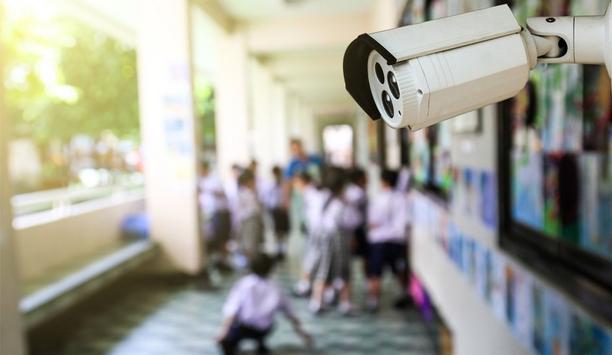
We must leverage existing technologies like social media monitoring, gunshot and weapons detection, and real-time watchlist alerting. We owe it to our children. The recent news of the Dallas elementary school shooting absolutely gutted me. It’s a tragic and incomprehensible loss of life. A question I hear being asked again and again – could technology have made a difference? From my experience, modern technologies can help schools mitigate some of the damage and provide an early warning to law enforcement so they can mount a faster and more effective response. Early warning technologies The fact is technologies exist – and are in production – that can provide an additional safety net and potentially slow a would-be attacker and at least give law enforcement a few more moments of notice to mount an effective response. Naturally, people will argue for stronger gun controls and better mental health programs Seconds are precious. And they’re being lost because schools often don’t have the requisite early warning technologies to trigger the alarm. Naturally, people will argue for stronger gun controls and better mental health programs. They’re absolutely needed, but schools and law enforcement need real-world tactical solutions that exploit the power of today’s technologies. Real-World tactical solutions Social media monitoring: The shooter apparently made three social media posts, about 30 minutes before the shooting. The FBI and local police can monitor public social media posts in real-time to identify threats and respond quickly. Gunshot detection: Gunshot detection systems use acoustic sensing technology to identify, discriminate, and report gunshots to the police within seconds of the shot being fired. A gunshot detection system usually involves a number of sensors to detect the sound of a gunshot and transmitters to send a message to the police dispatch center. Weapons detection: Weapon detection systems use high-performance object detection algorithms using deep neural networks. These AI algorithms work with your existing video surveillance systems to automatically detect automatic knives, guns, and firearms using deep learning models. Watchlist alerting: Many schools in the U.S. have lists of known security threats. This often includes ex-students, parents, and faculty who were prone to violence in the past and sexual predators who live in the immediate vicinity. Watchlist alerting works with a school’s video surveillance system to identify persons of interest (POI) through both face and attribute recognition in real-time and sends instant alerts instantly when a POI approaches school property. Watchlist alerting solution If someone is not watching that camera at that time - the camera is almost worthless" After a tragic event on one of their campuses, a public-school district in Santa Fe, Texas invested in a watchlist alerting solution, an AI-based face recognition security solution to create a safer environment for the thousands of students, teachers, and staff who populate their schools and facilities. This was in 2019. According to Kip Robins who was then the Director Technology at the Santa FE ISD: “We have almost 700 cameras throughout the district, but if someone is not watching that camera at that time - the camera is almost worthless.” Metal Detectors: Once dismissed as something only needed for schools in areas with a high crime rate, many schools across the U.S. are now considering the use of metal detectors. It should be obvious by now that living in a ‘nice neighborhood’ is not an insurance policy against school shootings. They can strike any community - large or small, rural or suburban. Use of metal detectors To be clear, there is no single technology that will prevent this type of tragedy. But, let’s act now and at least have the technologies in place to help expedite a better response – while we simultaneously debate the deeper questions about the nature of education, mental health and guns in American society. We owe it to our children. Avi Golan is CEO of Oosto, a Vision AI pioneer enabling organizations to better protect their students, customers and employees by identifying security and safety threats in real-time.
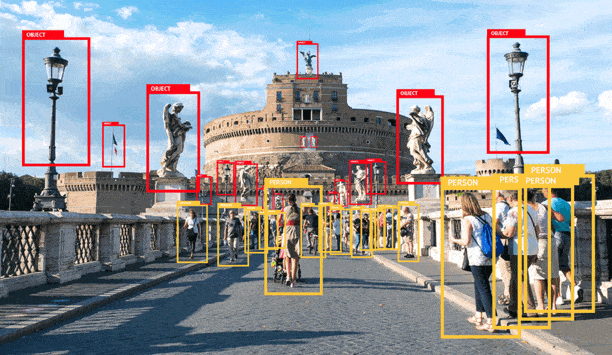
Artificial Intelligence. You’ve heard the words in just about every facet of our lives, just two words, and they’re quite possibly the most moving, life-changing words employed in everyday conversations. So what exactly is AI, who currently uses it and should be using it? What Is AI? AI is a powerful way of collecting, qualifying and quantifying data toward a meaningful conclusion to help us reach decisions more quickly or automate processes which could be considered mundane or repetitive. AI in its previous state was known as “machine learning” or “machine processing” which has evolved into “deep learning” or, here in the present, Artificial Intelligence. AI as it applies to the security and surveillance industry provides us the ability to discover and process meaningful information more quickly than at any other time in modern history. Flashback - VCR tapes, blurred images, fast-forward, rewind and repeat. This process became digital, though continued to be very time-consuming. Today’s surveillance video management systems have automated many of these processes with features like “museum search” seeking an object removed from a camera view or “motion detection” to create alerts when objects move through a selected viewpoint. These features are often confused with AI, and are really supportive analytics of the Artificial Intelligence, not AI themselves. Machine Learning Fully appreciating AI means employment of a machine or series of machines to collect, process and produce information obtained from basic video features or analytics. What the machines learn depends on what is asked of them. The truth is, the only way the AI can become meaningful is if there is enough information learned to provide the results desired. If there isn’t enough info, then we must dig deeper for information or learn more, properly described as “deep-learning” AI. Translated, this means that we need to learn more on a deeper level in order to obtain the collaborative combined information necessary to produce the desired result. Deep Learning AI Deep learning AI can afford us the ability to understand more about person characteristic traits & behaviors. Applying this information can then further be applied to understand how to interpret patterns of behavior with the end goal of predictable behavior. This prediction requires some degree of human interpretation so that we are able to position ourselves to disrupt patterns of negative behavior or simply look for persons of interest based on these patterns of behavior. These same patterns evolve into intelligence which over time increases the machine’s ability to more accurately predict patterns that could allow for actions to be taken as a result. This intelligence which is now actionable could translate to life safety such as stopping a production manufacturing process, if a person were to move into an area where they shouldn’t be which might put them in danger. Useful Applications Of Intelligence Informative knowledge or intelligence gathered could be useful in retail applications as well by simply collecting traffic patterns as patrons enter a showroom. This is often displayed in the form of heat mapping of the most commonly traveled paths or determining choke points that detract from a shopper’s experience within the retail establishment. It could also mean relocating signage to more heavily traveled foot-paths to gain the highest possible exposure to communicating a sale or similar notice, perhaps lending itself to driving higher interest to a sale or product capability. Some of this signage or direction could even translate to increased revenues by realigning the customer engagement and purchasing points. Actionable Intelligence From a surveillance perspective, AI could be retranslated to actionable intelligence by providing behavioral data to allow law enforcement to engage individuals with malicious intent earlier, thus preventing crimes in whole or in part based on previously learned data. The data collection points now begin to depart from a more benign, passive role into an actionable role. As a result, new questions are being asked regarding the cameras intended purpose or role of its viewpoint such as detection, observation, recognition or identification. Detecting Human Presence By way of example, a camera or data collector may need to detect human presence, as well as positively identify who the person is. So the analytic trip line is crossed or motion box activated or counter-flow is detected which then creates an alert for a guard or observer to take action. Further up the food chain, a supervisor is also notified and the facial characteristics are captured. These remain camera analytics, but now we feed this collected facial information to a graphic processing unit (GPU) which could be employed to compare captured characteristics with pre-loaded facial characteristics. When the two sources are compared and a match produced, an alert could be generated which results in an intervention or other similar action with the effort of preventing a further action. This process- detect, disrupt, deter or detain could be considered life-saving by predictably displaying possible outcomes in advance of the intended actions. The next level is deep-learning AI which employs the same characteristics to determine where else within the CCTV ecosystem the individual may have been previously by comparatively analyzing other collected video data. This becomes deep-learning AI when the GPU machine is able to learn from user-tagged positive identification, which the machine learns and begins to further reprocess its own data to further understand where else the person of interest (POI) may have existed on the ecosystem and more correctly improve its own predictive capabilities, thus becoming faster at displaying alerts and better at the discovery of previously archived video data. The Future In conclusion, the future of these “predictables” wholly rests in the hands of the purchasing end-user. Our job is to help everyone understand the capabilities and theirs is to continue to make the investment so that the research perpetuates upon itself. Just think where we’d be if purchasers didn’t invest in the smartphone?

Being in the physical security industry for almost two decades has been an exciting journey, with significant changes that have impacted the world of security. Companies today must be proactive when it comes to securing their facility and are lucky to have so many choices when it comes to security technology. From the beginning, the ISC West show was always at the forefront of new technology and brought together the very best technology and industry professionals in the “City of Lights”. Back in 2001 when I first entered the security world, video surveillance was the key driver, and transitioning from analog cameras to IP video cameras was the talk of the town. In the early 2000s, the ISC West show was filled with video manufacturers showcasing their new IP cameras and the IT folks were just starting to get involved with the security decisions. Back then the ISC West show consisted of a myriad of video manufacturers exhibiting their camera lines. Where now in 2020 the high-profile enterprise-level camera manufacturers dominate the show floor. Over the last two decades, keeping up with the technology advancements of IP cameras was a difficult feat for most camera manufacturers and the high-profile manufacturers who had the funds to invest in R & D were the only ones that survived. Changing the game in video surveillance and access control In the early 2000s, the ISC West show was filled with video manufacturers showcasing their new IP cameras Another huge change that our industry has seen over the years was the increase in the number of acquisitions. Smaller security manufacturers started being acquired by the larger ones, which changed the game in video surveillance and access control. In addition to manufacturers, large security integrators like Convergint Technologies & Anixter were also buying smaller commercial integrators and dominating the market. At ISC West today, you will see predominately high profile – big name manufacturers and integrators where the smaller companies were either acquired or went out of business. Revolutions in the industry The security industry also faced a huge revolution with three major technologies driving growth in the security market – Network-based technologies (IoT enabled solutions), Access Control as a Service (ACaaS) and Mobile Credentials. ISC West saw this evolution coming and created specific educational seminars dedicated to these topics. Another big push that came into play in the last few years was being able to integrate a host of technologies like video and access control by using an open architecture platform. Many partnerships were formed in the security industry due to this massive push for integration. At ISC West, we now see many companies having their partners sharing booth space. This helps reduce costs for exhibitors in addition to giving smaller companies credibility by being recognized with the bigger players in the industry. In addition, ISC West makes it easy for attendees to plan out their show schedule in advance with the mobile app; creating a convenient way to access show information from mobile devices. From the beginning, the ISC West show was always at the forefront of new technology Emerging excitement Today, ISC West continues to be an exciting show that is jammed packed with educational sessions, networking events, and new pavilions that help segment the security industry into different sectors. An example of some new technology pavilions includes drones & robotics, loss prevention & supply chains, and emerging tech. All new start-up companies that are 5 years old or less can be part of the emerging tech section of the show. Here entrepreneurs can unveil new and upcoming security technologies; creating a win win situation for any size business looking to make its name known in the industry. New technology, innovations and rising trends Another huge focus at the ISC West show is public safety. A full range of solutions are offered at the Public Safety Pavilion including barriers/bollards/gates/perimeter security, surveillance, access control, and alarms - along with innovative technologies for gunshot and drug detection, license plate recognition, acoustics, facial recognition and AI, connected vehicles, communication systems and devices, alerts and monitoring, and active shooter solutions Today, ISC West continues to be an exciting show that is jammed packed with educational sessions, networking events, and new pavilions and training. Virtual reality demonstrations have also been available at the show to help attendees with preventative measures when it comes to school and public safety. Some new vape and metal detection technology built on the IoT concept will be featured at ISC West 2020 to help combat the vaping epidemic in our country. With active shooter incidents on the rise, metal detection and perimeter protection at schools will be an important part of the show. Awards and showcases When it comes to show press, we have also seen an influx of awards for security manufacturers that are exhibiting at the show. The major security publications have been offering manufacturers the opportunity to submit a product in distinct categories and win a prestigious award at the show. This creates “buzz” about your product and great for social media postings. Live video interviews at an exhibitors’ booth has also become a very popular tool to increase brand awareness and thought leadership for exhibitors. The ISC West show offers numerous ways to drive traffic to your booth and promote new product launches seamlessly. Over the years, the show has created a conduit The ISC West show offers numerous ways to drive traffic to your booth and promote new product launches seamlesslyfor manufactures and integrators to showcase new products and technologies to end users across multiple vertical markets. At the top of the game While the security industry continues to evolve, the one thing that stays constant is the wealth of information that ISC West offers to its attendees. The show always brings together the latest technologies and thought leaders that will continue to change the game in security for years to come.
Case studies
Athena Security, a physical security and threat detection company specializing in AI-powered weapons detection systems, announced today they are working with MLK Community Healthcare, a non-profit healthcare system in South L.A., to improve security measures at their hospital. MLK Community Healthcare is utilising Athena’s Apollo 500 Weapons Detection System, an Al-driven walk-through concealed weapon detection system designed for busy entrances, such as those at hospitals and healthcare facilities. “Everyone deserves to feel safe going to work every day. Likewise, patients and their loved ones should feel at ease when seeking care at their local healthcare facility," said Lisa Falzone, Athena Security co-founder and president. Threat detection company Lisa Falzone, Athena Security’s co-founder and president, said the device offers peace of mind to healthcare providers and patients alike at a time when violence in hospitals and other healthcare facilities is rising across the country. “Everyone deserves to feel safe going to work every day. Likewise, patients and their loved ones should feel at ease when seeking care at their local healthcare facility,” Falzone said. “By leveraging our expertise in the security space and utilising emerging technology like AI, we’ve created a weapons detection system platform that is potentially saving lives while creating less disruption in the day-to-day activities at healthcare facilities.” Automated weapon detection systems The move comes ahead of a new AB 2975 California law requiring hospitals and certain other healthcare facilities to have automated weapon detection systems at key entrances. “When it came time to comply with California’s AB 2975 workplace violence prevention requirements and implement a weapons detection solution, we conducted an extensive evaluation of the available systems. Athena’s Apollo 500 Healthcare Weapons Detection System stood out as the best overall value, combining effective weapons detection with the operational capabilities and healthcare-focused workflows our hospital needed,” said Trenton Jackson, Director of Public Safety and Support Services at MLK Community Healthcare. Weapons detection platform “Throughout the installation and testing process, Athena has been a responsive collaborator. They’ve worked with us every step of the way to ensure that the weapons detection platform technology works as it should and integrates smoothly into our hospital operations.” Athena Security’s Apollo 500 Weapons Detection System has already been shown to improve security measures at healthcare facilities. A recent case study at an Illinois-based healthcare system found that Athena’s product successfully detected more than 200 weapons at their hospitals in 2025 alone.
The Adrian Public Schools Board of Education approved the renewal of its ZeroEyes AI-based gun detection and intelligent situational awareness platform during its April 13 meeting, continuing the use of artificial intelligence technology designed to enhance school safety by monitoring existing security camera systems for potential firearms. The deployment has been in place since 2023. ZeroEyes' AI gun detection and intelligent situational awareness software layers onto existing digital security cameras. If a gun is identified, images are instantly shared with the ZeroEyes Operations Center (ZOC), the industry's only U.S.-based, fully in-house operation center, which is staffed 24/7/365 by specially trained U.S. military and law enforcement veterans. Security safety enhancements If these experts determine the threat is valid, they dispatch alerts and actionable intelligence — including visual description, gun type, and last known location — to law enforcement and district officials as quickly as 3 to 5 seconds from detection. ZeroEyes is just one component of the multi-layered security safety enhancements that have taken place over the past few years. The District has implemented multiple safety enhancements including a full overhaul of its security camera systems, the addition of weapon detection K-9 support across school facilities, and the installation of bullet-resistant and shatter-resistant glass in key areas of school buildings. Proactive safety planning Superintendent Nate Parker stated that the District remains committed to proactive safety planning. “The safety of our students and staff remains our highest priority,” Parker said. “We continue to take intentional, layered steps to strengthen our security systems and ensure our schools are prepared and protected. The renewal of ZeroEyes reflects that ongoing commitment.” Officer Joshua Perry of the Adrian Police Department, who serves as a School Resource Officer and participates in District safety planning, said collaboration has been central to the District’s approach. “These improvements demonstrate a strong partnership between schools and law enforcement,” Perry said. “The combination of training, communication, and technology significantly strengthens our ability to keep students and staff safe.” Partnerships with innovative technology As these collaborative safety efforts continue to evolve, partnerships with innovative technology providers like ZeroEyes remain a key component of the district’s strategy. “Adrian Public Schools’ continued investment in layered, proactive security demonstrates a clear commitment to protecting students and staff,” said Mike Lahiff, CEO and co-founder of ZeroEyes. “By renewing their partnership with ZeroEyes, the district is strengthening its ability to identify and respond to potential threats in real time, giving first responders critical information when every second counts. We’re proud to support Adrian in creating a safer learning environment for its community."
ZeroEyes, the creators of the first AI-based gun detection video analytics platform to earn full U.S. Department of Homeland Security SAFETY Act Designation, announced that its proactive AI gun detection and intelligent situational awareness software has been deployed by Arkansas’ Trinity Catholic School. Trinity is the state’s first private school to adopt ZeroEyes to help protect students, staff, and visitors from gun-related threats. Prioritising safety Located in Fort Smith, the faith-based middle school serves more than 230 students and 30 faculty members in a three-story building spanning more than 105,000 square feet. With a community-focused mission, the school encourages students to "Be Something, Do Something, and Leave Something, All for the Glory of God." The school has long prioritised safety with measures like robust door locking mechanisms, laminated glass, security cameras throughout the property, and a full-time on-site security officer. The adoption of ZeroEyes represents a proactive, technological enhancement to this already comprehensive security program. The Trinity campus is situated on 20+ acres of property extending to nearby roadways, so ZeroEyes will provide early warning if individuals with weapons approach on foot. Students an important asset "The students are obviously the most important asset we have, so we would go to any level to protect them," said Daniel Grubbs, Safety and Security Officer at Trinity Catholic School. "With a property of this size, early warning and situational awareness are critical. ZeroEyes is a force multiplier that will help us to rapidly locate and neutralize any gun-related threats on our campus.” AI gun detection software ZeroEyes' AI gun detection and intelligent situational awareness software layers onto existing digital security cameras. If a gun is identified, images are instantly shared with the ZeroEyes Operations Center (ZOC), the industry's only U.S.-based, fully in-house operation center, which is staffed 24/7/365 by specially trained U.S. military and law enforcement veterans. If these experts determine the threat is valid, they dispatch alerts and actionable intelligence — including visual description, gun type, and last known location — to local law enforcement and school administration as quickly as 3 to 5 seconds from detection. "Trinity Catholic School has taken a proactive, tactical approach to campus safety, protecting students and staff while maintaining a welcoming environment," said Mike Lahiff, CEO and co-founder of ZeroEyes. "We’re proud to provide technology that mitigates gun-related incidents with speed, accuracy, and integrity."
Xtract One Technologies announced its SmartGateway has been selected by Nova Scotia Health to strengthen security measures and provide AI-powered weapons detection across facilities province-wide, with an initial order of 25 systems. Nova Scotia Health, in tandem with its nurses’ union, is working to modernize and strengthen security across its facilities to ensure a safe environment for all patients, visitors, and staff. Adopting and deploying advanced technologies like SmartGateway is an important step toward achieving that goal. Safe and secure health care By helping to limit the number of potentially dangerous items entering their hospitals, this technology supports its commitment to providing safe and secure health care. Xtract One was selected for its proven efficacy to accurately detect knives, a top priority for the organization. Previously tested in Truro, Nova Scotia, over a 12-day trial period, SmartGateway successfully scanned 7,400 individuals entering the facility and detected 49 prohibited items during that period, mostly pocket knives and box cutters. Deploying SmartGateway “Violence against healthcare workers is a challenge that persists and demands addressing. By deploying SmartGateway, Nova Scotia Health is setting an important example for what it means to take meaningful action to protect frontline healthcare workers, patients, and visitors,” said Peter Evans, CEO of Xtract One. “This installation marks another key step in our expanding work with Canadian healthcare organizations, having deployed in Manitoba earlier this year. We look forward to continuing to deliver effective threat detection as more providers take proactive measures to prioritize security and peace of mind for their teams.” Overall approach to security “Our goal is to deliver first class healthcare, and ensuring the safety of all who enter our facilities is a critical step in providing that service,” said Dean Stienburg, Director of Security for Nova Scotia Health. “With SmartGateway, we’re making tangible strides in bolstering our overall approach to security. We were impressed by the system’s effectiveness during the trial period and are looking forward to the deployment helping us mitigate and respond to the threats of today’s environment.” Maximising security screening outcomes SmartGateway delivers fast, discreet, and accurate individual screening, utilizing AI-powered sensors to unobtrusively scan for weapons and other prohibited items upon entry. This technology replaces intimidating, traditional metal detectors and mitigates the need for individuals to remove personal items. This prioritizes individual privacy and comfort, all while maximizing security screening outcomes. SmartGateway is designed to enable seamless passage through checkpoints and promote the uninterrupted flow of movement.
Round table discussion

Sadly, active shooter incidents have become so common that they no longer grab big headlines or dominate the news cycle. A near-constant cascade of active shooter events persists in the background of our collective consciousness, a familiar drumbeat that is no less tragic because it is continuous. As more active shooter incidents occur, the security marketplace continues to implement solutions to minimize the impact, including gunshot detection. We asked this week's Expert Panel Roundtable: What is the role of gunshot detectors in today’s security ecosystem?

Cost is a reality to be managed. No matter how powerful or desirable a technology may be to a customer, the sale often comes down to the basic question: Can I afford it? And affordability extends not just to the purchase price, but to the cost of technology over its lifespan. In addition to advances in technology capabilities, the security industry has also achieved inroads to make its offerings more worth the cost. We asked this week’s Expert Panel Roundtable: What is the physical security industry doing to make more affordable and cost-effective technology solutions for end users?
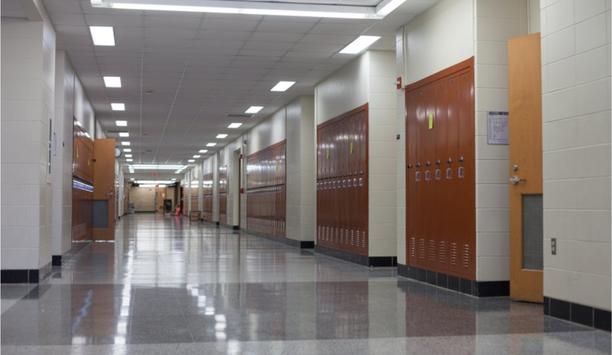
School shootings are a high-profile reminder of the need for the highest levels of security at our schools and education facilities. Increasingly, a remedy to boost the security at schools is to use more technology. However, no technology is a panacea, and ongoing violence and other threats at our schools suggest some level of failure. We asked this week’s Expert Panel Roundtable: How have security solutions failed our schools and what is the solution?