

Video analytics - Expert commentary

Schools today are charged to provide an environment that is both safe and conducive to learning, which can be difficult considering the range of security incidents and challenges they face, including bullying, fights, graffiti, theft and more. In addition to working within often tight budgetary constraints, a main challenge is to provide the highest level of security in an aesthetically pleasing way that doesn’t make students feel as if they are in prison. While these two needs may seem...

The Internet of Things (IoT) is having a significant and ever-changing impact on the way we view video security. Today, cameras are expected to be so much more than devices with which to simply capture images; they need to be far smarter than that. These future-facing cameras are becoming an integral part of the vast digital connectivity infrastructure, delivering a parallel performance as intelligent sensors with the ability to extract the kind of invaluable data that helps businesses make impr...

With the ever-growing availability of video data thanks to the low cost of high-resolution video cameras and storage, artificial intelligence (AI) and deep learning analytics now have become a necessity for the physical security industry, including access control and intrusion detection. Minimizing human error and false positives are the key motivations for applying AI technologies in the security industry. What Is Artificial Intelligence? Artificial intelligence is the ability of machines to...
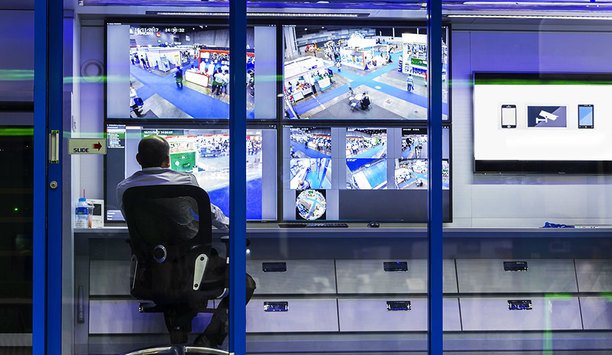
Despite the huge amount of video data collected, statistics show that only 10 percent of data is ever used and most loses its value within seconds of being generated. Why use such a limited amount of data? Many security organizations are focused on delivering the right information in case of an emergency or providing the correct evidence after a criminal act. Yet the fact is, a new video security system can be a large investment. Together with the service, maintenance and management costs assoc...

In 2017 we foresaw the emergence of video surveillance as a service. We also predicted an increase in intelligence in cameras, greater adoption of analytics, and more content aggregation. We saw biometrics taking increasing importance as a measure to prevent massive data breaches. We took on more projects that were larger in scope and size. More implementations involved higher-resolution cameras and longer retention times leading to greater adoption of multi-tier storage. Looking Ahead To 2018...

There are many notable trends on the horizon for the physical security and surveillance industry. In the growing area of low-latency live video streaming applications, we will see the continued move to HTML5 playback. For the security industry, live video streaming is an enabling technology that provides many opportunities for dealers and integrators to leverage additional services for the customers. Flash’s Loss, HTML5’s Gain To be effective, the technology ne...

One of the toughest business decisions companies need to make is when selecting a new video surveillance system, as it’s a rigorous process to compare camera offerings and technologies, and to evaluate price structures. With its proven performance over the last several years, IP surveillance systems have become the defacto standard for most professionals. Those experts typically cite the numerous benefits that IP cameras offer, including higher image resolution, ease of installation, scal...

Cameras capable of recording video at 60 frames per second (fps) are becoming widely available in the security industry. It’s important to understand what 60-fps brings to the table for the security industry and how to leverage the technology for particular scenarios. Capturing video at 60-fps represents a unique application. System integrators typically use much lower frame rates, ranging from 7- to up to 30-fps. The potential for an incident might only represent 1%, or less, of the tim...

The air travel industry has evolved from one commercial passenger on the first commercial flight in 1914 to an estimated 100,000 flights per day. According to The International Air Transport Association (IATA), the total number of passengers who flew in 2017 is expected to reach 3.7 billion. But it’s not just people who fly. Each day, more than $18.6 billion of goods travel by air, which represents one-third of all world trade, by value. Meanwhile, the aviation industr...

In 2017, access control solutions evolved and expanded within physical security operations, aligning with the overall industry trend of moving security from a reactive to a more proactive model. Access Control Serving The Industry From increased integration capabilities to mobile applications to predictive analytics, access control served as the platform that enabled this transition in physical and data security. Other steady growth areas included wireless readers, smartphone usage as a crede...

What a year it’s been! 2017 has been a monumental period of product innovation and growth for Pivot3. The company experienced a more-than-50-percent increase in bookings from Q2 to Q3 this year, including a record number of million-dollar orders. We also saw deals supporting multiple use cases more than double, and experienced continued growth in the video surveillance market, driven by new product enhancements and contracts worth more than $1 million. We have also in...

2017 demonstrated the need for increased safety, security, and collaboration. We predicted that there would be an increase in the role of cybersecurity in 2017, and without a doubt there was great focus around the need for stronger network security protocols. Growing Focus On Cybersecurity Cybersecurity continues to be top of mind and organizations demand solutions that are cyber-secure. Manufacturers, integrators, and end-users must actively collaborate to develop policies and solutions that...

The past year has proved to be a year full of many changes both within our industry and for Robotic Assistance Devices (RAD). While we have experienced increased adoption of artificial intelligence-based solutions, the industry has been challenged with an ever-evolving technology landscape. Protecting enterprise organizations from both cyber and physical security threats will be an ongoing challenge the industry must grapple with. Greater Adoption Of Robotic Solutions To...

The overall economy and climate always has a bearing on growth from a macro standpoint and certainly the security market is impacted as well. US economic growth has been healthy at 3% through the first half of 2017. Combining that with jobs growth and we have a marketplace that is ripe for growth and expansion. Continued Focus On Cybersecurity One major trend that expanded in 2017 would be the continued focus and concerns on cybersecurity. There is stronger demand from customers and company ex...

For the security industry, 2017 was a good year, but not a great year. With political changes coming and greater interest in border control, perimeter security and analytic technologies, we have seen an increase in enquiries from both federal, and state law enforcement agencies and municipalities. The Political Security Landscape The series of unexpected, natural and self-inflicted disasters that swept across the United States over the last few months have also created a greater int...

This time last year, we predicted 2017 would be the year digital identities began transforming trusted access and other interactions in physical and online environments. Continuous Authentication Experience Demand grew for unified identity and access management systems supporting both cards and cellphone devices. Trusted identities began bridging the gap between connected workers and smart buildings. We saw new IoT use cases that employ location services technologies to create a continuo...

This year has unfolded generally as predicted. Complete solutions have enabled IP video to further penetrate the small to medium business markets. IP convergence opened up new fast-growing markets for IP intercoms and IP audio systems. The preponderance of IoT devices has driven cybersecurity efforts to new heights. In addition, lower prices, along with the increasing investment needed in R&D to keep pace with rapidly changing technology, have led to market consolidation. IoT Creates Oppor...

The security market is very active right now. Business is strong, according to most of the people that I talk to in the industry. In 2017, we at The Protection Bureau had one of our best years ever revenue-wise. Because of a strong economy, businesses are spending money on security. 2017 Growing Trends The trends that happened in 2017 vary. One trend that is growing is the national account concept. This is because clients are deploying more and more enterprise-level systems and taking advanta...

Global economic expansion and technology improvements continued to drive demand this year for IP cameras, network video recorders (NVRs), access control and other security technologies. A Strong Year For Security Overall, 2017 represented another strong year for the security industry. A combination of falling prices and improved IP camera performance helped drive camera sales during the year as the migration from analog to IP continued to pick up momentum. Advancement...

In 2017 we saw a lot of new construction projects, and many existing buildings upgraded their security systems to include high-resolution cameras and better-quality recording systems. Because the economy is stronger, many businesses and municipalities increased their security budgets for large-scale and public projects due to terrorism threats in public places. Smart Cities Became More Popular One of the bigger trends we saw in 2017 is the growing popularity of sm...

Video surveillance solutions have come a long way in recent years, including this past one, with IP-based imaging solutions delivering incredible resolution and detail to provide higher levels of situational awareness, information and overall security. In 2017, we also witnessed how video surveillance serves an emerging need and desire to acquire greater business intelligence. Today’s cameras and VMS are able to truly deliver on the promise of IP video without requiring end users to break...

The security industry was strong and healthy in 2017. High-end security markets, such as the power distribution and critical infrastructure sectors, saw continued growth and opportunity for perimeter security technologies like thermal imaging, video analytics and radar. For the low-end security markets, there was significant competition from Chinese manufacturers. Despite this challenge, we saw continued growth from premium Western security manufacturers in 2017 in which many introduced cost-ef...

2017 witnessed a continued decline in the cost of cameras. While this creates a challenge for camera companies, it creates two clear opportunities: (1) Product differentiation now relies more heavily on software rather than camera parameters, which drives more focus and rapid innovation on the software side, and (2) cameras have become more affordable which encourages an increase in the adoption rate and size of surveillance projects. Artificial Intelligence Surveillance Applications Ad...

The physical security market continues to experience growth as users look to capitalize on the promises of emerging technologies and because of this, 2017 proved to be a great year for Oncam. In fact, this year was the best year in Oncam's history in terms of sales, as 360-degree fisheye cameras have gone from being a “specialty” camera used only in certain applications to a primary device for enabling total situational awareness. Today, many of our customers leverage 360-degree ca...

Our most popular articles in 2017 reflected changing trends in the U.S. security market, from deep learning to protection of mobile workers, from building automation to robotics. Again in 2017, the most read articles tended to be those that addressed timely and important issues in the security marketplace. In the world of digital publishing, it’s easy to know what content resonates with the market: Our readers tell us with their actions; i.e., where they click. Let&rsq...

The security industry remains interested in capturing actionable data from video analytics and this year we saw increasing interest from non-security industries. While still a relatively young industry for our market—think of where Google was with collecting metadata 10 years ago—video security works with similar algorithms for capturing various scenarios. The data this provides is becoming more valuable not only for security purposes, but also for business operations, such as deter...

An increase in spending on security, more focus on data security, higher demand for integrated solutions, and steady progress to move beyond the pixel race were key trends in 2017. As we look forward to 2018, we will continue to see development in these areas as well as greater impact of the Internet of Things (IoT) on the video security market. Potential Of Video Security Data More and more, users are realizing that the real issues in video security are not about pixel counts. Managing incre...

While the security industry continues to grow, increased commoditization and the rise of low-cost cameras that are vulnerable to cyber-attacks has forced our industry to take a harder look at cybersecurity. Systems integrators and customers are increasingly aware of the dangers posed by these devices, and demand more accountability from manufacturers. This is good news for innovative manufacturers like Hanwha who have always put cybersecurity at the core of their product development. Because we...

Today’s security industry has reached a critical mass in the volume of collected data and the limits of human attention to effectively search through that data. As such, the demand for video analytics is increasing globally and we believe that all video surveillance systems will eventually feature video analytics. Artificial Intelligence Solutions Through the power of artificial intelligence (AI), Avigilon™ is developing technologies and products that dramatically increase the effe...

A tipping point is defined as: “The point at which a series of changes becomes significant enough to cause a larger, more important change”. In the same way that IP video changed surveillance a decade ago, our industry is now feeling the impact of recent developments in Artificial Intelligence, Machine Learning, Deep Learning, Big Data, and Intelligent Video Analysis. Keyword Definitions Let’s start with a few more definitions. Artificial Intelligence (AI) deals with the sim...