Port security

GISEC Global 2026, the Middle East & Africa’s largest and most impactful cybersecurity event, concluded its 15th edition following three days of international collaboration, technology innovation and high-level dialog on the future of cyber resilience. Held for the first time at Dubai Exhibition Centre, Expo City Dubai, the 2026 edition welcomed thousands of visitors from more than 130 countries, alongside 750+ global cybersecurity brands and 350+ speakers. The international turn...

Hanwha Vision has launched its new VGA AI Tele lens Thermal Camera series, introducing a next-generation thermal surveillance solution designed to deliver highly accurate AI-based detection across both land and maritime environments. Combining ultra-sensitive thermal imaging, advanced AI analytics, mission-critical cybersecurity, and rugged durability, the new series is engineered to support critical infrastructure, perimeter protection, coastal monitoring, and border security operations in the...

As supply chain disruptions continue to wreak havoc on global economies, port security and landside operations are increasingly burdened with dynamic security challenges, operational risks, and tightening regulations. Efficient, rapid door-to-door cargo transport is critical as the volume of goods transported by global container fleets has nearly doubled in recent years and large increases in maritime traffic have led to cargo pileups at ports that have reached crisis levels during the pandemic...

Kingdom Security, one of the UK’s foremost security companies, is working in partnership with the S12 and urging others in the industry and the public to follow suit, as they back a new parliamentary petition to protect security workers. The UK, which has almost 250,000 security workers, does not currently have enough legal protections that truly protect security workers, and Kingdom Security are calling for change. The petition calls for assaulting a security worker to become a standalo...

Matrix Comsec, a pioneer in Security and Telecommunication solutions, was honored with the CII Industrial Innovation Award 2025, recognizing Matrix as one of the Top 50 Most Innovative Companies in India. The award was presented at the CII Industrial Innovation Awards ceremony held in New Delhi on 16th December 2025. Instituted by CII in 2014, the CII Industrial Innovation Awards celebrate visionary enterprises across various industry segments. These prestigious awards aim to recognize and hono...

As part of its preparations for the ninth edition of the Doha International Maritime Defense Exhibition and Conference (DIMDEX 2026), the Organizing Committee convened a diplomat briefing to provide updates on the event's significant evolution as a global defense platform, its growing commercial impact, and its responsiveness to industry needs, alongside essential information and logistical arrangements related to participation. The event took place at the Qatar Emiri Naval Forces base (Umm Al...
News
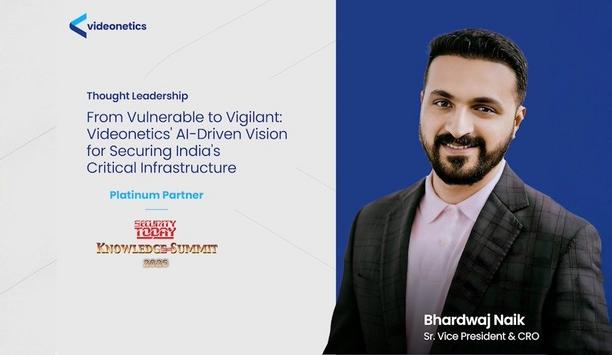
At the Security Today Knowledge Summit 2025, Bharadwaj Naik, Chief Revenue Officer of Videonetics, presented a forward-looking vision for protecting India’s critical infrastructure with AI-powered video analytics. Speaking on the panel “Invisible but Vulnerable – Safeguarding India's Maritime, Digital & Energy Lifelines,” Naik underscored the urgency of moving beyond traditional surveillance to predictive, intelligence-driven security frameworks. Telecommunications and networking With over two decades of experience in telecommunications and networking across India, APAC, and the Middle East, Naik highlighted the vulnerabilities facing India’s maritime, digital, and energy assets. “A single intrusion at a landing station or refinery can disrupt trade, connectivity, and national security. Traditional surveillance is not enough; intelligence-led systems are essential,” he stated. Transforms video data into actionable intelligence Videonetics has already deployed its AI-powered solutions at scale, securing over 80 airports, 150 cities Videonetics has already deployed its AI-powered solutions at scale, securing over 80 airports, 150 cities, and 100 enterprises, including critical refineries. Naik explained how the company’s technology transforms video data into actionable intelligence: detecting intrusions, anomalies, and potential sabotage in real time. “In lifeline security, every second counts. AI helps us gain those seconds — often the difference between disruption and resilience,” he noted. Naik also addressed the risks to India’s digital backbone. “Even a few compromised landing stations in Mumbai could severely impact connectivity. Passive surveillance and manpower alone cannot mitigate such risks,” he cautioned. Four pillars of Videonetics’ framework Videonetics’ framework for critical infrastructure protection rests on four pillars: Perimeter Security – Detecting intrusions and suspicious activity at high-risk facilities. Integrated Situational Awareness – Combining AI analytics with access control, sensors, and radars for real-time risk mapping. Predictive Risk Detection – Identifying anomalies early to prevent escalation. Rapid Response & Continuity – Linking analytics with command systems to reduce response times from hours to seconds. Integrated Videonetics’ solutions with radars The Singapore Maritime Port Authority reduced manual monitoring by 40% after adopting AI analytics Global case studies further validated this approach. The Singapore Maritime Port Authority, for example, reduced manual monitoring by 40% after adopting AI analytics, while Middle Eastern terminals and refineries have integrated Videonetics’ solutions with radars and command systems to strengthen resilience. Naik emphasized that technology alone is not enough. “True resilience comes from collaboration between defense forces, policymakers, and technology providers. The ability to share AI-driven surveillance data in real time with naval command is the kind of synergy India needs,” he said. Future of infrastructure protection Concluding, Naik positioned Videonetics as a trusted partner in shaping India’s next-generation security architecture. “The future of infrastructure protection lies in moving from vulnerability to preparedness. AI-powered video analytics is fast becoming the foundation of resilient security frameworks,” he said.

FLIR, a Teledyne Technologies company, released its newest high-resolution visible/thermal security camera for commercial and industrial sites, the FLIR PT-Series AI SR. FLIR developed this visible 4K and thermal pan/tilt short-range security camera in response to modern security challenges that require more than just passive detection and monitoring: they demand a multispectral solution that actively identifies, tracks, and responds to threats in real time. FLIR PT-Series AI SR features FLIR PT-Series AI SR features thermal and 4K visible-light imaging sensors for outstanding version With the FLIR PT-Series AI SR, site operators can detect intrusions early, gain a better understanding of threats from improved intruder identification, and leverage smarter data coordination for a stronger, more comprehensive security response. For continuous monitoring across wide-area perimeters, facilities, and critical infrastructure, the FLIR PT-Series AI SR features thermal and 4K visible-light imaging sensors for outstanding performance even in low-light conditions. This innovative security camera technology can operate in darkness, bright sunlight, and adverse weather conditions. Designed for complex urban or remote settings, the PT-Series AI SR is ideal for oil and gas facilities, power utilities, ports, business parks, and data centers. FLIR’s proprietary communication protocol “Applications of this type seek site safety and protection through perimeter surveillance that is both robust and cost-effective,” said Michael Deruytter, Senior Director of Product Management at FLIR. “Our PT-Series AI SR features Edge AI and Nexus®, FLIR’s proprietary communication protocol that allows our devices to communicate seamlessly with one another for accurate target detection and tracking. The result is a multi-layered security ecosystem that delivers a strategic advantage at every stage of the security journey.” Detect, identify, track, and act Key to the new FLIR PT-Series AI SR’s superior performance is the uncooled thermal sensor Key to the new FLIR PT-Series AI SR’s superior performance is the uncooled thermal sensor. It provides a low, <25 mK Noise Equivalent Temperature Difference (NETD) for exceptional sensitivity when registering small temperature differences. This capability translates into clear and detailed imaging that, when combined with the 4x continuous zoom and 640 × 512 resolution, allows security professionals to detect security threats through precision target identification. The camera’s Nexus capabilities provide customers with unrivaled situational awareness without the complexity of additional software or servers. Overall cost of ownership It not only streamlines security operations but significantly reduces the overall cost of ownership compared with other market solutions, as users need fewer FLIR cameras to gain complete coverage. In combination with AI on the edge, the ability to pair with and automatically hand-off to other FLIR fixed and PTZ (pan, tilt, zoom) cameras ensures reliable detection and classification at a distance, so security professionals have the information they need to act immediately.

The Doha International Maritime Defense Exhibition and Conference (DIMDEX) has announced a partnership agreement with the Joaan Bin Jassim Academy for Defense Studies to jointly host the Middle East Naval Commanders Conference (MENC). The MENC is a key feature of the ninth edition of DIMDEX which will take place from 19 to 22 January 2026 at the Qatar National Convention Center. DIMDEX 2026 is held under the patronage of His Highness Sheikh Tamim Bin Hamad Al-Thani, Amir of the State of Qatar, and is hosted and organized by the Qatar Armed Forces. Maritime defense and security sector The partnership with the Joaan Bin Jassim Academy for Defense Studies is part of the ongoing cooperation The agreement was signed at Joaan Bin Jassim Academy for Defense Studies by Staff Brigadier (Sea) Abdulbaqi Saleh Al-Ansari, Chairman of the DIMDEX Organizing Committee, and Staff Brigadier (Dr) Rajih Mohammed bin Aqeel Al-Nabet, President of Academy. The partnership with the Joaan Bin Jassim Academy for Defense Studies is part of the ongoing cooperation among various sections of the Qatari Armed Forces, aimed at leveraging their combined expertise and capabilities to contribute to the success of one of the largest events in the maritime defense and security sector. Latest developments in maritime defense and security The Middle East Naval Commanders Conference will center on the theme of "Defense Diplomacy and Maritime Security Challenges". As a pioneering forum, it will bring together international thought pioneers to discuss the latest developments in maritime defense and security within the context of this critical theme. The event will welcome senior government officials, ministers, ambassadors, Chiefs of Staff, naval commanders, experts, maritime professionals, and academics. Defense and security sectors The event will receive senior state officials, ministers, ambassadors, Chiefs of Staff, and naval chiefs Staff Brigadier (Sea) Abdulbaqi Saleh Al-Ansari, Chairman of the DIMDEX Organizing Committee, said: “We are honored to partner with the Joaan Bin Jassim Academy for Defense Studies, a pioneering institution specializing in military sciences, to host the Middle East Naval Commanders Conference at DIMDEX 2026." "Through our combined expertise, we aim to provide a premier platform for addressing critical issues facing the defense and security sectors, and for developing strategic insights to tackle emerging challenges on the global stage”. Integration between civil and military institutions Staff Brigadier (Dr) Rajih Mohammed bin Aqeel Al-Nabet, President of the Joaan Bin Jassim Academy for Defense Studies, stated: “The Academy remains firmly committed to enhancing joint cooperation and advancing academic military programmes at the national level. We place significant emphasis on organizing specialized training workshops and coordinating efforts in support of national events." "Our work also reflects a strong commitment to our societal role, particularly in raising awareness of the importance of integration between civil and military institutions, thereby promoting strategic balance and reinforcing the strength of the home front. These efforts are guided by the Academy’s vision of leadership and excellence”. Strategic policies and plans “Through such initiatives, the Academy aspires to consolidate its standing as a pioneering institution in postgraduate defense studies, both regionally and internationally. Our goal is to develop distinguished military and civilian pioneers equipped with the skills to analyze security threats, assess risks, and formulate strategic policies and plans that enhance the nation’s security and stability”. The Joaan Bin Jassim Academy for Defense Studies is a specialist academy dedicated to developing exceptional military and civilian pioneers. Advanced military and academic knowledge The Academy equips them with the skills to identify, understand, and analyze security threats The Academy equips them with the skills to identify, understand, and analyze security threats, assess associated risks, and formulate effective policies, strategies, and plans to safeguard national security. The Academy also plays a vital role in fostering strategic thinking, planning capabilities, and national policy development, enabling students to acquire advanced military and academic knowledge at the strategic level. Future-ready maritime technologies Held under the theme “A Global Hub for Defense Innovations: Invest in Possibilities to Shape a Secure Tomorrow,” DIMDEX 2026 is set to be the most impactful edition yet, bringing together key decision-makers, industry pioneers, and government representatives from across the globe. The four-day event will serve as a key driver in fostering innovation, encouraging strategic investments in future-ready maritime technologies, and driving business opportunities for participating companies.

Allied Universal®, the world’s renowned security and facility services company, is proud to announce that its client, the Helen Delich Bently Port of Baltimore has received a top U.S. Coast Guard security assessment for the 15th consecutive year. Security assessment The assessment which included a detailed review of all security protocols and procedures is for the six state-owned, public marine terminals that are managed by the Maryland Port Administration (MPA). The U.S. Coast Guard Sector Maryland conducts an annual inspection at Maryland’s Port of Baltimore to ensure compliance with federal security regulations. Robust security solutions Allied Universal recognizes the importance of maintaining the highest level of security for the port Allied Universal recognizes the importance of maintaining the highest level of security for the Port of Baltimore and is committed to continually providing robust, industry-renowned security solutions to keep the port’s workers and visitors safe. “Allied Universal is honored to serve the Helen Delich Bently Port of Baltimore, and we are pleased to learn of this outstanding ranking by the U.S. Coast Guard,” said Tracey Fuller, President of Government Services for Allied Universal. Facility-specific solutions Tracey Fuller adds, “We take pride in our ability to provide a range of highly effective, facility-specific security solutions to the port so it can continue to serve the greater Baltimore community as a hub for economic growth, a stronghold for hundreds of thousands of jobs and traveling visitors.” Of the nation’s more than 300 ports, the Port of Baltimore is ranked first for the volume of autos and light trucks, farm and construction machinery, and imported sugar and gypsum. It also includes a cruise passenger terminal.
OSI Systems, Inc. announces that its Security division was awarded a contract valued at approximately $5 million from a Latin American customer to provide cargo and vehicle inspection solutions, including installation and integration support. Among the solutions to be provided are the Eagle® P60 high-energy, drive-through cargo and vehicle inspection system, Z Portal® high-throughput, drive-through inspection system, and the VM500 drive-through radiation monitoring portal. Vehicle inspection solutions OSI Systems’ Chairman and CEO, Deepak Chopra, stated, “We are pleased to further our ongoing efforts to enhance global security and proud to offer our leading systems, which are designed to deliver efficient and accurate inspection of cargo and vehicles at port and border crossings. Our advanced technologies and leadership in security solutions are key to meeting customers' evolving security needs.”

From 10 to 13 October, the global airport community will gather for the 24th edition of inter airport Europe at the Munich Trade Fair Centre in Germany. The event returns with an impressive line-up of well over 400 airport suppliers from 37 countries, including seven national pavilions and more than 100 new exhibitors. Live exhibits Visitors can look forward to plenty of live exhibits in the halls and Outdoor Area and a new 600 square meter GSE Experience Area. An exciting event program including Technical Seminars, Innovation Awards, and the co-located inter airport FOCUS, The Sustainability Summit provides interesting opportunities to further engage with new technologies and suppliers, all dedicated to improving airport performance while delivering a return on investment. New economic importance inter airport Europe has developed into the most senior gathering of global airport operators, airlines, CAAs, service suppliers The Munich Trade Fair Centre will once again turn into the world’s biggest hub for exploring and sourcing new technology, equipment, and services for better airports. Over nearly 50 years, inter airport Europe has developed into the most senior gathering of global airport operators, airlines, CAAs, service suppliers, investors, and other experts in this sector. The upcoming event marks another milestone for the airport industry which is currently rising to new economic importance with a multitude of opportunities and challenges. Airport professionals Airport professionals from more than 100 countries have already registered as visitors, including key representatives from AENA, Air France, Deutsche Lufthansa, Fraport AG, Heathrow Airport, İGA Istanbul Airport, Oman Airports, Shell Aviation, WISAG, and many more. Over four exhibition days, they can explore an excellent cross-section of technologies and services for the entire airport supply chain, including airside operations, terminal management, passenger services, baggage handling, safety and security, airport IT, air traffic control, airport maintenance, and environmental management. Insights into technology innovations Networking and knowledge platform on how to develop, embed, and integrate sustainability strategies An impressive program of accompanying events offers additional insights into technology innovations about wider market trends. These include Technical Seminars, Innovation Insight Sessions, the prestigious Innovation Awards, and the co-located inter airport FOCUS Sustainability Summit, a two-day, high-profile networking and knowledge platform on how to develop, embed, and integrate sustainability strategies into every aspect of airport life. Roadmap to airport operations “Co-locating exhibition and summit is an exciting opportunity for us to provide more value to the global airport community. Both events naturally complement each other, providing attendees with a great roadmap to future-proof their airport operations,” says Olaf Freier, Portfolio Director Transport of inter airport Europe, on behalf of show organizer RX. “The co-location offers new and encouraging perspectives that will help pave the way for innovation, resilience, and sustainability at future airports.” inter airport Europe at a glance: Indoor and outdoor stands with live equipment Over 30% of exhibitors are newcomers on the inter airport show floor, forming an impressive line-up A large show floor in halls B5, and B6, and the adjacent outdoor area invite visitors to discover more than 400 suppliers who deliver advanced airport equipment, technology, and services across the globe. The top five exhibitor countries are Germany, Italy, the United Kingdom, France, and the Netherlands, with 37 countries represented in total. Over 30% of exhibitors are newcomers on the inter airport show floor, forming an impressive line-up of well-known international brands alongside promising startups and scaleups. A new 600 square meter GSE Experience Area, sponsored by Weihai Guangtai Airport Equipment, will offer visitors the opportunity to see the latest equipment for aprons and runways live and in action. National Pavilions and First-time Exhibitors Several National Pavilions will feature this year – Italy, France, the UK, the Netherlands, Finland, and newcomer Spain, all showcasing some of their countries’ finest tech companies and products. Long-term show partner GATE (The Airport Technology Network) will be hosting a number of its members at their dedicated GATE Pavilion again. In addition, there will be two First-time Exhibitor pavilions specifically dedicated to companies new to inter airport Europe. Opening and Innovations Awards Ceremony The spotlight on best practices, technologies, and partnerships that drive innovation and excellence The inter airport Europe Innovation Awards celebrate the achievements of the many inventors and technical pioneers within the exhibitor community, putting the spotlight on best practices, technologies, and partnerships that drive innovation and excellence for better airports. The winners will be announced at the Opening and Innovation Awards Ceremony on Tuesday, 10th October, 11:00 - 12:00, at the Seminar Theatre in Hall B5. Welcoming presentations include speeches from Nicola Hamann, Managing Director at RX, Kay Bärenfänger, President at GATE Alliance, and Jost Lammers, CEO at Munich Airport. Seminar Programme: Three days of expert talks The free-to-attend inter airport Europe Seminar features a selection of technical talks on pioneering solutions and approaches to pressing airport issues, including the Innovation Insight Sessions featuring participants of the Innovation Awards. The 15-to-30-minute sessions will touch on key aspects of the passenger experience and passenger journey, baggage handling, security systems, as well as ramp and terminal management. The technical seminars will run between 10 - 12 October at the Seminar Theatre in Hall B5, stand B5-1580. Visit the show website for the full seminar agenda. inter airport FOCUS – The Sustainability Summit The Sustainability Summit offers two days of top-tier education, networking, and collaboration opportunities The co-located inter airport FOCUS – The Sustainability Summit offers two days of top-tier education, networking, and collaboration opportunities for aviation stakeholders looking to develop, discuss, or initiate sustainability measures required to reach their net zero commitments, including sustainable airport operations, net-zero infrastructure, and new mobility concepts. inter airport FOCUS takes place on 11 and 12 October at the Press Centre East Entrance (Rooms 1A, 1B, 2). The Summit tickets can be purchased online or on-site and also include free entry to the inter airport Europe exhibition and seminars. For the full summit program, please visit inter airport FOCUS. Visitor tools, Matchmaking Visitors are invited to use the Exhibitor List Tool and Online Show Preview to search for products and companies that are of particular interest to them. Once registered, visitors have access to the inter airport Europe Matchmaking Platform, allowing them to send or receive meeting invitations based on their business requirements. Meetings can be arranged at the exhibitor’s stand or in the dedicated meeting lounge in Hall B6, stand B6-590. Hosted Buyer Programme The Hosted Buyer Programme offers a tailored networking experience with industry pioneers The Hosted Buyer Programme offers a tailored networking experience with industry pioneers from airfield construction, ground handling, ground support equipment, interior design, hardware and software solutions, terminal infrastructure, and operations in the 2023 group. It focuses on growing markets and emerging regions, with buyers from UAE, India, Kenya, South Africa, Saudi Arabia, and Ghana, and it is an excellent opportunity to open up new markets for exhibitors. Venue, tickets, and opening times inter airport Europe 2023, the 24th International Exhibition for Airport Equipment, Technology, Design, and Services, takes place in halls B5, B6, and the adjacent outdoor area at the Munich Trade Fair Centre in Germany. Access to the exhibition halls is via Entrance East. Please visit the Online Travel Hub for further information on transport, accommodation, and visa. Show opening hours are from 9:00 AM to 5:00 PM on Tuesday, Wednesday, and Thursday (10 to 12 October), and from 9:00 AM to 3:00 PM on Friday (13 October). Visitors can register via the Online Ticket Shop and benefit from a reduced price when purchasing their ticket in advance. Day tickets cost €42 online or €52 on-site; season tickets cost €62 online or €72 on-site.

Expert commentary

The average business owner or investor has some kind of security precaution in place, especially in the after-hours when there are fewer deterrents to inhibit criminal activity. Security guards, video surveillance systems, motion sensor lights, or even just fake cameras placed around the property are some of the common options people choose. Future of overnight security Smart business owners are starting to realize, however, that some of these traditional security measures are becoming antiquated and no longer cutting. The now and future of overnight security is in remote guarding. Pioneered by companies like Los Angeles-based Elite Interactive Solutions, which was founded back in 2007, remote guarding is revolutionizing the overnight security business. Minimizing criminal activity Remote guarding is fast becoming the most popular choice among commercial end-user property owners Remote guarding utilizes a combination of cutting-edge technology, “digital guards,” highly trained security agents, and local law enforcement if and when necessary to minimize the potential of criminal activity. For those adequately enlightened to its overwhelmingly impressive crime prevention capabilities, remote guarding is fast becoming the most popular choice among commercial end-user property owners to secure and protect their investments. What Is Remote Guarding? Remote guarding is a revolutionary concept and increasing trend in security systems that utilize a combination of methods to effectively analyze potential threats to property. Cameras and/or other monitoring devices running highly advanced algorithmic software are installed in strategic areas or vulnerable places onsite and remotely located security agents are immediately notified of any activity within a designated perimeter of the property. A blend of AI, cybersecurity, and video analytics When properly deployed by an expert provider, the technology stack includes a proprietary blend of video analytics, artificial intelligence, cybersecurity, and more. Done right, “noise” is effectively filtered out, allowing agents to act on legitimate alerts and achieve zero false alarms communicated to first responders. Today, there are a lot of terms and descriptions tossed around about remote guarding, remote video, virtual guarding, etc., but those attributes must be present to represent the true definition of the offering and its many virtues. Realtime situational awareness Many systems have a two-way speaker that allows the security agent to give a verbal warning When specially trained security agents are alerted to trespassers, possible intruders, or other suspicious activity, they analyze the situation in real time and determine the necessary level of action. Many systems have a two-way speaker that allows the security agent to give a verbal warning, known as a voice-down, to the individual(s) that they are being watched. Most perpetrators, often believing the response is emanating directly from security personnel on the property itself rather than from a remote command center, flee immediately. However, if the threat persists, the security agent enlists local law enforcement to get on the scene. Customized remote guarding When properly deployed, remote guarding systems are also customized to specific properties. A team of consultants visits the client’s property to evaluate its vulnerabilities and where to best place cameras and/or other monitoring devices for system efficacy. Traditional Security Shortfalls According to Keith Bushey, a retired commander for the Los Angeles Police Department, there is much frustration between law enforcement officers and potential victims of crime due to the historically unreliable performance of traditional burglar alarm systems and central monitoring stations. He states about 90% of security-related calls are false alarms, a problem that has been well-documented through the years. Onsite challenges When a legitimate emergency does occur, the perpetrators have often already done their damage When a legitimate emergency does occur, the perpetrators have often already done their damage and/or escaped by the time law enforcement arrives. Onsite security guards are not the remedy either as they bring their own set of issues and challenges. Unexpected costs Traditional security systems can also have unexpected costs. The cost is not only in the security guards’ paycheck or the cost of the equipment itself. The cost comes when an actual incident occurs. In worst-case scenarios, the security guard(s) are injured, the business suffers inventory loss, and/or damage is sustained to the property. The medical and other costs for the security guard(s), the loss of inventory, property damage, deployment of law enforcement resources, and possible fallout of legal expenses all add up. Even in the best-case scenario, false alarm expenses incur if law enforcement is dispatched. These, among many others, are some of the primary issues that remote guarding resoundingly answers as a superior alternative. A Bounty of Benefits Remote guarding systems have been proven to cut costs and be more effective than traditional security systems. Even though the monthly monitoring costs of remote guarding are significantly higher than traditional intrusion detection system monitoring, the much higher effectiveness in crime reduction, elimination of false alarms, and augmenting or replacement of manned guards result in a substantially higher return on investment (ROI) to the end user. Easy tracking of threats The security cameras already have their image captured on record, making them easier to track down For example, case studies have demonstrated reduced security costs for clients by 60%, on average. These reductions have come from the costs of security staff, inventory, or property loss, plus saving money on insurance premiums and deductibles. The nature of remote guarding reduces the risk and costs of false alarms, with professional security agents able to determine an actual threat before law enforcement is called. In a rare instance when a perpetrator escapes before law enforcement arrives or can detain the individual(s), the security cameras already have their image captured on record, making them easier to track down and identify. Reduction of false alarms The significant reduction in false alarms is greatly appreciated by law enforcement, as it allows them to focus on real emergencies or crises. Better relationships are also developed between clients and law enforcement, as remote guarding systems are highly reliable in providing accurate and real-time information to officers as they approach the scene. In short, it assists law enforcement in doing their job more effectively, as well as more safely thanks to having eyewitness information before engaging in an active crime scene. Partnership When you combine the decreased cost with the increased efficiency and success rate, it is easy to see why many commercial end-user property owners across the country are making the shift to remote guarding. It’s also an outstanding opportunity for professional security dealers and integrators to partner with a remote guarding services provider to bring a superior solution to their end customers and pick up a recurring monthly revenue stream in the process.

It’s no secret that the data security sector is constantly changing. It has an annual CGR of about 12.3%. Future trends in data security Much of this has to do with the rise of cybercrime in recent years, with reports showing that cyberattacks happen as often as every 39 seconds. To combat the growing rate of cybercrime, data security has been on the rise. As we journey further into this era, it becomes evident that a spectrum of significant trends is molding the future of data security. This exploration delves into a selection of these trends, unraveling their importance and the potential implications they carry 1. AI security tools will increase Artificial Intelligence is also being used in the development of smart attacks and malware The introduction of Artificial Intelligence in the data security industry brought significant changes, especially in cybersecurity. AI has been the golden standard for face detection, natural language processing, automated threat detection, and automated security systems. Additionally, Artificial Intelligence is also being used in the development of smart attacks and malware, bypassing even the latest security protocols in data control. And as time progresses, AI security tools will flourish and dominate the scene. Let’s take a more in-depth look at three of the top AI security tools. Targeted attack analysis tool Manufacturers utilize targeted attack analysis tools to uncover targeted and stealthy attacks. Artificial Intelligence can be applied to the program’s capabilities, processes, and knowledge. For instance, Symantec launched this tool to combat the Dragon 2.0 attack in 2022. The phishing attack reprimanded multiple energy companies while trying to gain access to their operational networks. Targeted Attack Analysis Tools can analyze incidents and look for similarities from previous situations. They also help detect suspicious activities and collect all the necessary data to determine whether a specific action is malicious. Intercept X tool Results from the Intercept X Tool feature high accuracy and a low false positive rate Sophos, a British security hardware and software company, launched the Intercept X Tool. It engages a neural network that records and analyses data like a human brain. Sophos’ Intercept X Tool can extract features from a single file and perform a deep analysis. It detects malicious activities within 20 milliseconds. Plus, it’s also trained to work on bi-directional sharing and real-world feedback of threat intelligence. Results from the Intercept X Tool feature high accuracy and a low false positive rate. IBM Watson Technology IBM’s QRadar Advisor uses IBM Watson Technology, a unique AI tool for fighting cyber attacks. Artificial Intelligence can auto-investigate activities and indicators for potential exploitation or compromise. With cognitive reasoning, IBM Watson Technology can present critical insights to accelerate the response cycle. Security analysts can utilize this technology to search for threat incidents, reducing the risk of letting them fly under the radar. 2. Blockchain as a security solution It guarantees no points of failure or hackable entrances that can expose datasets inside the system Blockchain is a type of distributed ledger technology (DLT) that aims to establish trust within an untrusting ecosystem. Today it’s one of the most robust cybersecurity technologies in the industry. Blockchain utilizes a decentralized ledger system, but your team members can still gain access to transparent information in the cloud. Members can also record, pass along, and view necessary transactional data in the blockchain. The entire blockchain process maintains data integrity within the system while establishing trust among team members. It guarantees no points of failure or hackable entrances that can expose datasets inside the system. Cybersecurity, biometrics Cybersecurity primarily benefits from these features because blockchain can create a secure and robust wall between data and hackers. On top of that, blockchain ledgers can include biometrics like fingerprints and retina scans. These prevent hackers from accessing any private data. Because blockchain is decentralized, it also limits hackable data. Together with the technology’s record-keeping system, each node is provided insight into data manipulation exposing real-time cybercrime attempts. 3. Increased and widened access control Without access control, expect your company to be open to security issues, including theft, data loss, and breach of data Access control is critical in data security. More than a valuable security tool, business leaders can use access control to regulate people accessing any given resource. A company with an IT security setting can control who has the liberty to edit certain files. One of the primary goals of access control is to minimize threats or attacks to organizations and businesses to keep people and data secure. Without access control, expect your company to be open to security issues, including theft, data loss, and breach of data protection laws. Benefits The benefits of increased and widened access control include: Identifying who can access and control your data at specific time intervals. Protecting data from overwriting, accidental deletion, and malicious intent. User permissions that can be readily changed. Compliance and regulation with data privacy laws. Central management of access to data through a reporting portal or a dashboard. Multi-factor authentication Access control comes in various types and systems, so it’s critical to know the features of what you’re looking for. The most common type is multi-factor authentication or MFA. It involves multiple steps before logging in, requiring the user to enter other relevant information besides the password. Some other examples of information include biometrics, answering a security question, or entering a code sent to the user’s email address. Two-factor authentication, role-based access control Two-factor authentication further prevents unauthorized entries that can result in unnecessary data possession Two-factor authentication further prevents unauthorized entries that can result in unnecessary data possession. Another type of access control is role-based access control. In this setup, only one individual can set up access guidelines and grant permissions to specific team members within an organization. 4. Greater use of the zero-trust security model The zero-trust security model is a framework that requires every user within and outside the organization to undergo authentication, authorization, and validation. These are all essential to ensure proper security configuration before access is granted to the company’s applications and data. A zero-trust model assumes that anyone can cause data breaches and that a traditional network edge is not taken into effect. Moreover, it addresses the following modern-day challenges: Hybrid cloud environments. Security of remote workers. Ransomware threats. This framework utilizes the combination of multiple advanced technologies, including: A risk-based multi-factor authentication. Endpoint security. Identity protection. Cloud workload technology. The zero-trust model uses all these innovative tools for system identification, user verification, access consideration, and system security maintenance. Constant validation and monitoring Enforcing strict policies and compliance with data privacy laws are also essential Additionally, it also considers data encryption, email security, and asset verification before establishing connections with applications. The architecture of a zero-trust framework requires constant validation and monitoring of the users and the devices they are using. Enforcing strict policies and compliance with data privacy laws are also essential. More importantly, the zero trust architecture requires all organizations to be aware of all their available services and accounts to gain complete control of data handling and manipulation. 5. Increased privacy regulations Privacy regulations and policies guide organizations in proper data control, handling, and security. These policies guide organizations in proper data control, handling, and security. As a responsible business owner, you must comply with these regulations to avoid legal issues. With cybersecurity attacks becoming common, expect increased and stricter privacy regulations to be released in the next few years. While current policies are still taken into effect, various modifications and adjustments will occur to compete with the rising numbers of data breaches, thefts, data loss, and more. California Privacy Rights Act (CPRA) Currently, the California Privacy Rights Act (CPRA) is the most comprehensive legislation on state data privacy. It only started to take effect on January 1, 2023. The CPRA introduces the following principles: Broad individual consumer rights. Significant duties of people who need to collect sensitive and personal information. Additional definitions of data privacy and security. An individual’s duties include releasing information about data collection to concerned data subjects and proper access, correction, and deletion of information. Final thoughts 2023 is a big year for data security. Trends such as increased adoption of zero-trust policies, a greater reliance on AI security tools, and the implementation of blockchain as a security solution are all things we expect to see shortly. Staying up-to-date with these trends is important for keeping your business current and ensuring that you’re adhering to new and changing regulations. Doing so can give you an edge over the competition and keep you out of legal hot water.

Global transportation networks are becoming increasingly interconnected, with digital systems playing a crucial role in ensuring the smooth operation of ports and supply chains. However, this reliance on technology can also create vulnerabilities, as demonstrated by the recent ransomware attack on Nagoya Port. As Japan's busiest shipping hub, the port's operations were brought to a standstill for two days, highlighting the potential for significant disruption to national economies and supply chains. Transportation sector The attack began with the port's legacy computer system, which handles shipping containers, being knocked offline. This forced the port to halt the handling of shipping containers that arrived at the terminal, effectively disrupting the flow of goods. The incident was a stark reminder of the risks associated with the convergence of information technology (IT) and operational technology (OT) in ports and other critical infrastructures. This is not an isolated incident, but part of a broader trend of escalating cyber threats targeting critical infrastructure. The transportation sector must respond by bolstering its defenses, enhancing its cyber resilience, and proactively countering these threats. The safety and efficiency of our transportation infrastructure, and by extension our global economy, depend on it. Rising threat to port security and supply chains XIoT, from sensors on shipping containers to automatic cranes, are vital to trendy port functions OT, once isolated from networked systems, is now increasingly interconnected. This integration has expanded the attack surface for threat actors. A single breach in a port's OT systems can cause significant disruption, halting the movement of containers and impacting the flow of goods. This is not a hypothetical scenario, but a reality that has been demonstrated in recent cyberattacks on major ports. Adding another layer of complexity is the extended Internet of Things (XIoT), an umbrella term for all cyber-physical systems. XIoT devices, from sensors on shipping containers to automated cranes, are now integral to modern port operations. These devices are delivering safer, more efficient automated vehicles, facilitating geo-fencing for improved logistics, and providing vehicle health data for predictive maintenance. XIoT ecosystem However, the XIoT ecosystem also presents new cybersecurity risks. Each connected device is a potential entry point for cybercriminals, and the interconnected nature of these devices means that an attack on one, which can move laterally and can have a ripple effect throughout the system. The threat landscape is evolving, with cybercriminals becoming more sophisticated and their attacks more damaging with a business continuity focus. The growing interconnectivity between OT and XIoT in port operations and supply chains is also presenting these threat actors with a greater attack surface. Many older OT systems were never designed to be connected in this way and are unlikely to be equipped to deal with modern cyber threats. Furthermore, the increasing digitization of ports and supply chains has led to a surge in the volume of data being generated and processed. This data, if not properly secured, can be a goldmine for cybercriminals. The potential for data breaches adds another dimension to the cybersecurity challenges facing the transportation sector. Role of Cyber Resilience in Protecting Service Availability Cyber resilience refers to organization's ability to prepare for, respond to, and recover from threats As the threats to port security and supply chains become increasingly complex, the concept of cyber resilience takes on a new level of importance. Cyber resilience refers to an organization's ability to prepare for, respond to, and recover from cyber threats. It goes beyond traditional cybersecurity measures, focusing not just on preventing attacks, but also on minimizing the impact of attacks that do occur and ensuring a quick recovery. In the context of port operations and supply chains, cyber resilience is crucial. The interconnected nature of these systems means that a cyberattack can have far-reaching effects, disrupting operations not just at the targeted port, but also at other ports and throughout the supply chain. A resilient system is one that can withstand such an attack and quickly restore normal operations. Port operations and supply chains The growing reliance on OT and the XIoT in port operations and supply chains presents unique challenges for cyber resilience. OT systems control physical processes and are often critical to safety and service availability. A breach in an OT system can have immediate and potentially catastrophic physical consequences. Similarly, XIoT devices are often embedded in critical infrastructure and can be difficult to patch or update, making them vulnerable to attacks. Building cyber resilience in these systems requires a multi-faceted approach. It involves implementing robust security measures, such as strong access controls and network segmentation, to prevent attacks. It also involves continuous monitoring and detection to identify and respond to threats as they occur. But perhaps most importantly, it involves planning and preparation for the inevitable breaches that will occur, ensuring that when they do, the impact is minimized, and normal operations can be quickly restored. Building resilience across port security and supply chains In the face of cyber threats, the transport sector must adopt a complete method of cybersecurity In the face of escalating cyber threats, the transportation sector must adopt a comprehensive approach to cybersecurity. This involves not just implementing robust security measures, but also fostering a culture of cybersecurity awareness and compliance throughout the organization. A key component of a comprehensive cybersecurity strategy is strong access controls. This involves ensuring that only authorized individuals have access to sensitive data and systems. It also involves implementing multi-factor authentication and regularly reviewing and updating access permissions. Strong access controls can prevent unauthorized access to systems and data, reducing the risk of both internal and external threats. Network segmentation Network segmentation is another crucial measure. By dividing a network into separate segments, organizations can limit the spread of a cyberattack within their network. This can prevent an attack on one part of the network from affecting the entire system. Network segmentation also makes it easier to monitor and control the flow of data within the network, further enhancing security. Regular vulnerability assessments and patch management are also essential. Vulnerability assessments involve identifying and evaluating potential security weaknesses in the system, while patch management involves regularly updating and patching software to fix these vulnerabilities. These measures can help organizations stay ahead of cybercriminals and reduce the risk of exploitation. EU’s NIS2 Directive EU’s NIS2 Directive came into effect, and member states have until October 2024 to put it into law The transportation sector must also be prepared for greater legislative responsibility in the near future. The EU’s NIS2 Directive recently came into effect, and member states have until October 2024 to put it into law. The Directive aims to increase the overall level of cyber preparedness by mandating capabilities such as Computer Security Incident Response Teams (CSIRTs). Transport is among the sectors labeled as essential by the bill, meaning it will face a high level of scrutiny. Getting to grips with the complexities of XIoT and OT integration will be essential for organizations to achieve compliance and avoid fines. Global transportation infrastructure Finally, organizations must prepare for the inevitable breaches that will occur. This involves developing an incident response plan that outlines the steps to be taken in the event of a breach. It also involves regularly testing and updating this plan to ensure its effectiveness. A well-prepared organization can respond quickly and effectively to a breach, minimizing its impact and ensuring a quick recovery. In conclusion, mastering transportation cybersecurity requires a comprehensive, proactive approach. It involves implementing robust technical measures, fostering a culture of cybersecurity awareness, and preparing for the inevitable breaches that will occur. By taking these steps, organizations can enhance their cyber resilience, protect their critical operations, and ensure the security of our global transportation infrastructure.
Security beat
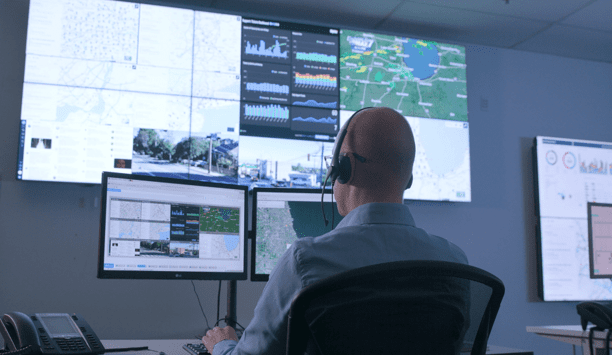
Audio-video technologies have historically been a silo in the enterprise, separated from the larger network infrastructure by their use of analog, hard-wired and proprietary connections. Software-defined system However, AV devices such as video walls and corporate signage add more value to security and emergency response operations when they are connected to the larger IT network and can interface seamlessly with other systems. That’s the approach provided by Userful, which offers a software-defined system for end-to-end control of audio-video applications in an enterprise, using a web browser and standard industry protocols. The use of software avoids the need for proprietary hardware and the compatibility challenges of multiple hardware systems operating in silos. It also yields visibility and control throughout the system. Single software system The single software system grants IT, administrators, the ability to govern multiple platforms The single software system grants IT, administrators, the ability to govern multiple platforms, while providing individual departments access to the specific applications they need. The emphasis is on meeting stakeholders’ functional requirements using a system governed by the IT department. The data travels across the IT network infrastructure without being blocked by the use of proprietary hardware and cabling, for example. Digital transformation Avoiding the analog (hardwired) approach enables enterprises to “digitally transform” the operation of their audio-video devices. The approach is especially useful at the intersection of security and digital signage. “We give the power back to the local IT administrators, who can govern the system and enable customers to govern their applications,” says Shane Vega, VP of Product Marketing at Userful. The company’s software aggregates video information and distributes it as needed to individual video displays. Real-time event monitoring The software enables various video devices to become a seamless part of the IT infrastructure. It also facilitates sharing of information throughout the enterprise, even in an emergency. In contrast, proprietary, siloed systems hamper the free flow of information when it is needed the most. For example, if there is an emergency or active shooter situation, video devices throughout an organization can be leveraged to inform occupants about the details of the event in real-time and to provide actionable instructions specific to an occupant’s location in the building. Visual communications When security is integrated into a larger platform, it can spread the message visually throughout the enterprise Visual communications, such as digital signage, comprise a powerful extension of a security system that actively monitors threats, and offers the ability to communicate to a large group of people. When security is integrated into a larger platform, it can spread the message visually throughout the enterprise. Strategic messaging can guide building occupants to their best course of action during an emergency, whether it is to flee or to shelter in place. Situational awareness The software-driven IT system can aggregate information from multiple sources, such as video camera feeds or information from an access control system, and display it on a large video wall, for example. Free-flowing information promotes situational awareness in a control room, and enables immediate response, whether it’s to call the fire department, sound an alarm, or initiate a mass exodus of building occupants. IT software approach “It makes everyone strategically aware and sends the appropriate messaging to those who need it, rather than to everyone at once,” says Vega. Facilitating more effective operations centers is the “tip of the spear” of what Userful offers customers, he adds. The IT software approach simplifies video wall applications, which are becoming increasingly complex, by enabling content to be scaled, chopped, and aggregated to fit the demands of a display wall. An analytic might trigger the system to enlarge a camera view on the full screen, to send video to the police, or “take over” screens throughout a building to provide strategic messaging. Third-party integrations Designing video walls more strategically in an operations center can help operators interpret information quickly Designing video walls more strategically in an operations center can help operators avoid fatigue and interpret information quickly and efficiently. “Userful’s role in the display world is to make sure software can distribute the information despite the hardware,” said Vega. Userful works with third-party integration to add system functionality and automate responses. Software flexibility “We’re a platform that pulls in sources of information, maybe it’s a hundred cameras, and then we manage the entire solution,” says Vega. “We enable users to take data from multiple sources and send it to a wide range of displays, creating a repository of information.” “When you have a software-defined platform, you can extend the solution using the flexibility of the software into a system that cannot be achieved with hardware,” says Vega. “If people want to scale their system to multiple locations, we can add a source remotely.” Proactive responses to security “Security is an important market for everyone, paramount for any organization,” says Vega. “Individuals are responsible for the safety and security of constituents and require a proactive, not reactive response.” “We can provide proactive responses because of the nature of AV-over-IP, which is interoperability. It can draw attention to threats and proactively communicate response plans.” Managed service provider The “software-defined” approach can help systems integrators position themselves as a managed service provider Getting away from siloed solutions should be a priority for any IT purchase by an organization, says Vega. “We need to train end-users to take a holistic view and not to look at it from a siloed perspective. A fuller understanding helps them gain efficiencies.” The “software-defined” approach can help systems integrators position themselves as a managed service provider rather than just “selling boxes.” “Think about how you can partner with end-users over the long term,” advises Vega. Information-based automation “Think of technology as a holistic part of the business for better outcomes across the whole business. More information is better information, and integrators can help customers create automation that will provide more awareness.” The Userful proposition offers especially good value in transportation markets, such as ports and airports; and in campus environments, such as enterprise, higher education, and airports. In any scenario where there are a lot of screens, the system can distribute corporate and emergency messaging, whether on a baggage claim screen or a way-finder screen.
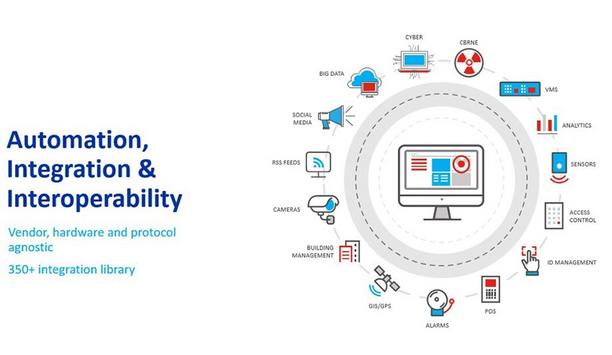
Following its recent acquisition, Vidsys will continue to operate, now as an ‘An ARES Security Company’. The Vidsys brand is known worldwide for its PSIM (physical security information management) solution and the acquisition will accelerate the next generation of products that incorporate Artificial Intelligence (AI) to enhance their value to Vidsys clients and the overall market. ARES Security Corporation has developed and deployed security and public safety software solutions for the past 20 years, solving complex physical security challenges. Their AVERT security software solution supports the full lifecycle of physical security operations: risk and technology assessment and design, training, and intelligent real-time incident response. AVERT security software AVERT security software helps clients by increasing security effectiveness and reducing cost AVERT security software helps clients by increasing security effectiveness and reducing cost. Clients are in many market segments including Corporate, Military, Government, Power, Data Centers, Transportation and Ports. Vidsys’ PSIM will immediately be improved by incorporating AVERT C2 (Command & Control), allowing clients access to expanded capabilities and an advanced technical roadmap. “Over time we will migrate the Vidsys technology to our state-of-the-art, multi-tenant SaaS architecture that includes secure, multi-site data sharing, an updated library of connectors, and integration to the AVERT digital twin, artificial intelligence/machine learning and automation capability,” said Ben Eazzetta, ARES Security Corporation’s Chief Executive Officer (CEO). Technical roadmap for upgrading to AI-PSIM platform “We are a client-centric company, and we will continue to support Vidsys clients,” stated Ben Eazzetta, adding “We will focus initial efforts towards closing any required and promised capability gaps and offer a significantly improved technical roadmap for the platform to be upgraded to AI-PSIM.” Additional AVERT products will be made available to Vidsys clients in a ‘cost-effective way’. They include technology for assessment and design, virtual tabletop and virtual reality training and enhanced AI and robotics capability surrounding the digital twin. A ‘digital twin’ is a digital representation of a physical object. Rapid incident response and robotic sentries interfaces ARES/Vidsys solution offers capabilities with extremely high levels of automation for rapid incident response ARES has a strong market position in several verticals that require a robust and automated next-generation AI-PSIM. The ARES/Vidsys solution offers capabilities with extremely high levels of automation that enable rapid incident response and incorporate advanced features, such as interfaces to robotic sentries. “These capabilities, along with a more automated deployment process, will allow Vidsys to scale their acquisition of customers across key verticals in which ARES is already active. This automated deployment process will also open new opportunities to work with system integrators who have shied away from PSIM projects in recent years,” stated Ben Eazzetta. Optimizing security operations ARES believes the physical security market is underserved by technology that optimizes operations. Ben Eazzetta adds, “All of our products are designed to optimize security operation, and the acquisition of Vidsys allows us to accelerate the development of the next generation PSIM that is adaptive and intelligent, powered by AVERT’s AI, and Modeling and Simulation system.” Vidsys pioneered PSIM in the security industry and created a robust library of connectors, providing an integrated real-time incident response system powered by a rules engine. Together, the AVERT/Vidsys solution seeks to transform the way security operations centers (SOCs) operate and respond to emergencies. Vidsys pioneered PSIM in the security industry and created a robust library of connectors Managing security at multiple sites Ben Eazzetta said, “There’s no denying that some in the security industry see PSIM as a four-letter word. But PSIM exists because it meets a need in the security operations center that cannot be met by either video management or incident management systems. It is critical that PSIM evolves to meet the rapidly changing demands of enterprise clients.” He adds, “Our clients need to manage security at multiple sites, each with different security plans and threats, they need adaptive rules engines to manage complex incidents and emergency responses, and they need automation to seamlessly command and control all security assets, including robotic assets.” Flexible and intelligent software Future of command-and-control will need to be flexible, intelligent software with extremely high levels of automation “The future of command-and-control will need to be flexible, intelligent software with extremely high levels of automation that enables very rapid incident response and incorporates advanced capabilities such as interfaces to robotic sentries,” said Ben Eazzetta. He adds, “To achieve this, we are replacing the brittle, difficult-to-configure rules engine of today’s PSIM with machine learning and AI capabilities that can produce automated/optimized responses or recommendations in near real time.” SaaS-enabled and remotely hosted system The systems will be SaaS-enabled, remotely hosted and easily configurable to reduce the cost and time of deployments for large enterprise implementations and easily supported by end-users, and system integrators. In a post-Covid-19 world, it is critical that enterprise security software solutions be adaptive, intelligent, automated and offer the ability for disparate teams to share information and collaborate in a meaningful way, while responding to incidents and emergencies in real-time. The ARES/Vidsys offering is a lifecycle solution that meets the needs of enterprise security operations. Next-generation of AI-PSIM “ARES has always pushed the needle of what is possible with our AVERT solution, ever since development of our digital twin technology began in 1999 to protect our nation’s nuclear stockpiles,” said Ben Eazzetta, adding “Today, we continue to innovate with the next generation of AI-PSIM.” So what’s ahead for ARES and Vidsys in 2021? “A lot of Zoom calls!” laughs Eazzetta, adding “We are excited to leverage the decades of hard work that both teams have put into our solutions. We all realize the fantastic opportunity we have been given to create a next-generation AI-PSIM and to open new markets for all of our products and solutions.” He adds, “Combining the two companies will lead to improved development/support capability and significantly improved roadmaps for our clients. We will provide immediate ROI for clients by lowering deployment costs and leveraging the entire suite of products to provide more immediate value while continuing to deliver as promised, like ARES always does.”

The U.S. Department of Homeland Security (DHS) will be participating at ISC West in a big way. Representatives of the federal department will be taking part in more education sessions this year, and the DHS tech-scouting team will be on hand to view the latest technologies on display at the show. Exhibitors – and anyone else at the show – are invited to the “DHS Town Hall” on March 19 (Thursday) at 3:30 p.m. in meeting room Galileo 1001. The aim is for DHS to engage with the technology community and provide guidance as industry innovation moves forward. In the face of growing operational demands and complex threats, the need for homeland security technology solutions continues to rise. The Department of Homeland (DHS) is seeking new ideas and partners to safeguard public trust, save lives, reduce risks, and protect the flow of commerce and goods for the community. They will share information about the department’s problem sets, capability needs and business opportunities for accelerating technology development to ensure they are keeping pace with the speed of innovation and complex threats. Speaking at ISC West DHS seeks to challenge industry partners to develop technology to enhance security operations across multiple end user missions. The DHS Science and Technology Directorate (S&T) and Cybersecurity and Infrastructure Security Agency (CISA) will jointly speak and exhibit at ISC West. Attendees can meet DHS professionals working in cyber security, critical infrastructure, resilience, aviation security, border and port operations, and first responder capabilities. Attendees are invited to visit the DHS exhibit booth #33040 in the Drones and Robotics Zone. The DHS Town Hall on Thursday, titled “Enhancing Security and Doing Business at the Speed of Life,” will be a “call to action” for show participants to help secure the future. DHS seeks to become more agile and to pursue new pathways to do business in a fast-moving world. Through strategic partnerships, DHS is mobilizing the innovation community to safeguard the public trust. Security sessions DHS will also be participating in these sessions at ISC West, March 17-20 at the Sands Expo, Las Vegas, Nev: You Say It’s Going to Change the World? Tues., March 17, 9:45 a.m., Sands 302. Security relies on anticipating what comes next and staying a step ahead. How will 5G increase secure capabilities and reduce threats from bad actors? How will blockchain secure personal and financial identity and when will quantum computing render all encryption obsolete? How is DHS investing in counter-drones? How does AI change the security landscape? The New Federal Security Landscape – Are You Prepared? Wed., March 18, 1 p.m., Sands 302. The federal security landscape is evolving alongside the private sector. What are the new high-risk areas of concern and how are emerging threats (cyber, UAS) changing the way federal facilities are protected? How are these new risks balanced against traditional ones? How is the Interagency Security Committee (ISC) responding? DHS panelists will discuss. CISA Special Guest Speaker at SIA Interopfest. Wed., March 18, 4 p.m., Sands 701. Daryle Hernandez, Chief, Interagency Security Committee, DHS, Infrastructure Security Division, will provide insights to complement the technology interoperability demonstrations. Enhancing Security Through UAS Technology, A DHS Perspective. Thurs., March 19, 11:30 a.m., Venetian Ballroom. What is DHS doing today to prepare for a future of increased visualization and automation? New questions are emerging around capabilities and vulnerabilities. Emerging technologies like AR, Next Gen Sensors, and UAS, provide the Department of Homeland Security (DHS) with tools to become more responsive and adaptive to new threats.
Case studies

Nizam Zachman Port, one of Indonesia's most important fishing hubs, supports thousands of local fishermen and maritime businesses. Recognizing the potential to enhance operations and better serve the community, the port management deployed Hikvision’s AIoT (AI-powered Internet of Things) technologies to make the port smarter and more efficient. Standard AIS signaling Port management identified several key areas where they believed technology could make a significant difference Every day, Nizam Zachman Port handles huge volumes of fish destined for both the Indonesian domestic market and for export around the world. Such an operation relies heavily on technologies that can make the port safer, more efficient, and more secure. Recently, the port management identified several key areas where they believed technology could make a significant difference. The first was to develop comprehensive capabilities to identify ships entering their waters, including unregistered fishing boats that don't use standard Automatic Identification System (AIS) signaling. They wished to adopt a unified detection approach that would operate effectively in all weather conditions, from foggy mornings to dark nights. Traditional communication methods The management team also recognized the value of upgrading their ship-counting and reporting systems. While their experienced staff performed excellent manual counting, management knew that combining human expertise with automated technology could deliver even more accurate records. This would be particularly valuable during busy periods, and when ships arrive at night and depart before dawn. Another area for improvement was communication. Here, the management team wanted to replace traditional communication methods with a modern audio system for efficient message delivery across the harbor. Innovative technologies for a smarter port To put their plans into action, Nizam Zachman Port partnered with PT. Dea Global Niaga, who designed a comprehensive system that perfectly matched the port's ambitious goals. Ship detection and identification: At the heart of the new system is an Anti-corrosion Thermal & Optical Bi-spectrum Network Positioning System (DS-2TD6267-100C4L/WY). This specialized camera uses thermal imaging to detect heat signatures from ship engines and hulls up to 2 km away and works equally well in fog, rain, or darkness. The casing meets the NEMA-4X anti-corrosion standard, ensuring durability in the salty sea environment. The camera is complemented by a Security Radar (DS-TDSB0W-FK/2km). At any point in time, this can identify and track the movement of up to 32 vessels in the harbor, providing detailed speed and distance information. When the radar detects movement, it automatically directs the camera system for seamless coordination. Enhancing perimeter security: To enhance perimeter security, two DarkFighter IR Network Speed Domes (DS-2DE5425IW-AE(T5)) have been installed. These cameras, with their Pan-Tilt-Zoom (PTZ) functionality, offer flexible movement and orientation. They come equipped with a 25x optical zoom, enabling them to provide detailed views of the port’s perimeter, ensuring that any incidents are quickly identified, even in low-light conditions. Improving communications across the port: For communication, seven Network Speakers (DS-QAZ1310G1T-E) have been installed across the port. These speakers allow the command center to broadcast announcements and alerts much more efficiently than before. Centralized intelligence: Everything connects through Hikvision’s 64-Channel 8K Network Video Recorder (DS-9664NI-M16/R), to the HikCentral Professional Platform. This video management platform serves as the system’s brain, automatically counting ships, analyzing patterns, and generating comprehensive reports that provide valuable insights into port traffic. Enhanced efficiency, accuracy, and community safety According to Mr. Al Fajar Alam, a Port Master at Nizam Zachman Port, the results have been remarkable. “The capability to maintain high performance in all-weather ensures that no ship goes undetected,” he said. The automated ship counting system delivers accurate information that improves everything from fee collection to capacity planning. As a result, port operations became significantly more efficient, with automated systems handling routine monitoring while staff focus on higher-value activities. Benefit from enhanced security and smoother processes For the broader fishing community, these advances mean a safer, more organized port experience “Communication has also been improved dramatically,” Mr. Alam added, “Port staff can now deliver clear messages instantly throughout the harbor. Emergency announcements, docking instructions, and routine communications now flow smoothly through the IP speaker system.” For the broader fishing community, these improvements mean a safer, more organized port experience. Fishing operations benefit from enhanced security and smoother processes, while the entire local maritime economy gains from having a truly modern facility. Maritime tradition meets AIoT The transformation showcases what's possible when maritime tradition meets AIoT. Nizam Zachman Port hasn't just upgraded technology–they've reimagined how a fishing port operates in the modern era. As other ports across Indonesia seek modernization, this project stands as an inspiring example of how AIoT can enhance community-focused maritime facilities while preparing them for future growth.

Genetec Inc., the pioneer in enterprise physical security software, announced that the Port of Barcelona has successfully implemented Genetec™ Security Center, significantly improving the port’s safety, efficiency, and operational capabilities. As one of the Mediterranean’s major logistics hubs, the Port of Barcelona has experienced continuous growth in recent years, leading to new operational and security challenges. In response, the Port Authority launched a modernization initiative focused on transforming the port into a safer, smarter, and more sustainable environment. A unified approach to evolving security needs Port Authority selected Genetec Security Center for its open, unified platform that seamlessly integrates video surveillance While the port’s previous security system was effective, it lacked the flexibility and interoperability between devices made by different manufacturers required for current demands, hindering real-time decision-making – a critical factor when managing infrastructure of this scale. To overcome these limitations, the Port Authority selected Genetec Security Center for its open, unified platform that seamlessly integrates video surveillance, access control, intrusion detection, and other security technologies into a single interface. Port integrated advanced technologies Following a successful pilot using virtual servers, the port migrated its CCTV infrastructure – growing from 180 cameras to over 530, with plans to surpass 800 in the coming years. Alongside this expansion, the port integrated advanced technologies, including access control, intercom systems, video analytics, forensic tools, fire detection, and real-time occupancy analysis. Tangible results from day one Port operators can now manage all security systems through a single tool, streamlining workflows The deployment of Genetec Security Center has produced immediate results. Port operators can now manage all security systems through a single tool, streamlining workflows and significantly reducing response times to incidents. Additionally, maintenance and operational efficiency have improved across the board, contributing to significant cost savings. The system has proven especially valuable during high-traffic events like the America’s Cup and Nadal al Port, where it enhances crowd and vehicle management to ensure smooth and safe operations. How unified physical security can enhance not just safety? “The flexibility and scalability of Security Center have allowed us to centralize all our systems, reduce response times, and improve operations,” said Dídac Höflich, ICT Infrastructure Project Manager at the Port of Barcelona, adding “Genetec has provided us with a long-term solution that evolves with our needs, while also giving us peace of mind, knowing we are prepared for any challenge.” “Working with the Port of Barcelona demonstrates how unified physical security can enhance not just safety, but also efficiency and scalability for critical infrastructure,” said Jordi Charles Rodriguez, Account Executive at Genetec Inc., adding “We’re proud to support the Port Authority’s long-term vision and help lay the technological foundation for the port’s continued growth and innovation.”
Ferroport, which operates the iron ore terminal at the Port of Açu in São João da Barra, Rio de Janeiro, Brazil, has deployed state-of-the-art video surveillance cameras from Axis Communications to enhance nighttime security and visibility, while decreasing environmental impact and prioritizing sustainability. With cutting-edge technology, the port now has precise surveillance cameras that capture high-quality nighttime images, while reducing the amount of artificial lighting that negatively impacts the surrounding ecosystem. Partnership with Axis Communications The partnership with Axis Communications has allowed Ferroport to meet Brazilian port standards with ease, while also supporting its robust sustainability strategy. Partnership with Axis Communications has allowed Ferroport to meet Brazilian port standards The ISPS Code (Resolution 53 Conportos) and Ordinance 143 of the Federal Revenue Service mandates that Brazilian port terminals must remain under 24/7 video surveillance, pioneering the port to search for a solution that would comply with these stringent standards while also enhancing wildlife conservation efforts in the area. Ferroport’s commitment to environmental stewardship has resulted in the planting of 66,000 trees in the surrounding area over six months and protecting more than 1.3 million loggerhead sea turtle hatchlings since 2008. Balance security with environmental conservation “Security is a top priority for Ferroport, with cutting-edge technology in place to protect our assets,” said Marcelo Oliveira, Property Security Coordinator for Ferroport. “With 206 cameras monitoring offshore, operational, and perimeter areas, our system was equipped to monitor unauthorized vessels during daylight hours, but nighttime surveillance presented a challenge due to the absence of natural light." "To balance security with environmental conservation, we partnered with Axis to capture high-quality images in complete darkness – enhancing security while minimizing ecological impact.” Video surveillance network Ferroport invested in 20 Axis cameras, but the company has been expanding its network Ferroport upgraded its video surveillance network with cutting-edge technology capable of ensuring accurate and reliable surveillance of the port around the clock. Initially, Ferroport invested in 20 Axis cameras, but the company has been expanding its network as the impressive quality of the devices and positive impact on sustainability have become clear. With these installations, Ferroport can now: Leverage a high-tech solution that balances security, compliance, and environmental responsibility. Capture high-quality images in complete darkness – minimizing the impact of artificial lighting on local ecosystems. Turn off night operating floodlights, allowing endangered species like maned wolves, porcupines, capybaras, and anteaters to return to their habitat. Use deep learning analytics for remote perimeter detection to prevent unauthorized entry by land, sea, or approaching vessels. Security capabilities “While Ferroport was looking to enhance its security capabilities, the company wasn’t willing to sacrifice its values or conservation goals to achieve it,” said Winicius Corali, Regional Sales Manager, Brazil, Americas. “We were able to work closely with port representatives to identify a solution that would provide the functionality Ferroport needed to comply with Brazilian regulations while also sustainability and conservation. Our hope is that Ferroport can serve as an example for other port security projects.”
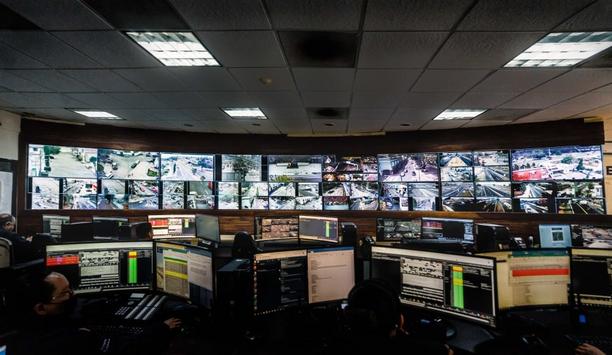
Alarming increases in vehicle thefts, unsolved traffic collisions, and stolen cargo in the Mexican State of Tlaxcala, motivated the Executive Commission of the State Public Security System (CESESP) to expand and upgrade its video security system. To counter the rise in crime, the CESESP sought a flexible, scalable, open-platform video management system (VMS) that could seamlessly incorporate existing cameras as well as over 800 new cameras and edge devices from a range of hardware and software providers. Tlaxcala Located in East-Central Mexico, Tlaxcala is one of 32 states within the Federal Entities of Mexico. With a population of approximately 1,343,000, based on the 2020 census, Tlaxcala is the smallest yet one of the most densely populated states in Mexico. The CESESP of Tlaxcala is tasked with safeguarding residents across the state's 60 municipalities. C4 center C4 center has multiple teams of six security professionals who monitor the system around the clock At the core of all security operations, including the 911 emergency response and 089 confidential tip line, is the CESESP's Control, Command, Communications, and Computing Center (C4). The state’s C4 center has multiple teams of six security professionals who monitor the system around the clock on a large, 24-screen video wall. The C4 also houses the system’s HP and Lenovo servers. Flexibility, scalability, and budget “Flexibility, scalability, and strictly adhering to the budget were top requirements for this critical, state-wide project,” said Maximino Hernández Pulido, Executive Commissioner of the State Public Security System. “We considered a variety of proposals and providers, but we ultimately followed the advice of our integrator, Digital Information Systems, and selected XProtect Corporate from Milestone Systems.” XProtect Corporate The new system includes cameras from Hanwha Vision, Bosch Security and Safety Systems, Hikvision, and Pelco The new system includes cameras from Hanwha Vision, Bosch Security and Safety Systems, Hikvision, and Pelco, all integrated within the system and managed by XProtect Corporate VMS from Milestone Systems. The system is also fully integrated with the BriefCam Video Analytics Platform, delivering video intelligence for system managers to identify, monitor, investigate, and visualize incidents plus video data to make smarter decisions. Efficient and cost-effective integration “Because state officials rely on their video system 24/7, the update needed to be gradual with no downtime. As new cameras were integrated into the Milestone platform, the previous system slowly disappeared,” said Isaac Sánchez Morales, an engineer at Digital Information Systems (SDI), an integrating company. “The XProtect Corporate open platform VMS allowed us to leverage our existing cameras and servers, integrate new equipment and devices, making the process very efficient and cost-effective, and we never had a gap in service.” Data-driven video for fast response times BriefCam video analytics technology The solution detects, identifies, and classifies video metadata to drive more efficient investigations The BriefCam video analytics technology seamlessly integrates into Milestone’s XProtect Smart Client. The solution detects, identifies, and classifies video metadata to drive more efficient investigations and business decisions, such as finding missing persons, investigating vandalism, theft, assaults, accidents, injuries, or acts of violence, as well as extracting and analyzing through heatmaps, dashboards, and visualizations. The analytics have proven beneficial in accelerating investigations, attaining situational awareness, and optimizing operational intelligence for enhanced video search, alerting, and data visualization. Real-time alerts, situational awareness “We installed the BriefCam Insights and Investigator products, and regularly use the platform’s RESPOND and RESEARCH capabilities. One of the advantages of all these XProtect-integrated analytics is that operators do not have to open additional windows or enter new credentials to access them,” said Sánchez. “With this integration of technologies, operators can trigger real-time alerts based on complex object classifications and filter combinations to increase situational awareness meaning authorities can react to events as they unfold.” Proactive policing with LPR With the BriefCam RESPOND solution, object characteristics and license plate recognition tools can be used" Sánchez added, "With the BriefCam RESPOND solution, object characteristics such as vehicle, person, or animal, and license plate recognition tools can be used to trigger rule-based alerts." "These tools can help overcome the challenges of urban video surveillance and drive proactive policing in Tlaxcala." Video technologies reduce state crime rates Following the comprehensive expansion of the security infrastructure, statistics from the Executive Secretariat of the National Public Security Systems revealed Tlaxcala boasted the lowest crime rate nationwide. With the modernized system in place, officials documented a 93% reduction in pilfered freight from transport companies. Similarly, vehicle theft declined by 22.5%. A cost-efficient and flexible way Milestone Interconnect provides a cost-efficient and flexible way to gain central surveillance According to Sánchez and the SDI team, it is expected that each municipality within the territory will soon have its own locally focused VMS. With the use of Milestone Interconnect, all the municipality subsystems will integrate directly with the state-wide platform. Milestone Interconnect provides a cost-efficient and flexible way to gain central surveillance of multiple sites spread across a region. C4 video surveillance operation “The integrated solution delivered through Milestone is a robust, efficient, and secure system that provides all the necessary tools for the C4 video surveillance operation,” added Executive Commissioner Hernández-Pulido. “In addition, the excellent technical and post-sales support from Milestone and SDI has led us to meet the system and performance goals we set for ourselves.”
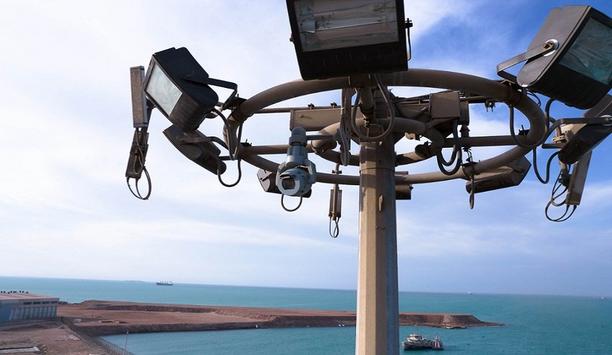
MIC IP ultra 7100i cameras from Bosch were recently installed on around ten 40-meter-high masts to meet the high-security requirements at the port of Paracas in Peru. The port operators were looking for a video security solution to ensure reliable, high-resolution surveillance of an 11-hectare area, even when faced with the adverse weather conditions that are typical in the region, including stormy winds and extremely salty air. Challenges of port security “Our previous cameras from a different supplier were unable to meet our expectations,” explains César Rojas, Operations Manager at the port of Paracas, adding "That represented a major security risk, as we weren’t technically equipped to reliably detect intruders and their potential criminal activities in sensitive areas involving the loading or unloading of goods at the port terminal and take the necessary action." The solution: MIC IP ultra 7100i cameras Remote panning, tilting, and zooming from a control room gives them excellent coverage of large areas Due to MIC IP ultra 7100i cameras from Bosch with UHD (4K) resolution, 12x zoom, and optical image stabilization (OIS), the port’s management team has found a solution that satisfies all their requirements. MIC cameras are moving pan-tilt-zoom (PTZ) devices. Remote panning, tilting, and zooming from a control room gives them excellent coverage of large areas. These technical features won over the management team. UHD (4K) resolution “Thanks to ultra-high definition, we can detect intruders and see what they’re up to in sharp detail for the first time. As a result of optical image stabilization, this is even the case if strong winds rock the masts with the cameras attached at a height of 40 meters, or if we zoom up to 12x in the very salty air,” says César Rojas about the rugged and high-performance of the Bosch cameras. Intelligent cameras take security to the next level The MIC cameras being used can even be trained to recognize user-specified target objects (both stationary and moving) to automatically alert the port’s security personnel of unusual activity. This AI-based intelligent tracking also makes it possible to determine the exact position of objects so that, in the event of an emergency, staff can get to precisely the right location faster.

Residents at Chapel View can receive and answer door entry requests via mobile while granting temporary access using QR codes, due to Comelit-PAC’s dedicated mobile app and use of the latest security technology. Chapel View Set in the quaint village of Gildersome in Leeds, Chapel View is an exclusive housing development, presenting seven residential homes in a discreet cul-de-sac, all secured with a communal gate. The community featured a legacy door entry system that required an upgrade to ensure the security of residents. Comelit-PAC worked with local installation specialists AC Secure from the initial design process, through the works programme to project completion. Door entry Each house has its licence and users can use the feature-rich Comelit app to control the gate Door entry, via Comelit-PAC’s VIP system, was specified, utilizing its stylish Ultra door entry solution, to enable control of the gate to the housing estate. Each house has its license and users can use the feature-rich Comelit app to control the gate while also creating QR codes to allow temporary access for visitors. Says David of the resident’s association of Chapel View, “With high expectations for our residents to deliver ultimate security, every element of the new door entry system also had to be considered from a convenience perspective, to enable them to answer door entry requests remotely, from their smartphone." Additional benefits “AC Secure worked with us right from the specification process and took the time to understand these requirements, before recommending Comelit-PAC as an ideal solution." "The additional benefits of utilizing app technology to present door entry and QR codes for temporary access to visitors immediately appealed. And the system was installed with minimal disruption and a great benefit to our community." Smart home security systems Adam Cousens, Managing Director at AC Secure added, “Chapel View has the look and feel of a quaint village community where security and door entry is a high priority. All the smart home security systems had to be stylish and futureproof to suit the requirements of the community, whilst also ensuring ease of installation and simple use." “Comelit-PAC’s Ultra system with VIP technology, coordinating with its dedicated app was the natural choice for door entry." Ultra digital entrance panel The system enables new residents to grant access through the vehicle gates using Comelit’s dedicated mobile app "Residents love the sleek design and the VIP technology is easy to use and allows them the convenience to receive calls and see visitors from anywhere. The combination has truly elevated the door entry experience.” The entrance to Chapel View has been enhanced with Comelit-PAC’s stylish, flush-mounted Ultra digital entrance panel. The system enables new residents to grant access through the vehicle gates using Comelit’s dedicated mobile app. Mobile-first solution Stephen Wragg, Business Development Manager for Comelit-PAC concluded, "What our work with AC Secure at Chapel View demonstrates is how Comelit-PAC is ‘with you always.” There is no project too big or too small for us to work with our installers and partners to provide smart, yet stylish door entry solutions for residents to benefit from the latest in smart access control." "Ultra, together with VIP presents a powerful mobile-first solution that can ensure the ultimate security for this residential community.”
Round table discussion

Headlines of violence in our schools are a reminder of the need to keep educational institutions safe. In fact, if there is a positive aspect to the constant bombardment of headlines, it is that it keeps our attention perpetually focused on how to improve school security. But what is the role of physical security systems? As the new school year begins, we asked this week’s Expert Panel Roundtable: Are schools safer because of physical security systems? Why or why not?

As physical security technologies become more complex, it is incumbent on the dealer/integrator to have the skills and expertise needed to ensure that a system operates smoothly. The value of integrators increasingly rests on the skill sets they bring to bear when installing a system. If the skills are missing, there is a problem. We asked this week’s Expert Panel Roundtable: What missing skills among security integrators can cause problems for customers?

Driving the smart homes market is the convenience of simple technology solutions. Almost every home now has a “smart speaker” that makes it easier than ever for homeowners to interface and control their technology. But where does security fit into the new landscape of smart home systems? We asked this week’s Expert Panel Roundtable: What’s new in smart homes and residential security systems?
Products