Industrial security - Round table discussions

Sadly, active shooter incidents have become so common that they no longer grab big headlines or dominate the news cycle. A near-constant cascade of active shooter events persists in the background of our collective consciousness, a familiar drumbeat that is no less tragic because it is continuous. As more active shooter incidents occur, the security marketplace continues to implement solutions to minimize the impact, including gunshot detection. We asked this week's Expert Panel Roundtable: What...

Diversity in a company’s workforce is arguably more important now than ever. Societal awareness of the importance of diversity has grown, and many people see diversity as an important factor that reflects positively (or negatively) on a company’s culture and image in the marketplace. We asked this week’s Expert Panel Roundtable: What should the security industry do to promote workplace diversity?
Many of the threats facing the energy and utility sector are related to cybersecurity, as recent incidents have confirmed. Another problem is that operating systems for utilities tend to be outdated, which presents extra challenges in a connected world. There are also physical security demands, not to mention regulatory and social issues. We asked this week’s Expert Panel Roundtable: What are the security trends in energy and utilities?
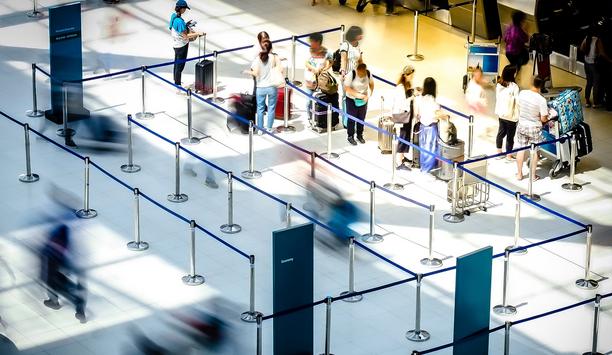
Air travel is returning to pre-pandemic levels. COVID and its aftermath have added new compliance and operational concerns for airport security, and social and political volatility around the world emphasises the need for constant vigilance. A range of new technologies are enhancing airport security, not to mention providing new tools to simplify processes throughout the airport. We asked our Expert Panel Roundtable: Which technologies are transforming airport security?

A new generation of security professional is waiting in the wings. They will be faced with unprecedented challenges, as they seek to transform the security marketplace to the ‘next level’. Technology changes ensure the market will be very different 10 years from now and the fresh labor pool will need to be able to meet the host of new challenges. We asked our Expert Panel Roundtable: What exciting career opportunities in the security industry await the next generation?

Crime prevention is a basic goal of security, even if a security system merely convinces a criminal to seek out a different target. However, many of today’s security technologies are most useful after the fact, to provide forensic information about a crime that has already taken place. Solving a crime presents a whole new level of challenge. Surely, prevention is the best approach. We asked this week’s Expert Panel Roundtable: How successful is the security industry in crime preventi...

Artificial intelligence (AI) is simultaneously an emerging technology, a common term in popular culture, and a buzzword in the security industry. But these aspects of the term can lead to misunderstanding in the marketplace. AI technology is continuing to emerge, but what is the reality today? How do depictions of AI in popular culture impact how it is understood in the real world of security? As a buzzword, at what point does marketing hype garble our understanding of reality? We asked this wee...
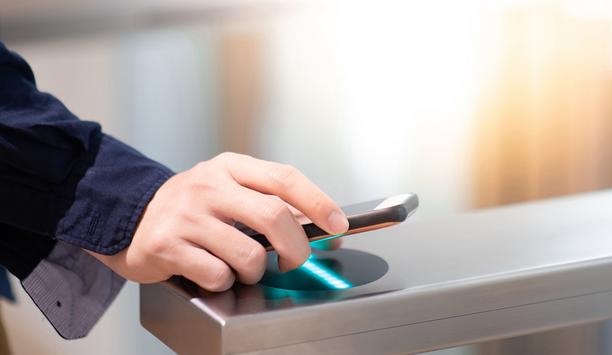
There is a broad appeal to the idea of using a smartphone or wearable device as a credential for physical access control systems. Smartphones already perform a range of tasks that extend beyond making a phone call. Shouldn’t opening the door at a workplace be among them? It’s a simple idea, but there are obstacles for the industry to get there from here. We asked this week’s Expert Panel Roundtable: What are the challenges and benefits of mobile access control solutions?

In-person training sessions were mostly canceled during the worst of the COVID-19 pandemic. However, the need for training continued, and in some cases increased, as the security industry sought to adapt to the changing business climate of a global emergency. So how well did we as an industry adjust? We asked this week’s Expert Panel Roundtable: How has security industry training changed in the last year?
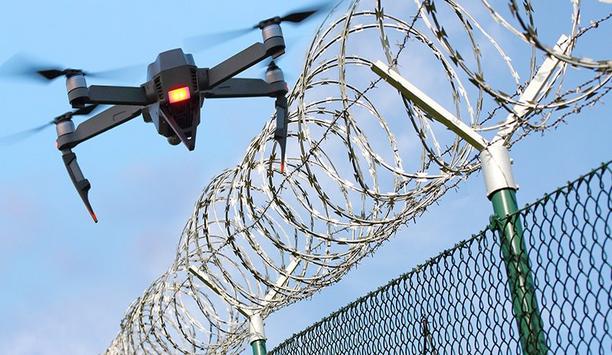
Perimeter security is the first line of defense against intruders entering a business or premises. Traditionally associated with low-tech options such as fencing, the field of perimeter security has expanded in recent years and now encompasses a range of high-tech options. We asked this week’s Expert Panel Roundtable: What are the latest trends in perimeter security technology?

During the coronavirus lockdown, employees worked from home in record numbers. But the growing trend came with a new set of security challenges. We asked this week’s Expert Panel Roundtable: What is the impact of the transition to remote working/home offices on the security market?

Contact tracing has been more than a buzzword during the coronavirus pandemic. In some cases, it has been an issue of life and death. Tracking who an infected person has been in contact with is an important tool to minimize disease spread, and technology from the physical security industry claimed a role in contact tracing early on – and continues to provide benefits as companies seek to reopen. We asked this week’s Expert Panel Roundtable: How can the security industry enhance conta...

When the United Kingdom voted to leave the European Union, a world of uncertainty unfolded for those doing business in the UK and the EU. The referendum was passed in July 2016. Including subsequent delays, the separation was completed after four years in January 2020, with a transition period ending December 2020. Even with the deadlines past, there are still pockets of uncertainty stemming from the separation. We asked this week’s Expert Panel Roundtable: How has Brexit affected the secu...

It has been two years or so since the last ISC West trade show, the biggest security show in the U.S. market. The coronavirus pandemic has caused a year’s worth of trade show cancellations, and the trend will continue for a while longer. The absence of trade shows has been transformative for the security marketplace, among others, as companies implemented a variety of alternative approaches, with mixed results. We asked this week’s Expert Panel Roundtable: What impact has the cancel...

As a subset of the larger economy, the security industry is bound to feel the effects of an economic downturn. Such was the case in 2020 when the COVID-19 pandemic undermined economic growth and presented a brand new set of challenges to business. The security industry has been able to pivot toward emerging opportunities, but that success has been offset by broader economic challenges. We asked this week’s Expert Panel Roundtable: What impact, positive or negative, has the larger economy h...

2019 was a big year for the Expert Panel Roundtable. The range of topics expanded, and we had more participation from more contributors than ever before. In closing out the year of contemplative discussions, we came across some final observations to share. They can serve both as a postscript for 2019 and a teaser for a whole new year of industry conversations in our Expert Panel Roundtable in 2020.

The high cost of thermal imaging cameras historically made their use more likely in specialized law enforcement and military applications. However, lower pricing of thermal imaging technologies has opened up a new and expanding market for thermal cameras in the mainstream. We asked this week’s Expert Panel Roundtable: What are the new opportunities for thermal cameras in mainstream physical security?

Fire and security systems are two elements of the same mission: To keep buildings and their occupants safe. However, the two systems often operate independently and may not be integrated. Should there be more integration and what are the pitfalls? We asked this week’s Expert Panel Roundtable: What are the challenges and opportunities of integrating security and fire systems?

Artificial intelligence is on the verge of changing the face of multiple industries – from healthcare to entertainment to finance, from data security to manufacturing to the cars we drive (or that will drive themselves!) In the physical security market, AI has garnered a lot of attention as a buzzword and as a harbinger of things to come. We asked this week's Expert Panel Roundtable: What security markets are most likely to embrace artificial intelligence (AI)?

There will be more artificial intelligence, more machine learning, video systems with more capabilities, and all of it will add greater value to our solutions. Those are among the expectations of our Expert Panel Roundtable as they collectively look ahead to the remainder of 2019. One unexpected prediction is that AI will not prove to be a game changer – at least not yet. We asked this week’s Expert Panel Roundtable: What will be the biggest surprise for security in the second half o...

The ability to treat patients in a secure environment is a base requirement of hospitals and other healthcare facilities. Whether facilities are large or small, security challenges abound, including perimeter security, access control of sensitive areas, video surveillance, and even a long list of cyber-risks. We asked this week’s Expert Panel Roundtable: What are the security challenges of hospitals and the healthcare industry?

Technology advancements often come with new terms and definitions. The language of our marketplace evolves to include new words that describe innovations in the industry. In the skilled hands of marketers, terms intended to be descriptive can also take a new element of ‘buzz,’ often presaging exciting developments that will drive the future. We asked this week’s Expert Panel Roundtable: What new buzzword have you heard, and what does it mean for the industry?
ISC West 2019 is in the industry’s rear-view mirror, and what a show it was! The busy three days in April offered a preview of exciting technologies and industry trends for the coming year. We asked this week’s Expert Panel Roundtable: What was the big news at ISC West 2019?
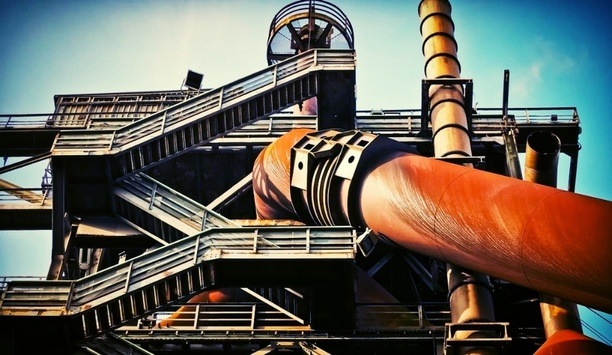
They call it “critical” for a reason. The so-called “critical infrastructure” is composed of the basic services that citizens have come to depend on, and which are necessary to support society and ensure national stability. The term includes high-visibility segments such as airports, refineries, transportation, wastewater, nuclear reactors, electric utilities, pipelines, and more. Because these functions are so critical, the stakes of providing security are higher than fo...

Even the most effective technologies usually require some level of human involvement. What new technologies do, generally speaking, is change the nature of a human’s role. Most jobs in today’s world are vastly different than 50 years ago, in many cases because of the changing role of technology. In the physical security world, what specific impact does technology have on the human element of systems? We asked this week’s Expert Panel Roundtable: Have recent developments in secu...