


Cyber security - Round table discussions

Cost is a reality to be managed. No matter how powerful or desirable a technology may be to a customer, the sale often comes down to the basic question: Can I afford it? And affordability extends not just to the purchase price, but to the cost of technology over its lifespan. In addition to advances in technology capabilities, the security industry has also achieved inroads to make its offerings more worth the cost. We asked this week’s Expert Panel Roundtable: What is the physical securi...

“Deep learning” is recently among the more prevalent jargon in the physical security industry, and for good reason. The potential benefits of this subset of artificial intelligence (AI) are vast, and those benefits are only now beginning to be understood and realised. But how can we separate the marketing hype from reality? How can we differentiate between future potential and the current state of the art? To clarify the latest on this new technology, we asked this week’s Exper...

Artificial intelligence (AI) is simultaneously an emerging technology, a common term in popular culture, and a buzzword in the security industry. But these aspects of the term can lead to misunderstanding in the marketplace. AI technology is continuing to emerge, but what is the reality today? How do depictions of AI in popular culture impact how it is understood in the real world of security? As a buzzword, at what point does marketing hype garble our understanding of reality? We asked this wee...
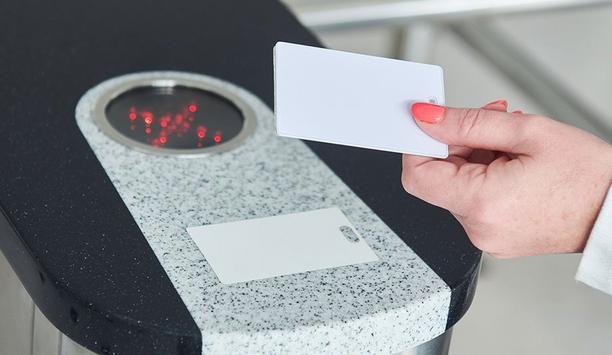
The idea of touchless systems has gained new levels of prominence during the last year, driven by the global COVID-19 pandemic. Contactless systems have been part of the industry’s toolbox for decades, while technologies like facial and iris recognition are finding new uses every day. We asked this week’s Expert Panel Roundtable: Which security markets are embracing touchless, contactless systems and why?

Adoption of General Data Protection Regulation (GDPR) by the European Union in 2016 set a new standard for data privacy. But adherence to GDPR is only one element, among many privacy concerns sweeping the global security community and leaving almost no product category untouched, from access control to video to biometrics. Because privacy concerns are more prevalent than ever, we asked this week’s Expert Panel Roundtable: What is the impact on the physical security market?
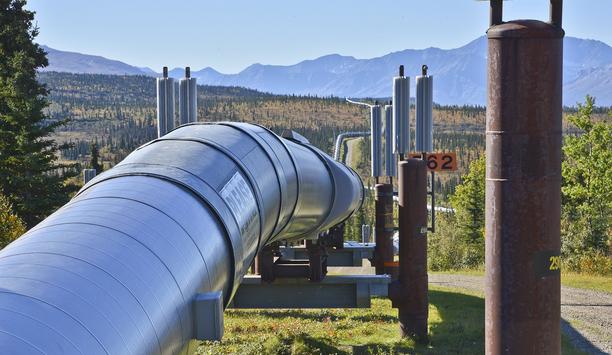
Many of us take critical infrastructure for granted in our everyday lives. We turn on a tap, flip a switch, push a button, and water, light, and heat are all readily available. But it is important to remember that computerized systems manage critical infrastructure facilities, making them vulnerable to cyber-attacks. The recent ransomware attack on the Colonial Pipeline is an example of the new types of threats. In addition, any number of physical attacks is also possibilities. We asked this we...

There is a broad appeal to the idea of using a smartphone or wearable device as a credential for physical access control systems. Smartphones already perform a range of tasks that extend beyond making a phone call. Shouldn’t opening the door at a workplace be among them? It’s a simple idea, but there are obstacles for the industry to get there from here. We asked this week’s Expert Panel Roundtable: What are the challenges and benefits of mobile access control solutions?

In the past few weeks, the light at the end of the COVID-19 tunnel has brightened, providing new levels of hope that the worst of the pandemic is behind us. Dare we now consider what life will be like after the pandemic is over? Considering the possible impact on our industry, we asked this week’s Expert Panel Roundtable: Which security technologies will be most useful in a post-pandemic world?

Security systems are vital to any company. Nowadays, however, they can also provide additional benefits to any enterprise beyond protecting people, assets and facilities. Specifically, systems that were previously focused on security can now be leveraged in new ways to benefit the broader enterprise. When this happens, the security department transitions from a ‘cost center’ to a repository of data that can benefit the whole company, and even contribute to the bottom line. We asked t...

During the coronavirus lockdown, employees worked from home in record numbers. But the growing trend came with a new set of security challenges. We asked this week’s Expert Panel Roundtable: What is the impact of the transition to remote working/home offices on the security market?

When technology performs a required task effectively, there is little reason to upgrade to the ‘next big thing’. In this regard, the physical security market is notoriously slow to change. Much of yesterday’s most robust and dependable equipment is still in place at thousands of customer sites, still performing as well as the day it was installed. However, there comes a point when any technology becomes outdated. We asked this week’s Expert Panel Roundtable: Which securi...

When the United Kingdom voted to leave the European Union, a world of uncertainty unfolded for those doing business in the UK and the EU. The referendum was passed in July 2016. Including subsequent delays, the separation was completed after four years in January 2020, with a transition period ending December 2020. Even with the deadlines past, there are still pockets of uncertainty stemming from the separation. We asked this week’s Expert Panel Roundtable: How has Brexit affected the secu...

Security technology has been a vibrant and successful market for decades now, but sometimes the public is not aware of those successes. Awareness in some cases is limited because security technologies work ‘behind the scenes’ to keep everyone safe. In other cases, the industry may be seen in a negative light, based on misinformation about topics such as surveillance and privacy. How can we get the word out about our industry’s successes? We asked this week’s Expert Panel...

Our Expert Panel Roundtable is an opinionated group. However, for a variety of reasons, we are sometimes guilty of not publishing their musings in a timely manner. At the end of 2020, we came across several interesting comments among those that were previously unpublished. Following is a catch-all collection of those responses, addressing some of the most current and important issues in the security marketplace in 2021.

We are several weeks into 2021, and it is already shaping up to be an eventful year. The happenings and trends from 2020 will likely carry over into the new year, but in a fast-moving industry such as ours, there will also be additional trends to watch. Looking toward the year ahead, we asked this week’s Expert Panel Roundtable: What will be the biggest security trends in 2021?

As an industry, we often speak in buzzwords. In addition to being catchy and easy to remember, these new and trendy industry terms can also reflect the state of the security market’s technology. In short, the latest buzzwords provide a kind of shorthand description of where the industry is - and where it’s going. We asked this week’s Expert Panel Roundtable: What new buzzword(s) rose to prominence in the security industry in 2020? (And how do they reflect industry trends?)

Internet-based training has long provided a less-expensive alternative to in-person classroom time. There are even universities that provide most or all of their instruction online. However, the COVID-19 pandemic has expanded acceptance even more and increased usage of internet-based meeting and learning tools. We asked this week’s Expert Panel Roundtable: How can remote or Internet-based training benefit the physical security market?

Video storage has been a challenge since the days of VCRs and videotape. Storing images is a central need for any video systems, especially one that is focused on the forensic and investigative aspects of video. Today, digital video is stored on hard drives and even in the cloud. Increasingly, video is considered “data” that drives a variety of video analytics and even artificial intelligence (AI) applications. We asked this week’s Expert Panel Roundtable: What are the new tren...

Protecting the oil and gas market is key to a thriving economy. The list of security challenges for oil and gas requires the best technology solutions our industry has to offer, from physical barriers to video systems to cybersecurity. We asked this week’s Expert Panel Roundtable: What are the security challenges of the oil and gas market?

We are all more aware than ever of the need for cybersecurity. The Internet of Things is a scary place when you think about all the potential for various cyber-attacks that can disrupt system operation and negatively impact a customer’s business. Because most physical security systems today are IP-based, the two formerly separate disciplines are more intertwined than ever. We asked this week’s Expert Panel Roundtable: How can cybersecurity challenges impact the physical security of a...

Cloud systems are among the fastest-growing segments of the physical security industry. The fortunes of integrators can improve when they embrace a recurring monthly revenue (RMR) model, and cloud systems are expanding the services and features manufacturers can provide, from remote diagnostics to simplified system design. But for all the success of cloud systems, there remains confusion in the market about the exact definition of “cloud.” Or does there? We asked this week’s Ex...

We live in an era of Big Data. Surrounded by a flood of information, more companies are looking for ways to analyze that information (data) and systematically extract intelligence that can help them operate more efficiently and profitably. The data obsession has extended to the physical security industry, too, where large amounts of data have historically been a little-used byproduct of our access control and even video systems. But the picture is changing. We asked this week's Expert Panel Roun...

Utilities are an important element of critical infrastructure and, as such, must be protected to ensure that the daily lives of millions of people continue without disruption. Protecting utilities presents a unique range of challenges, whether one considers the electrical grid or telecommunications networks, the local water supply or oil and gas lines. Security technologies contribute to protecting these diverse components, but it’s not an easy job. We asked this week’s Expert Panel...
The new year is several weeks old, so it is safe to say that many of our New Year resolutions have fallen by the wayside. Despite the limited success of our personal resolutions, the new year is a great time to take stock, look ahead, and plan to make 2020 the best year yet. Thinking about our industry as a whole, we asked this week’s Expert Panel Roundtable: What should be the security industry’s “New Year’s resolution?”

The new year comes with new opportunities for the security industry, but what technologies will dominate our discussions in 2020? Topics such as artificial intelligence (AI) and HCI (hyperconverged infrastructure) became familiar in conversations during 2019, and they are likely to dominate our thoughts again in the new year. But other buzzwords are also gaining steam, such as “blockchain” and “frictionless access control.” Connectivity and the cloud will also be timely t...

Securing large campus environments can be particularly demanding and requires a range of technology solutions. In effect, a campus may represent a dozen or more individual facilities to be secured, in addition to protecting the overall environment. Seeking more insight into the number and variety of needs of securing a campus, we asked this week’s Expert Panel Roundtable: What are the security challenges of protecting large campus environments?
While unpacking our bags from a trade show, it is interesting to consider the dominant themes and trends we heard and saw at the show. So it is with the recently concluded Global Security Exchange (GSX) show in Chicago, presented by ASIS International. Amid all the product promotion, training sessions, networking and tired feet at the show, what really stood out? We asked this week’s Expert Panel Roundtable: What was the big news at the GSX 2019 trade show in Chicago?

The new school year is a good time to reflect on the role of security in protecting our schools. From video to access control to some newer technologies, our Expert Panel Roundtable found plenty to talk about when we asked this week’s question: How does security technology make our schools safer?

Passwords are one of the most familiar elements of information systems, but also one that can be overlooked or underutilized. New alternatives are emerging, and the role of passwords is evolving in the age of the Internet of Things. We asked this week’s Expert Panel Roundtable: How is the role of passwords changing in physical security systems?

One impact of Chinese companies entering the physical security market has been an erosion in product pricing, creating what has been called the "race to the bottom." However, political forces and cybersecurity concerns have presented new challenges for Chinese companies. Adding cybersecurity increases costs, and the addition of more functionality to edge devices is another trend that has impacted product pricing. We asked this week's Expert Panel Roundtable: Has price erosion ended (or slowed do...