VIVOTEK - Experts & Thought Leaders



















White papers from VIVOTEK
VIVOTEK - The Next Generation Video Codec 'Scalable Video Coding (SVC)'
Download
Integration Of Wide Dynamic Range Technology In Surveillance Cameras
Download
2Dimensional, 3Dimensional Noise Reduction In Video Surveillance Cameras
Download
Extreme Weatherproof In Surveillance Cameras
Download
Integrating NVRs Into IP Surveillance Systems
Download
Latest VIVOTEK news & announcements

March Networks®, a pioneer in video surveillance and business intelligence, and VIVOTEK, a global security solutions provider, will showcase their combined vision for intelligent transit security at the American Public Transportation Association (APTA) TRANSform Conference & EXPO 2026, Oct. 5-7 at McCormick Place in Chicago. At APTA, the companies will bring “Connected Intelligence: On the Move” to life by demonstrating how transit agencies can connect video, AI and operational data across buses, shuttles, rail, stations and depots. Demonstrations will include Attribute Search for faster investigations, AI cameras that monitor distracted driving and fatigue, and Sleep Mode that can capture incidents even when vehicles are parked and powered down. AI-powered IP cameras “VIVOTEK brings a strong portfolio of AI-powered IP cameras built for demanding transit environments, with the image quality, analytics and value operators need, plus broad integration across the video ecosystem,” said Net Payne, Chief Sales & Marketing Officer for the combined March Networks and VIVOTEK organization. “Combined with March Networks’ strength in mobile recording, video management and investigation, we can give transit agencies a more complete view across vehicles, stations, depots and the wider network.” Together, the portfolios span onboard and fixed transit environments, offering customers greater choice and a more connected approach to video across their networks. Manually reviewing footage The demonstrations address practical transit challenges including passenger safety, operator behavior, incident investigation, fleet operations and ridership analysis. Attribute Search helps investigators quickly search recorded video by characteristics such as clothing color, vehicle type or other visual attributes, reducing the time spent manually reviewing footage. For transit agencies, that can mean finding a person of interest across a station, identifying a vehicle connected to an incident or tracking activity across multiple cameras more quickly. Additional AI capabilities can support driver fatigue and distraction detection, passenger counting, occupancy analysis, object and zone detection, tampering alerts and vehicle empty checks. When video is connected with GPS, telematics, and other operational data, investigators gain additional context around incidents and vehicle activity. Complex public transit systems March Networks supports some of North America’s largest and most complex public transit systems, including one with a fleet of nearly 2,500 vehicles. Capital District Transportation Authority (CDTA) in Albany, New York, uses March Networks video across fixed-route buses, garages, an administrative and call center facility, and the Rensselaer Rail Station. VIVOTEK deploys more than 100,000 IP cameras each year for onboard transportation applications, including buses, trains, and ferries. Some international deployments include Lillestrøm Bus Terminal in Norway and Bangkok's MRT Red Line. Demanding transit environments APTA attendees will see connected technologies from the March Networks and VIVOTEK portfolio, including: Mobile video, recording and cameras: March Networks RideSafe NVRs and cameras built for demanding transit environments, complemented by VIVOTEK’s transportation and rolling-stock camera portfolios for driver and cabin views onboard, at stations and in other fixed environments. Centralized video management: March Networks Command Enterprise Software for managing video across vehicle fleets and fixed facilities. AI-powered investigation: AI Smart Search, Attribute Search and other analytics that help teams find relevant video faster. Driver and passenger intelligence: Driver monitoring, passenger counting, occupancy analytics, and other transit-specific applications. Cloud and evidence management: Cloud-based intelligence and evidence management, including Searchlight Cloud and Evidence Vault. The combined portfolio also gives transit agencies options to connect video with access control, cloud storage and other security systems across stations, depots and administrative facilities. APTA attendees can visit March Networks at booth 3220 and VIVOTEK at booth 3858 to see technologies supporting connected, AI-powered transit security across mobile and fixed environments.

Five months after joining forces, March Networks®, a global pioneer in video surveillance and business intelligence, and VIVOTEK, a foremost global security solutions provider, will exhibit jointly at Global Security Exchange (GSX) 2026 for the first time. At booth 1823, September 14–16 at the Georgia World Congress Center in Atlanta, the combined organization will demonstrate how Connected Intelligence for Modern Security brings together video, AI, cloud, business intelligence and third-party systems to give customers better operational intelligence and faster ways to act on it. Creating value for customers “We said from the beginning that bringing March Networks and VIVOTEK together would create meaningful value for our customers and partners,” said Net Payne, Chief Sales & Marketing Officer. “Now we can point to real examples of that happening in the technologies we’re connecting, the systems we’re deploying and the way we’re operating as one company. GSX allows us to show that progress together on a global stage.” Five months in: The merger is delivering Since the April merger, teams across both organizations have been connecting technologies and expertise to create practical new capabilities for customers. At GSX, attendees will see several examples: Broader VIVOTEK camera support within March Networks environments, giving customers additional device choice and a seamless experience. New C•CURE integration with March Networks Command Enterprise Software, bringing access control events and video together in a single pane of glass. VORTEX, VIVOTEK’s award-winning surveillance platform, integrates with Searchlight Cloud, extending operational intelligence capabilities into direct-to-cloud video environments. Searchlight AI is included for Searchlight Cloud customers, providing natural-language video search without an additional license cost. Expanded face and license plate search and re-search across compatible cameras and devices. VIVOTEK Chroma24 camera delivers clear, full-color video in ultra-low-light environments, improving AI detection and video search. What a connected ecosystem looks like in practice GSX will also demonstrate how the March Networks and VIVOTEK combination fits within Delta Electronics’ broader Building Automation business, creating opportunities to draw on Delta’s capabilities in AI, cloud services, edge computing, intelligent buildings, manufacturing and supply chain. “A North American apparel brand with more than 500 stores was evaluating a competitor’s cloud-based analytics solution,” said Jeff Corrall, Chief Product Officer for March Networks and VIVOTEK. “We were able to integrate VIVOTEK’s advanced cameras, the VORTEX cloud platform, and March Networks’ operational intelligence software into a tailored solution that strengthens store security while using AI to measure foot traffic and checkout efficiency. That combination gave the customer the confidence to choose us.” Integration beyond technology The merger is also bringing the organizations closer together behind the scenes, from product roadmaps and R&D to manufacturing, sourcing and supply management. It gives March Networks and VIVOTEK greater access to Delta’s global manufacturing and supply chain resources, strengthening material management and supporting greater factory automation. For customers and partners, that means the merger is strengthening not only the portfolio, but also how solutions are developed, sourced, and delivered. GSX 2026 “We’re still early in this journey, but we’re already seeing what becomes possible when we bring these teams and technologies together,” Payne concluded. “The customer deployments and integrations we’re showing at GSX are tangible examples of that progress. Our focus is on building those connections in ways that solve real problems and give customers better information when and where they need it.” Visitors can experience March Networks and VIVOTEK together at GSX 2026, booth 1823. Members of the media are invited to meet with executives at the show for additional updates on the merger, ongoing integrations, and what comes next for the combined organization.
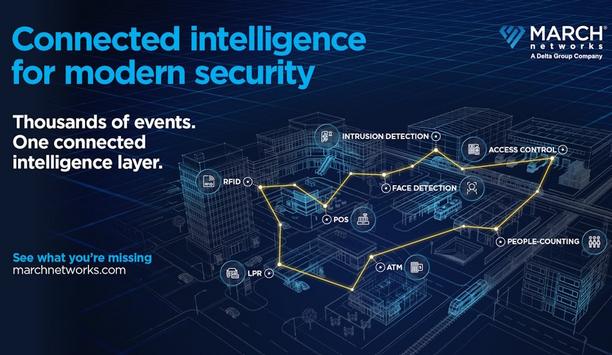
March Networks®, a pioneer in video surveillance and business intelligence, announces its 2026 mid-year product release, introducing expanded AI-powered search, new cloud video intelligence, broader VIVOTEK camera support and integration with C•CURE access control. The release is the first since the April 2026 merger of VIVOTEK’s branded business with March Networks. It marks the introduction of Connected Intelligence for Modern Security, the company's strategic approach to connecting video, data and AI across every system and site. Cloud video intelligence Organizations already capture vast amounts of video, operational data and security information. The challenge is making those systems work together. When information remains isolated, important patterns, risks, and opportunities can go unseen. March Networks connects video, data and AI to reveal what matters, helping customers investigate faster, uncover hidden patterns and act with greater confidence. “Customers do not need more disconnected systems or more data. They need the intelligence that comes when video, data and AI work together,” said Peter Strom, President and CEO of the combined March Networks and VIVOTEK organization. “This release advances the March Networks solutions our customers use today, and creates more ways to connect cameras, access control, business systems and VIVOTEK technologies. It is an important step in our broader vision for connected, intelligent businesses.” Patterns and opportunities Connected Intelligence for Modern Security defines how March Networks and VIVOTEK bring video, data and AI together to surface what matters across every system, sensor and site. At the center of this approach is a clear promise: Connecting cameras, operational data, AI and workflows through one intelligence layer helps organizations uncover risks, patterns and opportunities that isolated systems often miss. The strategic approach is built on three pillars: Connect the Ecosystem - Every camera. Every system. Every site. Connect cameras, access control, third-party systems, devices, data sources and workflows to reduce fragmentation across the environments customers already manage. Turn Sight into Insight - AI that reveals hidden patterns. AI-powered search, analytics and reporting help businesses find, validate and act on critical evidence and operational insights faster. Extend Intelligence Everywhere - From one site to thousands. On-Premise. Hybrid. Cloud. Connected solutions make intelligence accessible across roles, sites, devices and operating environments, allowing customers to deploy and scale technology based on their security, operational and infrastructure needs. Together, these pillars connect physical security, operations and intelligence at enterprise scale, helping customers move from sight to insight, faster action and better business results. The 2026 mid-year release expands March Networks and VIVOTEK's end-to-end portfolio across enterprise video management, business intelligence, AI-powered investigation, cloud services and third-party system integration. These capabilities put Connected Intelligence for Modern Security into action today and set the direction for what comes next. Enterprise video management “We have seen firsthand what's possible when customers connect video, AI, transactions and operational data,” said Strom. “For example, these connections helped a large retail organization uncover nearly $1 million in organized retail fraud that traditional reporting and manual video review had missed. When intelligence is connected and systems work together, hidden losses become visible, investigations become faster and data becomes decisive.” Get faster answers at no extra cost with Searchlight AI, now included for all Searchlight Cloud users. Spot trends and act sooner with AI-powered, on-demand analysis of business data tied to video. Find critical evidence faster with expanded face and license plate search across compatible devices. Expand camera choice and flexibility with broader VIVOTEK support across March Networks environments. Unlock business intelligence for direct-to-cloud video with the new VIVOTEK VORTEX and Searchlight Cloud integration. Investigate access events faster by connecting C•CURE access control with March Networks Command Enterprise Software. Demonstrating product capabilities Together, these capabilities expand the devices, systems, data sources, deployment models and workflows customers can connect across their security environments. March Networks will bring Connected Intelligence for Modern Security to life by showcasing its newest solutions with VIVOTEK at Global Security Exchange, GSX 2026, taking place September 14–16 in Atlanta, Georgia. March Networks and VIVOTEK will also demonstrate product capabilities, connected workflows and ongoing technology integration at the 2026 Security Exhibition & Conference, taking place September 2–4 in Sydney, Australia. Attendees will see how connected video, data and AI help operators act on what matters across retail, banking and enterprise environments, from a single location to thousands of sites.
Insights & Opinions from thought leaders at VIVOTEK
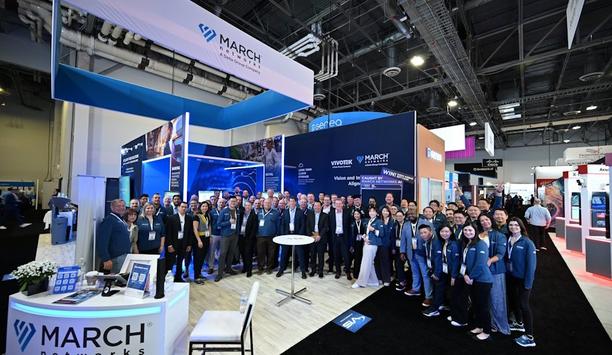
Combining VIVOTEK’s branded video security business with March Networks paves the way for the combined brands to meet customers’ increasing appetite for integrated solutions rather than individual components. The merger brings VIVOTEK's branded video security business together under one operating structure with March Networks’ enterprise-grade video surveillance, AI analytics, and cloud-managed security solutions. Customers now have access to a broader, more integrated portfolio spanning enterprise video management, advanced cameras, edge artificial intelligence (AI), cloud services, recording platforms, and business intelligence, says Net Payne, Chief Sales & Marketing Officer at March Networks and VIVOTEK. Distinct product strategies Given the combined companies, product development, sales, marketing, and customer support can move in step rather than in parallel. March Networks and VIVOTEK were already both part of the Delta Electronics family, but they previously operated as separate businesses with distinct product strategies, teams, and routes to market. March Networks and VIVOTEK announced the merger of their branded video security businesses last spring following Delta Electronics' acquisition of remaining VIVOTEK shares. “Aligning our complementary capabilities lets us innovate faster, simplify engagement, and respond more quickly to a market moving toward AI, cloud and intelligent video,” says Payne. This merger reflects a broader shift across the physical security industry, adds Payne. “Customers no longer see video purely as a tool for reviewing incidents after the fact,” he says. “They expect it to help identify risks earlier, simplify investigations, improve operations, and support better decisions across the organization.” Cloud video management Meeting customer expectations requires more than bolting AI features onto existing systems Meeting customer expectations requires more than bolting AI features onto existing systems. Rather, it requires cameras, edge intelligence, recording, software, cloud services, and business data working together as one coordinated platform. “By bringing March Networks and VIVOTEK together, we combine deep expertise across the full video technology stack while preserving the relationships, sector knowledge and customer focus both companies have built over many years,” says Payne. “Our goal is to make intelligent video more integrated, scalable, and practical for customers and partners worldwide.” Both entities bring strengths to the combined companies. March Networks brings experience in enterprise software, cloud video management and large-scale deployments; while VIVOTEK brings strength in imaging, camera technology and edge intelligence. Together they seek to ensure more choice when designing systems, a clearer path for future expansion, and technologies that work together more effectively without compromising the reliability, cybersecurity, and support customers expect from both companies. Advantages for channel partners Channel partners gain a broader portfolio to address a wider range of customer requirements, combining components as each deployment demands. Channel partners also benefit from expanded geographic reach, deeper technical expertise, and greater investment in training and enablement. “Importantly, this is designed to be a seamless transition,” says Payne. “Partners keep working with the teams and relationships they already know, while gaining access to new capabilities and certification opportunities. Over time, that alignment should make it easier to design, deploy and support complete solutions.” Because they are established and respected brands, March Networks and VIVOTEK branding will continue to be used. Rebranding is not a goal, and neither identity is being replaced by the other. Coordinated decision-making “The immediate priority is organizational alignment by making it easier for customers and partners to benefit from the combined portfolio,” says Payne. Product branding will continue to reflect the relevant portfolio and market context. As product roadmaps become more closely coordinated, customers can expect greater interoperability and a more cohesive experience, says Payne. Any future branding changes will be managed carefully and communicated clearly. Combining the businesses reduces duplication and enables coordinated decision-making across product strategy, engineering, sales, marketing, operations, and customer support. “Instead of developing capabilities independently, teams can share their expertise, align roadmaps, and direct investment to where it has the greatest customer impact,” says Payne. Combining specialized knowledge globally The combined organization operates across six continents and more than 75 countries The combined organization includes more than 300 research and development (R&D) engineers across four Centres of Excellence in Canada, Taiwan, Italy and Poland, thus bringing together a substantial base of specialist knowledge. The unified network also sharpens the ability to prioritise global opportunities, respond to regional needs and bring innovations to market faster. The combined organization operates across six continents and more than 75 countries, supported by more than 1,100 certified channel partners. That footprint provides greater capacity to support multinational customers while staying responsive to local market needs. Looking ahead, future growth will increasingly come from helping customers turn video into useful, actionable intelligence. “The market is moving beyond conventional surveillance toward solutions combining AI, cloud services, edge processing, video management and operational data — and our new structure brings these together as one connected solution rather than several isolated technologies,” says Payne. Broader technical expertise There will also be closer collaboration among specialists in imaging, hardware, software, analytics, and cloud, which is important given how much customer infrastructure, regulatory, and deployment requirements vary. The companies can support cloud, hybrid, and on-premise environments, giving organizations a practical path toward more intelligent video. More choice comes from bringing together complementary technologies across product groups. Greater scale is achieved through a larger engineering organization, broader technical expertise and more capacity to invest in innovation. Challenges for the industry at large Looking to the future for the industry at large, the greatest challenge will be managing the rapid growth of AI Looking to the future for the industry at large, the greatest challenge will be managing the rapid growth of AI responsibly, securely and at scale, says Payne. Video systems will generate more data and automate more decisions, but organizations must be able to trust how that intelligence is created, protected, and applied, he adds. “Cybersecurity, privacy, data sovereignty, system interoperability and AI accuracy are more important than ever,” says Payne. Addressing these elements requires expertise across the entire technology stack: from camera and edge processing to recording, cloud infrastructure, video management and analytics. “Together, March Networks and VIVOTEK can coordinate development across all these layers, giving customers flexible architectures that balance innovation with security, transparency and operational control,” says Payne.
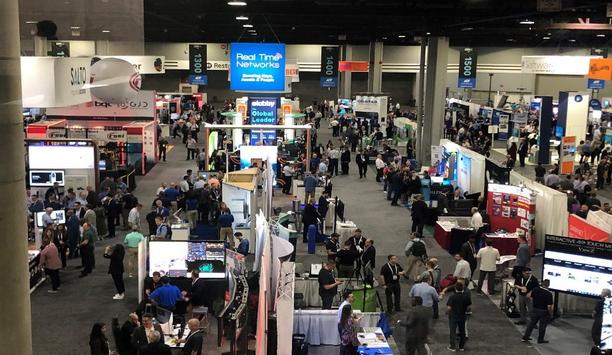
GSX 2022 this week in Atlanta highlights the changing role of security in the enterprise. The role of the security director increasingly will encompass facets of cybersecurity as well as physical security. Transitioning to an operation that incorporates both disciplines requires a workforce that embraces education and building new skills. Education and the opportunity to build new skills are evident everywhere at GSX, including in the hundreds of education sessions and also in the knowledge shared on the show floor in the exhibit hall. Risk-Based decisions “I really just do physical security.” That used to be a common phrase in the industry, but no more. In addition to ‘upskilling,’ security practitioners also need to speak the language of business and to insert the concepts of security into that language. Fast changes in security are challenging today’s professionals to keep up. The GSX education sessions seek to meet the need. Embracing ESRM includes a complete change in the thinking and approach to security Among the topics at the GSX conference is ESRM (Enterprise Security Risk Management), a security approach that focuses on risk-based decisions and partnerships with asset owners. It’s an approach that requires a holistic view of security risk. Embracing ESRM includes a complete change in the thinking and approach to security. Rather than seeking ‘approval’ for security decisions, security professionals identify risks and possible mitigation strategies and present them to management. Shaping access control Activity in the exhibit hall was brisk on the first day, which was heartening to those who attended a vastly downsized show last year in Orlando. At this show, there is even carpeting. Trends lead the lively discussions at GSX. In a presentation on the show floor Monday, manufacturer Brivo shared top trends that are shaping access control. The trends include: Hybrid work is here to stay. Some 60% of respondents to a Brivo survey said access control is extremely or very important to the hybrid work model. Providing immense value to an organization, access data helps to manage occupancy and is part of the larger discussion of facility utilization. Data analytics is ‘mission critical.’ Combining data from multiple sources, including access control, becomes powerful when leveraged using artificial intelligence (AI) and machine learning tools. Applications such as anomaly detection help companies improve operations. Some 65% of respondents to the Brivo survey say integrating access control with other technologies is an important trend. Keeping people healthy Other trends identified by Brivo include mobile credentialing and security centralization (cloud) Other trends identified by Brivo include mobile credentialing and security centralization (cloud). Among other exhibitors, Johnson Controls is focusing in their booth on solutions, not products, including the convergence of physical security into the digital space. The OpenBlue system is a digital platform that incorporates security, HVAC, fire/life safety, and building operations in a single platform that is the ‘nerve center’ of an organization. Increasingly, the areas ‘security’ is responsible for are expanding. During the COVID pandemic, for example, security had to embrace a role in keeping people healthy (as well as safe). The challenges of the pandemic accelerated the OpenBlue portfolio as more security professionals expanded their role. Security operations center “Moving into the digital space, and digitizing what used to be a security operations center, enables us to increase automation and enable security operations to respond more quickly,” said Kenneth Poole, Johnson Controls’ Vice President, National Accounts, North America Building Solutions. Security directors are responsible for things they have never been responsible for before" “Surprisingly a lot of customers are being forced into new areas,” Poole added. “Security directors are responsible for things they have never been responsible for before.” Poole says he is encouraged by the willingness of ‘old school’ security directors to embrace the new reality. Azena’s approach to supplying edge-based camera applications on an ‘app store’ is gaining momentum. Several new applications are being announced at GSX, among the 110 apps on the Azena app store. Apps can be loaded onto Azena-enabled cameras manufactured by Bosch, Hanwha, Vivotek, BST, TopView, and Ability. Video management system Azena has simplified the integration of its app solutions, enabling developers to make only slight changes to an app and ensure it is compatible with the largest video management system (VMS) platforms, including Milestone, Genetec, and NX Witness. A wizard on the camera enables simplified mapping of data analytics to events in a VMS system. New applications in the Azena app store include video sensors to prevent ‘bed fall’ accidents in hospitals and healthcare facilities, incidents that can cost $35,000 on average and account for $34 billion in the United States in a year. The app identifies video signs of an imminent bed fall, such as excessive movement in bed. The analytics run inside the camera and the video feed doesn’t leave the device, so there are no privacy concerns. An Azena app is installed in a camera mounted on ‘Yellow,’ the ‘robot dog’ manufactured by Boston Dynamics Effectiveness of metal detectors Another new application is gun detection that can augment the effectiveness of metal detectors. Also, an Azena app is installed in a camera mounted on ‘Yellow,’ the ‘robot dog’ manufactured by Boston Dynamics and configured for security applications by Prosegur. An Azena app is installed in a Vivotek AI box on the back of the dog; it can detect fire, smoke, and moved luggage. Azena apps for flare and leak detection are becoming more popular in the oil and gas industries, and there are camera apps that can monitor tank levels. Cisco Meraki is introducing two new camera models at GSX, with 4K and 4MP options, a terabyte of storage for 4K, and 256Gb of storage for 4MP. Air quality sensors The cameras will allow most customers to record 30 to 90 days of video in the camera at the edge The cameras will allow most customers to record 30 to 90 days of video in the camera at the edge. Also at the show, they introduced a push button and air quality sensors that are easy to incorporate into a Cisco Meraki application. Cisco Meraki also offers a dashboard that is integrated with the rest of the product portfolio to enable users to view devices on the same interface and in the same ‘pane of glass.’ For physical security users, there is the Meraki Vision Portal, which enables physical security users to run a more effective investigation. Features include a floor plan view and the ability to switch among multiple cameras. Users can instantly search videos using ‘motion search’ to easily find an event in a video.

Technology is driving new opportunities in the security industry. Innovation trends include artificial intelligence (AI), edge-based systems, mobile systems, a greater focus on software, and efforts to simplify operation of security systems, even as capabilities become more complex. ISC West 2022 reflected these changing trends. “In addition to emphasizing technology innovation, ISC West also reflected an industry that is resilient, dedicated and passionate,” said Mary Beth Shaughnessy, the Event Director of ISC Security Events. ISC West 2022 “Almost 12,000 dealers, installers, integrators, end users and consultants reconnected at ISC West 2022, and there were nearly 20,000 total industry professionals in attendance (including manufacturers),” adds Mary Beth Shaughnessy. The 550 exhibitors and brands on display reflected an industry that has come through the COVID-19 pandemic in better shape than ever, poised for even greater success in the years ahead. Turning video and access control into knowledge Deployment of AI to ‘watch video’ can inform users of what’s happening in real-time Motorola Solutions emphasized several themes that were heard repeatedly throughout the show. “One trend is fulfilling the need to turn video and access control into sources of knowledge, inside the enterprise,” said John Kedzierzski, Motorola Solutions’ Senior Vice President of Video Security and Access Control. Deployment of AI to ‘watch video’ can inform users of what’s happening in real-time, while monitoring access control yields the equivalent of an operating system inside a building. Using the Cloud offers consumer ease-of-use to systems The second trend listed by Motorola Solutions is working to bring the consumer ease-of-use experience into enterprise security solution applications. Professional security systems were previously complicated to buy, install, manage and upgrade. However, using the Cloud, even distributed enterprises can bring consumer ease-of-use to systems, from improving the out-of-box installation experience to boosting the ability to manage the system. Transition to ‘mobile first’ interfaces The third trend emphasized by Motorola Solutions is transition to ‘mobile first’ interfaces, reflecting the need for busy security executives to be on-the-go, but with full access to their systems, without being chained to their desks. Since the last springtime ISC West show in 2019, Motorola Solutions has grown rapidly, both organically and through acquisition of IndigoVision, Pelco, Openpath, Envysion, and Ava Security. Cloud-based Orchestrate system Integration is simple through a ‘drag-and-drop’ approach that doesn’t involve writing code In addition, the company is making it easier to integrate video and access control systems with Motorola’s radio systems, typically carried by security guards. The cloud-based Orchestrate system translates ‘events’ from access control and video, to trigger notifications on a mobile radio. Integration is simple through a ‘drag-and-drop’ approach that doesn’t involve writing code. Simplifying implementation of AI Artificial Intelligence (AI) has traditionally been associated with the use of large servers or even intelligence in the Cloud. Several exhibitors at ISC West helped to change that misconception. For example, Oosto offers a simpler and more economical approach. They supply edge appliances for AI. The purpose-built Vision AI appliance, a small box, puts intelligence at the ‘near edge’, by connecting to up to five cameras. Easy and dependable ‘failover’ ensures redundancy without a big investment, and the system can work with any IP camera, including an end user’s installed base of cameras. Oosto’s TCO (total cost of ownership) calculator Oosto’s TCO (total cost of ownership) calculator spells out how much a customer can save versus using a big server, including lower costs such and power and cooling. AI was probably the biggest buzzword at ISC West, but there was also emphasis on the practical results of applying AI to physical security. Artificial Intelligence (AI) - the biggest buzzword at ISC West I believe our purpose is to bring buzzwords, like Cloud and AI together in a way that is useful to end-users" “What surprises me (at the show) is that there is a lot of generic marketing of AI, but we are trying to step back from our analytics and look at applications that serve certain end-users,” said Jeff Corrall, Vice President - Product Management at March Networks, adding “As an industry, we are still at the stage of AI as a buzzword.” Jeff Corrall further said, “I believe our purpose is to bring buzzwords, like Cloud and AI together in a way that is useful to end-users. We have to live with the buzzwords, but what we really want is to apply them. That creates a stickiness with the end-user — when high technology is making a difference.” March Networks Labs address specific end-user problems and then apply their systems to provide a solution. Jeff Corrall adds, “A lot of AI is responding to what the customer is asking for, and we are stepping back and making sure the end-user will use it on a consistent basis.” ‘Edge versus cloud’ was a common theme at ISC West Edge versus Cloud ‘Edge versus cloud’ was a common theme at ISC West, pondering where in a system the ‘intelligence’, such as AI and machine learning, as well as other functionality, should reside. Among the companies addressing the quandary was Axis Communications, which focused on the issue using a racing theme at their presentation to the industry press. The winner of the ‘race?’ - The combination of both approaches working together as a team, of course. AXIS Speed Monitor on exhibit One introduction at the show was the AXIS Speed Monitor, a speed detection app available using ACAP Axis Communications also highlighted the deep learning analytics of the ARPEC 8 camera chip (introduced during the COVID-19 pandemic), which will be deployed across their camera line. One introduction at the show was the AXIS Speed Monitor, a speed detection app available using ACAP (Axis Camera Application Platform), the capability to load ‘apps’ onto camera chips at the edge. They also introduced the D4100-E Network strobe siren (a smart edge device), the Audio Manager Pro (a cloud-based software system enabling zoning and callouts for specific areas in a building), the W101 body worn cameras with GPS capabilities, and a Barcode Reader for doorstop applications (another ACAP app). ‘App Store’ approach to expanding applications Azena is at the center of expanding applications at the edge, promoting new applications through an ‘App Store’ approach that sells software apps that can be loaded onto cameras that are equipped with Azena’s operating system. In the last couple of years, the company (formerly known as Security and Safety Things) has expanded its offerings. There are currently 108 apps in the store from 30 to 40 app developers. There are 14 camera models (from six manufacturers) that are commercially available and run their operating system. The newest camera is a fisheye model from Vivotek. “What we have seen is that a lot of the use cases are pretty unique,” said Fabio Marti, Vice President - Marketing for Azena. Two examples are an application that monitors a flame to ensure it is burning cleanly (no smoke). Another system monitors nets covering fish farms to avoid birds getting tangled up in the nets. Fabio Marti said “A challenge is to find new business avenues for integrators. Everybody is not eager to look beyond their comfort zone.” Focusing on software to ensure user experience Software systems are one of the major focal points for innovation in security systems Software systems are one of the major focal points for innovation in security systems and Verkada is focusing on how software innovation can improve systems. “For decades, innovation was on the hardware front,” said Filip Kaliszan, Verkada’s Founder and Chief Executive Officer (CEO), adding “We saw an opportunity for more innovation on the software side. The customer experience revolves around software.” Ensuring an end-to-end experience “We want to guarantee an end-to-end experience,” adds Filip Kaliszan. As a new company with a ‘hybrid cloud’ approach, Verkada focused on appealing to end users to convince them of the value proposition. Once an end user was convinced, Verkada brought in an integrator partner to deliver the solution. In effect, Verkada finds demand and brings that demand to the integrator. Software-centric operation of a modern building Verkada is broadly focused on ‘software-centric operation of a modern building.’ After starting out in video, Verkada has since expanded into systems for access control, alarm systems, and other categories. They use a combination of third-party hardware and equipment that is custom designed to work seamlessly with their software systems. Verkada’s end goal is to put the various systems together into a platform. They will continue building each product category, which will eventually be unified into ‘the operating system for the building of the future.’

The Key To Unlocking K12 School Safety Grants
Download
Honeywell GARD USB Threat Report 2024
Download
Physical Access Control
Download
The 2024 State Of Physical Access Trend Report
Download
The Security Challenges Of Data Centers
Download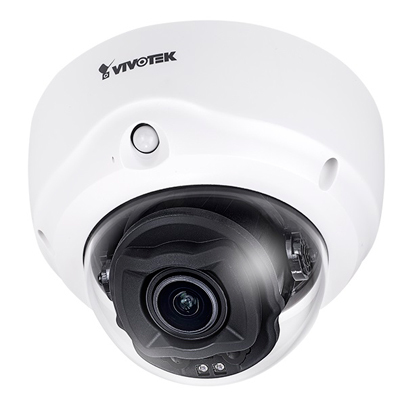
VIVOTEK Indoor Dome Camera
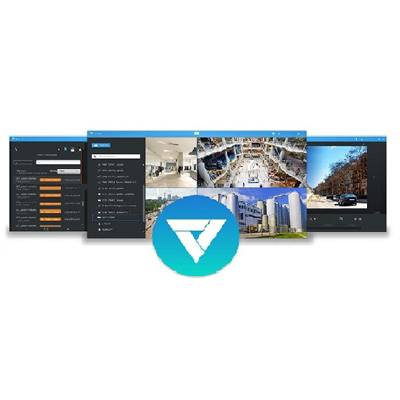
New Management Experience With VIVOTEK VAST 2
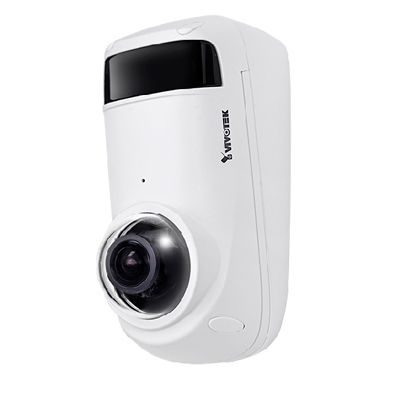
VIVOTEK 180-degree Panoramic Camera