Siemens Building Technologies - Experts & Thought Leaders






































Latest Siemens Building Technologies news & announcements

With its new Managed Detection and Response (MDR) service, Siemens Smart Infrastructure is strengthening cyber resilience for energy suppliers and operators of energy-intensive industries and critical infrastructures like data centres and airports. As information technology (IT) and operational technology (OT) continue to converge, companies are being challenged to manage a growing flood of security alerts. They often lack the required staffing with the appropriate expertise and 24/7 availability. Analysis of potential incidents The new service from Siemens addresses this gap and helps companies operate their increasingly digitalised systems securely, in compliance with NIS 2 EU-wide legislation concerning cybersecurity and from a single source of trust. Compared to setting up in-house 24/7 Security Operations Center (SOC), Siemens' MDR service reduces investment costs by up to 80 percent. Ongoing operating costs for cyber defense are reduced by up to 50 percent through a predictable and scalable service model that is NIS 2-compliant. The MDR service provides 24/7 protection through monitoring, analysis of potential incidents, and recommendations for action. This enables up to 90 percent faster defense against cyber threats. The process begins with collecting security-related data from the customer’s IT and OT systems, which is securely transmitted to the Security Operations Center (SOC). Proactive threat detection The core task is alarm assessment and incident handling: Incoming events are analyzed, classified, and prioritised from false alarms to critical incidents. Based on this, the customer receives specific recommendations for mitigation and resolution. To ensure smart and proactive threat detection, the detection rules are continuously maintained, expanded, and adapted to new threat landscapes. “Today, energy security is inextricably linked to cybersecurity. This is precisely where we offer our customers crucial support,” said Stephan May, CEO of Electrification and Automation at Siemens Smart Infrastructure. “Our MDR service combines technology with the expertise of our OT specialists. This allows operators of critical infrastructure to focus on their core business while we protect their systems from cyberattacks. This is the only way we can securely advance the digital transformation and help accelerate the energy transition.” Safeguarding operational systems One of the first companies to benefit from this comprehensive protection is Hertener Stadtwerke, a municipal utility in Germany. It is already using the new MDR service to safeguard its operational systems. “The requirements for cybersecurity, especially for critical infrastructures like ours, are constantly increasing,” said Stefan Burkert, Head of Communications Technology at Hertener Stadtwerke. “The MDR service from Siemens is a crucial building block for us to meet these requirements and protect our critical infrastructure. It helps us comply with regulations and gives us peace of mind knowing that our systems are monitored by experts at all times. It allows us to focus on ensuring a reliable energy supply.” The MDR service provides the highest level of cybersecurity in accordance with the principles of the Charter of Trust. Siemens thereby helps operators of critical infrastructure worldwide to drive their digital transformation forward in a secure, scalable, and cost-effective manner. Initiated by Siemens, the Charter of Trust calls for binding rules and standards to build trust in cybersecurity and further advance digitalisation.
Data isn’t just the driver for project planning and design. The Eplan Data Portal offers users access to high-quality product catalogs from a continually growing pool of renowned component manufacturers. The portal has now passed the mark of more than two-million sets of static device data from around five hundred manufacturers! By using integrated configurators, users have far more than four million data sets at their fingertips. It’s a nearly limitless and ever-increasing variety of components that can quickly and easily be integrated into projects – and the data quality is naturally top notch. Data excellence in action More than four million device data sets available means an enormous amount of variety for projects More than four million device data sets available means an enormous amount of variety for projects. However, it isn’t just the quantity, but rather the quality of the data. “Quantity and quality is something that goes hand in hand for us,” says Eplan Head of Content Quality Management Rainer Ackermann. “We have high expectations for the quality and completeness of the data sets so that we can offer our users the greatest possible added value. That’s also why we continue to work on the Eplan Data Standard, or EDS.” Manufacturers are also striving to meet these expectations of providing data sets that are as comprehensive as possible. This can include components for control cabinets, the 3D representation of a device, dimensions for drilling patterns, connection diagrams as well as commercial data, device numbers and text descriptions. Siemens automation and technology integrated Siemens has been represented in the Data Portal with energy automation and building automation products for many years. Now, protection and automation devices from the Siprotec 5 family have been added. Protection, automation, and monitoring of the power grid are essential for a resilient network. "We need a secure and reliable power supply to establish a sustainable infrastructure and achieve our net-zero goals," explains Stefan Werben, Portfolio Manager of Siprotec Medium Voltage Products at Siemens, adding:"We are pleased that we can now additionally support those customers who have chosen Eplan as their engineering platform to efficiently realize their projects in the construction, operation, and expansion of plants." Innovation in building control Sauter, a pioneer technology manufacturer in the field of building automation, system integration and building services, headquartered in Basel, Switzerland, and Freiburg, Germany, added to the Eplan Data Portal their ecos504/505 range of products for integrated room automation. “The positive feedback from our customers as well as from within our own company has motivated us to provide even more device data in the Eplan Data Standard,” says Sauter Head of Marketing and Product Management Peter Schoenenberger. Data depth ensured Rittal has around 7,300 devices stored in the Eplan Data Portal, these include cabinets, and cabinet accessoriesA majority of the device data stored in the portal – 1.4 of more than 2 million components – are already available in the Eplan Data Standard. The EDS increases and guarantees the quality of the data sets so that they can be used efficiently – ideally from engineering through to production. Rittal has around 7,300 devices stored in the Eplan Data Portal – around 5,600 of them in the Eplan Data Standard. These include control cabinets, control cabinet accessories, Blue e+ climate control devices and more. There are almost no limits globally speaking as well: If a device data set is created using ECLASS as a step file in an IEC format (the European standard), the Eplan software automatically also supports the NFPA device data set (the American standard). Simplify data with Eplan With this multi-standard support in one single data set, macros can also be saved in accordance with various standards that the Eplan Electric P8 software then recognizes automatically. Furthermore, modifiable data from configurators and selectors of various manufacturers can also be used. These have linked their product catalogues directly with the Eplan Data Portal. Development continues Less visible but at least as important is the continued development of the data quality in the Eplan Data Portal. This year the focus is on preassembled cables. To ensure that machine cabling works as efficiently as possible with the new Eplan Cable proD solution, 3D data for the connectors is also being successively introduced. Technically speaking, functional improvements are also on the horizon: The Eplan Data Portal will be able to be directly integrated into local device management with the upcoming release of the new Eplan Platform 2026. This will again even further simplify selecting components and accelerate project planning and design work.
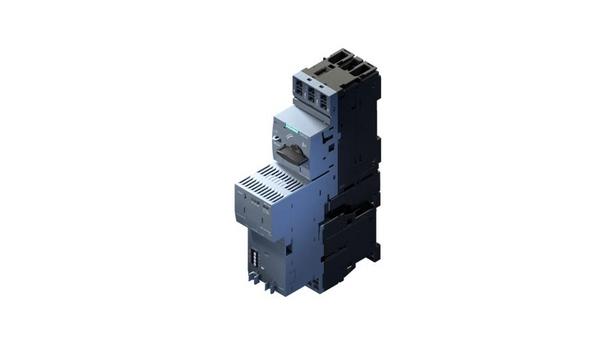
With the SIRIUS 3RC7 intelligent link module, Siemens now offers a quick and easy way to gain complete data transparency down to the field level. The plug-and-play expansion module combines information technology (IT) and operational technology (OT) with minimal installation and commissioning effort. This means that the data available at the load feeders can be used efficiently. SIRIUS modular system SIRIUS 3RC7 is part of the SIRIUS modular system, the vast portfolio for industrial controls As part of the pioneering automation concept Totally Integrated Automation (TIA) from Siemens, the SIRIUS 3RC7 intelligent link modules are seamlessly integrated into the existing automation environment. SIRIUS 3RC7 is part of the SIRIUS modular system, the comprehensive portfolio for industrial controls. “Transparency down to field level is becoming increasingly important. However, many devices are not connected to the automation system, which means important data is missing," said Andreas Matthé, CEO of Electrical Products at Siemens Smart Infrastructure. Siemens’ comprehensive solution Matthé added: "By digitalizing the field level, we are creating a new dimension of transparency and enabling data-driven decisions.” A variety of load feeder parameters can be collected and evaluated directly, including voltage, current, phase imbalance, number of overload trips, and much more. The integrated diagnostic functions help detect and correct faults more quickly. Among other things, the data can be used for Senseye Predictive Maintenance, Siemens’ comprehensive solution for predictive maintenance. It uses artificial intelligence, for example to examine current fluctuations for anomalies that indicate a defect. This significantly increases the planning reliability for maintenance, availability, and cost-effectiveness of the system. SIRIUS 3RC7 intelligent link Thanks to full integration in TIA, users obtain up-to-date status data in their operating software Thanks to full integration in TIA, users receive up-to-date status information in their operating software. In addition, when using special apps such as Node-RED, they have access to a dashboard to quickly identify bottlenecks. This prevents downtime and increases the availability of the system. The SIRIUS 3RC7 intelligent link modules integrate perfectly into the compact SIMATIC ET 200SP I/O system as well as any other common automation system. Up to 16 load feeders can be connected per BA-Send module bus adapter in order to benefit from the simple commissioning, individual scalability, and maximum flexibility offered by the SIMATIC ET 200SP. SIMATIC ET 200SP I/O system In conjunction with SIRIUS switchgear and the compact SIMATIC ET 200SP I/O system for control cabinets, SIRIUS 3RC7 intelligent link modules ensure reliable and efficient data exchange between OT and IT. The addition of the new SIRIUS 3RC7 intelligent link module to the existing SIRIUS portfolio (modular system) has created a new, enhanced product: the SIRIUS Intelligent Load Feeder. The SIRIUS Intelligent Load Feeder is a pre-assembled digital feeder consisting of a SIRIUS 3RV2 circuit breaker, a SIRIUS 3RT2 contactor, and the intelligent link module.
Insights & Opinions from thought leaders at Siemens Building Technologies
The Physical Security Interoperability Alliance (PSIA) was founded in 2008 with a goal of creating ‘plug-and-play interoperability’ among physical security devices, systems and services. Since then, the organization’s mission has both expanded to include logical security and focused more narrowly on identity, a critical aspect of security today. In recent years, PSIA has concentrated on its PLAI (Physical Logical Access Interoperability) specification, which provides a means to enable disparate physical access control systems (PACS) to communicate to each other and share employee identity data. This is especially important for companies who have made acquisitions and inherited different incompatible PACS systems. “PLAI can unify a security environment through one trusted source, even if there are multiple PACS systems,” says David Bunzel, Executive Director of the Physical Security Interoperability Alliance (PSIA). Bridge between disparate PACS The PLAI specification provides a bridge between disparate PACS, allowing a single trusted source for identity management. Leading PACS vendors including JCI (Software House), Lenel, and Kastle Systems and biometric vendors including Eyelock, Idemia, and Princeton Identity, have each implemented PLAI adapters, supporting this specification. AMAG will have their adapter in the coming months, and Honeywell and Siemens have it on their road maps. At ISC West last April, PSIA was able to demonstrate five of these vendors sharing records and the ability to add and terminate an employee and have it updated across each PACS and biometric system. PSIA was able to demonstrate five of these vendors sharing records at ISC West last April The Physical Security Interoperability Alliance (PSIA) has evolved from supporting physical security to also integrating logical security. Access to facilities and secure areas of buildings is increasingly dependent on software and hardware systems which can validate a person’s identity. “The PSIA has chosen to focus on interoperability between identity management systems and access control devices,” says Bunzel. “We have successfully demonstrated the technology, and it is now being specified by consultants, integrators and enterprise customers in actual security systems. We expect to see some large companies announcing PLAI implementations in the next quarter.” Open standards processes PSIA relies on an open standards process, with collaboration among leaders in the various parts of the security industry. Specifications are architected, discussed, drafted, and reviewed by members of the organization in technical committees. The process is dynamic, with periodic updates added, which will improve and enhance the specifications as appropriate. The PSIA has focused on identity management for enterprise customers, says Bunzel. “We have active members who make devices that support access hardware (for example, locks and biometric systems) who by design complement PACS vendors and HR management systems.” PLAI also enables a variety of services for enterprise customers that may rely on a security credential" “We continue to add more PACS and biometrics vendors to the PLAI ecosystem, expanding the value of the specification in the market,” says Bunzel. “PLAI also enables a variety of services for enterprise customers that may rely on a security credential, including printing services, parking, and facility management. In the near future, the PSIA expects to extend PLAI into elevators. There are other identity management capabilities, and the PSIA will evaluate opportunities as the market demands them,” says Bunzel. In addition to PLAI, PSIA has several ‘legacy’ specs, but they are not actively working on further iterations. PSIA could always consider new development on legacy specs if the market demanded it. Some legacy specs address video, and security cameras often work with access control systems. However, PSIA currently is leaving video to ONVIF. The near-term direction and plan for the PSIA is to focus on PLAI and its commercialization.

One of the biggest recent security divestitures in the news was the sale of Mercury Security to HID Global, which occurred around a year ago. The seller in that transaction was ACRE (Access Control Related Enterprises), also the parent company of Vanderbilt and ComNet. We recently spoke to founder and CEO Joe Grillo, a 30-year industry veteran, about the mergers and acquisitions (M&A) market, ACRE’s future, and new opportunities opened up by the Mercury sale. Q: What’s new with ACRE? Grillo: We have an opportunity to have organic growth and to have some scale on a global basis to be a decent size player" ACRE is a company I founded in 2012, and since then we have had six acquisitions and one divestiture. We’ll never focus on ACRE as a brand, but we currently have more visibility of ACRE as a parent company with our two strong brands, ComNet and Vanderbilt. Last year was a very busy year [with the sale of Mercury Security to HID Global] because it takes as long to sell a brand as to buy one, maybe more so. Q: What’s next? Grillo: What you are seeing from us this year is that we are again in a buying mode. No announcement yet, but we expect one by the end of the year. We are well-funded, have great partners, and see an opportunity to continue to grow acquisitively as our highly fragmented space of access control continues to consolidate. From the standpoint of ACRE, with the ComNet and Vanderbilt brands, we are also doing more integration on the backside – not what the customer sees. We will continue to grow toward a $200 million business. We were there when we owned Mercury, and we will get there again. We have an opportunity to have organic growth and to have some scale on a global basis to be a decent size player. Because ACRE are owned by a private equity company, we are brought into every opportunity: ComNet is a good example" Q: Do you see the M&A market being more competitive – more companies looking to acquire? Grillo: There’s a lot of money chasing not-so-many deals, so evaluations can get expanded. But as interest rates creep up, it is definitely a challenge to find the right valuation, the right financing and the right strategic fit. It is a very strategic market. Q: There have been some big acquisitions lately. Were you guys involved at all in evaluating those opportunities? Grillo: Because we are owned by a private equity company, we are brought into every opportunity. An example of that was ComNet. I would not have been aware that the founder passed away two years ago and that there was this opportunity to own the business. So we look at everything; anything that’s out there we look at. The biggest recent announcement in our world was S2 (being sold to UTC/Lenel), and, yeah, we looked at that. It didn’t fit our profile – it was too expensive. Great business, and it’ll be interesting to see how it fits into the UTC environment. There was also Isonas [which was recently sold to Allegion], but the size didn’t add enough scale, but I like the technology. ComNet sells communication networking solutions and products, which is more attractive than video systems for ACRE Q: So what are you looking for in an acquisition? Grillo: It’s hard for us to find something that moves the needle, and you have to find that right balance. Is it something we can digest and have the financing for, and also is there room on the back end? We are private equity-owned, so we know there will be an exit for our investors, too. So we have to find the right balance, good valuations, the right size and digestible. If you look at our acquisitions, we have done two “carve outs.” The Vanderbilt name didn’t exist until we bought the business from Ingersoll Rand, and then we bought the [intruder] business from Siemens. That’s how Vanderbilt came about. You get a lot of value when you carve out a business, but there’s a lot of work. In the case of Mercury or Access Control Technology (ACT) that we acquired; they were growing and profitable but they stretch your finances a lot more. So you have to find the right mix in there. Q: Does video interest ACRE at all? Grillo: We have to find the right balance, good valuations, the right size and digestible"ComNet is our video play. ComNet sells communication networking solutions and products, and 70 to 80 percent of that is used for video systems. But unlike cameras, which don’t interest us, it’s actually good margins, highly specialized repeat business and with good channel partners. So where are we going to play? Cameras – no (because of commoditization). We have some recorder technology (from the Siemens acquisition) and we have the communication networking technology (with ComNet). On the software side, we have looked at a lot of the VMS companies, and a lot of them have been on the market. But the valuation expectations can be high because they are software companies. And we really believe in partnering as a good thing, too. If we integrate to Milestone or Salient or some of these companies, we will never lose an access control client because they chose a particular VMS. Q: ACRE is also looking to grow organically, isn’t it? Grillo: From a technology perspective, we are a product company and we are continuing to bring new products to the market with the ComNet communication networking business and the access control business. And in Europe, we have a third leg of the stool, which is the very successful intrusion and burgular alarm business we acquired from Siemens (SPC products now sold under the Vanderbilt brand). That business continues to do well and is now one of the highest performing segments in our portfolio.The intrusion and burgular alarm continues to do well and is now one of the highest performing segments in our portfolio" Q: But you don’t have to own a company to make it part of your solution. Grillo: An important word is integration. We have to integrate to all the wireless locks. We have to integrate to the VMS systems. But we don’t have to own them. Q: How has the Mercury Security divestiture impacted the rest of your business? Grillo: It has opened up the opportunity for us to look at Mercury partners as possible acquisition targets without worrying about conflicts with the very good business of Mercury. We have more flexibility now compared to the Mercury era. Q: How will the economic cycle impact the security market? Grillo: Interest rates are a much bigger issue than the overall economic cycle. We talk a lot about it with our owners – clearly interest rates are tightening up. If you go out to do acquisitions or to borrow money to do something with your business, it will be tougher than it was two years ago, and it may get worse in the next two years. Security is less impacted by the economic cycle than some industries.
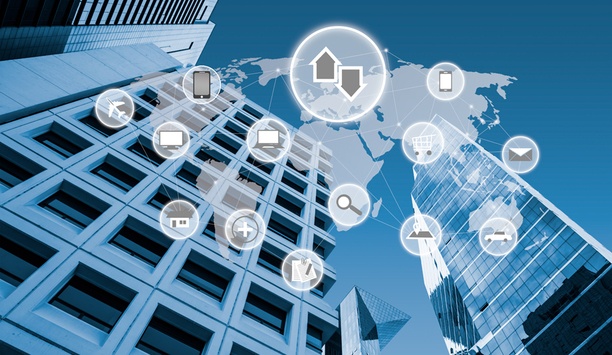
By drawing data from a number of different sources and subsystems, including building automation, it is possible to move towards a truly smart environment Security solutions should be about integration not isolation. Many organizations are considering their existing processes and systems and looking at how to leverage further value. Security is part of that focus and is a central component in the move towards a more integrated approach, which results in significant benefits. Gert Rohrmann, Technical Manager for the solutions division of Siemens Building Technologies UK, examines how by drawing data from a number of different sources and subsystems, including building automation, it is possible to move towards a truly smart environment.For larger systems that can leverage existing IT network infrastructures, integration is an important factor. It makes sense to move away from a single discipline approach to one that views security in a more holistic way. This applies not only to the integration of different security functions, but also how security and safety can be integrated into general business processes. The market has moved significantly in connectivity terms, particularly with the development of open architecture.New Physical Access Control StandardsOriginally driven by the network video sector, the focus for the security industry has switched to the adoption and development of new physical access control standards with a push to build compliant devices. Open architecture continues to develop around the BACnet protocol, particularly in the building management systems environment, with a further drive towards standard protocols in the security arena led by industry forums such as ONVIF (Open Network Video Interface Forum) and PSIA (Physical Security Interoperability Alliance). Supporting customers to move away from proprietary communication protocols, providing software through cross-domain management and command and control solutions will become an increasing focus as the trend towards integration and standard IT solutions accelerates. Operational teams require intelligent and integrated management tools as the business environment becomes more complex. The focus for the security industry has switched to the adoption and development of new physical access control standards Enterprise Resource Planning Software Smart cards have the potential to enhance workplace security through the inclusion of authentication for accessing the IT network and applications, digital signature and email encryption, biometric data, printer access management and other ‘bolt on’ functionalities such as cashless vending. Increasingly, standardized and certified interfaces are being established with Enterprise Resource Planning software systems such as SAP and Human Resources, as well as facilities management. This ability to interface with data sources enables an automated process for identity management, including automatic assignment of access entitlements based on the individual’s role and responsibilities. The operational cost savings, increased data consistency and security that can be achieved is significant.Enhanced Energy EfficiencyAn important area of integration is to enhance energy efficiency and subsequent cost savings. Security has a vital role to play in this process as the security systems provide the information relating to the occupancy of a building. At its simplest, if the alarm detection or access control system knows that no-one is present in a given room, the heating, ventilating, lighting and air conditioning systems can be automatically adjusted to reflect the situation. It is also possible to set building conditions based on the person that has entered Furthermore, it is also possible to set the conditions based on the person that has entered a building, as the access control reader will know the identity of that individual and their role. An example would be lowering the temperature for cleaning staff, whose role is more physically active than that of an office worker carrying out more sedentary tasks for a longer period of the day.Intrusion And Emergency ManagementAnother benefit of integrating security and building management systems is the ability to handle an emergency incident. In the event of an intrusion, the appropriate lighting and surveillance video cameras can be activated automatically, or in response to an emergency evacuation, wayfinding instructions can be set in motion to ensure safe exit.Enhancing Fire ProtectionObtaining a return on investment is an important factor in implementing integrated management systems and capitalizing on synergies between core subsystems - such as security and fire safety protection, power, communications and building energy management – makes it possible to minimize or remove system overlaps, thereby saving money and improving manpower allocation. It is common for security and fire safety systems to operate independently; however, deep integration across security and fire technologies will not only offer higher levels of performance from these areas, but also create a fully automated approach to task handling and incident management by extending cause and effect to include security within life safety systems. Deeper integration will enable identification and analysis of unusual behaviour and facilitate more proactive decisions We are familiar with security subsystems such as CCTV, alarms, access control and perimeter protection working together to protect assets and restrict entry to specific areas; however, fire safety systems such as fire detection and clean extinguishing still usually work in isolation. Deeper integration will enable identification and analysis of unusual behavior and facilitate more proactive decisions. By combining a wide variety of systems and creating a logical sequence, it is possible to limit potential damage. For example, in the event of fire, a workflow-oriented approach driven by security and safety devices would maximize protection across the site, as video surveillance cameras would verify the situation, ventilation systems would adjust to prevent smoke from spreading, escape routes would be activated and live messaging would alert relevant personnel and facilitate safe, orderly evacuation. The integration of these multiple technologies would enable a complete incident record to be collated and communication with the access control system would create an instant roll call of people on site.Fully Integrated Security InstallationSiemens has installed a fully integrated fire, security and energy management solution at Sabiha Gökçen International Airport in Turkey. This intelligent solution has been designed to deliver first-rate protection and maximum energy efficiency for the airport’s passengers, staff and assets and the general public. The operator can view displays of alarms, messages and the status of all connected systems The safety and security system required the installation of 200 video surveillance cameras and 28 digital recorders, and 9,000 Sinteso fire detectors combined with 400 carbon monoxide gas detectors, all fully integrated to provide maximum levels of protection. The operator can view displays of alarms, messages and the status of all connected systems and the modular architecture makes it both cost-effective and scalable. In the event of evacuation, an integrated voice notification system using 4,600 loudspeakers will be activated automatically.Total Integrated Power SystemTo further enhance safety, a Total Integrated Power system enables power distribution from the medium voltage supply right through to the socket outlet, providing maximum control and improved protection, helping to detect any irregularities in the energy distribution system to prevent the possibility of a fire or power failure. The solution has the flexibility to adapt to changes in usage and requirements and can be expanded at any time in the future Cost And Energy Efficient SystemsThe Siemens Desigo building automation system measures 11,000 data points and reacts by raising blinds, turning off lights and reducing or increasing heating and air conditioning, thereby saving energy and ensuring a comfortable environment inside the terminal.The integration of security, fire safety and energy management means that all the disciplines are fully coordinated to ensure that the airport buildings are safer, more comfortable, more efficient and economical. The solution has the flexibility to adapt to changes in usage and requirements and can be expanded at any time in the future, thus maximizing the value of the original investment.Integrated And Automated Security ManagementAt a corporate level, successful integration contributes to the delivery of strategic and operational objectives and on a day-to-day level, provides a safe and efficient working environment, which is essential to the performance of any organization. Businesses are increasingly demanding technology that will assess and manage critical situations, distribute information and co-ordinate and manage resources. It is common for building systems to operate independently; however, deeper integration of building management with security technology will not only offer higher levels of performance and greater energy efficiencies, but also create a fully automated approach to task handling and incident management.