Security-Net, Inc. - Experts & Thought Leaders






Latest Security-Net, Inc. news & announcements

Security-Net, Inc., a network of security system integrators, is pleased to welcome its newest member, John Wever, chief technology officer of ITD Texas (Integrated Technologies and Design), with offices in El Paso and the Dallas-Fort Worth area. With the addition of ITD Texas, Security-Net strengthens its presence in the Southwest while adding a member with deep expertise in federal government and mission-critical security projects. Founded in 2010, ITD Texas is a full-service electrical and security systems integrator providing fire detection, access control, video surveillance, intrusion alarm systems, and structured cabling solutions to a wide range of industries, including federal government, healthcare, and education. High-security installations The company has built a strong reputation for delivering complex, high-security installations, including work with the Department of Defense, Department of Homeland Security and other state and local government agencies. Wever, who co-founded the company alongside his wife Marcia, brings a strong engineering background to the business, with experience spanning electrical infrastructure, substations, and advanced security systems. Under his leadership, ITD Texas has grown to approximately 30 employees and expanded its footprint to include a pair of offices to provide broad coverage for customers in Texas. Operational and business practices “Security-Net is a group I’ve known and respected for many years,” said Wever. “We’ve collaborated with several members on projects in the past, and I’ve seen firsthand the strength of the network. Joining Security-Net gives us the opportunity to learn from experienced business leaders, adopt best practices, and continue growing our company to the next level while also supporting other members in Texas and beyond.” Through its participation in Security-Net, ITD Texas aims to leverage the organization’s collaborative environment to strengthen its operational and business practices, while contributing its expertise in federal government projects and emergency service response. The company’s presence in Texas, one of the country’s largest and fastest-growing economic markets, also creates new opportunities for fellow members to expand their reach and better serve national clients. High-security government environments “ITD Texas brings a unique combination of technical expertise and real-world experience in high-security government environments,” said Roy Stephenson, director of business development for Utah Yamas Controls, and a long-time Security-Net member. “Their strong presence in Texas and ability to support complex projects make them a valuable addition to the Security-Net network.” In addition to its government work, ITD Texas provides comprehensive electrical and life safety solutions, reflecting its roots in electrical contracting and its evolution into a full-service integration firm. The company is known for its hands-on approach, rapid response capabilities, and commitment to protecting critical infrastructure and facilities. Security-Net currently has 19 members with an extensive geographical footprint to serve customers throughout the United States, Canada, and internationally. Together, members share best practices, including technical knowledge and training initiatives, and partner on customer projects that extend beyond a company’s geographic reach to ensure national account-level service.

Security-Net, Inc., a network of pioneering security system integrators, is pleased to welcome its newest member, Mala Grover, president and chief executive officer of Digitronics, based in Herndon, Va. With the addition of Grover, Security-Net strengthens its presence in the Mid-Atlantic region, including Washington, D.C., Maryland, Virginia, and West Virginia, while gaining a member with deep expertise in federal government security projects. Advanced electronic security systems Grover brings three decades of experience in the security industry, including more than 20 years pioneering Digitronics, a woman-owned small business specializing in design, installation, and support of advanced electronic security systems. The company is uniquely positioned in the federal sector, maintaining CSEIP certification and UL 2050 certification, which enable Digitronics to serve highly regulated government environments and protect critical national infrastructure. In recent years, the company has expanded its footprint into the commercial market, offering the same level of rigorous design and implementation expertise to private sector clients. Project management, bidding, and integration practices “Security-Net is truly an elite group of seasoned companies spread across the United States,” said Grover. “One of the biggest benefits is the network itself and having trusted partners across the country who I can reach out to for support on projects or team with to get them completed on time and within budget. It’s like having an extended arm that helps me deliver the best possible service to my customers.” Through her participation in Security-Net, Grover is eager to both contribute her federal sector expertise and learn from her peers’ extensive experience in project management, bidding, and integration practices. She believes the relationships she builds through Security-Net will help her business to continue to grow, innovate, and evolve. Security-Net’s collective capabilities With Digitronics joining Security-Net, the organization gains additional depth in federal government integration and expands its footprint in the important Washington, D.C. corridor, which is a region known for its complex and high-security installations. "Mala brings an exceptional level of professionalism and technical expertise to the group,” said Roy Stephenson, director of business development for Utah Yamas Controls, and a long-time Security-Net member. “Her company’s experience in the federal sector, along with its UL 2050 certification, adds a tremendous amount of value to Security-Net’s collective capabilities.” Prior roles of Grover Grover entered the security industry in 1995 after beginning her career in international business. What started as a single $450 project grew into a thriving company managing large-scale federal installations, including projects with the U.S. Department of Education. Today, Digitronics employs 23 people, including Grover’s son, who is helping expand the company’s commercial business. Security-Net currently has 19 members with an extensive geographical footprint to serve customers throughout the United States, Canada, and internationally. Together, members share best practices, including technical knowledge and training initiatives, and partner on customer projects that extend beyond a company’s geographic reach to ensure national account-level service.
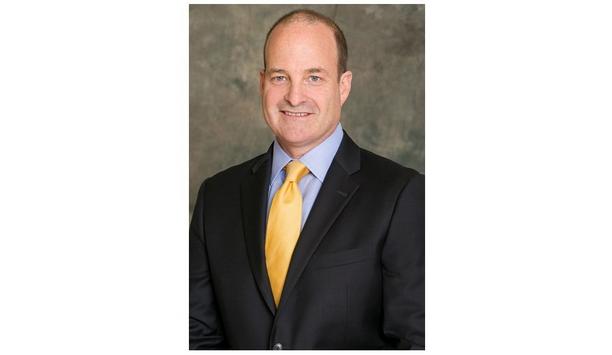
Security-Net, Inc., a network of pioneering security system integrators, is pleased to introduce its newest member, Louis Boulgarides from Ollivier Managed Security based in Los Angeles. This addition expands Security-Nets reach on the West Coast and brings its membership total up to 18 security integration company partners in North America. 33 years of experience Boulgarides brings to Security-Net a diverse and extensive career in the security industry. With more than 33 years of experience, he has a strong background in cloud-based solutions, including managed services. His company operates a Global Security Operations Center where the focus is on providing customers with alarm and video monitoring, along with managed services. Best practices Our employees have a unique mix of experience in both guarding and security system installation" For Boulgarides, joining Security-Net provides him with the opportunity to share best practices with fellow members, along with the ability to provide customers with access to top-level systems integration support outside of Los Angeles using the network of partners. “Our employees have a unique mix of experience in both guarding and security system installation,” said Boulgarides, president and chief executive officer of Ollivier Managed Security. “Because we understand how our customers will use the products we install, we are uniquely positioned to help our clients with their global security needs.” Monitoring and managed services With Boulgarides and Ollivier, Managed Security joining Security-Net, members of Security-Net gain additional expertise in monitoring and managed services, along with important coverage in the Southern California market. “As an organization, we are continuously looking for new members to join Security-Net who have their finger on the pulse of the latest security industry technology trends and who can provide important geographical reach for national account customers,” said Bill Hogan, president and chief executive officer of D/A Central, a Security-Net member who was instrumental in recruiting Boulgarides to join the group. Diverse and extensive career Five years ago he purchased Ollivier Managed Security after working for the company for three years “Louis Boulgarides and his business, Ollivier Managed Security, is clearly heading the way in both of these areas.” Boulgarides' journey in the security industry began three decades ago. He has spent two decades focused on the guarding aspect of the business and previously served as the senior regional vice president at Allied Universal with their guarding division, before transitioning to the president of their systems integration division. Five years ago he purchased Ollivier Managed Security after working for the company for three years. Knowledge and training initiatives Security-Net currently has 18 members with an extensive geographical footprint to serve customers throughout the United States, Canada, and internationally. Together, members share best practices, including technical knowledge and training initiatives, and partner on customer projects that extend beyond a company’s geographic reach to ensure national account-level service.
Insights & Opinions from thought leaders at Security-Net, Inc.

As anyone who has ever flown on a commercial airline since 2001 knows, security measures at airports are well enforced and the emphasis on traveler safety is all around the airport and its grounds. Mass transportation, meanwhile, presents a special but not any less significant challenge when it comes to determining security issues. These facilities need to develop the means to protect a constantly changing and large population of passengers. And unlike airports these facilities often have hundreds of points of entry and exit on multiple modes—buses, subways, light rail, commuter trains, even ferries. About 2 million Americans will use the nation’s airways on a given work day, while 35 million people will board some form of public transportation. In fact, statistics have shown that nearly 11 billion trips are taken on public transportation every year. In some large metropolitan areas in North America where mass transit is well established, more than 20 percent of the area’s inhabitants get around via public transportation.About 2 million Americans will use the nation’s airways on a given work day, while 35 million people will board some form of public transportation Solving Mass Transit Security For transportation officials and their security providers, solving the mass transit security issue begins with determining the key concerns and then creating the proper responses via security systems, policies and procedures to mitigate the risks. Although vandalism and graffiti are very visible signs of criminal behaviour in mass transit settings such as bus stops and subway stations, this is not where transportation officials typically focus their energy. Fences and gates can secure out-of-service buses and train cars, as can remote surveillance methods to keep such vandalism at a minimum. Instead, it is the day-to-day safety and security of transit riders and employees that should become the highest priority. This begins with creating the safest environment possible that is highlighted with appropriate signage and, when necessary, audible warnings, and supporting that with technology, such as surveillance cameras, that will document what has happened if an incident occurs.Analytics can also be useful in alerting security about other suspicious behaviours at a transit stop, such as an untended bag or package Crime Prevention In Transportation Analytics can also be useful in alerting security about other suspicious behaviours at a transit stop, such as an untended bag or package Incidents of concern within a transit setting can take several forms, ranging from legitimate accidents or crimes to false claims such as faked fall down the stairs to potential and actual suicides. Bus and subway stations also have become magnets for homeless people who may put themselves and others in harm’s way by trying to access less secure public areas within a station as temporary shelters. If someone is injured on a subway platform and the transit provider is held liable, it could be on the hook for hundreds of thousands, if not millions of dollars. Suicides are a major concern for operators, with personnel now being trained to look for individuals who seem distressed, are loitering in the area or are intentionally putting themselves in a dangerous situation, such as standing too close to the edge of a platform. The deployment of video analytics, which can be programmed to send alerts when certain pre-set actions occur, can help determine when such dangerous behaviours come into play. Analytics can also be useful in alerting security about other suspicious behaviours at a transit stop, such as an untended bag or package or a person going into a restricted area. Whether it is on the bus, train or ferry or at the stops themselves, cameras and intuitive video management systems are the key to both active and forensic transit security. Some cities use buses that are up to 60 feet long and those can be equipped with up to a dozen cameras Train Security And Safety By using the proper cameras and recording systems in a transit environment, quick-acting personnel can locate a person of interest who boarded a train at one station, follow him during his trip and produce a crisp, clear identifiable image at the end. Those setting up the system thus should keep in mind proper camera positioning, resolution and motion-based changes to framerates or other compression settings. A typical 30-foot bus often has six cameras—one each at the front and middle doors, two more within the bus and then one looking forward and another looking behind the bus. The latter two are important in the event of accidents to verify liability. Some cities use buses that are up to 60 feet long and those can be equipped with up to a dozen cameras.Train stations often deploy high-definition cameras to better support facial recognition software to get that actionable image Train cars are similarly equipped with two to four cameras to view activity down the centre aisle. Within the stations themselves, there can be from 15 to 30 or more cameras capturing wide-angle shots. Train stations, which have a restricted point of egress, often deploy high-definition cameras to better support facial recognition software to get that actionable image. Installing The Right Technology For The Solution Although bandwidth and storage can be a concern, with motion-based recording, the resolution can be bumped up during event, resulting in a 1-megapixel stream jumping to 4 or even 8mbps when needed. By changing the resolution on demand, end users can cut their storage needs significantly. Transportation settings often rely on the same technology used in other security installations, primarily mini dome cameras, although there are some mini transit domes built specifically for the environment with the proper aesthetics. Because of vandalism threats, transit typically avoids pendant mounts, which can be more easily grabbed and damaged. Temperature ratings for cameras also come into play in cold climates with cameras often getting outdoor exposure.Today’s new buses and trains are constructed with the cameras onboard and newer stations also take security into consideration at the earliest design stage As trains and buses move along their routes, especially those that service outlying areas, Internet connectivity becomes an issue as well. Because it may be difficult for video to be sent in transit, security bus barns are equipped with Wi-Fi so video from onboard cameras can be downloaded at the end of the day. And the use of hardened recorders at the stations allows security personnel to retrieve recorded video. Transit Security With Modern Technology Today’s new buses and trains are constructed with the cameras onboard and newer stations also take security into consideration at the earliest design stage. Older infrastructure from long-standing subway and bus terminals can prove to be a challenge when adding security, but these issues aren’t insurmountable. Often the solution is to add more cameras to cover the same square footage because of less-than-ideal sight lines and to place conduit wherever it works best, which may mean positioning it under platforms or in other out-of-the-way places within older stations. Looking ahead, transit security will continue to evolve, not only as new stations and modes of transportation are added to the system, but in terms of communicating with commuters. People can expect to get mass notification alerts on their mobile devices, and those same devices can provide vital data to transportation entities to better develop their overall systems.

The security market is very active right now. Business is strong, according to most of the people that I talk to in the industry. In 2017, we at The Protection Bureau had one of our best years ever revenue-wise. Because of a strong economy, businesses are spending money on security. 2017 Growing Trends The trends that happened in 2017 vary. One trend that is growing is the national account concept. This is because clients are deploying more and more enterprise-level systems and taking advantage of network-based systems. Another trend this past year is growth of the IP video market, a strong technology in the market because and where many integrators generate their revenue. We also saw many clients with older surveillance systems invest in updating their technology, such as replacing older IP-based systems with newer versions and taking advantage of analytics and greater recording options and storage solutions. Many of our customers also invested in updating their access control systems by replacing their older Weigand cards with more secure card formats. Unexpected Challenges One of the unexpected challenges we ran into this past year related to technical roadblocks that integrators hit with products. For example, a camera manufacturer may increase the capabilities of the camera, but the capabilities of the recording systems have not caught up. Or, the access control system has to integrate with other systems, but the application programming interface (API) is not finished. That has perhaps been one of the biggest surprises this year as an integrator.There is currently a battle going on as to who can provide the lowest-cost camera. This means that integrators are going to have to watch their margins Looking Ahead To 2018 The economy looks like it will be as strong in 2018 as it was in 2017. I expect that cybersecurity will continue to have a strong impact on the security market because there are greater network security issues. It’s important that security systems integrators understand that the cybersecurity impact is going to be huge in 2018.There is currently a battle going on as to who can provide the lowest-cost camera - this means that integrators are going to have to watch their margins Some other impacts I expect to take shape involve the IP camera market. There is currently a battle going on as to who can provide the lowest-cost camera. This means that integrators are going to have to watch their margins. For example, if the integrator buys a camera for $500 and sells it for $1,000 that is a good margin. However, if that camera now cost $100, and the mark-up is $200, that will greatly reduce profits. Strong IT Service Providers Will Win The biggest winners in the market will be those who position their companies to be strong IT service providers. The trends are changing very quickly, and security systems integrators who are geared towards providing a high level of technical expertise are going to be more successful. Business at The Protection Bureau is up 19 percent over last year. We also completed projects in 39 states and one country, so our national accounts business is extremely strong. Our successes have been in the organization, project management and sales of national accounts. The challenge going forward is to keep up that level of revenue, profitability and manpower. If you talk to any integrator around the country and ask them what is your biggest headache, they will tell you it’s finding good people trained on IT and networks. Certified Security Project Manager Qualifications 2017 was also an extremely strong year for Security-Net, of which The Protection Bureau is a member, especially relating to the national account work we do with each other. Last year we achieved $17.8 million in revenues with national level projects and expect to beat that number in 2018. The quality of the members of Security-Net continues to grow. We are also really pleased that all of our security project managers are becoming a Certified Security Project Manager (CSPM) through the Security Industry Association. This is going to have a positive impact on Security-Net and every member’s business.

The Protection Bureau is one of the top-10 security integrators in the US You really can’t talk about The Protection Bureau, Exton, Pa., without discussing its founder, the late Keith Ladd. If you’ve been in the industry any length of time, you probably had a chance to meet him. I certainly did. In fact, when I was a cub reporter with one of the first security publications I ever worked for, my inaugural visit to a customer and central station was to The Protection Bureau. That’s where I met Keith Ladd. He was a busy man, but took time out to talk to me about the nuances of the security industry. Most of all, he was kind and understanding, patient with my (extremely rudimentary) questions about security. Keith Ladd’s 40-Year Legacy And now, this summer, The Protection Bureau celebrated 40 years of exemplary service – thanks not only to Keith but to his son J. Matthew Ladd, chief executive officer, and daughter Karen Ladd Baker, senior vice president, who continue to lead the central station company into new technologies and services – but always with an emphasis on the customer and their employees. Keith Ladd was an extraordinary person with a knack for technology even when he started the company, which he ran for 35 years until turning it over to Matt and Karen to operate. Keith Ladd passed away in 2009 at the age of 74 and has been remembered posthumously throughout the industry with awards and accolades. Today, The Protection Bureau operates in 38-plus states with more than $15 million in annual revenue and some 95 employees. The company is one of the top-10 security integrators in the country, with a professional central monitoring station, also in Exton, and an office in South Plainfield, N.J. The Protection Bureau was at the forefront of the industry’s move into the world of services, offering managed access control security in the late 1990s and video monitoring in 2009. Growth Driven By Employee Engagement J. Matthew Ladd credits the company’s continued growth both to his father’s legacy and “can do” attitude, and to active participation in every aspect. “My sister and I were not just handed the company by my father,” says Ladd. “We were always very involved and let our employees also be part of its success by embracing their opinions and new technologies. We have a fantastic team and have built a company that can grow by itself.” “My sister and I were not just handed the company by my father. We were always very involved and let our employees also be part of its success by embracing their opinions and new technologies. We have a fantastic team and have built a company that can grow by itself”, says J. Matthew Ladd, CEO of The Protection Bureau Ladd says his father started the company in his garage in 1975. Now the firm has a 16,000-foot Central Station Alarm Association Five-Diamond certified central station and a fleet of 67 vehicles. The central monitoring station has fully redundant virtual servers and handles fire alarms, intrusion alarms, forced and held door alarms, environmental supervision, medical, holdup, intercom door control and fully managed video and access control services. Customer-focused Strategy The Protection Bureau is also a member of the Electronic Security Association, Security-Net and is a PSA Security Network owner/member. The company’s offerings include all the latest services, including home automation and interactive services and video, in addition to intrusion detection and a vast array of complete home and commercial security services. According to J. Matthew Ladd, the company continues to expand its technology services, but the real story behind its success is a solid focus on the customer. “Our mission as a systems integration company has not changed. Our charge is to provide the most professional services to our customers, treat everyone with respect, and work closely alongside current and future members of the community and the industry. In this way, we know we can all succeed and provide the peace of mind everyone deserves.”