SAFR - Experts & Thought Leaders







Latest SAFR news & announcements

SAFR, a global provider of face-based security solutions, will showcase at GSX 2026 how organizations can gain greater certainty about who entered and what happened, while maintaining control over how privacy is managed. Across physical security, organizations are looking for ways to strengthen access control, improve visibility and investigate events faster. But adopting face-based technology can also introduce important questions around privacy, including where information is processed, how it is managed and which approach is appropriate for a particular environment. SAFR gives organizations the most choice to handle privacy. Intent-based access With SAFR SCAN, organizations have multiple ways to manage privacy based on their requirements, including choices around what biometric data is stored, where it is stored and how long it is retained. Options such as storing biometrics on a user’s mobile device or smart card gives the user control over their biometric data, while intent-based access removes inadvertent background scanning. With SAFR Camera, face matching is processed directly on the device, with non-matches deleted, helping to minimize unnecessary data collection. “Security and privacy shouldn’t have to compete,” said John Cassise, Chief Product Officer at SAFR. “Every organization has different requirements. We believe they should have choices in how they deploy face-based security and manage privacy, rather than having those decisions dictated by the technology. SAFR gives customers that flexibility while helping security teams gain greater certainty about what happened.” Face-based security ecosystem At GSX 2026, SAFR will demonstrate how its portfolio supports stronger security without giving up control over privacy. From access control to video, organizations can choose the SAFR face-based solution that fits their environment while maintaining greater control over how privacy is managed. That flexibility means organizations can bring the technology to the areas that matter most, work with the security infrastructure they already have and select an approach to privacy that aligns with their requirements. The result: greater certainty, more visibility and stronger security without requiring privacy to be the tradeoff. SAFR will demonstrate its face-based security ecosystem at GSX 2026, September 14–16 in Atlanta, Booth 2051.

SAFR today announced new investigation capabilities for SAFR Guard, without the need for on-site servers. Retail security has been burdened by costly, infrastructure-heavy systems that are complex to maintain and slow to scale. SAFR Guard now changes that, combining real-time proactive alerts with new investigation capabilities, all without server bloat. With built-in privacy guardrails, it’s designed for responsible use from day one. Server-dependent infrastructure As retail crime becomes increasingly frequent and connected, traditional systems built around manual case building are struggling to keep up. Security teams are expected to act faster, manage growing operational demands, and reduce shrink, all while dealing with the costs and maintenance of server-dependent infrastructure. SAFR Guard introduces a modern approach to retail security, helping retailers move from isolated incidents to actionable patterns. By combining proactive alerts with smarter investigative insights, SAFR Guard enables teams to detect repeat activity, surface connections across events, and respond more effectively in real time. “SAFR Guard’s ability to investigate and alert on high-harm individuals is key to its success,” said Chris Ochs, Director of Product at SAFR Guard. “Early warning directly translates into safer stores,” he added. Modern retail security Unlike traditional infrastructure-heavy systems, SAFR Guard eliminates the burden of on-site servers, reducing operational complexity and cost while enabling faster deployment and easier scaling across locations. The result is a more streamlined approach to retail security, one designed to help teams focus less on managing systems and more on preventing loss. With real-time prevention, faster investigations, and infrastructure-free deployment, SAFR Guard is helping define a new standard for modern retail security.
SAFR, a RealNetworks company and a pioneer in AI-powered computer vision for physical security, and Anava, an expert in intelligent video solutions, announces a new edge AI solution that runs SAFR facial recognition directly on Axis Communications’ network cameras using the Axis Camera Application Platform (ACAP). The joint offering enables highly accurate, real-time facial recognition and video analytics at the edge, reducing infrastructure costs while increasing performance and deployment flexibility. Large-scale deployments The new SAFR Powered by Anava ACAP solution embeds SAFR’s efficient, high-performance computer vision engine inside Axis cameras. By processing video in the camera instead of on centralized servers, organizations can significantly lower network bandwidth usage, reduce server hardware requirements, and achieve a lower total cost of ownership for large-scale deployments. Furthermore, by operating natively within the Axis ecosystem, this ACAP integration generates facial recognition events that flow seamlessly into existing Axis Camera Station VMS, as well as other popular video management systems. This ACAP solution gives customers greater flexibility in deploying SAFR's high performance facial recognition technology across their existing Axis footprint. Deploying facial recognition “By bringing our AI directly into Axis cameras, we are giving customers a smarter, leaner path to deploying facial recognition for security, access control, and business intelligence,” said Brad Donaldson, VP of Computer Vision, SAFR from RealNetworks. “Our collaboration with Anava and Axis allows system integrators and end users to take advantage of edge compute in a way that is both scalable and cost-effective.” “The Anava and SAFR integration showcases the power of ARTPEC processing and the ACAP platform to deliver advanced analytics directly at the edge,” said Drew Pacino, Business Development Manager at Axis Communications. “By reducing infrastructure complexity, this solution helps customers lower costs while unlocking greater operational efficiency and additional value from their Axis footprint.” Server-dependent systems The SAFR Powered by Anava ACAP solution transforms standard surveillance into a proactive safety net by enabling real-time recognition directly at the source. This capability moves beyond simple monitoring, providing a high-speed, scalable tool for bad actor detection and public safety that functions without the latency or high costs of traditional server-dependent systems. Furthermore, the solution has additional use cases such as barrier-less access control as well as occupancy and demographic analytics. “By running SAFR software as an ACAP directly on Axis cameras, we’ve eliminated the need for costly, power-hungry onsite servers to process every stream," said Ryan Wager, CEO of Anava. "This edge-based approach provides enterprises with a lean, highly scalable architecture that delivers the industry’s most advanced bad actor detection while maintaining a privacy-preserving posture. By utilising Anonymous ID methodologies, we ensure that actionable intelligence is gathered without compromising individual data, all while driving massive infrastructure savings,” he added. Enabling hybrid architectures Designed to work within existing or new Axis installations, the solution can be combined with SAFR’s cloud or on-premises components when needed, enabling hybrid architectures that balance edge processing with centralized management, video storage, and advanced analytics. Key benefits of the SAFR Powered by Anava ACAP solution include: Lower total cost of ownership through reduced server hardware, lower network traffic, and simplified infrastructure. Real-time performance for facial recognition and other video analytics on live video streams. Flexible deployment options, including pure edge, hybrid, and cloud-connected configurations. Seamless integration into existing IP video infrastructures and workflows. Facial recognition solution The new ACAP solution from SAFR and Anava is available for most Axis camera models, through SAFR and Anava channel partners and authorized resellers. SAFR and Anava will showcase the new edge-based facial recognition solution at ISC West, March 25–27 in Las Vegas. Connect with the SAFR and Anava teams at Booth #25081 to see how the solution works.
Insights & Opinions from thought leaders at SAFR
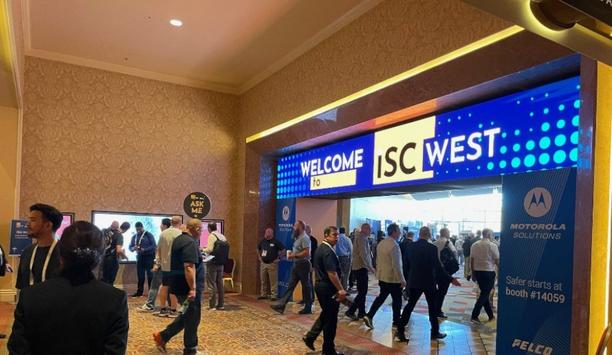
ISC West 2024 mirrored a vibrant industry on the precipice of accelerated change. Factors such as the cloud, artificial intelligence (AI), edge computing, and biometrics are shaping the future of the security marketplace, and they were front-and-center at the industry’s biggest U.S. show in Las Vegas. Foot traffic was steady and impressive, including more than 29,000 security industry professionals viewing 750 exhibitors. A torrent of eager attendees crowded the lobby on the first day and could not wait for the doors to open. When they were admitted, the wealth of technological innovation and business opportunity did not disappoint. Focus on cloud systems Cloud systems were high-profile at ISC West. Camera manufacturer Axis, for example, introduced their Axis Cloud Connect at a press conference. Meanwhile, Genetec officially launched their Security Center SaaS platform, which aims at eliminating points of friction to enable integrators to easily embrace cloud systems from quoting and ordering to provisioning and installing. Camera manufacturer Axis, for example, introduced their Axis Cloud Connect at a press conference Cloud provider Eagle Eye Networks promoted their new “Eagle Eye 911 Camera Sharing” technology under which both non-Eagle Eye Cloud VMS customers (via Eagle Eye 911 Public Safety Camera Sharing) and Eagle Eye customers can opt to share their video feeds for use by 911 operators in case of emergency. If users opt-in, 911 operators can have access to live video as an emergency unfolds. Eagle Eye Networks provides the feature by integrating with RapidSOS call center software. Camera locations are based on geolocation coordinates, and customers can choose if they want to participate and which cameras they want to share. Biometrics in the mainstream Biometrics were well represented at ISC West, including Alcatraz AI, which introduced an outdoor version of their biometric face recognition product. The Rock X works well despite harsh lighting. Alcatraz’s products do not have to be integrated, they communicate just like a card reader using OSDP or Wiegand protocol. “At the show, customers are excited about moving to a frictionless environment and getting rid of existing credentialing,” said Tina D’Agostin, CEO and co-founder of Alcatraz. “We are making access control frictionless, secure and private. The experience can be as passive as possible – people can just walk in.” Multiple types of authentication, and the ability to detect tailgating and stream video SAFR from Real Networks also featured biometric face recognition, emphasizing feature sets, convenience, and price/performance. They offer multiple types of authentication, and the ability to detect tailgating and stream video. A new device is a small mullion mount that is “approaching the price of a card reader, factoring in the need to purchase cards,” said Brad Donaldson, Vice President and General Manager. SAFR focuses on convenience: You don’t have to take out your phone to pass through a door. Enrollment is easy by incorporating existing databases, and costs are lower than competitors, said Donaldson. The system analyses multiple points on the face, turns it into data and then encrypts it, providing a “unique signature for each person.” Credentials in Apple Wallet and Google Wallet AMAG Technology announced the compatibility of credentials with the Apple Wallet and Google Wallet. The company is also embracing a new strategic direction under President David Sullivan. They launched a new website in January, are developing dynamic resources and a partner page, and they now integrate with 120 tech partners. AMAG Technology Financial Services now enables their channel partners to offer leasing and financing options to customers. The big new booth at ISC West reflected an effort to “market different and look different,” according to the company. The big new booth at ISC West reflected an effort to “market different and look different" The new Symmetry Control Room, a command-and-control system, is a relaunch of an earlier AMAG product with enhanced features. Suitable for large enterprise customers, the software enables a big video wall to display all the various systems and incorporates all the data into a single “pane of glass.” Operators can “draw a lasso” around cameras they want to display on the video wall and can follow action across multiple camera feeds. Navigating megatrends A breakfast meeting for integrators, sponsored by Assa Abloy Opening Solutions, was built around the theme “Navigating Megatrends for Sustainable Growth." The megatrends are artificial intelligence, sustainability and cybersecurity. Related to cybersecurity, there are 350 common vulnerabilities and exposures (CVE) published per week, reflecting the continuing threat to cybersecurity. Physical security has a “data lake” of information from various physical security systems that can be an attractive target for cybersecurity breaches. Data sets can be exploited and/or poisoned. The security industry needs to apply “defense in depth” to the challenges of protecting data. “The threat landscape is always changing, and security technology is an iterative process,” said Antoinette King, i-PRO’s head of cyber convergence, one of the panelists. Natural language systems Natural language systems are a newer approach making an early appearance at ISC West Natural language systems are a newer approach making an early appearance at ISC West. Brivo, for example, has an early prototype of its “natural language search capabilities” that can answer questions such as “Who is in the office?” or “Where is Bob and what has he done?” Brivo also promoted its all-in-one door station device that combines a card reader and a camera (for facial authentication) and serves as a video intercom, thus eliminating the need for multiple devices at the door. Brivo is also emphasizing tailgate prevention, facial authentication, and people counting using AI at the edge. Also promoting natural language systems was Verkada, which unveiled a beta version of its AI Search feature that embraces national language capabilities. With AI Search, users will soon be able to use natural language to search for people or items. For example, a search could be “person climbing over a fence” or “person making phone call” or “person wearing football jersey.” Verkada wants to be thoughtful with the rollout and make sure effective guardrails are implemented to prevent abuse and bias. The release should happen in the coming months. Multi-family applications Allegion is promoting the XE360 hardware lock platform in various formats, including cylindrical lock, mortise lock, deadbolt, and exit trim. At the show, Allegion noted an enthusiasm for multi-family applications. “We have been surprised by the people who want to add electronics and to retrofit existing multi-family facilities to compete with newer facilities,” said Henry “Butch” Holland, Allegion’s Regional Director, Channel Sales East Region. Allegion works with 60 different physical access control software providers, including familiar players such as LenelS2 and Genetec Allegion also offers an “indicator” display on its locks, showing at a glance whether a door is locked or unlocked. The “indicator” might also display “occupied” or “vacant.” Allegion works with 60 different physical access control software providers, including familiar players such as LenelS2 and Genetec. Integrator M&A trends Everon looks for acquisitions in areas where they do not currently have support for national accounts A conversation with Everon at ISC West provided insights into the accelerating trend of mergers and acquisitions among the integrator community. Everon, formerly ADT Commercial, has done six acquisitions of local integrators since they changed their name last year. In targeting companies to acquire, they look for a good company with a good reputation, and they consider how the new company’s competencies complement their own. Some M&A strategy is geographic, as Everon looks for acquisitions in areas where they do not currently have support for national accounts. They also consider density, seeking to add new acquisitions in larger markets where they don’t currently have a big market share. “A lot of investment is coming into security because it is seen by investors as recession-proof,” said Michael Kennedy, VP, Mergers and Acquisitions, for Everon. Kennedy met with 95 businesses last year for possible acquisition, and the company only finalized a handful – reflecting that Everon is selective and careful that corporate cultures are aligned. “With an acquisition, the goal is to keep every customer and every employee,” said Kennedy. Voice of the customer ISC West provides an opportunity for manufacturers to listen to the “voice of the customer;” in person, no less. “We have every kind of problem come to the booth,” commented Heather Torrey, Honeywell’s General Manager, Commercial Security, Americas. “People are passionate, interested and very specific with their questions and comments,” she said. “We are driving a complete system, but we are flexible, helping our customers to meet their needs and not try to fit every foot into the same shoe. Sometimes meeting customer needs involves working with competitors," Torrey commented. “It truly comes back to listening to the customer, not just ‘this is what we have to offer,’” she adds. ISC West provides an opportunity for manufacturers to listen to the “voice of the customer;” in person, no less. Edge applications are everywhere at ISC West, and one company is promoting a new approach to expand functionality at the edge. Camera company i-PRO advocates the use of the “Docker” platform for app development, an option they offer on their cameras. Docker “containers” package deep-learning algorithms to make it easier to embed software into edge devices. Anyone can run Docker apps on i-PRO cameras that use the powerful Ambarella chip. A Docker “swarm” can combine multiple edge devices to work together and share resources. For example, the approach can increase computing power at the edge to increase the capabilities of instant analytics. It’s faster and provides better redundancies. A “distributed computing platform” ensures less latency than communicating analytics to a central server. Unification of capabilities Johnson Controls (JCI) also promotes the trend of combining multiple systems into a single pane of glass. Their “Open Blue” platform, with a security version unveiled at the show, integrates various security systems into one, combining data and monitoring device health. Basically, the system manages all resources holistically. JCI also notes a trend toward “unification of capabilities,” e.g., combining access control and video. “The scope of security is evolving from a focus on protection to a broader focus on operations,” commented Julie M. Brandt, JCI’s President, Building Solutions North America.
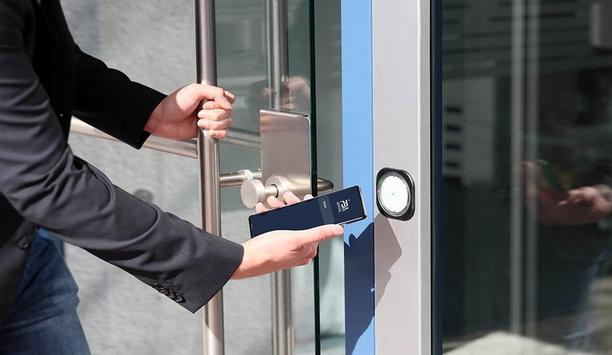
PKOC stands for Public Key Open Credential. It is a new standard that will meet a 30-year industry challenge and strip away much of the complexity and cost involved in protecting and administering credentials for access control. It could also accelerate the transition from cards to mobile access control. PKOC is a standards-based mobile credential that is essentially free, vendor-agnostic, and interoperable across multiple devices and systems. It is a highly secure access credential that can live on a mobile phone, in a plastic access card, or in any device capable of generating a public-private key pair. Access control systems PKOC is the newest standard of the Physical Security Interoperability Alliance (PSIA), a tax-exempt organization created to define, recommend, and promote standards for IP-enabled security devices and systems. PSIA introduced the Physical Logical Access Interoperability (PLAI) specification in 2013 to normalize identity data across disparate physical access control systems. The PKOC specification was introduced in 2021. We’re convinced this is the future A challenge for PSIA in promoting the PKOC mobile credential is to explain it quickly and in layman’s terms “We see the benefit of implementing the PKOC technology and doing it well,” says Sam Siegel, Senior Field Applications Engineer for ELATEC, a manufacturer of credential-agnostic readers/writers. “We wanted to get involved and join the discussion.” ELATEC has been participating in PSIA for more than a year. “This is a better way to do things,” says Siegel. “The PSIA, myself included, are convinced this is the future. The challenge is to get enough people to understand that it is a seismic shift away from what has been in place for so long.” A challenge for PSIA in promoting the PKOC mobile credential is to explain it quickly and in layman’s terms. The explanation spans the concept of public key infrastructure (PKI) and the difference between symmetrical and asymmetrical digital keys. Protecting symmetrical keys A symmetrical key system, which has been used historically in the access control market, involves the use of a single proprietary digital key to both encrypt and decrypt information. This means that digital public keys must be incorporated into each access control reader in the form of a module or a license, which the reader uses to read any compatible cards. Protecting symmetrical keys has been an expensive technology challenge the access control world The need to share these digital keys (in effect, the ability to read every compatible card) securely among access control manufacturers, integrators and end users involves extra administration and costs to ensure the security of the system. Protecting symmetrical keys has been an expensive technology challenge the access control world has borne for decades. The use of proprietary keys also promotes dependence on a single manufacturer or vendor to expand the ecosystem. The use of asymmetrical keys takes away these challenges. Advantages of using asymmetrical key pairs PKOC embraces the principle of PKI (public key infrastructure), a two-key asymmetrical system used to ensure confidentiality and encryption. In effect, there are two digital "keys," one public and one private, that are used to encrypt and decrypt information, in this case, a credential for an access control system. The secure credential standard is generated independently of a third-party credential issuer. It is generated within the device. In the access control scenario, the smartphone generates a key pair in the secure element of the phone, including a private key, which is stored on the smartphone, and a public key, which serves as the user’s ID number in the access control system. Sharing the public key is not a security risk because it is worthless without the private key that is locked away on the smartphone. PKOC-enabled smartphone The smartphone must contain the private key in order to interface with the access control system When a PKOC-enabled smartphone approaches a PKOC-enabled reader, the reader sends a one-time random number (a ‘nonce’) to the smartphone, which then encrypts it using the private key, and sends it along with the public key back to the reader. The reader uses the public key to decrypt the random number, which confirms the authorized access associated with the smartphone. The signals are sent via Bluetooth Low Energy (BLE). Importantly, the private key never leaves the smartphone and is never shared with any other elements of the access control system. Therefore, there are no administrative or technical costs associated with protecting it. The smartphone must contain the private key in order to interface with the access control system using the public key. Mobile credentialing system For ELATEC, embracing PKOC provides a new way to highlight the company’s value proposition and promote it to a new group of companies; i.e., those who adopt the PKOC approach to mobile credentialing. The ‘universal’ configuration of the ELATEC reader hardware is credential-agnostic “PKOC serves as a great way to show off our value and what we do best,” says Siegel. ELATEC provides credential readers/writers that operate in a variety of card and reader environments, incorporating an integrated BLE module to support mobile ID and authentication solutions, including PKOC. Using applicable firmware, the ‘universal’ configuration of the ELATEC reader hardware is credential-agnostic and so compatible with any RFID card or mobile credentialing system, all in a small form factor (around 1 1/2 inches square). How readers and smartphones interact The PKOC standard addresses the variables of how the reader and the smartphone share information. Currently, the PKOC standard addresses communication via BLE, but the principle is the same for systems using near-field communication (NFC), ultra-wideband (UWB), or any future protocols. PKOC also defines how device manufacturers can enable devices (readers, locks, control panels, biometric devices, etc.) to securely consume the credential for authentication and access. PKOC can be used with smart cards as well as with smartphones. In the case of a smart card, the public and private keys are contained on the smart card, which communicates via NFC with the reader. The encryption/decryption scenario is exactly the same. PKOC enables users to ‘bring your own credential’ (BYOC). Public key number ELATEC is proud to have played an instrumental role with the PSIA in the implementation of PKOC" BLE offers a broader read range than NFC; the read range can be managed using software and/or by signaling intent or two-factor authentication. Because private keys remain secure inside a smartphone, they do not have to be incorporated into a digital wallet for security purposes, although they could be incorporated for matters of convenience. To simplify administration, the public key number can be used as a badge number. If badge numbers have already been assigned, a column could be added to the database to associate badge numbers with public key numbers. “ELATEC is proud to have played an instrumental role with the PSIA in the implementation of PKOC,” said Paul Massey, CEO of ELATEC, Inc. “End-users should not be limited in their solution mix to one or two vendors due to their proprietary technology. PKOC now provides the ideal combination of security, convenience, interoperability, and cost for industry participants, by industry participants.” ‘Experience PSIA’ will promote PKOC at ISC West ISC West participants include PSIM manufacturer Advancis Software and Services The flexibility of PKOC will be on display at ISC West 2023, where ‘Experience PSIA’ will register attendees and provide them with a PKOC credential that can be used with a variety of readers throughout the show. Also showcasing the PLAI standard, PSIA’s presence at ISC West will include ELATEC along with several other vendors/manufacturers. A special PSIA event will be held from 5:30 to 7:30 p.m. on March 29 at the Venetian Ball Room B&C in Las Vegas. ISC West participants include PSIM manufacturer Advancis Software and Services, which acquired Cruatech software in 2012; and Idemia, specializing in identity-related security services including facial recognition and other biometrics. Integrated security systems Also involved are Johnson Controls (JCI), an integrated security systems provider that offers a range of security products and services; and Siemens, which offers its own range of security solutions and systems. Other participants include Last Lock, which has a unique spin on internet-enabled locks; while SAFR from Real Networks offers accurate, fast, unbiased face recognition and additional computer vision features, and Sentry Enterprises provides the SentryCard biometric platform for a privacy-centric, proof-of-identity solution. Finally, rfIDEAS manufactures credential readers.
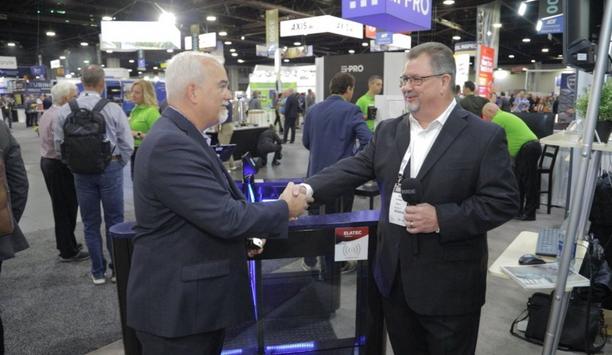
Collaboration among manufacturers in the physical security industry can result in systems that are easier to install for integrators and that provide a better customer experience for end users. Illustrating the point is the recent collaboration among a turnstile technology company, a supplier of short-range wireless readers/writers, and a biometric business focused on ‘frictionless’ access control. “The more manufacturers collaborate with each other, the more benefits for end users,” says Steve Caroselli, the Chief Executive Officer (CEO) of Orion Entrance Control. Better collaboration means a better user experience We look for opportunities to collaborate and make sure the experience is above and beyond" Steve Caroselli adds, “Better collaboration means a better user experience. We look for opportunities to collaborate and make sure the experience is above and beyond.” Orion’s collaboration with ELATEC RFID Systems and SAFR touchless biometrics by RealNetworks Inc. highlights the advantages of manufacturers working together to ensure technologies operate smoothly in the real world. Taking ownership of the customer experience When Orion Entrance Control provides a SpeedGate swing-glass optical turnstile, they take full ownership of the customer’s experience. That means ensuring the turnstile application operates as it should, regardless of which component of the broader system might be at fault. To the customer experience, a card reader that doesn’t work is the equivalent of a turnstile that doesn’t work. Which component is at fault is irrelevant, and in fact, invisible, to the overall customer experience. Importance of dependable operation of turnstiles As the most visible element in many access control systems, dependable operation of turnstiles reflects positively on the manufacturer and on the entire system. Orion tests various third-party components with their turnstiles To ensure an optimum customer experience, Orion tests various third-party components with their turnstiles, in order to ensure flawless operation before a turnstile is delivered to a customer. Customers buying an Orion turnstile send the card readers they want to use to Orion’s corporate headquarters in Laconia, New Hampshire, USA, where Orion engineers ensure seamless operation. Ensuring optimum customer experience All readers are designed to be bolted to the wall rather than installed inside a turnstile In addition to scenario-based testing, readers are placed inside the turnstile for a streamline appearance, which can be a challenge given the variety of sizes and types of readers a customer might choose. All readers are designed to be bolted to the wall rather than installed inside a turnstile, which complicates adaptation efforts. In short, historically for Orion, ensuring the optimum customer experience involved extra time and effort, although obviously it was worth it. Providing flexibility for any environment Seeking to simplify the process, Orion has found an alternative to using many different types and models of card readers for its turnstiles. Deploying an RFID reader/writer from ELATEC provides flexibility to operate in a variety of card and reader environments, including almost all 125 kHz and 13.56 MHz contactless technologies. The product is compatible with low-frequency (LF), high-frequency (HF), near field communication (NFC) or Bluetooth Low Energy (BLE) signals. An integrated BLE module supports mobile ID and authentication solutions. There is an integrated antenna for LF and HF to ensure excellent contactless performance. ‘Universal’ configuration of the ELATEC reader hardware Using applicable firmware, the ‘universal’ configuration of the ELATEC reader hardware is compatible with any card system. It works with all the access control protocols, including SEOS, OSDP and other open protocols. “We can stock an open SKU and flash the firmware as per the customer requirement,” says Steve Caroselli. The small form factor (around 1 1/2 inches square) of the ELATEC module lends itself to easy installation inside the turnstile housing. Easy availability of the ELATEC readers helps Orion continue to serve customers, despite recent disruptions in the supply chain. And, ELATEC’s reader hardware has earned global certifications that enable Orion to use their products for customers around the world. Testing to ensure smooth operation ELATEC was responsive at every stage as the relationship evolved, providing sample equipment for testing Before embracing the ELATEC reader module, Orion tested it for several months to ensure compatibility with its turnstiles. ELATEC was responsive at every stage as the relationship evolved, providing sample equipment for testing and working closely with the Orion team. Everyone in the ELATEC sales and engineering team, right up the company’s C-suite, worked to support Orion during the testing phase. In the end, in addition to other advantages, ELATEC’s detection speed and read range compares favorably to competing technologies. “We move really fast as an organization, so we are looking for other organizations that move very fast,” says Steve Caroselli, adding “We met with ELATEC one week and had the equipment for testing the next week. We like to work with companies that move fast, and they are culturally aligned with how we do business.” Orion turnstiles with ELATEC TWN4 Palon Compact panel The Orion turnstiles incorporate an ELATEC TWN4 Palon Compact panel, a versatile panel-mount reader designed for integration into third-party products and devices. It supports enhanced interfaces, especially RS-485, and reflects the advantages and integrated tool support of the ELATEC TWN4 family. Orion is implementing SAFR SCAN biometric technology using hardware and software from RealNetworks Inc. “The selection of ELATEC products allows Orion to provide their customers and partners with a flexible RFID reader solution that supports numerous credential options and virtually all transponder technologies,” said Paul Massey, the Chief Executive Officer (CEO) of ELATEC, Inc., adding “This is especially valuable in multi-tenet, multi-credential environments.” Orion works with all the various stakeholders – architects, consultants, integrators, and end users – to ensure total satisfaction with an installation. Biometric technology for ‘frictionless’ access control Orion is also implementing SAFR SCAN biometric technology into their turnstiles using hardware and software from RealNetworks Inc. The facial recognition reader technology, designed for mainstream commercial access control, provides a ‘frictionless’ experience, and allows users to pass through turnstiles at a walk. The system can authenticate up to 30 individuals per minute with 99.9% accuracy, despite varied lighting conditions. SAFR’s system provides a good user experience Orion designed a mounting system to incorporate the biometric reader into their turnstile design Orion designed a mounting system to incorporate the biometric reader into their turnstile design. SAFR’s system provides a good user experience, when it comes to enrollment. On each turnstile, the SAFR technology can operate separate from the ELATEC reader or in conjunction with it for multi-factor authentication in higher-security applications. Innovation for new applications A broad approach to the customer experience reflects Orion’s positioning as a technology company, in addition to being a manufacturer of turnstiles. Their Infinity software is the ecosystem ‘nerve center’ platform to ensure operation and connected through a single ‘pane of glass.’ The need to protect more entrances beyond the lobby led Orion to develop its recently patented DoorGuard, a LIDAR-based solution that detects each person who passes through a doorway and prevents tailgating (like a turnstile) for applications, such as stairway doors, perimeter doors, data centers, IDF closets, etc. The software mimics the advantages of a turnstile to monitor access control and occupancy. Removing friction during installation and beyond Orion’s Constellation is a presence detection system that uses UWB (ultra-wideband) radar to sense where people are in a building for emergency response and building utilization applications. “One of our core values is to remove friction and make customers’ lives easier,” says Steve Caroselli, adding “Our people-first philosophy is: What can we do to make your life better? We want to be systematic, and everything must be repeatable in terms of how we react and interact with customers.”