Xtract One Technologies Inc. (formerly Patriot One) - Experts & Thought Leaders













Latest Xtract One Technologies Inc. (formerly Patriot One) news & announcements
Xtract One Technologies announces the release of Mean Time to Secure (MTTS), a new feature suite and performance metric set available across its SmartGateway, Xtract One Gateway, and Xtract One View platforms, introducing Mean Time to Secure (MTTS) metrics. MTTS provides security operators a complete, end-to-end, data-driven view of their entry screening program's performance. MTTS combines Mean Time to Detect (MTTD), which measures primary screening speed, with Mean Time to Resolve (MTTR), which measures secondary screening resolution time, into a single metric: MTTS = MTTD + MTTR. The metric is tracked continuously in Xtract One View and available across all deployed systems. Screening resolution time The release also introduces Divestor enhancements that allow security staff to categorize threats directly in the Console App during secondary screening. Verified weapon counts by type feed in real time to Xtract One View's hero stats dashboard, giving security directors audit-ready reporting for executive leadership without manual logging. "The security industry often defaults to “vanity” metrics, such as number of people per minute. These metrics do not tell the true and complete story. Throughput only tells you how fast people move through a single point - the primary screen," said Peter Evans, CEO of Xtract One. "By itself, throughput is a meaningless measurement.” Long secondary screening takes “A solution could have fast ingress, but low detection. Or, fast ingress and very high alert rates, which then defines a different story at secondary screening.” “Throughput alone, or other single data point measures, do not provide the operator the full picture, and insights to outcomes; what happens after an alert, how long secondary screening takes, or what's driving time, or the end-to-end guest experience. Security speed and guest experience speed are not the same number, and as an industry has been measuring only one of them. MTTS gives operators the complete picture for the first time, and the data changes how security programs get evaluated, staffed, and improved.” Multiple adjacent systems Security teams have had visibility into how quickly individuals move through the primary screening point but no way to account for, or measure, the overall outcomes of their security program. Security staff have been reporting to their management teams on throughput rates while management noticed a difference between what the numbers showed and what the entry point experience actually felt like on a busy event night or a peak shift change. Real Xtract One anecdotes include an entertainment venue that couldn't prove screening wasn't the bottleneck, a manufacturer that couldn't document that individuals were clearing security within an acceptable window, and a corporate security team that couldn't tell leadership how long secondary screening was taking or whether anything was being found. Mean Time to Secure was built to answer all of these questions. The September release also includes continued AI model improvements for both SmartGateway and Xtract One Gateway, cloud-managed over-the-air software updates for SmartGateway via Xtract One View, and Auto Pod Sync for Xtract One Gateway, which removes manual configuration steps when setting up a fleet of multiple adjacent systems. The September software release is available to all SmartGateway, Xtract One Gateway, and Xtract One View customers.
Xtract One Technologies announces multiple SmartGateway deployments across California healthcare facilities, reflecting growing demand from health systems across the state ahead of the March 2027 compliance deadline for California Assembly Bill 2975. Deployments are underway at Hazel Hawkins Memorial Hospital in Hollister and Contra Costa Health in Martinez, with expected completion by mid-August, in addition to the previously reported San Mateo Health deployment. AB 2975 requires hospitals across California to implement enhanced security measures at high-traffic public entrances by March, 2027. The mandate reflects a broader recognition among healthcare administrators and state regulators that emergency departments and other public-facing hospital entrances require dedicated screening to protect staff and patients from weapons-related violence. Real procurement decisions "California health systems are making real procurement decisions right now, and the facilities selecting Xtract One are doing so because the technology fits the environment," said Peter Evans, CEO of Xtract One. "SmartGateway was built for high patient and visitor volumes, diverse populations, and clinical staff who need to focus on care. What we're seeing across Hazel Hawkins, Contra Costa Health, and San Mateo – and more broadly with healthcare systems in general – is that once an organization sees accurate, high-throughput detection running in a real hospital environment, expanding the solution across the facility becomes an obvious next step." Divesting personal items Xtract One's presence in California healthcare predates the AB 2975 mandate. San Mateo Medical Center deployed SmartGateway at its main campus in 2025 following extensive testing of available solutions, with plans to expand to all satellite clinics. The Hazel Hawkins and Contra Costa Health deployments build on that established footprint as health systems across the state accelerate their procurement timelines ahead of the March 2027 deadline. Xtract One's SmartGateway is designed specifically for high-throughput environments with lower volumes of personal belongings. The system identifies concealed guns and knives while allowing individuals to walk through at a natural pace without divesting personal items, distinguishing it from traditional walk-through metal detectors that alert broadly on any metal object. For healthcare environments where speed and accessibility are critical to patient care, that distinction matters. Emergency department entrance The first of three initial SmartGateway systems is now operational at Hazel Hawkins Memorial Hospital's emergency department entrance, the hospital's main entrance, and the labor and delivery wing. "Our emergency department sees the most public foot traffic of any entrance we have, which makes it the right place to start," said Jorge Ramirez, Director of Emergency Management and Security at Hazel Hawkins Memorial Hospital. "Reducing the risk of violence against our staff, our patients, and our visitors is the goal behind every part of this rollout." Weapons-related incidents "This deployment gives our team the ability to screen for weapons without slowing down the emergency department or changing how patients and staff experience our facility. That balance mattered to us throughout the evaluation process," said Dale Fors, Manager of Security at Hazel Hawkins Memorial Hospital. The hospital noted that the new security measures are being implemented to meet the requirements of the state mandate rather than in response to any specific increase in weapons-related incidents at the facility. Possible security posture Contra Costa Health has also selected three SmartGateway systems for deployment across its main entrance, emergency department, and psychiatric entrance in the primary hospital facility. The deployment is driven by a clear security mandate of detecting and intercepting firearms and bladed weapons before they reach clinical environments. Contra Costa Health has prioritised detection accuracy above all other operational considerations, implementing a bag check protocol alongside SmartGateway screening at its main entrance to ensure the most thorough possible security posture across all three entry points.

Xtract One Technologies announces its Xtract One SmartGateway has been selected by Peterborough Regional Health Centre (PRHC) for facility entrance deployment following a successful pilot and evaluation period. The selection reflects PRHC’s leadership and commitment to exploring innovative approaches to healthcare safety and adds to Xtract One’s growing presence in healthcare environments. This selection in Ontario follows previous Canadian deployments across Prince Edward Island, Manitoba, and Nova Scotia. Recognized as an innovator in Ontario’s healthcare system serving a regional referral population of 600,000 people, PRHC is taking a proactive approach to addressing modern security challenges. The organization recently convened a security forum for healthcare leaders across the province of Ontario to collaborate on best practices, followed by a hands-on, three-week pilot to evaluate emerging technologies in a real-world clinical environment. Adopting innovative approaches After the comprehensive pilot and extensive testing, PRHC selected SmartGateway for its ability to detect a broad range and large volume of weapons, ease of use, and seamless integration into the hospital’s operational flow. The deployment will take place at the facility’s Emergency Department entrance. PRHC’s decision reinforces the organization’s role as a leader in evaluating and adopting innovative approaches to healthcare safety across Ontario. “Healthcare organizations are increasingly embracing digital transformation strategies that enhance safety without compromising the patient experience,” said Peter Evans, CEO of Xtract One. “Our work with Peterborough Regional Health Centre demonstrates how forward-thinking providers can balance intelligent screening technology that proactively addresses modern threats with the openness and accessibility that are essential to care environments. We’re proud to support PRHC as it sets a new standard for healthcare safety in Ontario while contributing to the growing adoption of advanced AI-driven solutions. As more organizations follow in PRHC’s footsteps, we look forward to expanding our provincial and healthcare presence.” Undergo secondary screening “As the Peterborough region’s largest employer, PRHC views care and safety as inseparable. We believe that every team member, patient, family member, and caregiver deserves to feel safe and supported from the moment they walk through our doors,” said Jennifer Taylor, Vice President and CFO at Peterborough Regional Health Centre. “SmartGateway is a solution we’re proud to introduce in our Emergency Department, where it will support us to uphold this standard for patients and families, who depend on us to be there when they need us most.” Modern healthcare settings SmartGateway delivers intelligent, high-throughput security screening using advanced AI-powered sensors that discreetly detect weapons and prohibited items as individuals enter a facility. The system enables fast, accurate screening without requiring individuals to stop, divest personal belongings, or undergo secondary screening. Unlike traditional metal detectors, SmartGateway supports a continuous flow of movement, allowing healthcare facilities to maintain efficient ingress even during peak periods. By combining robust detection capabilities with a frictionless user experience, SmartGateway helps create safer environments while preserving the welcoming, patient-centred atmosphere critical to modern healthcare settings.
Insights & Opinions from thought leaders at Xtract One Technologies Inc. (formerly Patriot One)
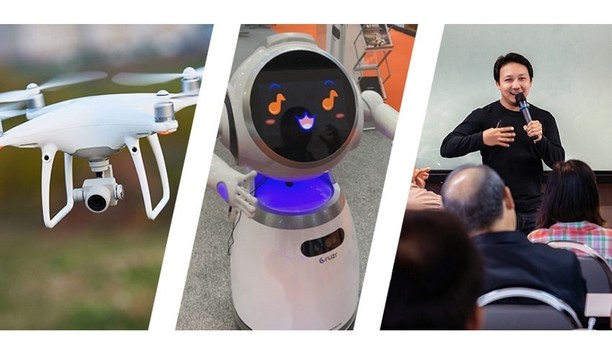
From robots to drones to counter-drone solutions, a range of new technologies will be displayed at ISC West 2019. The Unmanned Security Expo will return, including a dedicated complimentary education theater for attendees offering sessions on a range of topics. UAVs, UGVs And Autonomous Systems Also included will be demos of the best UAVs (unmanned aerial vehicles), UGVs (unmanned ground robotics and vehicles) and autonomous systems on the market. The market growth for unmanned technologies being used for security and safety benefits is progressing at a rapid pace. Let’s look at some of the exhibitors in the 2019 Unmanned Security Expo: Cobalt Robotics' robots are purpose-built for a specific use case, providing after-hours support and security for corporate locations Cobalt Robotics' robots are purpose-built for a specific use case, providing after-hours support and security for corporate locations. Indoor environments, which are confined and controlled, present fewer navigation challenges for robots, which can quickly become familiar with the surroundings and navigate easily through an office space. Indoor robots can provide benefits beyond security, too, such as facility management, promoting employee health and safety, and emergency response Compact Surveillance Radar (CSR) System SpotterRF provides the world’s most advanced compact surveillance radar (CSR) system for affordable wide-area, all-weather perimeter security and small force protection. Incorporated in 2009, the company attained profitability quickly and is ahead of forecasts. Dedrone has remained at the front of the issue of drone threats, integrating installations to military bases, stadiums, public events, and private individuals. The company has expanded its operations to include a new office in Washington, D.C, and has continued to upgrade its DroneTracker software. DroneTracker is the industry’s first airspace security solution that includes automated summary reporting for instant diagnosis of drone airspace activity. Airspace Security And Drone Tracker Magos Systems is a state-of-the-art radar technology and perimeter protection solutions provider Magos Systems is a state-of-the-art radar technology and perimeter protection solutions provider. Founded in 2007 in Israel, Magos first specialized in advanced radar solutions for the military and defense markets. In 2015, Magos’ technology was declassified, allowing the company to focus on developing best-in-class systems for the commercial security market. Today, Magos radars are used in over 30 countries in critical infrastructure, data centers, electric utility sub stations, and oil refineries as well as in other commercial verticals like vineyards and car lots. Now, Magos is positioned to see increased adoption of its solutions in the U.S. Patriot One Technologies Inc. develops solutions to detect concealed weapons, utilizing novel radar technologies. Their innovative radar technology provides first responders and security personnel valuable time in active threat scenarios. The technology offers stand-off detection of concealed threats typically employed in public locations. These are just a few of the exhibitors in the Unmanned Security Expo. They represent technologies that will help to shape the future of the security marketplace.

With the year 2025 stretched out before us, there are many techniques one could use to predict what will happen in the new year. You might analyze historical data and analyze future trends. Or you could try statistical or economic modeling. Or you could develop multiple scenarios based on various assumptions to explore potential outcomes. Or you could just check your email. At this time of year, my email is full of industry folks looking to predict what the future holds in 2025. Ranging from artificial intelligence (AI) to privacy, the retail market to drones, here is a sampling of forecasts for 2025 provided by various players in the security market, courtesy of my email messages. What’s Ahead for AI? From Faisal Pandit, VP & GM, Global Security Products, Johnson Controls (JCI): “The future of security operations includes customizable, scalable solutions where users can control if, when, and how they use AI to improve efficiency depending on the size and function of their organization.” Says Kevin Woodworth, Vice President, Global Product Management, Intrusion, JCI: “Next year will see a growing focus from product developers on designing systems that streamline setup and configuration through increased AI integration. This reflects a broader trend of leveraging AI to simplify use and enhance adaptability as solutions evolve, rather simply employing it because it’s popular.” From Peter Evans, CEO of Xtract One Technologies: “AI algorithms will significantly advance in distinguishing between harmless, everyday items and potential threats. With this, we will see false alerts become even more rare.” Says JP Castellanos, Director of Threat Intelligence, Binary Defense: “Machine learning (ML)-powered anomaly detection will move beyond proof-of-concept to become mission-critical, enabling teams to uncover unknown threats and behavioral anomalies in real time – well before they escalate.” Evans of Xtract: “As AI becomes more advanced in threat detection, it will lead to more sophisticated protection of individual privacy. We can expect to see more AI techniques utilized for threat identification that do not capture personal data and are privacy-first.” Predictions on interoperability and compliance Woodworth of JCI: “New products added to singular systems must be interoperable. In 2025, organizations will need to embrace interoperability. AI will progress past reactive measures to achieve predictive capabilities.” Pandit of JCI: “With organizations increasing their focus on the regulatory environment, there will be an uptick in specialized certification programs to meet these needs. New security roles will emerge that will be focused on tracking and applying relevant regulatory changes.” Expanding capabilities for video cameras Woodworth of JCI: “Beyond capturing images, cameras will be able to detect potential threats and also mitigate them instantly, issuing vocal warnings, controlling access, or escalating issues without human intervention.” Looking ahead to retail developments Hansel Oh, Director of Product Marketing at Brivo: “Centralized, cloud-based security platforms will enhance credential management and monitor logistical operations to enable retailers to battle cargo theft.” Stephen Burd, Vice President, Essence Security: “With an increase in police response times, sophisticated crime, and smash and grabs, 2025 will see a huge demand for security solutions that go beyond simply notifying the police and will look to actively intervene and prevent damage or loss from occurring.” The role of drones and training Mary-Lou Smulders, CMO, Dedrone by Axon: “Drones will transition from being viewed as supplementary tools to becoming essential components of public safety operations. As departments recognize their effectiveness in various scenarios, the perception of drones will shift, and they will be integrated into core operational frameworks alongside traditional assets like patrol cars while replacing helicopters as a cost-effective and versatile alternative.” Erik Hohengasser, Electrical Technical Lead at NFPA: “As the skilled trades evolve, there will be an increasing demand for specialized and technical training. Predictive analytics, virtual simulations and hands-on experiential learning will become especially valuable due to allowing employees to gain real-world expertise in safe and controlled environments.”
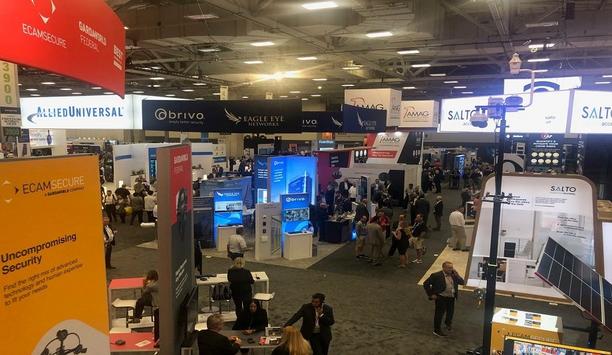
Companies at GSX 2023 emphasized new ways that technologies such as artificial intelligence (AI) and the cloud can address long-standing issues in the security market. Among the exhibitors at the event in Dallas were companies seeking creative ways to apply technology, lower costs, and make the world a safer place. Reflecting on the exhibition, here are some additional takeaways. Expanding AI at the edge i-PRO is a company reflecting the continued expansion of edge AI capability in the security market. Today, more than half of the company’s lineup supports AI at the edge so the customer has a wide choice of form factors when seeking to leverage the feature set. AI processing relay, extended warranty i-PRO is increasing their warranty period from 5 to 7 years, which could be a lifetime warranty in some cases I-PRO also has an “AI processing relay” device that accepts non-AI video streams and applies edge analytics. AI has progressed from a high-end technology to a feature available in a variety of cameras at different price points. i-PRO is also increasing its warranty period from 5 to 7 years, which could be a lifetime warranty in some cases depending on a customer’s refresh schedule and lifecycle management. Active Guard, MonitorCast The company’s video management system (Video Insight) is continuing to build new features including “Active Guard,” an integrated metadata sorter. Their access control platform, MonitorCast, is a Mercury-based solution that is tightly integrated with Video Insight. Their embedded recorders now have PoE built in. “We can move at a faster pace to fill out our product line since leaving Panasonic,” says Adam Lowenstein, Director of Product Management. “We can focus our business on adapting to the market.” Emphasis on retail and other verticals Shoplifting is a timely issue, and retail is a vertical market that got a lot of attention at GSX 2023. “We see a lot of retailers who are primarily interested in protecting employee safety, but also assets,” says Brandon Davito, Verkada’s SVP of Product and Operations. “Shrinkage is a CEO-level priority.” “Retailers are getting more engaged with security posture, instead of letting perpetrators walk,” Davito adds. Intrusion detection Verkada has an intrusion product that will notify a central station if there is an alarm On the alarm side, Verkada has an intrusion product that will notify a central station if there is an alarm, and operators can review videos to confirm the alarm. Other capabilities seeking to discourage trespassers include sirens, strobes, and “talkdown” capabilities. International expansion Verkada continues to expand internationally with 16 offices in all, including Sydney, Tokyo, and London. The core value proposition is to enable customers to manage their onsite infrastructure more simply, including new elements such as PTZ cameras, intercoms, and visitor management. Verkada emphasizes ease of use, including a mobile application to allow access to be managed across the user base. Forging partnerships “We are committed to the channel and industry, and we continue to build relationships and expand our reach,” says Davito. Among the industry relationships is a new partnership with Convergint, which was hinted at during the show and announced later the same day. They are also expanding their partnerships with Schlage, Allegion, and ASSA ABLOY. Working with other verticals They offer new features for K -12 schools, and a new alarm platform is easier to deploy and manage Verkada has also found success across multiple other verticals, notably healthcare, where they integrate with an electronic medical records system. They offer new features for K-12 schools, and a new alarm platform is easier to deploy and manage. They are integrating wireless locks to secure interior doors in schools, looking to secure the perimeter, and installing guest management systems. Transitioning the Mid-Market to the Cloud Salient is squarely focused on the “mid-market,” a large swath of systems somewhere between small businesses and enterprise-level systems. Pure cloud systems are not as attractive to this market, which has a built-out infrastructure of on-premise systems. Adding a camera to an existing system is easier and less expensive than tying it to the cloud. Benefits of cloud It’s a market that may not be ready for pure cloud, but there are benefits to be realized from adding a cloud element to existing systems. “We are continuing to augment our premise-based solutions with added cloud capabilities and flexibility,” says Sanjay Challa, Salient’s Chief Product Officer. The feedback Salient hears from their customers is “I want to own my data.” The hybrid cloud approach offers the right mix of control, flexibility, and unit economics. Cloud add-on capabilities We want to provide the flexibility for customers to go full-cloud as it becomes more economically attractive" Cloud add-on capabilities include bringing more intelligence about system operation to the user via the cloud. Over time, Salient expects to sell more cloud-centric offerings based on feedback from integrators and customers. “We want to provide the flexibility for customers to go full-cloud as it becomes more economically attractive over time,” says Challa. Vaidio AI technology Salient seeks to be a transition pioneer to help customers realize the path to the cloud. Their approach is “crawl, walk, run,” and helping customers make the transition at each stage. Salient has added AI to its product offering, incorporating Vaidio AI technology from IronYun into a powerful suite and broad array of on-premise analytics, which are gaining traction. The seamless approach makes it easy for customers to embrace AI analytics, although Salient remains broadly committed to open systems. Addressing ‘Soft’ Features for Integrators AMAG is in the process of enhancing its product line with the next generation of access control panels. However, “product” is just part of the new developments at AMAG. In addition to “hard” features (such as products), the company is looking to improve its “soft” features, too; that is, how they work with the integrator channel. Integrator channel Rebuilding a process to make your organization more efficient, is relatively easy; it just takes a lot of persistence" “We have the depth of our legacy customer base we can learn from, we just need to close the feedback loop quicker,” says Kyle Gordon, AMAG’s Executive Vice President of Global Sales, Marketing, and commercial Excellence, who acknowledges the value of reinstating face-to-face meetings after COVID. “We are laser-focused on nurturing our integrator channel,” he says. “Developing new features takes time, but rebuilding a process to make your organization more efficient, that’s relatively easy; it just takes a lot of persistence,” says Gordon. More cohesive internal communication is another useful tool, he says. Disrupting the cloud based on price Wasabi is working to make cloud applications less expensive by offering a “disruptive” price on cloud storage, $6.99 per terabyte per month (80% less than hyperscalers). Contending “hyperscalers” like AWS are charging too much for cloud storage, Wasabi is using its own intellectual property and server equipment co-located in data centers around the world. Wasabi sells “hot cloud storage,” which refers to the fact that they only have one tier of storage and data is always accessible. In contrast, a company such as AWS might charge an “egress fee” for access to data stored in a “colder” tier. Cloud storage “We saw that several video surveillance companies had not yet adopted cloud storage, and we saw an opportunity to make it easy to use,” said Drew Schlussel, Wasabi’s Senior Director of Product Marketing. “We just install a little bit of software that allows them to store data in the cloud and bring it back from the cloud.” Performance, protection (cybersecurity), and price Wasabi works with integrators, resellers, and distributors and also integrates with VMS companies Wasabi works with integrators, resellers, and distributors and also integrates with VMS companies such as Genetec and Milestone. Emphasizing performance, protection (cybersecurity), and price, their data centers are certified to SOC 2 and ISO 27001 standards. Faster throughput for weapons detection Xtract One is a young company focusing on weapons detection in a time of accelerated concern about gun issues post-COVID. Founded in Canada and based on technology developed at McMaster University, Xtract One has found a niche in providing weapons detection at stadiums and arenas. These customers already have budgets, and it is easy to shift the money to a newer, faster technology. Madison Square Garden in New York City is among its customers. Cost savings solution Xtract One can increase throughput to 30 to 50 people per entrance per minute (compared to 5 to 6 people per minute when using metal detectors). The solution doesn’t require anyone to empty their pockets and the system alarms on items beyond guns and knives. Using Xtract One allows customers to reduce the number of screening lanes and security staff, providing additional cost savings, all while getting fans through the screening process in half the time. Purpose-built sensors The system uses purpose-built sensors looking for specific characteristics, such as reflective and density properties In addition to stadiums and arenas, Xtract One, formerly Patriot One, is also getting “inbound” interest from schools, hospitals, manufacturers, and other verticals that makeup 50% of their business. “We’re on a rocket ride, mainly because the weapons issues are not going away,” says Peter Evans, CEO and Director at Xtract One. The system uses purpose-built sensors looking for specific characteristics, such as reflective and density properties, all correlated by an AI engine. Providing early warning of violence ZeroEyes is another company focused on weapons detection. Their AI gun detection system works with video images to identify if someone is “brandishing” (carrying) a weapon. In other words, the system does not detect concealed weapons. Identifying someone carrying a weapon provides early warning of a possible violent act. Increased response with AI-enables images Images are identified by AI and sent to a monitoring center where a human confirms the image before contacting first responders. Knowing the location of a shooter enables staff to lock entry points, move people to safety, and direct first responders. The company was founded to leverage existing camera views to stop mass shootings and gun violence by reducing response times.