Nortek Security & Control LLC - Experts & Thought Leaders
















Latest Nortek Security & Control LLC news & announcements

Nice, a global pioneer in Home and Building Management solutions announced the completed convergence of ELAN®, SpeakerCraft®, and Panamax® Energy Management to the Nice brand name. Integrated product ecosystem Since the company acquired Nortek Security & Control in 2021, Nice has been focused on executing its strategic plan to strengthen the company’s position as an industry pioneer in North America by converging its vast product portfolio under one unified brand. The milestone reinforces its mission of simplifying everyday movements by offering the most complete, integrated product ecosystem in the industry for residential, commercial, and perimeter protection applications. Nice-branded Home Management solutions ELAN, SpeakerCraft, and Panamax Energy Management are the first in a series of brands that will transition ELAN, SpeakerCraft, and Panamax Energy Management are the first in a series of brands that will transition to Nice. As part of the transformation, the company built on the pioneering brand legacies to launch a host of new Nice-branded Home Management solutions across several categories. These include Nice Home Management with the release of HR40 Remote Control and Home Management OS 8.8 software upgrade, Nice Audio with the recent debut of the SC-IC3 Small Aperture Speaker, SC-IC-SUB8 Small Aperture Subwoofer, SC4-100 4-Channel Amplifier, SB-40P Soundbar, and AIM MK3 architectural speaker series, Nice Energy Management with the DC12-IP Smart DC Power Manager, and the company’s first-ever innovative line of custom smart sun shades with Sun Shades by Nice. Holistic Home Management ecosystem “Today’s announcement is a culmination of efforts focused on bringing together several brands under Nice, forming a holistic Home Management ecosystem,” said Mark Owen Burson, Chief Marketing Officer at Nice North America. “Delivering on this vision will enable us to tell a more complete, integrated story designed to better address the needs of our partners and customers. By focusing on Home Management solutions first, we are now equipped to begin convergence of Linear and other brands to develop a more comprehensive, end-to-end solution for homes and businesses.” Enhance awareness and position Addressing the changes and future, Luca Longhin, President of Nice North America, had this to add, “After acquiring and rebranding Nortek Security & Control, the next step in our evolution was to focus on aggressive convergence of the brand portfolio to enhance awareness and the position of Nice in North America." "The realization of this vision brings together a complete solution under the Nice brand and, with the broadest and deepest portfolio in the industry, solidifies our place as a Home and Building Management powerhouse. In North America, and across the globe, Nice is better equipped to capitalize on opportunities and drive rapid growth. There’s still a lot of work to be done, but today marks a very important milestone.” Transitioning Linear Access and Surveillance brand Nice is also incorporating updates to its HySecurity brand, which offers Perimeter Protection solutions In 2024, Nice will begin the process of transitioning all offerings from the Linear Access and Surveillance brand, including everything from Access Control to Gate and Garage Door Openers (GDO), to the Nice brand. The first step in this process will be the release of a new residential GDO, the Nice Linear661, and a consumer application for gates and garage doors, called Nice G.O. As part of the company’s continued development in North America, Nice is also incorporating updates to its HySecurity brand, which offers Perimeter Protection solutions to secure critical infrastructure sites. One home, one solution The consolidation of these brands strengthens the company’s commitment to offer a more holistic whole home management solution that best serves its partners and customers by delivering one home, one solution. Following the company’s announcement of a new organizational structure, recently appointed CEO and President of Nice North America, Emanuel Bertolini, and Luca Longhin, will guide Nice through this next evolution of growth and innovation.
Nice, a global manufacturer of smart home, security, and building automation solutions announced the completed transition from Nortek Control to Nice North America. This milestone strengthens the Nice global brand and solidifies its position as a powerhouse in North America. Partners, including dealers, integrators, builders, and distributors, will benefit from its broad portfolio of residential, commercial, and industrial solutions, deeper partner programs, and expanded training and certification for the field. Home and building management solutions As part of this transition, the company is sunsetting Nortek Control and announcing the convergence of several commercial brands for the CI channel. By integrating ELAN®, SpeakerCraft®, and Panamax® into Nice, the company will progressively leverage its full portfolio of solutions for home and building management. This transition will take place over the next year. Impact of name change We’re committed to developing new solutions, focused on design and the highest and easiest experience for users" “This name change is an important milestone for the development of our organization in North America. With a combined experience of 90 years of innovation and a talented and diverse team, we are well positioned to bring passion and innovation to the market,” said Luca Longhin, Deputy CEO of Nice North America. Luca Longhin adds, “We’re committed to developing new solutions, focused on design and the highest and easiest experience for partners and end users.” Complete, integrated product ecosystem “Brand convergence has been a key pillar driving our actions since the acquisition,” said Mark Owen Burson, CMO of Nice North America, adding “To simplify everyday movements, as our mission states, we must start by streamlining the experience for partners and creating more value for customers." He continues, "With today’s announcement, Nice embarks on a journey from a house of brands to a branded house, offering the most complete, integrated product ecosystem in the industry for residential, commercial, and industrial applications.”
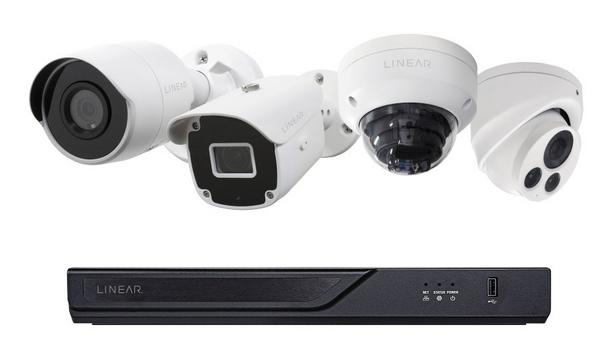
Nice/Nortek Control (Nortek Security & Control LLC) is set to showcase their brand new smart and AI-powered intelligent Linear Surveillance Cameras and Network Video Recorders (NVRs) at ISC West 2022. This multi-family cameras and NVRs are designed to seamlessly integrate with Linear Access Control and Telephone Entry systems. New Linear Surveillance Cameras and NVRs The new line of surveillance cameras are powered by IntelliVision Video Analytics, to provide actionable insights using AI (Artificial Intelligence) and deep learning-based video analytics on the edge. The NVRs communicate with Linear Access Control and Telephone Entry systems, to automatically see video events tied to the corresponding access events, thereby helping property or facility managers with proactive notifications. Together, the whole surveillance system integrates with Linear Access Control and Telephone Entry systems, for ease of installation and all-in-one support. Integrated solution right out of box Dealers and property/facility managers now have an integrated solution right out of box" Santhosh Thammi, the Vice President (VP) of Linear Product Management for Nice/Nortek Control, said “The Linear Surveillance line is the first step in our vision to enhance our access control ecosystem, with smart automation capabilities.” Santhosh Thammi adds, “Dealers and property/facility managers now have an integrated solution right out of box. The Linear Surveillance line is ideal for commercial buildings, multi-dwelling units (MDU), gated communities, city municipalities and K-12 and higher education campuses.” IV400 Intelligent AI camera family The multi-family camera line includes the IV400 Intelligent AI camera family and the IV200 camera family. The IV400 is a quad-core 5MP camera family and utilizes the full suite of IntelliVision analytics, including intelligent motion detection, object detection and classification (humans, vehicles, and animals), object left/removed, directional line crossing, and intrusion/perimeter watch. The IV200 camera family is a cost-effective 2MP camera line with fixed and varifocal lens options. The IV200 cameras also provide core IntelliVision features, such as motion detection, object detection, and object left/removed. Nice/Nortek Control’s ‘Stronger Together’ portfolio The Linear Surveillance line is part of Nice/Nortek Control’s expanded, ‘Stronger Together’, portfolio of Access, Security, Control, and Entertainment solutions. Integrators, dealers, and distribution partners benefit from access to greater opportunities with a broader solutions portfolio of integrated smart and connected products. To learn more about the new Linear Surveillance Products, visit Nice/Nortek Control at ISC West 2022, taking place in Las Vegas, Nevada, USA, from March 22 to March 25, 2022, at Booth 20007.
Insights & Opinions from thought leaders at Nortek Security & Control LLC

Mergers and acquisitions are among the most disruptive forces in the security marketplace. However, they are also both a reality and a growing trend. Whenever there is value to be leveraged, companies tend to enter into business transactions to maximize that value. For the security industry, the result is a continually shifting collection of manufacturer companies seeking new ways to provide value to customers. M&A activity continued unabated in 2021, despite residual industry challenges such as dysfunctional supply chains and lingering consequences of a global pandemic. Here are some of the larger and/or most impactful M&A transactions of 2021. Stanley Black & Decker sells to Securitas Stanley Black & Decker announces an agreement to sell most of its Security assets to Securitas AB for $3.2 billion in cash. The transaction includes Stanley Black & Decker's Commercial Electronic and Healthcare Security business lines. The businesses carry 2021 forecasted revenues of approximately $1.7 billion. “The business is well-positioned for ongoing growth within Securitas, a global pioneer in the security industry,” says James M. Loree, Stanley Black & Decker's CEO. Openpath’s solution makes businesses more secure with multi-factor authentication Motorola acquires Openpath and Envysion Motorola Solutions adds to its security industry portfolio with the acquisition of Openpath Security Inc.., a cloud-based mobile access control provider. Openpath’s solution makes businesses more secure with multi-factor authentication, enables a contactless entry experience, and can be easily scaled and managed due to its cloud-based architecture. Motorola also announces the acquisition of Envysion, a provider of video security and business analytics solutions for quick-service restaurant and retail industries. Delta Electronics buys March Networks Delta Group, a provider of power and thermal management solutions, purchased 100% of the shares in Infinova (Canada) Ltd., owner of Canadian-based video surveillance and business intelligence company March Networks, from Infinova International Ltd. through its subsidiary Delta International Holding Limited B.V. Following the close of the transaction, it was expected that March Networks will continue to operate from its Canadian headquarters, and the March Networks executive management team will continue to lead the organization. Delta Electronics is also the parent company of VIVOTEK. APi Group acquires Chubb Fire and Security Business APi Group Corp. acquire the Chubb Fire & Security Business from Carrier Global Corporation for an enterprise value of US$ 3.1 billion. Headquartered in the United Kingdom, Chubb has approximately 13,000 employees globally and a sales and service network that spans 17 countries, serving more than 1.5 million customer sites in Europe, Asia Pacific, and Canada. APi Group is a business services provider of safety, specialty, and industrial services in more than 200 locations worldwide. Teledyne Technologies Inc. will acquire FLIR in a cash and stock transaction valued at approximately $8.0 billion Teledyne acquires FLIR Teledyne Technologies Inc. and FLIR Systems, Inc. jointly announced that they have entered into a definitive agreement under which Teledyne will acquire FLIR in a cash and stock transaction valued at approximately $8.0 billion. Jim Cannon, President and Chief Executive Officer of FLIR, said, “We could not be more excited to join forces with Teledyne through this value-creating transaction.” Resideo adds Norfolk Wire and Electronics Resideo Technologies, Inc. acquired privately held Norfolk Wire & Electronics, based in Richmond, Virginia. Norfolk was founded in 1985 and is a regional distributor of security, telecom, network, and audio-video (AV) related products, supplies, and tools. With 11 full-service retail locations and a 43,000 sq. ft. distribution center, Norfolk serves customers across the mid-Atlantic region and will be part of Resideo's ADI Global Distribution business, a wholesale distributor of security, AV, and low-voltage products. Triton acquires ACRE, which acquires Feenics and Matrix Triton Partners acquired ACRE, an end-to-end security solutions provider based in Dallas/USA and Dublin/Ireland. Triton is investing alongside the current management team of ACRE. Weeks later, ACRE acquired cloud-based workplace solutions company Time Data Security (TDS). Later in the year, ACRE announced acquisition of Feenics and Matrix Systems. Feenics brings cloud-based access control solutions brings cloud-based access control solutions to ACRE’s rapidly growing network of global customers while also expanding its portfolio to support the growing demand for cloud-based security solutions. Matrix enables ACRE to expand the addressable market for the company’s technology portfolio. Brivo, Inc. and Crown PropTech Acquisitions have entered into an agreement making Brivo a publicly listed company Brivo becomes publicly traded through the merger Brivo, Inc., a cloud-based access control and smart building technologies company, and Crown PropTech Acquisitions, a publicly traded special purpose acquisition company (SPAC), have entered into a definitive merger agreement that will result in Brivo becoming a publicly listed company. The transaction values the company at a pro forma enterprise value of $808 million. Upon closing, the combined company will operate as Brivo, and its Class A common stock is expected to be listed under the ticker symbol “BRVS.” Nice buys Nortek Security Nice, a global manufacturer of smart home, security, home, and building automation solutions, , acquired Nortek Security & Control from Melrose Industries. Nortek Security & Control is a developer of technology for security, home automation, control, power, AV and entertainment, access control, health, and Artificial Intelligence (AI) systems, for residential and commercial markets. Eagle Eye acquires Uncanny Vision Eagle Eye Networks, a cloud video surveillance solutions company, has acquired Uncanny Vision Solutions, an artificial intelligence (AI) analytics and Solutions Company. The acquisition accelerates the company’s leadership in providing AI and analytics, to make customers’ businesses more efficient and the world a safer place. The acquisition also includes research and development (R&D) capabilities and a new regional office located in Bangalore, India.

Our most popular articles in 2017 reflected changing trends in the U.S. security market, from deep learning to protection of mobile workers, from building automation to robotics. Again in 2017, the most read articles tended to be those that addressed timely and important issues in the security marketplace. In the world of digital publishing, it’s easy to know what content resonates with the market: Our readers tell us with their actions; i.e., where they click. Let’s look back at the Top 10 most-clicked articles we posted in 2017. They are listed in order here with the author’s name and a brief excerpt. 1. Las Vegas Massacre Demands Reevaluation of Hospitality Sector Security The Oct. 1, 2017, sniper attack from a 32nd-floor room at Mandalay Bay, overlooking 22,000 people attending a country music festival, has been compared to “shooting fish in a barrel.” When the bullets rained down, there was nowhere to hide. The attack came from outside the “perimeter” of the event, so any additional screening of attendees would not have prevented it. There are also implications of the Las Vegas massacre for the hospitality industry. Hotels and resorts such as Mandalay Bay have not generally embraced technologies like the explosives scanners or X-ray machines used at airport terminals, at least not in the United States. 2. Deep Learning Algorithms Broaden the Scope of Video Analytics [Zvika Ashani] Until recently there have been minimal applications of Machine Learning used in video analytics products, largely due to high complexity and high resource usage, which made such products too costly for mainstream deployment. However, the last couple of years have seen a tremendous surge in research and advances surrounding a branch of Machine Learning called Deep Learning. The recent increased interest in Deep Learning is largely due to the availability of graphical processing units (GPUs). GPUs can efficiently train and run Deep Learning algorithms The last couple of years have seen a tremendous surge in research and advances surrounding a branch of Machine Learning called Deep Learning 3. Home Security Systems: Why You Need to Upgrade From 3G to 4G Technology [Missy Dalby] The current communication method for most home security systems is via CDMA and 3G (GSM) technologies. With the emergence of faster, better, and stronger 4G LTE technology, carriers are migrating away from old technology standards and methods towards new, more efficient ones. As such, the older technology is going dark, and soon. Manufacturers of cellular modules have stopped making them. At the end of 2018 they will stop letting customers add systems utilizing 3G radios to their channels. 4. Diving into AI and Deep Learning at NVIDIA’s San Jose Conference [Larry Anderson] Video analytics applications fall under NVIDIA's “AI City” initiative, which they describe as a combination of "safe cities" (video surveillance, law enforcement, forensics) and "smart cities" (traffic management, retail analytics, resource optimization). Depending on the application, AI City technology must function in the cloud, on premises and/or at the edge. NVIDIA’s new Metropolis initiative offers AI at every system level, from the Jetson TX2 "embedded supercomputer" available at the edge, to on-premises servers (using NVIDIA’s Tesla and Quadro) to cloud systems (using NVIDIA’s DGX). 5. Physical Security Evolves to Protect Mobile Workers [Annie Asrari] With an increasing number of employees traveling and working remotely, the days of a dedicated worker who commutes to and from a single location every day of the week are just about over. Security professionals must take a second look at their policies and procedures for employee safety. To protect employees in this new mobile world, where people, assets and brand reputation threats may face higher than normal levels of safety and security risks, businesses must focus less on securing physical, four-wall perimeters and instead take a global approach to security that focuses on protecting traveling, remote and lone workers. Businesses must take a global approach to security that focuses on protecting traveling, remote and lone workers 6. New Security Technologies Driving Excitement on Busy ISC West Day One [Larry Anderson] ISC West in Las Vegas kicked off April 5 with an expanding focus on new technologies and new applications, including some that go beyond any narrow definition of security. “Technology is disrupting the market and executives are taking our solutions beyond security,” says Moti Shabtai, CEO and President of Qognify. “They are starting with security and quickly moving to other risk and business continuity issues in the organizations. They want a clear return on investment (ROI), which we can deliver if we move from covering a limited island of ‘security’ issues and give them the value of also managing risk, safety, and operations.” 7. Optimizing Building Automation for Good Return on Investment [Minu Youngkin] Smart buildings are on the rise around the world, not only because a growing number of companies are considering their environmental impact, but also because of the dramatic cost savings that can be realized through integration. In every building that has an integrated security and access control system, an opportunity awaits to also integrate the building’s energy use, water use, ventilation and more. The key is to effectively convey the tremendous potential of this new technology to the end user. 8. ISC West 2017: How Will IT and Consumer Electronics Influence the Secuirty Industry? [Fredrik Nilsson] A good way to predict trends [at the upcoming ISC West show] is to look at what’s happening in some larger, adjacent technology industries, such as IT and consumer electronics. Major trends on these fronts are the most likely to influence what new products will be launched in the electronic security industry. Proof in point is H.264, an advanced compression technology ratified in 2003 and adopted as the new standard by the consumer industry a few years later. By 2009, it became the new compression standard for the video surveillance industry as well. Violence will continue to challenge the healthcare sector in the future 9. The Future of Healthcare Security: Violence Response and Emergency Preparedness [Ben Scaglione and David LaRose] Violence will continue to challenge the healthcare sector in the future. Domestic violence, child abuse, behavioral health, drug and alcohol abuse will all continue to challenge hospital staff in the Emergency Department, Women’s Health, and behavioral health areas. The Hazard Vulnerability Assessments (HVA) along with facility wide risk assessments helps in defining risk severity and identifying historical patterns of violence. 10. Robot Revolution: Uncovering the Real Value of Security Robots [Steve Reinharz] The security coverage that a robot offers in the case of a shopping mall can be easily overshadowed by the fact that the machines seem to serve to entertain the population. Instead, security robots can best be utilized for more high-level roles, such as in critical infrastructure sites, corporate campuses and educational facilities, where wide, expansive spaces require continuous protection. In these locales, security can be difficult to achieve, as cost, location and lack of resources make the logistics of deployment difficult.

“Netflix,” “twerk” and “selfie” were added to the dictionary. Boston Marathon bombing. Activist Nelson Mandela and actor Paul Walker died. Edward Snowden gave NSA classified documents to Wikilinks. These events may seem like they happened only yesterday, but they are some of the top news headlines from four years ago. Four years can feel like a very short time, and in four short years, every security panel installed by dealers to date will go dark. The current communication method for most home security systems is via CDMA and 3G (GSM) technologies. With the emergence of faster, better, and stronger 4G LTE technology, carriers are migrating away from old technology standards and methods towards new, more efficient ones. As such, the older technology is going dark, and soon. One year ago, AT&T stopped certifying new 3G parts. Meaning manufacturers of cellular modules, like Nortek Security & Control, have stopped making them. At the end of 2018 they will stop letting customers add systems utilising 3G radios to their channels. Knowing this, dealer programs like Monitronics and Guardian have already stopped or have significantly slowed the acceptance of 3G operated systems. Shifting From 2G To 3G Technology One of the big questions asked by most security dealers is: Should I roll a truck to replace the panel/cellular communication? To appropriately answer, let’s take a look back at the last time a shift in technology like this occurred. In 2016, 2G communication switched over to 3G and many dealers waited until systems failed to communicate before they started changing equipment, which is not a recipe for success. These networks help lay the foundation for how smart device technology interacts with a home security system and on which network To be fair, network providers don’t turn off bandwidth and access points like switching off a light. It starts slowly, as the provider starts to allow the technology to degrade over time. What dealers will experience is that parts of their service area will start to go down, or the service will become much slower than normal. Unfortunately, there is not a published schedule for where and when the services will decline, so the best advice is to begin to change the entire customer base early to avoid disruption. With that in mind, the answer about rolling a truck is a resounding yes. Dealers should figure out how many ticking time bombs they have, figuratively speaking, and start laying out a plan to upgrade them over time. Waiting can be a costly move that proves to be deadly to their business. It’s ideal to plan for the longest window to make this change to ensure that the majority of your customer accounts don’t sunset at once. Understanding 4G, 3G And CDMA The cellular market is shifting away from older communications standards with all major carriers quickly adopting 4G LTE technology. The benefits of LTE are a faster network and more broadband, which equates to faster Over-the-Air (OTA) programming and updating, and extended life without the need to roll a truck. Customers will experience faster home control response and faster streaming of CCTV video.Many telecommuniations providers are rolling out their 4G LTE offerings. For example, Verizon's 4G LTE network offers a super-fast cellular connection and the robust data capacity needed to rapidly deliver interactive services. AT&T is also rolling out 4G LTE, but due to coverage concerns, those radios will also be backward compatible with 3G – for a while. That backward compatibility tends to lead to more expensive radios, but ensures that the new radio you install today will work today and for years to come. The cellular market is shifting away from older communications standards with all major carriers quickly adopting 4G LTE technology These networks help lay the foundation for how smart device technology interacts with a home security system and on which network. This also allows for channel connection and using the network to send push alert notifications, updates, and other new and timely information. LTE Cat 1 Vs. Cat 3 And VoLTE Another nuance of LTE is Category 1 (Cat 1) vs. Category 3 (Cat 3) LTE. Cat 3 LTE is what is available now and offers data transfer speeds and voice quality similar to the smart phone on which you may be reading this article. Cat 1 LTE are less expensive modules and are available for data only applications but, the industry is waiting for VoLTE (Voice over LTE) certification on Cat 1 to ensure two-way voice functionality. Word is that lower cost LTE will be available soon, however the date is still unknown. The trade-off is lower speed (100 Mbps to 10 Mbps) but for the data transmitted by security systems the speed (security panel application) is not noticeable. Cat 3 supports two-way voice today. The latest sunset dates for existing cellular technologies came straight from Verizon and AT&T. Verizon is pushing to be the first U.S. based network fully on LTE, so they have an aggressive sunset date of December 31, 2019. AT&T is also working to switch to LTE, although their window for sunset is longer: the end of 2021. That said, AT&T has warned cellular module makers that at the end of 2018, they will no longer issue SIM cards for 3G devices, which moves up the need to jump on the LTE train significantly. AT&T has warned cellular module makers that atthe end of 2018, theywill no longer issue SIMcards for 3G devices Cost-efficient System Upgrades The choice is simple; do you want to create a plan to upgrade your current installation base and avoid costly disruptions of service and potential loss of customers, or wait until that decision is forced upon you? If you wait, you may find that entire sections of the towns or states that you cover go out overnight, leading to a service nightmare. Of course, there is a cost to making these service calls. After polling several dealers, I found that the costs hover between $150 and $250, including the cost of the new radio. This can also take a needed technician away from a new install. So, how can dealers try to turn the lemons of this forced change into lemonade? By finding ways to turn this need to upgrade equipment into a profitable visit. As service technicians plan for routine service calls, map out nearby customers and see if they are willing to have the technician that is already in the area make a stop to upgrade their system. Prepare For Future Technological Updates Some savvy dealers are offering promotions during these upgrades, offering home automation devices or new doorbell cameras, where they profit off of the sale of the new equipment and any increase in RMR helps to defray the costs of the service call. The new solutions also benefit the homeowner and make their system more valuable to them, which creates a win-win. Finally, be forward thinking and also switch out the panel to one with a replaceable cell sled, like the 2GIG GC3, so for future technological updates you don’t have to roll a truck and only have to mail out a new radio. The change is coming – will you be ready?









