March Networks Corporation - Experts & Thought Leaders























White papers from March Networks Corporation

How Video Technology Is Transforming Loss Prevention, Operations, And Customer Experience In The Retail Sector
Download
How Intelligent Video Is Transforming Banking And Financial Institutions
Download
Securing Your Growth With Video Surveillance
Download
A Focus on Video Surveillance Cybersecurity
Download
How To Get Buy-In From IT Departments On IP Video Installations
Download
Is The Cloud Ready?
Download
Latest March Networks Corporation news & announcements

Since Copenhagen-based Danske Bank began using March Networks® video surveillance systems in 2007, the risks facing the banking industry have changed dramatically. In 2012, according to Thomas Johansen, director of the bank’s Physical Security and Risk Group, Danske Bank had 36 robberies in Denmark alone. In 2018, as consumers performed more of their banking online and the number of branches decreased, there were only three bank robberies recorded. Video surveillance system However, during the same time span, ATM crime increased dramatically — so much so that according to sources, the gross losses on Danish-issued credit cards amounted to more than $60 million US in 2018. Now the bank uses its video surveillance system as much to help combat fraud and money laundering as it does for physical security, said, Johansen. Now the bank uses its video surveillance system as much to help combat fraud and money laundering The March Networks Searchlight™ for Banking software, in particular, has become an essential tool for protecting the bank’s assets. The Searchlight software, which integrates surveillance video with transaction data from Danske Bank’s ATMs, alerts fraud investigators to transactions involving withdrawals just short of the daily threshold limit, and high-value withdrawals from newly activated accounts. Its daily reports include bank card numbers, which fraud investigators can use to identify cards that have been reported lost or stolen. Deter fraudulent activity The reports also enable investigators to easily link to the recorded video to see the individual conducting the transaction. If the card owner is listed as a woman, for example, but a man is seen using the card in the video footage, it’s a further indication that the transaction could be fraudulent. Investigators might then freeze the account, contact the bank card owner, and use the recorded video evidence to help build their case. In total, more than 50 Danske Bank operators use the software daily to detect and deter fraudulent activity. Danske Bank also plans to eventually use Searchlight to detect instances of money laundering, by configuring the software to report on a range of transactions indicative of suspicious behavior, such as high-value multiple deposits and transfers. Retail banking branches Danske Bank operates 102 retail banking branches in Denmark, 32 in Norway, and 35 in Sweden In the Nordic region, Danske Bank operates 102 retail banking branches in Denmark, 32 in Norway, and 35 in Sweden. In Denmark alone, it operates approximately 500 ATMs. Overall, the bank records video from approximately 4,000 cameras and has more than 500 March Networks video recorders, including 8732 Hybrid NVRs in its retail branches and head offices, and either 8704 or 8508 Hybrid NVRs in its ATMs. In addition, Danske Bank has a presence in Kuala Lumpur, Germany, Poland, Latvia, Lithuania, India, and the United Kingdom, where it provides banking services to Nordic companies or has technology centers and back office operations — all of which are also equipped with March Networks video surveillance systems. Monitoring meeting rooms Johansen estimates that approximately 500 Danske Bank employees have access to live and recorded March Networks video. They include branch employees, fraud and anti-money laundering departments, ATM operations staff, security guards, health and safety personnel, and receptionists. Even kitchen staff and waiters use the system to monitor meeting rooms in the bank’s head office in Copenhagen, so they know when to serve the next course and clear up following meetings. This ensures that each user sees only the video they need to do their job, and meets key security To accommodate this broad access to video, system administrators use March Networks Command™ Enterprise Software to restrict access to cameras based on each employee’s job description or department. This ensures that each user sees only the video they need to do their job, and meets key security and General Data Protection Regulation (GDPR) requirements for the bank. Law enforcement authorities As video surveillance proliferates across cities, law enforcement authorities make more and more use of the vast array of archived video captured by banks, retailers, schools, and other organizations. No exception, Danske Bank is regularly asked to hand over video for police investigations involving robberies and other crimes, said Johansen. During a terror attack close to one Danske Bank branch in 2015, for example, Johansen was personally involved in supplying police with video footage. “Fortunately, in most cases, I can find the video needed in a few minutes and deliver it to police in a folder with the Command Client reviewer. That has really helped us out because three or four years ago, we would have to deliver the video on CDs or USB sticks, which was a lot more time-consuming.” Precise video evidence March Networks’ Smart Search functionality enables users to quickly search for motion March Networks’ Smart Search functionality enables users to quickly search for motion in a specific area of the archived video by generating a list of all recorded events detected within that area. Additional March Networks search features — such as motion histograms, video indicators, and visual finders — also help users zero in on the precise video evidence required. Johansen is happy to help law enforcement with investigations, but hopes to come up with a solution that reduces the burden on Danske Bank personnel by giving police secure, limited access to video from select cameras during specific timeframes. Avoiding false alarms Currently, Danske Bank’s alarm monitoring company has 24/7 access to the March Networks system and is able to pull up video from all branches remotely to verify the cause of an alarm activation. This makes it possible to dispatch police immediately if necessary, while avoiding false alarms. The banking industry has changed dramatically since 2007 when Danske Bank first selected March Networks as its video surveillance partner. March Networks technology has also evolved, delivering ever-better performance as well as the video-based business intelligence capabilities customers like Danske Bank need to keep their assets secure.
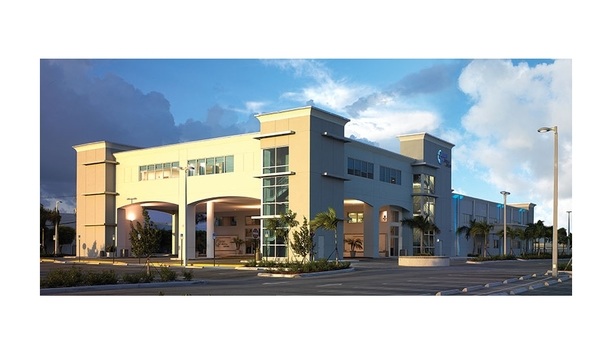
Leon Medical Centers is a privately-owned healthcare organization with seven state-of-the-art facilities serving over 46,000 elderly and Medicare patients in Miami and neighboring communities in Dade County, Florida. Established in 1996 by Benjamin Leon Jr., Leon Medical Centers is one of the largest and most prestigious primary healthcare organizations in the state. However, what really sets it apart is its rigorously enforced service philosophy of ‘personal attention at all times’ and its commitment to treating its patients with the ‘dignity, respect, compassion and human kindness that they deserve.’ Mobile video recorders Leon Medical Centers began deploying previous-generation March Networks mobile video recorders in 2011 In keeping with its commitment to exceptional service, Leon Medical Centers operates a fleet of 230 buses that pick up patients, take them to their appointments and return them home. To ensure their safety in transit and monitor compliance with its service philosophy, it relies on an integrated March Networks® RideSafe™ video surveillance solution. Leon Medical Centers began deploying previous-generation March Networks mobile video recorders in 2011. “We had another vendor’s equipment up to that point, but the system couldn’t support IP video,” said Erick Martinez, Leon Medical Centers’ Security Systems Manager. “At the time, we were using analog cameras and wanted to upgrade to higher definition video. We were also experiencing a lot of issues with hard drive failures.” Hybrid network video recorders In 2014, Martinez began upgrading to RideSafe GT Series Hybrid Network Video Recorders (NVRs), and now has 120 of the new mobile recorders in addition to almost 200 older March Networks mobile DVRs. The RideSafe GT Series recorders are available in 8, 12, 16 or 20-channel models with hybrid capability allowing end users to migrate from 100 percent analog to 100 percent IP video. An embedded Linux-based operating system, ruggedized design offering protection against shock, vibration, dust and moisture, solid state electronics, and internal battery backup make the RideSafe GT Series recorders ideal for reliable operation in punishing mobile conditions. A hard drive mirroring capability ensures redundancy and storage flexibility, while health monitoring proactively alerts system administrators to hard drive failures, irregular temperatures or synching issues with cameras. Safety of our passengers Our patients are elderly, so if there’s a slip and fall incident, we want to have evidence of what happened" Each Leon Medical Centers bus is equipped with six March Networks cameras. Five of the cameras are mounted to capture interior views and the last is used externally to capture video of passenger entry and exit points. “Our focus is on the safety of our passengers,” said Martinez. “Our patients are elderly, so if there’s a slip and fall incident, we want to have evidence of what happened. We also use the system to confirm compliance with our service standards. Our drivers are the first and last points of interaction with our patients, so if there’s an issue, we want to be able to review and rectify it.” In the event of an incident in transit, the driver is able to push a button on the dashboard to tag the associated video. Diagnostic imaging services When the bus arrives at one of the clinics, the tagged video automatically down-loads through a Wi-Fi hotspot to a server for immediate review by Leon Medical Centers risk management personnel. While in range of a Wi-Fi hotspot, the system also downloads health alerts and can also upload any scheduled software updates or new device settings. For routine video downloads, there’s hardly ever a need for Martinez’s staff to board a bus. “Wireless downloading saves us a lot of time,” he said. “It makes incident reporting much more efficient when we need to have an issue resolved. It helps a lot.” The seven Leon Medical Centers are one-stop-shop facilities with onsite labs, pharmacies, diagnostic imaging services and dental clinics. Traveling to multiple locations Leon Medical Centers operates four Healthy Living Centers with modern gyms, exercise and yoga classes This convenient service model enables patients to see their family doctor or a specialist, have blood work done, get an X-ray and fill prescriptions without having to spend time traveling to multiple locations. Each center has a café, where patients can have a coffee and socialize. And to help patients stay fit, Leon Medical Centers operates four Healthy Living Centers with modern gyms, exercise and yoga classes, seminars and other programs. Patients who require surgery or a hospital procedure are picked up and delivered by Leon Medical’s bus transportation service. On arrival, they’re greeted and escorted to their destination by staff from Leon Medical’s Hospital Service Centers, which are located within all of the major Miami-Dade County hospitals. Aside from the seven centers and four Healthy Living Centers, Leon Medical operates a fleet maintenance garage and a 300,000 square-foot corporate headquarters. Video management software Martinez says that the fixed facilities are also being equipped with March Networks 8000 Series Hybrid NVRs, which are managed using the same March Networks Command video management software powering the mobile recorders. Having a single software solution to access and manage video - regardless of whether it’s recorded on a bus or in one of the medical centers - means that Leon Medical Centers doesn’t have to train staff on multiple software systems. It also provides the organization with complete oversight of its clients and operations. Once again, it’s all about patient safety and service excellence. “If a patient loses a purse or a wallet, for example, we’ll be able to find it for them on one of our buses or in a clinic. Or if they have an issue with an employee, we’ll be able to review the video and take care of it,” said Martinez. Video surveillance infrastructure Martinez and his staff are trained to take full advantage of all the Command software functionality A Microsoft certified engineer, Martinez heads up a department solely focused on overseeing Leon Medical’s video surveillance infrastructure. “This department didn’t exist four years ago,” he said. “I was part of the IT department responsible for PC support. Mobile security was handled by transportation at the time. I thought it would be a good idea to create a separate department with IT expertise to look after mobile security, and senior management agreed.” Martinez and his staff are trained to take full advantage of all the Command software functionality. For example, they’re able to manage video viewing privileges to ensure users have access only to those cameras corresponding to their roles or responsibilities. They’re also able to take advantage of Command’s support for Microsoft Active Directory integration, which collects established user account information from Leon Medical’s corporate network directory. Patient safety and service excellence This allows them to select users from the company directory, assign a profile and customize their user interface to display the tools needed for their role. Looking ahead, Martinez and his team will be busy this year, as Leon Medical Centers continues to expand. We have four construction build-outs planned, including a four-story, 80,000 square-foot building" “We have four construction build-outs planned, including a four-story, 80,000 square-foot building and two parking garages - one six-floor and one seven-floor garage - so there will be opportunities for additional fixed video surveillance systems. Because we lease our buses for three years, we’re also always adding to our transportation fleet, so we’ll continue swapping out our 5308 recorders in favor of the newer GT Series.” “March Networks has served us well,” said Martinez. “Without a high-quality, reliable video surveillance system, we would have a much more difficult time fulfilling our commitment to patient safety and service excellence. It’s that simple.”

Two of the most important priorities in a manufacturing environment are safety and productivity. Failure to follow safe work practices around machinery on a factory floor can result in serious injury, while poor productivity can erode profits and ultimately threaten the viability of the business. At WCCO Belting, a Wahpeton, North Dakota-based manufacturer of custom rubber products for agriculture and light-industrial conveyor equipment, a March Networks® video surveillance solution plays a key role in enhancing both safety and productivity. Monitor Work Processes “Recently, for example, we had a minor safety incident on one of our machines that was captured by the system,” said Michael Marsh, Senior Technology Administrator. “The video not only allowed us to determine the cause of the incident, it also helped us create a proprietary piece of equipment to ensure that the accident would never happen again.” Safety was the main reason WCCO Belting acquired a March Networks system in 2015 Safety was the main reason WCCO Belting acquired a March Networks system in 2015, but the company soon discovered it could use the technology for other equally important priorities. “We found that we could use the video solution for time studies, to be more effective and efficient,” said Marsh. WCCO engineers use the video to monitor work processes and then tweak them to speed production, while ensuring optimum quality. Security System Integrator The company selected Marco Technologies as its security system integrator in 2015, and acquired March Networks 8000 Series Hybrid NVRs shortly thereafter. Two years later, when WCCO Belting decided to also equip a second production facility in Arlington, Texas, it upgraded to a March Networks Command™ Recording Software (CRS) solution in North Dakota and moved the 8000 Series Hybrid NVRs to its Texas facility. At the same time, the company deployed March Networks Command Enterprise Software to tie all the video from its geographically-dispersed facilities together, said Marsh. The software enables WCCO Belting “to oversee everything and manage the entire system from a single point of entry.” In addition, approximately 50 March Networks IP cameras — including indoor domes with wide dynamic range and outdoor IR bullet cameras — provide crystal-clear video of activity on the company’s factory floors, loading docks and parking lots. Remote Configuration Marsh cites ease of use and outstanding support as the main reasons for selecting the video solution. “The technology is easy to implement, easy to use and easy to navigate. Support has also been great. When we ran into some early issues, they responded quickly to help resolve the problem.” We didn’t have to uproot a lot of the architecture already in place" “More recently, when we decided to expand the system to include our second location, it was Marco that recommended the CRS solution and the redeployment of our NVRs to Texas. It was really plug and play. That was the winning piece for us. We didn’t have to uproot a lot of the architecture already in place.” A system that was easy to rollout was important because WCCO Belting’s IT department does the physical camera install themselves, while partnering with Marco Technologies for remote configuration. Command Mobile App “It’s one of the reasons we like March Networks, because we’re a hands-on IT department,” explained Marsh. “We like to make sure we’re always on top of things and that we understand the equipment we’re working with. If we can’t install it ourselves and need someone to come in and do it for us, it just creates future costs.” Aside from the IT department, which has administrative access to the system, authorized supervisors and managers at WCCO Belting are able to audit video for safety and security purposes. Temporary access is also provided to engineering staff for time studies. Marsh and several supervisors also have access to video through the Command Mobile app on their smartphones. Available as a free download from the Apple Store and Google Play, Command Mobile runs on iPhones, iPads and Android devices. Track Offending Vehicle Remote, after-hours access to video proved valuable during the previously mentioned safety incident, for example, “by allowing managers to pull up video from home and use it to make decisions quickly,” said Marsh. The video solution has also proven useful to local law enforcement, as some of the bullet cameras covering the employee parking lot at the North Dakota facility also have a clear view of North 9th St., a busy artery in the town of 8,000. The video resolution was so good that we were able to quickly track the offending vehicle" “One day, I was called to the front desk and met by two police officers and three sheriffs,” recalled Marsh. “They wanted to come to my office but didn’t say why. I was never so nervous in my life. Once in my office, they explained that they wanted to see if we had any recorded video to help them solve a hit and run a block and a half down the road. We did, and the video resolution was so good that we were able to quickly track the offending vehicle.” Rubber Belting Solutions “We’ve had two law enforcement visits since then, so now when they show up, I know I’m not in trouble,” joked Marsh. A family-owned business, WCCO Belting was founded in 1954 by Ed Shorma, a Korean War veteran who mortgaged the family car and borrowed $1,500 to buy a shoe repair shop. Propelled by Shorma’s strong work ethic and talent for ingenuity, the business grew and evolved as a manufacturer of rubber belting solutions, leading to Shorma’s recognition as Small Business Person of the Year by U.S. President Ronald Reagan in 1982. WCCO Belting is currently led by president and CEO, Tom Shorma, Ed’s son, and has 270 employees — 200 in North Dakota and 70 in Texas. The company’s rubber product solutions are sought after worldwide, and exported to customers in more than 20 countries. The company won North Dakota’s Exporter of the Year award in 2003, and in 2010 and 2016 it was the recipient of the Presidential ‘E’ Award and ‘E-Star’ award for its export promotion efforts.
Insights & Opinions from thought leaders at March Networks Corporation

There are many new technologies at ISC West this year. There are also some tried-and-true solutions on display. More mature products have the benefit of being fully vetted and battle-tested, which may make them a more comfortable choice for security customers. I had a couple of discussions on Day 2 of the show about the advantages, and possible drawbacks, of new products. “To a security director, when you say ‘new,’ he translates that into ‘risk,’” says Bill Spence, VP of Sales, U.S., Canada and Western Europe for HID Global’s Lumidigm biometrics brand. “Anytime you say new, there is a probability of risk. The key is to educate. Education quantifies risk, and an educated customer can make an intelligent decision about risk versus reward.” “We have to take customers from where they are to help them understand new technologies,” says Spence. “We must give them a bridge to that understanding, and education is the bridge.” Lumidigm Biometrics Integrations An app provides graphics that take installers step-by-step through the installation process HID Global is incorporating Lumidigm biometrics into the new iClass SE RB25F fingerprint reader being highlighted at the show. Two-factor authentication can use either a card or mobile credential along with biometrics; there is no latency; and templates can be stored on a card. Another new offering at the HID Global booth is an augmented reality tool to simplify installation of newer systems that incorporate the more secure OSDP protocol. An app provides graphics that take installers step-by-step through the installation process. Also highlighted at the HID Global booth — and at the booths of turnstile manufacturers throughout the show — are embedded readers that provide tested and certified mobile access control for turnstiles. IClass SE technology is embedded in the iRox-T Turnstile Reader from Essex Electronics. Innovative Security Technologies There’s a delicate balance at any trade show between creating excitement about new products and educating customers to be comfortable with new technologies. There is some of both at ISC West 2019. In the future, hardware will be a delivery device, not the core of systems “We are on the cusp of change in the industry, and it’s closer than ever,” says Jennifer Doctor, Johnson Controls’ Senior Director, Project Management - Intrusion. “We will see the impact of promised technologies that will come from other industries, such as artificial intelligence. The very definition of security is changing. We are an industry that needs to be risk-averse, and we need to prove out the technology. There is innovation, but we just need to make sure technologies are what the market wants and expects.” “In the future, hardware will be a delivery device, not the core of systems, which will come from intelligence in the software and from services,” she adds. “The products we deliver will enable that.” Have 30 percent of service companies in the U.S. security market jumped into the cloud? PowerSeries Pro Intrusion Portfolio Johnson Controls is highlighting the commercial PowerSeries Pro intrusion portfolio, which features PowerG encrypted technology that enables wireless systems that are cyber-secure. The cloud is coming on strong, and one company finding success in cloud systems is Eagle Eye Networks, which has seen 93% compounded annual growth over the past three years. Economies of scale have enabled them to lower subscription prices by 35%, with an extra 10% decrease for customers that pay annually. Ken Francis, President of Eagle Eye Networks, says they are signing up 50 new dealers a month for the cloud video offering. Francis estimates that 30 percent of service companies in the U.S. security market have jumped into the cloud “It’s really heating up,” says Francis. “The general cloud is driving increases in the surveillance cloud.” Jumping To Cloud Embracing the cloud and recurring monthly revenue (RMR) requires that dealers transform their businesses to ensure success. Francis says dealers should dedicate sales resources to cloud offerings rather than expect everyone to sell the cloud, and there should be a base commission plan on RMR services in lieu of upfront project fees. March Networks is also showing integration of video with the Shopify cloud-based point-of-sale (POS) system “Talk to professionals about your cash flow and understand how to capitalize on financing partners to ensure cash flow while investing in the RMR stream,” he adds. “And look for ways to reduce your costs to serve the customer base as your RMR increases.” For example, use of remote site diagnostics, configuration and support can avoid the need for expensive “truck rolls” that can undermine profitability. Francis estimates that 30 percent of service companies in the U.S. security market have jumped into the cloud. Alarm companies, which are accustomed to the RMR model, are generally ahead of the curve, while traditional security integrators are lagging. “It’s a requirement to change or die,” he notes. Insight Hosted Managed Service Also, in the area of managed services, March Networks is highlighting its Insight hosted managed service that can provide instant information on video systems located at remote sites, including visibility into firmware versions, camera warranty information, and cybersecurity status of systems. The ability to dive deeply into system status empowers a new recurring revenue stream for integrators. Color-coded icons summarize system status and show pending issues and clicking on the icons provides detailed workflow information. The system can also be offered for smaller systems such as those at convenience stores and quick-serve restaurants. March Networks is also showing integration of video with the Shopify cloud-based point-of-sale (POS) system. The integration enables managers to evaluate POS information, especially anomalies, to determine possible employee theft and other shrinkage issues.
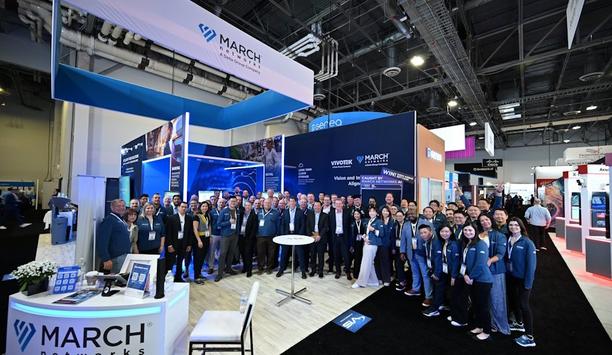
Combining VIVOTEK’s branded video security business with March Networks paves the way for the combined brands to meet customers’ increasing appetite for integrated solutions rather than individual components. The merger brings VIVOTEK's branded video security business together under one operating structure with March Networks’ enterprise-grade video surveillance, AI analytics, and cloud-managed security solutions. Customers now have access to a broader, more integrated portfolio spanning enterprise video management, advanced cameras, edge artificial intelligence (AI), cloud services, recording platforms, and business intelligence, says Net Payne, Chief Sales & Marketing Officer at March Networks and VIVOTEK. Distinct product strategies Given the combined companies, product development, sales, marketing, and customer support can move in step rather than in parallel. March Networks and VIVOTEK were already both part of the Delta Electronics family, but they previously operated as separate businesses with distinct product strategies, teams, and routes to market. March Networks and VIVOTEK announced the merger of their branded video security businesses last spring following Delta Electronics' acquisition of remaining VIVOTEK shares. “Aligning our complementary capabilities lets us innovate faster, simplify engagement, and respond more quickly to a market moving toward AI, cloud and intelligent video,” says Payne. This merger reflects a broader shift across the physical security industry, adds Payne. “Customers no longer see video purely as a tool for reviewing incidents after the fact,” he says. “They expect it to help identify risks earlier, simplify investigations, improve operations, and support better decisions across the organization.” Cloud video management Meeting customer expectations requires more than bolting AI features onto existing systems Meeting customer expectations requires more than bolting AI features onto existing systems. Rather, it requires cameras, edge intelligence, recording, software, cloud services, and business data working together as one coordinated platform. “By bringing March Networks and VIVOTEK together, we combine deep expertise across the full video technology stack while preserving the relationships, sector knowledge and customer focus both companies have built over many years,” says Payne. “Our goal is to make intelligent video more integrated, scalable, and practical for customers and partners worldwide.” Both entities bring strengths to the combined companies. March Networks brings experience in enterprise software, cloud video management and large-scale deployments; while VIVOTEK brings strength in imaging, camera technology and edge intelligence. Together they seek to ensure more choice when designing systems, a clearer path for future expansion, and technologies that work together more effectively without compromising the reliability, cybersecurity, and support customers expect from both companies. Advantages for channel partners Channel partners gain a broader portfolio to address a wider range of customer requirements, combining components as each deployment demands. Channel partners also benefit from expanded geographic reach, deeper technical expertise, and greater investment in training and enablement. “Importantly, this is designed to be a seamless transition,” says Payne. “Partners keep working with the teams and relationships they already know, while gaining access to new capabilities and certification opportunities. Over time, that alignment should make it easier to design, deploy and support complete solutions.” Because they are established and respected brands, March Networks and VIVOTEK branding will continue to be used. Rebranding is not a goal, and neither identity is being replaced by the other. Coordinated decision-making “The immediate priority is organizational alignment by making it easier for customers and partners to benefit from the combined portfolio,” says Payne. Product branding will continue to reflect the relevant portfolio and market context. As product roadmaps become more closely coordinated, customers can expect greater interoperability and a more cohesive experience, says Payne. Any future branding changes will be managed carefully and communicated clearly. Combining the businesses reduces duplication and enables coordinated decision-making across product strategy, engineering, sales, marketing, operations, and customer support. “Instead of developing capabilities independently, teams can share their expertise, align roadmaps, and direct investment to where it has the greatest customer impact,” says Payne. Combining specialized knowledge globally The combined organization operates across six continents and more than 75 countries The combined organization includes more than 300 research and development (R&D) engineers across four Centres of Excellence in Canada, Taiwan, Italy and Poland, thus bringing together a substantial base of specialist knowledge. The unified network also sharpens the ability to prioritise global opportunities, respond to regional needs and bring innovations to market faster. The combined organization operates across six continents and more than 75 countries, supported by more than 1,100 certified channel partners. That footprint provides greater capacity to support multinational customers while staying responsive to local market needs. Looking ahead, future growth will increasingly come from helping customers turn video into useful, actionable intelligence. “The market is moving beyond conventional surveillance toward solutions combining AI, cloud services, edge processing, video management and operational data — and our new structure brings these together as one connected solution rather than several isolated technologies,” says Payne. Broader technical expertise There will also be closer collaboration among specialists in imaging, hardware, software, analytics, and cloud, which is important given how much customer infrastructure, regulatory, and deployment requirements vary. The companies can support cloud, hybrid, and on-premise environments, giving organizations a practical path toward more intelligent video. More choice comes from bringing together complementary technologies across product groups. Greater scale is achieved through a larger engineering organization, broader technical expertise and more capacity to invest in innovation. Challenges for the industry at large Looking to the future for the industry at large, the greatest challenge will be managing the rapid growth of AI Looking to the future for the industry at large, the greatest challenge will be managing the rapid growth of AI responsibly, securely and at scale, says Payne. Video systems will generate more data and automate more decisions, but organizations must be able to trust how that intelligence is created, protected, and applied, he adds. “Cybersecurity, privacy, data sovereignty, system interoperability and AI accuracy are more important than ever,” says Payne. Addressing these elements requires expertise across the entire technology stack: from camera and edge processing to recording, cloud infrastructure, video management and analytics. “Together, March Networks and VIVOTEK can coordinate development across all these layers, giving customers flexible architectures that balance innovation with security, transparency and operational control,” says Payne.

An attention-grabbing exhibit at GSX 2024 in Orlando involved a robot dog that could open a door. Boston Dynamics robot dog ASSA ABLOY impressed attendees with the robotics demonstration, featuring the Boston Dynamics robot dog that could open a door using either an HID credential or a mechanical grip. This innovation represents a shift toward more autonomous security solutions and is suitable for environments where human access may be limited. ASSA ABLOY impressed attendees with the Boston Dynamics robot dog Operational efficiency Eye-catching exhibits at the GSX in Orlando, showcasing the future of security technology It was one of many eye-catching exhibits at the GSX in Orlando, showcasing the future of security technology, and offering practical solutions to the industry's challenges. For security professionals, the advancements presented opportunities to enhance operational efficiency and to maintain a proactive stance in a rapidly evolving market. Control ID face identification Alongside their robot demonstration, ASSA ABLOY also highlighted the Control ID Face Identification. Access Controller, providing advanced facial recognition access control. From identity management to AI-driven surveillance systems, GSX 2024 offered a glimpse into the tools that can streamline processes, increase security, and reduce costs. Here are some other highlights. ASSA ABLOY also highlighted the Control ID Face Identification More integration with critical infrastructure A major theme at GSX 2024 was the increasing integration of security solutions with critical infrastructure. ALCEA (formerly ASSA ABLOY Critical Infrastructure) is an example. Their globalized software solution ALWIN is designed for managing access control, visitor management, and other security factors across multiple locations. ALCEA's approach involves not only internal collaborations within ASSA ABLOY but also partnerships with external organizations. An example of innovation is the Neenah Foundry lockable manhole cover, blending safety and security. Solving identity management challenges The solution simplifies onboarding and access request changes while ensuring compliance with policies Identity management continues to be a key focus in the security sector, and AMAG Technology addresses this need with its Symmetry Connect product. The solution simplifies onboarding and access request changes while ensuring compliance with policies. For professionals overseeing identity access management, Symmetry Connect provides a streamlined, automated approach, reducing human error and increasing operational efficiency. AMAG also sees a growing demand for efficient visitor management systems, especially in the post-COVID landscape. AMAG’s products cater to the need for enhanced security without overburdening staff. AI and cloud-based surveillance solutions Axis Communications highlighted its advancements in AI and cloud-based video management systems with its AXIS Camera Station Edge and Pro products. These solutions can connect seamlessly to cloud systems, providing security professionals with easy access to surveillance data anywhere. With the increasing need for centralized management, Axis’s offerings ensure that security teams can efficiently manage surveillance with minimal infrastructure. Axis also showcased its commitment to AI-driven analytics based on superior video quality. There were also networked audio solutions for public announcements and background music, among other uses. Body-worn cameras for corporate and Healthcare uses Traditionally focused on law enforcement, Axon is now expanding its body-worn cameras and TASER technology into corporate, retail and healthcare environments. Their Axon Body Workforce camera is a practical solution for protecting frontline workers in high-risk environments. Axon also introduced drone-based solutions for real-time aerial awareness Axon also introduced drone-based solutions for real-time aerial awareness, a significant benefit for large campuses or remote locations. As more industries adopt corporate surveillance systems, Axon’s offerings provide flexible, scalable solutions that address the need for real-time, actionable intelligence. Cloud-based access for smart buildings Brivo’s native cloud systems and flexible credentials offer practical, future-proof security options Brivo showcased how cloud technology is revolutionizing access control by offering systems that integrate seamlessly with other smart building platforms. Their open API approach enables collaboration with IT teams, bridging the gap between physical security and IT management. Brivo’s new partnership with Comcast Smart Solutions illustrates how large enterprises can implement advanced solutions, including access control while maintaining flexibility. For professionals managing complex building environments, Brivo’s native cloud systems and flexible credentials offer practical, future-proof security options. AI-powered multi-sensor camera Hanwha focused on an AI-powered multi-sensor camera, equipped with an NVIDIA processor capable of running complex analytics. In addition, Hanwha’s new AI camera technology can process multiple video streams simultaneously, either stream from its sensors or outside cameras, enabling better tracking of objects in complex environments. Their eight-channel AI Box, which converts legacy cameras into AI-enabled devices, is an attractive solution for professionals seeking to upgrade existing systems without the need for complete overhauls. For security teams looking to enhance situational awareness, Hanwha’s AI-based offerings provide advanced, scalable solutions. Workflow management and hybrid cloud security Genetec continued the theme of integrated solutions with their Operations Centre module for Security Centre, which consolidates work management into a single platform. Built on lean management principles, this system simplifies workflow for security professionals, promoting real-time collaboration across mobile and web platforms. As the industry shifts from on-premises systems to hybrid cloud solutions, Genetec’s products provide seamless transitions for organizations. Their new SaaS Security Centre also allows for natural language video searches in multiple languages, making it easier for global teams to manage operations across locations. Simplifying remote surveillance The company’s focus on scalability and efficiency is demonstrated by the “Eagle Eye Complete” subscription service Eagle Eye Networks showcased their continued international expansion, highlighting a new data center opening in Saudi Arabia and new hiring initiatives in Australia and Europe. Their “Eagle Eye Anywhere” solar-powered camera system exemplifies the move towards flexible, easy-to-install solutions that can be deployed in remote locations. Integrators benefit from simplified maintenance through remote management, reducing the need for on-site support and ensuring operational continuity. The company’s focus on scalability and efficiency, as demonstrated by the “Eagle Eye Complete” subscription service, reflects the broader industry’s shift toward managed security services. Tailored solutions for commercial clients Everon continues its transition away from its former identity as ADT Commercial. Claiming the status of a competitive commercial integrator, Everon is reinventing itself by offering customized billing and monitoring solutions for a range of industries. Their cloud-based business intelligence platform, which combines video surveillance with data analysis, is aimed at enhancing operational awareness by detecting anomalies such as OSHA violations or retail point-of-sale exceptions. With AI-driven dashboards, clients can customize their security solutions to meet specific needs, reflecting a growing demand for tailored, data-driven security applications. Innovation through cloud and mobile LenelS2 is part of Honeywell, and they emphasized their investment in cloud and mobile solutions at GSX 2024. Their "Enterprise OnGuard Cloud" platform, launched in June 2024, is a testament to the growing demand for cloud-enabled access control systems. With the addition of NFC-enabled Blue Diamond credentials, LenelS2 is pushing towards smarter, more secure mobile access options. The strategic combination of Lenel’s solutions with Honeywell’s infrastructure offers users enhanced engineering capabilities and global reach. This reflects a broader market trend of integrating mobile devices into physical security protocols. Bringing AI to everyday security LPR system, combined with their Searchlight Cloud Analytics, offers a powerful tool for identifying security risks March Networks highlighted their new AI-driven smart search feature, designed to help security teams quickly detect operational anomalies in retail and financial environments. From identifying misplaced cash in quick-service restaurants (QSRs) to detecting "jackpotting" attacks on ATMs, their solution highlights the increasing importance of AI in enhancing both security and operational efficiency. Their Licence Plate Recognition (LPR) system, combined with their Searchlight Cloud Analytics, offers a powerful tool for identifying and responding to security risks in real-time, emphasising the practicality of AI in daily security operations. Driving sustainability in security Securitas showcased its commitment to sustainability, a growing concern for businesses across all industries. By providing CO2 data for clients and promoting digital tools like mobile credentials, Securitas is leading the charge in creating greener, more sustainable security solutions. Their focus on remote services and occupancy insights offers companies a way to reduce their environmental impact while enhancing security operations. The company’s alignment with science-based targets and circular economy practices signifies the increasing role sustainability will play in the security sector. Future lies in integration The GSX 2024 trade show revealed that the future of security lies in intelligent integration, AI-driven analytics, and cloud-based management systems. The innovations presented will help security professionals streamline their operations, enhance situational awareness, and future-proof their systems. As these technologies continue to evolve, professionals must stay informed about the latest advancements to maintain a competitive edge in the security marketplace. GSX was a great place to start. At the end of the day at GSX, it wasn’t just the robot dog that was opening doors …. to the future of security systems. {##Poll1727925373 - Of the important factors highlighted at GSX 2024, which do you consider most when adopting new security solutions?##}

The Key To Unlocking K12 School Safety Grants
Download
Honeywell GARD USB Threat Report 2024
Download
Physical Access Control
Download
The 2024 State Of Physical Access Trend Report
Download
The Security Challenges Of Data Centers
Download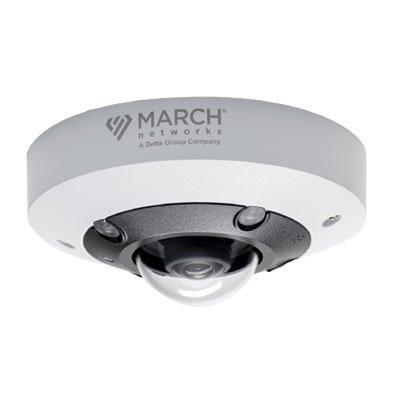
March Networks VA5 IR 360° Camera With Built-in De-warping, Video Analytics And Microphone
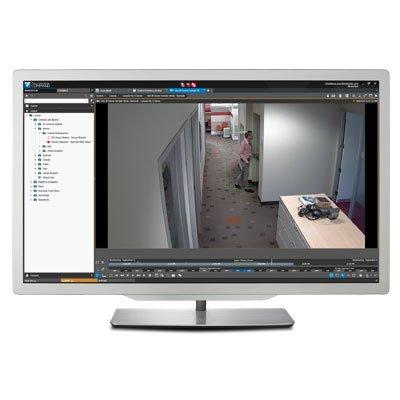
March Networks Cloud Storage Solution
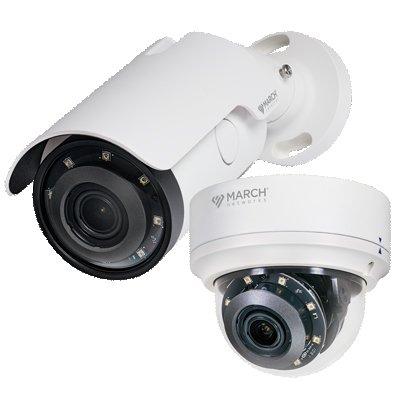
The ME8 Series IP Cameras from March Networks