iJET International - Experts & Thought Leaders



Latest iJET International news & announcements
Clients will continue to receive the core services of travel tracking, trip briefs and alerts iJET International, Inc., a leading provider of integrated risk management solutions, announces the acquisition of Aon’s WorldAware book of business and the WorldAware brand to further iJET’s strategic efforts to expand globally. Clients will continue to receive the core services of travel tracking, trip briefs and alerts. “We have strategically positioned for growth through acquisition for years. WorldAware was a natural fit both in vision and geographical locations,” said Bruce McIndoe, CEO of iJET International. “We welcome the talented employees who have joined the iJET team.” Additional details about this acquisition are forthcoming.

The GBTA Foundation, the education and research arm of the Global Business Travel Association, recently announced the launch of the new Travel Risk Management Maturity Model (TRM3™) Self-Assessment Tool. The update to the TRM3 tool was created in partnership with iJET International thanks to a special task force of GBTA members and industry experts. 20 Percent Of Organizations Lack A Risk Management Plan “This single biggest issue for our members right now is duty of care,” said Michael W. McCormick, GBTA Executive Director and COO. “A recent lightning poll survey of our global members following the terror attacks in Brussels showed 20 percent of organizations do not have a risk management plan in place and an additional 8 percent are unsure if they have a plan. Clearly there is work that still needs to be done. The new TRM3 tool is designed to help companies evaluate their risk management program and identify opportunities for improvement.” “Empowering organizations to protect their people, assets and reputation with the right solutions. That is why we come together to share best practices and provide operational standards for success,” said iJET CEO, Bruce McIndoe. “At the end of the day, keeping people safe is really what matters.” Effective Improvement Across Multiple Process Disciplines The new tool is a major update over the current TRM3 tool in place and now assesses each key performance area of a travel risk management program in greater detail and also provides specific recommendations to help companies take their program to the next level. The TRM3 can help guide efficient, effective improvement across multiple process disciplines within an organization – legal, HR, travel, safety, security and business continuity. The self-assessment tool looks at the following 10 categories: policies and procedures, education and training, risk assessment, risk disclosure, risk monitoring, risk mitigation, response and recovery, notification, data management and program communication. Based on the answers, it rates the program from “Level 1" defined as reactive up to “Level 5,” which is defined as optimized indicating that the travel risk program is integrated throughout the organization.
iJET, a leading integrated risk management solutions provider, announced recently the launch of Powered by iJET, a new business unit that will enable organizations focused on people and locations to deliver a differentiated value proposition in their product or service. "An indirect channel strategy, as well as our focus on developing flexible and custom solutions across the travel and financial services industries has been part of iJET's DNA since the early days of our company," said Bruce McIndoe, CEO of iJET International. "Indirect channels are one of the fastest growing areas of iJET's business, and the needs of existing and new industry leading organizations looking for unique ways to leverage our technology, intelligence, and services continue to expand. The Powered by iJET business unit will have a dedicated and focused set of resources to deliver on this growing need." Powered by iJET will support existing and new partnership models across multiple industry verticals. Enablement/Distributor: powering partners new and existing products and services through: Cloud/Web Services APIs Licensing and distribution of iJET's industry leading global intelligence including real-time global alerts, country/city health, safety and security profiles, and widely acclaimed database of Travel Intelligence®. Integration of mobile application and mass communication capabilities supporting a wide-range of building block services such as personnel locator, risk exposure, and travel/assignment management. Enhanced Service Wrappers 24/7/365 response hotline, 24/7 access to analysts, medical/security assistance, and bespoke security/intel assessments. Referrals Powering partners by supporting their client needs for end-to-end, fulsome risk management solutions and services via direct relationship with iJET. Resellers Powering partners to allow them to directly sell and deliver iJET's Worldcue® Risk Management solutions to their customers. "Enabling, augmenting and enhancing solutions with partners has become the norm, not the exception," said Theresa Thomas, Senior Vice President, Powered by iJET. "The days and ego of 'owning' the full end-to-end solution for organizations are gone. Our partners want to bring together the best in class capabilities across category providers to deliver the richest and most valuable experience for their customers. iJET has a long history of listening and responding to the changing needs of our partners and the market. The launch of the Powered by iJET business unit is the most recent proof point of this positive evolution, and I could not be more proud or excited to be leading this effort."
Insights & Opinions from thought leaders at iJET International
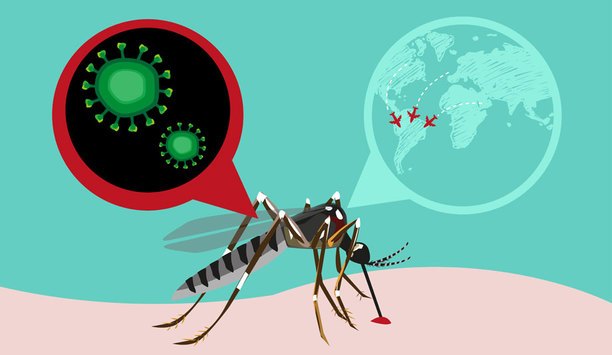
Many companies are considering carefully the possible risks of business travel to the areas most impacted by the Zika virus, and others may have facilities located in affected areas. What Is The Zika Scare? Transmitted by mosquito bite, the Zika virus can cause a fever that typically involves minor symptoms. There is an additional risk to pregnant women as Zika fever has been linked to incidences of microcephaly (a neurodevelopmental disorder) in newborn babies through mother-to-child transmission. Zika has also been linked to neurologic conditions in infected adults, including cases of Guillain-Barré syndrome. The virus can also be transmitted sexually, so men who travel to Zika-impacted countries could put their partners (and therefore their offspring) at risk. Informed Employees Benefit Everyone When traveling to affected areas, precautions such as protective clothing and insect repellent can help. Travellers should sleep indoors with air conditioning and recirculated air, making sure any protective screens are intact. Travellers may confer with hotel management about what any facility is doing to minimize the risk, such as spraying measures or emptying standing water (where mosquitos breed). “Make sure any employees involved in international travel are aware of what Zika is and the implications, so they can understand their risk,” says Katherine Harmon, Director of Health Intelligence at iJET International, an integrated risk management company. “Inform employees of their risk before they get caught in a situation,” says Harmon. “We are advising that education is the most important thing.” Any employee contemplating travel to a Zika-impacted area should consult with his or her physician to assess their specific medical condition and whether it involves additional risk. Employees who choose to travel despite warnings could be asked to sign a liability waiver, although it would not provide full protection for an employer, especially in case of a jury trial, says Harmon. Recognizing Zika Transmission And Impact On Certain Areas An important risk variable to consider is how much the virus may have impacted any certain area. Some countries have been especially hard-hit, while others may be listed on a travel advisory list but may have reported only a handful of cases. Brazil has reported more than a millions cases, for instance, while some islands in the Caribbean have only reported a few, says Harmon. Conditions in each locale contribute to spreading the virus through mosquito bites. Variables include how cities are laid out, the presence of mosquito breeding grounds, and availability of mosquito spray. The virus also spreads faster in areas that have not previously been exposed; there has been no opportunity to develop “herd immunity.” Currently, Brazil is at the peak of its epidemic curve. The disease is believed to have been introduced (from endemic areas of Asia or the Pacific Islands) when Brazil hosted international events such as a canoe race and the FIFA World Cup, both in 2014. See larger image Some countries have been especially hard-hit, while others may be listed on atravel advisory list but may have reported only a handful of cases Risk Assessment Of Employees Traveling To Affected Area Dealing with any impact from the Zika virus is another instance when a company should rely on its business continuity plan and call on its crisis team, says Harmon. What is the current risk exposure? Where might the disease spread? What is the possible reputational risk if an employee were to be impacted? What would the impact be on productivity if a key employee were sidelined to care for a disabled infant? Those are just a few of the possible risk of employees traveling to an impacted area, or of having a facility located in an impacted area. The crisis team should discuss in proactive terms how they can get ahead of the situation. In addition to depending on companies like iJET for information, enterprises can refer to Web sites from U.S. Health and Human Services and/or the Centers for Disease Control and Prevention (CDC). In Europe, the European Center for Disease Prevention and Control is a good source. Zika’s Impact On Economy And Security There are also concerns about the economic impact of the disease on affected areas (and on companies operating there). The Zika scare could negatively affect tourism; for example, the Olympic games are coming up this summer in Rio De Janeiro. Fear and uncertainty might also undermine security of infected areas, even if no one contracts the disease, says Harmon. Employees might become disgruntled because they perceive an employer as slow to act on the Zika situation, for example. It’s another reason companies should be proactive, both to allay fears and to promote best practices. “Fear is always a dangerous element when it comes to human behavior,” says Harmon. “Zika is a mild disease aside from its associated complications. There are much more serious diseases that people should be aware of that are also transmitted [by mosquito bites].” Related viruses include dengue, yellow fever, Japanese encephalitis, and West Nile viruses. Communication and outreach are important so that fear is reduced through knowledge of sound best practices, she adds. How Much Worse Could The Situation Get? It’s hard to tell, says Harmon. Previous forecasting models, such as those used in the Ebola outbreak, were not very accurate. Everything depends on each nation’s ability to combat the problem, which can vary widely. Contributing to an optimistic outlook are proactive response in some areas, and President Obama has requested $1.8 billion to combat the disease on the U.S. domestic front. However, security concerns can also be an obstacle to dealing with the virus. For instance, in El Salvador, Mara Salvatrucha (MS 13) gangs have reportedly attacked police and sought to thwart mosquito elimination practices, and fumigators have refused to return to insecure areas. iJET Health Intelligence Department Harmon oversees iJET’s health intelligence department, where analysts comb the globe for reports of any diseases or other health impacts. iJET collects information, analyses it and presents the facts to its clients along with any measures they should take to reduce risk. Information helps to dispel fear and anxiety, says Harmon. iJET pushes out select alerts to travellers based on their specific travel plans. iJET also provides several public resources, including a training video and information sheets posted on its Web site.









