EyeLock LLC - Experts & Thought Leaders



Latest EyeLock LLC news & announcements
EyeLock LLC, the provider of iris-based identity authentication solutions, announces the release of its highly anticipated EyeLock ID® logical access system for connected workers. Recognizing that passwords and usernames are things of the past, EyeLock ID combines its myris® iris authentication device and an easy-to-use software application to enable individuals to securely logon to computers, networks, and apps. myris is handheld, USB connected, and the ideal biometric solution to facilitate trouble-free, secure access to networks and corporate applications for remote and on-site workers. myris has been an EyeLock workhorse and is the core technology of the EyeLock ID system. Biometric authentication solutions The software application within EyeLock ID was co-developed by New Jersey-based Integral Biometrics, formerly Integral Technology Solutions, and leverages Integral's extensive experience developing and deploying integrated biometric authentication solutions to top tier global corporations. Responding to the COVID-19 pandemic, companies around the world have enabled their employees to work from home. Many will not return to the office due to the freedom and flexibility working from home provides. With that said, it comes as no surprise that corporations feel uneasy with the lack of data security for computers being used outside of the organization. Most have policies to limit who has access to devices, apps and networks but these policies are tough to enforce. Identity management tool EyeLock ID includes one myris sensor and an annual software subscription EyeLock ID requires remote employees to logon to the computer and corporate applications using their irises to automate and simplify credential-based logins. "The EyeLock ID logical access solution ensures greater data security for businesses and requires additional accountability by their employees when working from home. With this easy-to-use and affordable identity management tool, EyeLock ID should go home with every corporate computer and be used on every office workstation," said Jeff Carter, CEO of EyeLock. EyeLock ID includes one myris sensor and an annual software subscription. The solution provides biometric login support for Microsoft Windows® via Active Directory accounts, application-specific automated access to numerous corporate systems such as SAP®, Citrix® and other key corporate applications. Multi-Factor authentication It also provides single sign-on (SSO) solutions with multi-factor authentication (MFA) options. EyeLock ID takes just a few minutes to install. Marc Diament, CEO of Integral Biometrics, added, "The Integral team is excited to partner with EyeLock to help businesses become more comfortable with remote and on-premise network access by their employees, and EyeLock ID is the best product on the market to achieve this objective. With the current changes and challenges faced in a swiftly morphing workplace, every opportunity to achieve greater security while eliminating complexity is a welcome transformation that we are eager to help deliver."
The PSIA will show continued momentum for its Physical Logical Access interoperability (PLAI) spec at ISC West 2019. “In past demos we were able to show some exchange of records between PACS systems, but this year we will have five vendors, and demonstrate existing employee identity data sets, which can be passed to other systems in the security environment beyond having just a clean start,” said David Bunzel, Executive Director of the PSIA. Physical Security Systems Biometrics, an important component of enterprise physical security systems, will also be featured in the demo. Princeton Identity has previously demonstrated its PLAI adapter and at ISC West 2019 we will be showing new adapters from EyeLock and IDEMIA. Two of the major physical access control (PACS) vendors, Johnson Controls and LenelS2, will show their new commercial PLAI adapters at the demo “Having the ability to transfer employee credential data so that associated biometric identifiers can be constructed and utilised with existing access control systems will be a valuable feature for our customers,” said Consuelo Bangs, Senior Program Manager, IDEMIA Identity & Security USA LLC. “This will save time and money by eliminating redundant record creation.” Two of the major physical access control (PACS) vendors, Johnson Controls and LenelS2, will show their new commercial PLAI adapters at the demo. Critical Components “Our enterprise customers have complex environments with high costs for integrations and identity synchronization today, and as a result these customers have been looking for solutions. PLAI provides an effective means to support these industry needs,” said Jason Ouellette, Product General Manager- Access Control, for Johnson Controls. One of the critical components is the introduction of an independent commercial PLAI Agent by Cruatech of Dublin, Ireland. This Agent acts as a central hub, to allow interchange between disparate PACS and biometric vendors. “The introduction of the Cruatech Agent offers the means to effectively provide solutions to enterprise customers, solving an important problem in the industry–finding a method to have a single trusted source in an enterprise environment,” said Bruno Desrochers of Tech Systems Inc.

EyeLock's technology delivers an unprecedented level of security with unmatched biometric accuracy EyeLock LLC, a provider of iris-based identity authentication solutions, announced it will be showcasing the nano EXT, the most advanced outdoor iris identity authentication solution, at ISC West 2017, which takes place April 5-7, 2017 at the Sands Expo Center in Las Vegas. ISC West is the largest security trade show in the U.S. Vandal Resistant Construction The nano EXT is designed to withstand EXTreme outdoor elements while providing unmatched security and convenience for data centers, banks, factories, industrial facilities, and office buildings. The nano EXT incorporates the following features: IP-67 rating for operating in extreme outdoor conditions IK-10 certification for its vandal-resistant construction Standoff distance of 19-24 inches ADA-compliant design Instant auto-height adjusting Further, the nano EXT integrates seamlessly with the various access control platforms, including Lenel, AMAG, Pacom, Software House, and Genetec, ensuring dependable, rapid, and hassle-free installation. Advanced Biometric Technology “The addition of an outdoor unit to our offering speaks directly to customers who want to implement a single technology approach for managing outdoor and indoor access control as well as to those looking to upgrade their exterior access points to the most advanced biometric technology,” said Anthony Antolino, Chief Marketing and Business Development Officer of EyeLock. EyeLock’s solutions are ideal for vertical markets including enterprise security, healthcare, stadiums, government, higher education, data centers, and more EyeLock Identity Suite Aside from the nano EXT, EyeLock is highlighting the following products and solutions at ISC West: HBOX: An overhead iris-based identity authentication system. The flexible design accommodates multiple mounting environments from mobile stands, fixed frames, and wall mounts to new construction and existing retrofit configurations. HBOX is ideal for borders, customs, stadiums, office buildings, and the like. nano NXT: A point of entry miniaturized iris-based recognition system. The nano NXT is an ideal replacement for card-based systems, and seamlessly controls access to secured entrances, server rooms, and any other physical Portable template: Provides nano NXT users the option to store templates on a smartcard or mobile The portable template supports large user populations without the need to manage an iris template database or gain access to the network. The portable iris template solution provides next-level security with increased convenience and mobility. EyeLock Identity Suite (EIS): A browser-based Centralized Management Application (CMA) which streamlines administration of EyeLock devices and users. EIS simplifies firmware updates and provides the ability to simultaneously manage multiple device settings and remote device diagnostics for online and offline devices. EyeLock products will also be shown in the following booths: Stanley Security Booth #31073, AMAG Technology Booth #10053, and Vanderbilt Industries Booth #25075. Identity Management EyeLock’s solutions are ideal for vertical markets including enterprise security, healthcare, stadiums, government, higher education, data centers, and more. EyeLock's technology delivers an unprecedented level of convenience and security with unmatched biometric accuracy, making it the most proven way to authenticate one’s identity aside from DNA. EyeLock’s proprietary iris authentication technology looks at more than 240 unique iris characteristics and provides a fast, user-friendly experience. EyeLock is one of the only biometric companies in the world to own and control the entire software and algorithm stack, providing patented approaches to dual-eye authentication, an unmatched security architecture and anti-spoofing technology.
Insights & Opinions from thought leaders at EyeLock LLC
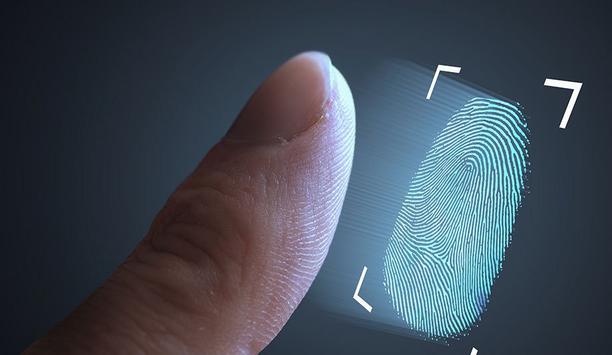
Recently contacted by your credit card company because of a data breach or were you a victim of identity theft? Many of us have either been affected by identity theft or know someone who has been affected. Many consumers are seeking a secure environment that is also user-friendly. Businesses are seeking the same, with absolute certainty, that only valid users can access critical data. How can your company tackle these security and usability requirements while ensuring customer satisfaction? Today's three primary biometric modalities are fingerprint, facial and iris, and each has its own strengths and weaknesses but due to the global COVID-19 pandemic, touchless is highly preferred. Any company claiming their technology is best for all applications is likely being disingenuous. The key is to first prove a biometric is required, and once decided, the following five steps will help select the best biometric modality and supplier. Today's three primary biometric modalities are fingerprint, facial and iris, and each has its own strengths and weaknessesBiometrics can provide a mechanism to tackle these issues head-on by moving from what you know (password) and have (ID card) to who you are (your biometric), which dramatically increases the level of security while also being user-friendly. But how is the best biometric modality selected for an upcoming product? User interaction Start by defining the planned customer usage model, including the typical user, normal or desired interaction, and product in-field environment and placement, as well as any strategic plans. Think through the clothing the users will wear (e.g., face masks), the height of the users, hygiene requirements and opt-in requirements. Decide how quickly the biometric must respond and test this during the POC testing. The better the enrollment image (template), the better the matching performance and overall user experience. Biometric storage Start by defining the planned customer usage model, including the typical user, normal or desired interaction, and product in-field environment and placement, as Due to the global COVID-19 pandemic, touchless is highly preferredwell as any strategic plans. Think through the clothing the users will wear (e.g., face masks), the height of the users, hygiene requirements and opt-in requirements. Decide how quickly the biometric must respond and test this during the POC testing. The better the enrollment image (template), the better the matching performance and overall user experience. Cost and security Start by selecting which product lines will use the biometric and establishing the desired price point(s). Decide how the biometric will fit into the product and get bulk pricing to understand unit costs at volume. Software is typically handled as a license fee and often negotiable. The production cost per unit decreases as volumes increase. Choose the biometric modality that best meets functional and security requirements while hitting the targeted price. The biometric security level required depends on the assets being protected and the matching usage model. A 1:1 model, such as a cellphone, may be fine with a low-security biometric application. However, in a 1:N model, such as airport security, requires a more secure biometric such as iris. To select the best biometric for the product, compare each company's false acceptance rate (FAR) and false rejection rate (FRR). FAR indicates the biometrics ability to keep intruders out, while FRR indicates the biometrics ability to allow enrolled users in. Ensure that all biometric companies being considered can provide this information at a minimum. It is better to get each company's detection error trade-off (DET) curve, which shows how FAR and FRR vary relative to each other. Criminal activity Hackers and criminals are always trying to break technology, including biometrics. Be certain each technology has robust presentation attack detection (PAD), which ideally is third-party certified. Understand what if any personally identifiable information (PII) needs to be captured, and decide how the PII will be handled, including who will manage the data (i.e., your company, the biometric supplier or another third party). Be certain that whoever controls the PII uses the latest encryption standards and employs techniques to secure this data in memory, crossing the network and in the biometric database. Understanding the European GDPR Compliance standards if applicable will also be important. Supplier consideration Each supplier being considered should be evaluated throughout the POC testing process. Ensure the supplier is trustworthy, provides good customer support and meets its commitments. Evaluate the supplier's engineering capability and support model to ensure it can support any desired design changes and support your Be certain each technology has robust presentation attack detection (PAD)engineers to deliver the best functioning product. Selecting the best biometric for your exact use case will take some time and effort, but it has the potential to grow your business and delight your customers. Do not shortchange the process and go with the cheapest solution without doing some research. As the saying goes, you get what you pay for.

The Physical Security Interoperability Alliance (PSIA) was founded in 2008 with a goal of creating ‘plug-and-play interoperability’ among physical security devices, systems and services. Since then, the organization’s mission has both expanded to include logical security and focused more narrowly on identity, a critical aspect of security today. In recent years, PSIA has concentrated on its PLAI (Physical Logical Access Interoperability) specification, which provides a means to enable disparate physical access control systems (PACS) to communicate to each other and share employee identity data. This is especially important for companies who have made acquisitions and inherited different incompatible PACS systems. “PLAI can unify a security environment through one trusted source, even if there are multiple PACS systems,” says David Bunzel, Executive Director of the Physical Security Interoperability Alliance (PSIA). Bridge between disparate PACS The PLAI specification provides a bridge between disparate PACS, allowing a single trusted source for identity management. Leading PACS vendors including JCI (Software House), Lenel, and Kastle Systems and biometric vendors including Eyelock, Idemia, and Princeton Identity, have each implemented PLAI adapters, supporting this specification. AMAG will have their adapter in the coming months, and Honeywell and Siemens have it on their road maps. At ISC West last April, PSIA was able to demonstrate five of these vendors sharing records and the ability to add and terminate an employee and have it updated across each PACS and biometric system. PSIA was able to demonstrate five of these vendors sharing records at ISC West last April The Physical Security Interoperability Alliance (PSIA) has evolved from supporting physical security to also integrating logical security. Access to facilities and secure areas of buildings is increasingly dependent on software and hardware systems which can validate a person’s identity. “The PSIA has chosen to focus on interoperability between identity management systems and access control devices,” says Bunzel. “We have successfully demonstrated the technology, and it is now being specified by consultants, integrators and enterprise customers in actual security systems. We expect to see some large companies announcing PLAI implementations in the next quarter.” Open standards processes PSIA relies on an open standards process, with collaboration among leaders in the various parts of the security industry. Specifications are architected, discussed, drafted, and reviewed by members of the organization in technical committees. The process is dynamic, with periodic updates added, which will improve and enhance the specifications as appropriate. The PSIA has focused on identity management for enterprise customers, says Bunzel. “We have active members who make devices that support access hardware (for example, locks and biometric systems) who by design complement PACS vendors and HR management systems.” PLAI also enables a variety of services for enterprise customers that may rely on a security credential" “We continue to add more PACS and biometrics vendors to the PLAI ecosystem, expanding the value of the specification in the market,” says Bunzel. “PLAI also enables a variety of services for enterprise customers that may rely on a security credential, including printing services, parking, and facility management. In the near future, the PSIA expects to extend PLAI into elevators. There are other identity management capabilities, and the PSIA will evaluate opportunities as the market demands them,” says Bunzel. In addition to PLAI, PSIA has several ‘legacy’ specs, but they are not actively working on further iterations. PSIA could always consider new development on legacy specs if the market demanded it. Some legacy specs address video, and security cameras often work with access control systems. However, PSIA currently is leaving video to ONVIF. The near-term direction and plan for the PSIA is to focus on PLAI and its commercialization.

IFSEC International 2018 kicked off last week at London’s ExCel Centre. Visitors were lucky enough to experience a rare three days of British sunshine as they came together to discuss the latest trends and technologies in the physical security industry. Many exhibitors commented on how the show seemed smaller than previous years, with stands more spread out, and fewer ‘double-decker’ offerings than earlier shows. Although exhibitors represented all aspects of physical security, including access control and intrusion detection, the show was largely dominated by video surveillance. Video manufacturers Avigilon and Dahua were key sponsors, while the largest stand by far was occupied by Hikvision. Rather than hosting large product portfolios, exhibitors chose to demonstrate how integrated solutions could provide a more holistic solution If stands seemed more modest than in previous years, this may be a reflection of the industry shifting away from its long-standing product focus. Displaying large product portfolios takes more exhibit space. In an increasingly commoditized market, security integrators are combatting price erosion by emphasizing holistic solutions rather than products and features. While some manufacturers have responded by collaborating with partners to offer a broader portfolio of solutions, others have invested in building end-to-end systems. Both these trends were reflected at the show; rather than hosting large product portfolios with a wide range of features, exhibitors chose to demonstrate how integrated solutions could provide a more holistic solution to end users’ challenges. Integrated Systems Approach One manufacturer opting for a solutions focus was security, access control and door entry systems provider STANLEY Product and Technology. The stand was represented by a range of STANLEY brands including PACOM and PAC GDX, as well as technology from recent acquisition 3xLOGIC. The PACOM team was on hand to demonstrate integrations of PACOM’s Graphical Management System (GMS) with workflow management software from RightCrowd, and biometric authentication products from EyeLock. PACOM Systems’ Commercial Director Gary Rowden explained that the stand was designed specifically to showcase all of STANLEY’s brands and partners in one place, encouraging customers to buy into the STANLEY solutions approach, rather than focusing on specific products. The show was largely dominated by video surveillance, with video manufacturer Avigilon a key sponsor Connecting With Partners Another company emphasizing partner solutions was Milestone Systems. Milestone’s Vice President for EMEA, Malou Mousten Dyhr Toft, who joined the company in March, explained how IFSEC International continues to be a key show. It was an opportunity to meet with Milestone’s expansive community of existing partners, as well as connecting with new partners and end users. Milestone hopes to enable community customers to process more video data with fewer servers, increasing scalabilityIn February this year, the company launched the Milestone System Builder initiative, allowing partners to optimize their hardware to pre-load Milestone’s XProtect VMS software. Several system builder partners were present at the Milestone stand. By collaborating with NVIDIA, Milestone hopes to enable community customers to process more video data with fewer servers, increasing scalability and reducing the total cost of ownership of its partner solutions. The stand showcased Milestone’s latest XProtect 2018 R2 VMS that leverages NVIDIA’s high-powered graphics processing units (GPUs), which can handle up to 2,000 video streams on one single server. Commitment To Open Systems MOBOTIX took this year’s IFSEC International as an opportunity to spread the word about its increased commitment to open systems. Since the company’s majority acquisition by Konica Minolta in 2016, and the subsequent addition of CEO Thomas Lausten last year, the company has undergone a significant change in approach, all-the-while guarding its core decentralized IP video product offering and made-in-Germany DNA. Lausten was previously a key figure at Milestone Systems and has brought to MOBOTIX a new approach focused on collaboration. Partners present at the MOBOTIX stand included Milestone, Kentix and Wavestore. The company also demonstrated its commitment to open systems by unveiling MOBOTIX MOVE, the manufacturer’s first line of ONVIF G compliant cameras. Visitors were lucky enough to experience a rare three days of British sunshine at IFSEC International this year Security system provider Vanderbilt had many new developments on show, including integrations both within Vanderbilt systems and with partner systems. The company’s SPC intrusion detection system now integrates with Milestone software, allowing SPC users to trigger events and control alarm systems from within the Milestone platform. A further highlight was Vanderbilt’s ACTEnterprise access control system, which now integrates with ASSA ABLOY’s Aperio wireless locking solution. Vanderbilt hopes that the integration will provide customers with faster, more cost-effective access control installations.Vanderbilt hopes that the integration will provide customers with faster, more cost-effective access control installations Reducing Costs, Increasing Ease-Of-Use Many exhibitors were keen to demonstrate how integrated solutions could reduce costs for integrators by unifying systems on one easy-to-use platform. Arecont Vision unveiled its new Contera cloud-based video management solution at ISC West in April, making IFSEC the technology’s first outing in the European market. Contera is Arecont’s first video management offering and will allow customers to benefit from end-to-end solutions from the US-based company. Since the Contera system is designed to be web-based from the start, integrators will not be faced with the additional cost of adapting a legacy VMS system to the cloud. IDIS was another manufacturer highlighting their enhanced user experience and reduced cost offered by end-to-end systems. Visitors experienced demonstrations of the IDIS Center video management software, which is designed to offer smart user experience controls, and a user-friendly interface. Also on display were the company’s latest ranges of analog and IP cameras. The IDIS system allows users to ‘mix-and-match’ HD analog and IP video depending on the requirements of the project, with all surveillance operated from the same IDIS software interface. The mix-and-match approach avoids the additional cost of unnecessarily ripping and replacing legacy analog systems. IFSEC 2018 presented a snapshot of how manufacturers from across video, access control and intrusion detection are continuing to innovate and collaborate to stay competitive in an increasingly challenging market, without losing sight of the most pressing needs of end users and integrators.