Everon - Experts & Thought Leaders





















Latest Everon news & announcements
Everon, LLC, a security integrator and premier provider of commercial security, video, fire and life safety solutions ranked the third largest integrated security company in the U.S. by SDM Magazine, announces a strategic collaboration with Teledyne FLIR (FLIR), a global pioneer in thermal imaging and sensing technologies, to deliver FLIR’s UL-listed thermal imaging cameras and bring a first of its kind early warning fire detection and monitoring service to the commercial market. Through this industry pioneer effort, Everon will be offering FLIR’s first UL 2684- and NFPA 72-compliant thermal imaging solution for early warning fire detection, addressing requirements for initiating devices (Chapter 17) and inspection, testing, and maintenance (Chapter 14). FLIR has obtained UL certification for its A-Series thermal imaging cameras as of September 21, 2026, enabling the combined solution to meet stringent fire and life safety code requirements. Faster emergency response Unlike traditional detection devices, the FLIR thermal imaging solution can identify abnormal heat signatures and fire related thermal events as they begin, providing early warning notification while initiating a fire alarm event directly at the fire alarm control panel. This integrated approach helps facilitate faster emergency response, reduces overall risk, and improves protection of critical assets and environments. The system offers highly configurable alarm settings to meet specific customer requirements and use cases, including: Fixed temperature threshold alarms Rate of temperature rise alarms Percentage of change notifications Multiple zones or areas of interest within a single camera Wide range of applications By covering larger areas and monitoring multiple zones simultaneously, one thermal camera can replace multiple traditional detection devices – improving overall effectiveness and detection reliability while simplifying system design and ongoing maintenance. The solution is designed for a wide range of applications, including battery energy storage systems (BESS), energy production and utilities, data centers, warehouses, distribution centers, rooftop solar, manufacturing, food and beverage, and recycling and waste management operations. Thermal imaging technology “Working with FLIR on this solution represents a major advancement in how early fire detection and life safety systems can be designed and deployed,” said Ryan Sandler, Vice President, Fire & Life Safety for Everon. “By combining Everon’s deep expertise in code compliant fire and life safety integration with FLIR’ s proven thermal imaging technology, we’re helping customers detect thermal events earlier, respond faster, and reduce risk – particularly in complex, high hazard environments.” “When it comes to fire detection, the value comes down to one thing: time,” said Kyle McKinney, Vice President, America Sales for FLIR Advanced & Integrated Systems. “By enabling earlier detection of developing thermal events, FLIR's UL-Listed thermal imaging solution gives organizations more time to respond before a fire impacts people, assets, and operations. We are excited to bring this capability to Everon's customer base and help them reduce risk across their most critical environments.”
Everon, LLC, a security integrator and premier provider of commercial security, video, fire and life safety solutions ranked the third largest integrated security company in the U.S. by SDM Magazine, announces it has acquired Scarsdale Security Systems, Inc. (Scarsdale), a prominent, New York-based provider of integrated security and fire alarm solutions serving a wide range of commercial markets. Founded in 1982 and headquartered in Scarsdale, New York, Scarsdale Security Systems brings more than four decades of experience in the design, installation, service and monitoring of security, fire alarm, access control, and video systems. Commercial integration market The company was ranked #35 for Non-Residential Install Revenue in the 2026 SDM 100, reflecting its established position in the commercial integration market. Scarsdale’s nationwide operations are supported by approximately 100 employees – including a highly skilled field team and an established subcontractor network. This acquisition advances Everon’s National Account strategy while creating immediate benefits for Scarsdale customers. By joining Everon’s established national service platform, customers will gain access to expanded resources, a broader service footprint, enhanced operational support, and a proven infrastructure designed to deliver consistent service across complex, multi-site environments. Customers will benefit from the responsiveness and local relationships they value, backed by the scale, capabilities, and nationwide reach of a commercial security integrator. Creating additional opportunities “Scarsdale has built an outstanding reputation serving commercial customers, particularly those with complex, multi-site environments,” said Don Young, Chief Executive Officer of Everon. “Through this partnership, Scarsdale customers benefit from our established, successful National Account infrastructure, extensive service capabilities, innovative technology portfolio, and nationwide reach while continuing to benefit from the trusted relationships and responsive support that have been central to Scarsdale's success.” “Joining Everon represents an exciting next chapter for Scarsdale,” said David Raizen, President and Founder of Scarsdale Security Systems. “We have built our reputation on high-quality solutions, dependable service, and long-standing customer relationships. Everon’s national platform, resources, and established National Account infrastructure will help us extend that value even further for our customers and employees.” The acquisition of Scarsdale will create additional opportunities for Everon to leverage its existing national account infrastructure, enhance operational efficiency, and further integrate national account resources.

Everon, LLC, a foremost security integrator and premier provider of commercial security, video, fire and life safety solutions ranked the third-largest security company in the U.S. by SDM Magazine, announced the promotion of Jay Robertson to Chief Business Operations Officer, a newly created executive leadership role reporting directly to Don Young, Chief Executive Officer. Role and responsibility In this expanded position, Robertson will oversee Everon’s centralized, customer-facing operations along with the company’s core business support functions. Establishing this new role represents an important milestone in Everon’s strategy to continually elevate the customer experience, streamline processes through intentional AI investment, and strengthen cross-functional alignment across the organization. Experience With more than 20 years of experience in the security industry – including with Protection 1, ADT, ADT Commercial, and Everon – and a strong record of demonstrating customer ownership, Robertson will lead the Business Operations organization. This brings together Everon’s Monitoring Operations, Customer Care & Retention, Video Solutions, Shared Services, Product Management, and Project Management departments under a single, centralized operational leader. This consolidation is designed to create greater speed, efficiency, and operational agility to support Everon’s next phase of growth. End-to-end experience for customers By aligning these customer-impacting departments under a single pioneer, Everon is poised to create a more cohesive, end‑to‑end experience for its customers. This centralized structure enables deeper collaboration, clearer accountability, and faster responsiveness for a holistic approach to the customer journey. By bringing key touchpoints together, from product management and operations logistics to monitoring and customer care, Everon is better equipped to anticipate customer needs, reduce friction, and deliver a consistently elevated experience across every interaction. New goals Additionally, Robertson’s organization will advance Everon’s strategic use of artificial intelligence to streamline operational workflows and elevate customer engagement. This includes automating high‑volume processes to increase efficiency and ROI, and deploying advanced AI within Everon’s monitoring centers to support faster issue resolution, as well as enriched coaching and quality insights for frontline employees. By incorporating agent‑assist and agentic AI tools to manage routine processes, Everon will enable teams to focus on higher‑value, relationship‑driven customer interactions – ultimately strengthening the organization’s ability to scale operations and deliver service with greater speed and consistency. Delivering operational excellence “Jay’s appointment marks an exciting and strategically important step in Everon’s evolution as a differentiated service provider and customer-centric security partner,” said Don Young, Chief Executive Officer. “By centralizing our customer-facing operations and critical business support teams under a single leader, we are building the operational foundation required to achieve greater agility, speed, and service consistency. Further supported by focused AI investment, Jay’s proven leadership will be instrumental in driving forward our commitment to delivering industry-leading operational excellence and exceptional value to our customers across the U.S.” Key leadership addition supports Everon customer service experience As part of Everon’s strengthened customer-centric strategy, Everon also welcomes Michael Forbes as Senior Director, Customer Care & Retention to join the Business Operations team. Forbes, who began his career on the frontlines of Protection 1 in 2012, will play a pivotal role in driving operational excellence, enhancing customer satisfaction, and building high-performing teams committed to delivering a world-class customer experience.
Insights & Opinions from thought leaders at Everon
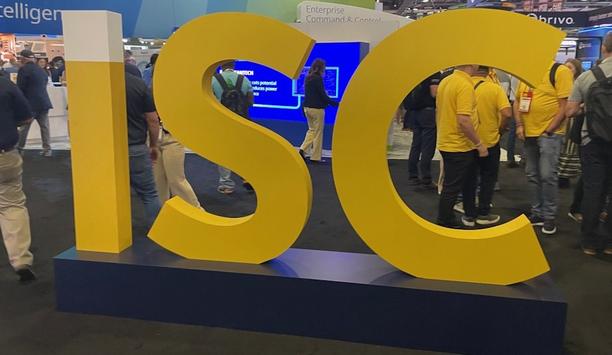
Artificial Intelligence (AI) had a major presence at the ISC West 2026 show in Las Vegas. Almost every booth offered some variation on AI and how intelligence is transforming the physical security industry. Several industry leaders led the way, showcasing how they are tackling complex security challenges with smarter, more efficient solutions. Obviously, the security industry will never be the same. Milestone Systems: Responsible AI and open platforms Milestone has declared 2026 the "year of delivery” on previously announced developments and enhancements. A standout feature is their new natural language AI search, which is being integrated across XProtect, Arcules, and Briefcam platforms to simplify how users interact with vast amounts of video data. A core pillar of their strategy is responsible AI development, which prioritises using licensed data over "scraped" data. They have introduced new anonymisation tools that protect privacy by replacing faces with AI-generated characteristics like hair color while keeping the person unrecognisable. Furthermore, Milestone is moving workloads to Linux to reduce costs, transitioning toward an app marketplace, and has partnered with NVIDIA for the "Hafnia" project to ensure high-quality data to train AI models. Ambarella: Powering the edge with AI chips With their presence at ISC West in a meeting room near the trade show floor, Ambarella is the "engine" behind many high-performance intelligent video products, specializing in low-power AI chips like the N1 and CV7 families. Their technology is moving beyond cameras, where they provide systems-on-chips [SOCs] to many manufacturers. They have expanded into "AI boxes" that can process 64+ video channels simultaneously. A standout feature is the Natural Language technology, which allows users to search for specific objects or abstract scenes using simple prompts. To address modern security concerns, Ambarella has implemented "agentic" programming for a no-code development of automated workflows and media signing to combat AI-generated deepfakes by verifying video integrity through metadata. Motorola Solutions: Simplifying intelligence Motorola Solutions shows physical security evolving into a real-time enterprise intelligence layerMotorola Solutions is prioritising user accessibility by integrating natural language processing into its system configuration. Motorola's portfolio demonstrates how physical security technology is evolving into a real-time operational intelligence layer across the enterprise. Instead of requiring custom coding, operators can now use simple commands—like asking the system to "show me when someone fell down"—to set up advanced analytics and search parameters. The company is also deploying AI agents designed to aggregate data and automatically flag safety or compliance risks, such as perimeter breaches or blocked fire exits. To ensure maximum utility of the hardware, Motorola Solutions’ system can ingest massive, complex physical manuals and automatically generate monitoring rules based on those standard operating procedures. Furthermore, Motorola is focusing on interoperability, using industry-standard interfaces to ingest data from various hardware brands and networks. This approach aims to provide operators with clear, recommended next steps during critical events, streamlining the decision-making process in high-pressure environments. i-PRO: Putting generative AI at the edge i-PRO is bringing generative AI directly to the edge with a new fisheye camera, which processes complex analytics locally rather than relying solely on the cloud. These cameras, on display at ISC West, have moved beyond simple attribute-based tracking to identify complex behaviors like aggression, fighting, and slip-and-fall incidents. By running on the latest Ambarella chips, i-PRO cameras can use generative AI to improve image quality and analyze scenes in real-time without external processing. This focus on edge-based intelligence ensures high-performance analytics are available even in environments where constant cloud connectivity might be a challenge. Brivo: The rise of agentic AI Eagle Eye Video Assistant (EEVA) acts as a natural language AI agent that can monitor for specific threats Brivo and Eagle Eye Networks have officially unified under the Brivo name, focusing on streamlining the experience for large integrators. They are pioneers in agentic AI, introducing features that allow users to talk to their mobile apps to initiate lockdowns or add users. Their Eagle Eye Video Assistant (EEVA) acts as a natural language AI agent that can monitor for specific threats, such as a brandished weapon or a specific vehicle, and automatically trigger access control responses. By treating access and video as a unified system, Brivo enables users to connect specific video skills—like detecting a red car or a brandished weapon—to automated access control actions. They are also using AI to achieve "zero-cost integration," linking disparate cloud systems using AI-generated instructions. Everon: Emphasis on video monitoring Everon is making a massive investment in active video monitoring, using AI-driven systems to deter crime even before it happens. “The market is ripe for it, and customers are demanding it,” says David Charney, Everon’s Sr. Vice President, Video Command Center. Employing virtual guards who can use voice commands, lights, and horns to "shoo away" unauthorized individuals. The company has implemented senior-level leadership that has facilitated more than 5,000 video-based apprehensions. Everon, specializing in integrated systems for multi-site businesses, uses a rigorous selection process to choose AI providers that can accurately filter alerts for specific applications, such as identifying when a fire door is blocked. As a "trusted advisor" to their 300,000 customers, the company focuses on delivering professional-level results that move beyond basic recording to proactive threat mitigation. Hanwha: New hybrid VMS combines cloud and on-prem Hanwha Vision highlighted the official public launch of Blaze, a hybrid video management system (VMS). The platform uses a hybrid architecture to manage on-premise and cloud-connected devices across multiple sites without complex port forwarding. Blaze features native AI capabilities, including semantic search that allows operators to find specific incidents using natural language queries, such as "person with a safety jacket." The AI security platform lets teams search surveillance footage the way they search Google. AI similarity detection allows operators to quickly trace a person’s movement and investigate incidents faster (useful in active shooter behavior, medical emergencies, or crowd panic scenarios, and more). The system also provides a "histogram" view of traffic patterns to help security professionals quickly identify anomalies in historical footage. OpenEye: Operational intelligence and shift to OpEx OpenEye unveiled AI-powered features such as visual chat and scene analysisOpenEye is redefining video surveillance by moving intelligence from the camera level to the cloud, significantly reducing the need for on-site server management. At ISC West, OpenEye introduced new AI-driven tools like visual chat and scene analysis. Beyond security, these tools provide valuable operational alerts, such as identifying overflowing dumpsters, dirty tables in restaurants, or vehicles blocking dock doors. The system also utilizes natural language for search, allowing users to find specific attributes like "people wearing backpacks" within designated timeframes. OpenEye also highlighted an industry-wide shift toward operational expenditures (OpEx) billing models, as users increasingly prefer predictable monthly or yearly payments over large upfront capital expenditures (CapEx). This model aligns with their channel-based operations, meeting customers where they currently operate without the burden of high fees. IQSIGHT: New name, same mission for Bosch video Formerly Bosch Video, the newly named IQSIGHT seeks to maintain the “Bosch pedigree” under the new name. It’s the same engineering, manufacturing, etc. IQSIGHT also pledges to be "easier to do business with" by improving user interfaces and end-to-end user experiences. Despite the transition, the company has increased their pace of innovation and reinforced the open systems philosophy with enhanced integrations with Milestone, Genetec, and others. The major product release at the show is IVA Pro Context, which uses generative AI to provide human-level scene understanding. Through a partnership with Laelaps AI, a robotics startup, IQSIGHT is exploring autonomous dispatch and response. When a camera identifies a scene, it triggers a robot to provide a tailored response. Commercialisation is expected in 12 to 18 months. Verkada: How their system can solve a crime But how does AI operate in the real world? Verkada had a “themed” exhibit demonstrating how their system could solve a hypothetical theft at the Louvre museum in Paris. The exhibit took attendees through and showed how Verkada technologies (e.g., license plate recognition and search capabilities) could provide fast results to solve the crime. AI-powered tools, like their newest unified timeline, demonstrate value in the real world of investigations.

2025 was another impactful year for mergers and acquisitions (M&As) in the security industry, which is undergoing an enormous transformation as global pioneers prioritise specialized technology to drive future growth. The year 2025 has been defined by massive corporate reorganisations, most notably Honeywell and Resideo spinning off core divisions to unlock shareholder value. Simultaneously, an aggressive wave of mergers and acquisitions is reshaping the landscape, with giants like ASSA ABLOY and Motorola Solutions absorbing innovators in AI-driven surveillance, cloud-native access control, and identity management. From residential security shifts to critical infrastructure enhancements, this article will summarise how these strategic moves signal a decisive industry pivot toward integrated and intelligent security ecosystems. Resideo to spin off ADI business Resideo Technologies, Inc. announced its intention to separate its ADI Global Distribution business from its Products & Solutions (P&S) business via a tax-free spin-off to shareholders. The separation is expected to be completed in the second half of 2026. P&S will continue as Resideo, a building products manufacturer of residential controls The goal is to unlock value, enhance operational performance, and improve strategic flexibility for both entities. After the separation, P&S will continue as Resideo, a building products manufacturer of residential controls and sensing solutions. ADI will become an independent public company and remain a global wholesale distributor of low-voltage products, including security and audio-visual solutions. Honeywell separates into three companies There are big changes pending at Honeywell, another global security industry company. Honeywell announced plans to separate its Automation and Aerospace businesses into two independent, publicly traded companies following a comprehensive portfolio evaluation. Combined with the previously announced spin-off of Advanced Materials, this strategy will create three distinct industry pioneers. The Automation and Aerospace separation is targeted for completion in the second half of 2026 as a tax-free transaction for shareholders. The largest portion of Honeywell’s traditional security business (cameras, access control, and fire safety) sits within the Building Automation segment of the new Honeywell Automation company. This unit includes products from recent major acquisitions, such as LenelS2. SimpliSafe’s new chapter SimpliSafe has agreed to be acquired by private equity firm GTCR from Hellman & Friedman SimpliSafe has agreed to be acquired by private equity firm GTCR from Hellman & Friedman, another private equity firm. As the third largest U.S. residential security provider, SimpliSafe will continue under the leadership of the current CEO, while its founders remain significant investors. GTCR, an experienced security industry investor, intends to support the company’s expansion and continued innovation in AI-powered, DIY home protection. This marks a new chapter in SimpliSafe’s mission to provide professional monitoring without long-term contracts. SimpliSafe is GTCR’s fifth investment in the security alarm industry, including prior investments in residential-focused security companies SecurityLink and Protection1, along with commercial-focused security companies HSM and Everon. Motorola grows technology portfolio Motorola Solutions grew its portfolio through acquisitions in 2025. The industry giant strategically expanded its safety and security ecosystem through the acquisition of four specialized technology firms. The company acquired Blue Eye to integrate AI-driven remote video monitoring and 24/7 security operations into its threat detection workflows. To support frontline workers, Motorola added Theatro’s voice-powered communication platform, which complements existing mobile and video technologies. Motorola further bolster its public safety capabilities with the acquisition of RapidDeploy, a cloud-native Next Generation 911 provider that offers real-time caller mapping and data analytics to accelerate emergency responses. Motorola also agreed to acquire InVisit to enhance its Avigilon Alta suite with cloud-based visitor management, streamlining guest registration and blocklist screening for enterprise security. These acquisitions aim to unify detection, communication, and response across various sectors, including retail, healthcare, and critical infrastructure. Allied sells majority stake in AMAG Allied Universal sold a majority stake in AMAG Technology to Shore Rock Partners In December, Allied Universal sold a majority stake in AMAG Technology to Shore Rock Partners. Shore Rock is a growth investor focused on critical infrastructure, with strategic backing from BellTower Partners. Allied Universal will retain a significant minority share. The sale is intended to allow 54-year-old AMAG, which provides integrated access control, identity, guest, and video management solutions, to operate independently from Allied Universal's services-based model for long-term growth. Shore Rock's plan is to invest in advancing AMAG's product line and customer relationships. With this transaction, David Sullivan, AMAG's President, will become CEO. Everon acquires ADT multifamily segment Commercial security provider Everon announced in September that it had entered into a definitive agreement to acquire the business-to-business (B2B) multifamily segment from ADT. This acquisition is a strategic extension that expands Everon's reach in the valuable multifamily market. It will allow the company to offer a more comprehensive portfolio of tailored solutions, including access control, video surveillance, and self-guided tour capabilities. Everon's CEO states that the deal enables them to help property owners and managers increase net operating income and improve operational efficiency. Dormakaba acquires TANlock and Avant-Garde Dormakaba, a global provider of access solutions, acquired TANlock GmbH in July Dormakaba, a global provider of access solutions, acquired TANlock GmbH in July. TANlock is a German firm specializing in innovative high-security access solutions for data centers and other critical infrastructure. The acquisition strengthens Dormakaba’s presence in the data center market. TANlock's intelligent system provides enhanced server cabinet security using electromechanical rack locks and various authentication modules. This solution is scalable, future-proof, and can be integrated into existing IT infrastructures for both retrofits and new installations. Dormakaba also agreed to acquire Indiana-based Avant-Garde Systems Inc. to strengthen its North American entrance control portfolio. This move bolsters Dormakaba’s presence in high-growth sectors like airports and data centers. Acre acquires REKS for AI Recent M&A activity also reflects the growing importance of artificial intelligence. For example, Acre Security acquired REKS, a purpose-built generative AI solution designed to transform access control, allowing professionals to use natural language queries for instant data insights. Integrated into Acre’s cloud-native ecosystem, this AI-powered platform prioritises data privacy while streamlining operations. Led by a new AI Development Team, Acre plans to expand these capabilities into intrusion detection and visitor management. Two acquisitions for Allegion Global security provider Allegion, through one of its subsidiaries, completed the acquisition of ELATEC Global security provider Allegion, through one of its subsidiaries, completed the acquisition of ELATEC, a manufacturer of security and access technology, specializing in RFID credentials and readers solutions designed in Germany and sold globally. ELATEC’s portfolio of readers leverages their internally developed software stack and ensures compatibility with nearly 100 credential types, making the company a pioneer in interoperability, which aligns well with Allegion’s partner-of-choice strategy. Allegion, also through one of its subsidiaries, acquired Brisant Secure Limited, a security hardware provider in the United Kingdom. Senstar acquires Blickfeld for LiDAR sensors Senstar Technologies Corporation has agreed to acquire Blickfeld, a specialist in 3D LiDAR sensors and software. Expected to close in Q1 2026, the acquisition integrates Blickfeld’s hardware into Senstar’s advanced security ecosystem. This strategic move expands Senstar’s addressable market into volume monitoring and traffic applications while enhancing its AI-powered situational awareness capabilities. Following the transaction, Blickfeld will operate largely independently as a subsidiary. ASSA ABLOY continues acquisition spree Global giant ASSA ABLOY was probably the most active company in the M&A market in 2025 Global giant ASSA ABLOY was probably the most active company in the M&A market in 2025, demonstrating aggressive market growth, strategically reinforcing its core business, and expanding its technological footprint across the global security marketplace. The acquisitions delivered on the company's strategy to strengthen its position in mature markets by integrating complementary products and solutions. A major theme for ASSA ABLOY was the enhancement of the door and perimeter security portfolio, particularly in the Americas. This effort included acquiring US-based Metal Products Inc. (MPI) for custom-made hollow metal doors and frames and International Door Products (IDP) for fire-rated steel door frames, both in the fall. Earlier in the year, ASSA ABLOY gained a stronger presence in Central Canada with the addition of Wallace & Wallace and Wallace Perimeter Security, a manufacturer, distributor, and installer of perimeter fencing, door, and gate solutions. The Entrance Systems Division also saw expansion with the acquisition of Belgium’s Kingspan Door Components, a manufacturer of sectional door panels. Furthermore, Door System, a Danish manufacturer of high-quality fire-rated doors, was signed for acquisition in the spring. Cloud-based platform ASSA ABLOY also made significant moves in electronic and access control solutions. Early 2025 saw two key acquisitions: Uhlmann & Zacher, a German supplier of access control handles and knobs, and InVue, a US-based provider of connected asset protection and access control solutions. Reinforcing this segment, SiteOwl, a pioneering cloud-based platform for physical security lifecycle management, was acquired in the summer. The spring acquisition of Pedestal PRO, a US manufacturer of access control pedestals and mounting solutions, further strengthens the electromechanical offerings in the Americas. ASSA ABLOY bolstered its capabilities in remote care technology with Germany’s TeleAlarm Group in late spring. HID Global expands in 2025 HID Global, a subsidiary of ASSA ABLOY, was also active on the M&A front in 2025 HID Global, a subsidiary of ASSA ABLOY, was also active on the M&A front in 2025, aggressively driving the convergence of physical and digital identity solutions and signaling a clear roadmap for security professionals. HID's move to purchase Vancouver-based IDmelon, announced in the autumn of 2025, targets the critical need for robust logical access control. IDmelon’s proprietary software platform transforms everyday identifiers, including existing physical credentials, smartphones, or biometrics, directly into enterprise-level FIDO (Fast IDentity Online) security keys. This approach streamlines an organization’s transition to phishing-resistant, passwordless multi-factor authentication (MFA) and minimizes the need for disruptive changes by integrating physical and digital access into a single, cohesive solution. Safer patient experience Separate from its focus on digital access, HID also bolstered its Identification Technologies Business Area by acquiring the Calmell Group. Calmell is a long-established manufacturer specializing in smart cards, smart paper, and magnetic tickets for the public transportation sector. This addition is expected to expand HID’s footprint and relevance in global public transportation ecosystems, allowing the Barcelona-headquartered firm to leverage HID’s core expertise in digital credentials to drive future-proof solutions for seamless mobility. Also, HID acquired Intelligent Observation to expand its Healthcare Real-Time Location Systems (RTLS) portfolio. Intelligent Observation provides a platform to reduce hospital-acquired infections (HAIs) by tracking hand hygiene compliance. The system uses wearable Near-Field Magnetic Induction (NFMI) devices and a cloud-based SaaS dashboard. This technology records and reports if healthcare workers sanitize appropriately, providing granular compliance data to administrators to enable a safer patient experience.
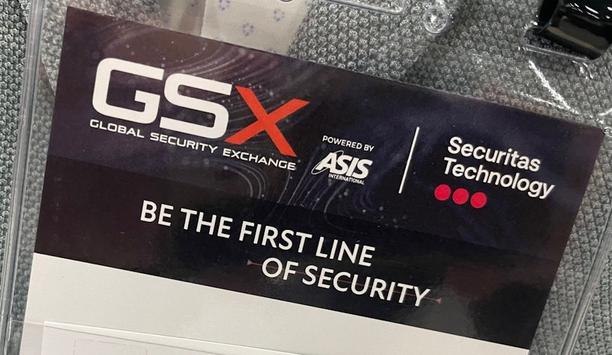
There was high-level energy at GSX 2025, befitting an industry undergoing massive change. Artificial intelligence (AI) was everywhere, but not so much in the booth signage. Rather, AI has made its way beyond marketing claims and solidly into the core of the products themselves. There were hundreds of examples of how AI is changing how security systems operate, all for the better. Clearly on display at GSX 2025 was an industry in the midst of metamorphosis. Deep integration of AI My conversations with companies across the security ecosystem revealed an industry heavily focused on leveraging advanced technologies like AI and the cloud to address increasingly complex global and localized threats. Several key themes emerged at the Global Security Exchange (GSX), sponsored by ASIS International, held Sept. 29–Oct. 1 at the Ernest N. Morial Convention Center in New Orleans, La. Themes I heard repeated throughout the show floor included deep integration of AI, the ongoing shift toward cloud-based and hybrid architectures, and a sharp focus on modernizing security systems to meet current challenges. AI and intelligent automation transform security The use of GenAI is moving beyond simple search functions into real-time decision support Companies are integrating AI and intelligent technologies to enhance analytics, streamline incident response, and improve internal efficiency. The use of Generative AI (GenAI) is moving beyond simple search functions into real-time decision support. For example, Bosch Video Systems introduced a "second tier" to its video analytics capabilities by combining highly sensitive edge detection with GenAI models in the cloud. For example, in visual gun detection, edge analytics might flag a potential gun (yellow), but the cloud-based GenAI then quickly reviews and confirms the threat (red), helping to filter out false alarms. Bosch is also using GenAI for more open-ended searches, such as a "Where's Waldo" application demonstrated at their booth. GenAI-powered system Eagle Eye Networks says they are focused on helping integrators "organize the AI chaos” through their cloud-based video platform. Their precision person and vehicle detection capabilities work across multiple cameras. Motorola Solutions introduced Inform, an AI-assisted incident response solution designed to bring clarity to the "noise" and help security teams respond to complex threats. They also offer Avigilon Visual Alerts, an on-prem GenAI-powered system that expands the natural language interface. AI internally to improve processes The Body Workforce Mini protects frontline workers and businesses "amid rising violence and theft." The Axon Body Workforce Mini, a small “computer with a lens” for non-police applications, is AI-capable and can perform real-time translations, automated report writing, and summarization, and can even act as a personal assistant by incorporating company policies. All those functions are built into a lightweight body-worn camera designed to safeguard frontline workers in retail and healthcare verticals. The Body Workforce Mini protects frontline workers and businesses "amid rising violence and theft." Beyond products, integration company Everon is using AI internally to improve processes, such as handling commoditized tasks, which they expect will result in better customer satisfaction. Everon wants to be known as a premier service provider and will be introducing new services in the video realm. AI-powered search and continuous system upgrades Genetec prefers the term Intelligent Automation (IA), instead of AI, to describe its empathetic interface, which can "know" what additional information a security professional needs when they click on an image, for example. Genetec says the advantages of the cloud include AI-powered search and continuous system upgrades. Their Security Center SaaS has had a fast and successful launch. It enables cloud-based systems with local storage. Genetec also highlighted the Cloudlink 210, a cloud-managed appliance designed to unify physical security operations that can be simply plugged in without involving IT staff. They call it a “headless appliance.” Cloud migration and the push for hybrid systems Hanwha debuted OnCAFE (Cloud Access for Everyone), a new cloud-based access control product The industry continues its strategic march toward the cloud, often through hybrid applications that blend on-prem strength with cloud flexibility. Acre's access control is described as "cloud-first technology," and they continue to focus on cloud solutions, incorporating AI. To help customers transition, they offer the "Bridge," a migration tool that allows systems to communicate throughout the move. At the same time, they are continuing to develop and enhance their core on-prem products – DNA Fusion and AccessIt!. Adding access control to supplement their video product line, Hanwha debuted OnCAFE (Cloud Access for Everyone), a new cloud-based access control product. The goal is to provide “access control that is easy;” It works alongside their OnCloud direct-to-cloud VMS as a Service platform. Future of video management The future of video management is increasingly hybrid. Milestone recently completed a three-year process of updating XProtect and building for the future of hybrid applications. At GSX, they showcased how their XProtect Evidence Manager seeks to "democratize evidence management" by collecting video, cell phone data, notes, and other metadata related to a case for easy sharing and prosecution. Also, Milestone’s “app center” enables additional features to enhance XProtect without involving integration. Milestone is also focusing on "Metadata Ingest," which collects and aggregates data from various manufacturers (including Genetec, Motorola, and Exacq) for use by AI. Strategic modernization and open integration Convergint and Genetec collaborated on a "2026 Technology Modernization Outlook" white paper A key theme for the future is the shift toward open systems and strategic modernization, enabling security professionals to better utilize new technology. Convergint and Genetec collaborated on a "2026 Technology Modernization Outlook" white paper, arguing that dealers and end-users need to think more strategically when buying technology. They predict that "2026 will be the year of modernization," with tangible results including unified intelligence, flexible deployment, and lower total cost of ownership. The call for open standards and architecture was also strong. What AI needs from open systems Johnson Controls noted that cloud, AI, and open standards are its three big focus areas. Their C-CURE IQ 3.10 is gaining adoption as it unifies access and video. OpenEye is seeking to address the "AI disruption anxiety" in the industry, focusing on what AI needs from open systems. The emphasis is on the value of a Model Context Protocol (MCP), an open standard and framework to enable AI systems to integrate and share data with external tools and sources. Addressing shifting global and local threats Allied Universal's "World Security Report 2025" highlights a risen focus on executive protection Companies unveiled solutions targeted at new security concerns, particularly the rising threat of violence, theft, and misinformation. Allied Universal's "World Security Report 2025" highlights an increased focus on executive protection and cites the rise of misinformation and disinformation as the number two threat. They noted that macro trends around instability and the political and social environment are driving security threats globally. To combat physical threats, Shooter Detection Systems introduced a new outdoor sensor, which is now generally available after a favorable feedback period that included an apprehension in one municipality. The company notes the unique challenge of developing technology for a "non-cooperative" threat like a person with a gun, in contrast to most security technologies that are "cooperative" and depend on user compliance. Implementation of integrated security Flock Safety is expanding its focus beyond license plate readers into solutions for retail, with a new initiative to automate and streamline investigative processes, which are often manual. The company also showcased "drones as automated security guards," which can be deployed within 90 seconds to provide "eyes" on a site and enhance safety. The system works on its own network and is firewalled away from the city system A tour of the City of New Orleans' Real Time Crime Center (RTCC), hosted by Axis Communications, demonstrated a mature implementation of integrated security. The RTCC uses Axis cameras, Genetec VMS, and is tied to a Motorola Solutions Command Center to enhance efficiency and effectiveness, operating independently of the police department. They measure success in terms of valuable hours saved in an investigation or even when an event is happening. The system works on its own network and is firewalled away from the city system. Rapidly changing industry on display The GSX 2025 highlights an industry that is moving toward more intelligent and integrated solutions. The investment in AI is shifting security from reactive monitoring to proactive, automated assistance. Throughout the show floor, the continued embrace of hybrid cloud architectures, coupled with an emphasis on open standards and modernization roadmaps, suggests a security ecosystem built for agility and future growth. These trends, and the GSX show itself, collectively underscore the industry's commitment to delivering scalable, next-generation solutions for a changing threat landscape.