Dell - Experts & Thought Leaders











Latest Dell news & announcements
Dell and Nutanix announced that PowerStore now supports Nutanix Cloud Platform, available with NCI 7.6. Organizations want enterprise storage performance in their Nutanix environments without giving up the simplicity that brought them to the platform. Today, Dell and Nutanix are delivering on that promise. Performance and independent storage Dell PowerStore now supports Nutanix Cloud Platform with NCI 7.6, bringing end-to-end NVMe all-flash performance and independent compute and storage scaling to Nutanix AHV hypervisor. PowerStore integrates transparently into Prism — no new tools or training required. Dell Private Cloud completes the platform with automated deployment, full-stack lifecycle management and Dell system-level hardware support. This makes PowerStore the second Dell storage platform to integrate with Nutanix, following PowerFlex, which became the first external storage supported and integrated with Nutanix Cloud Platform. Together with Dell Private Cloud, which completes the platform with automated lifecycle management and Dell system-level hardware support, organizations now have a fully validated foundation for running Nutanix with enterprise-grade external storage. Key capabilities As Dell's flagship all-flash storage platform, PowerStore delivers end-to-end NVMe performance, always-on data reduction and comprehensive data protection. For Nutanix environments, Dell and Nutanix have engineered an integration that preserves the operational experience Nutanix teams expect. End-to-end NVMe all-flash performance — Consistent low-latency storage for mission-critical databases, enterprise applications and data-intensive analytics without consuming compute resources for storage data services. Independent compute and storage scalability — With Dell Private Cloud, add Dell PowerEdge compute nodes or expand PowerStore capacity on separate tracks based on actual workload demand. PowerStore's Dynamic Resiliency Engine enables granular storage scaling one drive at a time. Transparent Prism integration — Provisioning, snapshots, clones and expanding virtual hard disks are handled directly through Prism. Existing Nutanix skills apply from day one. 6:1 data reduction guaranteed — Always-on intelligent deduplication and compression deliver an industry-leading 6:1 data reduction guarantee, consolidating more workloads while lowering storage costs. Versatile cyber resilience — From asynchronous replication to Metro synchronous with zero RPO and zero RTO, protection policies are managed from Prism. Remote backups via Dell PowerProtect Data Manager provide long-term retention with cloud archival and retention locks. Dell Private Cloud completes the platform PowerStore brings enterprise storage to Nutanix. Dell Private Cloud completes the platform, automating AHV deployment with validated blueprints, orchestrating lifecycle management, and backing the full stack with Dell system-level hardware support. The result is appliance-like simplicity on disaggregated infrastructure, with the flexibility to run PowerStore or PowerFlex on a single Dell foundation. In a recent Technical First Look, Omdia validated the integration, noting that Dell Private Cloud enables organizations to "deploy workload-ready clusters in approximately 2.5 hours, with zero manual effort needed after hardware installation, representing over 90% fewer steps compared to manual deployment methods." What this means for customers PowerStore for Nutanix is the latest step in a 14-year partnership that continues to accelerate. With PowerStore support for Nutanix Cloud Platform, Dell now offers the broadest infrastructure portfolio available for Nutanix environments, spanning from private cloud to disaggregated architecture, and extended data protection. This is what infrastructure freedom looks like, the flexibility to choose the right platform for every workload, the simplicity to manage it through the tools your team already knows, and a partnership that keeps building what comes next. Availability PowerStore for Nutanix Cloud Platform is available now with AOS 7.6. Whether you're modernising from traditional HCI, evaluating hypervisor alternatives, or looking for enterprise storage performance in your Nutanix environment, visit the PowerStore page or reach out to your Dell or Nutanix representative.
Dell Technologies introduces Dell Deskside Agentic AI, a new addition to the Dell AI Factory with NVIDIA that gives workgroups the ability to deploy and scale agentic AI workflows locally without the cost, latency and data sovereignty constraints of cloud-only approaches. With the NVIDIA OpenShell runtime now supported across the entire Dell AI Factory with NVIDIA, enterprises benefit from a single security and policy enforcement layer from deskside workstations to Dell PowerEdge XE servers. As AI workflows shift toward agentic architectures, token usage compounds at an accelerating rate, driving cloud costs that can quickly become unsustainable despite falling token prices. Cloud-only strategies fall short on what matters at scale: economics, security and data sovereignty. Organizations running agentic AI need infrastructure that addresses all three and scales with workloads without requiring a rebuild every time they mature. Enterprise-ready path The Dell AI Factory with NVIDIA delivers an enterprise-ready path from the desk where decisions are made to the data centre where they scale. For agentic AI workloads of various sizes, organizations can break even versus public cloud API costs in as little as three months with Dell Deskside Agentic AI. Deskside systems keep inferencing local, costs predictable and data secure, giving businesses greater control over their AI environment. NVIDIA OpenShell gives developers and IT teams a secure, sandboxed environment to build, deploy and govern AI agents across the Dell AI Factory with NVIDIA from workstations to servers. Teams can build and iterate more freely while reducing exposure to unpredictable cloud inference costs, bandwidth expenses and IP risks. Handling heavy AI workloads Dell Deskside Agentic AI is built around the reality that roughly over 50% of agentic workflows run on open-weight models. This is where the 30-billion to 284-billion parameter model range performs bulk reasoning that efficiently drives operations forward. From coding assistants and research agents to highly secure, private AI assistants for regulated industries, the solution offers a range of Dell high-performance workstations, each sized for different workload and budget requirements. These pair with the NVIDIA NemoClaw reference stack and Dell Services to handle heavy AI workloads wherever they make the most economic sense. With Dell Deskside Agentic AI, organizations can reduce spend up to 87% compared to cloud APIs, over two years. Providing scalable performance Dell Pro Max with GB10: Compact and power-efficient system for small-scale, individual agent prototyping, starting with 30 billion up to 200 billion parameter models. Dell Pro Precision 9: Enterprise workstation towers featuring Intel Xeon 600 processors for workstation and up to five NVIDIA RTX PRO Blackwell Workstation Edition GPU configurations, providing scalable performance for workhorse class GPU workloads and supporting models from 30 billion to 500 billion parameters. Dell Pro Max with GB300: Powered by the NVIDIA GB300 Grace Blackwell Ultra Desktop Superchip and Dell’s exclusive MaxCool technology for peak efficiency, this platform is purpose-built for inference of frontier-level AI models from 120 billion up to 1 trillion parameter models. NVIDIA NemoClaw reference stack: An open-source foundation for securely managing always-on AI agents built on OpenClaw, the agentic framework that powers persistent, autonomous, multi-step AI workflows on local hardware. The stack combines high-performance NVIDIA Nemotron open models for reasoning and coding, and OpenShell's secure runtime — all part of the NVIDIA Agent Toolkit for building and orchestrating long-running agents. Dell Services: End-to-end guidance through the full agentic AI lifecycle – from initial strategy and hardware deployment to workflow alignment, agent prioritisation and ongoing optimization – accelerating time-to-production and closing internal AI skills gaps. Full infrastructure stack Deploying agentic AI in production requires a consistent framework that protects sensitive data, integrates with current operations and covers the full infrastructure stack. NVIDIA OpenShell, now supported across the entire Dell AI Factory with NVIDIA, gives organizations a sandboxed environment to build, deploy and govern agents with privacy and security controls at runtime. It spans Dell high-performance workstations through Dell PowerEdge XE servers on Canonical Ubuntu and Red Hat AI in the Dell AI Factory with NVIDIA. Developing and deploying agents closer to data improves governance, security and operational control. Multi-agent workflows NVIDIA AI-Q 2.0 blueprint support gives organizations a tested foundation to deploy multi-agent workflows handling research, decision support and complex tasks, accelerating the move from pilot to production. Now available as the Dell-NVIDIA AI-Q 2.0 Reference Architecture, powered by Dell AI Data Platform, it is engineered for demanding on-premises workloads in regulated industries including financial services, public sector and manufacturing. Jeff Clarke, chief operating officer, Dell Technologies: "The most efficient token is the one produced closest to the data, and most enterprise data isn't in the cloud. Dell Deskside Agentic AI gives every workgroup a secure local environment to run agents, keep costs predictable and keep IP inside the building. What works at the desk scales to the data centre. That's a deployment model for the next decade." Cost-effective infrastructure Justin Boitano, vice president, AI Platforms, NVIDIA: “As enterprises reshape and scale the future of work with agentic AI, they’re seeking infrastructure that spans the full enterprise — from our desks where work happens to the AI factories where intelligence scales. With NVIDIA OpenShell across the Dell AI Factory with NVIDIA, enterprises can develop locally, scale securely and deploy agentic AI on one consistent platform.” Ryan Shrout, president, Signal65: “As enterprises transition from AI experimentation to full-scale production, the need for secure, scalable and cost-effective infrastructure has never been greater. Dell Deskside Agentic AI, as part of the Dell AI Factory, bridges the gap between local control and enterprise scalability, while providing headroom for continued iteration. This deskside to data center capability is unique and empowers organizations to harness the full potential of agentic AI while maintaining data sovereignty and predictable costs.”
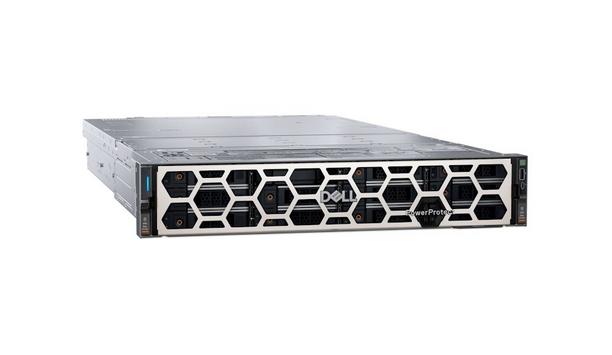
Dell Technologies introduces new security by design and cyber resilience capabilities to help organizations secure, detect and recover from next-generation threats. The enhancements address emerging risks from quantum computing and AI by hardening device foundations, strengthening cyber resilience when incidents occur and extending threat detection into AI data platforms. Cyber resilience capabilities AI is creating more valuable data and giving attackers new ways to move faster. Quantum computing will accelerate that shift by weakening the encryption technology that organizations use today to protect data and verify software integrity. These converging threats are driving demand for devices built to resist future attacks, cyber resilience to minimize incident impact and stronger detection across environments where AI data lives. Dell is addressing these security challenges through a layered defense approach across the technology stack, from the PC to the data center. Deepest firmware layers Quantum computing threatens the security foundations that protect devices today, driving a need for security by design at the deepest firmware layers. Dell is introducing quantum-ready security features to its commercial PCs to protect against attacks that can evade traditional security tools and remain hidden even after a restart or system reinstall. The upgraded security features harden the PC’s embedded controller (EC), a core hardware security component, to verify firmware updates using signatures designed to resist future quantum-enabled attacks. This helps prevent the controller from accepting malicious or tampered firmware and reduces supply chain risk by validating updates with stronger encryption and digital signatures. Post-quantum standards Dell's enhanced BIOS Verification capability, aligned to post-quantum standards, detects tampering by checking the BIOS against a trusted reference stored securely in Dell's cloud. If something does not match, this Dell-unique verification[ii] flags the device and triggers an alert so teams can investigate and respond. Hardened devices are essential for helping reduce successful attacks, and so is cyber resilience to minimize impact when incidents occur. According to Dell’s Cyber Resilience Insights research, only 40% of global organizations successfully contained and recovered from a cyberattack or incident drill with minimal impact. Dell is strengthening its PowerProtect cyber resilience portfolio to help organizations detect threats like ransomware sooner and recover faster from incidents. Most secure foundation Enhancements to PowerProtect Data Manager help organizations resolve recovery issues faster with an AI-powered assistant that provides contextual guidance during time-sensitive tasks, spot ransomware risk earlier with enhanced anomaly detection that scans Dell PowerStore snapshots and simplify management at scale with a unified dashboard across distributed systems. PowerProtect Data Domain, the world’s most secure foundation for cyber resilience[iii], extends protection to smaller sites and strengthens data security in transit. The PowerProtect Data Domain DD3410 appliance delivers up to 2x faster backups and 46% faster data restores,[iv] empowering organizations to resume operations quickly after an incident. The updated Data Domain Operating System, now including support for Transport Layer Security (TLS) 1.3, helps protect data while it moves between systems and aligns with NIST requirements for encrypted connections. Streamlining security operations Fast recovery requires early threat detection. AI workloads concentrate valuable data in platforms that traditional endpoint security can miss, creating visibility gaps that attackers exploit. Dell is extending its Managed Detection and Response (MDR) service into environments where unstructured data and AI workloads live. Building upon the MDR expansion to Dell PowerProtect, Dell MDR now extends to Dell PowerScale, providing organizations with enhanced visibility into threats targeting their AI data storage platforms. Supported by Dell’s expert cybersecurity analysts, this service enables earlier detection of suspicious activity and automates response actions, streamlining security operations and safeguarding critical data. Next-generation antivirus capabilities Additionally, Dell is introducing a new Endpoint Detection and Response (EDR)-only option. This service monitors, investigates and responds to endpoint threats using advanced threat detection and next-generation antivirus capabilities. When used with Dell PCs, the service offers unique visibility into BIOS verification results. If a PC’s BIOS drifts from its trusted baseline due to a potential compromise, an alert is sent to Dell’s MDR team to investigate. John Roese, global CTO and chief AI officer, Dell Technologies: “Quantum computing will break the encryption and digital signatures protecting data today, while agentic AI raises the stakes by increasing the value of data and autonomously shares it across teams and organizations. We've been preparing for both shifts for almost a decade through our investments in post-quantum cryptography and our approach to cyber resilience and security by design. We are continuing to bring these protections across our portfolio to help organizations navigate emerging technologies and stay ahead of tomorrow’s threats.” Compression optimize bandwidth Javier González Belinchón, director, Corporate Infrastructure & Operations, Palladium Hotel Group: “In luxury hospitality, even a brief IT disruption during peak operations can have a major impact. We work with heavy workloads, and PowerProtect Data Manager’s Transparent Snapshots make a real difference. We get no business disruption, lower risk of data loss and the VM backup times are cut in half. Coupled with our PowerProtect Data Domain appliance, deduplication and compression optimize bandwidth, remote backups are seamless and storage requirements are drastically reduced.” Fernando Montenegro, vice president & practice lead, Cybersecurity & Resilience, Futurum: “As AI adoption expands, security teams need to protect more high-value data in areas where traditional controls may not provide adequate visibility into how threats move across AI workloads and data platforms. Dell’s approach reflects this broader cyber resilience strategy aimed at reducing risk, deepening security visibility and helping organizations recover more effectively when incidents occur.” Availability: Quantum-ready security features will be available on new Dell commercial PCs launching in 2026. Dell PowerProtect Data Manager enhancements are now available. Dell PowerProtect Data Domain Operating System updates are now available. Dell PowerProtect Data Domain DD3410 appliance will be available April 15, 2026. Dell Managed Detection and Response (MDR) expansion to Dell PowerScale is now available. Dell Endpoint Detection and Response (EDR)-only option is available April 16, 2026.
Insights & Opinions from thought leaders at Dell

Managed services provided through the cloud offer multiple advantages for system integrators. These Include: Increased Recurring Monthly Revenue: Managed services are a new business model that generates more stable and predictable income streams for integrators. Stickier Customers: Managed services foster a more involved relationship between integrators and their customers, which can help boost customer retention. High Gross Profit Margins: Cloud managed services create an opportunity for a service and technology to be purchased together, helping to generate a higher gross profit margin from the beginning of the customer relationship. They Are Easier To Provide: The cloud enables integrators to serve more sites without hiring additional technicians. Problems Can Be Fixed Proactively: When a problem occurs on a site that is managed by a cloud-based system, the integrator can receive a real-time notification regarding the issue - possibly before the customer even notices a disruption in service. Increased Valuation Of Business: According to a study by Dell, companies that utilize cloud, mobility, and security technologies are experiencing as much as 53 percent higher revenue growth rates compared to those who do not such technologies. Importance Of Cloud-Based Solutions The cloud also challenges integrators to educate customers on the value of the new approach The cloud also challenges integrators to educate customers on the value of the new approach. For example, the cloud changes the expense model of security systems. It allows customers to shift from a capital expenditure (CapEx) model, where large capital funding is required to purchase equipment, to an operational expenditure (OpEx) model, where the costs of the solution become an operating expense. Since the cameras, installation, storage, and software are packaged into the service, you don’t need a large capital outlay up front - you simply pay a predictable expense every month. Leveraging this difference opens new sales opportunities for integrators. The benefits of cloud services on how physical security equipment and software services can be monitored and maintained through a connected service is a particular benefit to integrators. Data Monitoring And Security “By having data describing the health of the system shared on the cloud, system integrators can observe data on demand and create proactive maintenance plans in coordination with the end user,” says Stuart Rawling, Director of Business Development, Pelco by Schneider Electri, and one of our Expert Panelists. A daily challenge for end users is balancing human resources used in the operation of a system “Such plans should result in increased system reliability and less downtime. If system performance data is aggregated and anonymized, it could also be used by manufacturers to analyze and form conclusions about maintenance schedules and system lifespan.” A benefit is happier customers. “A daily challenge for end users is balancing human resources used in the operation of a system and daily maintenance, with maintenance having shared responsibility with the system integrator,” says Rawling. The Cloud Software As A Service The SaaS model gives companies the resources to improve the deep learning model" The cloud also can help to make cutting edge technologies more affordable. Economies of scale provided by the Cloud (Software as a Service, or SaaS) are making the sophisticated capabilities of deep learning affordable to a wider audience. Meanwhile, deep learning augments cloud systems with capabilities that may not be available (or affordable) in on-premise systems, thus accelerating the broader move to cloud systems. “Having a SaaS model gives companies the resources to improve the deep learning model,” says Shawn Guan, CEO and co-founder of Umbo Computer Vision, a provider of deep learning video analytics. “We can make more accurate systems that scale better and faster. SaaS enables vendors to do something great with deep learning. You don’t have to redo it for everybody. One customer benefit from another customer and all the knowledge is aggregated together.”

As technology advances, the world is becoming increasingly connected, changing the way users think about and interact with security systems, which continue to evolve across all verticals and applications. With this change comes new opportunity for security integrators; security systems are advancing, creating new needs for products and services — some of which can be met through the adoption of cloud-based service systems. Cloud technology is no longer a dreamt-up version of the future of security — it’s here. If you’re hesitant to make the move to the cloud, consider these six reasons to embrace this new technology now. Cloud technology has created an opportunity for integrators to offer managed services to their customers Increased RMR Cloud technology has created an opportunity for integrators to offer managed services to their customers, producing a new business model that generates more stable and predictable income streams. By offering managed services on a subscription basis, integrators can build a part of their business to provide recurring monthly revenue (RMR), allowing them to scale faster. This business model is especially beneficial for customers who prefer to pay a fixed monthly or yearly rate for services rather than a large upfront fee, which can help attract new business while growing revenue from current customers. Stickier Customers Providing managed services fosters a more involved relationship between integrators and their customers, which can help boost customer retention. This is primarily the result of three factors. Firstly, customers who buy managed services are committed for a specified term, which helps develop an ongoing business relationship between them and the integrator. Secondly, providing managed services creates an opportunity for more customer contact — each interaction is an opportunity to build rapport and monitor customer satisfaction.While the functionalities of each system vary, their potential is evident in the cloud-based services available Third, customers who purchase managed services generally tend to do business longer than customers who purchase products or services individually; with the monthly purchase of their services on autopilot, customers get into the habit of receiving these services, which helps reduce the chance that they’ll cancel their subscription while also building customer loyalty. High Gross Profit Margins Cloud managed services create an opportunity for a service and technology to be purchased together, helping to generate a higher gross profit margin from the beginning of the customer relationship. On an ongoing basis, cloud service platforms offer a new level of accessibility to integrators, helping to provide better insight on activity trends to identify opportunities to continuously grow their revenue through subscription-based streams. Easier To Provide Managed Services Traditionally, serving more sites required integrators to hire more technicians to meet the needs of their growing customer base, but the cloud has helped overcome this demand. While the functionalities of each system vary, their potential is evident in the cloud-based service platforms that are available today. When a problem occurs on a site that is managed by a cloud-based system, the integrator can receive a real-time notification regarding the issue The Avigilon Blue™ platform, for example, is a powerful new cloud service platform that helps integrators address the needs of their customer sites using fewer resources by offering the ability to administer system upgrades, fixes, health checks, and camera or system settings adjustments remotely. The Avigilon Blue platform automatically sends, and stores video analytics highlights in the cloud, which can easily be accessed from any PC browser or mobile device. This data can be used to efficiently manage customer sites and maintain the health of those sites, helping to increase speed of service and expand the capacity to have more sites up and running.Cloud service platforms have the potential to revolutionize the security industry by providing new opportunities for integrators Not only does this help integrators scale their business faster, it creates an opportunity to provide added value to the customer at a lower cost as new upgrades and services come out. Proactively Fix Problems Before They Occur In addition to automating notifications and tedious maintenance tasks, cloud service platforms help provide integrators with the information and abilities they need to keep their customer sites running smoothly. When a problem occurs on a site that is managed by a cloud-based system, the integrator can receive a real-time notification regarding the issue — possibly before the customer even notices a disruption in service. They can then identify the problem and determine whether it can be resolved remotely or requires a technician to be deployed. By having the capacity to pinpoint service needs and make certain adjustments via the cloud, integrators can streamline their customer service processes and lower their response times to provide better, more efficient service. Increased Valuation Of Business Companies that utilize cloud technologies are experiencing as much as 53 percent higher revenue growth rates The ability of cloud service platforms to help integrators manage more sites remotely and expand their revenue through subscription-based streams offers a competitive business advantage. Security innovators have harnessed the power of the cloud to enhance integrator efficiency so that they can spare their attention, resources and effort for where it’s needed most. As a service that helps offer scalability and a high gross profit margin while requiring fewer resources to maintain customer sites, cloud service platforms have the potential to revolutionize the security industry by providing new opportunities for integrators that may ultimately increase their business valuation. According to a study by Dell, companies that utilize cloud, mobility, and security technologies are experiencing as much as 53 percent higher revenue growth rates compared to those who do not such technologies. Integrators who adopt cloud service platforms can benefit from numerous advantages — cost-saving maintenance capabilities, the potential to generate new monthly recurring revenue, and user-friendly design and data security — which make them a significant development within the industry as well as a potential lucrative new business model. The dream of cloud technology is no longer a distant idea of the future, it can become a present reality — and integrators who harness its power can reap its business benefits now.

H.265 compression continued to be a popular topic from exhibitors on the second day of IFSEC Video beyond security, compression, HD over analog and integration were on the lips of several exhibitors at IFSEC International 2016. Strangely for a security exhibition, there were plenty of exhibitors talking about non-security applications on the second day of IFSEC International in London. For Axis Communications, Atul Rajput, Regional Director for Northern Europe, said the Internet of Things will have a big impact on security systems. Having been a leader in the IP video space, Axis is now involved in applications such as audio, intercoms and HVAC (heating ventilation and air conditioning) -- all over IP. Looking ahead, in five to 10 years, the Internet of Things will include sensors that can report back information such as environmental data and the interconnectivity in smart homes. “Now we’re involved in access control, horn speakers and retail analytics such as people-counting,” said Rajput. Over at Hanwha Techwin, a press conference highlighted one pioneering application -- using video to monitor a person’s vital signs such as breathing and heart-rate. Such a set-up could, for example, be used to monitor the wellbeing of detainees in police custody. Again today, H.265 compression was mentioned as a popular feature among exhibitors. Hanwha Techwin uses its own Wisestream compression technology in addition to H.265. The company says Wisestream can deliver up to a 50 percent reduction in bandwidth, with this rising to 75 percent if used with H.265. To put it another way, when you combine both with 4K images, the bandwidth required is the same as that for HD video. H.265 Not The Only Compression Standard In Town But not everyone has been carried away by H.265. The folks at Axis use something called Zipstream compression and H.264; the thinking is that most video management systems don’t yet support H.265. Zipstream uses a dynamic frame rate that reduces the rate to its lowest when a scene is static, then increases it when there is movement or activity. Say you reduce your video storage by half, it translates into needing less hardware and less cooling, thereby reducing the carbon footprint of the end-user. Another big talking point was HD over analog, or AHD. At Hanwha Techwin, for example, where they have a full range of AHD cameras and NVRs, they say the technology has “taken the market by storm” – especially in the UK, southern Europe and even Nordic countries. It seems existing analog infrastructures, their ease of installation and low cost of implementation account for the high demand for this video technology. Partnerships and integration were also big themes at this year’s show, as Milestone promoted their Open Platform Community Partnerships Lead To Better Security Solutions Partnerships and integration were also big themes at this year’s show. VMS (video management system) supplier Milestone Systems announced what it describes as a “deep level partnership” with access control specialists Nedap. “Milestone always [was] an open platform company because we couldn’t do everything ourselves,” said Kenneth Petersen, Chief Sales and Marketing Officer. “We now want to take this to the next level to be an open platform community. Together with our partners, we can offer the best solutions.” Sieger Volkers, Managing Director of Security Management at Nedap, said: “The best of video management and access control will be combined into a solid, seamlessly integrated security solution. We’re committed to developing a deep integration between our access control platform AEOS and [Milestone’s] XProtect, reducing delivery risks and complexity for our mutual partners.” Hardware And Software In Harmony With this approach, Milestone hopes to provide more certainty about different software and hardware working well together, which should make life easier for integrators too, who are just beginning to integrate IP access control and video. A deep partnership, however, does not merely involve working together from a technical perspective but also with commercial operations such as sales and marketing. Milestone also announced a new global partnership with one of its existing partners, Dell OEM Solutions, which helps customers who have their own intellectual property to bring their technology to market. Dell will be able to fully test Milestone’s VMS and can simulate large camera systems, showing customers how their systems will perform before committing to them. Finally, speaking of VMS, AxxonSoft has brought these systems to a whole new level. The company was demonstrating what is said to be the first video transmission to a VMS from an HD-equipped drone. It incorporates a 14MP fisheye lens camera, flies at a height of up to 150 meters and can deliver images wirelessly within a 2km range. It is capable of providing video analytics and face recognition and should be available later this year.