Dallmeier - Experts & Thought Leaders


















Latest Dallmeier electronic GmbH & Co.KG news & announcements

Dallmeier will present its latest video security solutions and integrations at Security Essen from September 22 to 25, 2026, together with its technology partners Advancis and barox. This year’s trade show presence will focus, among other things, on integrated solutions for professional video security – from responding quickly to security-related events to efficiently monitoring the network and video systems in use. Visitors will also have the opportunity to experience the Panomera® multifocal sensor technology for the efficient protection of large areas. Dallmeier will be represented at the barox booth in Hall 5, Booth B19, and at the Advancis booth in Hall 8, Booth A15. Dallmeier and Advancis: Fast alarm notification with the right images At the Advancis booth, the focus will be on the integration of Dallmeier camera systems with the WinGuard Physical Security Information Management (PSIM) system. In the event of an external alarm, the interface between Dallmeier and Advancis ensures that the relevant camera images are immediately available to the operator in WinGuard. At the same time, it enables alarm notifications from Dallmeier Edge video analytics to be transmitted quickly to WinGuard. This alerts the operator to a potential threat situation at an early stage and quickly provides a comprehensive overview of the situation, enabling the necessary measures to be initiated. About Panomera® V8 Another highlight is the Panomera® V8, which will be on display at the Advancis booth. With eight sensors, the multifocal sensor system captures a seamless 180° field of view without blind spot. Eight integrated AI chips and logically linked neural networks also provide the foundation for precise video analytics across large areas. This makes the Panomera® V8 suitable for extensive areas in industries such as manufacturing, logistics, airports, stadiums, and smart cities. Dallmeier and barox: Locating network issues faster At the barox booth, Dallmeier will showcase the Checkmk integration in the SeMSy® Event Manager and SeMSy® Compact. Information from barox switches can be read directly, enabling network issues to be located and resolved quickly and efficiently.Visitors to the barox booth can also gain insights into Dallmeier’s patented multifocal sensor technology with the Panomera® S8. The camera system combines images from multiple sensors into a high-resolution overall view, enabling the efficient monitoring of large areas and long distances.

With the new Privacy Mode, Dallmeier is expanding its video solution with a powerful data protection feature: Operators can centrally and temporarily disable image capture, recording, and image output – system-wide or in defined sub-areas. At the same time, the activated Privacy Mode is clearly indicated directly on the cameras. With the new Privacy Mode, Dallmeier is focusing above all on ease of use: The feature allows operators to temporarily disable image capture and recording for the entire system or individual cameras – quickly, in a controlled manner, and without having to switch off individual components separately. Until now, completely interrupting video surveillance often required various system components to be specifically disabled. In the future, a single command will be sufficient: Authorized users can activate Privacy Mode directly via the SeMSy® Compact client software. Interrupting video surveillance As soon as Privacy Mode is activated, the affected cameras immediately stop capturing images. At the same time, recording is stopped and the video output is replaced by a static Privacy Mode image. This means that no personal image data is captured or recorded while Privacy Mode is active, eliminating unnecessary use of recording capacity. For operators, this makes it significantly easier to implement internal data privacy policies and comply with legal requirements. Data privacy policies While Privacy Mode is active, the system components remain active and fully operational, eliminating the need to shut down and subsequently restart the system. Once Privacy Mode is deactivated, video surveillance becomes available again within a very short time and can return to regular operation with virtually no delay. This offers significant advantages particularly for critical infrastructure, airports, stadiums, and public facilities. Operators can respond flexibly to different situations without compromising the rapid availability of their security system. Building additional trust A special feature of Privacy Mode, which is also protected by a utility model, is the externally visible indication of its status directly on the cameras. Depending on the model, this can be achieved, for example, by lowering the Privacy Shield of a Panomera® camera, flashing a privacy indicator, or moving Domera® cameras to a defined privacy position. This allows employees, visitors, or event attendees to immediately see that no images are currently being captured. It enhances transparency for affected individuals and helps build additional trust. Practical and convenient solution Privacy Mode can only be activated by authorized users. In addition, the feature can be protected by appropriate authorization concepts and security mechanisms, such as a dual-login procedure. This ensures that operators retain full control over the use of the data privacy feature at all times. Privacy Mode helps operators more easily meet the requirements of the GDPR as well as principles defined by data protection authorities, such as data minimisation, recording limitation, and transparency. Requirements for privacy-compliant video surveillance continue to increase. The new Privacy Mode provides operators with a practical and convenient solution for meeting these requirements. Video information technology In 1984, Dieter Dallmeier founded what is now Dallmeier electronic – not in the proverbial garage, but in a garden shed in Regensburg, Germany. Today, the company, which can justifiably call itself a hidden champion for video information technology "Made in Germany", has several hundred employees worldwide, more than 250 of them at the company headquarters in the center of Regensburg alone. Dallmeier's camera, recording, software, and analysis solutions optimize security and processes for B2B end customers in a wide range of industries in over 60 countries. The focus is on users from the casino, smart city, airports, logistics, stadiums, and industrial sectors. But also, banks, critical infrastructure facilities as well as medium-sized companies from all sectors. Tangible customer benefits With pioneering innovations, Dallmeier has succeeded time and again in placing itself at the forefront of technology: From the world's first digital image storage system with motion analysis in 1992, the patented "multifocal sensor technology" Panomera® with its "Mountera®" mounting system, to the latest Domera® camera family, which allows up to 300 camera variants with only 18 components. These and many other innovations provide real, tangible customer benefits. And with a low Total Cost of Ownership (TCO) and a high Return on Investment (ROI) they can easily compete with systems produced and supplied from low-wage countries. With "Made in Germany", they also guarantee the customers the highest standards in data protection, cybersecurity, and ethical responsibility. With high quality and short supply chains, they also ensure – almost incidentally – sustainability and environmental protection. From their prestigious headquarters in the center of Regensburg, Dallmeier not only carries out its own research and development but also the complete manufacturing process – from component to product to solution.
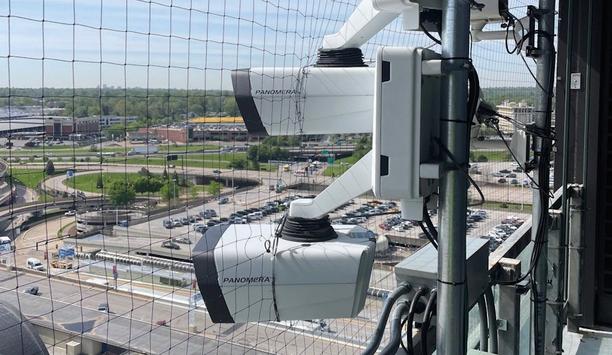
As Missouri’s largest and busiest aviation facility, St. Louis Lambert International Airport (STL) welcomed more than 15 million passengers in 2025. To implement a digital 360-degree surveillance system and secure over 70 million square feet of airport infrastructure, STL required a solution capable of covering vast spatial areas while significantly reducing infrastructure costs and complexity. At the same time, the airport aims to implement AI-applications to optimize its operations. With Dallmeier’s Panomera® multifocal sensor technology, STL achieved comprehensive high-resolution coverage with approximately 90 % fewer cameras and 75 % less infrastructure compared to the original surveillance design. Video security system Due to the continuous growth in passenger numbers, the STL Operations and Security Teams decided to modernise the existing video security system in June of 2018 in two areas: Firstly, in surface parking areas to increase customer safety and eliminate criminal activity such as vandalism and theft. The second solution targeted the airport’s four runways, the taxiways, and all terminal buildings to monitor the activities of aircraft, ground vehicles, and airport personnel. STL Airport Operations Team contacted their security integrator, Tech Electronics, to design and deploy an updated camera solution. The initial design used a combination of PTZ and single sensor IP cameras and would have required more than 130 cameras in total. From an infrastructure perspective, this would have required the installation of more than 42 new camera poles and the corresponding infrastructure (cable, network, power, etc.). The airside solution required significantly more technology to achieve the desired surveillance coverage. So, STL and Tech Electronics decided to look for another, more economical solution. Desired surveillance coverage During their technology search, STL discovered the Dallmeier Panomera® multifocal sensor technology, which was developed specifically for surveillance of large spatial areas using the fewest number of cameras to achieve the required surveillance coverage. David Kulinsky, Deputy Director of Operations & Maintenance at STL, recalls: “When we discovered Panomera® and saw that one Panomera® camera can capture large areas at high resolution and replace several single-sensor cameras, including the costly infrastructure, it became clear that Panomera® provided STL a more economical solution with higher quality images at a lower overall cost.” Intuitive user experience The test installation at the airport proved the image quality of the Panomera®. Kevin Hubble, Services Manager for STL with Tech Electronics, comments: “I was surprised at how few Panomera® cameras were needed to replace several PTZs and single sensor cameras and display the images in a much more user-friendly format. The SeMSy® Compact VMS software enables the user to view a single high-resolution image of the entire scene with simple digital PTZ controls to ‘zoom’ into any part of the image in greater detail. The result is an intuitive user experience resulting in greater operational efficiency – not to mention the superior high resolution video coverage.” To date, STL has installed more than 27 Panomera® cameras. Multiple IPS 10000 recording appliances and 5 user workstations with the SeMSy® Compact VMS client software complete the video system. Compared to the original planning, this resulted in approximately 90 % reduction in the number of cameras and approximately 75 % reduction in infrastructure required for the installation. Comprehensive situational awareness A particular highlight of the deployment is STL’s digital 360-degree surveillance concept. Using only ten Panomera® cameras, the airport achieves comprehensive situational awareness across large airside areas including runways, taxiways and apron operations. Unlike conventional camera concepts that require numerous PTZ and single-sensor cameras, Panomera® delivers a complete high-resolution overview in a single seamless image. This enables operators to monitor critical airport activities more efficiently across large spatial areas, while significantly reducing infrastructure complexity, maintenance effort and overall operating costs. AI-based video analysis Beyond security applications, STL is also evaluating Panomera® technology for operational process optimization inside the terminals. As part of a planned deployment in the ticketing area, a Panomera® V8 system will support AI-based video analysis functions such as passenger flow and waiting time analysis. The objective is to improve operational efficiency, optimize check-in processes and enhance the passenger experience — while leveraging the same high-resolution surveillance infrastructure already deployed throughout the airport. Video information technology David Kulinsky with STL summarises: “Any technology project at an airport must deliver a solution that is operationally efficient, resilient, and built for long-term performance. Our decision to deploy Panomera® cameras significantly enhanced overall surveillance coverage across the airport while reducing the technology and infrastructure footprint required to support it.” “The system also provides the ability to zoom into specific areas without sacrificing full-scene situational awareness or recording capabilities—an operational advantage over traditional PTZ cameras, which only record the field of view being actively monitored and can limit broader operational visibility.” In 1984, Dieter Dallmeier founded what is now Dallmeier electronic – not in the proverbial garage, but in a garden shed in Regensburg, Germany. Today, the company, which can justifiably call itself a hidden champion for video information technology "Made in Germany", has several hundred employees worldwide, more than 250 of them at the company headquarters in the center of Regensburg alone. Digital image storage system Dallmeier's camera, recording, software, and analysis solutions optimize security and processes for B2B end customers in a wide range of industries in over 60 countries. The focus is on users from the casino, smart city, airports, logistics, stadiums, and industrial sectors. But also, banks, critical infrastructure facilities as well as medium-sized companies from all sectors. With pioneering innovations, Dallmeier has succeeded time and again in placing itself at the forefront of technology: From the world's first digital image storage system with motion analysis in 1992, the patented "multifocal sensor technology" Panomera® with its "Mountera®" mounting system, to the latest Domera® camera family, which allows up to 300 camera variants with only 18 components. Complete manufacturing process These and many other innovations provide real, tangible customer benefits. And with a low Total Cost of Ownership (TCO) and a high Return on Investment (ROI) they can easily compete with systems produced and supplied from low-wage countries. With "Made in Germany", we also guarantee our customers the highest standards in data protection, cybersecurity, and ethical responsibility. With high quality and short supply chains, we also ensure – almost incidentally – sustainability and environmental protection. From our prestigious headquarters in the center of Regensburg, Dallmeier not only carries out its own research and development but also the complete manufacturing process – from component to product to solution.
Insights & Opinions from thought leaders at Dallmeier

It is better to create new markets than to struggle to maintain a presence in the bitterly contested existing markets. The security market in 2015 has been faced with many ups and downs, and in such a scenario innovating new products gave companies the necessary boost to take on competitors and capture new markets. That’s the viewpoint of Dallmeier as an eventful year draws to a close; a year in which we won and completed many new projects all over the world. Despite, or perhaps because of the "megapixel race" that is still taking place on the market, our new approach with the Panomera® multifocal sensor technology continues to demonstrate that we have chosen exactly the right path. We remained true to our philosophy of not blindly following trends, but questioning conventional wisdom and placing the greatest emphasis on customer benefits. Dallmeier is not a product manufacturer – we are a provider of solutions that provide added value for the customer. Panomera Multifocal Sensor Technology Panomera® fundamentally improves the mode of operation and the operating scope of video systems in industrial and commercial settings, and the efficiency of a video system is increased significantly. The maxim "less, but much better, more effective and consequently more cost-effective" has never been more true. Even the core application area of video security technology has been transformed: No longer does the technology merely provide surveillance capability; it has evolved to include process optimization and process control through a substantial information gain with the aid of intelligent, analytical video solutions. Multifocal sensor (MFS) technology thus closes a gap left by conventional video systems. MFS technology is already beginning to change the future of video security technology fundamentally. This is clearly reflected today in the projects and enquiries we receive. New Projects In 2016 We are well positioned to face the future and are looking with optimism to the coming years. We attach very high priority to the development of pioneering innovations that function reliably and bring the user real benefits. What sets Dallmeier apart is the fact that we are not experts in just one field, we can support our reputation with innovations in all aspects of video security technology: in the camera field with multifocal sensor technology, but also in recording, transmission technology and video management. Each of these technologies individually will again provide us with access to many new projects in 2016. See the full coverage of 2015/2016 Review and Forecast articles here

Dozens of suppliers, dealers, installers and industry organisations participated in our First Annual Security Market Review and Forecast 2014 was a great time to be in the security industry, and 2015 will be even better. This is the optimistic view shared among industry leaders contacted by SourceSecurity.com and asked to reflect on the market in 2014 and to look ahead to the New Year. Dozens of suppliers, dealers, installers and industry organizations participated in our First Annual Security Market Review and Forecast – and SourceSecurity.com is publishing each of their unique and exclusive insights into the security marketplace. This article includes links to all of the commentary articles submitted by participants in our Review and Forecast series. The Security Industry Association, Washington, D.C., documents growing confidence in the market as 2014 progressed. The organization’s SIA Security Market Index reflects that confidence related to the U.S. market – rising to 74.6 (on a 100-point scale) in November from 72.3 in September and 62 in July. Technology opportunities may be a factor in that optimism – including new technologies like 4K Ultra HD video and incorporation of mobile devices (and even wearables) into security applications. For many, 2014 was the year they were introduced to the idea of the “Internet of Things,” and especially to its looming impact on the home security and automation market. Big players like Apple and Google jumped into the fray, raising both awareness and expectations about the future of home automation. Business Outlook One contributor saw an increase in corporate and government expenditures. Another commented on the large numbers of grants available to improve sales, particularly in the education and healthcare markets. Since the 2012 Sandy Hook massacre, many U.S. school districts have moved rapidly to purchase security products. In the perimeter security arena, there is more business coming from soft targets such as major hotels, colleges, office buildings or other places where people congregate. Customers are taking a broader outlook on system expenditures, notes one commentator. Now they select systems as part of a long-term investment in their business. Emphasis on broader goals can also lead to larger projects. End users looking to reduce operational spend are finding multi-functional uses for tools that were traditionally used for security. For example, asset accountability is now playing a more significant role related to lowering corporate costs. The security executive position (at end user companies) is expanding from the monitoring and investigation of alarms to more strategic areas including risk mitigation and business continuity. Technology is evolving to the help them. Customers also face challenges of compliance as more regulatory requirements are thrust upon owners across multiple verticals. Dealers need an in-depth understanding of regulatory issues to enable them to meet customer needs. For many, 2014 was the year they were introduced to the idea of the "Internet of Things" and especially to its looming impact on the home security and automation market On the dealer front, PSA Security Network is taking steps to help educate security professionals concerning both the threats and the opportunities related to cybersecurity. One integrator (among others, no doubt) sees managed services as a notable trend looking ahead to 2015. Another dealer anticipates an expansionary period with continued growth and profitability provided integrators continue to maintain a high level of performance. A third dealer expects integration of wireless and edge technology to continue to change the economics of installation. The new president of ASIS International has also weighed in with an extensive and enlightening forecast. Video One of our year-end commentators notes that 2014 was the “the first year that HD cameras that are as reliable, as convenient, and as affordable as [standard resolution] cameras became widely available.” That helps to explain why migration from standard resolutions to HD really took off in 2014. It was also the year that saw acceleration of alternatives to IP as a means to move video within a building. Both analog HD (HD-SDI) and digital HD (HDCVI) gained prominence as alternatives. General video trends include popularisation of HD, intelligence and integration – and the Internet and Big Data will also impact the video market. New ONVIF “Profiles” are important tools to promote interoperability, data security and ease of installation. Analog-to-digital conversion fueled double-digit growth rates for video companies. Multiple vendors introduced 4K Ultra HD cameras, and one major supplier now expects 4K to be the video standard in the security industry by 2020. There was a major switch toward an emphasis on providing solutions rather than products in the video arena, driven in part by companies looking to add value amid concerns about the commoditisation of cameras and other components. One company notes that total solutions have become more important than products in the industry. Brands are starting to transition from product manufacturers to solutions providers. A company that focused initially on smaller (SMB) systems is looking to expand into the mid-tier and larger projects market, not uncommon as players look to widen their scope. Notable technologies include multifocal sensor cameras and wireless video systems powered by solar energy to expand the reach of video systems to remote locations. In general, related to how video is used, there is a shift from a reactive approach to a more proactive approach, and from just security uses to using video to address wider business opportunities. In general, video systems are becoming more sophisticated and smarter. Access Control Electronic access control is expanding to capture a larger number of doors in an enterprise – competing for a larger share of doors that are now locked mechanically One European commentator says that access control has moved out of the shadows as the “poor cousin” to video systems and now has a higher growth rate. He sees a continuation of the growth for the next three to five years along with greater symbiosis of IP security and ID management. Among access control system manufacturers (OEMs), the competitive landscape remains fragmented. However, the smaller OEMs that have been around for decades are facing competition from new players with novel approaches. More consolidation is likely. Also, large video companies continue to seek a share of the access control market. There is also a continuing need to update legacy systems while keeping existing infrastructure and hardware intact. A smart card with integrated biometric reader emerged in 2014 – it can be used with existing card reader infrastructure, adding a biometric authentication element to as many (or as few) card holders as the end users requires. There is also growth in long-range solutions. Credential form factors are evolving beyond cards and readers to include mobile devices for access control that provide a better way to open doors. A smart phone-based access control system provides free, real-time upgrades. Electronic access control is expanding to capture a larger number of doors in an enterprise – competing for a larger share of doors that are now locked mechanically. One contributor has seen good growth in “e-locks” across all of Europe. Emphasis On Data “Big Data” was a buzz-word in 2014, and a growing emphasis on data – how to get it, how to process it, how to use it – was an everyday reality for manufacturers, integrators and end users in the security market. Customers are looking to make data-driven decisions with insight and foresight provided by intelligent analysis of various data. One commentator emphasized that winners in the security industry will be those who apply business intelligence to the data they are gathering and that have policies in place to determine trends and take action. Increasingly, surveillance video will be looked at as Big Data that can be analyzed to bring value to the top line of the business. IT And The Cloud As security systems continue to migrate to IP, they more closely resemble IT solutions Influence of the IT market on physical security was a given in 2014. One effect was a trend toward the decoupling of hardware and software with the help of open standards. The IT-inspired approach is now being adopted in physical security. As security systems continue to migrate to IP, they more closely resemble IT solutions. This change is taking place more rapidly than most expected, which can be disruptive to systems integrators who are not prepared to do business in the IP world. At the enterprise level especially, physical security will become more and more deeply embedded into the overall corporate IT strategy. The cloud became a major factor in the physical security market in 2014. The continued movement to “cloud” or “distributed” applications will impact how manufacturers and integrators go to market – affecting pricing, purchasing guidelines and other factors. See the full coverage of 2014/2015 Review and Forecast articles here

2015 will see Multifocal sensor cameras opening up new markets for Dallmeier Dallmeier 2014/2015 Review and Forecast:The resolution of megapixel cameras is always going to be higher. But people are starting to understand that resolution is not everything, nor does it solve the problem of the customer. In addition, many megapixels on a single chip have unpleasant side-effects related to things like light sensitivity, lens quality, image rate and bandwidth. What really interests the customer is not the number of megapixels, but rather whether suspects can be singled out and identified – regardless of which area of the surveillance field that person is located in. So the resolution of the camera itself (e.g. a “5-megapixel camera”) is not decisive; but more relevant is how many pixels per meter are obtained for the relevant object/person. You need 62 pixels/m for observation, 125 pixels/m to recognize known persons, and 250 pixels/m to identify unknown individuals. Dallmeier is following this approach with our multifocal sensor technology. Contrary to single-sensor cameras, several lenses with different focal lengths are used. This patented technology makes it possible to monitor large areas and distances comprehensively, and to do so in real time with uniform image resolution and consistent focal depth. A single installation point is needed. The solution is extremely cost-effective both in the lower number of required cameras and especially in the decrease in necessary infrastructure such as masts, cables, etc. It also means that solid solutions can be found with this technology for projects that could not previously be implemented at all. So the multifocal sensor technology opens up a huge market for planners and builders. The response in the market to multifocal sensor technology is already extremely positive, and this will further develop in 2015 as it addresses definite needs. An eventful, immensely successful year is coming to a close for Dallmeier. 2014 was a jubilee year for us, in which we celebrated the 30th anniversary of the company’s founding. Our product portfolio has grown steadily over the last 30 years. These days, we offer total solutions from a single supplier – from image capture through recording to video management and intelligent video analysis. See the full coverage of 2014/2015 Review and Forecast articles here









