CEDIA - Experts & Thought Leaders







Latest CEDIA news & announcements

CEDIA Expo 2026, produced by Forge, welcomed 9,653 verified attendees to Denver for three days of product discovery, manufacturer training, education, and industry connection. More than 320 exhibiting brands came together with the residential integration community to reconnect with customers, build new relationships, and create new business opportunities. “What stood out in Denver was the quality of the audience and the business happening across the show floor,” said Jason McGraw, Group Vice President and Show Director for CEDIA Expo, powered by Forge. “Exhibitors told us they were meeting high-quality prospects, strengthening relationships with existing customers and generating real business opportunities. With 26% of attendees experiencing CEDIA Expo for the first time, we’re continuing to bring new people into the show and connecting them with this industry. That, combined with the business, discovery, and connection, is exactly why CEDIA Expo continues to be the premier event for the residential integration community.” Residential technology ecosystem Held September 2–4 at the Colorado Convention Center, CEDIA Expo brought together professionals from across the residential technology ecosystem. The event featured 215 educational and training sessions, including 101 Manufacturer Product Trainings, 97 CEDIA education sessions, and 17 thought leadership discussions covering the technical, business, and design trends shaping the industry. Experiential areas drew strong interest throughout the week. More than 20 dedicated audio and sound demonstration rooms gave attendees the opportunity to experience the latest performance technologies firsthand, with lines forming for demonstrations. Destination Outdoors, sponsored by Coastal Source and Lutron, showcased the expanding outdoor living and entertainment category through products and solutions designed for connected experiences beyond the walls of the home. Broader residential ecosystem Programming also reflected the expanding intersection between technology, design, and the broader residential ecosystem. The Day of DiscoveryTM program, produced by Technology Designer, connected architects, interior designers, and builders with technology manufacturers and integration expertise, while the Women in Consumer Technology (WiCT) Luncheon brought industry professionals together for networking, conversation, and recognition. Exhibitors pointed to strong traffic, high-quality leads, and the value of connecting face-to-face with the integration community. Custom integration industry “CEDIA Expo 2026 delivered unmatched momentum for the custom integration industry. Lutron was proud to showcase significant expansions to our intelligent lighting and shading portfolio, connect with thousands of integrators, and celebrate the innovation that defines this extraordinary community,” said Ben Bard, Vice-President, Luxury Residential Business, Lutron. “But the true highlight was the people — the integrators who show up, invest in their teams, and continually push the boundaries of what technology can deliver for their clients. We left inspired, energized, and deeply grateful for the trust this community places in us. CEDIA Expo remains the premier destination for meaningful partnerships, hands-on learning, and breakthrough product discovery.” Custom installation industry “Any opportunity to bring vendors and dealers together sparks innovation and exciting conversations. CEDIA 2026 was no exception. It has always been the best opportunity to come together as a community,” said Kathleen Thomas, Head of Custom Integration Sales, Sony Electronics. “CEDIA Expo 2026 was a highly productive show for Paradigm, Anthem and MartinLogan,” said Zoltan Balla, Vice President, Marketing & Development Operations, Paradigm Electronics Inc. & MartinLogan Ltd. (PML Sound). “The event provided an essential platform to launch our latest product innovations and connect directly with high-quality leads from across the custom installation industry. Exhibiting allows us to meet face-to-face with new and existing dealers, share our newest updates, and strengthen our relationships within the integration community. The strong foot traffic and valuable business leads generated throughout the week highlighted the importance of the show for our brands, and we look forward to returning next year.” Residential technology ecosystem CEDIA Expo brought together professionals from across the residential technology ecosystem, including integrators, installers, manufacturers, distributors, designers, architects, and other industry partners. Programming addressed the forces shaping the market today and the opportunities ahead, from AI, lighting, and smart home technology to aging in place, outdoor entertainment, sustainability, entrepreneurship, business planning, and design integration. With Denver complete, planning is already underway for CEDIA Expo 2027 at Las Vegas Convention Center, with a focus on strengthening the experiences at the heart of the show: discovering new products, experiencing technology firsthand, connecting directly with manufacturers, education, and the face-to-face relationships that drive business. “CEDIA Expo is where the residential integration industry comes together, and Forge is fully committed to its future,” said McGraw. “We’re already building toward Las Vegas with a clear focus: deliver a strong experience for exhibitors and attendees, create meaningful business opportunities, and continue to bring the residential integration community together.” CEDIA Expo 2027 will take place September 7–10, 2027, at the Las Vegas Convention Center’s West Hall.
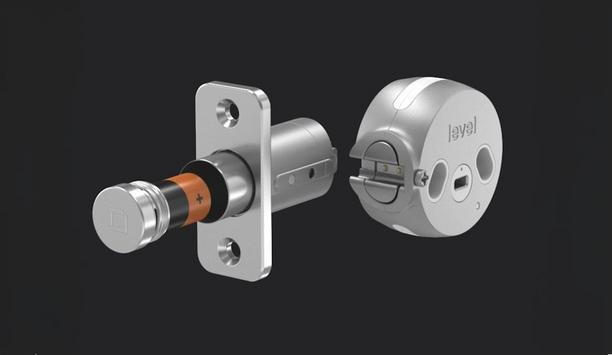
Level Home, Inc., the company redefining the smart home, announced the release of professional installer editions of its industry-renowned, award-winning smart locks, Level Bolt and Level Lock+ including new Zigbee native configuration options. Curated for the professional install market, Level Bolt Pro Pack and Level Lock+ Pro Pack offer special add-ons and integration opportunities for installers to offer their customers the convenience of smart home technology, while maintaining the design aesthetic of their homes. Exclusive Level Pro Packs “Our debut at this year’s CEDIA Expo is a clear demonstration of our growing presence in and commitment to the professional installation market,” said Eric Waters, Vice President (VP) of Sales at Level. He adds, “Our new and exclusive Level Pro Packs are designed to support these professionals by combining best-in-class technology with an elevated design to complement any home.” Smart home experience Level Pro Packs offer multiple ways to unlock the home-whether it's with a key or phone The new Level Pro Packs include everything required for professionals to deliver a seamless smart home experience that blends effortlessly into a homeowner’s daily routine. Equipped with best-in-class features and the highest level of security, Level Pro Packs offer multiple ways to unlock the home - whether it's with a traditional key, key fob, or phone. Plus, everything can be managed remotely and connected with smart home systems, like Apple Home, Google Home, and Amazon Alexa. New Level Bolt-Zigbee Level Bolt Pro Pack and Level Lock+ Pro Pack are now shipping and available to the professional channel through a partnership with WAVE Electronics. Attendees at the Level Booth at the CEDIA Expo 2024 will have the opportunity to experience the new Level Bolt-Zigbee firsthand, along with Level's comprehensive Pro Pack smart lock solutions. Visit Level at the CEDIA Expo 2024 from September 5-7, 2024, in Denver, CO, at Booth #3354.

The award-winning DEN SmartStrike™ is available for pre-order via the DEN SmartHome website. The first invisible, wireless communicating door strike, the DEN SmartStrike can be installed easily and discreetly into the door frame. Featuring a completely inconspicuous design, users get all of the benefits of a smart door lock without compromising the esthetic design of the door, all while maintaining existing door hardware, including the handle. Author's quote “We look forward to connecting with dealers at CEDIA Expo 2023 and showing them how this highly profitable category can be a key addition to their product portfolio. The concealed design of the DEN SmartStrike streamlines inventory management, meaning dealers don’t need to stock a variety of colors or styles,” said DEN Smart Home CEO and Founder, Marijn van der Wal. “We’re thrilled to be able to offer dealers at CEDIA Expo exclusive pricing on their first unit so they can try the DEN SmartStrike at their homes or businesses to learn about the product and experience the benefits for themselves.” DEN SmartStrike SmartStrike is battery-powered, with users not needing to change the batteries for up to two years The DEN SmartStrike is a unique solution that provides users with the best of both the analog and smart home worlds. Once installed, users can unlock their door using a traditional key or via the companion app to easily, safely, and securely access their homes and businesses. Through the app, available for both iOS and Android, users can also create digital keys for family members, friends, and temporary guests. The SmartStrike is battery-powered, with users not needing to change the batteries for up to two years. DEN SmartHome security Z-Wave enabled, the DEN SmartStrike is compatible with more than 4200 certified, interoperable devices, making it part of the largest, most diverse smart home and security ecosystem available. Future versions of the DEN SmartStrike will add Matter, Zigbee, and Wi-Fi connectivity to provide compatibility amongst a vast array of IoT networking platforms and further future-proof the DEN SmartHome security solution. Dealers who sign on to the Authorized Dealer Program at CEDIA Expo from September 7 to 9, 2023 will be able to purchase a SmartStrike for their home or showroom at a special rate of $99.
Insights & Opinions from thought leaders at CEDIA
The smart home market has seen significant growth since 2010. Specifically, less than 0.5% of homes in the American region had connected home devices such as thermostats, lighting, security and entertainment in 2010; by the end of 2017, nearly 12% of households in the region will have connected home devices, an average of six devices per home. The success of smart homes started with professional security providers offering bundled packages, focused mostly on security monitoring. However, due to the cost of professional contracts, consumers began to embrace the do-it-yourself (DIY) approach. Despite the challenges and opportunities that come with professional and DIY approaches, the momentum of smart home growth depends on these two approaches working symbiotically. Smart Home Technology Partnerships A few recent examples include the relationship with Vivint and Best Buy and Vivint with Sprint. In most cases, Best Buy is a competitor to Vivint because a consumer can buy point devices and ecosystem and install it themselves or enlist the help of the Geek Squad. Even more recently, Nest announced optional professional monitoring with its Nest Secure products in partnership with MONI. Although this approach isn’t new, Scout Alarm, LiveWatch and SimpliSafe already have similar approaches, it continues to stress the need to combine multiple channels and approaches to the smart home market. Moreover, these are examples of symbiotic partnerships that will help the total market. In 2017, there were about 122 million smart home devices shipped globally. The retail channel represented about 62 percent of all device shipments in 2017 and will represent about 70 percent in 2021. Despite the increased demand for professional installation, the do-it-for me approach, most the volume remains with ad-hoc purchases. This includes a consumer video camera or a smart thermostat purchase from a retailer or when a consumer wants to add devices to an existing professionally installed system, they often will buy products from retail. There is a growing needto combine multiplechannels and approachesto the smart home market Furthermore, the multiple-system operator (MSO) and professional security provider channels will be evenly split in 2017; however, by 2021, the MSO channel is expected to be double the market size of the security provider channel. The primary reason for this rapid change over five years is the lack of professional security providers in EMEA and APAC; as a result, MSOs will dominate the professional channels in these regions, while across North America, security providers will maintain a strong market presence. Top Trends In Smart Homes A few of the top trends in smart homes to watch out for over the next 12-24 months include user interface, flexible services, cyber security and adjacent markets. The user interface trend continues to evolve for the smart home. Although voice commands are trending towards becoming the new user interface beyond 2017, the voice will not be the only means to control and interact with the smart home. Mobile phones or tablets will still be required to configure most devices. This means that although the Amazon Echo can control a WeMo plug, the consumer will still be required to download the WeMo app and configure the device. However, after the device is added to the same network as the Echo, the app is no longer needed on a day-to-day basis. Displays will also become increasingly popular throughout homes because the smart home is becoming increasingly isolating. Mobile phones or tablets will still be required to configure most devices in future smart homes DIY ecosystems such as Wink or SmartThings or Philips Hue lighting are often limited to one person with one mobile device. As a result, other members of the household would need access to that mobile device or would need access on their own device after being authorized by the primary user (all assuming a smart speaker is not being used). This is very limiting and the user experience is negatively affected. (Voice assistants like Google Home have added a feature to allow multiple accounts using voice recognition, which will help personalize smart homes.) However, displays in the home are a way to access all devices for anyone in the home. Smart Home Equipment Cost Flexible service offerings and pricing is already taking shape across smart home offerings. DIY installed smart home systems such as Scout Alarm already offer no contract monitoring. Professional monitoring companies are already offering no contract pricing and providers such as Comcast are looking to pilot programs for just video monitoring bundled with Internet for a low monthly fee. Options for financing are also going to become commonplace. Smart home equipment is expensive, especially when attempting out outfit a modest size home (2,500 square feet +). Immediate access to services is becoming more critical. This means consumers should be able to access on-demand service options directly from a mobile device to activate or deactivate professional monitoring. Lastly, pricing still needs to come down for many smart home devices but there is a threshold. Since many smart home devices today do not have a recurring monthly fee, the cost of maintaining mobile apps, platforms and support services must be propped up by higher device prices. However, companies can look to offset some cost by sourcing different material. According to the IHS Markit Teardowns Team, the cost of the metal ring on the Nest 3rd Generation thermostat is $10, which is more expensive than the LCD display which comes in at $9. In comparison, the Ecobee3’s most expensive part is the LCD screen at about $4.00. As a result, the Ecobee3 costs nearly $20 less to manufacture compared with the Nest 3rd Generation thermostat. Smart Home Security Securing the smart home will be a hot topic over the next 12 months. One method of change will be manufacturers requiring consumers to change default passwords. Manufacturers need to start requiring consumers to change passwords before a product can be used. Home routers, for example, often use ‘admin’ as the username and ‘password’ as the password and most users never change these. For elder care, door/window sensors and motion sensors could be used in combination with software to monitor routine The challenge that many consumers and suppliers face today is that many passwords are built directly into the firmware and the consumer has no way of making changes. As a result, the integrity of the device comes down to the supplier. As threats become more severe with ransomware and other botnet attacks, manufacturers will need to implement additional thresholds of threat assessments to keep consumers safe. One method involves two-factor authentication. IHS Markit expects the monetization of cyber-security for residential customers to start appearing in 2018. This means that security service providers would monitor network traffic for the consumer. The software would not be monitored or implemented directly by the consumer; instead, the service provider will take care of all the monitoring of network traffic. What this means is that the software or router would monitor network traffic for patterns and manage which servers are pinged by IoT devices such as consumer video cameras. Care Homes And Insurance Companies Although the compound annual growth rate (CAGR) for smart home device revenue is set to exceed 50% through 2021, the growth could be much higher with support from adjacent markets such as elder care, construction/developers and insurance companies. For elder care, door/window sensors and motion sensors could be used in combination with the software to monitor routine. If an elderly person suddenly changes their routine, this would alert caregivers. This same premise can be used in professional elderly care settings to help staff prioritize patient needs. IHS Markit expects the monetization of cyber-security for residential customers to startappearing in 2018 Working with insurance companies is another method of reaching the customer with smart home devices; however, the use of insurance is highly fragmented across regions. As a result, North America is the best opportunity as of 2017 to partner with insurance companies. Furthermore, insurance companies are mostly interested in managing the entire ecosystem. Blending Professional And DIY Smart Homes While offering subsidized equipment (smoke detectors and water leak detection) can reduce claims, insurance companies need to have full access to the data – as a result, they are more interested in creating their own platform from scratch or working with a provider to support data analysis. Working closely with builders will also continue to gain traction, especially across EMEA and APAC. By working closely with builders, this reduces the challenges associated with B2C channels and the overall cost of the system can be masked by the mortgage payment, resulting in more system installations with less distribution expense. Overall, the line between professional and DIY smart home is blending. CEDIA and Amazon recently announced a collaboration and Netgear Arlo announced the first wire-free and battery-operated ONVIF compliant camera. With the combination of voice-control, consultations from Amazon and Best Buy, the reduction in the pile of smart home hubs in the basement as more protocols are embedded in gateways/routers, and no further need for the special Apple chip for HomeKit compliance after iOS 11, smart homes are becoming easier to achieve both for consumers and professionals.
Small-timers with big ideas can always make their way into the industry In recent years, home automation technology has given birth to the “Smart Home” in which internet-enabled and controlled devices are bringing a new level of comfort to the standard house. From locking doors to setting the temperature to opening the blinds for a view of the sunset, technology is transforming the home into something reminiscent of the now-quaint 1960s sci-fi cartoon, The Jetsons. Of course, we’re still waiting for our jet packs and flying cars, but the house itself is doing far more of the work than anyone thought possible just a few years ago. Future Of The Home Automation Sector? “We have seen a lot of consolidation over the last five to seven years, and a lot of it was because of the economy,” says Dave Pedigo, Senior Director of Learning & Emerging Technologies at the Custom Electronic Design and Installation Association. “As much as you see the potential for consolidation, I also see a lot of potential for startup companies that have the ability to make products and are innovative, serve a purpose and can change the industry.” In an era of 3D printing, rapid prototyping and small companies powered by social media and crowd funding, small-timers with big ideas can always make their way into the industry, he adds. “It’s put us into what I think is the next industrial revolution,” says Pedigo. “While a lot of this is going to very large companies, at the same time I wouldn’t discount small or startup companies that offer goods that are unique and useful.” 4K: Opportunities And Challenges "It’s put us into what I think is the next industrial revolution. While a lot of this is going to very large companies, at the same time I wouldn’t discount small or startup companies that offer goods that are unique and useful", says Dave Pedigo of CEDIA “Right now it seems like 4K video distribution will be the next big trend,” says Brad Hintze, Director of Product Marketing for Control4. “4K is the next step in high-resolution video and in our opinion it will not be like 3D. 4K will have staying power. It is for this reason that we came to market with our own suite of 4K video distribution equipment for the Control4 Smart Home.” He believes content is the main driver, both in adoption and hardware design. Network providers like Comcast and Dish Network, all have their own roll-out plans for 4K channels and content, which will eventually bleed into consumer adoption. “But from a hardware and automation perspective, it presents challenges because the industry standards for image display and copy protection are evolving rapidly,” explains Hintze. “Control4 recently released our fully HDCP 2.2 compliant 4K A/V Matrix switch products, which eliminates the black screen produced by playing copy-protected content from studios on non-compliant equipment. Being able to adapt to this wave is what will keep us ahead of the curve!” Intelligent Sensors For Smart Home Industry experts predict that sensors in the home will reach a level of sophistication never considered in early versions of Smart Home. These devices will know when the house is empty and be able to shut off heating and cooling systems. Smart phone with geolocation will then tell it when the owner is on her way back so it can start adjusting the temperature to a comfortable level. “There will be an app on a phone that shows that you’re going to be home in a few minutes,” says Rawlson O’Neil King, Communications Director of the Continental Automated Buildings Association. “Then the house unlocks when you are at the door. The garage opens after detecting you’re close to the house. You have lights that turn on and off at certain times by detecting your presence.” Industry experts predict that sensors in the home will reach a level of sophistication never considered in early versions of Smart Home. These sensors will also end once and for all the question of “did I lock the door?” or “did I turn off the stove?” And, it won’t just be lights that turn on and off. Sensors in washing machines will know that clothes have been put inside and will start the cycle at a time when costs are at a lower level, he adds. These sensors will also end once and for all the question of “did I lock the door?” or “did I turn off the stove?” Home Automation – A Double Edged Sword With the move towards home automation, the coming years will see a greater emphasis on security as more and more devices become accessible – and hackable – on the web. As a security expert at the Federal Aviation Administration prior to joining Vivint as Chief Security Officer, Joe Albaugh saw attacks against critical infrastructure and industry. “The underlying theme was they are computer connected, the data is online and accessible and many of the attacks and threats are exactly the same,” he notes.
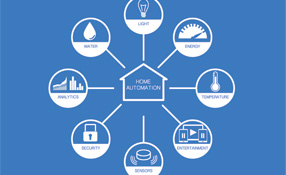
Once home automation – controlling everything from HVAC to door locks to lights to security cameras – was solely the providence of the high-end home. Custom systems were pricey – some ranging upwards of $100,000 or more. That was before widespread access to broadband internet and before everyone started carrying a powerful internet-connected mini-computer – called a smart phone – in their pocket. Home Automation Goes Mainstream These days the Smart Home has gone mainstream. Home automation apps to control lights, locks and cameras can be purchased at The Home Depot or ordered from Amazon.com. Customers of Comcast’s Xfinity Home solution can call a technician to install its “smart” devices, but the service offerings are tiered: On the low end you do it yourself while you have to pay more for a high-end full-service offering that includes home security monitoring. DIY Home Security: A Good Fit? “Over the last few years you’ve seen a move toward I would say DIY and entry-level automation,” says Dave Pedigo, Senior Director of Learning & Emerging Technologies at the Custom Electronic Design and Installation Association. “There are DIY products, and entry-level solutions you can get from the big providers and they’re very affordable. So the biggest difference is in reliability.” "There are DIY products, and entry-level solutions you can get from the big providers and they’re very affordable. So the biggest difference is in reliability", says CEDIA’s Dave Pedigo For the handy “do-it-yourselfer,” home automation can be cheap and easy, if not always good – or safe for that matter. Instead of paying for monthly monitoring, homeowners can install a web cam, access from a smartphone or tablet and essentially do their own security monitoring. The downside of this approach is readily apparent. Without full-time monitoring, homeowners can easily miss the break-in or the aged parent who falls and can’t get up. Until they log on and take a look, there’s no central station to send medical aid or call the police. Connecting door locks and other devices to the Internet can also open a door to hackers, if the infrastructure isn’t properly protected. Challenges With Mainstream Home Automation “Yes, home automation is becoming more mainstream, which is raising general awareness for the category as a whole,” says Sean Goldstein, vice president of marketing at Crestron. “The elements that are mass market are cookie cutter.” In the high-end space, when people want different interfaces, or to control systems in a more custom fashion, a more advanced home automation system is needed. “Off-the-shelf home automation systems won’t be able to accommodate the needs of every customer and their lifestyle,” he says. To separate themselves from the DIY crowd, these security companies are emphasising the whole home solution “Where I think Vivint differentiates itself is in offering a complete solution to our customers in an affordable way,” says Joe Albaugh, Vivint’s Chief Security Officer. “The key is offering everything from the home security platform to energy management to lighting to cameras and even a doorbell camera. It’s a package that we’ve offered that’s built to work together out of the box.”