ASSA ABLOY - Experts & Thought Leaders




























White papers from ASSA ABLOY
Busting The Myths About Wireless Access
DownloadLatest ASSA ABLOY EMEA news & announcements
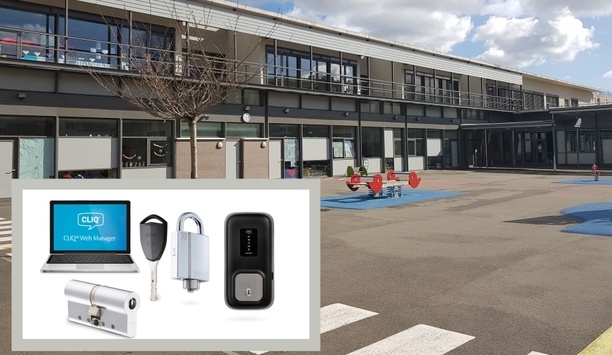
One French town just north of Paris faced familiar key management challenges. Each person in their Municipal Technical Centre had to carry approximately forty physical keys. If a single key was lost or stolen, for even one door, all compromised cylinders had to be changed. To prevent unauthorized access, all the keys had to be replaced, too — at great expense. Key duplication costs were mounting. “One lost key cost from €3,000 to €4,000 for changing cylinders and replacing the keys,” explains Fabrice Girard, Territorial Technician at the Villiers-le-Bel Municipal Technical Centre. Administrators can program access rights for every CLIQ key, padlock or cylinder using the Web ManagerTo fix their expensive lost key problem, Villiers-le-Bel city administrators chose to combine ABLOY’s mechanical PROTEC2 and CLIQ electromechanical locking within the same flexible, key-based access control system. Almost 500 CLIQ wireless cylinders, 850 programmable, battery-powered CLIQ keys, plus programming devices and wireless CLIQ padlocks, have been deployed in a multi-year, rolling upgrade program. CLIQ Web Manager software Now, with CLIQ, lost or stolen keys are canceled instantly using the CLIQ Web Manager software. The Web Manager works securely inside a standard browser, with no software installation needed. Administrators can program access rights for every CLIQ key, padlock or cylinder using the Web Manager. They filter access to specific sites and doors according to the precise needs of every city employee. “CLIQ Web Manager is a very easy and pleasant system to use every day,” says Fabrice Girard. CLIQ also saves time for the city’s security team, because staff no longer must return to the Technical Centre to collect the keys for multiple sites. Authorized users carry a single, programmable, battery-powered CLIQ key, where all their individually tailored access rights are stored. Wireless system to enhance safety We wanted a wireless system with reduced maintenance costs and increased safety"“We wanted a wireless system with reduced maintenance costs and increased safety,” adds Fabrice Girard. “CLIQ met all these requirements.” The city has already rolled out CLIQ beyond their Municipal Technical Centre to 10 local schools. Using the CLIQ Web Manager, security staff can track exactly who has been granted access to every school site — critical for these sensitive premises and to improving overall school safety. Plans are in place to equip Villiers-le-Bel’s 12 remaining schools with CLIQ within 2 to 3 years, including canteens and boiler rooms. Because CLIQ can be deployed and scaled flexibly, the city’s dedicated security budget funds this gradual extension of their CLIQ system. CLIQ® technology is secure, user-friendly and scalable across multiple sites — and already trusted in schools, colleges and universities all over Europe. To learn more about CLIQ® key access control, visit campaigns.assaabloyopeningsolutions.eu/cliq
ASSA ABLOY, the global pioneer in access solutions, has acquired Santos, a Portuguese manufacturer of mechanical locking solutions. Founded in 1948, Santos has over 140 employees. With the main office and factory located in Águeda, Portugal, sales for 2025 amounted to approximately 9.3 million euros with a good EBIT margin. The acquisition will be accretive to EPS from the start. Mechanical core business "This acquisition delivers on our strategy to strengthen our position in mature markets through adding complementary products and solutions to our core business,” says Neil Vann, EVP & Head of the EMEIA Division. “We are committed to growing our mechanical core business, and the acquisition of Santos will help us drive that through expanding our product portfolio and improving our regional footprint,” says João Carmo, Vice President & Head of ASSA ABLOY Opening Solutions Portugal.

It was recently reported in EU Business News that three in five young people would be unlikely to consider a career in manufacturing. When one couples this with the fact that there has been a steady decline of traditional manufacturing apprenticeships in many European countries, it creates a real risk for a significant skills gap in the industry. If manufacturing isn’t attracting and retaining early talent, this will lead to a skills gap that will ultimately mean less innovation and lower productivity in one of the most vital sectors. Data-driven systems Welcoming new talent into manufacturing is increasingly vital to the sector’s long-term success Welcoming new talent into manufacturing is increasingly vital to the sector’s long-term success. As existing talented workers retire, manufacturing urgently needs early talent to pick up the baton and carry forward the industry, developing the future technologies and helping ASSA ABLOY continue the journey to work smarter, safer, and more sustainably. As early talent enter the workforce, they bring new ways of thinking and different perspectives. While experienced professionals have embraced new technologies over time, early talent often enters the workforce already fluent in digital tools, data-driven systems, and platforms like AI. Together, these complementary strengths can drive innovation and adaptability across the industry Next generation of talent Manufacturing must evolve in how it presents itself to new job seekers To compete for the next generation of talent, manufacturing must evolve in how it presents itself to new job seekers. First, learning and development opportunities are essential. As well as equipping new recruits with technical skills, they demonstrate that manufacturing takes ambition seriously and offers credible, long-term career paths that are dynamic and flexible. By the same token, structured mentorship programmes give employees the feedback and support they need to grow, and ultimately, signal that they will be valued and invested in from day one. Manufacturing also needs to ensure the hiring processes and workplace environments are attractive to job seekers. That means offering a digital-friendly recruitment process, role models that employees can truly look up to, and a focus on wellbeing within the workplace — creating an environment where people feel seen, supported, and inspired to thrive. ASSA ABLOY Opening Solutions EMEIA At ASSA ABLOY Opening Solutions EMEIA, they are constantly investing in early talent programmes. Since 2010, their EMEIA Graduate Programme has welcomed over 200 ambitious young professionals onto an 18-month development journey – one that offers real opportunities to learn, grow, and contribute meaningfully to the business. Jack Robinson has been personally involved in shaping this programme over the years, and is proud to say it has achieved a 5-year retention rate of over 90% following completion. This is testament to the programme’s effective support structures and real commitment to the long-term career prospects of all participants. Female representation in STEM Since 2022, female representation in STEM roles across the business has grown by 20% Since 2022, female representation in STEM roles across the business has grown by 20%, and women now hold 27% of management positions. ASSA ABLOY has ambitious targets to continue to grow female representation. Further illustrating the focus on creating a workplace that is inclusive and has a real sense of belonging, 85% of the colleagues now say they feel comfortable being themselves at work. This is 3% above the industry benchmark, though the target remains 100%. These outcomes reflect a meaningful cultural shift and the kind of company ASSA ABLOY is building for the future. Looking ahead Creating a truly future-focused business culture is an ongoing process. The world is evolving quickly – and so must manufacturing. This means constantly improving how companies recruit, support, and retain their employees, while continuing to build an industry that reflects the values and expectations of the modern workforce.
Insights & Opinions from thought leaders at ASSA ABLOY

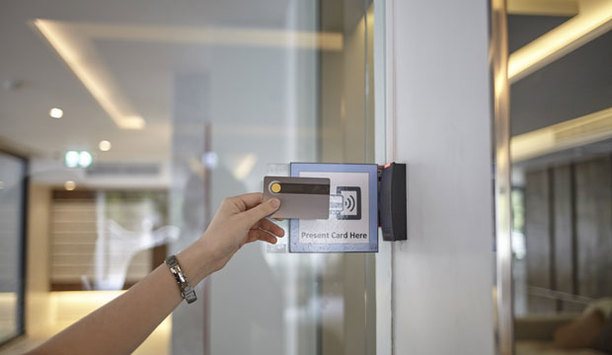
Digital access control has well-known benefits over traditional security, of course, but also costs attached to each stage of its lifetime. However, these costs are not fixed. Many factors – including building size, shape, type, location, national regulations and more – impact affordability and efficiency calculations. Crucially, the type of access solution a business selects – wired or wireless – impacts total operating costs, including during installation, running, and any potential expansion or reconfiguration stages. Wireless installation Wiring premises can be expensive. So, the potential cost savings from choosing wireless digital access begin at the very start. Installation stage is the largest contributor to potential cost savings when businesses go wireless. In calculations for one report, access experts at ASSA ABLOY examined projected costs for a fictional 100-door installation. Labor savings for those who chose wireless over wired locks were 82.5%. Why? Firstly, because wireless installation is much faster. It is also less intrusive. Most wireless locking devices require little or no drilling of the door, whereas wired security needs cabling through and partly around a door – which means not just door damage, but the contracting of specialist electrical installers who may require multiple site visits. These costs add up. Digital access technology Torus aims for the highest level of LEED certification for all its new properties In Poland, for example, developer Torus aims for the highest level of LEED certification for all their new properties around Gdansk. Where possible, they choose products with Environmental Product Declarations (EPDs) and Green Circle documentation, favoring access solutions which reduce their carbon footprint. Wireless digital access technology is a natural choice. “The lack of wiring significantly reduces materials use, reduces costs, and ensures quick installation,” confirms Torus’ Roman Sokolowski. There’s no cabling, which cuts power consumption. There’s less damage to the building fabric and fitters make fewer journeys to and from the site. Adaptable locking solution By choosing a wireless solution, organizations also upgrade building security with little disruption. A wireless system makes it easier to improve security at an existing building via a retrofit process which does not inconvenience staff or disturb work routines. This was one goal at Plexal, a £15 million flexible work environment for London enterprise and academia. Plexal chose battery-powered wireless locks integrated with DoorFlow, NetNodes’ online platform for managing and auditing building access. “Plexal required an adaptable locking solution for a range of different doors and, with no wiring required, it was quick and easy to install ASSA ABLOY Aperio® devices with minimal disruption,” confirms Stewart Johnson, Director at NetNodes. Cost savings with improved energy efficiency Choosing wireless over wired locking can play a vital role in reducing ongoing energy use Choosing wireless over wired locking can play an important role in reducing ongoing energy use – and, therefore, expenditure. Wholesale electricity prices in Europe are approximately double what they were in 2019, according to the IEA’s “Electricity 2024” report. For a variable cost such as energy, where businesses have little control over unit prices, it is critical to control usage, especially if high and/or changeable energy prices become what analysts at ING called “the new normal for business”. Thus, the fact that battery-powered locks consume much less energy than traditional wired solutions is increasingly relevant and important. Additional savings on energy costs Traditional wired door access devices often work via magnets connected permanently to mains electricity. These doors draw power around the clock to remain locked. Wireless locks work differently. They only “wake up” when presented with a credential, to make the access decision. This translates to an additional saving on energy costs during operation: more than 70%, or thousands of euros over a typical access system’s lifetime. Wireless digital access Wireless locks only need a change of their standard battery, which may be rechargeable Related energy and materials costs during in-use stage are also lower. Wireless locks only need a change of their standard battery – which may be rechargeable – typically once every two years. No specialist maintenance is required, saving on specialists and their travel to and from the site(s). By choosing wireless digital access, businesses help protect themselves against these ongoing costs, notably energy price increases and volatility. Cost-efficient flexible working, for staff and facilities managers Perhaps harder to quantify, but equally easy to imagine, the financial benefits of choosing a wireless digital solution are felt in the increased convenience and efficiency of daily operations. In the co-working sector, for example, flexible access to offices is a priority. As “fixed” office space rented by corporations continues to fall, co-working spaces are expected to keep growing, with one estimate suggesting almost 18% CAGR to 2030. To stand out from the competition, the founders of ULab in Alicante sought the latest innovations in access and design to create their 21st-century business center. Part of the suite of digital access solutions from ASSA ABLOY, a SMARTair® system gave ULab real-time access management via battery-powered locks and Openowä, the Mobile Key solution for SMARTair, without any need to wire doors and other openings. SMARTair TS1000 Web interface With SMARTair and Openow, workspace residents can carry virtual keys on their smartphone With SMARTair and Openow, workspace residents can carry virtual keys on their smartphone; ULab’s security team update their rights over the air. An office manager can perform any operation remotely from the SMARTair TS1000 Web interface. In case of an emergency, they could lock-down the site or open doors remotely, for example. It’s convenient, efficient and boosts ULab’s security, benefiting users and managers. And because of SMARTair’s flexibility, they can comfortably welcome many more than their usual 100 daily users. “In addition to regular daily traffic, weekly traffic can almost multiply by 10 if an event is held,” says Enrique Burgos Pérez, Director at ULab. “We needed an access control system as flexible and convenient as SMARTair.” ASSA ABLOY benchmarking report Choosing wireless locks also adds flexibility – and can reduce costs – when an organization reconfigures or expands their commercial space. High-quality wireless devices like SMARTair can typically be reinstalled at another opening without impacting reliability. They move to wherever is convenient. If a business is rethinking workspace to encourage flexible or hybrid work patterns, for example, cost efficiencies could be significant. Typical savings on office relocation or expansion are estimated at around 30% with wireless over wired locking, according to the same ASSA ABLOY benchmarking report. Cost efficiency and more control with ASSA ABLOY digital access To refit and improve their student accommodation, managers at the University of St Andrews sought energy- and cost-efficient access control. They chose Aperio, another innovative digital access solution from ASSA ABLOY. Approximately 1,600 doors so far are equipped with battery-powered Aperio escutcheons – without cabling. Aperio devices integrate fully with both the university’s existing central security system and their student ID card. University security managers continue to enjoy the efficiency benefits of monitoring and controlling access from a single point and in real-time, including for doors across multiple buildings. Aperio, another innovative digital access solution from ASSA ABLOY. Benefits of cost-efficiency In comparison to a wired solution, Aperio offers significant cost-efficiency benefits. Devices are wireless, so can be installed with little energy use and no need for wiring to the mains. They consume near-zero energy when idle and run on standard batteries, consuming little power during operation. Through the entire product life-cycle, Aperio combines reliability with cost effectiveness. “Aperio gives us central management and control,” says Pauline Brown, Associate Chief Information Officer at the University of St Andrews, “and contributes to our award-winning track record in energy efficiency.”
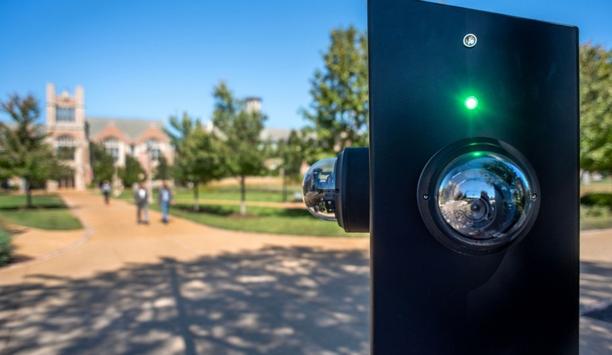
College campuses are meant to be places of learning, growth, and community. Fostering such an environment requires the deployment of policies and technologies that ensure safety and security. Considering the growing role of security technology in the higher education market, we asked this week’s Expert Panel Roundtable: What are the new applications for security technology in the college and university markets?

The design of buildings encompasses many elements, from the practical to the aesthetic. Well-designed buildings should be functional, and they can also be beautiful and inspiring. But can security systems and building design coexist and complement each other? We asked this week’s Expert Panel Roundtable: How does building design impact physical security systems -- and vice versa?

The Key To Unlocking K12 School Safety Grants
Download
Honeywell GARD USB Threat Report 2024
Download
Physical Access Control
Download
The 2024 State Of Physical Access Trend Report
Download
The Security Challenges Of Data Centers
Download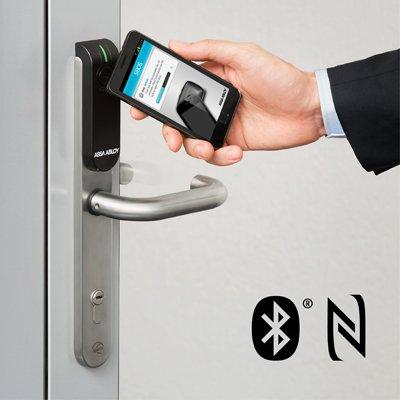
ASSA ABLOY - Aperio® Mobile access

ASSA ABLOY Aperio H100 Wireless Access Control Handle

ASSA ABLOY Aperio Wireless Locks