ACOEM - Experts & Thought Leaders





Latest ACOEM news & announcements

Acoem, a global pioneer in advanced acoustic threat detection solutions, announces the appointment of Mike ODea as Managing Director of its Acoustic Threat Detection (ATD) business. ODea brings more than 20 years of experience in public safety and physical security, with a focus on using emerging technologies to improve situational awareness and decision support. An expert in Smart and Safe Cities, he has led major video surveillance deployments and complex security integrations, with a particular focus on combining data from multiple technologies to support operators and first responders. Public safety agencies At Acoem, ODea will lead the growth of the ATD business and work to expand the use of its ATD technology among system integrators, public safety agencies, and enterprise security organizations. Acoem ATD builds on more than 30 years of acoustic technology development for military defense applications by Metravib Defense in its Protection Division. The system uses edge-based AI to detect and locate gunfire at the sensor and immediately direct a PTZ camera toward the source, giving security teams visual context alongside the initial detection. Modern physical security ecosystem “We’re very pleased to welcome Mike to lead Acoem ATD at an important point in the growth of the business,” said Frédéric Molliex, DCEO, Protection Division. “He brings a strong understanding of how technologies such as video, AI and acoustic detection need to work together to give security teams and first responders better situational awareness. Mike understands both the technology and the operational realities our customers face. That makes him the right person to build on Metravib’s 30 years of acoustic expertise and accelerate the adoption of Acoem ATD as an integral part of the modern physical security ecosystem.” Threat detection capabilities “I’ve spent much of my career bringing technologies together to give public safety and security teams better information when they need it,” said ODea. “That’s what drew me to Acoem ATD. The ability to detect and locate gunfire, immediately direct existing cameras to the source, and give those managing the response real-time information they can use is where I see real value. There is a significant opportunity to make acoustic threat detection a more established part of the security technology stack, and I’m looking forward to working with our integrator and technology partners to make that happen.” ODea will make his first major industry appearance with Acoem ATD at GSX 2026 (booth 4366), where the company will showcase its latest acoustic threat detection capabilities.

At ISC West 2026, booth #28039, Acoem will showcase the latest version of its ATD Gunshot Detection system, featuring an expanded acoustic intelligence engine capable of analyzing 96 distinct attributes of a gunshot event in real time. The 96-attribute framework reflects how modern gunshot detection has moved beyond simple loud-noise thresholds. Each acoustic event is evaluated across a broad range of waveform, spectral, temporal, and ballistic characteristics, such as impulse shape, rise time, spectral content, and shockwave geometry. This allows the system to distinguish true gunfire from environmental noise with greater precision, even in complex outdoor environments such as parking lots, campuses, critical infrastructure sites, and public venues. Critical infrastructure sites By performing this analysis directly on a single AI-powered sensor, Acoem ATD delivers immediate, validated alerts without relying on cloud processing, backend servers, or multi-sensor triangulation. Detection, classification, and localisation occur at the edge, enabling actionable intelligence in real time. “Not all gunshot detection systems analyze sound the same way,” said Timothy English, Managing Director at Acoem ATD. “Having 96 unique attributes reflects decades of acoustic research and real-world data. It allows the system to evaluate the full anatomy of a ballistic event rather than reacting to a handful of characteristics. That depth of analysis is what enables faster decisions and greater confidence when seconds matter.” Immediate situational awareness Acoem ATD’s AI-powered sensor and Cadence software tightly integrates with video management systems, transforming detection into immediate situational awareness. Upon confirming a gunshot, the sensor automatically slews a connected PTZ camera to the source of gunfire using open standards (ONVIF-S). Security teams receive both audio validation and live video of the scene, without manual intervention or delay. This automated camera response is especially critical in outdoor environments, where fixed camera coverage and human monitoring alone often leave blind spots. By directing PTZ cameras instantly, the system ensures that critical moments are captured as events unfold, supporting faster response and stronger post-incident investigations. Mission-critical environments Shown for the first time at ISC West, Acoem has developed an on-prem version of its Cadence software for mission-critical environments such as utilities, government, and remote facilities, where outside internet connections are restricted for cybersecurity reasons. Unlike other platforms that centralize control, Cadence gives organizations direct autonomy to monitor sensors, validate alerts, and manage deployments in real time. Unlike legacy gunshot detection architectures that require multiple sensors arranged in fixed meshes, Acoem ATD localises threats with a single sensor by analyzing both the muzzle blast and the ballistic shockwave of a projectile. This approach reduces infrastructure complexity while extending coverage beyond traditional perimeter boundaries, including shots originating outside fenced or controlled areas. Protecting temporary events Because intelligence resides on the device, the system is well suited for both permanent and portable deployments. Sensors can be installed on existing poles, infrastructure, or mobile security trailers, making it possible to protect temporary events, evolving risk areas, or remote locations without redesigning the network or adding server capacity. Acoem’s edge-based AI architecture is designed for noisy, unpredictable environments. The neural network continuously evaluates acoustic conditions and applies advanced denoising and pattern recognition techniques to isolate true ballistic signatures. Maintaining operational effectiveness This reduces false alarms while preserving sensitivity to real threats, even when background noise levels are high. By avoiding continuous audio streaming and limiting recordings to brief, event-triggered clips, the system also supports privacy-by-design principles while maintaining operational effectiveness. ISC West attendees are invited to visit booth #28039 to see how 96-attribute acoustic intelligence, edge processing, and automated PTZ control work together to close the gap between detection and response.

Acoem, a pioneer in advanced physical security solutions, announced that a large North American utility is utilizing its ATD Gunshot Detection system to protect critical infrastructure at multiple sites across the country. Over the past few years, utilities across the United States have faced a troubling trend: gunfire directed at electrical substations and other energy assets. Whether the intent is vandalism, sabotage, or reckless target practice, the results are the same. A single rifle round can destroy a million-dollar transformer that could take months to replace. This happens when the cooling fluid drains from the transformer. Once the fluid is lost, the unit quickly overheats and frequently ignites. Physical attacks on critical infrastructure A recent DHS Homeland Threat Assessment concurs, stating, “We assess that domestic and foreign violent extremists will continue to call for physical attacks on critical infrastructure in furtherance of their ideological goals…” One of the largest electric power and natural gas utilities in North America recognized this risk after a number of gunshot attacks on substations disrupted power to tens of thousands of customers. In one case, power was not restored for days, and a person dependent on life support equipment tragically lost their life. The challenge Before implementing a new solution, the utility needed to reassess how its security technologies worked together. Traditional security cameras were excellent for documenting clearly visible problems, but they could not reliably detect something as small as a bullet hole in a damaged transformer, leaving a critical awareness gap. The company’s challenge was not only detecting a gunshot but doing it fast enough to act before cascading failures occurred. Threats outside the perimeter In many cases, gunfire at substations originates from hundreds of feet outside the fence line. The sound of the muzzle blast may never reach the site, leaving only the supersonic ballistic wave as evidence of incoming rounds. A system limited to triangulating muzzle blasts within a perimeter would miss these long-range threats entirely. Integration with security cameras and VMS Facing these unique requirements, the utility sought a technology that could provide instant notification with video and audio verification. This capability was essential to confirm whether an event was malicious or accidental. Integration with the utilities existing video management system (VMS) was a requirement, while direct control of a pan-tilt-zoom (PTZ) camera would allow operators to focus immediately on the source of the gunfire and determine if an actual threat existed. "We needed immediate, accurate alerts to prevent catastrophic damage,” said the utility’s physical security program manager. “Whether a threat is close-range or from a high-powered rifle fired from hundreds of feet away, we needed a modern, self-contained, highly accurate system to provide a full picture.” The requirement of a closed, secure network Cybersecurity was another defining requirement for this utility. The company prohibits internet connectivity within its operational network, a strict “air-gapped” policy that rules out any cloud-based system. For these secure environments, any new security technology must operate entirely on-premises, integrating directly with existing video and access control platforms. Finding the correct solution To address the complex nature of the threats and meet these stringent demands, the utility required a specialized solution that avoided a full infrastructure overhaul. After extensive testing, the utility selected Acoem’s ATD (Acoustic Threat Detection) system. The company has now deployed numerous detection systems across multiple states and regions, with new installations continuing every week as part of an ongoing modernization plan. A principal reason behind choosing the Acoem ATD system was based on how the system works compared to legacy solutions. Instead of sending audio data from multiple sensors to a remote server, the Acoem sensor processes detection right on the device. When a gunshot occurs, it detects both the muzzle blast and the ballistic wave, confirming the event and calculating its location instantly. Cybersecurity requirements of restricted internet access Processing analytics on the edge is instant and gives operators the time they need to respond. That might mean rerouting power, isolating a substation, or taking a transformer offline before it fails. Having that situational awareness can make the difference between a quick repair and an extended regional outage. Acoem developed an on-premises version of its Cadence software specifically to meet the utility’s cybersecurity requirements of restricted internet access. The platform displays live maps, sensor health, and provides audio verification clips that allow operators to hear what the sensor heard while viewing the shooter’s position overlaid on the map. Cadence integrates directly with the utility’s Avigilon video management system. “Running software on-premises was non-negotiable,” said the utility’s program manager. “We needed the benefits of automation and analytics without exposing operational systems to the internet.” Situational awareness with eyes on target Detection is only half the story. Integration with a PTZ camera on site provides immediate visual confirmation. When a gunshot is detected, the sensor automatically commands the camera to pivot to the coordinates of the source. Operators can see what happened as it happens, even if the shooter is several hundred yards outside the fence line. In some locations, thermal or infrared cameras may complement the acoustic sensors to detect movement in tree lines or along rights-of-way. This pairing of acoustic and visual intelligence transforms response operations, allowing the utility security team to verify alarms in real time and coordinate with law enforcement or maintenance crews as needed. Hunters or vandals? In one recent example, the utility’s Acoem ATD system detected gunfire at a remote substation. Through the linked PTZ camera, operators quickly confirmed that the shots came from hunters outside the perimeter and that there was no threat to equipment or personnel. The team was able to assess the situation instantly without dispatching crews or contacting law enforcement. Scalability and integration flexibility The utility required open standards and interoperability. They did not want a proprietary system that locked them into a specific platform. The Acoem ATD system met that demand, integrating through APIs with their existing Avigilon infrastructure. Whether a site runs on VMSs such as Avigilon, Milestone, or Genetec, the ATD sensors connect seamlessly within the same ecosystem. Just as important, the solution had to scale. The utility began with a few high-risk sites and has expanded steadily without redesigning its network. This “start small, grow fast” approach aligns with how the organization evaluates, validates, and then standardizes new technologies. CIP-014 compliance and beyond The North American Electric Reliability Corporation’s CIP-014 standard mandates physical security measures for critical transmission substations, including threat detection. The utility wanted to go further. It set a new benchmark for awareness, resilience, and uptime. Acoustic threat detection is now a key component of its operational strategy, providing actionable intelligence that prevents damage rather than documenting it after the fact. A smarter path forward Protecting critical infrastructure today means recognizing that not every threat is digital. A single bullet can cause as much disruption as a cyberattack. The key is giving operators the real-time data they need to act quickly and decisively. By combining edge-based AI, on-premises software, and open integration with existing security systems, Acoem’s ATD system has given the utility company the situational awareness it needed to protect its assets and its customers. The system keeps vital equipment online, strengthens compliance, and helps safeguard the communities that rely on uninterrupted service. “Securing the grid now demands both digital and physical vigilance,” said the utility’s program manager. “Gunshot detection has become a critical layer of defense for the infrastructure that powers our daily lives.”
Insights & Opinions from thought leaders at ACOEM

The security landscape is undergoing a profound transformation, as evidenced by the innovations showcased at the ISC West Expo 2026. From dismantling of silos between physical and digital security to the ongoing transition to cloud and hybrid platforms, much of the discussion on the show floor was familiar, if somehow more urgent than ever. Clearly the industry is moving toward unified, cloud-native, and highly automated ecosystems. In a series of deep-dive meetings and demonstrations at the recent show, I got a first-hand glimpse of the future of the physical security marketplace. Spoiler alert: The future is now! HID Global: Tearing down the silos HID Global is addressing the long-requested convergence of physical and digital security. Recognizing that the industry has historically operated in silos, HID is now leading with a combined implementation team to leverage the power of both sides. HID is supporting the transition by combining its logical and physical security teams to help end users design secure, end-to-end journeys for their employees. By leveraging its massive existing footprint in physical access, HID is uniquely positioned to help organizations upgrade their cybersecurity posture without a total "rip and replace" of their hardware. HID is seeing a surge in demand for converged credentials that unite building access with digital identity. On the digital front, HID has implemented FIDO (Fast Identity Online) and passkeys to replace traditional passwords with more secure, biometric-backed authentication methods. Acre Security: Bridging the gap to the cloud Acre Security previewed a cloud-native video solution, reinforcing its cloud-first security strategyAcre Security is currently consolidating brands, bringing established names like Feenics and AccessIt under a single corporate umbrella. A primary theme for the company at ISC West is the migration of legacy systems to modern infrastructure. To facilitate the transition, they are launching "The Bridge," a technology designed to help on-premise customers transition to the cloud at a pace that suits their operational needs. The company is also expanding its portfolio into video. Attendees at the show received a preview of a new cloud-native video solution slated for release later this year, signaling Acre’s commitment to a holistic, cloud-first security suite. Acoem: Real-time acoustic threat detection With a 35-year foundation in vibration and acoustics—including military sniper detection—Acoem is providing gunshot detection through edge processing. Unlike systems that rely on the cloud and may suffer from latency, Acoem’s technology processes data at the sensor level for instant alerts. Their sensors are engineered for massive outdoor spaces, covering a 500-foot radius (roughly 11 football fields) and can detect high-powered rifle shots from up to half a mile away. The system provides critical intelligence by distinguishing between muzzle blasts and "mach noise" from bullet travel, delivering an audio file to the end-user that maps the location and direction of the threat. They use AI to filter out environmental false positives, such as skateboards hitting metal rails. Alarm.com: The all-in-one dealer ecosystem Beyond hardware, Alarm.com is leveraging AI to streamline the sales process Alarm.com is doubling down on "giving tools to dealers to help them be successful," with a focus on unified commercial solutions. A highlight at ISC West is their new fire communicator, which integrates fire monitoring into their single app, completing what they call the "fourth leg of the stool." The product allows fire systems to benefit from the same real-time customer engagement and push notifications that have long been available for intrusion and video. The key products, such as commercial-grade hardware, are now available for immediate purchase. Beyond hardware, Alarm.com is leveraging AI to streamline the sales process. Their new AI Proposal Builder uses customer meeting notes to automatically generate customized, value-driven sales proposals for dealers. Allegion: A global shift in credentialing Following the acquisition of ELATEC, Allegion is adopting a more global market approach and expanding its OEM business. The company is involved in the development of Aliro, the newly unveiled mobile credentialing standard. Allegion’s strategy is built on versatility: While Aliro serves the burgeoning mobile market, they also offer PKOC for plastic cards, allowing them to provide solutions regardless of the user's preferred credential type. The ELATEC acquisition has effectively filled previous gaps in their use-case portfolio, positioning them as a comprehensive provider for both physical and digital access needs. AtlasIED: Engineering for life safety Transitioning from audio to a fully automated threat detection company, AtlasIED showcased its new IPX line at ISC West. This modular platform uses a single PoE++ port to power various "plug-and-play" modules, allowing for easy system upgrades. Their gun detection technology achieves a 99% confidence rating by "stacking" AI models; it cross-references audio data with infrared signatures to detect muzzle flashes and air quality sensors for particulates. With systems already running in 80% of U.S. international airports, the company maintains 24/7 domestic engineering support to manage these "life-safety adjacent" environments. Axis Communications: Unifying connectivity Axis Communications is advancing network video with 4G/5G surveillance, reducing cabling needs Axis Communications continues to lead in network video, with a new focus on offering surveillance through 4G and 5G networks to eliminate the need for extensive cabling in long-range applications. Axis also introduced several specialized hardware pieces, including the P1486-LE global shutter camera for high-speed traffic monitoring and the Q2802-TE, which integrates thermal and visual monitoring into a single unit. To assist technicians, they launched a new installer app that uses Bluetooth for easier camera pairing and management directly from a mobile device. Axon: De-escalation through enterprise wearables Focusing on frontline safety, Axon is expanding from law enforcement into the enterprise sector with its retail and healthcare-focused body camera. Weighing only 0.25 lb, these cameras are designed to be less intimidating, using colorful designs and acting as a primary de-escalator for aggressive behavior. A clear front display signals when recording is active, striking a balance between safety and a non-intimidating appearance. These devices feature live-streaming and panic alarms that connect workers to a Global Security Operations Center (GSOC). To ensure the footage is legally viable, Axon maintains a rigorous audit trail that authenticates every action recorded. Genetec: The value of the unified platform Genetec is advocating for unified platforms that reduce the time between incident detection and resolution. They argue that AI is becoming a commodity and that the true value lies in unified platforms that reduce the time from incident to resolution. Their approach emphasises the "outcomes" customers need, such as allowing security teams to coalesce around an investigation quickly. Genetec remains a strong supporter of open systems for enterprise customers, ensuring they have the choice to integrate diverse technologies rather than being locked into a manufacturer’s “walled garden.” This flexibility is critical for high-end security environments that require tailored, responsive systems. Johnson Controls: Large-scale enterprise solutions Johnson Controls has made a significant push into the enterprise video market with C-Cure IQ, a standalone VMS designed for major hubs like airports and large campuses. Through a partnership with Scylla, they have integrated 11 advanced analytics—including facial recognition and weapons detection—directly into their cameras. They also showcased new multi-sensor panoramic cameras capable of "stitching" multiple images into a single 360-degree view. While innovating in video, Johnson Controls also confirmed modern upgrades to their intrusion line, including their legacy DSC Neo line. The new DSC PowerSeries Neo 5, a high-end residential and commercial platform, features an all-new user interface and built-in PowerG+. They have also begun shipping the IQ5 family lineup, which is powered by a Qualcomm DragonWing processor. ONVIF: Standardising the future of AI and cloud ONVIF continues to lead the charge in establishing common languages for the security industry. A major focus is their new "Cloud Profile," which enables cameras to connect directly to the cloud through a standardized protocol. They are also expanding into audio standards to ensure IP-based speakers can seamlessly connect to Video Management Systems (VMS). To combat the rise of sophisticated digital manipulation, ONVIF is developing "video signing" standards. ONVIF is actively seeking more diverse enterprise participation to help shape these emerging AI standardsThis feature protects the integrity of video for evidentiary purposes by embedding a digital signature and timestamp directly into the footage at the camera level. Additionally, the organization has formed an AI Working Group to develop common communication methods for "AI agents" within physical security systems. ONVIF is actively seeking more diverse enterprise participation to help shape these emerging AI standards. Roberto Licari is the new ONVIF Ambassador, seeking to attract new companies (even outside the security sector) to ONVIF as they look to expand their offerings. SwiftConnect: Bridging digital and physical identity SwiftConnect is redefining access control by shifting the focus from physical cards to digital identity. As a cloud-based "connected access network," the platform bridges the gap between IT identity providers (like Okta or Azure AD) and legacy physical access control systems. At the show's Security Experience Center demonstrations, SwiftConnect showcased its ability to integrate mobile credentials within Apple and Google Wallets across multiple technology platforms. By aligning physical security with Zero Trust principles, they ensure that access is governed by the same rigorous standards as digital networks. Their software-centric approach allows for a more seamless employee experience while simplifying the management of complex, multi-site building security. This emphasises a future where the mobile device becomes the primary tool for navigating the physical workspace. Wasabi Technologies: Redefining cloud storage economics With cloud technology becoming a baseline requirement at every booth, Wasabi Technologies highlighted its "hot cloud storage" as a cost-effective alternative to major hyperscalers. Their model claims to be 80% less expensive than competitors, notably removing hidden fees. Wasabi is increasingly bundled at the "back end" of security solutions through partnerships with integrators and end users. A key feature for law enforcement and high-security sectors is their "Object Lock" capability, which ensures that video evidence remains untampered with and immutable during defined retention periods. By providing high-performance storage without the unpredictable costs typically associated with the cloud, Wasabi is positioning itself as the foundational layer for data-heavy video surveillance applications that require long-term, secure retention. Wasabi is positioning itself as the foundational layer for data-heavy video surveillance applications ZKTeco USA: Versatile and integrated access ZKTeco USA showcased a range of integrated solutions, including turnstiles, visitor management, and access control. Their Atlas access control series offers versatility, supporting everything from traditional readers and keypads to QR codes and fingerprint scanning, with the flexibility to operate on-premise or in the cloud. For tight environments, they introduced the Mars 100 turnstile, which features a compact 2x3-foot footprint. They also highlighted the Omni series, an all-in-one standalone reader-controller that manages access, intercom, and visitor functions in a single device. Innovation in portability was evident in their new walk-through metal detectors, which consist of two poles with an 8-hour battery life—ideal for schools and temporary events. While they offer their own Armatura readers, ZKTeco emphasized that their solutions can integrate with other industry leaders to fit diverse customer needs.
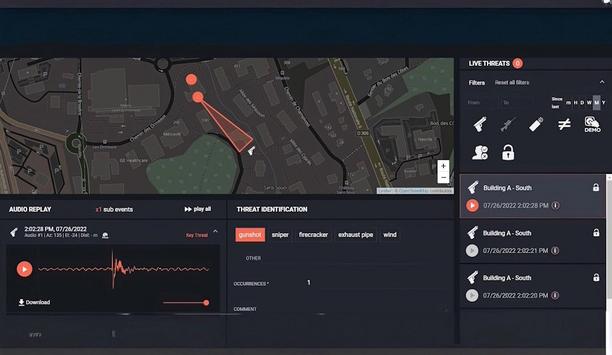
Gun violence remains one of the most unpredictable threats in today’s physical security landscape. When it strikes, seconds matter. The ability to detect and respond to gunfire almost instantaneously can determine outcomes. Security pioneers and first responders know this, and yet too many gunshot detection systems in operation today are shackled by outdated assumptions and aging architecture. The demand now is not for incremental improvements, but for a complete rethinking of how these systems function. Prevailing model For years, the prevailing model has relied on server-heavy frameworks and complex sensor networks that introduce unnecessary latency and complexity. Systems that depend on sending audio data to remote servers for analysis are inherently slower. In a live gunfire situation, waiting even a few seconds for confirmation can be the difference between life and death. The expectation in 2025 is clear: detection and actionable intelligence must occur in real time, with no delays. Edge-based intelligence: The new standard Deploying three or more sensors to cover an area imposes significant cost and operational burdens To minimize points of failure and latency, the future of gunshot detection lies in edge processing. Intelligence must reside inside the sensor itself, not in a data center or a remote server. Edge-based acoustic sensors can now detect and geolocate gunshots in under three seconds without external dependencies. They do not require triangulation or corroboration from multiple devices. One sensor, one shot, one instant location—that is the new standard. Consider the limitations of traditional perimeter-based systems. Deploying three or more sensors to cover an area imposes significant cost and operational burdens. Maintaining this infrastructure often means trade-offs in coverage and flexibility. For example, if a detection system can only triangulate within a ring of sensors, there will be no information available for shots fired outside this restricted perimeter, even from a short distance away. Worse, these older models are prone to false positives triggered by fireworks, construction noise, or other environmental sounds. Each false alert erodes confidence in the system and burdens response teams unnecessarily. Contrast this with modern edge-AI sensors that not only detect the muzzle blast of a firearm but also analyze the ballistic wave of a hypersonic projectile in motion. This dual-signature capability delivers a level of accuracy far beyond what older systems can offer. When a shot is fired, the sensor detects, classifies, and pinpoints the event almost instantly. There is no reliance on back-end processing or corroborative triangulation. The sensor acts autonomously and decisively. Real-time response with visual confirmation The level of integration changes gunshot detection from a passive alerting tool into an active part These advancements do not stop at detection. Integration with existing security infrastructure is crucial. Modern sensors leverage open standards such as ONVIF Profile S to control pan-tilt-zoom (PTZ) cameras directly. As soon as a gunshot is detected, the sensor can automatically cue a camera to the exact coordinates of the event. This process happens in less than three seconds, giving operators live visual intelligence of the situation as it unfolds. The days of security personnel scouring multiple camera feeds or responding to vague reports are over. Today, they can focus their attention on the precise location of the threat. This level of integration transforms gunshot detection from a passive alerting tool into an active part of situational awareness. It provides command centers and first responders with actionable intelligence, enabling them to make informed decisions in real time. It is not enough to know that a shot was fired; security teams need to see where it happened and assess the scene immediately. Adapting to the environment Environmental adaptability is another area where modern edge-based systems excel. Acoustic detection has long struggled with ambient noise. Urban environments are filled with loud, impulsive sounds that can easily be mistaken for gunfire. However, edge-AI sensors can now be trained to understand the acoustic profile of their specific environment. They learn what constitutes normal background noise and adjust accordingly. If a venue frequently hosts fireworks displays or is situated near construction zones, edge-processed AI systems can be trained to differentiate those sounds from genuine threats. This site-specific learning dramatically reduces false positives and enhances overall system reliability. Flexibility in deployment A single intelligent sensor can now provide broad coverage with minimal setup Flexibility in deployment is equally important. Today’s security needs are not confined to permanent installations. Large public events, temporary venues, and rapidly evolving threat environments require portable solutions. Edge-based sensors can be deployed on mobile platforms such as trailers or temporary masts, providing high-precision detection wherever it is needed. Because all processing occurs at the edge, these mobile systems do not rely on centralized servers to function effectively. The sensor is the system. This shift represents a fundamental change in how security professionals approach gunshot detection. The industry is moving away from reactive, infrastructure-heavy models toward proactive, efficient, and adaptable solutions. A single intelligent sensor can now provide broad coverage with minimal setup. It detects, locates, and visually confirms threats autonomously. Interoperability further enhances the value of modern systems. By embracing open protocols, these sensors integrate seamlessly with existing video management systems (VMS) and security platforms. Organizations are no longer locked into proprietary ecosystems. They can deploy best-in-class solutions that work together harmoniously. This openness accelerates deployment and reduces friction, a critical advantage when securing dynamic environments on tight timelines. Privacy by design Alert signals contain location, timing, and sound type data only with no continuous listening Privacy concerns are front and center in any surveillance deployment and the thought of an audio listening device can raise eyebrows. Modern gunshot sensors are event-driven and only share short recordings (such as a 1.5-second clip for verification) triggered by gunshot levels (over 100 dB). Conversations and other ambient audio are neither captured nor stored. Alert signals contain location, timing, and sound classification information only with no continuous listening or streaming. Closing the gap between detection and response Ultimately, doing gunshot detection right demands a new mindset. Edge processing is not a technical novelty; it is an operational necessity. Security pioneers must expect and demand more from their detection systems—faster alerts, smarter filtering, real-time visual confirmation, seamless integration, and scalable deployment. The technology to achieve this exists today. High-accuracy, real-time gunshot detection is not a future promise; it is a present reality. The responsibility now lies with the industry to embrace this better way forward. Communities and the professionals who protect them deserve solutions that rise to meet today’s challenges with intelligence, speed, and precision.









