Security camera systems - Round table discussions

Casinos are tasked with monitoring vast gaming floors, cashier cages, and access points. The market for casino security and surveillance demands software and hardware that provide high-definition, multi-angle visual coverage to ensure the integrity of the games and to protect players, staff, and the public. Like other vertical markets for physical security technology, the casino market is undergoing change and facing challenges. We asked our Expert Panel Roundtable: How are new technologies...

Like other disciplines in the world of corporate security, executive protection is evolving from reactive to proactive. Unlike reactive bodyguards, modern executive protection professionals use a proactive approach focused on risk mitigation, advance planning, and threat intelligence to prevent incidents before they happen. What is the role of technology? We asked our Expert Panel Roundtable: How can physical security technology promote better executive protection?

Adequate video surveillance coverage depends entirely on a facility's layout, square footage, and security goals. Historically, better coverage required more cameras, but technology innovations are changing those expectations and undermining previously held rules of thumb. We asked our Expert Panel Roundtable: Do today's video systems generally require more cameras or fewer cameras, and why?
Installing physical security systems requires integrating diverse technologies (e.g., cameras, access control, alarms) that often use different protocols and must be adapted to a building's unique physical layout and legacy infrastructure. Specialized technical expertise is required for seamless networking and proper configuration. Hopefully, no important factors are overlooked in the installation process. We asked our Expert Panel Roundtable: What is the most overlooked factor when inst...

Emphasizing proactive rather than reactive security shifts the focus from dealing with crises and damage control to prevention. Advantages of a proactive approach include cost efficiency, better business continuity, and fewer crises that draw attention away from strategic improvements. Staying ahead of threats is a core mission of the security department, and technology has evolved to enable security professionals to deliver on that mission better than ever. We asked our Expert Panel Roundtable:...

The role of audio in physical security is multifaceted and increasingly vital, offering a layer of intelligence and interaction that access control and/or video surveillance alone cannot provide. Sounds provide crucial context to visual events. For instance, someone running might appear suspicious on video, but audio could reveal they are shouting for help, changing the interpretation entirely. Even so, historically speaking, audio has been an underused component in physical security. How is the...
Port forwarding is a networking technique that allows incoming traffic on a specific port number to be redirected to a particular device or application on a local network. Open ports on the network expose an IP video system to the internet. This makes it a potential target for malicious cyberattacks. In the physical security industry, the elimination of port forwarding is seen as a basic and manageable precaution to shore up cybersecurity. We asked this week's Expert Panel Roundtable: What are t...

The most common wearable device deployed by security professionals is the body-worn camera. Traditionally used by law enforcement professionals, these devices are finding more and more uses in the corporate security world, and even impacting issues such as customer service. However, the term “wearables” also encompasses a range of other devices, including many worn by consumers. We asked this week’s Expert Panel Roundtable: How are wearable technologies impacting the security m...
College campuses are meant to be places of learning, growth, and community. Fostering such an environment requires the deployment of policies and technologies that ensure safety and security. Considering the growing role of security technology in the higher education market, we asked this week’s Expert Panel Roundtable: What are the new applications for security technology in the college and university markets?
Transportation enables the movement of goods and people, facilitates trade and commerce, and is crucial for businesses to operate and expand. Security technology plays a major role both in protecting today's various transportation systems and increasingly to make them more efficient. We asked this week's Expert Panel Roundtable: What’s new in technology serving the transportation market?

Audio might detect sounds like breaking glass or footsteps before a person even enters the field-of-view of a video camera. Audio also helps to provide context: Someone running in a video image might be suspicious, but the situation is different if they are yelling for help. Furthermore, audio enables operators to talk remotely to people on site, which can deter crime, de-escalate situations, or gather information. And yet, optimizing audio is often an overlooked aspect of physical security syst...

In today's interconnected world, the lines between physical and digital security are blurring. This means that threats can easily exploit vulnerabilities in both realms, potentially causing significant damage. That's why the convergence of cyber- and physical security systems is becoming increasingly important. It has already been a topic of discussion in the security market for more than a decade. To get a reality check, we asked this week’s Expert Panel Roundtable: Has convergence been a...

Edge devices play an important role in the Internet of Things (IoT) by enabling real-time data analysis, faster decision-making, and improved operational efficiency across various industries. In the physical security industry, applying artificial intelligence (AI) capabilities to edge devices expands the possibilities, and edge devices offer complementary functionality to support movement to the cloud. We asked this week’s Expert Panel Roundtable: What are the latest developments for edge...

Video surveillance has been a dominant factor in the casino market since the 1950s when video replaced the use of elevated walkways that allowed casino security personnel to monitor the gaming floor from above. As technology continues to evolve, we can expect to see more innovative uses of video in the casino market. Beyond video, other technologies are also transforming the casino experience. We asked this week’s Expert Panel Roundtable: How are new technologies impacting the casino surve...

Cloud implementations enable organizations to slash IT costs, boost performance, increase efficiency, and provide flexibility in a variety of applications. Cloud computing is a great way to store and access data from anywhere in the world, as long as you have an internet connection. In the case of video management, Video Surveillance as a Service (VSaaS) systems are becoming more popular, both as a means of managing costs and to deliver expectations of accessing video from any device anywhere in...

Video storage has come a long way since rooms full of VCRs stored video from an entire system of cameras. Video storage equates to data storage, and there are multiple options ranging from hard disk storage to the cloud to storage on each individual camera using SD cards. Increasingly, cloud-based storage is an attractive option to store video footage conveniently and safely. We asked this week’s Expert Panel Roundtable: How is expansion of video storage capabilities impacting the security...

Headlines of violence in our schools are a reminder of the need to keep educational institutions safe. In fact, if there is a positive aspect to the constant bombardment of headlines, it is that it keeps our attention perpetually focused on how to improve school security. But what is the role of physical security systems? As the new school year begins, we asked this week’s Expert Panel Roundtable: Are schools safer because of physical security systems? Why or why not?

As physical security technologies become more complex, it is incumbent on the dealer/integrator to have the skills and expertise needed to ensure that a system operates smoothly. The value of integrators increasingly rests on the skill sets they bring to bear when installing a system. If the skills are missing, there is a problem. We asked this week’s Expert Panel Roundtable: What missing skills among security integrators can cause problems for customers?

Driving the smart homes market is the convenience of simple technology solutions. Almost every home now has a “smart speaker” that makes it easier than ever for homeowners to interface and control their technology. But where does security fit into the new landscape of smart home systems? We asked this week’s Expert Panel Roundtable: What’s new in smart homes and residential security systems?

Historically, the emphasis of security systems has been on reactivity, whether it’s providing video evidence of an incident or data to support a resulting investigation. Reactivity is core to impactful security, but increasingly, systems are also seeking to be more proactive. A proactive system seeks to prevent events from happening in the first place, thus mitigating the harm to an organization, and making the need for a reactive response moot. We asked this week’s Expert Panel Roun...
The role of the integrator/installer in the physical security marketplace is shifting as technologies evolve and applications expand. Integrators are being faced with a need to augment their expertise both in a wider range of systems and deeper into the specifics of each increasingly complex technology. At the end of the day, it falls to the integrator/installer to ensure a system performs as promised, however much a consultant or even a manufacturer might be involved in the process. We asked th...

Deployed across a wide range of devices, the Internet of Things (IoT) collects data to help business owners make decisions on a macro scale as well as at a granular level. The IoT is a network of physical devices embedded with sensors, software, and network connectivity that allows them to collect and share data. We called on this week's Expert Panel Roundtable to comment on the intersection of the IoT and physical security. We asked: How is the Internet of Things (IoT) increasing the effectiven...

Analog video cameras are still used in a variety of applications, primarily because yesterday’s robust and flexible technology is still functioning today, although it has been years, or even decades, since the initial installation. In many cases, this past generation of security cameras is still reliable and effective. Embracing an installed base of analog cameras is often the most cost-effective approach when updating or expanding a surveillance system. But what about the future? W...

Time flies in the busy world of security, so it’s no surprise that the midpoint of 2023 comes before know it. Let’s pause after the first half of the year to look ahead at what can expect during the second half (Hint: It’s all about AI). We asked this week’s Expert Panel Roundtable: What will likely be the most important technology development in the security marketplace in the second half of 2023?
A sad irony in the physical security industry has been the lax attention paid historically to the cybersecurity elements of our industry’s systems. However, the picture has improved starkly in recent years as manufacturers have stepped up to meet the cybersecurity challenges and awareness of the issue has become much higher. We asked this week’s Expert Panel Roundtable: What's new in cybersecurity for physical security systems?

Integrators and installers are on the front line of creating most security systems. They are also usually the first point of contact if there is a problem with the system. In general practice, many end users deal with integrators and seldom if ever speak to the manufacturer. Should it be that way? We asked this week’s Expert Panel Roundtable: Why does a manufacturer need a direct relationship with an end user?

Protecting video involves many of the same strategies and protocols as those used to protect any other type of data. In the world of IP cameras and systems, video can be transmitted anywhere in the world to anyone who needs to see it. But what about access by outsiders who are not authorized to view the video? Or what if heaven forbid, the video is accessed by an unauthorized user who later posts it to YouTube? We asked this week’s Expert Panel Roundtable: What safeguards are in place...

Environmental, social, and corporate governance (ESG) standards in the broader marketplace reflect a growing recognition that business needs to lead the way in addressing a range of environmental and social issues. Environmental concerns, especially as they impact climate change, are a familiar facet of business life. In addition, social concerns include human rights and equity; basically, an organization's relationships with people. Governance refers to the structure of rules, practices, and pr...
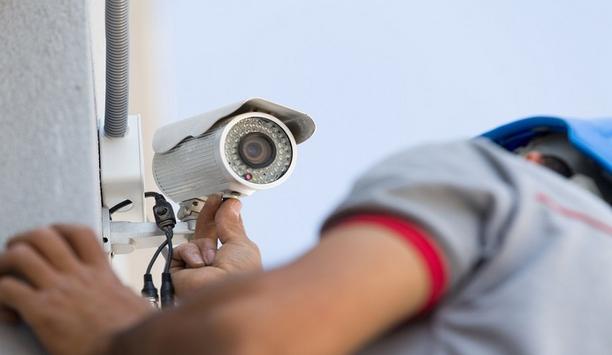
Every security system is unique, of course. Specific to each installation are the problems the customer and the integrator may experience along their journey. However, given the installation of hundreds of physical security systems, there are commonalities that occur. We asked this week’s Expert Panel Roundtable: What are the major pain points when installing a physical security system?

Big Data is a persistent buzzword in the broader technology realm and in the physical security market. More every year, it seems we see a greater impact of the compilation of numerous data sources (Big Data) on our market. Smart leaders in the industry are looking at the vast opportunities that exist to leverage Big Data into greater intelligence and situational awareness. We asked this week’s Expert Panel Roundtable: What is the intersection of the security market and "big data?"