GDPR

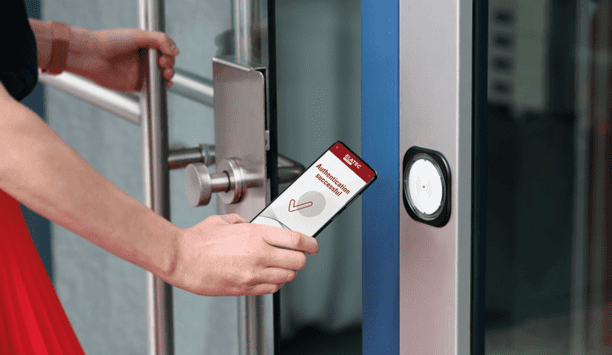
Skanska CDE, a developer of modern office buildings across Central and Eastern Europe, has implemented a digital wallet access control system at its Studio A office building in Warsaw, as part of a growing shift among commercial buildings toward wallet-based credentials as the default. Aimed at removing the friction of separate access apps for employees, tenants and guests, the deployment is built on the company's proprietary StudioApp web application and HID Origo Web Provisioning, a cloud-bas...

Euralarm and the Confederation of European Security Services (CoESS) have published an updated edition of their Cybersecurity Guidelines for the Security and Fire Safety Industry. The revised publication provides practical guidance for organizations across the sector as cybersecurity becomes an increasingly important operational, technical and regulatory requirement. The growing connectivity of fire safety and security systems brings significant benefits, including remote monitoring and mainten...

Cybersecurity operations are evolving at the speed of a fibre-optic lightning storm. Security teams are dealing with cyberattacks, increasingly complex IT environments, and a flood of alerts that can bury analysts beneath digital noise. In response, many organizations are turning to AI-powered Security Operations Centre (SOC) to improve threat detection, automate response processes, and strengthen resilience. Yet one important question remains: can AI-powered SOC meet strict regulatory and comp...
Security Operations Centres (SOC) are evolving at a remarkable pace. What once relied heavily on manual investigation and rule-based monitoring is now increasingly powered by artificial intelligence, machine learning, and automation. As cyber threats grow faster, more evasive, and more sophisticated, organizations are under pressure to modernise their SOC capabilities without sacrificing visibility, compliance, or operational control. For Chief Information Security Officers, choosing the right...

With the new Privacy Mode, Dallmeier is expanding its video solution with a powerful data protection feature: Operators can centrally and temporarily disable image capture, recording, and image output – system-wide or in defined sub-areas. At the same time, the activated Privacy Mode is clearly indicated directly on the cameras. With the new Privacy Mode, Dallmeier is focusing above all on ease of use: The feature allows operators to temporarily disable image capture and recording for the...

Antare, a new agentic security platform for body-worn and fixed cameras, has launched. UK-based Antare uses artificial intelligence to automatically review security footage, detect incidents, alert teams, and document every event, transforming everyday operations into actionable insight that helps improve performance and reduce operational risk. The platform is compatible with both Antare’s intelligent body-worn cameras and customers’ own existing fixed camera infrastructure. Antare...
News

iDenfy, a global RegTech company focusing on identity verification and fraud prevention solutions, announced a new partnership with the Legaline platform, the UAE’s first LegalTech service platform. By integrating iDenfy’s automated identity verification and Anti-Money Laundering (AML) screening into its client onboarding flow, Legaline can now virtually verify clients from any country in real time. This supports the Safe Deal payment system, where client funds are held and released only once both parties sign a closing act, so clients pay only for completed work to build trust between clients and UAE-licensed lawyers. Client onboarding flow Legal services in the UAE operate in one of the most jurisdictionally complex markets in the world, which include federal legislation, seven separate emirate-level systems, two common-law financial centers in the DIFC and ADGM, and more than a dozen additional zones. According to recent UAE statistics, foreign nationals make up close to 88 percent of the country’s population in 2026, so most people that needs for a legal help in the UAE are newcomers who do not know which court has jurisdiction, which lawyer to trust, or what a fair fee looks like. Legaline platform describes itself as an ecosystem rather than a single product. It combines three layers into a single operating system for legal work in the UAE. Firstly, an AI layer provides citation-grounded legal research and document drafting, built on a lawyer-validated corpus of primary UAE law. Secondly, a marketplace layer that matches structured legal tasks with verified, UAE-licensed lawyers. Third, a trust layer, called Safe Deal, that holds client funds through Stripe and releases them only after both parties sign a closing act, so clients pay only for delivered work and lawyers can start knowing funds are already reserved. Identity verification solution That structure only works if every client on the platform is who they say they are. Lawyers commit real professional time to each engagement, and they will only do so consistently if every request comes from a verified, real person identity. This is where iDenfy came in to help with its identity verification solution that can verify identity documents from every country through a single flow, supporting over 16,000+ document types across more than 200+ countries and territories. Legaline draws people from virtually every country in the world who present passports, national identity cards, and residence documents from a wide range of issuing states. Information security management “Legaline is solving a genuinely hard problem, connecting clients and lawyers across one of the most complex legal markets in the world. Our role is straightforward. Every client on their platform needs to be verified quickly and accurately, no matter which country issued their documents, so that trust can be established from the first interaction,” said Domantas Ciulde, the CEO of iDenfy. Security carries particular weight in the decision. Identity documents are among the most sensitive data a person can share. iDenfy holds ISO 27001 certification for information security management, maintains full GDPR compliance, and undergoes regular audits of its data-processing practices to provide Legaline a way to answer client questions about documents safely. Distinguishing genuine submissions Behind the automation, iDenfy’s internal team of specialists works 24/7 to review flagged registrations by distinguishing genuine submissions affected by poor lighting or framing from those that show real signs of fraud. That human layer, combined with automated checks, keeps the onboarding process fast and smooth to verify an unlimited number of users and save costs, as iDenfy only charges per successful verification, rather than for every authentication flow. Before choosing the ideal identity verification provider, Legaline evaluated several companies and cited fast integration in hours rather than days as a deciding factor to go with iDenfy. “Bringing iDenfy in as our identity verification partner was not a hard decision. Legal work runs on trust, and in the UAE, where most of our clients are newcomers, that trust has to be built into the platform itself rather than earned slowly through referrals. iDenfy lets us verify clients from any country in the world through a single flow, which means our lawyers can take on a new client with confidence from the very first message,” said Dmitry Grinik, the Founder of the Legaline platform. Major international sanctions Beyond identity verification, Legaline also uses iDenfy’s AML screening to support compliance around its Safe Deal system, checking clients against major international sanctions and watch lists as part of the due diligence required whenever real money moves through the platform. In addition, lawyers on Legaline are also verified separately; the platform’s own onboarding process is built around UAE legal licensing and Stripe’s KYB onboarding, so every engagement on the platform runs between a KYC-verified client and a licensed, KYB-verified lawyer. That combination has already resolved three practical problems for Legaline. It closed the client side to verify their identities and replaced a patchwork of manual checks with one flow. It also reinforced the integrity of the marketplace itself, since lawyers now know their time will not be wasted on anonymous or fraudulent requests, which is what makes credible professionals willing to work through a digital platform at all. And it gave Legaline a level of compliance readiness that meets payment-partner and regulatory expectations from the start.

HID announces that its hardware-based HID ATOM™ document reader and HID U.ARE.U® facial recognition module have been integrated with Soloinsight's CloudGate™ visitor management and physical identity and access management (PIAM) platform to enhance the self-service visitor check-in kiosk from Connected Technology Solutions (CTS). Designed for global enterprises and critical infrastructure environments, the integration enables organizations to verify visitor identities before issuing access credentials while creating a consistent, auditable visitor management process. Facilities such as hospitals, data centers, offices and logistics hubs often manage hundreds of contractors, vendors and visitors each day, yet most check-in processes verify little more than a name. A visitor can type any name into a tablet or present a photo ID that a receptionist has no way to authenticate which means the person issued a badge may not be who they claim to be. Combining document authentication For regulated or high-risk facilities, that unverified access creates real exposure: unauthorized individuals gaining entry, gaps in the audit trail when an incident occurs and compliance failures when organizations cannot prove who was on site and when. By combining document authentication, facial verification and visitor management into a single solution, the kiosk helps security teams streamline visitor processing, reduce manual identity checks and maintain detailed records for compliance and investigations. A host pre-registers their visitor in CloudGate, which sends an email invitation with a QR code to the visitor. At the kiosk, the visitor scans the QR code, then verifies their identity through the HID ATOM document scanner, which reads passports, driver's licenses and mobile IDs. The HID U.ARE.U Face Module runs live face verification and rejects any scan that does not match the identity document or is not a live face. Reporting and regulatory compliance CloudGate confirms check-in, the kiosk prints a visitor pass on the spot and the host is notified. Returning visitors can also be granted a hostless welcome where appropriate. Following identity verification, CloudGate records each transaction in a centralized visitor record, providing security teams with a complete history of visitor activity that supports investigations, reporting and regulatory compliance. Dedicated technical support Key differentiators: Improved identity assurance. Unlike phone cameras, which depend on lighting, struggle to read embedded security features and carry a higher risk of fake IDs and misreads, HID ATOM captures the encoded data strip on passports and IDs, barcodes and RFID or NFC chips. It also detects document integrity features and produces a consistent scan every time. One scanner, any credential. A single HID ATOM reader accepts QR codes, passports, driver's licenses and mobile IDs, so visitors move through check-in without switching devices or lanes. Compliance built into the record. CloudGate produces audit-ready evidence across 40-plus frameworks including HIPAA, GDPR, SOC 2 Type II and ISO 27001, helping organizations maintain documentation that supports ongoing compliance and audits. Built to elevate existing investments. Native support for HID Signo readers and mobile credentials extends current HID deployments, while CloudGate overlays existing access control vendor-neutrally with roughly 30 physical access control system (PACS) connectors and 150-plus integrations across IT, HR, identity and access management (IAM) and security information and event management (SIEM). US-built with enterprise-grade support. Engineered and fabricated at the CTS Wisconsin headquarters and backed by a three-year warranty, dedicated technical support, white-glove installation and full ADA compliance.
Keepit, a SaaS data protection provider, announces AI Truth Cloud, the next evolution of its platform, transforming backup from a compliance requirement into the most trusted, strategically valuable data asset an organization can hold. As AI agents take on business-critical decisions, AI Truth Cloud positions Keepit as the sovereign source of truth that enterprise AI can safely build on: data that is verifiable, governed, immutable, and proven. Keepit holds something AI vendors cannot replicate: a complete, sovereign, immutable, and tamper-proof copy of an organization’s data - every version, across the protected application - stored in a vendor-independent cloud that no third party influences. That independence is the foundation of the “truth”: The AI Truth Cloud enables organizations to verify the authenticity, provenance, and integrity of data before it is ingested into any AI system, ensuring that the AI reasoning over their business is reasoning over data they can actually trust. Complete data foundation Enterprise data protection has evolved steadily from tape-based backup to disaster recovery and cyber resilience. With AI Truth Cloud, Keepit establishes the next step: from passive backup to a proactive trust fabric for verified, governed, and sovereign data. “Organizations are making high-stakes decisions based on what their AI tells them. But data that can’t be verified shouldn’t be acted on. AI Truth Cloud gives enterprises an independent, tamper-proof, and provably complete data foundation - one that AI can safely reason from, one that organizations can prove the integrity of and roll back to a known-good state from when a decision goes wrong. Verifying the truth before you act, and recovering it when you didn't. That is what it means to own the truth,” said Frederik Schouboe, Co-founder and Chief Visionary Officer at Keepit. Enterprise trust fabric The AI Truth Cloud platform is organized around five pillars: Protect; Observe; Recover; Prove; and Integrate. These replace the backup and recovery story with a complete framework for data trust. Three core capabilities form the immediate roadmap foundation: AI Connector Backup extends Keepit’s proven data protection to the AI tools enterprises already depend on - including agent configurations, AI skills, projects, and models - with point-in-time restore for any AI asset. That same immutable foundation becomes the verified recovery point when an AI agent behaves unexpectedly or is compromised. Keepit MCP (Model Context Protocol) platform is designed as a headless API layer that connects Keepit to any AI tool or workflow. It enables AI systems to query, audit, and interact with managed data programmatically. It positions Keepit not as a passive repository, but as an active node in the enterprise trust fabric. Keepit AI Safe Room addresses one of enterprise AI’s most pressing risks: running AI models directly on live production data. AI Safe Room provides an immutable Keepit copy of data as a pristine, isolated environment for AI training, inference, and testing, without putting production data at risk. If a model, prompt, or agent produces unintended results, it’s possible to do a full rollback: production remains untouched and recovery is immediate. Looking ahead, Keepit is developing additional capabilities across all five pillars - including AI agent behavioral monitoring, automated compliance evidence generation, cryptographic data provenance, and AI-powered threat rollback - each extending the platform’s role as the trusted data layer for enterprise AI. Building on a growing foundation AI Truth Cloud is not a change of direction for Keepit, it is the next frontier made possible by Keepit’s growing data foundation. Keepit will continue expanding connector coverage as organizations transition to AI-driven and agentic workflows, with protecting the data AI agents create and consume representing the next wave of protection needs. Alongside this, Keepit is introducing an ISV partnership strategy enabling software vendors to embed sovereignty, immutability, governance, and trusted AI capabilities directly into their own products through deep integrations with the Keepit platform - establishing Keepit as the underlying trust layer across the enterprise software ecosystem. For Keepit customers already running AI on a verified data foundation, that shift is not theoretical: “Knowing that our AI is working from a verified, immutable source changes the conversation from risk management to competitive advantage. Keepit has become a foundational part of how we think about data integrity for AI,” said Tom Hicks, Senior Manager, Identity, Quanta Services. Detailed capability announcements Keepit's channel partners are seeing the same demand from their own customers. "Our customers - especially in the public sector - are asking how they can use AI responsibly and demonstrate that to regulators. AI Truth Cloud changes that conversation from aspiration to practice. With an auditable, protected data layer built in, we can help organizations deploy AI at scale without compromising on governance or recoverability," said Jonny Scott, Head of Cyber Advisory, Phoenix More detailed capability announcements, roadmap milestones, and partner program updates will follow in subsequent releases.

Keepit, the dedicated cloud data protection company, announces the appointment of Thomas McCrory as Vice President of Sales, Americas. In his new role, McCrory will lead growth across the region, helping organizations understand why protected and recoverable data is the foundation of any AI strategy. Keepit is gearing up for growth in the Americas at a time when organizations are more dependent than ever on SaaS applications and the rapid adoption of AI is increasing both data volumes and operational risk - focus is moving more towards how companies protect their most valuable asset: data. Cloud data protection company “The rise of agentic AI is fundamentally changing how organizations think about their data - how they use it and how they protect it. What drew me to Keepit was its unique approach: a purpose-built, vendor-independent cloud with the data sovereignty and immutability that AI deployments require. Keepit already has strong footing in the US market, and my focus is on accelerating that - making sure the organizations investing in AI today understand Keepit’s full offering and why clean, protected, recoverable data is the foundation everything else depends on,” says Thomas McCrory. McCrory brings over 25 years of experience leading enterprise software sales organizations, most recently as VP, Americas Sales at DataRobot and before that as SVP, Global Sales at Incorta. Building high-performance teams Earlier in his career he spent several years at Alteryx, where he built and scaled multiple enterprise sales teams from the ground up. Equipped with a service-minded approach and a passion for building high-performance teams, McCrory joins Keepit at a time of significant growth in the US. "Data is every company's lifeline. Keepit is working to make sure every organization has a reliable source of truth to depend on as they build AI into their operations," says James Dwyer, Chief Revenue Officer at Keepit. "Tom is exactly the kind of leader we need to accelerate growth in the Americas. He has built enterprise sales teams from the ground up, worked through complex markets, and led with a people first approach that fits how we operate at Keepit."

iDenfy, the global identity verification, compliance, and fraud prevention business, announced the launch of its Age Estimation tool integrated into its onboarding software dashboard. This new Age Verification upgrade gives the ability to create, manage, and review age verification sessions on their own, separately from iDenfy’s standard identity verification flow metrics, while still relying on the same level of security. That means iDenfy’s users will now be able to choose an alternative, non-document-based Age Estimation workflow, designed to convert more users while still complying with age check requirements. Age verification workflow Age Estimation is a process that determines whether a user meets a minimum age requirement using a real-time selfie or via an uploaded document with the picture, if that requires a compliance policy, such as iGaming or financial industries. It is also commonly used by platforms that must confirm age eligibility before granting access to certain products or content. Previously, iDenfy’s platform offered an age verification workflow that required the end-user to upload a photo of their government-issued ID document. Now, with the new add-on of Age Estimation, this step can be removed, and the user can only be asked to capture their selfie biometrics. The system then determines the person’s age based on their facial features. Official API documentation Rather than treating age estimation as a feature bundled inside a broader onboarding flow, iDenfy has built it out with its own permission structure, billing model, and API endpoints, so its partners that only need Age Estimation checks are not required to adopt the full identity verification stack to access it. As a result, iDenfy’s users can view a full sessions list, generate tokens, and open a detailed session page from a single, centralized view, all supported by their own custom settings, fully encoded verification URLs, and official API documentation. Configurable age limit When a business enables the age estimation flow, the end user is asked to capture a live selfie, which is compared against a configurable age limit and buffer zone set by the business. It is worth mentioning that iDenfy’s age estimation tool can estimate people’s age within 3 years of gap accuracy, and control the age limit businesses want to provide access to their products. Users who are clearly above the age threshold pass in seconds using only a selfie. On the other hand, users whose estimated age falls near the legal limit are automatically routed to a certified ID document check within the same session, where the date of birth on the document, not the model’s estimate and make the final decision. Personal data businesses iDenfy claims that most young adults who are over 25 are considered easily verifiable. However, many companies have a hard time differentiating 18 to 24 age category. These users often still look young, and their facial features can be shaped by genetics or other external factors that potentially can mislead their verification systems. According to Domantas Ciulde, the CEO of iDenfy, the update reflects a broader pattern the company has noticed among its partners that operate in age-restricted and regulated markets: “Age estimation only works if the people using it can actually see what’s happening inside each session. We improved our product against disguises such as makeup or a mustache to precisely estimate people’s age and brought it into the dashboard with its own sessions list and detail view,” commented Domantas Ciulde. Validated age data reduces the risk of underage access to restricted products, platforms, and content, while limiting how much of the personal data businesses need to collect in the process. Because most users pass on a selfie alone, companies avoid asking their entire user base to submit a government ID just to prove they are old enough. This supports compliance with regulations such as the UK Online Safety Act, the EU Digital Services Act’s age assurance guidance, and GDPR’s data minimisation principle, as well as emerging state-level age verification laws in the United States and Australia’s under-16 social media restrictions. Centralizing session creation Because the estimate and the document fallback now run inside the same session and the same dashboard, review and audit work move faster too. Compliance teams can see what was checked without needing to reconcile records across separate tools. “Centralizing session creation and results in one dashboard view might sound like a small operational detail, but for partners that run age checks at scale, it removes a lot of manual tracking that used to happen outside our platform,” added Domantas Ciulde, the CEO of iDenfy. The Age Estimation dashboard module is available now to iDenfy partners, who can integrate through API or Dashboard, with 24/7 support available from iDenfy’s team to guarantee a smooth setup without any additional coding.
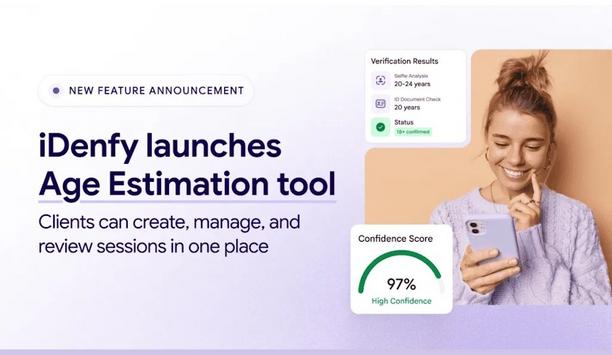
iDenfy, the global identity verification, compliance, and fraud prevention business, announced the launch of its Age Estimation tool integrated into its onboarding software dashboard. This new Age Verification upgrade gives the ability to create, manage, and review age verification sessions on their own, separately from iDenfy’s standard identity verification flow metrics, while still relying on the same level of security. That means iDenfy’s users will now be able to choose an alternative, non-document-based Age Estimation workflow, designed to convert more users while still complying with age check requirements. Age verification workflow Age Estimation is a process that determines whether a user meets a minimum age requirement using a real-time selfie or via an uploaded document with the picture, if that requires a compliance policy, such as iGaming or financial industries. It is also commonly used by platforms that must confirm age eligibility before granting access to certain products or content. Previously, iDenfy’s platform offered an age verification workflow that required the end-user to upload a photo of their government-issued ID document. Now, with the new add-on of Age Estimation, this step can be removed, and the user can only be asked to capture their selfie biometrics. The system then determines the person’s age based on their facial features. Treating age estimation Rather than treating age estimation as a feature bundled inside a broader onboarding flow, iDenfy has built it out with its own permission structure, billing model, and API endpoints, so its partners that only need Age Estimation checks are not required to adopt the full identity verification stack to access it. As a result, iDenfy’s users can view a full sessions list, generate tokens, and open a detailed session page from a single, centralized view, all supported by their own custom settings, fully encoded verification URLs, and official API documentation. Official API documentation When a business enables the age estimation flow, the end user is asked to capture a live selfie, which is compared against a configurable age limit and buffer zone set by the business. It is worth mentioning that iDenfy’s age estimation tool can estimate people’s age within 3 years of gap accuracy, and control the age limit businesses want to provide access to their products. Users who are clearly above the age threshold pass in seconds using only a selfie. On the other hand, users whose estimated age falls near the legal limit are automatically routed to a certified ID document check within the same session, where the date of birth on the document, not the model’s estimate and make the final decision. iDenfy claims that most young adults who are over 25 are considered easily verifiable. However, many companies have a hard time differentiating 18 to 24 age category. These users often still look young, and their facial features can be shaped by genetics or other external factors that potentially can mislead their verification systems. Personal data businesses According to Domantas Ciulde, the CEO of iDenfy, the update reflects a broader pattern the company has noticed among its partners that operate in age-restricted and regulated markets: “Age estimation only works if the people using it can actually see what’s happening inside each session. We improved our product against disguises such as makeup or a mustache to precisely estimate people’s age and brought it into the dashboard with its own sessions list and detail view,” commented Domantas Ciulde. Validated age data reduces the risk of underage access to restricted products, platforms, and content, while limiting how much of the personal data businesses need to collect in the process. Because most users pass on a selfie alone, companies avoid asking their entire user base to submit a government ID just to prove they are old enough. This supports compliance with regulations such as the UK Online Safety Act, the EU Digital Services Act’s age assurance guidance, and GDPR’s data minimisation principle, as well as emerging state-level age verification laws in the United States and Australia’s under-16 social media restrictions. Small operational detail Because the estimate and the document fallback now run inside the same session and the same dashboard, review and audit work move faster too. Compliance teams can see what was checked without needing to reconcile records across separate tools. “Centralizing session creation and results in one dashboard view might sound like a small operational detail, but for partners that run age checks at scale, it removes a lot of manual tracking that used to happen outside our platform,” added Domantas Ciulde, the CEO of iDenfy. The Age Estimation dashboard module is available now to iDenfy partners, who can integrate through API or Dashboard, with 24/7 support available from iDenfy’s team to guarantee a smooth setup without any additional coding.

Expert commentary

It has been 10 years since the European Union adopted the General Data Protection Regulation (GDPR), triggering a fundamental overhaul of data protection and privacy law. Today, GDPR is embedded in the day-to-day operations of organizations working with, or within, EU member states. GDPR was introduced in recognition that the world had changed profoundly and that existing data protection laws were no longer adequate in an increasingly digital and interconnected environment. The regulation was also designed to be forward-looking, providing a framework capable of governing innovation and emerging technologies. However, the rapid growth of AI-driven applications is prompting national data protection authorities to revise guidance for systems that process personal data. AI-driven applications Some of this innovation was already gaining momentum before GDPR, most notably body-worn video, which was being tested and deployed primarily by police forces. At the same time, more advanced projects, such as live streaming, were receiving funding, while organizations across the public and private sectors moved quickly to achieve compliance ahead of the regulation’s entry into force in 2018. Today, body-worn video is widely used by police forces in the U.K., France, Germany and Italy Today, body-worn video is widely used by police forces in the U.K., France, Germany and Italy, with adoption continuing to grow elsewhere. Uptake in commercial environments is more uneven. Some member states apply stricter rules than others, particularly around whether and how the technology may be used, and whether it infringes the rights of workers or members of the public. Facial recognition systems These concerns are amplified in relation to live facial recognition. In the U.K., no longer an EU member state but still aligned with GDPR, the government is encouraging police use of the technology and concluded a consultation on a new legal framework in February 2026. While reported deployments have been positive, the technology remains controversial and continues to attract opposition from civil liberties groups. The picture is further complicated by the fact that many facial recognition systems rely on AI. As a result, they may breach the EU AI Act, which entered into force in 2024 and largely prohibits real-time biometric identification in public spaces. Complex video environments This capability is critical not only for operational needs but also for responding to DSARs Over the past decade, video use across Europe has expanded significantly, encompassing CCTV, body-worn video, smartphone footage and video doorbells. At the same time, major advances in technology now allow security professionals to manage larger and more complex video environments while remaining compliant with GDPR. Modern video management systems (VMS) are a clear example. Security control room operators, whether on site or working from centralized locations, can now retrieve relevant footage quickly and efficiently. This capability is critical not only for operational needs but also for responding to data subject access requests (DSARs), which require organizations to provide personal data on request, within reasonable limits, or for sharing footage with law enforcement during investigations. Hybrid video environments Masking and blurring technologies have also improved significantly, reducing the time and effort required to redact footage before it is shared, either digitally or physically. Because GDPR applies to both public and private sector organizations, redaction requirements also apply when footage is shared with police. However, the economic and operational benefits of these systems have driven greater transparency The shift from on premises systems to cloud-based and hybrid video environments has introduced new challenges, particularly around data residency and the risk of EU citizens’ personal data being stored outside GDPR jurisdiction. However, the economic and operational benefits of these systems have driven greater transparency and the development of stronger controls, enabling organizations to adopt them with greater confidence. Delivering meaningful protections GDPR replaced the EU’s 1995 Data Protection Directive. In the 21 years between that directive and GDPR’s adoption, the world moved decisively from analog to digital. Ten years on, the regulation has proved resilient in delivering meaningful protections for EU citizens’ personal data. While there have been several high-profile fines related to CCTV use, some exceeding €10 million, the security industry has adapted effectively. Challenges, debate and controversy will undoubtedly continue as AI creates new opportunities to enhance safety and security operations. Taken together, GDPR and the EU AI Act provide a robust legal framework that allows security professionals to innovate while maintaining strong safeguards for privacy and data protection.

For years, the worlds of physical security and information technology (IT) remained separate and often at cross-purposes. The departments often worked in silos, despite the fact that infrastructure needs were crucial in the security industry and network traffic and data were of interest to IT professionals. Today, these practices are no longer divided. Physical security depends on network security, and vice versa. For partners, this presents a new challenge – how to speak to both IT and security teams and meet the goals of both. IT professionals are often responsible for protecting both digital and physical assets, so making the right choice is critical. Channel partners need to be able to offer solutions that are secure and easy to maintain, resulting in fewer system issues and downtime. Checklist for physical security system This checklist can help start your discussion with IT buyers. It outlines the goals that many IT leaders have for their physical security system. 1. Demonstrate alignment with security, business, and IT strategy A modern physical security solution should be a strategic fit that enhances the broader organizational goals – for IT, security, facilities teams, and others. It should improve collaboration between teams to achieve mutual goals. Start by demonstrating to IT and physical security teams how security systems generate rich resources of data that can help them improve safety protocols, optimize resources, and support cross-functional insights. Offer use cases of how other organizations have been able to use their systems for compliance reporting, efficiency improvements, or other operational goals. They’ll start to see how their physical security systems can break down silos between their teams. 2. Highlight technical compatibility A security solution should complement the customer’s existing IT ecosystem, not complicate it. Disconnected systems can cause a lot of manual work, putting strain on budgets and resources. A unified system helps reduce this load through automation, single sign-on, and centralized management. Suggest open architecture solutions to help ensure compatibility and avoid vendor lock-in. Such systems can also integrate smoothly with core systems like Active Directory, cloud platforms, and identity management tools to support the day-to-day operations of IT teams. Look for an open API framework that enables custom integrations with third-party tools, giving you the flexibility to tailor your customer’s system to their needs. 3. Prioritize cybersecurity and compliance Cybersecurity is non-negotiable for IT teams. They place a high priority on solutions that offer end-to-end encryption and secure data transfer protocols to safeguard sensitive information. They also look for compliance with global standards and regional laws such as GDPR, NIS2, ISO 27001, CCPA/CPRA, and the EU AI Act. IT teams also expect granular user controls, including role-based permissions and multi-factor authentication, as well as comprehensive audit trails to ensure accountability. Make sure your vendors demonstrate cybersecurity maturity through SOC 2 Type II audits and certifications under ISO/IEC 27017 and ISO/IEC 27001. Work with your manufacturer to stay up to date on the latest protocols and understand which solutions are compliant. Share this information with your IT customers. Your manufacturer should also provide training to help educate your team as requirements evolve. 4. Offer a pilot program to show reliability and performance IT teams want to make sure their security systems are reliable around the clock. Recommend solutions with high-availability configurations and clearly defined service level agreements (SLAs). Automated failover and disaster recovery capabilities should be built in. Scalability matters, too. The system should handle growing data volumes and the deployment of new systems and facilities without sacrificing performance. Suggest a pilot program for your customer to test out their new solution in their own environment to ensure reliability and compatibility. This will give your customer the opportunity to experience the system “in action” and ask questions before purchasing. 5. Indicate the cost of ownership IT teams want to understand the total cost of ownership (TCO) for long-term planning. Work with your manufacturer to provide transparent pricing structures that encompass licensing, implementation, and maintenance costs, avoiding hidden fees. Offer different deployment models that provide both technical and financial flexibility. Flexible licensing models (subscription or perpetual) can help align expenditures with financial planning. It also gives your customer the option to adopt cloud services at their own pace while continuing to use existing on-prem infrastructure. 6. Highlight vendor reputation and support Vendor stability and reputation matter to IT teams. Ensure your manufacturer has a proven track record. Examine case studies across various industries to gauge the vendor’s ability to meet diverse security requirements. Relay those stories to your customer to provide real-life examples of how a solution meets their needs. 7. Support the implementation and user adoption Deployment should be collaborative and minimally disruptive. Work with your manufacturer to develop a detailed implementation plan and timeline that you can then present to your customer. After implementation, you have an opportunity to continue building the relationship with the customer using training resources that drive adoption and long-term success. Your manufacturer should be able to support you with easily accessible tools and guides. 8. Offer risk assessment information IT teams take a proactive approach to risk. Demonstrate how your vendor provides clear vulnerability management and incident response protocols. This is where pilot programs are also invaluable. Help your customer test the solution in their environment before a full deployment. Integrators role in the convergence of IT and physical security Reaching IT teams isn’t about adding more features; it’s about aligning with their standards and making it easy for them to say yes. Work with your manufacturer to stay up to date on the latest requirements and opportunities to improve collaboration between teams. As a security integrator, you can help address the goals of both IT and physical security teams. Work with them to develop long-term relationships and a comprehensive approach to securing their organization, ensuring both physical and cyber threats are effectively mitigated.

The physical security industry has been in love with the cloud for quite some time. And understandably so. The promise of instant scalability, centralized access, and simplified maintenance is hard to ignore, especially in an era of remote work and distributed facilities. But reality is catching up to the hype. For many, especially those dealing with video surveillance at scale, the cloud is no longer the catch-all solution it once seemed. Rising costs, bandwidth limitations, and latency issues are exposing its shortcomings. And the more resolution increases, from HD to 4K and beyond, the heavier that burden becomes. Modern security cameras This is where edge computing, specifically AI-enabled edge processing available in modern security cameras, starts to look less like an option and more like a necessity. But it’s not just about adding intelligence to cameras. It’s about how that intelligence is deployed, scaled, and maintained. This leads us to containerization and tools such as Docker, which are a revolutionary piece of the puzzle. When cloud isn't enough Cloud analytics for video sounds great in theory: stream everything to the cloud Let’s start with a basic issue. Cloud analytics for video sounds great in theory: stream everything to the cloud, let powerful servers do the thinking, then serve up results to end-users in real time. However, in practice, this model can break down quickly for many end-users. Raw video is heavy. A single 4K camera streaming 24/7 can generate terabytes of data per month. Multiply that by hundreds or thousands of cameras, and the bandwidth and storage costs become unsustainable. Then there’s latency. If AI needs to detect a person entering a restricted area or identify a license plate in motion, seconds count. Routing video to a cloud server for analysis and waiting for a response can introduce delays. Adding in concerns about uptime, such as what happens if the internet connection goes down, it becomes clear why relying exclusively on the cloud creates friction for mission-critical deployments. The edge advantage Edge processing turns that model on its head. Instead of sending everything out for analysis, edge-enabled cameras do the heavy lifting on-site. AI algorithms run directly on the device, interpreting what they see in real time. They generate metadata—lightweight descriptions of events, objects, or behaviors—rather than raw video. This metadata can be used to trigger alerts, inform decisions, or guide further review. The benefits are obvious: latency drops, bandwidth use plummets, and storage becomes more efficient. Edge processing solves many cloud deployment issues by keeping the compute where the data is generated, on the device. This frees the cloud up to do what it’s best at: providing scalable and centralized access to important footage. But where does the edge go from here? How do we evolve these powerful IoT devices to deliver even more situational awareness? Enter Docker: An app store for edge AI They package an app along with everything it needs to run: the code, settings, libraries, and tools This is where the concept of containerization and open development platforms like Docker comes in. Let’s start with an analogy that is helpful for understanding containers. Imagine you're getting ready for a trip. Rather than hoping your hotel has everything you need, you pack a suitcase with all your essentials: clothes, toiletries, chargers, maybe even snacks. When you arrive at your destination, you open the suitcase and you’re ready to go. You don’t need to borrow anything or adjust to whatever the hotel has, since you’ve brought your own reliable setup. Containers in software work the same way. They package an app along with everything it needs to run: the code, settings, libraries, and tools. This means the application behaves exactly the same, whether it’s running on a developer’s laptop, on the edge in an IoT device, or in the cloud. Security camera with a powerful edge processor There’s no last-minute scrambling to make it compatible with the environment it lands in, because it’s self-contained, portable, and consistent. Just like a well-packed suitcase simplifies travel, containers simplify software deployment. They make applications faster to start, easier to manage, and more predictable, no matter where they’re used. For a security camera with a powerful edge processor, it’s like giving the camera its own specialized toolkit that can be swapped out or upgraded without touching the rest of the system. It also means you can run multiple AI applications on a single camera, each in its own isolated environment. Integrators and end-users These applications don’t interfere with each other and can be updated independently Want to add fall detection to a healthcare facility’s camera network? Just deploy the analytics in a container. Need to monitor loading docks for pallet counts at a warehouse? Spin up a different container. These applications don’t interfere with each other and can be updated independently. As a developer, if you use an open container platform like Docker, any system that supports Docker can utilize your software. This removes the need to do expensive custom work for each partner and ecosystem. This is one reason Docker containers are tried and true in the larger IT space and are just starting to get traction in the security sector. Docker also makes this scalable. Developers can build AI tools once and push them out to hundreds or thousands of devices. Integrators and end-users can customize deployments without being locked into proprietary ecosystems. And because containers isolate applications from core system functions, security risks are minimized. Metadata, not megabytes Traditional video analytics systems often require full video streams to be processed One of the most underappreciated aspects of this method is the way it redefines data flow. Traditional video analytics systems often require full video streams to be processed in centralized servers, either on-premises or in the cloud. This model is brittle and costly, and it’s also unnecessary. Most of the time, users aren’t interested in every frame. They’re looking for specific events. Edge AI enables cameras to generate metadata about what they see: “Vehicle detected at 4:02 PM,” “Person loitering at entrance,” “Package removed from shelf.” This metadata can be transmitted instantly with minimal bandwidth. Video can still be recorded locally or in the cloud, but only accessed when needed. This dramatically reduces network load and allows the cloud to be used more strategically: for remote access, long-term archiving, or large-scale data aggregation, without being overwhelmed by volume. Building smarter systems, together A single camera can run analytics from multiple third parties, all within a secure, containerized framework An equally important aspect of containerization is how it opens up the ecosystem. Traditional security systems are often built as closed solutions. Everything—from the cameras to the software to the analytics—comes from a single vendor. While this simplifies procurement, it limits innovation and flexibility. Docker flips that model. Because it’s an open, well-established standard, developers from any background can create applications for edge devices. Integrators can mix and match tools to meet unique customer needs. A single camera can run analytics from multiple third parties, all within a secure, containerized framework. This is a profound shift. Security cameras stop being fixed-function appliances and become software-defined platforms. And like any good platform, their value increases with the range of tools available. Hybrid: The realistic future So, where does this leave the cloud? It is still essential, but in a more specialized role. The most robust, future-proof architectures will be hybrid: edge-first and cloud-supported. Real-time detection and decision-making happen locally, where speed and uptime matter most. The cloud handles oversight, coordination, and data warehousing. Real-time detection and decision-making happen locally, where speed and uptime matter most This hybrid model is especially useful for organizations with complex deployments. A manufacturing plant might retain video locally for 30 days but push older footage to the cloud to meet retention requirements. A retail chain might analyze customer flow on-site but aggregate trend data in the cloud for HQ-level insight. Hybrid gives organizations the flexibility to optimize cost, compliance, and performance. Regulatory realities It’s also worth noting that not every organization can, or should, store data in the cloud. Privacy regulations like GDPR in Europe or similar laws elsewhere require strict control over where data is stored. In many cases, sensitive footage must remain in-country. Edge and hybrid models can make compliance easier by minimizing unnecessary data movement. Conclusion: Smart security starts at the edge The next wave of innovation in physical security won’t come from bigger cloud servers or faster internet connections. It will come from smarter edge devices, with cameras and sensors that don’t just record, but understand and classify events. And the foundation for that intelligence isn’t just AI, but how that AI is deployed. Containerization via platforms like Docker is unlocking new levels of flexibility, security, and scalability for the physical security industry. By embracing open standards, supporting modular applications, and rethinking how data flows through the system, physical security professionals can build solutions that are not only more effective but also more sustainable, secure, and adaptable. The cloud still has its place. But the edge is essential to the future for real-time intelligence, mission-critical uptime, and cost-effective deployment.
Security beat
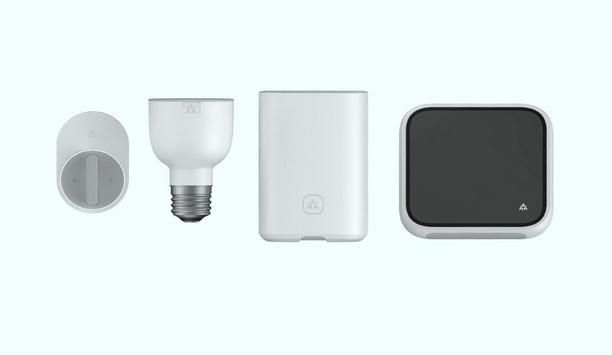
Matter is a new open-source interoperability standard that will simplify the connectivity of smart home systems, including security. The growing popularity of the Matter 1.0 standard was evident at the large Consumer Electronics Show (CES) in January in Las Vegas, where the standard was heavily promoted by companies including Google, Amazon, and Samsung. A flood of Matter-connected products is on the horizon for ship dates in the second half of 2023. Evolve, and manage IoT standards Creating the standard is the Connectivity Standards Alliance (CSA), formerly the Zigbee Alliance, which changed its name in May 2021. With 300 companies as members, CSA seeks to create, evolve, and manage Internet of Things (IoT) technology standards through a well-established, collaborative process. CSA promotes the benefits of global, open standards, and the value of the IoT to customers and consumers, and seeks to break down the barriers to broad access and adoption of IoT technologies and solutions. Matter The new brand name Matter was launched in May 2021 to designate the standard formerly known as Project CHIP (Connected Home over IP), developed by CSA member companies including Apple, Google, Samsung, and Amazon. There are currently 800 devices and apps certified to the new smart home standard, including various smart home equipment (except video cameras, which will be included in a major release in the fall of 2023). Matter version 1.0 was initial launch in October 2022. Matter 1.0 release Twice a year moving forward, Matter plans a minor release each spring and a major release each fall As part of the Matter 1.0 release, authorized test labs are open for product certification, the test harnesses and tools are available, and the open-source reference design software development kit (SDK) is complete, thus enabling new products to be brought to market. Twice a year moving forward, Matter plans updated releases, a minor release each spring and a major release each fall. Smart home interoperability Currently, a variety of CSA working groups are addressing various aspects of interoperability in the smart home, including issues such as data privacy, security, energy management, and health and wellness, says Christopher LaPré, CSA’s Head of Technology. “Implementing elements requires that the standards alliance be able to multitask on several tracks,” says LaPré. Some development is centering around connectivity and the need for a “hub” to which multiple systems can communicate and incorporate an “identity” to regulate the availability of information to various systems. The standards will enable both do-it-yourself (DIY) systems and devices deployed by professional installers. Addressing privacy requirements The new development will be guided by what installers need to succeed in the home automation" Ecosystems depend on the availability of some type of “identity” to meet privacy requirements. Rules must be implemented across the ecosystem that deploys a “trust system” to ensure privacy. Solving the challenge involves getting all the major players to the table at the technical level to meet the bar from the business and technology perspective. “Integrators and retailers will play a role as Matter continues to evolve,” says LaPré. “New development will be guided by what installers need to succeed in the home automation market.” Matter-certified devices There is still work to be done to expand the 800 certified devices to function throughout the Matter ecosystem and to add new devices over time. One goal is to simplify an integrator’s solution using fewer hubs (and possibly a single hub) to provide a wide variety of services. The timeline of adding new Matter-certified devices may be delayed by the availability of equipment in the global supply chain, says LaPré. Flexibility Multi-admin provides for the simultaneous operation of devices in multiple smart home systems A multi-admin feature of Matter enables more flexibility for multiple ecosystems. A core feature of Matter, multi-admin provides for the simultaneous operation of devices in multiple smart home systems. Accordingly, family or household members could operate the device with the digital assistant or smartphone app of their choice. A bridging protocol helps to tie existing systems together. Amazon, Apple, Comcast, Google, SmartThings, and the Connectivity Standards Alliance came together in 2019 to develop and promote this new standard, joined by fellow Alliance board member companies IKEA, Legrand, NXP Semiconductors, Resideo, Schneider Electric, Signify, Silicon Labs, Somfy and Wulian. Smart device communication Currently, member organizations span all sizes, across a range of business categories. More than 1,700 Member individuals participate in bringing the Matter specification, reference implementations, testing tools, and certification programs to life. Matter's underlying network technologies are Wi-Fi and Thread. Wi-Fi enables Matter devices to interact over a high-bandwidth local network and allows smart home devices to communicate with the cloud. Thread provides a mesh network within the home. Both the Wi-Fi Alliance and Thread Group partnered with the Connectivity Standards Alliance to help realize the vision of Matter.
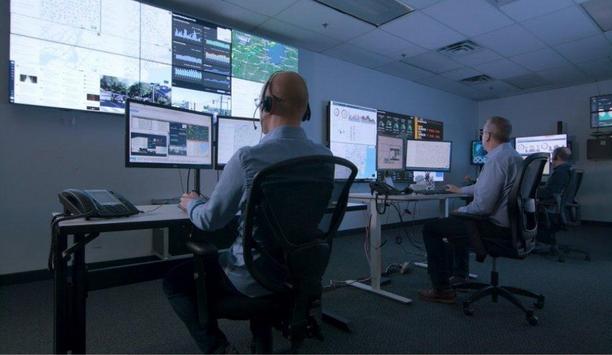
For an enterprise, addressing cyber security requires that stakeholders have immediate access to critical information compiled from multiple sources and presented where and how they need it. Various data sources monitor the cyber security status of a company’s computer systems to provide real-time visibility. Aggregating that data into visual dashboards and presenting it to operators enables any cyber security problems to be flagged quickly and resolved. Software system enhances cyber security Userful Corporation provides a software system that enhances cyber security operations for an enterprise Userful Corporation provides a software system that enhances cyber security operations for an enterprise, enabling stakeholders to envision various cyber security factors, such as application security, network security, cloud security and IoT (Internet of Things) security. The software system empowers operators to respond more efficiently. Working in conjunction with a company’s existing IT infrastructure, Userful software combines datasets from diverse systems into a visual format and delivers the information to a desktop computer, a video wall, or even to a home office. Real-time visibility “It provides a new dynamic to how cyber security issues are resolved,” said Shane Vega, Userful Corporation’s Vice President (VP) of Product Marketing, adding “The individuals who have flagged a cyber security issue may not be the ones to respond. Having real-time visibility provides more value to the overall response.” A typical cyber security operations center resembles a physical security command or emergency management hub – large video walls, individual desktop workstations, and operators that need to share information and respond quickly to any incident. Userful’s software helps in managing operations centers Userful’s software manages how data is presented in an operations center environment, without relying on proprietary hardware, operating outside an end-user customer’s IT infrastructure. Managing operations centers is a core offering for Userful Corporation, including command centers of all types, from traditional network operation centers to emergency network systems to security systems. The ability to use one software system throughout an enterprise is appealing to companies that have historically grappled with proprietary and siloed systems. Solutions that are easy to deploy, manage and scale Cyber security professionals need solutions that are easy to deploy, manage and scale" “We are a platform that can be utilized across the enterprise,” said Shane Vega, adding “Cyber security professionals need solutions that are easy to deploy, manage and scale, so they can manage all the threats every day.” Compiling and displaying information to an operations center has historically involved silos of proprietary audio/video (AV) hardware. Ironically, the hardware approach presents cyber security risks that undermine the very mission of protecting a company’s data and networks. The proprietary systems operate outside the company’s network infrastructure, and IT professionals do not have visibility into the systems. Security Orchestration, Automation and Response (SOAR) Instead of hardware, displaying information on Security Orchestration, Automation and Response (SOAR) can be accomplished using software running on off-the-shelf components, managed by the IT department and featuring all the cyber security protections required, throughout the enterprise’s network infrastructure. SOAR includes threat and vulnerability management, security incident response and security operations automation, enabling companies to collect threat-related data from several sources and automate the responses. Cyber security threats Possible threats might include an influx of packet generation, malware, someone seeking access to the network, or a malicious email. Various tools manage each threat, and each must be visualized. Because the threats are related, a comprehensive dashboard enables operators to create parallels and respond more efficiently. The software-as-a-service system ensures that all software is updated and can operate on the latest hardware In the Userful AV-over-IP scenario, an IT department takes full ownership of the computers and subsystems installed on the network. The software-as-a-service system ensures that all software is updated and can operate on the latest hardware. Companies always have an ecosystem of interconnectivity. Single platform/solution The single platform/solution also extends beyond operations centers to include meeting rooms and digital signage. All images are captured using existing protocols, such as Real Time Streaming Protocol (RTSP), HTTP Live Streaming (HLS), Web Real-Time Communication (WebRTC), and so forth. In contrast, the AV industry is hardware-centric and has been known to circumvent software approaches in order to justify selling more hardware. AV systems typically operate in terms of pixels rather than bytes of information and use proprietary software. Companies always have an ecosystem of interconnectivity Different departments in a company have historically installed their own specific AV systems, based on proprietary hardware, so that each department is siloed from the rest of the organization. Dangers of random hardware on a network Random hardware on a network, beyond the reach of the IT department, can provide access points to the network for hackers and other cyber security threats. Each proprietary hardware system exists outside the existing security protocols of the enterprise and each represents a cyber security vulnerability. Some companies end up with five or six different operations centers that involve three or four manufacturers, all siloed. Software versus hardware Our biggest challenge is to get people to understand what is possible with software versus hardware" “Our biggest challenge is to get people to understand what is possible with software versus hardware,” said Shane Vega, adding “The industry is inundated with hardware, and the risk is the unknown. Customers may not be familiar with a software solution that can accomplish what they have historically depended on hardware for.” Userful Corporation works through channel partners (integrators), who assemble complete systems using Userful software and other components, such as video screens, large-format commercial displays, groups of tiled displays, projectors – any type of display with an input. Corporate policy specifies security at every level Userful’s corporate policy specifies security at every level, including user authentication, encryption, endpoint security, air-gapped servers, information security policies, General Data Protection Regulation (GDPR), and a solution built on industry-leading IT standards. To spread the word about Userful Corporation’s capabilities related to cyber security, the company will be participating in Infosecurity Europe 2022, taking place from June 21 to June 23, 2022 at ExCeL, London, United Kingdom (UK).

Mergers and acquisitions are among the most disruptive forces in the security marketplace. However, they are also both a reality and a growing trend. Whenever there is value to be leveraged, companies tend to enter into business transactions to maximize that value. For the security industry, the result is a continually shifting collection of manufacturer companies seeking new ways to provide value to customers. M&A activity continued unabated in 2021, despite residual industry challenges such as dysfunctional supply chains and lingering consequences of a global pandemic. Here are some of the larger and/or most impactful M&A transactions of 2021. Stanley Black & Decker sells to Securitas Stanley Black & Decker announces an agreement to sell most of its Security assets to Securitas AB for $3.2 billion in cash. The transaction includes Stanley Black & Decker's Commercial Electronic and Healthcare Security business lines. The businesses carry 2021 forecasted revenues of approximately $1.7 billion. “The business is well-positioned for ongoing growth within Securitas, a global pioneer in the security industry,” says James M. Loree, Stanley Black & Decker's CEO. Openpath’s solution makes businesses more secure with multi-factor authentication Motorola acquires Openpath and Envysion Motorola Solutions adds to its security industry portfolio with the acquisition of Openpath Security Inc.., a cloud-based mobile access control provider. Openpath’s solution makes businesses more secure with multi-factor authentication, enables a contactless entry experience, and can be easily scaled and managed due to its cloud-based architecture. Motorola also announces the acquisition of Envysion, a provider of video security and business analytics solutions for quick-service restaurant and retail industries. Delta Electronics buys March Networks Delta Group, a provider of power and thermal management solutions, purchased 100% of the shares in Infinova (Canada) Ltd., owner of Canadian-based video surveillance and business intelligence company March Networks, from Infinova International Ltd. through its subsidiary Delta International Holding Limited B.V. Following the close of the transaction, it was expected that March Networks will continue to operate from its Canadian headquarters, and the March Networks executive management team will continue to lead the organization. Delta Electronics is also the parent company of VIVOTEK. APi Group acquires Chubb Fire and Security Business APi Group Corp. acquire the Chubb Fire & Security Business from Carrier Global Corporation for an enterprise value of US$ 3.1 billion. Headquartered in the United Kingdom, Chubb has approximately 13,000 employees globally and a sales and service network that spans 17 countries, serving more than 1.5 million customer sites in Europe, Asia Pacific, and Canada. APi Group is a business services provider of safety, specialty, and industrial services in more than 200 locations worldwide. Teledyne Technologies Inc. will acquire FLIR in a cash and stock transaction valued at approximately $8.0 billion Teledyne acquires FLIR Teledyne Technologies Inc. and FLIR Systems, Inc. jointly announced that they have entered into a definitive agreement under which Teledyne will acquire FLIR in a cash and stock transaction valued at approximately $8.0 billion. Jim Cannon, President and Chief Executive Officer of FLIR, said, “We could not be more excited to join forces with Teledyne through this value-creating transaction.” Resideo adds Norfolk Wire and Electronics Resideo Technologies, Inc. acquired privately held Norfolk Wire & Electronics, based in Richmond, Virginia. Norfolk was founded in 1985 and is a regional distributor of security, telecom, network, and audio-video (AV) related products, supplies, and tools. With 11 full-service retail locations and a 43,000 sq. ft. distribution center, Norfolk serves customers across the mid-Atlantic region and will be part of Resideo's ADI Global Distribution business, a wholesale distributor of security, AV, and low-voltage products. Triton acquires ACRE, which acquires Feenics and Matrix Triton Partners acquired ACRE, an end-to-end security solutions provider based in Dallas/USA and Dublin/Ireland. Triton is investing alongside the current management team of ACRE. Weeks later, ACRE acquired cloud-based workplace solutions company Time Data Security (TDS). Later in the year, ACRE announced acquisition of Feenics and Matrix Systems. Feenics brings cloud-based access control solutions brings cloud-based access control solutions to ACRE’s rapidly growing network of global customers while also expanding its portfolio to support the growing demand for cloud-based security solutions. Matrix enables ACRE to expand the addressable market for the company’s technology portfolio. Brivo, Inc. and Crown PropTech Acquisitions have entered into an agreement making Brivo a publicly listed company Brivo becomes publicly traded through the merger Brivo, Inc., a cloud-based access control and smart building technologies company, and Crown PropTech Acquisitions, a publicly traded special purpose acquisition company (SPAC), have entered into a definitive merger agreement that will result in Brivo becoming a publicly listed company. The transaction values the company at a pro forma enterprise value of $808 million. Upon closing, the combined company will operate as Brivo, and its Class A common stock is expected to be listed under the ticker symbol “BRVS.” Nice buys Nortek Security Nice, a global manufacturer of smart home, security, home, and building automation solutions, , acquired Nortek Security & Control from Melrose Industries. Nortek Security & Control is a developer of technology for security, home automation, control, power, AV and entertainment, access control, health, and Artificial Intelligence (AI) systems, for residential and commercial markets. Eagle Eye acquires Uncanny Vision Eagle Eye Networks, a cloud video surveillance solutions company, has acquired Uncanny Vision Solutions, an artificial intelligence (AI) analytics and Solutions Company. The acquisition accelerates the company’s leadership in providing AI and analytics, to make customers’ businesses more efficient and the world a safer place. The acquisition also includes research and development (R&D) capabilities and a new regional office located in Bangalore, India.
Case studies

Paderborn/Lippstadt Airport plays a central infrastructural role in the East Westphalia-Lippe region of Germany. In order to meet the growing requirements of the German Aviation Security Act (LuftSiG), the airport comprehensively modernised its existing video surveillance system. The objective was to ensure efficient monitoring of critical areas such as the apron, access roads, car parks, and terminal entrances – with minimal resource use. Together with systems integrator Horn Sicherheitstechnik, Dallmeier developed a solution that allows gradual migration to IP-based components such as the multifocal sensor system Panomera®, without the need to immediately replace existing analog technology. The solution complies with all applicable security and data protection requirements and is designed for future scalability. Secure airport operations Roughly six million people live within the catchment area of Paderborn/Lippstadt Airport. As a regional transportation hub, the airport provides vital connectivity to both tourist and business destinations. Scheduled and charter flights as well as business, private, and cargo traffic are all part of daily operations. This makes the airport not only an important infrastructure facility but also a regional employer and mobility partner. Smooth operations and full compliance with legal obligations – such as the Aviation Security Act (§5 and §8), the General Data Protection Regulation (GDPR), and the NIS-2 Directive – form the foundation for secure airport operations. Increasing regulatory requirements The decision to upgrade and extend the video security infrastructure was driven by increasing regulatory requirements and technological advancement. The focus was on reliable video coverage of the approximately 65,000 square metre apron area, as well as other critical zones such as access roads, car parks, terminal entrances and the so-called aviation security boundaries – the transition point for passengers from landside to airside. Analog systems were not replaced in one step; instead, a step-by-step migration to IP technology was planned and implemented – in a manner that was flexible and adapted to the airport’s existing infrastructure and operational needs. Modern IP cameras The implementation was carried out by experienced systems integrator Horn Sicherheitstechnik in collaboration with Dallmeier electronic. At the heart of the project is a hybrid system architecture that combines existing analog components with modern IP cameras. Video recording is handled by Dallmeier recording appliances such as the DMS 2400 and IPS 10000, which enable simultaneous operation of both analog and IP technologies. To monitor sensitive zones, various camera models are used – including Domera®, fisheye, and bullet cameras, as well as Panomera® systems from the W4 and S8 series. Panomera® enables wide-area coverage with a minimum number of cameras while still delivering high-resolution detail – a major advantage for large apron areas where both overview and detailed monitoring are essential. Video management is handled via SeMSy® Compact in combination with the SeMSy® Event Manager. Additionally, door and alarm contacts were integrated using Moxa devices to enable functional synergies and alarm forwarding – particularly at the aviation security boundaries. Aviation security boundaries With the new system, the airport fully meets the requirements of §5 and §8 of the German Aviation Security Act – for example, in monitoring aviation security boundaries, access roads and other sensitive operational areas. The hybrid system architecture allows targeted expansion of the existing infrastructure. One key benefit: Thanks to Panomera®, the number of cameras required was significantly reduced – without sacrificing field of view or image quality. This results in savings not only in installation and operational costs but also in ongoing maintenance. The modular system design supports step-by-step migration and offers long-term flexibility. “With the Dallmeier solution, we were able to seamlessly modernise our existing infrastructure while efficiently meeting new security requirements. We were particularly impressed by the flexibility to integrate both analog and IP systems,” explains Paul Sawatzki, Head of IT & Technology at Paderborn/Lippstadt Airport. AI-driven technologies The Dallmeier solution meets all requirements set forth by the GDPR and the NIS-2 Directive – especially in terms of data protection, IT security, and system availability. As an ISO-certified company – including certification to ISO/IEC 27001 for information security management systems – Dallmeier delivers the highest standards in the handling of sensitive data. These certifications provide a reliable foundation for deploying the technology in critical infrastructure environments. Additionally, Dallmeier’s in-house development and production in Germany (“Made in Germany”) ensures transparency and legal certainty for operators. Another key advantage of the new system is its future-proof design. Beyond surveillance alone, AI-based analytics for process optimization and cost savings are increasingly in focus. The airport plans to deploy AI-driven technologies such as the Dallmeier “Attribute Finder”, which can be seamlessly integrated into the existing infrastructure. High integration capability The project at Paderborn/Lippstadt Airport demonstrates how intelligent planning and cutting-edge technology can bridge the gap between legacy infrastructure, system modernisation, and long-term readiness. The “Made in Germany” solution delivers durability, efficiency, and high integration capability – representing a successful deployment of modern video technology in a critical infrastructure environment. Horn Sicherheitstechnik also draws a positive conclusion: “Thanks to close coordination with all project stakeholders and the use of Dallmeier’s PlanD camera planning tool, we always had full control over the project. The tool gave us complete planning reliability right from the design phase,” says Michael Horn, Managing Director of Horn Sicherheitstechnik. Video information technology In 1984, Dieter Dallmeier founded what is now Dallmeier electronic – not in the proverbial garage, but in a garden shed in Regensburg, Germany. Today, the company, which can justifiably call itself a hidden champion for video information technology "Made in Germany", has several hundred employees worldwide, more than 250 of them at the company headquarters in the center of Regensburg alone. Dallmeier's camera, recording, software, and analysis solutions optimize security and processes for B2B end customers in a wide range of industries in over 60 countries. The focus is on users from the casino, smart city, airports, logistics, stadiums, and industrial sectors. But also, banks, critical infrastructure facilities as well as medium-sized companies from all sectors. Image storage system With pioneering innovations, Dallmeier has succeeded time and again in placing itself at the forefront of technology: From the world's first digital image storage system with motion analysis in 1992, the patented "multifocal sensor technology" Panomera® with its "Mountera®" mounting system, to the latest Domera® camera family, which allows up to 300 camera variants with only 18 components. These and many other innovations provide real, tangible customer benefits. And with a low Total Cost of Ownership (TCO) and a high Return on Investment (ROI) they can easily compete with systems produced and supplied from low-wage countries. With "Made in Germany", they also guarantee their customers the highest standards in data protection, cybersecurity, and ethical responsibility. With high quality and short supply chains, they also ensure – almost incidentally – sustainability and environmental protection. From their prestigious headquarters in the center of Regensburg, Dallmeier not only carries out its own research and development but also the complete manufacturing process – from component to product to solution.

The MAK – Museum of Applied Arts in Vienna bridges the gap between past and future, design and contemporary art. As one of the oldest museums of applied arts in the world, the MAK stands for diversity, inclusion, innovation, and sustainable development — values that are also reflected in its ongoing infrastructure modernisation efforts. A prime example: security. To protect rotating exhibitions and the high number of visitors, the MAK relies on state-of-the-art video surveillance technology from Dallmeier. Security in a dynamic environment The museum’s historic building with its high ceilings, changing exhibitions, and demanding lighting conditions presents unique challenges for security infrastructure. The varying spatial configurations and atmospheric lighting – designed to enhance the presentation of the art – make it particularly difficult for conventional surveillance cameras. Effective monitoring calls for precisely tailored installation solutions to ensure uninterrupted visual coverage. “The technology used must not only deliver high quality but also be flexible and efficient enough to adapt to frequently changing conditions. By installing more than 100 high-resolution single-sensor cameras, Dallmeier created a customized solution capable of meeting all our challenges,” says Gerald Schön, Owner of Gerald Schön Elektro- & Sicherheitstechnik. Discreet and unobtrusive In addition to the protection of exhibits and the prevention of theft, burglary and vandalism, MAK´s focus is on visitor safety. At the same time, security technology should help to maintain a pleasant atmosphere. The surveillance cameras are therefore installed very discreetly throughout the museum complex, including the exhibition rooms, corridors, the MAK Design Shop, access roads, and entrances. The installed 4K Domera® cameras deliver high resolution images even in difficult lighting conditions. Thanks to the innovative “RPoD” (Remote Positioning Dome) function, camera angles can be adjusted remotely via the video management system — eliminating the need for labor-intensive physical reconfiguration. This is especially advantageous for the museum’s high ceilings and frequently changing exhibitions. AI-based features such as Intrusion Detection and Loitering Detection ensure precise alarms and significantly reduce false alerts. These technologies not only detect manipulation attempts during operating hours but also play a vital role in protecting sensitive areas after hours. Video management system Fisheye cameras provide full situational awareness, even in the museum’s largest exhibit halls. The integration of Dallmeier’s SeMSy® Compact video management system enables centralized management of recordings, intuitive operator control, and powerful tools like the AI-driven “SmartFinder” function. This allows staff to analyze incidents quickly and with minimal effort. The MAK’s decision to use Dallmeier products wasn’t based solely on image quality and innovative features. Data protection and cybersecurity were equally decisive — areas where Dallmeier, with its “Made in Germany” promise, delivers strong value. Disrupting daily operations Dallmeier products feature the highest level of technical security, enabling customers to implement and operate their video security solutions in a GDPR-compliant and cyber-secure manner. They also meet all the criteria crucial for successfully presenting evidence in court. Executing the project without disrupting daily operations was a logistical feat. From the initial planning phase to final installation, every detail was carefully coordinated. Working closely together, Gerald Schön Elektro- & Sicherheitstechnik and the MAK’s internal security department analyzed the museum’s needs and developed a tailored solution. “Thanks to thorough planning and close coordination, we were able to complete the project with 100% planning reliability and zero complications,” explains Gerald Schön. Frequent exhibition changes With the modernisation of its security infrastructure, the MAK has taken a significant step toward the future. The video system integrates seamlessly with the museum’s historic and architectural features, ensuring reliable protection of valuable exhibits and a smooth, undisturbed experience for all visitors. “The ability to remotely adjust the camera angles has proven to be an invaluable benefit — especially with our high ceilings and the frequent exhibition changes,” emphasizes Peter Tampier, MSc, Head of Security at the MAK. The transition from “blurry images” to Ultra HD was executed smoothly thanks to the outstanding teamwork and deep expertise of all involved partners.

Stratas is a UK-based specialist in document automation, finance automation, and intelligent document processing (IDP). Its solutions help organizations automate processes underpinned by documents and improve control across finance and operations. Stratas needed a new, secure, and scalable data storage solution after notification that its remote storage provider planned to discontinue services. Richard Webb, the company’s Professional Services Technical Consultant, explains: “We weren’t confident that the physical servers were being properly maintained. Our provider was using older machines and running Windows Server 2012, which presented us with reliability and security challenges. If we had continued with our arrangement, things would have had to change.” Solution After considering several options, Richard and his team selected Node4’s Virtual Data Center (VDC) offering – the company’s managed, hosted Infrastructure as a Service platform. As the first step in deployment, Node4 set up a bespoke landing zone to assist Richard with data migration from his organization’s legacy servers. Node4 also configured VDC access via a secure, high-speed VPN. Public cloud solution “We told Node4 from the outset that we wanted a managed, hosted environment. We’re a lean business with no physical premises and didn’t want the overheads and complications of managing physical servers,” Richard comments. “On paper, a public cloud solution might have seemed logical. But we run several niche applications with specialized workflow and process requirements. Node4’s VDC was a better fit – we got the scalability and flexibility of public cloud without the complexity and administration headaches. But we also benefit from Node4’s support and expertise. It’s the best of both worlds.” Node4’s data center “We also wanted our data to remain in the UK on servers owned by a UK company,” he acknowledges. “That’s important for GDPR compliance and data sovereignty." "It was also a bonus that Node4’s data center is just down the road from us, so we’re hyperlocal, I guess. It all adds to the feeling that we’re not dealing with some faceless conglomerate – that there are real people on hand with a genuine interest in helping our business to thrive.” Results Stress-free migration With the landing zone operational and VPN connectivity established, Richard and his team began migrating applications and clients to their new Virtual Data Center. “Clients using our invoicing and accounting service can’t be offline for a long time – especially around month-end. So, although it was slower for us, we migrated one customer at a time at a rate of about five per week,” he explains. “Node4’s landing zone also allowed us to test migrations to ensure everything worked as expected before going live. This kept downtime to an absolute minimum and reduced many of the risks associated with migration to hosted environments.” Enhanced backup, recovery, and resiliency Richard and his team immediately benefited from switching to Node4’s virtual data center. “Our previous provider offered only basic backups, and their infrastructure lacked resiliency,” he recalls. “We could start work on a Monday and, without any prior warning, find half our servers were down. Switching to Node4’s virtual data center with modern, resilient servers – alongside built-in comprehensive backup and disaster recovery – improved our day-to-day operations and customer experience right from the outset.” Richard admits that the connectivity and reliability improvements far exceeded anything he’d hoped for. “It’s amazing! Even basics like logging in are easier. On our old system, it would take several attempts, and there was always a chance you’d get kicked out after a couple of hours. Getting online first time probably saves each of us around ten minutes a day. That may not sound much, but it quickly adds up as the weeks and months go by.” Advanced, integrated security Richard also notes that the VDC offers a range of security benefits, including firewall defences, DDoS protection and secured instances. “We’re planning to introduce multi-factor authentication to access our VPN. It’s a vital identity management tool for all businesses,” he comments. “But especially ones like ours with a 100% remote workforce.” Consumption-based model: Pay for used compute, network, and storage Richard is also keen to highlight the advantages of a consumption-based model. “The VDC is fully self-service. We can adjust compute, network, storage, and services on demand with just a few clicks – giving us complete control over our environment and costs." "This is important right now and also helps us plan ahead; for example, we can now see a pathway to rolling out AI and advanced automation in the coming years.” Transparent pricing “I like the fact that VDC pricing is transparent,” Richard admits. “We did our due diligence and looked at a few other companies. Their project and operational costs seemed lower. But there were lots of gotchas – like fixed data charges and data limits – hidden in the small print. So, when we weighed it all up, Node4, with its consumption-based pricing, was far better value and a much better organizational fit.” He concludes: “What does that mean on a day-to-day basis? Currently, we’ve scaled requirements as we’re carrying out some server consolidation work. But all that extra capacity is still there for us. And while we’re waiting, we’re not being charged for it. That’s a huge benefit. It helps us remain competitive and responsive to changing market and economic conditions.”

Located in the tranquil surroundings of Addlestone, Surrey, Rodwell House serves as part of the renowned Graham Care Group. This 79-bed nursing facility specializes in providing exceptional care for residents with dementia and physical frailties, continually seeking innovative ways to enhance service delivery. Meeting the evolving needs of modern care As a forward-thinking facility, Rodwell House sought to enhance the entry experience for both staff and visitors. The management team understood that the existing manual entry system, which required staff to remember and input codes throughout their shifts, could be improved to allow more time for resident care. For visiting relatives, many of whom are elderly themselves, the facility wanted to create an entry experience that was more welcoming and accessible. "We wanted to make visiting easier and more comfortable for families," says care home manager, Janet Bromley. Quality assurance initiatives "With the nature of the care that we provide, we need comprehensive oversight of people as they come in go out," explains Bromley. “Our commitment to provide excellent care means we recognize the value of having detailed access records throughout the building." "These support quality assurance initiatives and provide us with the insights we need to optimize the quality of our service. It was important, for example," says Bromley, “that we could get a clear record of which staff have been in different areas at particular times.” Facial recognition access control meets compassionate care Working closely with Graham Care's IT team, Rodwell House selected Hikvision's Face Recognition Terminals (DS-K1T342MWX-E1(O-STD)). 160 terminals have been strategically positioned at entry points, communal areas, and ward locations, with dedicated units for both entry and exit monitoring. Each terminal features a 4.3-inch LCD touch screen and built-in card reading functionality, supporting multiple access methods including facial recognition, card access, and traditional code entry. A particularly valuable feature for healthcare settings is the system's face-with-mask recognition capability, helping to maintain security protocols without compromising hygiene requirements. HikCentral Professional platform The terminals integrate seamlessly with the HikCentral Professional platform, creating a centralized management system that generates detailed access logs showing who entered which areas and when. This provides administrators with comprehensive visibility into facility access patterns while enabling quick retrieval of specific entry records for quality assurance or incident review purposes. To ensure full compliance with privacy regulations, Rodwell House obtained proper consent from all staff, residents, and families before implementing the system. The installation follows strict GDPR protocols, with alternative keypad access remaining available for those who prefer traditional entry methods. Delivering measurable improvements in service quality The implementation has generated significant improvements across multiple areas of facility operation. Staff members have embraced the technology enthusiastically, with entry processes becoming notably more efficient and secure. "From the staff perspective, it's brilliant," says Bromley. "I find it so easy to just go in—and other staff do, too. When it comes to entry, it's been a real and very popular success." The enhanced security capabilities of the new system now provides crucial support for safeguarding procedures. The system maintains comprehensive access records that can be quickly retrieved when investigating incidents or addressing concerns. "If we need to review any safeguarding situations, we can now easily access the entry records," explains Bromley, highlighting how detailed logging supports resident protection protocols. Relatives in the facial recognition system The new system has also revolutionized service oversight through better visibility into care delivery patterns. By recording access patterns to resident areas, management can confirm that care schedules are being followed appropriately. This enables them to verify that residents receive regular attention and ensures service consistency across all areas of the facility. Accessibility improvements are particularly significant for visiting families. The planned expansion to include relatives in the facial recognition system will eliminate the challenges associated with visitors remembering codes and operating keypads. "Facial recognition will make life a lot easier," says Bromley, emphasizing the technology's role in creating a more welcoming environment for elderly family members. A blueprint for future-ready healthcare facilities Rodwell House's successful deployment demonstrates how AIoT (AI-powered Internet of Things) technologies can enhance both security and care quality while maintaining the dignity and comfort that residents deserve. The scalable solution will be adopted across four other Graham Care facilities, with plans for over 800 additional terminals, establishing a new benchmark for smart, secure elderly care environments throughout the organization.

DFNBG Gastro GmbH & Co. KG, operator of 48 Dunkin' branches and other catering establishments in Germany, has migrated to the MOBOTIX CLOUD for the central management of its video surveillance. DFNBG partnered with MOBOTIX Diamond Partner VALEO IT Neteye GmbH for more than ten years, who have implemented and continuously optimized secure and efficient MOBOTIX video solutions in the 48 Dunkin' branches. Data protection regulations The operation of local storage systems was proving particularly difficult in shopping centers Due to the strong growth of DFNBG, the demands on the existing video management system increased. The local storage of video data became increasingly complex - both in terms of data protection regulations and the management of access rights. The operation of local storage systems was proving particularly difficult in shopping centers. The solution: a gradual migration from local NAS storage to the data protection-compliant MOBOTIX CLOUD. Access management and GDPR: the MOBOTIX CLOUD as a solution The MOBOTIX CLOUD video surveillance-as-a-service (VSaaS) offering allows users to conveniently control their cameras via a free app. The recorded videos are stored in highly available and cyber-secure data centers located close to the user. This ensures data protection-compliant storage in accordance with the GDPR. Intelligent camera technology A key advantage of the MOBOTIX CLOUD is the combination of intelligent camera technology A key advantage of the MOBOTIX CLOUD is the combination of intelligent camera technology and a powerful cloud platform. The cameras analyze events on site and only transfer relevant data to the cloud. This minimizes bandwidth requirements while maintaining the highest security standards. MOBOTIX Bridge Communication between the cameras and the cloud takes place via the MOBOTIX Bridge, a highly secure connection unit that ensures protected data transmission. The cloud solution also eliminates the need to operate separate server rooms with high security standards on site - a clear advantage for branches in shopping centers or high-traffic locations. DFNBG can control access rights Around half of the Dunkin' branches have already been converted to the MOBOTIX CLOUD Cloud data is managed directly by the users themselves. This means that companies such as DFNBG can control their access rights centrally without having to create individual solutions for each branch. “It was clear to us that the system is secure - including cyber-secure - and exceeds our requirements. But the central management of all access rights really saves us time and money,” says Harry Taubert, Construction & Development Manager at DFNBG. Around half of the Dunkin' branches have already been converted to the MOBOTIX CLOUD, and the remaining locations will follow successively. VALEO IT Neteye: MOBOTIX Partner for innovative video solutions As a long-standing MOBOTIX Diamond Partner and one of the largest integrators of MOBOTIX systems in Germany, VALEO IT Neteye has been instrumental in delivering customized, future-ready surveillance solutions to DFNBG. VALEO IT Neteye also offers full-service training to DFNBG to ensure everyone stays up to date with industry changes. “We only offer our customers MOBOTIX solutions because we are absolutely convinced of the quality and durability of the products manufactured in Germany,” explains Norbert von Breidbach-Bürresheim, Managing Director of VALEO IT Neteye.
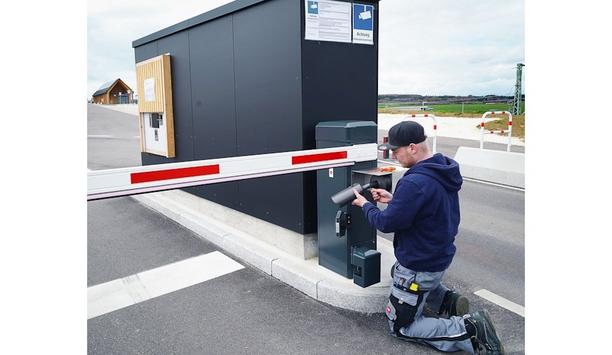
With an impressive 259 charging points and locally generated solar power to charge vehicles, Merklingen train station is the world’s largest e-car charging park. Situated between the cities of Stuttgart and Ulm, Merklingen was inaugurated in December 2022. The new train station serves approximately 1000 to 1300 passengers daily. It has benefited local hospitality, retail, and tourism since it opened with the state Ministry of Transport calculating that it will eventually generate an annual economic benefit of 4.8 million euros for the region. GDPR perspective As a transport hub for the local municipality of Merklingen, it is important that visitors feel safe and operations run smoothly. Because of this, the management team of the Zweckverband Schwäbische Alb contacted Reif GmbH looking for a new, intuitive video system that was futureproofed and could support the management of the station’s innovative e-car charging park. The customer also wanted an easy-to-use VMS to help with daily operations Existing systems on the market did not meet the customer’s requirements, specifically National Defense Authorization Act (NDAA) compliance which was important from a GDPR perspective. The customer also wanted an easy-to-use video management system (VMS) to help with daily operations and with event investigations. A new intuitive video system Hanwha Vision was chosen thanks to its intuitive WAVE VMS, NDAA compliance, open platform, and camera features. As a Diamond Partner, Reif GmbH was also able to offer a five-year warranty on the Hanwha Vision cameras. In total, 37 cameras are installed around the station’s car park along with WAVE VMS enabling continuous monitoring of the building and surrounding locations. The cameras include the QNO-8080R, a 5MP Network IR Bullet Camera, a TID-600R Intercom and the XNO-9082R, a 4K IR Bullet Camera with the Wisenet7 chipset and powerful video analytics including directional detection, audio detection, shock detection, and face/upper body detection. The benefits of an open system The open platform also supports future expansion of the station video surveillance if needed Hanwha Vision’s open platform offered the flexibility and futureproofing needed by the operator team, notably in supporting integration with a custom in-house AI parking control system that was developed in partnership with a regional software company. This system automates parking management removing the need for personnel to issue access, exit, and parking fees for the station car park. The open platform also supports future expansion of the station video surveillance if needed, or additional features and uses. Crucial evidence and insights The cameras work with the in-house parking management system to prevent unauthorized vehicles from entering the premises. They have also captured footage that was later used to investigate damage to property, helping operators to resolve such cases clearly and effectively with the video evidence. The XNO-9082R shows excellent performance in different lighting conditions thanks to Wisenet7 The XNO-9082R shows excellent performance in different lighting conditions thanks to Wisenet7, delivering clear images back to operators to help with situational awareness day and night. IK10 water and vandal protection was another selling point for the station team, as the cameras are all situated outdoors. Meeting GDPR requirements Hanwha Vision cameras are NDAA compliant, meeting the GDPR requirements for the station. No productive data is passed on to external third parties and the system can be operated completely on-premise to meet data protection regulations. Data can only be viewed by explicitly authorized individuals. Due to the WAVE VMS, maintenance staff can access the on-premise server in an emergency or malfunction with remote access through WAVE Mobile. “The performance and quality of Hanwha Vision cameras along with the open WAVE VMS that could work with the in-house AI parking management system made it the logical choice for the Merklingen station project,” explained Andreas Baumann, Managing Director at Reif GmbH.
Round table discussion

The most common wearable device deployed by security professionals is the body-worn camera. Traditionally used by law enforcement professionals, these devices are finding more and more uses in the corporate security world, and even impacting issues such as customer service. However, the term “wearables” also encompasses a range of other devices, including many worn by consumers. We asked this week’s Expert Panel Roundtable: How are wearable technologies impacting the security market?

As physical security technologies become more complex, it is incumbent on the dealer/integrator to have the skills and expertise needed to ensure that a system operates smoothly. The value of integrators increasingly rests on the skill sets they bring to bear when installing a system. If the skills are missing, there is a problem. We asked this week’s Expert Panel Roundtable: What missing skills among security integrators can cause problems for customers?

Facial recognition is a mature technology that continues to change and evolve. New innovations such as artificial intelligence (AI) are expanding facial recognition capabilities, even as privacy concerns, though often misguided, undermine wider acceptance in the market. We asked this week’s Expert Panel Roundtable: What are the new developments in facial recognition?
Products