Zwipe AS - Experts & Thought Leaders
























Latest Zwipe AS news & announcements
Zwipe, a globally renowned biometric technology company, is pleased to announce that it has been selected by Masria Digital Payments (MDP), one of the most well-known smart card manufacturers and digital payments providers in the Middle East and Africa to deliver biometric payments solutions to enhance MDP’s innovation product portfolio. Biometric payment solutions Zwipe will support MDP in integrating and rolling out biometric payment cards Zwipe will support MDP in integrating and rolling out biometric payment cards and eventually biometric enabled wearable devices to a region that has expressed significant interest in the technology. “To continue MDP’s long tradition of technology leadership, we are integrating Zwipe’s current biometric payment platform now to educate the market and get prepared for Zwipe Pay ONE,” said Ahmed Nafie, Executive Vice President (EVP) of Masria Digital Payments (MDP). Ever-rising usage of biometric payment cards Ahmed adds, “We are confident that, when that becomes available, we will have banks across the region ready to take the next natural step in payment cards with us.” The Middle East and North Africa is seeing great interest in biometric payment solutions, especially biometric payment cards. Zwipe – Masria Digital Payments partnership “Zwipe is thrilled to win a new strategic customer wanting to pilot our current product platform to pave the way for early deployment of our future offering, Zwipe Pay ONE. Working together we can unlock many opportunities in a part of the world that is proving to be a first mover when it comes to biometric payments,” said André Løvestam, CEO of Zwipe.
Identiv, Inc. announced that the company has partnered with biometric technology company Zwipe for access control card formatting services. Identiv’s U.S.-based card service bureau is programming the radio frequency identification (RFID) chips in Zwipe’s biometric credential line, providing all physical access control system (PACS) formats from Identiv’s portfolio. Pre-Formatted Smart Card Formatting Schemes In order to encode its biometric cards in a wide variety of formats, Zwipe connected with Identiv. Identiv’s encoding solutions are fast, flexible, and far less expensive than competing providers. Through this collaboration, Zwipe customers can now order Zwipe access control products pre-formatted with the most popular 125 KHz and 13.56 MHz smart card formatting schemes, enabling seamless integration with end-customer systems without the need for additional card formatting services by the integrator. “Identiv is seeing strong growth in the interest for biometric-enabled access control solutions,” said Stephane Ardiley, Identiv Director Product Management. “Zwipe’s credential products are very user friendly and offer a fast, efficient way for customers to upgrade to a biometric security level in their access control installations without the need to change their readers and back-end system. We see a good opportunity for Identiv by supplying formatting services for Zwipe cards, which we believe meets a strong, growing need in the marketplace.” Easy Biometric Access Control Integration Zwipe’s biometric credentials are delivered as credit card-sized cards with powerful, embedded biometric sensors for user enrollment and identity verification. After successful authentication via fingerprint, the RFID interface of the card is enabled, allowing the card to behave like a typical access control credential. “We are very excited to work with Identiv, as it allows us to address a large segment of customers for the first time — not just in the U.S. but across the world — thanks to the company’s expansive customer network,” said Einar Boije, Zwipe SVP of Access Control. “With Identiv’s capacity, we can now provide formatting services alongside our access control product lines, making it that much easier to integrate and deploy the world’s smallest biometric reader.”

Biometric tech company Zwipe will be well represented at one of the world’s largest security trade shows, ASIS International’s 63rd Annual Seminar and Exhibits (ASIS 2017) taking place in Dallas, Texas. Promoting Zwipe Access Solutions With over 22,000 industry guests from all the over the world and across the security spectrum expected to participate, ASIS is regarded as one of the world’s premier security events and will be a key showcase for Zwipe’s partner network in North America. Commenting on Zwipe’s participation, Einar Boije, SVP of Access Control said “ASIS 2017 is an excellent venue for us to work alongside our partners who will be taking the lead in promoting Zwipe Access solutions to the largest security market in the world”, adding: “We see a fast growing need for increased security for access to buildings and systems. Zwipe’s biometric access cards are a perfect fit for all those companies and organizations that want to make this necessary upgrade, but without changing their existing systems.” Zwipe Partners At ASIS 2017 Identisys Working through Zwipe’s partnerships with the ISG Network, one of Zwipe's partners present at ASIS 2017 will be Identisys – a full-service security, identification, and card solutions provider representing more than 70 key manufacturers in the ID and security marketplace, meeting customer needs in corporate, education, financial, gaming, government, healthcare, transportation, and other markets. Identisys is actively promoting and selling Zwipe Access and ID Solutions and can be visited at Booth 2015. ASIS is regarded as one of the world’s premier security events and will be a key showcase for Zwipe’s partner network in North America Identiv, Inc. As Zwipe recently announced, Identiv, a provider of physical security and secure identification will be demonstrating Zwipe Access cards at their Booth, No. 3617. Identiv will be providing formatting services for Zwipe and through this collaboration, Zwipe customers can now order Zwipe access control products pre-formatted with the most popular 125 KHz and 13.56 MHz smart card formatting schemes, enabling seamless integration with end-customer systems without the need for additional card formatting services by the integrator. This opens Zwipe to a large new customer base for the first time. ASIS Keynote Addresses Also demonstrating Zwipe products will be Allegion at Booth 2333, E-line by Dirak at Booth 714 and TZ who will be showing Zwipe Access at the ASIS Collaboration and Networking zone sponsored by Anixter at Booth 3509. ASIS 2017 will take place from September 25th to the 28th and will feature keynote addresses from former US President, George W. Bush, and serial tech entrepreneur Mark Cuban among others. Visitors from all over the world will gather to see the latest and greatest developments within a wide range of security applications in addition to educational seminars and presentations that will focus on the constantly evolving world of security.
Insights & Opinions from thought leaders at Zwipe AS
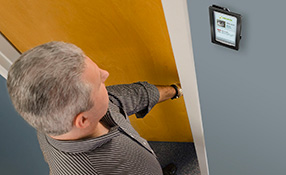
A biometrics-embedded tablet can tag a guard upon entering the building & feed videoof what’s happening beyond secure doors as he/she moves through the facility The best way to make the case for biometrics is to consider a physical and logical access control scenario, according to biometrics vendor SRI Identity, a program from SRI International, one biometrics company. With advances in security technology, access control systems have come to play a bigger role in organizational efficiency and strategies. Expanding Role Of Access Control Systems Imagine an employee sitting at their desk after entering a facility. The organization can tailor access and information to that employee across all devices and interfaces (access points, laptops, tablets, smartphones) in a way that not only improves security, but also enables the organization to track time and attendance, manage inventory control, and, in effect, to integrate biometrics into a broader operational system. SRI Identity’s (IOM) solutions offer an efficient, fast and non-invasive method of controlling physical and logical access, says Steve Perna, Executive Director, Products and Solutions Division, SRI International. “Enterprises can maintain high security without slowing things down,” he says. Consider the efficiency and productivity gains for a workforce with the use of biometrics. In hourly and shift-based businesses such as retail, hospitality and manufacturing, time and attendance becomes more accurate (no more “buddy punching”) and automated. It also becomes more convenient, eliminating all the extra steps between punching in, recording hours, processing payroll and performing analytics. SRI Identity Technology The ability to push information out to the edge based on the individual’s access level, location and other factors is a powerful capability, says Perna. A biometrics-embedded tablet could, for example, tag a guard upon entering the building, and feed video of what’s happening beyond secure doors as he/she moves through the facility to better situational awareness. SRI’s recently launched a biometrics-embedded tablet – equipped with its (IOM) technology – combines the accuracy and convenience of iris biometrics with the functionality and customization of the Android enterprise computing platform. This enables one device to support workflows including physical access control, time and attendance, inventory control, company messaging as well as addition customisable applications. Today, biometrics are seeing heavy use in mobile devices as well as banking applications, says Robert Fee, Director of sales, access control, Zwipe. Applications have seen the greatest uptick in replacement of passwords and log-ins, specifically in web and mobile based applications. Biometrics, as a form of security, has the potential to replace current forms of security, including physical, logical and web, he says. Therefore, considering the number of physical keys, access cards and credit/debit cards currently in the marketplace, the potential is excessively large. The primary value proposition of using biometrics over traditional security is that itdramatically enhances security by providing two-factor biometric authentication Enhanced Security With Biometric Solutions Fee says the primary value proposition of using biometrics over traditional security (in the case of access control) is that it dramatically enhances security by providing two-factor biometric authentication: your fingerprint. The days of using a PIN for two-factor are gone since PINs can be passed on from employee to employee to non-employee. “The vast majority of electronic access control (EAC) systems in place today authenticate the badge, not the person holding the badge,” says Fee. “Where is the security in that?” Solutions such as Zwipe biometric credentials allow implementation of two-factor authentication without replacing a single reader. No database integration, protection, installation, wiring or maintenance agreements required. It provides more security without any additional steps. Taking the same amount of time to use a biometric product as a traditional PIN-based card or swipe card, a biometric solution will offer greater security and ease of use, according to Zwipe. Zwipe specifically addresses privacy concerns by never storing a person’s fingerprint. The company creates unique templates that, by themselves, have no value other than within a Zwipe-based solution. Plus, the biometric engine within a Zwipe device is independent of the RF transponder that communicates to an external device, such as a physical or logical access reader. There is no biometric data being communicated between a Zwipe device and reader. Zwipe is the biometric reader. Entering Physical Access Control Market “We have physical spaces and virtual spaces, and the differences between them are becoming fuzzy,” says Jason Chaikin, President of biometric company Vkansee, which specialises in fingerprint capture for payment, data and other sectors, including physical access control. He notes that biometrics might be used to control an entrance to a building as well as entry into a network on a computer in the building. Additional safeguards can include confirming that a person trying to access a network from a computer in the building is also on record as having entered the building. “It brings together silos of information so we don’t have the weak links we have now,” he says. Chaikin says physical security devices are on his company’s radar. “I think biometrics should be on a lot more doors than they are now. Our new smaller size sensors can add biometrics for an extra $20 or so per door. The ability to locate the sensor safely under glass opens the doors to outdoor applications in a variety of harsh environments.” “People are willing to give a new look to biometrics, but the physical access control market is more conservative, so it will take more time,” says Chaikin. “When you contact companies, they are willing to give it a shot. Agile companies will start adopting new biometrics that work quite well – you will see a quick rampup.”
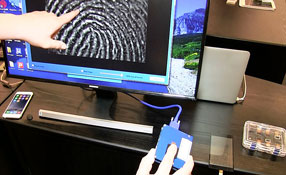
More fingerprint scanners being embedded into mid-range smart phones willspur the growth in availability of mobile wallets When Apple included a fingerprint scanner on the iPhone, everything changed in the biometrics market. What used to be exotic or even dubious instead became normal and everyday. Any negative connotations about biometrics were wiped away in an instant. “Since the release of Apple’s Touch ID, and subsequent similar products from Samsung and other mobile device manufacturers, we have not seen any negativity; the opposite in fact,” says Robert Fee, Director of Sales, Access Control, Zwipe, whose access product is essentially a small, portable biometric scanner that can fit in your pocket. Mobile Payment Services Driving Biometrics Adoption Pushing growth in biometrics adoption across all markets is greater adoption of biometric payment services such as Apply Pay and Samsung. A study from Juniper Research, Hampshire, U.K., finds that increased rollout of contactless payment services using fingerprint scanners will push the number of biometrically authenticated transactions to nearly 5 billion by 2019, up from less than 130 million in 2015. At present, there are only two services that use fingerprint scanners for authentication – Apple Pay in the U.S. and U.K. and Samsung in the U.S. and South Korea. However, both services are expected to be launched in several additional markets in 2016, and the convenience of the scanner is likely to make it a primary mechanism for transaction authentication. More fingerprint scanners in mid-range smart phones will spur growth in availability of mobilewallets. Also contributing will be a growing acceptance of contactless infrastructure at the point of sale (POS). Need For Biometric Data Security & User Privacy Juniper Research also commented on the need for security of biometric data. “When a password or PIN is hacked, the consumer can simply get a replacement,” says Dr. Windsor Holden, research author of the Juniper Research report. “When biometric data – fingerprint, iris, facial – is stolen, the consumer’s online identity could be irretrievably compromised.” The number of biometrically authenticated transactions will push to nearly 5 billion by 2019, up from less than 130 million in 2015 Biometrics has been ready for “prime time” for five years or more, says Jason Chaikin, President of biometric company Vkansee, which specialises in fingerprint capture for payment, data and other sectors, including physical access control. Apple’s incorporation of biometrics on the iPhone has created a real-life use case and a resulting “buzz” that will open the door to many other biometrics uses, he says. Privacy has been a key point both driving and inhibiting biometrics, he adds. “The issue with privacy is that you are only as strong as your weakest link,” says Chaikin, and security must extend to the every step of the process, from how the biometric is captured to how biometrics are stored and transferred, requiring encryption at every stage. Vkansee Miniature Optical Fingerprint Sensor Vkansee has developed a new sensor that could be used on a smart phone or any number of other devices. The smaller 2-millimetre optical fingerprint sensor, in effect, takes a photo of the finger for more accurate and reliable fingerprint authentication. Previously, optical fingerprint sensors such as those used by governments and civil authorities worldwide, have been larger – about 2x2 inches – too big to be used in embedded devices, for example. By miniaturising the familiar technology, Vkansee is paving the way for its greater use in smart phones, computers, tablets, automobiles, and physical access control. The small module can be mounted under a device’s glass screen so it’s not as susceptible to environmental elements. Currently the product is on the third run of pre-production samples; it will go into full production in 2016. In contrast, the capacitive sensors currently embedded in mobile phones and other devices emit a small amount of electricity and then measure how much of it is returned to the sensor – more from ridges in a fingerprint than from valleys – to build a map of the fingerprint. Users must touch the sensor directly. Manufacturers of sensors installed in today’s mobile devices include Fingerprint Cards AB (FPC), Sweden, and Synaptics, Santa Clara, California. Chaikin contends semi-conductor-based technology has reached its limit in terms of resolution, thus the need for an optical sensor that can be embedded in a device. (see bigger image)Vkansee created a fingerprint optical sensor to address the limits met bysemi-conductor-based technology in terms of resolution Vkansee’s new, miniaturized optical sensors are priced comparable to capacitive scanners, and have 2,000 pixel per inch resolution to capture “Level 3 details,” such as sweat pores and the shapes of fingerprint ridges. A byproduct of the greater resolution is to make it more difficult to fool the reader with a molded fake fingerprint. Beginning in 2016, smart phone and other device companies – including electronic access control companies – will be evaluating the Vkansee sensor with an eye toward embedding it into a variety of devices. “As the size of sensor gets smaller, it becomes important to be able to see deeply in the finger to get an accurate identification even on a small sensor,” says Chaikin. Speed, Accuracy And Convenience SRI International’s latest generation of biometrics products is following the trajectory of the evolution of mobile phones from a single-purpose device to today’s multi-function smart phone. “Just as we now expect smartphones to do a lot more than support voice calling, our offerings are using the speed, accuracy and convenience of biometrics to converge security and operations for enterprise workflows,” says Steve Perna, Executive Director, Products and Solutions Division, SRI International. “In years past, both customers and installers of biometrics were disappointed with the broken promises of what biometric technology could deliver,” says Larry Reed, CEO, ZKAccess. “Yes, today’s sales of biometrics are hampered.” But he adds that biometrics is making a big comeback. Driving the trend is the proliferation of smart phones with built-in finger readers (and soon-to-be face readers), improvements in biometric technology, reduction in the cost of biometrics.
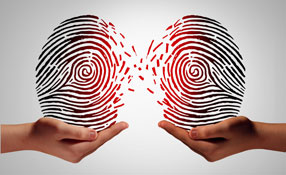
A number of misconceptions exist about the capabilities and technology ofbiometrics, perpetuated in popular culture by films and TV Like many categories in the security marketplace, the biometrics market suffers its share of misconceptions, ranging from misunderstanding of the technology to underestimating its utility for a broad range of uses. Misunderstandings Created By Pop Culture Contributing to the problem of understanding is the popular culture. “Popular movies such as James Bond and Mission Impossible have created many misconceptions and misunderstandings regarding biometrics,” says Robert Fee, Director of Sales, Access Control, Zwipe. “We all see them create perfect copies within minutes, and enter buildings or highly secured areas. If it was that easy, there would not be a multi-billion-dollar-a-year industry.” Another misconception that comes up is that a fingerprint template stored on one device works exactly the same with any other biometric device, says Fee. There is also a misconception that someone can steal and use a digital version of a person’s unique biometric, says Phil Scarfo, VP Worldwide Marketing, Biometrics, HID Global. “Some of the more advanced technologies like multispectral imaging [from HID Global] can identify human tissue as authentic, quickly detect fraudulent materials and respond and adapt to new vulnerabilities with a ‘learning’ capability that keeps up with new threats,” he says. Another misconception is that all biometrics devices and solutions are created equal. “What may be right for a mobile device and consumer application is not sufficient for commercial or enterprise applications,” says Scarfo. While there is the fear by some that biometrics poses a threat to personal privacy or a potential permanent loss of digital identity if it is stolen or compromised, it is far outweighed by the measureable benefits, he says. Ironically, the focus historically has been more on the potential risks rather than the benefits, adds Scarfo. Biometrics Binding Digital Identities To Individuals Most people don’t fully appreciate the critical importance of biometrics in an increasingly complex world of digital identities and ever-expanding ecosystem of ID cards, phones and other devices, says Scarfo. Biometrics is the only true means of linking or binding digital identities to the individual, determining who is actually using the system, and verifying whether he or she is a legitimate user for a myriad of new mobile and on-line applications. “The ability to securely link or bind digital identities to ourselves will simplify life and make it more secure,” says Scarfo. “Intelligently coupling what we have with who we are is a much better way forward in today’s complex digital world.” Misconceptions also persist around cost and ease of use, according to Steve Perna, Executive Director, Products and Solutions Division, SRI International. “Today’s biometrics systems are reliable, cost-feasible (particularly from a lifecycle cost perspective), and deliver ease of use,” he says. “Costs are being driven down across all aspects of the biometrics ecosystem, from underlying technologies and platforms to the devices themselves.” As prices reduce, functionality and features improve, and technologies become more mobile, biometrics is becoming an increasingly attractive form of security Misconceptions Related To Privacy There are also misconceptions related to privacy. People are apprehensive about sharing their biometric information out of fear of how their information can be exploited maliciously, says Arie Melamed Yekel, CMO, FST Biometrics. “However, these concerns are unfounded.” Much of an individual’s biometric information is already available publicly, whether registered through a governmental database, or facial/body/voice images and videos available on public social media profiles, he says. “In fact, entering one’s biometric information into a system such as FST Biometrics’ is much more secure since we take care to encrypt our data and protect our users,” he says. ZKAccess sees a big misconception is that biometric devices capture the actual image of a person’s fingerprint or face when enrolled. This creates a privacy concern for users that their fingerprint/face image can be compromised and subsequently used or shared without their permission, resulting in personal and/or financial harm to them. Biometrics do not capture live images. "Biometrics and fingerprinting are not the same,” says Larry Reed, CEO, ZKAccess. The commonly observed method of “fingerprinting” (seen on television and in hospitals/government facilities) is also known as an AFIS (an Automated Fingerprint Identification System, which uses digital imaging technology to obtain, store and analyze fingerprint data and originally used by the U.S. Federal Bureau of Investigation [FBI] in criminal cases). However, commercial biometric systems do not store/match actual images. Instead, biometric devices capture and store only a few dozen minutia points on the finger or face, apply proprietary mathematical algorithms, and convert those minutia points into binary code (i.e., a series of zeros and ones). “If you were handed a pencil and told to draw someone’s face by using 40 to 50 dots, would anyone recognize the face you drew?” Reed asks. “This is how biometrics capture, store and match templates. Only binary code is used.” Early Adopters Of Fingerprint Readers Some misunderstanding of biometrics stems from suboptimal experiences of early adopters of fingerprint readers for access control, says Steve Perna. “But the truth is that, in most cases, organizations didn’t try and abandon biometrics,” he says. “More likely they never adopted it due to stories they heard that impacted public perception. In other cases, higher prices dampened enthusiasm.” However, Perna says these impediments to adoption continue to fade, as prices come down, functionality and features improve, and as biometrics become inherently mobile and can deliver benefits beyond access control, such as time-and-attendance tracking, inventory management and logical access to other applications.









