SAGE Integration, Inc. - Experts & Thought Leaders





















Latest SAGE Integration, Inc. news & announcements
SAGE Integration announced the acquisition of Vital Installs and sudoVision Consulting LLC, expanding the company’s capabilities in security integration for commercial customers and government agencies. Vital Installs, with an office in Columbus, Ohio, provides security system solutions, structured cabling, and network installation services designed for performance, reliability, and growth. SudoVision Consulting LLC, out of Charlotte, North Carolina, is an SDVOSB-certified firm focused on delivering advanced technologies and services to commercial and government clients. Complex customer environments “We are thrilled to join the SAGE family. Since day one, our mission has been to deliver exceptional service and trusted solutions to every customer we support. As part of SAGE, we’re excited to expand that commitment, bringing our expertise, innovation, and customer-first approach to an even broader community. The future is bright, and we’re just getting started.” – Omid Jaafari, Founder/Owner, SudoVision Together, these acquisitions strengthen SAGE’s national delivery platform and add complementary expertise in low-voltage systems, future-ready infrastructure, and technology applications. The additions also enhance SAGE’s ability to support complex customer environments where physical security, resilient networks, and emerging technologies increasingly intersect. “Adding Vital Installs and sudoVision Consulting is an important step in our continued growth,” said John Nemorofsky, COO of SAGE Integration. “Their teams bring specialized capabilities that align directly with where our clients’ needs are headed: secure facilities, dependable infrastructure, and smarter technology solutions delivered with speed and precision.” With these additions, SAGE Integration continues to build a broader national security and technology services organization capable of helping clients protect people, facilities, operations, and critical assets across a wide range of industries.

SAGE Integration Inc. proudly welcomes Matthew “Matt” LaRue as Critical Infrastructure Manager. Matt is an accomplished security professional with a proven track record of driving operational excellence and expansion across the security and technology sectors. Trusted industry expert Throughout his career, he has managed large-scale accounts in the Utility, PetroChem, and Energy industries, led high-performing sales teams, and played a key role in revenue growth in the Energy sector. His expertise includes acquisition management, relationship management, and operations, making him a trusted industry expert. “We are thrilled to welcome Matt LaRue to the SAGE Integration team. Matt’s proven leadership, industry expertise, and commitment to client success align perfectly with our values and vision for growth. We look forward to the impact he will make as we continue to deliver exceptional solutions and service to our clients.” – John Nemerofsky, Chief Operating Officer, SAGE Integration.
SAGE Integration is excited to announce the newest office in Ripley, Tennessee, located at 567 Highway 51 South, Ripley, TN 38063. The latest expansion continues to enhance SAGE's ability to serve its expanding regional client base and address the rising demand for advanced electronic security solutions in the region. The new Ripley office will bolster local operations, enabling quicker response times, improved service, and deeper engagement with clients and the community while supporting our National Clients throughout the area. SAGE Integration's ongoing commitment "Our presence in Ripley, TN, marks a significant milestone for SAGE Integration," said John Nemerofsky, Chief Operating Officer. "This location allows us to deliver even greater value to our clients and strengthen our relationships within the region." The Ripley office demonstrates SAGE Integration's ongoing commitment to responsive service and reinforces its role as a trusted, innovative security integration partner nationwide.
Insights & Opinions from thought leaders at SAGE Integration, Inc.

Enterprise security directors often count on an integration firm to handle jobs ranging from day-to-day activities to long-term, technology-laden projects. However, before entering a relationship, you must know what's reasonable to expect from an integrator – as not all are created equal. Here are some tips that might make the selection process easier. Completing comprehensive classwork An integrator's experience working in an enterprise environment is an obvious consideration. Ideally, that experience fits well with your business. Any enterprise experience is a plus, but local, state, and federal regulations create precise yet very different rules for securing a utility instead of a hospital. That's also true for university campuses, manufacturing facilities, and many other operations. Many manufacturers offer certifications awarded after completing comprehensive classwork and testing Look for certifications indicative of an integrator's commitment to staying on top of industry changes. Organizations such as ASIS International and the Security Industry Association offer certifications showing an integrator's team members have mastered security principles and skills. Many manufacturers offer certifications awarded after completing comprehensive classwork and testing. Also, ensure an integrator sells and services equipment that integrates with your current security systems. Using multiple systems for the same function is less efficient. Project update meetings Go beyond an integrator's slick brochures and websites to ask tough questions about previous experience. How would the integrator handle a hypothetical situation in one of your facilities? Ask the integrator if there will be one project manager for all jobs. And ensure that person handles all interactions with security subcontractors. Ask if the integrator provides regularly scheduled project update meetings. It's frustrating to wonder how your project is progressing. Ask if the integrator's team can work during the hours and days that result in the least interference to your daily operations. Ask for onsite system training to save time and eliminate travel costs. Gathering sensitive data Look for an integrator with proven experience working with an enterprise IT department A malfunctioning component may be more than an inconvenience – it may be a severe security threat. You need to know how quickly your integrator can respond when things go wrong. Ask about available service plans. And consider the embedded staff approach in which the integrator places employees on your site full time to handle day-to-day and emergency activities. Much of the security equipment – video, access control, intercoms, visitor management, and more – is wireless and dependent upon networks operated by your IT department. Network-based devices provide more opportunities for hackers to gather sensitive data or cause critical equipment to malfunction. Don't trust your security operations with an Integrator unfamiliar with at least basic cybersecurity principles. Look for an integrator with proven experience working with an enterprise IT department. At a minimum, ensure the integrator can set and change security device IP addresses and port locations. Certifications from providers such as Cisco, Microsoft, and IBM indicate an understanding of various IT technologies. Potential security partners Knowledgeable integrators work with the well-encrypted Open Supervised Data Protocol (OSDP), now an internationally recognized standard. Run from any integrator who suggests operating an access control system with used Wiegand technology offering no encryption between cards and readers. It's easy for hackers to capture data and clone a working credential. Technology moves at a rapid pace. Your modern system of a few years ago may be long-of-tooth. You need an integrator capable of bringing new and innovative ideas to the table. You want an integrator who conducts in-house testing of new products, not relying solely on a manufacturer's claims. You want an integrator capable of thinking outside the box to solve a complex security problem. These ideas are just a start in assessing an integrator's value to your enterprise operation. However, they will help you sort through potential security partners to find one that best meets your needs.

Assembling security solutions has long been considered the role of the integrator, whose role is to pick and choose the best technology tools and then to assemble the complete system. However, more manufacturers are offering pre-integrated end-to-end solutions that include multiple elements from the same manufacturer, designed to work seamlessly together. At the end of the day, end users want to know: Whose role is it to provide security ‘solutions’ – the manufacturer or the integrator? We asked our Expert Panel Roundtable.

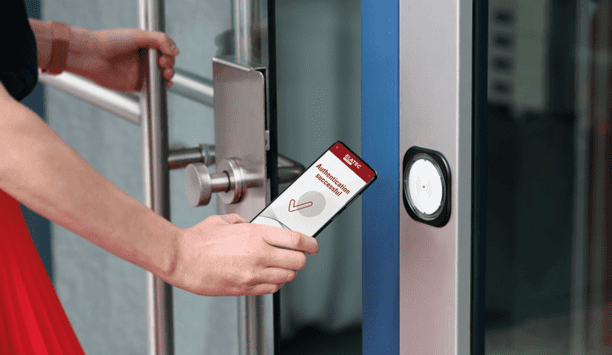
There is a broad appeal to the idea of using a smartphone or wearable device as a credential for physical access control systems. Smartphones already perform a range of tasks that extend beyond making a phone call. Shouldn’t opening the door at a workplace be among them? It’s a simple idea, but there are obstacles for the industry to get there from here. We asked this week’s Expert Panel Roundtable: What are the challenges and benefits of mobile access control solutions?