RecFaces - Experts & Thought Leaders













Latest RecFaces news & announcements

RecFaces, a global developer of enterprise-grade facial biometric software, will participate in FIRE & SECURITY INDIA EXPO 2026 (FSIE 2026), taking place September 3–5 at Jio World Convention Centre in Mumbai, India. Visitors will be able to meet the RecFaces team and explore three of the company’s flagship products — Id-Time, Id-Guard and Id-Gate — at the stand of its partner, Startologic Technologies (A9). At FSIE 2026, RecFaces will demonstrate how facial biometrics can address practical business and security tasks across large and complex enterprise environments. The company will focus on applications relevant to enterprises in construction, retail, education and smart offices, where organizations need reliable tools to manage workforce attendance, control access to facilities and strengthen the capabilities of existing video surveillance infrastructure. Video surveillance infrastructure Visitors to the stand will be able to explore three different applications of facial biometrics. Id-Time is designed for biometric workforce time and attendance management, helping organizations gain more accurate visibility into employee presence and working time. Id-Gate brings facial recognition into access control scenarios, while Id-Guard enhances video surveillance with facial biometric capabilities. Together, the three products demonstrate how RecFaces approaches facial recognition not as a standalone technology, but as a tool for addressing specific enterprise tasks within existing business and security infrastructure. The RecFaces team attending FSIE 2026 will include Tamara Morozova, CEO at RecFaces; Farida Baichora, Product Owner at RecFaces; and Oleg Kurochkin, the company’s strategic partner. During the exhibition, they will meet with enterprise representatives and industry professionals to discuss practical facial biometric use cases and explore how the technology can support their operational needs. Rapidly developing industries “India brings together rapidly developing industries and enterprises managing increasingly complex facilities and operations. For RecFaces, FSIE is valuable because it gives us the opportunity to speak directly with the people responsible for these environments and understand the business tasks behind their technology decisions,” said Tamara Morozova, CEO at RecFaces. “Our goal is not simply to demonstrate facial recognition, but to show how it can become a practical part of everyday enterprise processes — from managing access and security to gaining better visibility into workforce attendance. These live conversations also help us understand where the market is heading and ensure that our products continue to address real business needs.” For organizations in construction, facial biometrics can be relevant across environments ranging from infrastructure and residential projects to shopping malls and corporate facilities. Large retail businesses, meanwhile, often operate networks of stores with significant employee and visitor flows. Education and smart office environments bring their own requirements for access, security and workforce management. Lengthy development project “From a product perspective, the value of facial biometrics becomes clear when it is connected to a specific process,” said Farida Baichora, Product Owner at RecFaces. “With Id-Time, Id-Gate and Id-Guard, we address three distinct scenarios: workforce time and attendance management, access control and facial recognition within video surveillance. At FSIE, visitors can discuss with us which product fits their particular task, what role facial biometrics plays within the existing infrastructure, and how organizations can introduce the technology without turning biometric deployment into a lengthy development project.” FIRE & SECURITY INDIA EXPO brings together professionals and companies working across fire protection, life safety, security, building automation, loss prevention and risk management. For RecFaces, participation in the exhibition provides an opportunity to engage with India’s security community and enterprise decision-makers, demonstrate facial biometric software in practice, and exchange expertise on its application in modern business environments. RecFaces invites enterprises, security professionals, technology partners and industry representatives attending FIRE & SECURITY INDIA EXPO 2026 to visit Startologic Technologies’ Stand A9 on September 3–5 at Jio World Convention Centre in Mumbai to meet the RecFaces team and explore Id-Time, Id-Guard and Id-Gate in action.
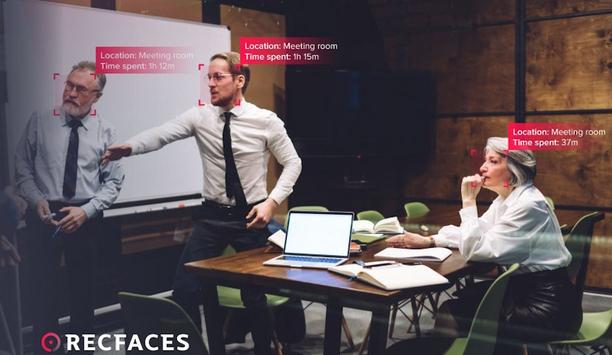
RecFaces, a global developer of enterprise-grade facial biometric software, announces a major update of Id-Time, its facial recognition solution for workforce time management, attendance control, and operational visibility across enterprise facilities. The new version represents a significant evolution of Id-Time, transforming it into a full-featured workforce time management and monitoring tool for organizations with complex structures, distributed sites, shift-based schedules, high people flow, and strict requirements for accuracy, automation, and control. Facial recognition solution At the center of the release is a complete biometric time and attendance module, now built directly into the product. Companies can manage planned schedules, timesheets, attendance reports, overtime, undertime, breaks, violations, absences, and automatic notifications in one interface. This allows HR teams, security departments, facility managers, and executives to see a complete picture of employee attendance and workforce discipline without relying on fragmented systems or manual reporting. Id-Time is now also powered by an upgraded version of a facial recognition algorithm ranked among the Top 5 globally by NIST. The latest version significantly increases identification accuracy and consistency, particularly in challenging conditions such as poor lighting, high people flow, or partial face visibility. This ensures faster and more reliable recognition performance in real-world enterprise environments. Real-time monitoring One of the key additions in the new Id-Time is real-time monitoring and diagnostics of events across a facility. The product now includes specialized dashboards for security teams, HR departments, and managers, helping them monitor system load, terminal status, camera performance, database diagnostics, and the number of people on site. This capability gives organizations not only better control over workforce attendance, but also a clearer understanding of what is happening at their facilities at any given moment. For example, in an emergency situation, security teams can use Id-Time to check how many people are located in a specific area and support evacuation or response procedures with more accurate information. Workforce time management The updated version also introduces custom and informative reports for workforce time management. Users now have access to more than 10 report types, including worked time summaries, attendance reports, overtime and undertime reports, detailed and summary violation reports, visitor reports, and presence monitoring. Reports can be exported in Excel, CSV, and PDF formats, making data ready for payroll processing, HR analysis, or integration with external systems via API. Another important new feature is visitor flow monitoring. Id-Time can now count and analyze visitors separately from employees, including their time on site, first and last passage, and daily statistics. One-time visits are recorded automatically, while temporary profiles can be deactivated according to schedule. This gives organizations a more accurate view of both employee and guest presence at their facilities. Biometric workforce management According to Farida Baichora, Product Owner at RecFaces, the update was developed around real customer needs and practical business scenarios: “At RecFaces, we always build our products around the needs of our clients. While working on this Id-Time update, we analyzed customer requests, market expectations, competitor capabilities, and real user experience, and brought all of this into one product vision. As a result, we created a solution that helps businesses save time, reduce costs, and clearly see what is happening at their facilities. This release is not only about new functionality — it is about making biometric workforce management more practical, flexible, and valuable for everyday operations. We will continue collecting user feedback, improving the product, providing human technical support, and releasing updates based on real business needs.” Geographically distributed facilities The new Id-Time also offers an expanded biometric profile and a flexible organizational structure. Organizations can manage employee photos, departments, positions, profile types, vacations, sick leaves, and different attendance policies for different groups. The solution supports complex corporate hierarchies, including departments, cities, countries, and distributed organizational structures. For enterprise and distributed deployments, RecFaces has introduced several important infrastructure improvements. Id-Time now supports Debian GNU/Linux 13.5 “Trixie”, giving customers more flexibility when choosing a corporate Linux server platform. The release also includes an offline mode for trackers, or video preprocessing servers, which is especially important for geographically distributed facilities. If connection with the central core is temporarily lost, identification events are processed and stored locally, then automatically synchronized with the central server once the connection is restored. Flexible notification templates The notification system has also been enhanced. New mechanisms for Email and Webhook notifications provide guaranteed delivery, flexible notification templates, and ready-to-use configurations for key scenarios, including access events, labor discipline control, system monitoring, password recovery, compromise alerts, and SMTP checks. Alongside these functional and technical updates, RecFaces has significantly improved the Id-Time interface. The redesigned navigation, compact table mode, optimized filtering, hotkeys, favorites, improved dark theme, updated SMTP/Email and Webhook settings, CSV import improvements, and a more intuitive organizational hierarchy make everyday use faster and more convenient for administrators, managers, HR specialists, and security teams. With this release, Id-Time becomes a comprehensive biometric workforce time management solution that combines facial recognition, attendance control, real-time monitoring, visitor analytics, flexible reporting, and enterprise-grade infrastructure capabilities in one product. The update reflects RecFaces’ commitment to customer-centric innovation and to developing practical biometric software that helps organizations strengthen control, improve efficiency, and make better operational decisions.

RecFaces, a global developer of enterprise-grade facial biometric software, will host an exclusive online expert panel, "Fueled by Face: Smart Biometrics for MENA Oil & Gas", on June 30 at 3:00 PM (GMT+4). Organized in partnership with Milestone Systems, the event will bring together regional technology experts to explore how facial biometrics is helping Oil & Gas operators strengthen security, improve workforce management, and accelerate digital transformation across critical infrastructure environments. Demanding security requirements Oil & Gas facilities throughout the Middle East and North Africa operate under some of the world's most demanding security requirements. Refineries, production sites, pipelines, compressor stations, and corporate campuses must manage thousands of employees, contractors, and visitors, many of whom require temporary or rotating access to sensitive areas. At the same time, operators face growing regulatory, health and safety, and operational pressures that require accurate, real-time visibility into who is on site, where they are located, and whether they are authorized to be there. The panel discussion will examine the security and workforce management challenges facing MENA Oil & Gas organizations and demonstrate how facial biometric technologies can address them. Attendees will gain practical insights into real-world use cases, including perimeter and restricted zone access control, contractor attendance verification, watchlist management, incident investigations, and emergency mustering. Enhancing security operations During the session, the experts will also provide a live walkthrough of the integration between RecFaces' biometric solutions and Milestone Systems' XProtect video management platform, demonstrating how organizations can enhance security operations through a unified technology ecosystem. The event will feature: Eugenia Marina, Business Development Director for the MENA region, RecFaces Mohammed Bajarsh, Vice President of Products, RecFaces Chebel Bou Chebel, Technology Partner Manager, Milestone Systems Traditional identification technologies "The Oil & Gas sector presents a unique combination of security, compliance, and operational challenges that traditional identification technologies struggle to address," said Eugenia Marina, Business Development Director for MENA at RecFaces. "Across the region, operators are looking for solutions that not only strengthen physical security but also provide verifiable, real-time workforce visibility. This panel is designed to share practical knowledge from projects and market conversations happening across MENA today, helping security leaders and system integrators understand where facial biometrics delivers measurable business value." Intelligent security technologies The discussion will also address how regional modernisation initiatives, including Saudi Vision 2030, UAE Vision 2031, and other national digital transformation programs, are accelerating the adoption of intelligent security technologies throughout the energy sector. "Many organizations still rely on fragmented processes that make it difficult to verify identity, investigate incidents efficiently, or maintain accurate workforce records across multiple locations," said Mohammed Bajarsh, Vice President of Products at RecFaces. "What we're seeing now is a shift toward unified biometric ecosystems where access control, video surveillance, attendance management, and incident response operate as a single network. During the session, we'll demonstrate how this approach can improve both security outcomes and operational efficiency from day one."
Insights & Opinions from thought leaders at RecFaces
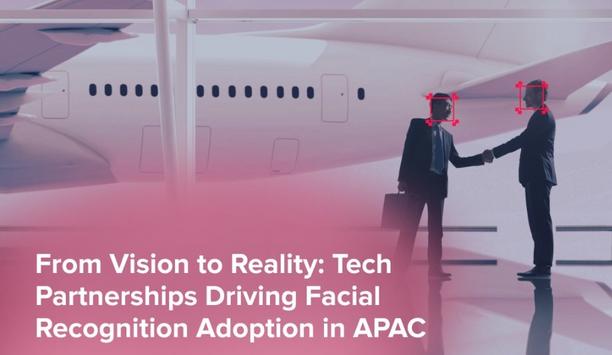
In today’s fast-evolving aviation landscape, innovation isn’t optional — it’s essential. With passenger traffic in the Asia-Pacific continuing to surge, the region is facing a pivotal moment: adapt with scalable tech, or fall behind. In January 2025 alone, APAC carriers accounted for 56.6% of global passenger traffic growth. Airports are operating at near capacity, with a record-high Passenger Load Factor (PLF) of 82.1%, leading to pronounced congestion at check-in counters, security checkpoints, and boarding gates. Increasing passenger volumes As airports strive to manage increasing passenger volumes without resorting to costly and time-consuming infrastructure expansions, technology — particularly facial recognition and biometric automation — emerges as a viable solution. However, the full realisation of these innovations requires more than just installing new system However, the full realisation of these innovations requires more than just installing new systems. It’s about building the right ecosystem of partners, processes, and policies to ensure sustainable, secure, and scalable growth. Presenting physical documents According to their estimates, over 120 APAC airports have already deployed biometric solutions at key travel touchpoints, including check-in, bag drop, security, and boarding. Thailand exemplifies this shift, with facial recognition deployed at six major airports — Suvarnabhumi, Don Mueang, Chiang Mai, Chiang Rai, Phuket, and Hat Yai — dramatically reducing passenger processing times. These systems allow travelers to verify their identities seamlessly at multiple touchpoints, from check-in and security screening to boarding gates, without presenting physical documents. This case reflects the Airports of Thailand’s (AOT) commitment to leveraging technology to improve operational efficiency and passenger experience. Digital identity programs Biometric solutions also extend beyond the airport: digital identity programs enable travelers to verify their identities before arriving at the terminal, creating seamless journeys from curb to gate. In this environment, facial recognition is not merely a futuristic innovation; it has become an operational imperative. Airports that fail to adapt risk falling behind, unable to manage burgeoning passenger volumes or meet evolving traveler expectations. True operational efficiency Despite its transformative potential, biometric technology cannot be successfully deployed in isolation. Achieving true operational efficiency through facial recognition requires strategic collaboration among technology vendors, IT integrators, airports, airlines, and regulatory authorities. Several pillars underpin a successful biometric implementation: Interoperability: Biometric systems must integrate seamlessly with a wide array of airline platforms, security protocols, and airport infrastructure. Lack of interoperability can lead to fragmented systems that frustrate staff and passengers alike. Scalability: Passenger volumes are forecasted to continue rising. Biometric solutions must be designed to scale rapidly in response to demand surges and future security challenges. Data Privacy and Security: With growing public scrutiny over personal data usage, airports must implement robust security frameworks that prioritize privacy and transparency. Encryption, consent-based use, and strict access controls are critical to gaining and retaining passenger trust. Future security challenges BKI can achieve significant throughput gains without major construction disruptions A case study illustrates these points: Malaysia’s planned revamp of Kota Kinabalu International Airport (BKI) aims to boost capacity by 33% over the next few years. Rather than expanding physical infrastructure alone, authorities are exploring facial recognition solutions to increase efficiency within existing spaces. By integrating biometric checkpoints at key touchpoints, BKI can achieve significant throughput gains without major construction disruptions. Such outcomes are only possible through well-coordinated technology partnerships, where vendors, airports, and integrators work toward a shared vision of future-ready travel. AI-powered computer vision What’s Next: Fully Biometric-Enabled Travel Looking ahead, the pressure on APAC airports is set to intensify. Airports Council International projects 9.5 billion air travelers globally by the end of 2025, a volume traditional processing methods cannot manage effectively. In response, AI-powered computer vision and facial recognition will continue to refine biometric processes, delivering higher accuracy rates and faster verification. Future systems will leverage real-time liveness detection, predictive analytics for crowd management, and seamless integrations across all travel stages. A fully biometric-enabled journey is becoming reality: Check-in with a glance at a kiosk Drop bags without producing an ID or boarding pass Clear security with automated facial recognition portals Board flights through biometric-enabled gates — without ever presenting a physical document. Experiencing significant growth Seamless integration across touchpoints creates a unified, frictionless journey In this vision of the future, identity becomes the ticket. Seamless integration across touchpoints creates a unified, frictionless journey. For APAC airports experiencing significant growth, full biometric enablement is becoming increasingly important for maintaining efficiency and staying competitive. At the same time, such a future demands robust technology ecosystems, where ongoing innovation is supported by partnerships that align regulatory, operational, and technological goals. Expanding physical infrastructure Building the Smart Airports of Tomorrow: Join the Conversation The aviation sector in APAC stands at a critical crossroads. Passenger growth, operational challenges, and heightened security requirements are converging, creating an urgent need for innovation. Facial recognition and biometric automation offer a clear path forward, enabling airports to handle growing volumes, enhance security, and deliver superior passenger experiences without necessarily expanding physical infrastructure. Facial recognition solutions Yet, the success of these innovations hinges on strategic, trusted technology partnerships. Airports must collaborate with technology vendors, IT system integrators, airlines, and regulators to ensure interoperability, scalability, and data security. At RecFaces, they believe the future of APAC airports is fully biometric-enabled. To explore how tech collaborations and advanced facial recognition solutions can transform airport operations, they invite users to join their free online panel discussion on April 30: ‘Smart Airports Start With Smart Tech: Facial Biometrics for APAC Airports.’
The global biometrics market has been recently developing rapidly, and this trend will continue shortly. If in 2018 its volume was estimated at $23.4 billion, according to the forecast of the analytical company BCC Research, the market size may increase to $71.6 billion with an average annual growth rate of 23.2 % by 2024. Fingerprint scanning, facial recognition, iris, vein, and voice technologies are expected to be implemented at the fastest pace. The analysis is based on the revenue indicators of key players depending on segments, including hardware, software, and integration. Biometric electronic documents Another analytical Agency, Acuity Research, estimates that the number of biometric electronic IDs will increase by about 3.5 billion electronic documents in the world. Moreover, more than half of the UN member States issue biometric passports. Government and private contracts of Canada, the United States, Belarus, Ukraine, Moldova, Lithuania, Hungary, Bangladesh, Senegal, and other countries are examples of implementation of programs for the transition to biometric electronic documents. Government organizations in various countries believe that biometrics is one of the most effective ways to identify refugees and those who cross the border. Now there are a lot of projects which are based on biometric technology. Biometric identification system Perhaps one of the most ambitious is the Aadhaar project being implemented in India Perhaps one of the most ambitious is the Aadhaar project being implemented in India. It is a biometric identification system that contains the data of more than a billion people. The database contains about 10 billion fingerprint templates, two billion iris templates, and a billion photos. There is another ambitious project at the Nairobi Jomo Kenyatta International Airport, where RecFaces company has implemented a passenger facial identification ready-made solution, that helps the security guards to receive notifications about airport visitors in just a few seconds and increase the efficiency of security services at least by 30%. The introduction of biometric identification of passengers aimed at increasing the level of airport security, as well as quickly obtaining information about the detection of wanted persons, stored in the long-term archive. Automated control gates As another example, face match is used at border checks to compare the portrait on a digitized biometric passport with the holder's face. In 2017, Thales company was responsible for supplying the new automated control gates for the system of Automated Fast Track Crossing at External Borders at Roissy Charles de Gaulle airport in Paris. This solution has been devised to facilitate evolution from fingerprint recognition to facial recognition This solution has been devised to facilitate evolution from fingerprint recognition to facial recognition during. Governmental systems, SmartCity, airports projects using identification technologies day by day become our reality and influence the growth of the biometrics market globally. Countries are studying the experience of each other and adopting it. Paperless payment technologies The global market of biometrics will shift all industries, starting from the transportation facilities especially airports, where a transition from traditional VMS and ACS to paperless biometric self-Boarding systems will be carried out. Sports facilities will see the development of paperless payment technologies at cash desks, and the banking sector — the payment systems with remote customer identification. HoReCa will transfer from staff time tracking systems to biometric payment systems, biometric check—in systems and the use of biometric identifiers. To sum up there are two most significant drivers of this growth are surveillance in the public sector and numerous other applications in diverse market segments.
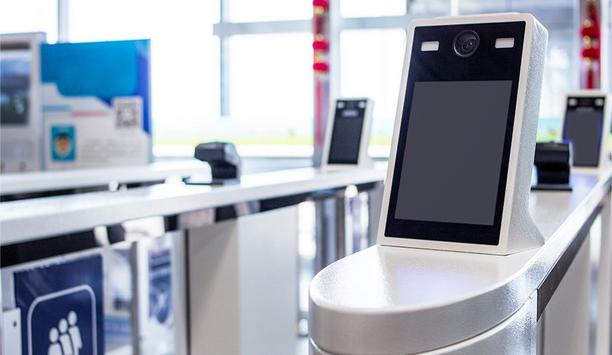
Several major players vigorously employ biometric recognition technologies around the globe. Governments use biometrics to control immigration, security, and create national databases of biometric profiles. Being one of the most striking examples, the Indian Aadhaar includes face photos, iris, and fingerprints of about 1.2 billion people. Financial institutions, on their part, make use of biometrics to protect transactions by confirming a client's identity, as well as develop and provide services without clients visiting the office. Besides, biometric technology ensures security and optimizes passenger traffic at transport facilities and collects data about customers, and investigates theft and other incidents in retail stores. Widespread use of biometrics Business, which suddenly boosted the development of biometrics, is an active user of biometric technology Business, which suddenly boosted the development of biometrics, is another active user of biometric technology. Industries choose biometric systems, as these systems are impossible to trick in terms of security, access control, and data protection. Being in demand in business, these three tasks are also relevant for the industry. However, the use of biometrics at industrial sites is discussed unfairly seldom. Therefore, it is the face identification that is the most convenient there, as workers often use gloves, or their hands may be contaminated, and the palm pattern is distorted by heavy labor. All these features make it difficult to recognize people by fingerprints or veins and significantly reduce identification reliability. Therefore, industries seek facial recognition solutions. Thus, let us demonstrate the application of face recognition technology at different enterprises, regardless of the area. Facial recognition use in incident management Facial biometric products are known to automate and improve the efficiency of security services by enriching any VMS system. These systems provide an opportunity of instantly informing the operator about recognized or unrecognized people, and their list membership, as well as save all the detected images for further security incident investigation. Furthermore, some sophisticated facial biometric systems even provide an opportunity to build a map of the movements of specific people around a site. Besides, it is relevant not only for conducting investigations but also in countering the spread of the COVID-19 virus. Identifying and tracking COVID-19 positive cases Therefore, if an employee or visitor with a positive COVID-19 test enters a facility, the system will help to track his/her movement and identify his/her specific location. It will also help to take the necessary measures for spot sanitary processing. Thus, the introduction of biometric facial recognition at the industrial enterprise can improve and speed up the incidents’ response and investigations without spending hours watching the video archive. Access control system to secure physical assets The right access control system can help industries secure physical and informational assets The right access control system can help industries secure physical and informational assets, cut personnel costs, and keep employees safe. Facial recognition systems may enrich access control systems of any company by providing more security. As biometric characteristics, by which the system assesses the compliance of a person with the available profiles in the database, cannot be faked or passed. The human factor is also reduced to zero, due to the fact that while identity documents can be changed, the inspector can make a mistake or treat his/her task carelessly, be in collusion with an intruder, the biometric system simply compares a person in front of the camera with the biometric profiles database. Biometric facial identification software For example, RecFaces product Id-Gate, a specialized software product for reliable access control to the site, checks the access rights by using biometric facial identification alone or in conjunction with traditional IDs (electronic passes, access keys, etc.), which means that there is almost a zero probability of passing to the site by someone else's ID. The access control system’s functionality allows one to strictly account the number and time of all the facility’s visitors and also track their movement. When unauthorized access is attempted or a person from the stop list is detected, Id-Gate sends an automatic notification to the access control system and operator. Enhanced data and information security Even despite the division of access to different industrial enterprise areas, the security service needs to provide independent information system security. Employees with the same facility access rights may have different access rights to data. However, in that case, a personal password is not enough, as an employee may forget it, write it down and leave it as a reminder, tell a colleague to do something for him/her during the vacation, or just enter it at another person’s presence. Password-free biometric authentication systems make the procedure user-friendly and secure Password-free biometric authentication Password-free biometric authentication systems make the procedure user-friendly and secure. Such systems usually provide an option of two-step verification when successful password entry is additionally confirmed by biometric recognition. Hence, it is particularly relevant due to the current lockdown in many countries. To sum up, the application of biometric technologies solves several issues of the industry, such as: Optimizes and partially automates the work of the security service, as it provides reliable identification and verification of visitors/employees, reduces the amount of time spent on finding a person on video and making a map of his/her movements, without spending hours on watching video archive in case of investigation. Provides a high level of reliability and protection from unauthorized access to the enterprise and the information system. Provides a two-step verification of the user/visitor (including password and biometric data) and almost eliminates the risk of substitution of user data/ID.









