Rapiscan Systems - Experts & Thought Leaders







Latest Rapiscan Systems news & announcements
OSI Systems, Inc. announces that its Security division received an order for approximately $50 million from a North American customer to provide ongoing maintenance service for its installed base of Rapiscan® inspection systems that are utilized for screening baggage, cargo and vehicles. As part of the award, the Company is also expected to provide continued support for its CertScan® Platform. OSI Systems’ President and CEO, Ajay Mehra, commented, "We are pleased to extend our long-standing support for this customer’s security operations. Our focus remains on delivering dependable service while enhancing performance and visibility across the installed base through CertScan."
OSI Systems, Inc. announced that its Security division’s Itemiser® 4DX and new Itemiser 5X trace detection systems have achieved ECAC/EU G1 approval, meeting the highest European standards for aviation security. This approval reflects compliance with the European Civil Aviation Conference (ECAC) and European Commission requirements for trace detection systems, supporting enhanced security for airline passengers. Meeting global secrity standards “Achieving ECAC approval and EU G1 certification demonstrates our commitment to delivering innovative solutions that meet rigorous global security standards and help our customers protect people and assets worldwide,” commented Ajay Mehra, President and Chief Executive Officer of OSI Systems. Security solutions The Itemiser 4DX and the Itemiser 5X systems are widely used by aviation security authorities around the world with thousands of systems deployed. In addition to airport passenger and cargo screening, the Company’s trace detection solutions can be utilized for prisons, customs and border operations, law enforcement, event security, and critical infrastructure applications.
OSI Systems, Inc. announced that its Security division has been awarded a contract to deliver multiple screening technologies for an upcoming major sporting event being held this winter in Europe. These systems will be utilized to screen people, baggage, and cargo, supporting a safe and seamless experience for athletes, officials, and fans from around the world. Protecting a celebrated event “We are honored to help protect one of the world’s most celebrated sporting events,” said Ajay Mehra, President and CEO of OSI Systems. “Our leading security solutions are designed to meet the unique challenges of large-scale venues, combining advanced technology with flexibility to safeguard people and infrastructure while preserving the spirit of global competition.”
Insights & Opinions from thought leaders at Rapiscan Systems
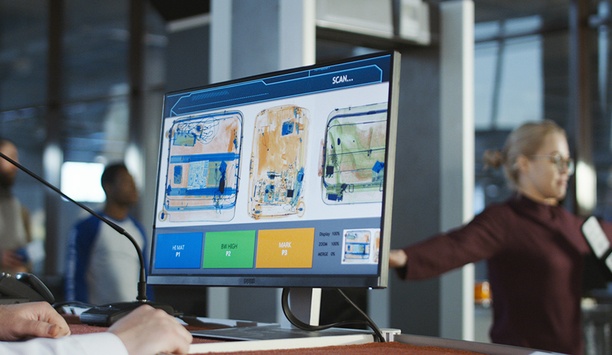
Using computed tomography (CT) security technology for cabin baggage screening at airports can eliminate the need for passengers to remove liquids and laptops from their bags, thus helping to make the security process easier and more efficient. As the latest in checkpoint scanning technology, CT provides 3D images with much more information to improve threat detection capabilities so decisions by the operator can be resolved quickly and more accurately, without the need for manual search. The whole experience is better and safer for everyone. The use of computed tomography The Netherlands were the first to introduce CT at the checkpoint and the Transportation Security Administration (TSA) in the United States plans to install 145 units in its airports by the end of the year. Australia is already installing and using CT at some of its airports. The United Kingdom is the first country to mandate use of CT for screening cabin baggage, and it is expected that the EU will also mandate this type of technology in the near future. It is expected that the EU will also mandate this type of technology in the near future The process of deploying CT is another level in the evolution of passenger screening and aviation security. Since 9/11, the traveling public has become increasingly educated about aviation security, says Steve Revell, Senior Director of Aviation CT at Rapiscan Systems. “What passengers expect is courtesy, professionalism and, most of all, to be able to travel safely without fear of harm,” he says. “Each level of security we have seen introduced over the years, I believe, shows commitment from all stakeholders to meet these key deliverables.” Rapiscan Systems' 920CT Rapiscan Systems' 3D cabin baggage screening system, 920CT, utilizes patented Dual-Energy technology and a sophisticated algorithm to provide the highest level of automatic detection of highly dense items, as well as automatic detection of explosives based on the most stringent global regulatory requirement. It also has a truck wheel design and contactless power and data transfer, both of which reduce maintenance costs and downtime and make the 920CT more efficient and robust. Rapiscan's 920CT provides the highest level of automatic detection Rapiscan’s 920CT is equipped with advanced software and detection algorithms that are designed to be upgradeable. With 3D volumetric imaging, the 920CT is superior to 2D systems as it provides improved visualization of potential threats. It has also been engineered to integrate seamlessly with Rapiscan’s TRS tray return solution to create a more efficient checkpoint experience, for both passengers and staff. “As a manufacturer, we strive to provide the very best quality service and equipment we can – working closely with regulators and airports alike to ensure the evolution and expansion of air travel is both collectively understood and fit for purpose,” says Revell. Portfolios and partnerships Rapiscan has a wide portfolio of products and capabilities. However, one company cannot do it all. “For this reason, we will always look to best-of-breed technologies that complement our offerings and provide a cohesive solution and, more importantly, long-term partnership,” says Revell. “The partnership deliverable is what drives the future. Our mission is one of an open platform that invites other technologies to work in conjunction with ours and integrate in such a way that can provide meaningful reports and controls systems to our clients, driving core efficiencies and security enhancements.” Our mission is one of an open platform that invites other technologies to work in conjunction with ours “The efforts borne by each of the key stakeholders is done for one very important and aligned reason, to ensure to the very best of our abilities that passenger safety is put first, is always put first and is done in the most courteous, professional way possible, without any undue inconvenience,” he adds. Increasingly, airports are asking for suppliers’ systems to talk to each other. Many airports have security screening equipment from multiple manufacturers and want to put images from these into a single, searchable database, to track missing items, improve productivity and efficiency, or comply with regulations. The Digital Imaging and Communication for Security (DICOS) is an industry standard that defines an interoperable data format for integration of security screening technologies across multiple vendor platforms. It facilitates the development and use of improved security screening technologies and third-party software. Rapiscan’s 920CT supports DICOS, and the company is working with multiple vendors to help create a single platform for airports.
Stratus Technologies is a provider of “always-on” technology, which helps to ensurethe running of mission-critical access control and video surveillance applications Building security – especially high-security installations – requires technology that is reliable and minimizes downtime. In some physical security installations, access control and video surveillance solutions are required to function uninterruptedly to ensure business continuity and maintain data integrity. While it may not be a household name in the security industry, Stratus Technologies, a provider of “always-on” technology, helps to ensure the running of mission-critical applications. Chief Executive Officer of Stratus Technologies, David C. Laurello, sees the company’s mission as “helping customers achieve the highest level of uptime for mission-critical applications” where a few seconds of downtime per year count. “The average downtime for our customers is less than 5 minutes a year, with the majority of customers experiencing no downtime at all. Our solution is a fully redundant server that runs in lockstep – we’re about failure prevention rather than failure recovery.” Stratus Security Applications For Financial Services And Other Markets The markets that Stratus operates in are financial services – including ATMs and point of sale – building security, manufacturing process control and telecommunications. In security applications, the company partners with companies such as Tyco Security Products on installations that require their applications, such as video monitoring systems and access control, to be “always on.” Stratus works with both manufacturing partners and system integrators and has a variety of offerings – both hardware and software – including the everRun enterprise solution that runs on standard servers. An application is installed on a pair of standard Intel servers that everRun keeps in sync to ensure no data loss or interruption takes place. It proactively monitors the servers and keeps the application online, even when there is a hardware failure, explains Laurello. Many security systems need to be up and running 24 hours a day, 365 days a year, including access control solutions where you need to monitor data and add orremove users of the system “Always On” Video Surveillance And Access Control Systems Many security systems need to be up and running 24 hours a day, 365 days a year. With access control solutions, for example, you need to have the system “always on” to monitor data and also to add or remove users of the system. “Of all of the open system fault-tolerant platforms in the marketplace, Stratus is present in around 40 percent,” says Laurello, “and that is across a variety of industries around the world.” For example, in financial services it is imperative that no data is lost, especially while a transaction is being processed (data “in flight”). Similarly, always-on can be vital in manufacturing applications, where even a moment of downtime can result in the costly loss of a whole batch of a drug, for example. And in the UK, Stratus works alongside threat detection equipment supplier Rapiscan as part of the baggage screening process at airports. Laurello sets out the key benefits as: Protecting physical security and building automation applications with an always-on operating environment. Detecting potential problems and taking action before downtime becomes an issue. The ability to scale easily to accommodate changing business requirements. Meeting the requirements for data integrity and reliability in regulated industries. Providing support 24 hours a day, 365 days a year. Stratus has a variety of offerings for security applications – both hardware and software – including the everRun enterprise solution that runs on standard servers Uninterrupted Security At Gerald R. Ford International Airport An example of a Stratus security installation is at Gerald R. Ford International Airport in Grand Rapids, Michigan. Over two million passengers pass through the airport each year, making it the second busiest airport in Michigan. More than 2,000 people work at the airport, the majority being employed by airport tenants. When the airport needed an access control system, they selected a Johnson Controls P2000-based solution, using a Microsoft Windows server 2003 operating system. The system operator has real-time access to an interactive facility map using dynamic icons, to monitor and control access points. Because of the critical nature of this application, the airport had to ensure that the system would be guaranteed to run with very high availability. Stratus everRun FT software synchronizes two standard Windows servers to deliver a virtual application environment that runs a single license of P2000 on both servers simultaneously. If a device or a server fails, the system continues to operate uninterrupted. With such applications, says Laurello, “we are the heartbeat of business-critical computing”.