Pinnacle Imaging Systems - Experts & Thought Leaders


Latest Pinnacle Imaging Systems news & announcements
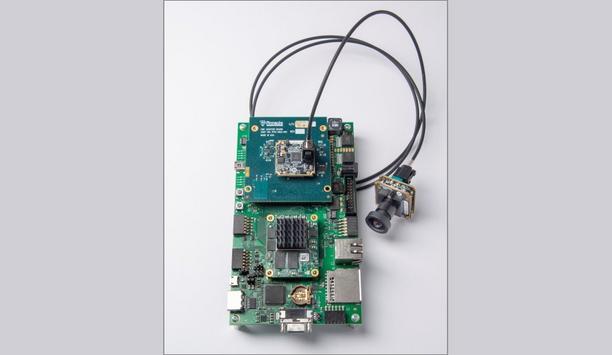
Pinnacle Imaging Systems, a globally renowned developer of Image Signal Processors (ISP) and High Dynamic Range (HDR) video solutions, has launched its new Denali 3.0 Programmable Image Signal Processor IP. Pinnacle Imaging’s camera-ready, end-to-end HDR ISP leverages its proprietary advanced algorithms to accurately tone map high contrast scenes for mission critical applications requiring data-rich, real-time imaging. Denali 3.0 Programmable Image Signal Processor IP With Denali 3.0, Pinnacle Imaging has redesigned its ISP for more efficient power consumption With Denali 3.0, Pinnacle Imaging has redesigned its ISP for more efficient power consumption, boosted performance with an expanded 20-bit image processing pipeline and limited latency to less than 20 lines, all with no external DRAM or frame buffers required. These improvements ensure Denali 3.0 delivers best-in-class image quality for applications demanding native support of real-time high dynamic range video for automotive, security and surveillance, robotics, medical, industrial, machine vision and automated sensory applications. Sensor-based safety mechanisms for ADAS “As designers continue to expand sensor-based safety mechanisms for ADAS and autonomous robotic applications, the need for ultra-low latency, and high-quality visual data advances at every stage; with Denali 3.0, we are providing the building blocks for the future of these technologies,” said Alfred Zee, Chief Executive Officer (CEO) of Pinnacle Imaging Systems. Alfred adds, “The opportunity to collaborate with industry renowned companies like Xilinx, Inc. and ON Semiconductor has afforded us a unique opportunity to build on our high dynamic range ISP and meet the demands of next generation platforms that will service applications of the future.” Sensor Agnostic Real-Time HDR Video Output The Denali 3.0 ISP cores are adapted from Pinnacle Imaging’s patented HDR technology. Modeled on true human vision, this proprietary technology enables retention of local image contrast as well as details in highlights and shadows, all without producing halos or color shifts. The fully programmable ISP provides designers with an incredible amount of flexibility to customize the processing to meet the unique challenges of their specific projects. Denali 3.0 is also uniquely adaptable to support sensors of any resolution, non-traditional color filter arrays (CFAs) and diverse HDR capture methods. Because Denali 3.0 runs exclusively in the FPGA fabric, designers are able to free up on-chip CPU and GPU resources for advanced artificial intelligence functionality. High-performance HDR ISP A high-performance HDR ISP is critical in today's numerous AI vision applications" “A high-performance HDR ISP is critical in today's numerous AI vision applications,” said Chetan Khona, Director, Industrial, Vision, Healthcare & Sciences at Xilinx, adding “The quality of any computer vision system’s results are only as good as the input data provided. We are thrilled that Pinnacle has successfully ported their Denali 3.0 ISP to our Zynq UltraScale+ family of MPSoCs, providing an adaptive ISP to meet our customers' needs for mission-critical applications.” Denali 3.0 can now be configured to support the complete line of Xilinx Zynq 7000 series and Zynq UltraScale+ programmable SoCs. It also offers native support for the ON Semiconductor AR0233 with a 20-bit image processing pipeline in Super Exposure Mode producing 120dB (20EV) of dynamic range with LED flicker mitigation. Automotive sensor solutions “Achieving world-class dynamic range is a key focus for ON Semiconductor automotive sensor solutions. Our Hayabusa family of sensors is designed to achieve maximum dynamic range with LED flicker mitigation (LFM). Pinnacle Imaging Systems is on the-cutting edge of HDR processing technology, adapting its flexible ISP to support our new sensor innovations.” said Stephen Harris Director of Automotive Solutions Architecture for ON Semiconductor’s Automotive Sensing Division. Stephan adds, “Their programmable Denali 3.0 ISP expands their data processing pipe to support the Hayabusa family’s native super-exposure 20-bit output achieving highest possible dynamic range with LFM.” As the demands on video analytics become more complex, whether by end users or integrated autonomous systems, Pinnacle Imaging is able to customize its Denali 3.0 IP cores to just about any image sensor, making it a unique platform for automotive ADAS cameras, automotive vision systems, robotics, autonomous vehicles, as well as intelligent traffic systems. Denali 3.0 is an ideal ISP solution for security and surveillance, as well as commercial UAV applications. Key features of the Denali 3.0TM IP Core Denali 3.0 delivers a real-time 20-bit data path capable of producing 120 dB or 20-EV steps of dynamic range For engineers and camera designers developing mission critical applications requiring the highest-quality video signal and ultra-fast response times together with the ON Semiconductor AR0233 CMOS sensor, Denali 3.0 delivers a real-time 20-bit data path capable of producing 120 dB or 20-EV steps of dynamic range (with LED flicker mitigation), while ensuring extremely low latency (less than 20 lines). Its unique HDR IP completely eliminates halo artifacts and color shifts. This allows Denali 3.0 to capture up to 1080p HDR video in real-time that is fully tone-mapped at 60 fps. Denali 3.0 is also able to accommodate automated or full-user control modes. HDR-Specific Features: 2 to 4 frame multiple exposure merge Auto de-ghosting & motion compensation Auto halo removal Transition noise suppression Auto EV bracketing Auto & manual brightness adaptation (gamma) Ability to capture separate HDR and Tone Mapped output video streams concurrently for ADAS Application Standard ISP Features: Black level and gain compensation Auto/Manual exposure Auto/Manual white balance Auto Gain Veiling glare correction Noise reduction Local contrast adjustment Bad pixel correction Automatic and manual Region of Interest (ROI) selection Signal to noise measurements Histogram calculation 50/60 Hz ambient artificial lighting sync Available configurations & integration partnerships Pinnacle has already developed several configurations of Denali 3.0 for deployment on Xilinx Zynq 7000 and Xilinx Zynq UltraScale + Programmable SOC platforms, as well as ON Semiconductor AR0233 and AR0239 configurations, and all are available immediately. Additionally, Pinnacle is offering fully-customizable IP blocks for ASIC or system-level implementations with additional sensors to be supported soon.

Recently, Pinnacle Imaging Systems, the HDR experts defining the future of digital high dynamic range capture, announced the immediate availability of its new Ultra HDR IP cores and high dynamic range video capture technology. With the licensing of its HDR technology, Pinnacle Imaging is porting its capture technology, proven in its previous still-image software implementation, to embedded solutions for HDR video capture. Pinnacle Imaging’s Ultra HDR technology is an ideal solution for OEM or manufacturers looking to capture and render very high dynamic range scenes in digital video applications. Many industries and applications can benefit from improved image detail in the deep shadow and bright highlight areas such as security and surveillance, intelligent traffic and transportation systems, after-market automotive camera systems, wearable camera and vision systems, etc. Maximising High Contrast Scene Detail With Ultra HDR And Scalable Design Designated Ultra HDR, Pinnacle Imaging’s patented HDR merge and tone mapping IP cores are modeled on true human vision to ensure preservation of a scene’s true colors throughout the tone mapping process. Ultra HDR provides capture and proprietary adaptive tone mapping of HDR scenes up to 19 EV or 115 dB. Pinnacle Imaging’s Ultra HDR technology can capture 120 fps (merging four exposures per frame), and stream full 1080 HDMI tone mapped video for display at up to 60 fps in real time. Pinnacle Imaging’s merge and tone mapping IP algorithms are scalable and flexible enough to accommodate different capture modes such as two, three or four exposure brackets, dual conversion gain or any combination thereof. This enables the Ultra HDR technology to adapt to a number of different components, design priorities and BOM requirements. Ultra HDR IP Cores can be ported to support a number of different sensors types and logic (FPGA, ISP, DSP+SoC, or ASIC). “Even the most modern image sensors are limited in the dynamic range which they can capture,” said Alfred Zee, President & CEO of Pinnacle Imaging Systems. “We believe that cameras should be able to provide the same contrast range that we naturally see with our own eyes, so we based our technology on the human vision model. It’s this unique approach that allows our Ultra HDR technology to deliver such color-accurate, high contrast video quality.” Complexities Of HDR Video Capture Pinnacle Imaging Systems’ Ultra HDR technology addresses many of the complexities involved in HDR video capture including: Automatic Ghost Removal & Halo Reduction – Compensates for movement between HDR exposures, from minimal camera motion to moving objects between frames Adaptive Local Tone Mapping – Automatically optimizes the tone mapping parameters based on the shadow and highlight areas of each individual video frame to ensure a more natural look to the output video Automatic White Balance Controls – Automatically calculates proper white balance settings for any scene or lighting condition Automatic Exposure Controls – Real time calculation and adjustment of the sensor’s exposure settings based on an automatic or manually selected region of interest to allow accurate exposure throughout a scene Shadow Exposure Bias Option – Ability to bias tone mapping with an additional Shadow Tracking option during the Auto Exposure mode for optimal shadow detail and data preservation, a key requirement for surveillance applications With initial FPGA implementation completed, Pinnacle Imaging IP blocks can now be ported to ASIC, DSP+SoCs or ISPs. Growing Demand For HDR Capabilities Embedded Into Video Cameras Numerous industries are now demanding the ability to capture improved video quality of high contrast scenes only made possible by Ultra HDR video capture. Where standard dynamic range cameras simply sacrifice shadow or highlight detail in high contrast areas, video cameras incorporating Ultra HDR can deliver natural looking tone mapped image detail in both the bright highlights and dark shadows. For example, compact POV action cameras notoriously have difficulty in high contrast situations. Pinnacle Imaging’s Ultra HDR technology allows a skier to capture both highlight and shadow detail despite the constant transition from bright white snow to shaded trees. Similarly, embedded HDR capture improves high contrast situations such as a police dash cam that cannot provide sufficient detail of a road-side encounter against oncoming headlights. This same technology allows surveillance cameras to track a suspect from a sun-drenched parking lot into a dim interior. “We are currently seeing growing demand for HDR capabilities embedded into video cameras and production equipment,” said Ron Tussy, Director of Business Development for Pinnacle Imaging Systems. “Our proprietary embedded HDR tone mapping is a critical underlying technology necessary to improve data capture for technologies used in range finding and recognition in automotive, security and surveillance or any other field demanding video to be captured across very bright and very dark areas.” Engineers, developers and manufactures interested in learning more about how Pinnacle Imaging’s Ultra HDR technology can be integrated with their digital video capture devices can review sample videos. For any media interested in learning more about the new solutions from Pinnacle Imaging, a member of the Pinnacle Imaging leadership team can be made available for interview and/or to provide a full demonstration of the Ultra HDR capabilities. Mr. Tussy will also be available to any media or exhibitors at the upcoming ISC West Expo being held April 6-8, 0216 in Las Vegas, Nevada.