Optalysys - Experts & Thought Leaders



Latest Optalysys news & announcements

Optalysys, a photonic computing company using silicon photonics to redefine high performance computing, has appointed Chris Walker as Chief Executive Officer. Based in Santa Clara, Walker will lead the company’s next phase of commercial growth and international expansion. Co-founder and current CEO Dr Nick New will transition to the role of Chief Product Officer, where he will continue to play a pivotal role in developing Optalysys’ photonics technology and building the US team. Chris Walker brings over three decades of semiconductor, AI and investment experience. The majority of his career was spent at Intel, culminating in his role as Corporate Vice President and General Manager of the Mobile Client Platforms Group. Technology-focused investment funds After Intel, Walker joined Cerberus Capital Management, advising technology-focused investment funds on strategy, operations and growth. Most recently, Walker was the CEO of Untether AI, where he successfully brought innovative, energy-efficient at-memory compute to market, leading to the strategic agreement and team acquisition by Advanced Micro Devices (AMD). With a proven track record of executive leadership, Walker will accelerate Optalysys’ technological deployment and commercial growth, expand Optalysys’s US team and strengthen its ties to Silicon Valley’s technology and investment networks. While Walker will be based in Santa Clara, Optalysys will continue to grow its established sites in Leeds and Bristol. Major technological breakthroughs The appointment follows a strong year for Optalysys, marked by customer acceleration, international expansion and major technological breakthroughs in photonic computing. In January 2026, Optalysys announced its £23M Series A2 round, supported by Northern Gritstone, Lingotto Horizon, imec.xpand and the UK government’s National Security Strategic Investment Fund (NSSIF). The company is delivering its first photonics system to one of its key partners in the US in the coming weeks. The system consists of the latest Optalysys photonics chip modules and allows large enterprise workflows to leverage its proprietary photonics technology and perform critical computational tasks while demonstrating AI and secure computing methods. High-performance computing Nick New, former CEO and now Chief Product Officer at Optalysys, says: “I’m immensely proud of what we have built at Optalysys since co-founding the company and of the team that has helped us get to where we are today. As we enter our next phase of growth and commercial expansion, now is the right time to bring in a leader with Chris’s experience and global network.” “Photonics is increasingly being recognized for its potential to transform the future of AI and high-performance computing, and Chris is exceptionally well placed to help Optalysys capitalize on that opportunity. This is a tremendously exciting point for the company and I am looking forward to working closely with Chris as we continue to scale the business and advance our technology.” Initial commercial development Chris Walker, CEO of Optalysys, says: “The demand for AI infrastructure is accelerating at an unprecedented pace, creating a significant opportunity for new computing architectures. Breaking the electron wall, Optalysys has developed a compelling photonics platform enabling compute in data transport that addresses some of the most pressing challenges facing the future of AI and high-performance computing. I am excited to join the team at this pivotal stage in the company’s growth and look forward to working with our customers, partners and investors to accelerate the commercial adoption of this technology globally.” Duncan Johnson, CEO of Northern Gritstone, says: “As a company rooted in the North of England but global in its ambition, Chris Walker’s commercial experience and appointment as CEO comes at a very exciting point in Optalysys’ international growth trajectory. Nick New has successfully led this innovative photonic computing company through its initial commercial development and fundraising. His move to Chief Product Officer will help ensure product-market fit at a time when AI is moving at pace.”
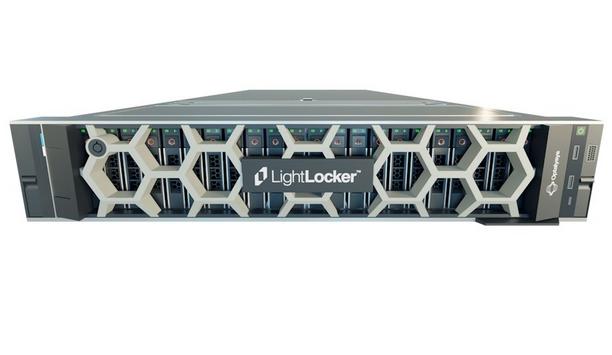
Optalysys, a company enabling the future of secure computing, has launched the world’s first dedicated enterprise-grade server for blockchain — LightLocker™ Node, designed to enable Fully Homomorphic Encryption (FHE) and ensure complete confidentiality on any transaction. Traditionally, public blockchain transactions are fully transparent, meaning all activity between wallets is visible and recorded — a significant challenge for industries handling sensitive information such as financial services. LightLocker Node LightLocker Node allows encrypted data to be processed directly on blockchain without decryption LightLocker Node allows encrypted data to be processed directly on blockchain without decryption. It maintains the decentralization that blockchain offers, while adding the confidentiality, performance, and scalability required for widespread enterprise adoption of FHE. With the ability to process over 100 encrypted transactions per second, LightLocker Node provides the performance needed to efficiently support real-world use cases such as confidential token transfer, private lending and automated market markers (AMMs), where true end-to-end encryption is becoming a critical requirement. Efficient performance The global blockchain market is projected to reach $248.9 billion by 2029 The global blockchain market is projected to reach $248.9 billion by 2029 at a compound annual growth rate (CAGR) of 65.5%, as companies develop infrastructure for widespread adoption. Optalysys’ LightLocker Node is purpose-built for blockchain encryption, offering an alternative to the current reliance on costly and inefficient GPU-based systems. Its modular upgrades and cloud integration enable businesses to scale blockchain operations without increasing costs. Available as a complete server solution, LightLocker Node uses 40% less energy than traditional GPUs, offering a secure, scalable, cost-effective and energy-efficient alternative for the next-generation of encrypted blockchain infrastructure. It is the first product to be launched in Optalysys’ product roadmap. Authority Comment Dr Nick New, CEO of Optalysys, said: “Blockchain has the potential to underpin not just the future of financial services, but the next generation of the internet itself. However, its lack of confidentiality has held it back from widespread enterprise adoption, especially in financial services.” “For blockchain technologies to be adopted at scale, infrastructure that supports confidential computing is essential. Traditional hardware solutions for encrypted blockchain are costly and inefficient.” “General-use chips are also not designed for the specific requirements of encrypted transaction processing. LightLocker Node, Optalysys’ dedicated FHE hardware for blockchain, addresses this problem. It is quantum resilient and enables secure, confidential data processing directly on the blockchain, without impacting performance.”
Research from Optalysys, a company enabling the future of secure computing through the acceleration of Fully Homomorphic Encryption (FHE) technology, has found that growth is being held back at UK financial services firms due to concerns over data security. Data security concerns A survey of over 250 IT decision-makers (ITDMs) working in the financial services sector, conducted by Obsurvant and commissioned by Optalysys, revealed that 70% of ITDMs believe their firm’s growth is being stifled by mounting data security concerns. The findings also revealed that over a third (39%) are unable to collaborate with external organizations due to data security constraints, while nearly half (45%) reported challenges managing or accessing sensitive data within their organization. AI Action Plan Research by Optalysys has found that only 33% of respondents believe their organization is fully prepared These findings come as the government unveiled its AI Action Plan, seeking to deploy AI across industries to increase growth and new financial regulation has come into force, with the EU’s Digital Operational Resilience Act (DORA). The regulation mandates that businesses in the sector need to ensure they can withstand, respond to, and recover from ICT-related disruptions. However, research by Optalysys has found that only 33% of respondents believe their organization is fully prepared to meet DORA’s stringent requirements. Data security investments Widely regarded as one of the jewels in the crown of the UK economy, contributing over £200 billion in 2023 and the UK’s fourth largest industry, high costs associated with data security measures are cited by 52% of respondents as the most significant challenge facing the sector. Data security has seen substantial investment in recent years, yet 44% of organizations reported they have still experienced data breaches or instances of unauthorized access. Outdated approach Dr. Nick New, CEO of Optalysys, said, “The financial services sector is the lifeblood of the UK economy, yet businesses are being limited by outdated approaches to data security." "Simply put, businesses harness the real power of AI or can’t unlock the full value of their data because they are too busy trying to keep it safe. This is a massive missed opportunity and it’s holding the entire sector back." Need for privacy-enhancing technologies “With economic growth at the top of the government’s agenda, the UK has the opportunity to take a pioneering position by adopting technology to drive growth across vital sectors like financial services." "Our findings highlight the need for emerging privacy-enhancing technologies like Fully Homomorphic Encryption (FHE) to address the challenges ITDMS within financial services firms are facing." Secure data processing and collaboration "To alleviate data security concerns, especially with sensitive customer and financial data, we need technology that allows encrypted data to be processed without it needing to be decrypted." "This will mean that organizations across the entire financial sector can talk to each other and collaborate in a secure and efficient environment, changing how businesses approach secure data processing and collaboration.”