Neurotechnology - Experts & Thought Leaders





Latest Neurotechnology news & announcements
Neurotechnology, a provider of deep learning-based solutions and high-precision biometric identification technologies, now announced that its face liveness detection technology has successfully passed a rigorous Level 2 (Level B) Presentation Attack Detection (PAD) evaluation. The independent assessment confirms that the upcoming releases of MegaMatcher SDK and MegaMatcher ID will comply with the ISO/IEC 30107-3 standard, demonstrating high resilience against sophisticated biometric spoofing attacks. 2D paper masks Presentation Attack Detection is a critical security feature in biometric systems, designed to determine if a presented biometric trait is from a live person or a fraudulent artifact. While Level 1 testing covers basic attacks (such as presenting a photo on paper or a screen), Level 2 (Level B) evaluates the system against more sophisticated attack instruments. These include 2D paper masks with cutouts, curved and 3D surface projections, shallow fakes and balaclava masks. Increasing use of facial biometrics “With the increasing use of facial biometrics in high-stakes applications like banking and digital onboarding, the sophistication of spoofing attempts continues to evolve,” said Mantas Kundrotas, Liveness Project Lead at Neurotechnology. “Achieving ISO Level 2 compliance validates our commitment to staying ahead of these threats. It ensures that our clients can deploy our solutions with confidence, knowing they meet the demanding international security standards without compromising user convenience.” Neurotechnology’s PAD algorithms The evaluation was conducted by BixeLab, an NVLAP-accredited biometric testing laboratory (NVLAP Lab Code: 600301-0). The test report confirms that Neurotechnology’s PAD algorithms demonstrated robust security, successfully blocking the vast majority of sophisticated spoofing attempts while maintaining a low False Rejection Rate (FRR) for genuine users.
Neurotechnology, a provider of deep-learning-based solutions and high-precision biometric identification technologies, announced the release of the MegaMatcher Criminal Investigation 2025.1 solution, with new features designed to enhance forensic capabilities for law enforcement agencies. Latent print recognition “We’re constantly evolving our technologies to meet the challenges faced by forensic professionals in real investigations,” said Denis Kačan, head of product at Neurotechnology. “With improved latent print recognition, more complete match results and case linking capabilities, this release delivers the tools experts need to handle difficult cases with greater speed, confidence and clarity.” Latest MegaMatcher Criminal Investigation version The latest MegaMatcher Criminal Investigation version received major upgrades that improve latent print management, processing and matching: New Enhancement Filters: New automatic enhancement filters improve the clarity of ridge patterns in latent prints with a single click. The system intelligently enhances prints found on textured or complex surfaces, increasing visibility while preserving forensic integrity. Latent-to-Unsolved Latent Search: When no match is found among known prints, investigators can initiate a search against other unsolved latent prints. This helps uncover links between cases and accelerate investigations. Latent Print Annotations: Examiners can now add comments directly to latent prints, improving collaboration, documentation and decision tracking throughout the forensic process. Latest version of Neurotechnology’s recognition algorithm Algorithm provides high identification accuracy, particularly in complex or low-quality latent print cases MegaMatcher Criminal Investigation works seamlessly with MegaMatcher ABIS, the company's powerful automated biometric identification system, which has latent print matching capabilities. The system uses the latest version of Neurotechnology’s latent print recognition algorithm, which ranks among the top performers in the NIST Enhanced Latent Fingerprint Technologies (ELFT) evaluation. This algorithm provides high identification accuracy, particularly in complex or low-quality latent print cases. AI-powered solutions for law enforcement Neurotechnology provides AI-based tools for identity management, surveillance and criminal investigations, designed for law enforcement agencies. The MegaMatcher product line includes MegaMatcher ABIS for high-accuracy biometric matching and MegaMatcher Criminal IDRS for biometric and biographic data capture. The company’s SentiVeillance video surveillance systems provide real-time recognition, tracking and event detection using Automated License Plate Recognition (ALPR), face recognition and human and vehicle object-related sets of algorithms.
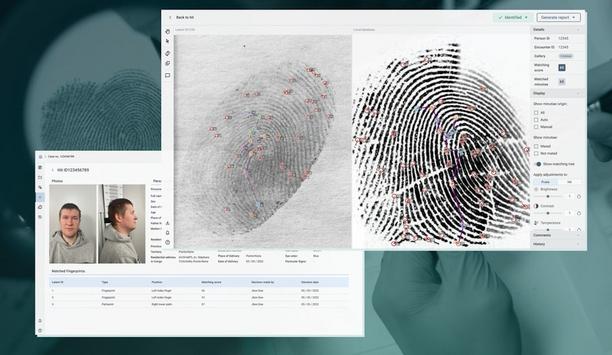
Neurotechnology, a provider of deep learning-based solutions and high-precision biometric identification technologies, announced the release of two new products: MegaMatcher Criminal Investigation and the MegaMatcher Criminal Identity Registration System (Criminal IDRS). Automated biometric recognition streamlines the identification process in law enforcement, greatly reducing the time and manpower required. Criminal investigations often deal with low-quality biometric data that requires manual preparation. The new MegaMatcher products can interconnect with the MegaMatcher Automated Biometric Identification System (ABIS) and work together in a unified system or as individual components to provide tailored solutions for law enforcement. Additions to the MegaMatcher product line The matching results can then be further compared and evaluated to identify unknown suspects “With the release of these new additions to the MegaMatcher product line, we are expanding our product range with new criminal investigation-focused solutions,” said Irmantas Naujikas, Director for Neurotechnology. “Our goal is to design and develop solutions that will provide fast, reliable, and customizable biometric functionalities for law enforcement agencies.” MegaMatcher Criminal Investigation is designed for criminal case management and biometric evidence analysis. It comes with an advanced toolset for examiners to analyze and enhance latent prints prior to identification to improve matching accuracy. The matching results can then be further compared and evaluated to identify unknown suspects. New MegaMatcher solutions Neurotechnology is in ongoing dialog with its law enforcement customers and will continue The new MegaMatcher Criminal Identity Registration System (Criminal IDRS) enables law enforcement officers to collect biographic, biometric and criminal records through live scans or ten-print cards. With its quality assessment functionality, this solution can automatically assess the integrity of collected data, indicate any fingerprint misplacement and gather multiple criminal enrollments into a single database. With the introduction of these new MegaMatcher solutions, Neurotechnology is in ongoing dialog with its law enforcement customers and will continue to build additional options that can be combined to address even more specific law enforcement investigation, identification and records management needs. MegaMatcher Product Line MegaMatcher-based solutions leverage the company’s industry-pioneering proprietary biometric recognition algorithms to effectively process vast quantities of biometric data. Neurotechnology's biometric algorithms have achieved top results in independent technology evaluations, including NIST ELFT, SlapSeg III, MINEX, PFT, FRVT, and IREX. The comprehensive MegaMatcher product line covers a wide range of biometric solutions, from a multimodal SDK and Automated Biometric Identification System (ABIS) to an established Identity Management System (IDMS), and now these newly introduced criminal investigation products. Neurotechnology’s MegaMatcher products can be tailored for elections, national identity, border control, law enforcement and other government and enterprise applications.