Magnet Schultz Ltd. - Experts & Thought Leaders

Insights & Opinions from thought leaders at Magnet Schultz Ltd.
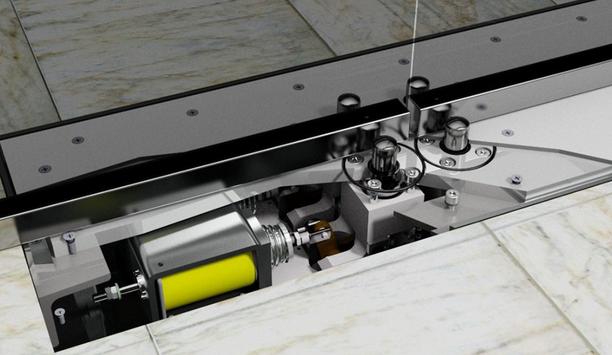
In part one of this feature, we introduced the shotbolt – a solenoid actuator – as the workhorse at the heart of most straightforward electric locking systems. Shotbolts remain at the core of most sophisticated electric locking solutions as well. But they are supplemented by materials and technologies that provide characteristics suited to specialist security applications. Here we look at some more demanding electric locking applications and contemporary solutions. Preventing forced entry Where the end of the shotbolt is accessible, the electric holding force can be overcome by physical force. That’s why anti-jacking technology is now a frequent feature of contemporary electric solenoid lock actuators. Anti-jacking, dead-locking or ‘bloc’ technology (the latter patented by MSL) is inherent to the way the locking assembly is designed to suit the requirements of the end application. The patented bloc anti-jacking system is highly effective and incorporated into many MSL shotbolts deployed in electric locking applications. The bloc technology uses a ring of steel balls in a shaped internal housing to physically jam the actuated bolt in place. A range of marine locks is widely used on Superyachts for rapid lockdown security from the helm Real life applications for MSL anti-jacking and bloc-equipped shotbolts include installation in the back of supermarket trucks to secure the roller shutter. Once locked from the cab, or remotely using radio technology, these shutters cannot be forced open by anyone with ‘undesirable intentions’ armed with a jemmy. A range of marine locks is widely used on Superyachts for rapid lockdown security from the helm. While anti-jacking features are an option on these shotbolts, consideration was given to the construction materials to provide durability in saltwater environments. Marine locks use corrosion-proof stainless steel, which is also highly polished to be aesthetically pleasing to suit the prestigious nature of the vessel while hiding the innovative technology that prevents the lock being forced open by intruders who may board the craft. Rotary and proportional solenoids sound unlikely but are now common A less obvious example of integrated technology to prevent forced override is a floor lock. This lock assembly is mounted beneath the floor with round-top stainless-steel bolts that project upwards when actuated. They are designed to lock all-glass doors and are arguably the only discreet and attractive way to lock glass doors securely. In a prestigious installation at a historic entranceway in Edinburgh University, the floor locks are remotely controlled from an emergency button behind the reception desk. They act on twin sets of glass doors to quickly allow the doors to close and then lock them closed with another set of subfloor locks. No amount of stamping on or hitting the 15mm protruding bolt pin will cause it to yield, thus preventing intruders from entering. Or leaving! Explosion proofing In many environments, electric locking technology must be ATEX certified to mitigate any risk of explosion. For example, remote electric locking is used widely on oil and gas rigs for stringent access control, general security and for emergency shutter release in the event of fire. It’s also used across many industrial sectors where explosion risks exist, including flour milling, In many environments, electric locking technology must be ATEX certified to mitigate any risk of explosionpowder producers, paint manufacture, etc. This adds a new dimension to the actuator design, demanding not only intrinsically safe electrical circuits and solenoid coils, but the careful selection of metals and materials to eliminate the chance of sparks arising from moving parts. Resilience under pressure The technology boundaries of solenoids are always being pushed. Rotary and proportional solenoids sound unlikely but are now common. More recently, while not directly related to security in the traditional sense, proportional solenoid valves for accurately controlling the flow of hydrogen and gases now exist. Magnet Schultz has an extensive and somewhat innovative new range of hydrogen valves proving popular in the energy and automotive sectors (Fig. 2-6). There’s a different kind of security risk at play here when dealing with hydrogen under pressures of up to 1050 bar. Bio security Less an issue for the complexity of locking technology but more an imperative for the effectiveness of an electric lock is the frequent use of shotbolts in the bio research sector. Remote electric locking is commonplace in many bioreactor applications. Cultures being grown inside bioreactors can be undesirable agents, making 100% dependable locking of bioreactor lids essential to prevent untimely access or the unwanted escape of organisms. Again, that has proven to be topical in the current climate of recurring coronavirus outbreaks around the world. More than meets the eye In part one, I started by headlining that there’s more to electric lock actuation in all manner of security applications than meets the eye and pointed out that while electric locking is among the most ubiquitous examples of everyday security, the complexity often involved and the advanced technologies deployed typically go unnoticed.Integrating the simplest linear actuator into a complex system is rarely simple For end users, that’s a very good thing. But for electro-mechanical engineers designing a system, it can present a challenge. Our goal at Magnet Schultz is to provide a clearer insight into today’s electric locking industry sector and the wide range of locking solutions available – from the straightforward to the specialized and sophisticated. Integrating the simplest linear actuator into a complex system is rarely simple. There’s no substitute for expertise and experience, and that’s what MSL offers as an outsource service to designers. One benefit afforded to those of us in the actuator industry with a very narrow but intense focus is not just understanding the advantages and limitations of solenoid technology, but the visibility of, and participation in, emerging developments in the science of electric locking. Knowing what’s achievable is invaluable in every project development phase.

Electric locking is among the most ubiquitous examples of everyday security. Yet the complexity of electric locks and the advanced technologies deployed to provide simple, dependable and, for the most part, impenetrable locking often goes unnoticed. And that’s a good thing: when we take things for granted, it usually proves they’re fit for purpose. As experts in the field of solenoid actuated designs, we’re okay knowing that remote electric locking solutions are taken for granted and that the design sophistication behind a functional and reliable locking assembly is often overlooked. As readers of this journal will know, security takes many forms. Perhaps the most recognizable application of a security policy is the ability to lock something. A door to prevent access. A gate to control the flow of people or vehicles. Or shutters to guard against theft. Or to unlock a turnstile to allow ingress and egress, as found in leisure centers and museums. Or to switch between either flow direction when required – think soccer match stand access, for instance. In part one of this feature, we look at straightforward electric locking solutions that use solenoid actuators. Straightforward security measures However, while locking can be one of the simplest security initiatives, it’s also capable of being among the most complex where sophisticated measures are called for. In part two, we will cover specialized electric locking technologies and some more unusual security solutions and application examples. Among straightforward security measures is remote locking Among straightforward security measures is remote locking – a function found almost everywhere you look. Unless you’re the proud owner of a classic car, when did you last physically put your vehicle key in the door lock? Remote locking ups the ante for designers who need to incorporate security in an assembly, an application, a product or a system. Solenoid Workhorses Solenoid actuators and electromagnet technologies are the bedrock of electric locks. Remote operation – activating a lock from a distance – is commonplace. Wireless RF transmitters in the key fobs of modern vehicles activate the central locking system. Cards with embedded RFID chips, fingerprint readers and facial recognition systems provide selective access to buildings, typically by either actuating a solenoid lock or releasing a powerful door magnet. You can see examples on the Jubilee and the new Elizabeth (Crossrail) lines on the London Underground. They use electric solenoid-based locks to secure platform access screen doors, only allowing them to open once the underground train has arrived. Solenoid-based electric locking is at the heart of safety-based security in applications such as elevator doors and disabled access lifts, on building hoists, and as interlocking systems for screens and safety covers on machine tools, to name a few. Solenoid-based electric locking is at the heart of safety-based security These are straightforward applications that address a range of issues that come under the general heading of security. Others demand special features built into the electric locking mechanism to meet specific end user requirements. This added complexity can present a design challenge to the inexperienced. Electro-mechanical design engineers invariably have a useful broad knowledge for developing products but not necessarily a core expertise in solenoid technology. One example we like to use is a railway carriage. To design and build that takes a huge breadth of knowledge and expertise due to the many systems and assemblies a carriage comprises. But passenger trains now feature remote electric door locking which must function perfectly – and without which the rolling stock is unfit for purpose. That electric locking subassembly design is a critical feature and a specialist development project. Solenoid actuators and electromagnet technologies are the bedrock of electric locks Shotbolts A generic term used for electric solenoid locks is shotbolts. In these linear actuating units, the solenoid typically moves the bolt directly or through a bell crank to turn the actuation through 90 degrees, or to extend the linear movement of the bolt. They can be built as Fail-safe or Fail-secure models, meaning energise-to-lock, or energise-to-release respectively, which determines the state they adopt in the absence of power. You would want some applications to default to unlock in the event of power loss, and others to default to the locked state. Both types usually deploy a spring to return the bolt in the quiescent unenergised state. Bi-stable is another functionality available. In this design, no power is consumed in either position. A loss of power will leave the device in its last state. Scaling down Some shotbolts are large. Those designed to secure the access ramp on the Solent hovercraft built by Griffon Hoverwork are powerful units – and in that application a weatherproof design is deployed to withstand the saltwater spray and frequent washdowns. But a shotbolt and the solenoid contained within it can be physically quite small and require minimal power, yet still provide highly secure locking in a mortice lock arrangement. This is where the locking assembly starts to become complex Over the years, bespoke designs have been developed for diplomatic bags and Cash In Transit (CIT) cases. Both use small, low power actuators. In the latter application by specialist Cash In Transit equipment manufacturers HDH, intelligent electric lock technology provides unique features – and there’s a range of surprises in store for anyone accessing cash boxes illicitly. Technologies in cash transit solutions include GPS tracking, alarms, remote monitoring and automatic ‘cash degradation’ systems if a case is forced open. Ensuring that degradation systems don’t activate when a case is opened legitimately is equally important. This is where the locking assembly starts to become complex, requiring special design expertise. The CIT solenoid lock uses a 90°actuator to latch, lock and arm automatically if required but can be set to not lock or arm as the actuator travel doesn’t engage with the mechanical latch mechanism by default. Integrated technology solutions inside the case include daylight sensors, surface protection wires inside and out, and reed switches between the lid and the base. All contribute to safety precautions that prevent accidental activation and protect the valuable cargo and the operator. But for first line security, straightforward shotbolt electric locking is still at the heart of CIT cases. Internet of Things Miniature shotbolts are also used in some medical ventilators – a topical subject at the time of writing during the global coronavirus pandemic. They are also increasingly appearing in consumer-level Internet of Things (IoT) applications, being a key component in home automation applications. Our goal at Magnet Schultz is to provide a clearer insight into today’s electric locking industry sector and the wide range of locking solutions available. We dealt with some straightforward technologies and applications here. In part two, we will look at special technologies built into more sophisticated solenoid locks to prevent forced entry, at materials that guard against explosion risks in hazardous environments and even at the use of proportional solenoid technology to manage pressurized gases. Read part two of this feature here.