Inner Range - Experts & Thought Leaders












White papers from Inner Range

The User-Centric Security Revolution
Download
Aligning Physical And Cyber Defence For Total Protection
Download
The Power Of Integration In Physical Security Systems
Download
IoT Connectivity
Download
11 Advantages Of A Combined System For Access Control And Intrusion
Download
'Boosting On-Site Safety And Security
Download
Beyond Security - Access Control For Multi-Tenant Sites
Download
Latest Inner Range news & announcements

A critical infrastructure security system unifies high-assurance access control, scalable intrusion detection including video verification, perimeter protection, and lone worker safety into a single platform, helping operators of electricity, water, and gas networks protect distributed sites, support regulatory compliance, and maintain the uninterrupted delivery of essential services. A loss of these services disrupts economies and endangers communities, which makes protecting them a national priority. It's also uniquely difficult, because critical infrastructure is rarely a single site. It's a distributed network of substations, treatment plants, and pipelines, often spread across vast and remote geographies. Most demanding environments That challenge is now backed by strict regulations across in all sectors including energy, water, and sewerage. Responsible entities must maintain a Critical Infrastructure Risk Management Program that addresses physical security alongside cyber, personnel, and supply chain hazards. For operators, strong physical security systems have become a compliance necessity. For over 38 years, Inner Range has purpose-built security solutions alongside critical infrastructure experts, protecting these vital assets with a multi-layered approach designed for the most demanding environments. Multi-factor authentication Access control is the foundation. Inner Range ensures only authorized personnel reach a site, using access cards, mobile credentials, PINs, or biometric authentication. Multi-factor authentication combines these methods for stronger protection, while video surveillance, granular scheduling, and real-time logging give operators complete visibility over every access point. The highest-risk zones demand more. Inner Range's High-Security solution has attained Class 5 accreditation which is the highest classification for intruder alarm systems under the Australian and New Zealand standard AS/NZS 2201.1, built for Zone 3 high security environments. Where traditional alarms focus only on external intruders, Class 5 also defends against insider tampering, through two-factor disarming, faster polling, and end-to-end encryption. Inner Range’s High Security solution has also been deployed to secure defense sites and critical infrastructure throughout Europe, the Middle East and the America’s. Advanced video analytics For operators, this means genuine assurance. Every detector, cable, and message is encrypted, from the edge device right through to the control panel, so the system can be trusted to detect and report a breach even when someone is actively trying to defeat it. For most sites, the perimeter is the first line of defense. Inner Range provides advanced video analytics for intruder detection that can scale across thousands of locations. Integrations with perimeter devices such as electric fences, beams, and other detection technologies provide the physical additional layers of perimeter security for large areas. Whether the protected area is an open expanse or a small building, smart analytics enable instant, automated threat responses. Distance is no barrier. The Multipath IP Cellular communication platform uses the internet and 4G cellular networks to transmit encrypted alarm messages to monitoring center's, ensuring first responders can act quickly no matter how remote the site. Video surveillance systems Critical infrastructure work often happens at remote and dangerous sites where, sometimes, people work alone. Protecting these workers is both an operational and a duty-of-care priority. Inner Range supports duress alarms from fixed or mobile systems that integrate with lone worker systems featuring man-down detection and personal tracking. When an alarm is raised, guards and staff are notified instantly through the Communicator messaging application via SMS and email, while Real-Time Location Systems pinpoint personnel on site for a faster response and video surveillance systems provide the eyes and ears on the situation. Specialized key locking A single utility can span hundreds of sites and dozens of subsystems. Inner Range's Enterprise platform unifies access control, video surveillance, building management, intercom, environmental monitoring, and specialized key locking, all into one interface. Operators get a single platform to monitor people, assets, machinery, and site conditions, and to respond to incidents in real time. This centralized oversight is what turns a sprawling, complex estate into something manageable, visible, and defensible. Unifying access control The real strength is in how the layers work together. Access control, video surveillance, intruder detection, perimeter sensors, facial recognition, location tracking, and lone worker safety operate as one coordinated system through a single pane of glass to detect, locate, and respond to threats automatically. Alerting the right people the moment an incident occurs. Every deployment is backed by professional support, from software maintenance and cyber security updates to remote assistance and custom integration. With over 130 native integrations and more than 170,000 systems deployed globally, the platform scales from a single facility to a national network. The infrastructure a nation relies on cannot afford gaps or guesswork. By unifying access control, video surveillance, intrusion detection, perimeter protection, and worker safety into one coordinated platform, Inner Range helps operators protect what matters most, and keep essential services running, from the core to the edge.
A school access control system brings together access control, video surveillance, intruder detection, and emergency response into a single platform, allowing schools and universities to protect students, staff, and assets while maintaining the open, welcoming environment essential to education, across single campuses or multi-site institutions. A school access control system is the foundation of how modern educational institutions protect students, staff, and campus assets. Schools and universities are large, open, and highly connected environments, with thousands of students, staff, and visitors moving freely across expansive campuses every day. From lecture theatres and research laboratories to student accommodation, libraries, and sporting facilities. Because of this diverse nature of facilities, institutions must balance accessibility and collaboration with the need to protect people, assets, and infrastructure. It's a balance that's becoming harder to manage, and institutions are investing accordingly. The global education security market is projected to grow from around USD 1.01 billion in 2025 to USD 1.82 billion by 2031, as schools and universities modernise ageing systems and move toward integrated, campus-wide security. The core challenge is unauthorised access. Campuses span vast, open spaces with multiple entry points, making them naturally vulnerable to people who shouldn't be there. Add the valuable assets held on site (equipment, IT infrastructure, research, and chemicals) and the need to protect residential accommodation and staff areas, and the security picture becomes genuinely complex. Institutions must manage all of this while keeping the environment welcoming, inclusive, and accessible. Campus access control for open environments Educational institutions carry a distinctive tension. A profusion of valuable assets must be protected (buildings, equipment, chemicals, and research facilities) while a vibrant, changing student population needs everyday access to classrooms, libraries, sports halls, and laboratories, often across multiple buildings and campuses. Inner Range ensures that only authorised staff and students are permitted in restricted areas while keeping common areas open and accessible. Multiple authentication methods (cards, fobs, mobile credentials, PINs, and biometrics) provide flexibility, with multi-factor combinations available for high-security areas such as laboratories and data rooms. Access permissions can be automatically revoked based on a calendar schedule or a specific campus activity, ensuring access rights always reflect current enrollment and timetabling. All activity logs are recorded digitally, allowing the auditing of access to resources including time and actions taken. Integration with student management systems One of the most powerful capabilities for education is automatic access provisioning. Inner Range seamlessly integrates with external systems such as student management applications, offering the convenience of automatic access upon enrollment. This provides a safer campus and a better student experience while dramatically reducing administrative overhead. Student access permissions can be supplemented by enrollment and training records, providing a tailored solution for each campus. A single credential can serve multiple campuses and functions including access control, personal ID, and library services. Protecting empty campuses out of hours Some of the greatest risk to a campus happens when nobody is there. Outside school hours, on weekends, and during holiday periods, unattended facilities become prime targets for break-ins, theft, vandalism, and graffiti. Large campuses with multiple blind spots are especially exposed. Inner Range protects campuses around the clock. When an intruder enters a restricted area, the system can trigger an alarm, notify a central monitoring station, initiate a guard tour, and send an instant alert to the building manager. Intrusion detection can be armed automatically when the site closes and disarmed during operational hours, ensuring continuous protection without interfering with daily routines. Incident response and emergency coordination When incidents occur, institutions need to respond quickly across large, distributed environments. Inner Range enables coordinated responses through real-time alerts, automated actions, mass notifications, and system-driven workflows. Whether coordinating an emergency response across multiple buildings or managing a specific incident, the system ensures the right information reaches the right people at the right time, with tailored messages based on assigned roles and responsibilities. Inner Range's Priority Access adds a further layer, keeping doors in a protected area locked until a designated staff member is first on site. During an emergency, Priority Access also safeguards entry to affected areas, giving authorised responders control while keeping others out. Integrated video surveillance and intercoms Video surveillance integration gives control rooms immediate access to live and recorded footage across the campus. Take a common scenario: a student presses the help button on an intercom point in a car park. The system treats it as an alarm and triggers a coordinated response. Guards receive texts and emails. Relevant video appears on the guard's video wall. The surrounding area can be locked down automatically. Every system works hand-in-glove to deliver an effective response, improving coordination across the campus. Single pane of glass across multiple campuses The Inner Range Enterprise Solution provides a single pane of glass for monitoring security, access, alarms, and operational events across multiple campuses and facilities. Rather than juggling independent systems across different locations, teams maintain consistent policies, reporting, and operational procedures throughout the entire institution. Bringing together access control, intrusion detection, alarm monitoring, mobile technologies, and operational workflows, Inner Range simplifies complex security environments while sharpening visibility at every level of the organisation. Smarter, safer, more efficient campuses Beyond security, Inner Range helps institutions save energy and enhance safety. Lights and heating turn on and off automatically based on whether people are in a building. Facility managers get centralized control over cameras, gates, and parking lights, all from a single, easy-to-use platform. Administrative tasks are simplified through automated, customised reporting delivered to relevant stakeholders. With more than 130 native and 350 third-party integrations, the platform connects into existing infrastructure and scales effortlessly, from a single school to a multi-campus university.
Inner Range has released Integriti Idemia Biometric Integration Version 1.6, further strengthening Integriti's position as a unified security and access management platform through expanded biometric authentication capabilities and enhanced support for Idemia's latest biometric reader technologies. The Integriti Idemia Biometric Integration enables organisations to seamlessly combine advanced biometric authentication with Integriti's enterprise-grade access control platform. The solution allows biometric enrolment and credential management to be administered through Integriti, while synchronising users, permissions and credentials directly to supported Idemia biometric readers. Readers remain connected to Integriti access control hardware and enforce site access policies with the added security of biometric verification. Expanded Device Support with Morpho Wave XP2 A key enhancement in Version 1.6 is the addition of support for the latest Idemia Morpho Wave XP2 biometric reader platform, expanding customer choice for high-security access control deployments. The integration has been validated against a comprehensive range of Idemia technologies, including: Morpho Wave XP2 Morpho Wave Compact Morpho Wave SP VisionPass SP VisionPass MDPI Access SIGMA Lite + iClass WR readers This broad compatibility enables organisations to deploy fingerprint, facial recognition and contactless hand-wave biometric authentication technologies within a common security architecture. Unified Biometric Management Through Integriti The Idemia Integration extends Integriti's native access control capabilities by providing a centralised framework for managing biometric devices and identity credentials. Security administrators can enrol users, synchronise biometric permissions, monitor device status and review biometric activity directly from the Integriti platform. Supported biometric technologies include: Fingerprint authentication Facial recognition authentication Hand biometric authentication The integration also supports event monitoring, alarm reporting, device health visibility and automated security workflows, helping organisations streamline identity management while improving site security. Greater Operational Visibility Version 1.6 builds on the capabilities introduced in previous releases, which delivered: Event and alarm logging from biometric readers into Integriti Review Automatic synchronisation of biometric user data Direct command and control of biometric readers through Integriti Automated triggering of Integriti actions based on biometric events Categorised event records for streamlined auditing and reporting Automatic device discovery and configuration loading Support for the 64-bit Integriti Integration Server This allows biometric authentication events to become part of a broader security management workflow, improving situational awareness and reducing operational complexity. Improved Stability and Reliability The latest release also delivers several quality and reliability enhancements, including: Resolution of issues affecting users with long names and surnames during synchronisation Improved handling of DisplayText command timing parameters Resolution of intermittent "Failed to save user" warnings encountered in certain scenarios These updates enhance the overall user experience and improve operational consistency in larger deployments. Enterprise-Ready Biometric Security The Integriti Idemia Biometric Integration continues to support a wide range of advanced capabilities, including: Reader status monitoring Automatic biometric reader synchronisation Biometric event-driven automation Triggering Integriti inputs from biometric events Centralised biometric enrolment and management Integration with corporate access control and alarm management workflows By combining biometric authentication with Integriti's unified security platform, organisations can strengthen identity verification, improve auditability and reduce reliance on traditional credentials alone. Availability Integriti Idemia Biometric Integration Version 1.6 is available now for Integriti Professional, Business and Corporate editions running Integriti Version 25.1 or later with the required biometric management licences. The release requires the Integriti Integration – Biometric Management licence (996969) and an Integriti Managed Biometric Reader licence (996970) for each enrolled biometric reader.
Insights & Opinions from thought leaders at Inner Range
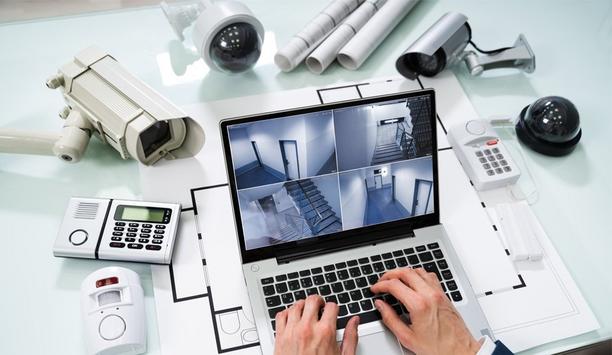
The advantages of security systems as forensic and investigative tools are well understood and demonstrated in the market. However, the new trend is toward systems that are useful in real-time and that even predict a security event, before it happens. We asked this week’s Expert Panel Roundtable: Which security systems are becoming more proactive than reactive?

When designing a security system for a site, the question of how it should be interconnected is often one of the first you need to answer. Should you choose a system that has its own proprietary bus network, which might require twisted pair cabling, or perhaps one based on an ethernet backbone? Both types of network have their advantages and disadvantages as discussed below. Ethernet connectivity Some security systems are based on a number of modules, and each module is connected to its own ethernet connection. One big advantage of a system like this is that in many cases it can be much more convenient, allowing the installer to utilize existing network cabling and other infrastructure, rather than needing to install new cabling. On the other hand, if a security system relies entirely on networking infrastructure controlled by others – typically the IT department, then the stability and reliability of the security system is dependent on that network being available when your system needs it. The stability and reliability of the security system is dependent on that network being available Another potential disadvantage is that certain areas of the premises may not be equipped with a nearby network outlet, and if the network in question is not managed by you, it might be necessary to request the IT department add an outlet for you to use. Proprietary bus connectivity A system with its own proprietary bus network can also have advantages. Perhaps the first and most important difference is that because the network cabling is installed specifically for the security system, the designer has the luxury of being able to decide exactly where the wiring should be placed and terminated. Another advantage is that the cabling would only be used by the security system, so the installation company can be sure the network will always be available, and there would be very little chance part of it could be accidentally unplugged. Another potential advantage is that some systems are able to run bus cabling of distances well over 1,000 metres, whereas individual ethernet connections are typically limited to 100 metres or less. Another consideration, which applies particularly to intruder and holdup alarm systems, is that communications between elements of the security system should not be prevented by other factors, such as a power failure. Obviously, if a part of such a network is formed by ethernet infrastructure, such as network switches and / or media converters, then that infrastructure needs to be battery backed, and the power supply must be monitored. In some cases, the equipment must be able to withstand a power failure of 24 or even 60 hours. Such long standby times are unusual in IT infrastructure, but are quite common in the case of security systems. The equipment must be able to withstand a power failure of 24 or even 60 hours How this all fits together When selecting a system, it is usually most helpful to have a flexible system that can support a number of different deployment options. This is especially true if the system in question can support a combination of different interconnection types. For example, a single system that can contain a variety of interconnections can then be deployed in a very wide variety of systems where existing infrastructure may be used to aid in the design and deployment: Fiber connections – Many modern sites are pre-cabled with existing fiber connections which can be used to form a dedicated interconnection between system components which can be of the order of kilometres apart. Ethernet connectivity – With the increasing ubiquity of networking within premises, some elements of a security system can be deployed using the existing infrastructure. Repeater - For very large or densely packed systems, a device that can be used as a form of “repeater” can be extremely useful to permit very long interconnect cabling distances. Systems can be formed by utilising a fusion of all of the above connectivity methods Some security systems can be set up to enable multiple discrete access control modules to be deployed, connected to an existing ethernet network, and treated as a single ‘system’ by the management software, while retaining full offline functionality in the event the network becomes unavailable. Further, some systems can be formed by utilising a fusion of all of the above connectivity methods. In practice, of course some applications would suit a deployment that relied solely on ethernet connectivity. Some other applications, especially systems or parts of systems that are part of an intruder and/or holdup alarm system, would better suit a deployment using a dedicated proprietary bus network, and other systems would suit a combination of these communications options. Selecting a system that can be deployed in a variety of ways can be enormously helpful in providing the flexibility projects might demand.

The Key To Unlocking K12 School Safety Grants
Download
Honeywell GARD USB Threat Report 2024
Download
Physical Access Control
Download
The 2024 State Of Physical Access Trend Report
Download
The Security Challenges Of Data Centers
Download
CONCEPT From Inner Range - An Access, Intruder Or Integrated System With Building Automation Features