Infinova - Experts & Thought Leaders



Latest Infinova news & announcements
Delta, a provider of power and thermal management solutions, announces its board of directors has approved the purchase of 100% of the shares in Infinova (Canada) Ltd., owner of Canadian-based video surveillance and business intelligence pioneer March Networks® from Infinova International Ltd. for USD 114 million (approximately NTD 3,163,500 thousand) through its subsidiary Delta International Holding Limited B.V. The deal is expected to strengthen Delta's presence in the growing video surveillance market and complement its building automation solutions. Video surveillance technologies Ping Cheng, Delta's Chief Executive Officer, said, "Security being an integral element of smart cities is boosting the global demand for video surveillance technologies. March Networks is a proven leader in providing end-to-end solutions to some of the world's leading financial institutions, retailers, transit agencies, and commercial customers.” Security being an integral element of smart cities is boosting the global demand for video surveillance" “We are confident that the collaboration between March Networks and Delta will expand our overall market opportunity and increase Delta's exposure to the growing video market beyond our surveillance subsidiary VIVOTEK. March Networks' cloud-based video solutions and business intelligence technologies set it apart and are also a perfect fit with our commitment to developing smart green solutions for a sustainable future." Aggressive growth plans March Networks President and CEO, Peter Strom, said, "Delta's financial strength and scale – with around $10 billion USD in annual revenues, over 80,000 employees, and deep M&A capability – will serve as an ideal platform for March Networks to accelerate its strategic plan of offering cloud-based video surveillance-as-a-service (VSaaS) and video-based business intelligence solutions to enterprises worldwide." He added that March Networks' customers and partners should expect no change to the high-quality products and services they've come to expect from March Networks as it embarks on its aggressive growth plans. Following the closing of the transaction, it is expected that March Networks will continue to operate from its Canadian headquarters, and the March Networks executive management team will continue to lead the organization.
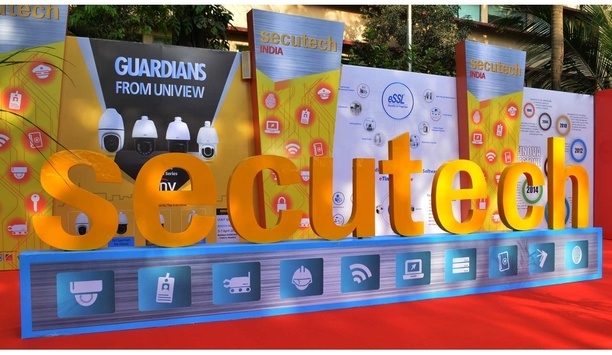
Attracting trade visitors from across the subcontinent, the region’s most influential trade fair for the security industry, Secutech India, is scheduled to return for its 9th edition from 7 – 9 May 2020 at the Bombay Exhibition Center, Mumbai. With exhibitor registration still open, the fair has already attracted more than 350 of the world’s leading security brands with less than three months remaining before it commences. The 2020 exhibition will feature Axis Communication, CP Plus, Hikvision, ZKTeco, Infinova, Matrix, Toshiba and many more. Security devices and turnkey solutions The 2020 edition of Secutech India is set to reflect the country’s digital transformation Detailing the business value of the fair, Ms Regina Tsai, the General Manager of Messe Frankfurt New Era Business Media Ltd said: “Catering to local market requirements such as cost efficiency and a need for fast project implementation, Secutech India assembles the full range of security devices and turnkey solutions under a single roof. Benefiting from its position in Mumbai, India’s commercial center, last year the fair attracted more than 20,000 buyers traveling from across India’s main regions, and we are looking forward to welcoming even more business this coming May.” The 2020 edition of Secutech India is set to reflect the country’s digital transformation. IP cameras are in high demand from SMEs, retail and the residential segment, while biometric access control systems are also gaining popularity in offices and at border controls, with users gradually favouring contactless systems such as facial recognition above fingerprint biometrics. Core security solutions In the view of Ms Tsai, this year’s fair is taking place at a favourable time for the regional industry: “The government aims to transform India into an electronics export hub, which will open up new opportunities for component manufacturers catering to the local manufacturing sector. But just as importantly, as part of India’s proposed Union Budget 2020, infrastructure development across roads, railroad, airports, ports, and economic corridors are expected to raise demand for core security solutions including video surveillance, video analytics, biometrics and intruder detection systems." "The governments ‘Digital India’, ‘Smart City Mission’, and ‘Technology Empowerment’ initiatives will also be growth drivers.” Access control in healthcare facilities As a maturing security market, the appetite for knowledge in India is growing" Among many benefits, the ability to make onsite comparisons, conduct meaningful business discussions and view product demonstrations are a few of the show elements that visitor’s to Secutech India value. According to Ms Tsai, business effectiveness is the top priority for the fair’s organisers: “Initiatives such as the ‘Secutech connect’ business matching service which links buyers with exhibitors based on industry background continue to be highly popular, helping us to generate genuine business outcomes for participants.” But beyond business, information exchange is also a priority says Ms Tsai: “As a maturing security market, the appetite for knowledge in India is growing. This is a need that the upcoming edition of Secutech India will cater for with a series of conferences dealing with topics relevant to the local market, including cybersecurity, smart city digital infrastructure; the convergence of 5G, artificial intelligence, data analytics and the IoT; access control in healthcare facilities, and fire safety in elderly care homes and restaurants.” Personal protection equipment In addition to its core focus on security, Secutech India 2020, in cooperation with the GPS Association of India, will feature a pavilion dedicated to fleet management, vehicle tracking as well as passenger and driver safety. The concurrent ‘Fire and Safety India’ event will also return as the destination for trade buyers to locate the latest firefighting gear, personal protection equipment and smoke detection systems.

Micron has announced general availability of the 128GB and 256GB density of edge storage microSD card solutions and collaboration with several leading video surveillance solution providers to promote surveillance-grade edge storage. Built on Micron’s industry-leading 64-layer 3D TLC NAND technology, the newly released solutions enable greater capacity in a smaller space, delivering up to 30 days of surveillance video storage in the camera itself. Over 98 percent of all microSD cards sold globally in 2017 were used in consumer applications, according to IHS Markit Industrial MicroSD Cards Over 98 percent of all microSD cards sold globally in 2017 were used in consumer applications, according to IHS Markit. These consumer-grade memory cards are not designed and validated for commercial use in video surveillance applications. Micron’s industrial microSD cards are designed specifically for professional video surveillance use cases and include a three-year warranty for 24x7 continuous video recording usage. The Micron microSD card design and firmware is optimized to ensure a reliable, robust and low-maintenance system design that delivers 24x7 continuous recording capability with minimum video frame drops. Due to a lack of surveillance-grade solutions, organisations have relied on the use of retail microSD cards that are not optimised for 24x7 recording" “Due to a lack of surveillance-grade solutions, organizations have relied on the use of retail microSD cards that are not optimized for 24x7 recording. As a result, these cards may fail earlier and also experience video frame drops as high as 30 percent,” said Amit Gattani, Sr. director of embedded segment marketing at Micron. “With a strong industry trend toward more analytics and artificial intelligence (AI) in surveillance cameras, there is a growing demand for higher reliability and higher density storage in the cameras. Micron is addressing this need with industry-leading density of 256GB in a surveillance-grade microSD card.” Edge Storage: Industrial-Quality Storage Designed for Professional Video Surveillance Applications Micron’s industrial microSD cards are specifically designed for IP video surveillance workloads and feature: Storage densities of 256GB, 128GB, 64GB, and 32GB, which enable more video to be stored at the edge, giving system designers increased flexibility Over three years of high-quality, continuous, 24x7 video recording3 in a wide range of temperatures and environments Technology for the cards to self-monitor and provide information on card usage and expected useful life remaining for each card Special firmware designed for continuous video recording, which minimizes frame drops and video loss A two million hours mean-time-to-failure (MTTF) or 0.44 percent annualized failure rate (AFR), which is equal or better than most surveillance Hard Disk Drive4 High Demand for Video Surveillance Cameras According to IHS Markit5, demand for professional video surveillance cameras continues to grow rapidly According to IHS Markit5, demand for professional video surveillance cameras continues to grow rapidly. It forecasts that over 130 million professional video surveillance cameras will be shipped in 2018, up from about 100 million in 2016. Following Micron’s release of increased capacities for their surveillance grade offerings, many leading professional video surveillance providers have adopted and deploying the solutions across their products with great success. “We are pleased that Micron is addressing the surveillance market with high reliability and high-performance edge storage products,” said Zhiming Li, product director at Dahua Technology. “Micron’s new 256GB industrial microSD card now enables use of edge storage as the primary storage in many SMB solutions and secondary storage in Enterprise solutions, enabling system integrators to optimize solution design, increase deployment flexibility and lower total cost of ownership.” Surveillance cameras are now deployed everywhere in highly distributed environments like smart cities and smart infrastructure" Edge Storage of Video and Analytics Data “Surveillance cameras are now deployed everywhere in highly distributed environments like smart cities and smart infrastructure. Edge storage of video and analytics related data in the surveillance camera gives unique flexibility to system integrators in optimizing the systems for performance and cost,” said Yul Pi, product collaboration director at Infinova. “Micron’s new ultrahigh density microSD cards bring the reliability and performance required for surveillance systems.” “The IP surveillance market continues to grow rapidly across all verticals and has created a rising demand for high-performance and reliable video storage. Recognizing this increasing need, VIVOTEK has deployed Micron’s new ultra-high-density microSD cards in our products to provide effective edge storage-based solutions for both SMB and Enterprise use case that enhance design flexibility and optimize system resources and total cost of ownership,” said Shengfu Cheng, director of marketing and product development division at VIVOTEK INC. “It’s important to adopt high-quality, surveillance-specific microSD cards, and we are pleased that Micron is leveraging its 3D flash memory leadership to deliver an optimized solution for this industry.” Small to medium businesses will drive significant growth in the coming years in the video surveillance-as-a-service market” Ultra-High-Density Edge Storage Solutions “Small to medium businesses will drive significant growth in the coming years in the video surveillance-as-a-service market,” said Jon Cropley, senior principal analyst for video surveillance at IHS Markit, a global business information provider. “Currently, these organizations typically rely on backend recording solutions for data storage. However, an increasing number of systems are available that do not require local network video recorders. The emergence of high-density edge storage has played a major role in this.” Micron understands launching ultra-high-density edge storage solutions based on 3D flash memory technology will change the way video is captured and stored" “Micron understands surveillance application cases and launching ultra-high-density edge storage solutions based on 3D flash memory technology will change the way video is captured and stored in future surveillance deployments,” said David Huang, president of GeoVision, US division. “We view our collaboration with Micron as a way to leverage edge storage to improve flexibility in solution designs and deployments while effectively bringing down the total cost of ownership for our customers.” Pricing and Availability The 128GB ($59 MSRP) and 256GB ($119 MSRP) versions of the Micron Industrial MicroSD Cards are available now for ordering through Micron global distribution channels. Micron is also showcasing the new 256GB Edge Storage solution at Security Industry Association's (SIA) New Product Showcase at ISC-West trade event in Las Vegas on April 10th, 2018.
Insights & Opinions from thought leaders at Infinova

Fiber optics enhances the operation and business bottom line of surveillance solutions Designers and end users of security systems, integrators and installers must consider and balance the functionality required of a video surveillance camera with its methods of transmission. This is the first of a 3-part examination by Mark Wilson, Marketing Vice President of Infinova, of how chief security officers (CSOs), directors and managers can understand the benefits of and how fiber optics enhances the operation and business bottom line of their surveillance solutions. With the continuing transition from analog to digital video surveillance, reliable transmission remains a crucial requirement. However, the usual transmission material, i.e. coax cable, has only limited reliability. With many legacy surveillance system installations, coaxial cable handles images from a camera to monitoring or recording, or both. Yet coax can often restrict transmission distance and cause signal degradation over long cable runs, not to mention interference.Networking, digital and Internet Protocol (IP) have ushered in Cat 5/Unshielded Twisted Pair (UTP) cable and high-speed Ethernet, employing IP to carry the digitalised video images. In some installations, wireless transmission - radio frequency, microwave, WiFi and mesh nets - play a role. Most enterprise security video designs are not totally wireless. Instead, the technology is applied to meet certain geographic or operational challenges. With fiber optic cabling, its interference immunity means better inherent security, robust cabling distances and huge bandwidth capability.Getting back to video signal transmission, it is important to note the practical differences among transmission methods. Security end users, their designers, system integrators and installers must consider and balance methods of transmission with the needed functionality of security cameras in light of the following: In cases of new security installations with scores of surveillance cameras, a minority have coaxial cable • Maximum cable run distances• Power requirements• Installation issues• Installation time• Quality of video• Integration with other systems• CostLimitations of coax cables in surveillance video transmissionCoaxial cabling has, for years, been the traditional transmission method of video surveillance traffic, with the presence of a coax BNC connector on almost every security camera . The most common coax cable is RG-59U. This cable provides a generally acceptable quality video path from a camera to the head end out to 230 m - the maximum recommended distance between an analog security camera and a digital video recorder, head-end or monitor.In the case of power transmission to the camera, many installations employ so-called Siamese cable - a single RG-59U wedded to an attached 18/2 cable, for both power and video. Still, some distances will increase voltage drop and it is necessary to select a power supply and cabling which match necessary voltage to distances. Today, especially in cases of new and upgraded security installations containing scores of surveillance cameras, a minority have coaxial, while a majority boast Cat 5/UTP and fiber optics.To some degree, the security shift has been spurred by the popularity of local area networks in most enterprises. Information Technology's (IT) means of transmission is gravitated to Cat 5/UTP wiring as well as fiber optics, often as an overall communications backbone. Security cameras can be more easily installed, using existing UTP cabling or fiber previously laid for enterprise network use. Corporate and government IP-based platforms have thus accelerated the security shift to such designs, especially where video surveillance is concerned.Use of video baluns for effective transmission of surveillance video Corporate and government IP-based platforms have accelerated the global shift towards fiber optics transmission When it comes to existing UTP, it is important to consider one warning- existing enterprise cables must first be verified in order to meet security industry standards for video performance.UTP cabling is lighter and easier to install (translate that to lower end user installation cost) than RG-59U. While the material itself is less expensive than comparable lengths of RG-59U, there still remain challenges and costs when pushing analog video signals through UTP cable. The process requires conversion of the camera's unbalanced BNC output into a balanced signal that can be carried on one pair of the UTP. When reaching a head-end or video recorder, the signal must be reconverted to handle a standard BNC-type connector. This means use of a balun.A balun is a device that connects a balanced line to an unbalanced line. It allows a signal of one impedance (a measure of opposition to an alternating current) value to be transmitted over a cable that uses a different impedance value. A video balun lets a system send video signals over a cable not meant for video. A point to consider in the use of a video balun is its necessary correspondence with a Cat5 cable. Coax cable, which transmits video, has an impedance of 75 ohm, while Cat5 has a100 ohm impedance. Therefore, baluns convert the original impedance to the impedance of the cable, and then back. Baluns are used in pairs; one on each end of the cable. Most significantly, transmitting video over Cat 5, without the use of video baluns, produces ghosting images, due to delays in the signal. There are two types of baluns: passive and active. Passive baluns convert the signal while active baluns impart an amplification method to increase transmission distance. UTP/ balun uses a single pair of a typically four-pair cable to handle the video, so three pairs can potentially provide power and pan/tilt/zoom from a head end to a camera. Combinations of baluns are called hubs.Fiber optics provides benefits Above and Beyond Cat 5Fiber optic technology, a method of sending and receiving information over great distances using light as the carrier, boasts significant advantages. Whether used as a backbone or a total transmission solution, its practical significance will be reviewed in more depth in Part 2 of this series to come. Mark S. WilsonVice PresidentInfinova

The Key To Unlocking K12 School Safety Grants
Download
Honeywell GARD USB Threat Report 2024
Download
Physical Access Control
Download
The 2024 State Of Physical Access Trend Report
Download
The Security Challenges Of Data Centers
Download
Infinova V2217_SMS_FCD_VMS_W03 Per Channel Security Management System Main Server – Face detection add-on license
Infinova V2217_SMS_FRE_VMS_W03 Per Channel Security Management System Main Server – Fire and smoke detection add-on license
Infinova V2217_SMS_FCD_FO_W03 Per Channel Security Management System Failover Server Face detection add-on license