Infineon Technologies AG - Experts & Thought Leaders





Latest Infineon Technologies AG news & announcements
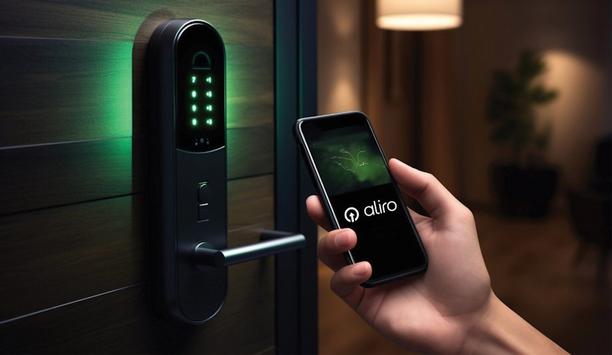
The Connectivity Standards Alliance (Alliance) announced the release of the Aliro 1.0 specification, a new communication protocol and credential standard designed to revolutionise how users interact with access points in every aspect of their lives. While the convenience of unlocking a smart home lock often captures public attention, Aliro is built for broader impact, aiming to streamline interoperability across varied access control use cases, including corporate offices, universities, hospitality venues, and single and multi-family residential homes. Driving adoption through major wallet integration A key differentiator for Aliro is the confirmed commitment from the world’s pioneer mobile wallet ecosystems. By aligning with Apple, Google, and Samsung, Aliro offers a standardized digital credential experience leveraging the smartphones and wearables people use every day. This strategic collaboration expands adoption pathways, empowering users to move easily between homes, workplaces, and public spaces using the secure digital wallets native to their operating systems. “Aliro is solving the fragmentation that has held back digital key adoption, replacing it with a single interoperability standard built through Alliance Member collaboration. By connecting the access control industry directly to leading mobile wallet ecosystems, it delivers a secure, frictionless experience that goes well beyond the front door. Lower integration complexity means faster innovation and shorter time to market. This is how the future of access control gets built,” said Tobin Richardson, President and CEO, Connectivity Standards Alliance. A unified standard for secured, seamless access The Aliro 1.0 specification establishes a robust framework utilising asymmetric cryptography to ensure secured and trusted interactions between user devices and readers, while respecting user privacy. This standardized protocol is designed for broad application across the entire access control ecosystem, providing a reliable experience in corporate offices, universities, hospitality venues, single and multi-family homes, and even areas without network coverage, such as underground parking garages and elevators. To meet diverse installation requirements, the specification supports a variety of transport technologies, including Near Field Communication (NFC) for tap-to-access, Bluetooth Low Energy (Bluetooth LE) for user-initiated long-range communication, and Bluetooth LE plus Ultra-Wideband (UWB) for a seamless, secured hands-free authentication method. To ensure global reliability, Aliro includes a comprehensive certification program and supporting test suites managed through Authorized Test Labs. This initiative unifies a global collective of over 220 Member companies - from lock manufacturers to silicon vendors and mobile platform leaders - working together to pave the way for a better, more secure mobile access experience. Through close collaboration, Member companies, including Apple, ASSA ABLOY, Google LLC, Infineon Technologies AG, Last Lock, Inc., Samsung Electronics, and STMicroelectronics pooled technologies, expertise, and innovations to enable the Aliro 1.0 specification, with Apple, Allegion, Aqara, Google LLC, HID, Kastle, Kwikset, Last Lock, Inc., Nordic Semiconductor, Nuki Home Solutions, NXP® Semiconductors, Qorvo, Samsung Electronics, STMicroelectronics, expected to be the first to achieve Aliro 1.0 certification. Empowering the value chain Aliro provides tangible benefits across the entire industry value chain by lowering implementation barriers and reducing overall complexity for stakeholders. For manufacturers, the standard acts as a universal arbiter for interoperability certification, significantly reducing research and development costs while simplifying the integration process with new partners. Integrators benefit from this streamlined approach through easier setup and more efficient troubleshooting across devices from multiple hardware providers. Ultimately, Aliro provides system owners with simplified maintenance and the flexibility to mix and match vendor-independent hardware and software across a wide variety of user devices. The path forward The release of Aliro 1.0 is the foundation of a living standard, not a one-time effort. This coalition is already looking toward future phases to integrate upcoming market and ecosystem requirements, such as expanded use cases like secure key sharing, while maintaining backward compatibility to ensure that current implementations are not compromised as the technology matures. By building this infrastructure to evolve alongside the market it serves, we are ensuring that Aliro remains the enduring, interoperable layer for universal digital credentials. As the specification enters the certification and commercialisation phases, this collective effort stands ready to deliver the scalability required for long-term global success.
The Connectivity Standards Alliance ("Alliance") Product Security Working Group is pleased to announce the release of their IoT (Internet of Things) Device Security Specification 1.0, with the accompanying certification program, and Product Security Verified Mark. This groundbreaking initiative aims to establish a unified IoT cybersecurity standard and certification program, providing manufacturers with a one-stop solution to certify their devices, enabling them to comply with multiple international regulations and standards more easily. Diverse international regulations "The unveiling of the IoT Device Security Specification 1.0, alongside its certification program and the Product Security Verified Mark, signals an important milestone in bolstering IoT security and building confidence with consumers," said Tobin Richardson, Alliance President & CEO of the Connectivity Standards Alliance. "By bringing together diverse international regulations into a cohesive specification, the Product Security Certification Program streamlines the process, reduces redundancy, and provides manufacturers with a singular, respected avenue for certifying their devices globally." IoT Cybersecurity baselines The Product Security Working Group aims to meet this challenge by consolidating requirements With the increasing adoption of consumer IoT devices, there is a heightened emphasis on security due to a rise in incidents involving breaches and malicious device hijackings. The Product Security Working Group aims to meet this challenge by consolidating requirements from the three most popular IoT Cybersecurity baselines from the United States, Singapore, and Europe into a single specification and certification program. This unifying effort helps manufacturers more easily and efficiently address these regulatory regimes' requirements aiming to instill confidence in consumers and regulators. Value of IoT devices "As consumers embrace the convenience and value of IoT devices, the Alliance is dedicated to helping to create more comprehensive protection for consumers. This initiative aims to establish a robust baseline for all consumer IoT devices," said Steve Hanna of Infineon Technologies AG and Chair of the Product Security Working Group Steering Committee. "The Alliance's Product Security Verified Mark and IoT Device Security Specification 1.0 will make it easier for manufacturers to address consumer IoT security requirements around the world." IoT Device Security Specification 1.0 requirements The Product Security's IoT Device Security Specification includes dozens of specific device security provisions. IoT Device Manufacturers must demonstrate compliance with those provisions, supplying justifications and evidence to an Authorized Test Laboratory with expertise in security evaluation and experience certifying products relative to this specification. Highlights of the specific requirements include: Unique identity for each IoT Device No hardcoded default passwords Secure storage of sensitive data on the Device Secure communications of security-relevant information Secure software updates throughout the support period Secure development process, including vulnerability management Public documentation regarding security, including the support period Driving requirements and specification These units spearheaded the process by driving needs and specification action Nearly 200 member companies — including Amazon, Arm, Comcast, Google, Infineon Technologies AG, NXP Semiconductors, Schneider Electric, Signify (Philips Hue and WiZ), and Silicon Labs — have collaborated, pooling related technologies, expertise, and innovations enabling the IoT Device Security Specification 1.0, the accompanying certification program, and Product Security Verified Mark to meet the diverse needs of stakeholders, including consumers, device manufacturers, and regulators. Together, these companies spearheaded the process by driving requirements and specification development and ultimately helping validate the final specification. The Product Security Certification Program and Verified Mark Product Security Verified Mark is proof a product meets the specification's security needs Encompassing a broad spectrum of smart home devices such as light bulbs, switches, thermostats, doorbell cameras, and more, the Product Security Certification Program establishes minimum requirements for IoT devices. By consolidating several international regulations into a single set of requirements, the Certification Program streamlines the process, helping manufacturers meet certification criteria from multiple countries or regions with a single evaluation. The Product Security Verified Mark is confirmation a product meets the specification's security requirements, with the goal of inspiring consumer confidence. When displayed prominently on certified product packaging, store signage, and online platforms, this Verified Mark builds trust by serving as a marker for secure IoT devices. A printed URL, hyperlink, QR code, or a combination of these representations on the Product Security Verified Mark gives consumers access to more information about the device's security features. Looking ahead As technology advances and new threats emerge, the Product Security Working Group remains committed to continuously enhancing the IoT Security Device Specification and the accompanying certification program. To learn more about how to be a part of the next generation of the IoT, visit here and become a Member of the Connectivity Standards Alliance.
Arrow Electronics, Inc. and its engineering services company, eInfochips, are working with Infineon Technologies AG to help eInfochips’ customers accelerate the development of electric vehicle (EV) chargers. Development of EV chargers, especially DC ‘fast chargers’, is becoming increasingly challenging to equipment manufacturers due to several factors, such as lack of prior experience, stringent functional safety and reliability requirements, and a fledgling support network. Arrow Electronics and Infineon Technologies partnership Arrow’s High Power Center of Excellence has developed a 30kW DC fast charger reference platform The collaboration between Arrow and Infineon aims to help innovators navigate these challenges, while accelerating time-to-market. As part of the collaboration, Arrow’s High Power Center of Excellence has developed a 30kW DC fast charger reference platform. This includes Infineon’s 1200V CoolSiC™ Easy power modules and also hardware design, embedded firmware, bi-directional charging support and energy metering functionality. Accelerate speed to market in e-mobility applications “Combining Arrow’s strength in components, engineering and design services with Infineon’s innovative products will help customers accelerate their design and speed to market in e-mobility applications,” said Murdoch Fitzgerald, the Vice President of Global Engineering and Design Services at Arrow. He adds, “Customers can rely on this collaboration to deliver innovative and leading edge DC faster chargers, accelerate and de-risk design cycles, and get access to a world-class support team enabling them to plan and manage their product roadmap and lifecycles.” Drive towards decarbonization and digitalization “Infineon is on a drive towards decarbonization and digitalization with our ecosystem partners, and this collaboration with Arrow is a testament to this mission,” said Shri Joshi, the Vice President of Green Industrial Power, Infineon Technologies Americas. He adds, “The joint 30kW DC fast charger reference platform, which includes Infineon’s latest power modules and devices, will help our customers bring more fast chargers to market as the future moves to electrical vehicles. We look forward to this ongoing collaboration to support our customer base.” 30kW DC fast charger reference development platform The first reference design from this collaboration, a production-grade 30kW DC fast charger reference development platform, is being demonstrated at Applied Power Electronics Conference, taking place from Feb. 25-29, 2024, in Long Beach, California, USA.

The Key To Unlocking K12 School Safety Grants
Download
Honeywell GARD USB Threat Report 2024
Download
Physical Access Control
Download
The 2024 State Of Physical Access Trend Report
Download
The Security Challenges Of Data Centers
Download