Immersive - Experts & Thought Leaders




Latest Immersive news & announcements

Immersive, the pioneer in AI-powered cyber resilience, announced it has been named a pioneer in The Forrester Wave™: Cybersecurity Skills and Training Platforms, Q1 2026. The report evaluates vendors on current offering and strategy in helping organizations develop and measure cybersecurity capability. Report evaluation In the report, Forrester noted that Immersive’s strategy is anchored in its bold vision to transform cybersecurity training into measurable, organizational resilience, noting that innovation is a standout. The evaluation cited the company’s forward-looking roadmap, including capabilities such as AI Program Builder and marketplace features, as well as its mature partner ecosystem that includes strategic alliances with consultancies and tech vendors to deliver co-innovation. “Cyber resilience cannot be measured by compliance alone. Organizations need evidence that their people, teams, and leaders can perform under pressure,” said Mark Schmitz, CEO of Immersive. “We believe this recognition from Forrester reinforces our strategy with Immersive One to help customers prove, improve, benchmark, and report readiness at enterprise scale.” Cyber resilience platform As threats evolve and AI reshapes how security teams operate, organizations face growing pressure to ensure their workforce can perform under real-world conditions. Through Immersive One, its unified cyber resilience platform, Immersive helps organizations prove readiness through realistic exercises, improve skills through hands-on labs, benchmark performance over time, and report measurable outcomes to leadership. Forrester also noted the breadth and timeliness of Immersive’s content, rapid research-driven updates, and executive dashboards and benchmarking tools as platform strengths.
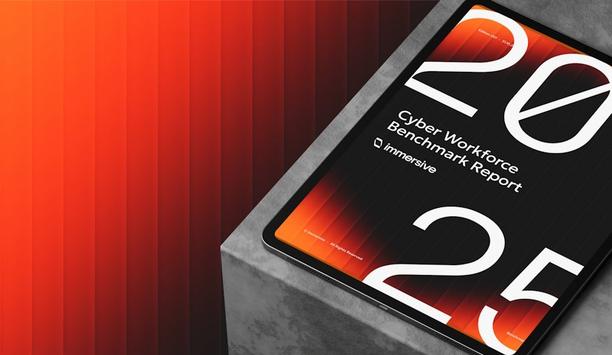
Immersive, the pioneer in cyber resilience, is revealing a widening gap between confidence and capability in cybersecurity. Despite record investment, heightened board oversight, and nonstop training, measurable readiness has flatlined. While nearly every organization believes it can handle a major incident, the data tells a different story. According to Immersive’s analysis, average decision accuracy is just 22%, and the average containment time is 29 hours. Meanwhile, Resilience Scores remain statistically flat to lower year-over-year (with an average decline of -3%) since 2023, showing that belief in preparedness continues to outpace proven performance. “Readiness isn’t a box to tick, it’s a skill that’s earned under pressure,” said James Hadley, Founder and Chief Innovation Officer at Immersive. “Organizations aren’t failing to practice; they’re failing to practice the right things. True resilience comes from continuously proving and improving readiness across every level of the business, so when a real crisis hits, your confidence is backed by evidence, not assumption.” Most significant findings The findings reveal that readiness breaks down in predictable ways. From how teams measure success, to what they choose to practice, and who they involve in the process, Immersive’s data exposes systemic patterns that prevent organizations from achieving demonstrable resilience. These are the fault lines where confidence diverges from capability, and where the work to truly be ready must begin. Among the report’s most significant findings: Confidence without capability 94% of organizations believe they could effectively detect, respond to, and recover from a major incident. In practice, teams achieved only 22% decision accuracy and took 29 hours to contain simulated attacks. Resilience Scores have remained statistically flat since 2023, and the median response time of 17 days to complete the latest cyber threat intelligence labs hasn’t improved despite increased spending and executive oversight. Confidence is climbing. Capability isn’t. Practicing the past 60% of all training still focuses on vulnerabilities more than two years old, leaving teams overprepared for yesterday’s threats. The most common exercises remain fundamental-level labs (36%), limiting progression into intermediate and advanced readiness. The result: stalled maturity and shrinking adaptability as organizations master outdated playbooks while new attack techniques evolve. Excluding the business Only 41% of organizations include non-technical roles (such as Legal, HR, Communications, or Executives) in simulations, even though 90% believe cross-functional coordination is strong. The data proves otherwise: when crises hit, unpracticed collaboration slows response and amplifies impact. True readiness demands rehearsed coordination across every function, not just the security team. New risks, old habits Veteran practitioners outperform newcomers on known threats, achieving roughly 80% accuracy in classic incident-response labs. But when faced with AI-enabled or novel attacks, those same experts lag behind. Senior participation in AI-scenario labs dropped 14% year over year, exposing a growing adaptability gap as adversaries weaponize AI. “Experience teaches what to do next, until the next thing has never happened before,” added Hadley. “Even the most seasoned teams must evolve as fast as the threats they face.” Methodology Immersive’s report draws from: An Immersive commissioned survey with Osterman Research of 500 cybersecurity pioneers and practitioners in the U.S. and U.K. (August–September 2025), capturing how organizations perceive and measure readiness. Anonymized performance data within the Immersive One platform (July 2024–June 2025), representing millions of hands-on labs across industries. Results from Immersive’s “Orchid Corp” crisis simulation, involving 187 professionals across 11 drills in 9 cities, measuring real-world decision-making and containment under pressure. Analysis of the Immersive Resilience Score, a benchmark that quantifies readiness across people, process, and technology by measuring decision accuracy, response time, framework alignment, and adaptability to new threats. The score applies to all Immersive users, subject to eligibility, as customers must have the relevant product to be evaluated on each corresponding factor.

Immersive, the pioneer in cyber resilience, announced the appointment of Aniket Menon as Chief Product Officer (CPO) and Thanos Karpouzis as Chief Technology Officer (CTO) to its executive leadership team. These critical additions will support innovation in Immersive One, the company’s unified cyber readiness platform, and reinforce Immersive’s mission to help organizations be ready for cyber threats through its AI-powered, evidence based Prove, Improve, Benchmark, and Report (PIBR) approach. Deep expertise Both c-suite pioneers bring deep expertise that aligns with Immersive’s vision for advancing enterprise cyber resilience: Aniket Menon is a cybersecurity product leader with over 15 years of experience at the intersection of security, technology, and infrastructure. Previously serving as VP of Product at Rapid7, Menon unified the company’s security operations platform and launched products spanning exposure management, detection and response, and cloud security, delivering measurable improvements in enterprise security programs. Thanos Karpouzis brings over 15 years of software industry experience, with a proven track record of innovation and delivering products that address critical customer needs. He previously served as Vice President of Engineering at Immersive, and before that was CTO at CoachHub, where he launched Aimy—the first commercial AI Leadership Coach—expanding the company’s personalized coaching capabilities. Prior to CoachHub, Karpouzis served as an engineering lead for Babbel and drove its learner apps product to become the world’s highest-grossing language-learning app, earning “Top Developer” and “Best Apps of the Year” recognition from Google Play and the App Store. Accelerating Immersive One’s technology Immersive is accelerating innovation in Immersive One’s role-specific training, simulations, ranges “Aniket and Thanos are visionary leaders who bring the expertise we need to accelerate Immersive One’s technology and platform, ensuring organizations are prepared for whatever threats may arise,” said Mark Schmitz, CEO of Immersive. “Their leadership will be pivotal as we scale our capabilities and expand our product portfolio to deliver solutions that help customers transform cybersecurity from a reactive necessity into a proactive, data-driven business function, equipping teams at every level to measure, improve, and prove their readiness.” With these appointments, Immersive is accelerating innovation in Immersive One’s role-specific training, simulations, ranges, and cyber drills, helping organizations protect their business, prove resilience to stakeholders, and adapt faster than the threats they face. Immersive One platform Immersive One is a unified platform that equips organizations to Prove, Improve, Benchmark, and Report their cyber resilience. The platform allows cyber pioneers to prove whether their technical teams, business leadership, and wider workforce are prepared for the next cyber incident with upskilling and exercises that benchmark readiness while also addressing compliance with regulations. Improving individual skill With the data and insights that come from these exercises, pioneers can then improve individual skill levels with targeted programs, rooted in individual performance data. Aligned with MITRE ATT&CK and other frameworks, Adaptive Intelligence Programs ensure organizations can prove cyber resilience with reports that back it up. Whether facing new regulations, board scrutiny, or real-world attacks, Immersive One turns people-readiness into a continuous, evidence based practice.