IDC Corporate USA - Experts & Thought Leaders



























Latest IDC Corporate USA news & announcements
NETSCOUT®, a provider of observability, AIOps, cybersecurity, and DDoS attack protection solutions, announces enhancements to its Arbor Edge Defense (AED) solution that helps enterprises maintain the availability of revenue-generating and mission-critical applications against sophisticated DDoS attacks that evade or bypass content delivery network (CDN) DDoS defences. The enhancements identify malicious sources concealed behind shared CDN infrastructure and apply precise, service-specific countermeasures to block attacks without denying access to legitimate customers using the same CDN. Accelerating digital experiences “Cybercriminals launch DDoS attacks for many reasons, but the ultimate outcome is to drain the targeted organization’s resources,” said Christopher Rodriguez, research director, security and trust, IDC. “These attacks pose significant operational and financial risk because adversaries can target multiple layers of an organization’s infrastructure and rapidly shift attack methods. Effective DDoS defense must be dynamic, highly performant, and broad enough to protect critical services across the attack surface.” Organizations rely on CDNs to accelerate digital experiences and absorb large-scale traffic surges, but CDN deployment alone does not eliminate DDoS risk. Dynamic applications, APIs, authentication services, uncached requests, and exposed origin infrastructure can remain vulnerable. Attackers exploit these gaps by sending DDoS attacks disguised as application-layer traffic that resembles legitimate user activity. CDN DDoS defences can miss this traffic because they focus on detecting volumetric DDoS attacks and rely on generic protections that are not customized to the individual customer applications being protected. Inspect application traffic These advanced application-layer DDoS attacks bypass CDN DDoS protections to the customer data centre, causing outages and impacting revenue. Defenders must either allow the attack through or block it, including the legitimate traffic along with it. NETSCOUT restores source-level visibility and enables precise mitigation of all CDN traffic closer to the protected service. The enhanced AED solution enables enterprises to: Reveal attack sources hidden by CDN proxies: AED integrates a high-performance TLS transparent proxy to decrypt and inspect application traffic, identify its true source from application headers, and apply precise application-layer DDoS countermeasures to block DDoS traffic that CDNs do not Stop application layer attacks: Detect traffic designed to exhaust application, API, authentication or infrastructure resources Protect applications with service-specific policies: Apply countermeasures tailored to the behavior and requirements of each protected service Preserve legitimate customer access: Block malicious traffic precisely without denying service to broad ranges of users behind shared CDN infrastructure and without impacting other traffic arriving from the CDN proxy Defend direct and CDN-mediated traffic paths: Mitigate attacks that pass through the CDN as well as attacks that bypass it and target origin infrastructure directly Extend existing CDN investments: Add an independent layer of protection and visibility without requiring the enterprise to replace their CDN provider Mimicking legitimate traffic “Enterprises cannot assume that putting a CDN in front of an application protects every path attackers can use to reach it,” said Scott Iekel-Johnson, AVP, product management, NETSCOUT. “Attackers increasingly look for ways around defences, including targeting origin infrastructure directly or slipping through the CDN by mimicking legitimate traffic. AED closes those gaps by extending DDoS protection beyond the CDN, closer to the application itself, securing the paths attackers still exploit, enabling enterprises to protect critical applications precisely while keeping legitimate customers connected.” Business-critical applications The AED enhancements extend NETSCOUT’s established DDoS protection portfolio into an increasingly important point of enterprise exposure: the connection between shared cloud delivery infrastructure and business-critical applications. By complementing existing CDN investments rather than requiring organizations to replace them, AED helps customers address a significant area of exposure while extracting greater security value from current infrastructure investments. For enterprises whose revenue, operations and public services depend on application availability, this provides an additional layer of resilience at the point where an attack can have the greatest business impact.
Fortinet® , the global cybersecurity pioneer driving the convergence of networking and security, announced the FortiGate 1200G series, the newest addition to the FortiGate G series with FortiSASE Outpost, which brings cloud-delivered security services into customer-controlled environments. By combining high-performance threat protection, modern connectivity, hardware-rooted platform security, and cloud-delivered security capabilities, the solution gives organizations the flexibility to enforce security where it makes the most business sense. Whether on-premises, at the edge, or in the cloud, security teams can maintain consistent protection, high performance, and simplified operations across hybrid environments. Advanced technology "The convergence of firewall and SASE technologies is creating a new SASE firewall market built for the realities of today’s hybrid world. Fortinet anticipated this shift by building FortiGate and FortiSASE on FortiOS and investing in proprietary ASIC technology that delivers security and performance at scale from day one." "The FortiGate 1200G with FortiSASE Outpost capability advances this vision by combining local enforcement and cloud-delivered security to address customers’ evolving sovereignty, performance, and AI infrastructure requirements." Ken Xie, Founder, Chairman of the Board, and CEO of Fortinet. FortiGate 1200G Series: High-Performance Security Built for AI Infrastructure As AI adoption, encrypted traffic, and hybrid infrastructure reshape enterprise networks, organizations need to inspect growing traffic volumes without introducing performance bottlenecks. They also need the flexibility to determine where security enforcement occurs based on application performance, data sovereignty, compliance, and operational requirements. Powered by Fortinet’s latest FortiASIC architecture, the FortiGate 1200G series accelerates networking and security processing to deliver predictable, low-latency protection for demanding enterprise and data center environments. Flexible 10G, 25G, and 100G connectivity helps organizations modernize their infrastructures, while hardware-rooted protections strengthen the integrity and resilience of the FortiGate 1200G. Key benefits of the FortiGate 1200G include: Keeping applications fast: Predictable low-latency inspection powered by FortiASIC enables organizations to secure encrypted and AI-driven traffic without sacrificing application performance. Modernizing with room to grow: Flexible connectivity supports campus, data center, and hybrid environments while providing headroom for future AI-driven growth. Increasing operational resilience: Hardware-rooted protections, secure credential storage, and built-in redundancy strengthen platform integrity and improve business continuity. Reducing operational complexity: FortiOS consolidates networking and security while enabling consistent policy management across appliances and cloud-delivered services. When configured as a FortiSASE Outpost, the FortiGate 1200G can operate as a high-performance local SASE point-of-presence (POP), giving organizations another option for where security inspection and enforcement occur. Industry analysts see converged firewall and SASE architectures as increasingly important for organizations preparing networks for AI-driven demands. Providing flexibility "Converged SASE and firewall platforms provide the flexibility to meet dynamic, AI-accelerated network architectures where they are, rather than becoming part of next year’s technical debt. Buyers that judge platforms only by how well they fit today’s environment, rather than how effectively they can adapt to tomorrow’s, are already behind." Pete Finalle, Research Manager at IDC. FortiSASE Outpost: Sovereign security delivered at the edge Organizations increasingly need the flexibility to determine where security inspection and enforcement occur based on their business, performance, sovereignty, and compliance requirements. Traffic can be routed through a cloud-based SASE POP, while data-sensitive, or latency-critical traffic can be processed locally through FortiSASE Outpost running on a FortiGate within a customer-controlled environment. Configured as a FortiSASE Outpost, the FortiGate operates as an ASIC-accelerated on-site SASE POP, delivering security inspection, policy enforcement, and access control closer to users and data. Organizations can strategically place on-site POPs near large concentrations of users in regions without a nearby cloud POP, helping reduce latency, preserve application performance, and lower bandwidth costs. This differentiated Fortinet architecture allows organizations to use Fortinet-operated POPs, on-site POPs, or both. The FortiSASE interface centrally manages configuration, policy, monitoring, lifecycle operations, and upgrades across both deployment models, maintaining consistent zero-trust policies, visibility and protection without treating the on-site POP as a separate security environment. Organizations can also keep designated traffic, logs, and processing within defined geographic or private infrastructure boundaries to meet regulatory requirements and reduce connectivity costs without changing the end-user experience. Protect every user without sacrificing performance or control Regardless of where enforcement occurs, users receive a consistent access experience, and organizations maintain common security policies, visibility, and zero-trust controls. This enables security teams to keep designated traffic, processing, and logs within specific geographic, jurisdictional, or private infrastructure boundaries without creating a separate security architecture or changing how users connect to applications. This deployment flexibility is especially important for AI-driven environments. Agents, applications and connected devices generate growing volumes of east-west traffic that may not need to be routed through a cloud POP and back. Using the FortiGate as a high-performance local enforcement point, organizations can inspect this traffic closer to the user. This helps reduce latency, preserve application performance, and maintain control over sensitive information. Built on FortiOS, FortiGate and FortiSASE share policy, threat intelligence, security context, and zero-trust decisions across local and cloud-delivered environments. FortiGuard AI-Powered Security Services provide real-time intelligence and automated protection across both deployment models, while FortiAI helps security teams investigate and respond to threats faster without adding operational complexity. Analysts also point to the need for architectures that let organizations choose where enforcement occurs without fragmenting policy, operations, or the user experience. Meaningful SASE firewall market "Organizations should not have to choose between the scalability of cloud-delivered security and the performance, control, or sovereignty of on-premises enforcement. The convergence of these models is creating a meaningful new SASE firewall market. Fortinet is well positioned for this shift, enabling customers to apply security through cloud-delivered FortiSASE or locally with the FortiGate 1200G and with FortiSASE Outpost, based on what their business requires, while maintaining consistent policy, visibility, and user experience." Will Townsend, Chief Analyst, LoneStar Advisory and Research. Availability FortiGate 1200G is expected to be available in Q3 2026.

Permiso Security, the unified identity security platform, announces the Permiso Risk Score Engine, a proprietary model that assigns continuous, multi-dimensional risk scores to every identity in an organization's environment. The Risk Score Engine is powered by Permiso's Universal Identity Graph and produces three distinct scoring outputs: Identity Risk Scores that prioritise which identities carry the most risk, Session Scores that highlight which activity needs immediate investigation, and Organization Risk Scores that roll up identity risk into a single tenant-level, quantifiable metric with peer benchmarking. Biggest contributing factors "Before Permiso, we had no way to quantify identity risk across our environment in a single view. The Risk Score Engine changed that. We can now see exactly which identities carry the most risk, why, and how that risk is trending over time. It has fundamentally improved how we prioritise," Said Brian Salomon, Security Engineer, YAGEO Group. Enterprise security teams today are unable to answer a straightforward question: across every environment, what is my overall identity risk, and what specifically are the biggest contributing factors? Answering it requires comprehensive visibility of every identity type and runtime behavioural data showing what each identity is doing at any given minute. Most organizations have neither. They assign identities a fixed risk tier based on privilege level and leave it there, or rely on noisy alert-driven approaches that only flag an identity when a detection fires. Neither scales. Distinct response recommendations The Permiso Risk Score Engine addresses these issues through a blend of static posture, graphed relationships between identities, and runtime data to score every identity on a 0-to-100 scale across three dimensions: Behavior (is this identity doing something unusual), Likelihood (is this identity likely compromised), and Impact (how much damage can this identity cause). The three-dimensional approach ensures that two identities with the same composite score, but different risk profiles, receive distinct response recommendations, giving security teams actionable intelligence rather than a single number. "The identity security market has lacked a consistent, quantifiable way to measure risk across all identity types. Continuous scoring that combines posture, behavior, and context into a single model is where the industry needs to go, and it is a meaningful step beyond what legacy ITDR and ISPM tools offer today," said Chris Kissel, Research Vice President, Security Products at IDC. Historical risk profile Key Capabilities: Three-dimensional scoring (Behavior, Likelihood, Impact) that explains why an identity is risky and prescribes specific responses based on the risk profile. Dual-layer risk computation combining static posture analysis (privilege levels, credential hygiene, entitlement scope) with runtime behavioral signals (active anomalies, threat intelligence matches, authentication context). Session-level scoring on dual axes (Suspicion and Impact) that enables SOC teams to triage active sessions based on what is happening now, independent of the identity's historical risk profile. Score velocity detection that identifies when the rate of score change is itself the signal, catching identity compromise sequences that unfold over minutes rather than days. Organization-level risk posture with peer benchmarking that gives CISOs a trackable, reportable metric for board-level communication on identity risk. Coverage across every identity type, from human users to service accounts, API keys, OAuth tokens, and IAM roles, including AI agents, the fastest-growing and least-governed identity class, scored with the same model as every other identity. "Static labels and one-alert-at-a-time triage do not scale when you are managing a global employee base, sprawling NHIs, and a growing agentic workforce. The Risk Score Engine gives every identity a continuous, evidence-backed score that tells you not just that something is risky, but why, and what to do about it," said Paul Nguyen, Co-Founder and CEO, Permiso Security. Another alerting system The Permiso Risk Score Engine is available now as part of the Permiso platform. "We built the Risk Score Engine on top of the Universal Identity Graph because risk scoring without unified identity context is just another alerting system. When you can see every identity, trace how they connect across environments, and layer behavioural baselines with threat intelligence, you can compute a score that actually means something. That is what separates a risk score from a risk guess," said Sanjeev Williams, SVP of Product, Permiso Security.
Insights & Opinions from thought leaders at IDC Corporate USA
The past decade has seen unprecedented growth in data creation and management. The products and services that consumers use every day – and the systems businesses, large and small, rely on – all revolve around data. The increasing frequency of high-profile data breaches and hacks should be alarming to anyone, and there’s a danger data security could worsen in the coming years. According to DataAge 2025, a report by IDC and Seagate, by 2025, almost 90% of all data created in the global datasphere will require some level of security, but less than half of it will actually be secured. Nuanced Approach To Data Security Security is a circle, not a line. Every actor involved in the handling and processing of data has responsibility for ensuring its securityThe rapid proliferation of embedded systems, IoT, real-time data and AI-powered cognitive systems – as well as new legislation like the European Union’s GDPR – means that data security has to be a priority for businesses like never before. With data used, stored and analyzed at both the hardware and software level, we need a new and more nuanced approach to data security. Security is a circle, not a line. Every actor involved in the handling and processing of data has responsibility for ensuring its security. What this means in practice is renewed focus on areas of hardware and software protection that have previously not been top of mind or received large amounts of investment from businesses, with security at the drive level being a prime example. The Importance Of Data-At-Rest Encryption In a world where data is everywhere, businesses need always-on protection. Data-at-rest encryption helps to ensure that data is secure right down to the storage medium in which it is held in a number of ways. Hardware-level encryption, firmware protection for the hard drive, and instant, secure erasing technology allow devices to be retired with minimal risk of data misuse. Data-at-rest encryption helps to ensure that data is secure right down to the storage medium in which it is held in a number of ways A recent report from Thales Data Threat found that data-at-rest security tools can be a great way to help protect your data. However, it’s important to note that this must be used in conjunction with other security measures to ensure that those that fraudulently gain access to your key management system can’t access your data. Ensuring Drives To Be Common Criteria Compliant One straightforward test any business can do to ensure its storage is as secure as possible is to check whether the drives are Common Criteria compliantDespite the clear benefits, this kind of encryption lags behind other areas, such as network and endpoint security, in terms of the investment it currently receives. The same Thales Data Threat report found that data-at-rest security was receiving some of the lowest levels of spending increases in 2016 (44%), versus a 62% increase for network and a 56% increase for endpoint security. One straightforward test any business can do to ensure its storage is as secure as possible is to check whether the drives are Common Criteria compliant. Common Criteria is an international standard for computer security certification, and drives that meet this standard have a foundational level of protection which users can build on. Providing An Additional Layer Of Security The retail industry has seen a spate of security breaches recently, with several major US brands suffering attacks over the busy Easter weekend this year. As frequent handlers of consumer card information, retailers are particularly vulnerable to attack. Data-at-rest encryption could enhance security in these instances, providing an additional layer of security between customer records and the attacker The advanced threats retailers face can often evade security defences without detection. Such a breach could grant attackers unrestricted access to sensitive information for possibly months – some breaches are known to have been detected only after consumer payment details appeared on the dark web. These types of undetected attacks are highly dangerous for retailers, which are relatively helpless to protect consumer information once their defences have been compromised. Data-at-rest encryption could significantly enhance security in these instances, providing an additional layer of security between customer records and the attacker which has the potential to make the stolen data valueless to cyber criminals. Industries In Need Of Data-At-Rest Encryption Healthcare organizations, which hold highly sensitive customer and patient information, have a strong use case for data-at-rest encryption. With the widespread adoption of electronic patient health records, that data is increasingly more vulnerable to attack. Recent research from the American Medical Association and Accenture revealed that 74% of physicians are concerned over future attacks that may compromise patient records. With the widespread adoption of electronic patient health records, that data is increasingly more vulnerable to attack The financial sector would also benefit from further investment in data-at-rest encryption, given 78% of financial services firms globally are planning on increasing their spending on critical data, according to Thales’ Data Threat Report. It’s helpful to view security as a circle in which every piece of hardware and software handling the data plays its partSMEs and enterprises are not immune to security threats either – with growing numbers of people traveling for work or working remotely, the risk of sensitive business data becoming exposed via device theft is heightened. Usernames and passwords have little use if thieves can simply remove unencrypted hard drives and copy data across. Securing Every Hardware And Software Technology vendors often focus on aspects of hardware and application security that are within their control. This is understandable, but it risks proliferating a siloed approach to data security. There is no single line for data security -- rather, it’s helpful to view it as a circle in which every piece of hardware and software handling the data plays its part. There’s a clear need for more industry dialog and collaboration to ensure data security is effectively deployed and connected throughout the security circle and across the value chain.
To say the surveillance industry has changed over the last quarter of a century is an understatement. From high-definition cameras and TVs to high flying drones and video analytics – the surveillance industry has shifted in ways we never expected to see in such a short space of time. What’s more, with such advancements in both quality and choice that’s now available in the market, it’s no wonder that revenue in the video surveillance market is set to double to $75.64 billion by the end of 2022. Overall, some of the biggest opportunities in the surveillance industry will be through adopting new technological practices, particularly around the Internet of Things (IoT), cloud storage and artificial intelligence (AI) such as machine learning. The main question however is exactly how these trends will shape the surveillance industry of the future? Growing Data Needs In The IoT Era Recently, Seagate and IDC released a whitepaper looking at the future of data and the factors that will contribute to worldwide data exploding to 163ZB by 2025. One of the biggest reasons for the increase in data is the rise of connected devices as a result of the IoT. Specifically, within surveillance we are seeing this occur already, thanks to drones and other wearable security devices becoming connected and coming online. With so many more transactions being created and tracked it’s crucial to think about how the surge in data will be managed. The use and integration of data in businesses and our lives is also quickly moving to the need for real time data Hard Drives Optimized For Surveillance With such complexity in both the data set and its use, it’s imperative that we make sure that we have all the right hardware for the job. In the past, data centers would typically use the largest capacity drives their budget would stretch to, with the knowledge that the drives would be sufficient for its needs. However, as we move to a more complicated data set thanks to the rise of the IoT, we now need to begin to make more of a conscious effort to consider what drive is right for our needs. A prime example is how specialized hard drives have been making their way in to the surveillance market that have been optimized for specific use functions. One such drive is Seagate’s SkyHawk which allows security applications to continuously record video over a 24/7 basis. Unlike other industries, the surveillance market needs drives that have the capacity to run and write data 90% of the time so that businesses are never caught out using unsuitable and unreliable drives which could have serious consequences to personal and business safety. Access To Video In The Cloud The rise of connected devices is also generating a substantial volume of data. This poses the question of where exactly this data will be stored and conversations are already taking place around access to video in the cloud. A key driver of the shift to cloud-based, fast-access, and truly mobile data usage is that data has increasingly become a critical influencer for our lives in all aspects There are a couple of benefits to consider when it comes to video surveillance in the cloud. Firstly, the data is stored in a central, shared system so users can access the content quickly and easily from wherever they are. Secondly, it’s possible to update a cloud-based product on an ongoing basis, often in real-time, and once improvements have been made they are immediately visible and available to customers. Emergence Of Hypercritical Data A key driver of the shift to cloud-based, fast-access, and truly mobile data usage is that data has increasingly become a critical influencer for not only our businesses but also our lives in all aspects. Our research with IDC revealed that data usage is changing and it now has to be analyzed by its level of criticality. The emergence of hypercritical data also means that businesses should look to review how they capture data and deliver data analytics. This is because they’ll require an infrastructure that can deliver high reliability and bandwidth as well as increased security. This could be something as simple as making sure they choose the hard drives that offer the ability and resilience to deal with the requests for data analysis. Thanks to AI we’ll see the industry becoming more proactive, rather than reactive Machine Learning And AI For Real-time Analytics The use and integration of data in businesses and our lives is also quickly moving to the need for real time data. As such, data is delivered to not only inform but also determine actions — sometimes autonomously. Consequently, machine learning and AI is causing a huge buzz within video surveillance. And it’s no wonder when the opportunity for our industry is huge. If security guards and emergency services can use the data from AI to make smart predictions, it will help increase preventative and real-time tactics in surveillance, rather than simply being used as a post event, forensic tool. Thanks to AI we’ll see the industry becoming more proactive, rather than reactive, as a result of machine learning being able to predict security and surveillance situations before they happen. Over time, the demand for intelligent video analytics and systems is only going to increase as more and more industries realize the benefits for its application. It’s up to all of us to work with our partners and customers to ensure that they are ready for this change and are advised of the best way to manage and store the data generated to meet their needs.
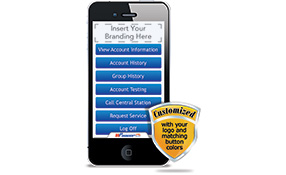
Widespread use of smartphones and the loT have fuelled explosive demand for connectivity, convenience and control The growing Internet of Things (loT) or intelligent, inter-connected devices are causing a paradigm shift in nearly every technology sector, including the security installing industry. The global IoT market, according to research firm IDC, Framingham, Mass., is predicted to increase from 10.3 million “endpoints” in 2014 to more than 29.5 million in 2020. This article by SourceSecurity.com's dealer/integrator correspondent, Deborah L. O’Mara looks at COPS Monitoring’s focus on helping security companies easily add a wide range of new services and corresponding RMR. Smartphones And loT Connectivity Demand Across the security landscape, this widespread change and adoption of devices and systems riding on the network is causing massive change across the board, from installing companies to central station monitoring firms. Jim McMullen, president and chief operating officer, COPS Monitoring, Williamstown, N.J., says widespread use of smartphones and the loT have fueled explosive demand for connectivity, convenience and control, and the Underwriters Laboratories Listed, Factory Mutual Approved central station provider is delivering the critical services associated with these trends. “Smart hardware for items like lighting, thermostat, locking, and video cameras and useful apps to manage these components are the types of services customers want. Fortunately, many of today’s modern security systems have proven to be a viable platform for a more comprehensive connected home solution. Dealers that understand and embrace these new services can leverage the growing demand by integrating home automation and lifestyle services with security. In many cases, it equates to additional recurring monthly revenue (RMR) and a ‘stickier’ customer.” Geo-Diverse Hometown Central Stations COPS Monitoring operates six strategically located geo-diverse hometown central stations. Five central stations, in New Jersey, Florida, Arizona, Tennessee and Texas, are hot-redundant and load sharing. If local conditions affect one of its locations, it continues to deliver fast and professional service by over-staffing other load-sharing centers. The company’s sixth central station in Maryland will be integrated into its current services in 2015. "Smart hardware for items like lighting, thermostat, locking, and video cameras and useful apps to manage these components are the types of services customers want, " says Jim McMullen, President & COO COPS Monitoring McMullen says that from the company’s beginning more than 37 years ago, COPS Monitoring’s success has been dependent upon one thing: helping independent alarm dealers succeed. “Today, we are the largest independently-owned third party monitoring company in the industry, yet our regional approach allows us to maintain a more personable ‘hometown’ level of service,” he says. “With one of the most of experienced management teams in the industry and an in-house staff of programmers, COPS Monitoring not only has clear vision and leadership, but we also have the resources and ability to give our dealers an advantage by quickly adopting the best new technologies as they become available.” New Services And Corresponding RMR COPS Monitoring is fine-focused on helping security companies easily add a wide range of new services and corresponding RMR. “We support essentially all of the modern panels from major manufacturers that give dealers the ability to offer their customers a variety of home control, lifestyle services and security apps,” McMullen says. “In addition to the ability to control their alarm system and other connected devices, consumers can also receive notification about alarm events. We also created our own useful app for dealers to package to end-users as a white-label solution. Unfortunately, today’s security system apps don’t give customers the most important information about what happened during an alarm event - such as who was called, whether a passcode was given, or if the authorities were dispatched. That’s why professional central station monitoring services are so critical, and we wanted the results of our actions to be at the end-users’ fingertips,” he says. User-Friendly Interface For Customer Satisfaction This solution has been a differentiator for the COPS dealers: the smartphone, tablet and PC access called MPower is branded with the dealer’s logo. The interface is also color-coordinated for a custom look and feel for each dealer. “The additional peace of mind of knowing what happened during an alarm event is why our dealers consider MPower an integral part of protecting RMR. Its user-friendly interface improves customer satisfaction and ultimately helps to reduce attrition. What’s more is that MPower can be offered as a standalone service because it works with any panel and transmission format, whether a connected home system is installed or not,” McMullen says. “Our industry is changing at a pace faster than ever before, which means dealers need a central station that can stay ahead of the technology curve and have the ability to quickly support the best emerging technology so they can provide the products and services their customers demand.”