Healix International - Experts & Thought Leaders






Latest Healix International news & announcements
Healix, the partner for health, travel, and security-related risk management solutions, has joined a five-year partnership with the recently formed Emergency Alliance. The Emergency Alliance represents the formal coming together of New Zealand’s expert relief agencies, who have agreed to collaborate to share knowledge and resources to create efficiencies in their fundraising activities. Through this collaboration, Emergency Alliance is able to provide more efficient emergency assistance to those who need it most. Launched in March, the platform leverages best practices from similar mechanisms operating in 13 other countries. Thirty years of partnership Healix will be bringing over thirty years of medical and security expertise to the partnership With this announcement, Healix will be bringing over thirty years of medical and security expertise to the partnership. Leveraging its understanding of risk and its range of innovative products, Healix will be able to aid the Emergency Alliance’s efforts to act efficiently and effectively when a crisis occurs. “We are very excited to be working with Healix. Their global network of travel, security, and medical experts will provide rich insights and assessments for Emergency Alliance and its members, and are part of our toolbox when we respond to significant global crises,” said Emergency Alliance Executive Director Paul Brown. “Through our Rapid Response Network, we are building a tight family of news media and corporate partners who can amplify our call for help, and we appreciate Healix’s foresight and leadership to commit to this long-term partnership.” he continued. Author's quote Jason McLennan, General Manager for Healix New Zealand notes that “when disaster strikes, it’s essential to work with trusted, recognized, and well-established organizations, and the Emergency Alliance offers this. With Healix now on board, the Emergency Alliance will have even further strength to handle the increasingly complex emergencies facing us. He adds, "Climate change, geopolitics, and other issues are bringing a new wave of emergencies that need to be handled efficiently and effectively. We look forward to working with Emergency Alliance in handling these challenges and working together to find and build the solutions that are needed the most.”
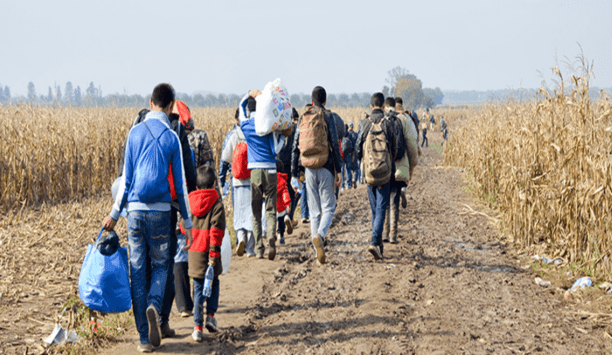
World Refugee Day 2022 took on an even greater significance this year as it comes amid the brutal war in Ukraine. According to the United Nations High Commissioner for Refugees (UNHCR), Russia’s invasion of Ukraine has pushed global displacement figures to record levels. More than five million Ukrainian refugees have been registered across Europe since the conflict began in February. One third of Ukraine’s population has been internally or internationally displaced. Reasons of displacement More than one percent of the current global population has been forced to flee The sombre truth is that more than one percent of the current global population has been forced to flee their homes. Displacement can occur for many reasons, including violence, war, natural disasters and climate change. The number of global refugees has risen by 10.7 million since 2021. This staggering increase can be largely attributed to the war in Ukraine, as well as humanitarian crises in Ethiopia, Afghanistan, Myanmar, Yemen and the Democratic Republic of Congo. Internally displaced peoples It is important to note that this total does not include the number of internally displaced peoples (IDP). IDP are those who are forced to flee their homes, but remain within their own country. Internal displacement is often caused by the rising number of extreme weather events, including heat waves, droughts, floods, typhoons and hurricanes. To maintain safety World Refugee Day is an important opportunity to acknowledge NGO's effort Effective relief for those who have been displaced is entirely dependent on the safety and wellbeing of the people that deliver it. World Refugee Day is an important opportunity to acknowledge the efforts of the non-governmental organisations (NGOs) and their employees that work tirelessly to assist refugees and IDPs worldwide. Aid workers Aid workers face significant security risks due to their direct exposure to violence, conflict and unrest. In addition, these workers are commonly targeted as political hostages or bargaining chips. In May of this year, the Russian military unlawfully detained two UK aid workers who were providing humanitarian assistance in Ukraine. These types of arrests represent a direct breach of humanitarian law. A concerning trend can be seen, evident in the increasing number of attacks against aid workers worldwide. Notable incidents Some notable incidents seen in the last 12 months: Three members of the UNHCR were wounded in an attack against a convoy in the eastern Democratic Republic of Congo in December 2021. Islamic State militants killed an aid worker employed by the Kurdish Red Crescent in the Al-Hol refugee camp in Syria, which underscores the extreme security risks humanitarian and medical organisations face in that area. Two humanitarian workers were killed in separate events in February. Aid convoys, warehouses and medical teams are regularly targeted. In March, the Norwegian Refugee Council (NRC) raised concerns about the rising number of lootings and attacks on aid workers in South Sudan as the country’s hunger and unrest crisis continues to deteriorate. Higher risk tolerance NGOs generally have a higher risk tolerance than multi-national corporations NGOs generally have a higher risk tolerance than multi-national corporations and governments. While securing acceptance in the field is undoubtedly one of the most important forms of protection, there are a number of other risk mitigation and crisis management measures available to help NGOs fulfil their duty of care towards their field staff and volunteers, and ensure donor confidence. Healix encourage NGO's Healix encourage the use of explicit NGO security management strategies. The company can assist by providing ground support and protective services, building evacuation plans and travel policies, conducting security audits and coordinating journey management plans. Additional services include the Healix Sentinel Tracker and Healix Sentinel Travel Oracle App, which allow NGOs to boost their preparedness and resilience while simultaneously enhancing their operational capabilities in high-risk security environments.

The hyper-connectivity that social media fortunes to both organizations and consumers has undoubtedly changed the way business is conducted. According to a study published in an article by Forbes in May 2021, over 70% of businesses surveyed now rely on social media for customer engagement, and nearly 90% of business executives interviewed agree that companies that don’t invest in social media will be left behind. Measuring brand engagement By engaging with customers directly and posting relevant content, businesses can build relationships, ‘humanizing’ their brand to increase loyalty, advocacy and visibility. Social media can be a helpful tool to measure brand engagement, and manage public perception. However, when used ineffectively, it also poses some inherent risks for companies However, when used ineffectively, it also poses some inherent risks for companies. With the relationship between consumer and businesses more transparent than ever, reputational risks need to be carefully managed. The lack of awareness or failure to mitigate such risks can often lead to significant brand damage, and other cascading impacts on the company like loss of earnings. Disgruntled customers can take to social media to air grievances. Criticism now travels at the speed of 280 characters in the most public manner. Damage controls responses Even well intended content or messages shared on social media can be misconstrued by consumers, resulting in blowback to the company. Moreover, with the prevalence of cancel culture, organizations and even their partners don’t have to be directly involved with incidents to be affected, just by association is enough. According to the World Economic Forum, ‘more than 25% of a company’s market value is directly attributable to its reputation’, which highlights the shareholder value at stake. Although predicating the potential root causes of reputational risk through social media can be difficult, the best way to minimize the associated risks is to build actionable crisis management protocols. Being proactive is the best way to mitigate risks, by engaging prompt damage controls responses in a manner appropriate for the audience. Coordinated media response What can organizations do to minimize reputational risk posed by social media For example, in the event that a disgruntled customer has video evidence of a company engaging in wrongdoing, it is up to the business in question to respond in a way which minimizes the potential risks associated. This could involve a rapid apology, acknowledgment of wrongdoing via social media, or even a more coordinated media response. What can organizations do to minimize reputational risk posed by social media? Companies should understand the current perceptions of their business and be honest in evaluations of expectations. Are services being oversold or expectations being overestimated? Managing expectations is one of the key measures to avoid dissatisfied customers. Strategic media intelligence Active monitoring of public perception can also help set expectations using such methods as media analysis, stakeholder surveys and other elements of strategic media intelligence. If any negative or hostile sentiment is discovered, analysis into the root cause can avoid an incident spiraling into a more serious or damaging event. This also allows businesses to spot emerging trends and allows them to amend behaviors. Approaching reputational risk management in the social media landscape requires an integrated approach, one which instead of being the defined responsibility of risk managers, requires the collaboration of internal auditors, marketing and PR, as well as IT. Internal auditors can also assist with guidance on social media policies Often overlooked, internal auditors play a critical advisory role in risk management by providing insight on the effectiveness of social media governance programs implemented by the organization. Internal auditors can also assist with guidance on social media policies and ensure their compliance with regulatory requirements. Minimizing reputational risks Since marketing and PR are closely familiar with customer insights, reputation management and all the communications filtered through the brand, their expertise is essential in helping risk managers develop risk management plans or ‘playbooks’ that outline different risk scenarios from social media and assist during times of crisis management such as providing clarity on brand positioning to mitigate further impact on social media. A company’s reputation is central to its ongoing success, in terms of maintaining loyal customers, retaining higher market values, and being an attractive prospect to investors and partners. Resilience to reputational risk, established through actionable, practised and strategic crisis management measures, is essential for any business. With customer expectations at an all-time high, minimizing reputational risks adds an extra layer of protection to profits, market position, and brand loyalty.
Insights & Opinions from thought leaders at Healix International
The FIFA World Cup is the ultimate celebration of “The Beautiful Game.” Every four years, we welcome this highly anticipated competition on the global stage, unifying nations and bringing people from all corners of the world together in the name of soccer. While the culmination of the World Cup’s unmatched energy creates electrifying moments on the soccer pitch, the underlying security and risk threats cannot be overlooked.World Cups are not just sporting events, they are temporary megacities. Spanning three countries and 16 host cities, the 2026 World Cup is rife with unprecedented circumstances and inherent logistical challenges that will make it the most complex and vulnerable risk climate ever. Security and risk professionals will need to balance physical security threats, crowd dynamics, extreme weather, medical emergencies, and geopolitical tensions over the course of an entire month to ensure an event that keeps people safe and protects assets. While this sounds like a tall order, the history of this massive global event, as well as other international sporting spectacles like the Olympics, have left behind scores of lessons learned about the potentially fatal risks at stake for host cities, organizations, players, and attendees at-large. Companies like Healix are shaping how the hard-earned lessons of past tournaments are influencing safety, security, and proactive risk management planning for 2026’s World Cup. Understanding country-specific threats The three-country format of this summer’s FIFA World Cup creates an unprecedented level of risk environment complexity. All but one of the previous tournaments have only had one host country and one risk environment for travellers and organizations to contend with. In contrast, the United States, Mexico, and Canada all have varying security risk levels and drivers. A strong security approach must address country, city and matchday-specific risks, regardless of the host city While there’s been significant discourse about the main security risks at the upcoming World Cup, this guidance is commonly applied to tournament under one generalized lens, rather than identifying the most prevalent city-specific risks. Whether it’s violent crime in Guadalajara, anti-ICE protests in New York City, or travel and operational disruption in Vancouver, every location comes with unique risks and challenges. Planning travel to Mexican host cities for the 2026 FIFA World Cup must account for the elevated security risks prevalent throughout much of the country, which include petty and violent crime, as well as express kidnapping, where victims are brought to ATMs and forced to withdraw money before being released. The violence recorded in Guadalajara in late February 2026 serves as a reminder of how cartel violence can be triggered rapidly and affect business travellers and tourists alike. Best practices for American and Canadian host cities will vary significantly, based on their crime rate, political significance, and stadium location. Matchdays at downtown stadiums like Atlanta, Seattle and Vancouver are at a higher risk of disruption from protests and petty crime due to higher footfall in those areas. On the other hand, a match at a suburban stadium, such as in Los Angeles or Dallas, is more likely to be disrupted by travel due to heavy traffic and limited public transportation. Regardless of the host city, a comprehensive approach must consider country-specific, city-specific, and matchday-specific risks is crucial to appropriately tailor your security posture. Physical security & crowd control: Managing emotion at scale The United States has hosted three major soccerchampionships over the last two years designed as “dry runs” for the 2026 FIFA World Cup. These tournaments have left behind valuable takeaways for venues and authorities to refine security measures for this year’s matches, while also providing precedent to help security managers plan and prepare for event-related disruption. Of the three tournaments, the most consequential for the security industry was the 2024 CONMEBOL Copa America, South America’s continental championship. Eight of the World Cup’s 11 American venues hosted matches, with a combined attendance of over 1,500,000. While most of the tournament passed off peacefully, significant unrest occurred during the final match between Argentina and Colombia at Hard Rock Stadium in Miami, Florida, which will host seven matches during the 2026 World Cup. Matches between sporting or geopolitical rivals are most likely to be delayed by heightened security Ahead of kickoff, thousands of ticketless fans attempted to forcibly enter the stadium by overwhelming undermanned ticket checkpoints, climbing fences, or entering restricted areas. Clashes broke out between fans and stadium security as fans attempted to overwhelm personnel to gain access. The incident resulted in 27 arrests and 55 ejections, delaying the match by 90 minutes. Post-incident reports from CONMEBOL and Florida authorities detailed that the incident was exacerbated by the stadium lacking sufficient security personnel, a spontaneous decision to allow non-ticketed fans to gather on the stadium grounds to control crowd flow, and minimal communication and coordination between local authorities and stadium operators. The events of the Copa America final will have significant ramifications for security at the upcoming FIFA World Cup, with FIFA and American authorities likely to use the Copa America final as justification for significantly tighter security postures at tournament venues– particularly, centrally located venues such as Atlanta, Los Angeles, Miami, and Seattle, as well as all five venues across Canada and Mexico. This will include allocating larger stadium exclusion zones, establish separate security perimeters, and increase the number of police and security personnel surrounding the stadium. While the lessons learned from the Copa America final are a positive impact on security for the upcoming World Cup, they do increase the potential for extended wait times to enter stadiums on matchdays, even for VIPs. Matches between sporting or geopolitical rivals are most likely to be delayed by heightened security, often seen at World Cups in matchups between two Latin American or European countries. Geopolitical risks: Navigating tensions of 2026 No World Cup exists in a geopolitical vacuum, and the host nation’s geopolitical climate and the tournament's context are widely discussed issues every four years. However, 2026’s FIFA World Cup is different for a few reasons, the unique, three-country dynamic, escalating tensions between both the US & Canada, and intensified border patrol restrictions on travelers from various countries seeking to enter the United States. Security professionals and risk managers should assess the 2026 World Cup as a moving target, shaping dynamic strategies and preparing for last-minute changes to travel plans, security implementations, and even potentially host cities/venues.Past World Cups have informed us that authorities tend to err towards a zero-tolerance policy, increasing the risks of incidental violence between fans and security forces. These risks can be present not only near stadiums and fan zones, but also throughout host cities in the lead-up to matches, as most fanbases will arrive a few days in advance of their team's match. Fan violence can also occur between fans of the same country, particularly in countries with an established ‘ultras’ culture, where club soccer rivalries are particularly intense. This typically pertains to South America, North Africa, and Eastern Europe. A flexible, country-specific security posture is vital for this tournament and future World Cups A hot-button issue in recent months has been the potential impact of Immigration and Customs Enforcement (ICE) on the World Cup. While a specific mandate for the tournament has not yet been disclosed by the US government, ICE’s leadership has confirmed that the agency’s Homeland Security Investigations (HSI) division will be deployed in World Cup host cities as part of the United States wider security posture for the tournament. Separating the news cycle from your organization’s security posture is a complex but necessary step to ensure you balance appropriate precautions without overly impacting your World Cup travel itinerary. While ICE's presence at the World Cup remains a realistic possibility, many of the risks associated with their presence can be mitigated with simple measures. For any traveler, whether a local or foreign national, best practice is to always have paper and digital copies of your documentation in the remote chance you are stopped by security personnel. Other advised measures include bypassing any ICE operations or anti-ICE protests. ICE operations targeting matches are likely to focus on matches involving countries subject to the Trump Administration’s full or partial travel bans, such as Colombia, Ecuador, and Haiti. On the pre-travel side, applying for any necessary visas as early as possible and ensuring all your documentation is in order is also a practical step. Conclusion If previous World Cups teach us anything, it’s that “security” cannot be siloed - it’s a multi-layered ecosystem of physical defense, medical and weather intelligence, and intense geopolitical preparedness. To enjoy “The Beautiful Game” at its fullest, the 2026 World Cup must be approached with adaptability, integration and primarily, establishing mutual trust. As World Cups continue to expand, multiple host countries with diverse security risk environments will become the norm; for instance, the 2030 tournament will have six different countries hosting matches, spread across Europe, North Africa, and South America. Ensuring your organization’s security posture is both flexible and country-specific is not only crucial for this summer’s tournament but sets a precedent that sets up success in future World Cups as well.

Travel and tourism are a colossus of a global industry. From backpackers to private jets, people from all backgrounds can explore the world in a variety of different ways for several different purposes. Many may associate the mention of travel with leisure – holidays, cruises, or other pastimes. However, a significant proportion of the industry is driven by travel for business-related means. According to the World Travel & Tourism Council (WTTC), business travel expenditure exceeded $1.4 trillion in 2018 – accounting for roughly 21.4% of the global travel and hospitality sector. Effect of COVID-19 on travel and tourism For companies, travel is vital. Aviation, in particular, has opened up near-unlimited opportunities for firms to establish a presence in countries worldwide, while the ease in which individuals can move across borders has become key in many client-customer relationships. However, travel and tourism have been hit hard by various lockdowns, containment measures, border closures, and travel restrictions as a result of COVID-19. That said, the return of business travel is critical for many organizations. While video conferencing technologies have transformed industries and helped to facilitate remote working opportunities for some, many sectors still rely heavily on trade shows, conferences, events, in-person meetings, and face-to-face conversations as the bedrock of business relations. According to a September 2020 survey from Globetrender, more than 75% of business travelers said that they would choose face-to-face meetings for sales and pitching over remote working, while over 60% of respondents agreed that the majority of deals and decisions cannot be made virtually. Travel centric concerns As vaccination efforts continue to ramp up, travel and tourism are expected to experience something of a revival It is clear, therefore, that an appetite for business travel remains. And as vaccination efforts continue to ramp up around the world, travel and tourism are expected to experience something of a revival. But companies must proceed with caution. When it comes to business travel, organizations have a duty of care, making them responsible for the protection, security, and wellbeing of their employees. Any possible risks that could jeopardize the health and/or safety of their staff must be scrutinized thoroughly, from extreme events to common disruptive risks. Previously, many travel-centric concerns were focused on three key areas – operational risks, security risks, and political risks. Operational, political, and security risks The former relates to the supply of crucial goods and services such as food and raw materials, hard infrastructure like roads and rail networks, and soft infrastructures such as telecommunications and the internet. These things are vital to the day-to-day functioning of countries, and the businesses operating within them. Security risks are related to more direct physical threats – dangers such as kidnapping, crime, external conflict, and general unrest – while political risks refer to political cohesion, public agitation, judicial risks, and the overall stability of the political structures that the country has in place. For companies with assets, operations, or interests in any territory, adverse changes in any one of these key risk areas can create a domino effect with severe consequences. If a new political regime is established and the regulatory environment is changed, this can have a major impact on how a firm has to conduct business, for example. Equally, if the infrastructure is poor and telecommunications and the internet are unreliable with frequent downtime, productivity can be significantly hampered. COVID-19 risks For security and peace of mind, global risk management can help to protect people and companies alike from both the everyday and extreme risks, allowing employees to travel in safety and with confidence. In today’s environment, however, there is a fourth risk that firms need to consider, not only to avoid disruption but equally to prioritize the health and safety of their employees. This is, of course, COVID-19. More complex security considerations For maximum safety and security of employees, a one-size-fits-all approach doesn’t work First, let’s consider the travel-related implications of the pandemic. Potential restrictions need to be considered – is the entrance into the country permitted at present? And could this change shortly? If the entrance is permitted, what are the medical requirements? Is a negative COVID-19 test needed, or a period of quarantine? And once you get there, are there any curfews that need to be considered? Or locations with different restrictions? Even if the answers to many of these questions pose little by way of potential disruption, this does not paint the full picture. Because of COVID-19, risks are high in parts of the world that have historically been considered the safest for the first time in a generation. With this in mind, companies need to consider the viability of travel on a case-by-case basis. It’s one thing saying that it is safe to go to a specific country, but for maximum safety and security of employees, a one-size-fits-all approach doesn’t work. Unique circumstances need to be accounted for so that no person is put in a position where their health or safety is placed at unreasonable risk. At the same time, these circumstances must be tied in with more typical security considerations. Balancing risks with concerns Consider Myanmar where there has recently been a military coup, Germany where there has been devastating flash flooding or South Africa where there is significant upheaval and riots. While a country might have low virus cases, that is not to say that there are no other risks. This is where the travel risk environment has changed – organizations now need to balance the evaluation of virus cases with more traditional operational, security, and political risks. Advice on responding quickly and appropriately COVID-19 has shown businesses to have processes and policies in place to be proactive rather than reactive In this sense, the pandemic has added complexity to business travel – yet this is not necessarily a bad thing. Many companies previously treated crisis management as a box-ticking exercise. There was a perception that crisis management was usually a case of preparing for the things that were never going to happen. Yet in the past 18 months, companies found themselves in a situation where they simply weren’t equipped to appropriately deal with the consequences of the pandemic. In this sense, COVID-19 has been instrumental in instigating long-lasting change within the industry. It has shown that businesses need to have processes and policies in place, so that if there is a major, unexpected incident – be it a global terror attack or pandemic – then they are ahead of the curve, and able to be proactive rather than reactive. Risk management Having a risk management partner can pay dividends. Risk management service providers can help to empower companies with key insights and critical advice, enabling them to react quickly and appropriately to developments in their regions of interest, and keep employees safe and secure. Situations can be assessed in terms of severity, and advice can be provided in terms of the potential implications, or necessary actions to take. Breaking security situations need to be analyzed, to ensure any impacted assets or employees are advised on the appropriate course of action. Combine this context with planned processes, and companies become well placed to react both quickly and appropriately to global developments.