FST Biometrics Corporation - Experts & Thought Leaders




Latest FST Biometrics Corporation news & announcements
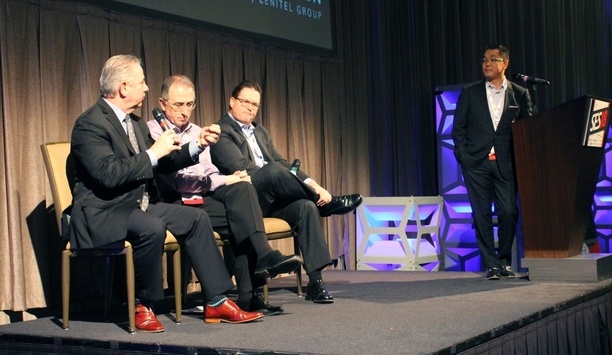
AMAG Technology hosted its annual Security Engineering Symposium in Newport Beach, California, February 23-26, 2018 at the Balboa Bay Resort. Nearly 70 end users, integrators and consultants attended the highly interactive networking event. AMAG Technology President, Kurt Takahashi and Vice President-Global Sales and Business Development, Jody Ross kicked off the conference with opening remarks and introductions of honored guests and AMAG staff. Chief Operating Officer, Howard Johnson presented 'Threat Analysis Through Machine Learning', and updated attendees on AMAG’s product roadmap and vision for the future. Breakout sessions educated attendees about Symmetry GUEST Visitor Management, Symmetry CONNECT Identity Management, the Symmetry Solution and RISK360 incident management. Keynote speaker, Michael Gelles, managing director and security expert, Deloitte, LLP, presented ‘Challenges to Building an Insider Threat Program’, where he outlined the program pillars to prevent, detect and respond, and how creating a program is a team sport.It was a great experience to hear everybody’s perspective on deployment strategies Networking Platform “Every year I am amazed at the collaboration and networking that occurs at the Security Engineering Symposium and this year it was fantastic to see end users, integrators and consultants sharing ideas and interacting with the technology partners to learn about the latest technologies,” said AMAG Technology, Director of Business Development, Kami Dukes. “We had a record number of technology partners attend, which speaks for itself. The cutting-edge technologies demonstrated were on target with the trends we are seeing in the industry. Seeing those technologies close up and having the opportunity to ask questions was invaluable.” “This is my first SES and I was very impressed with the setup,” said Craig Vollman, a computer expert who works for a large healthcare insurance company. “As an end user, I especially enjoyed the break-out sessions being paired with integrators, manufacturers and consultants. It was a great experience to hear everybody’s perspective on deployment strategies and to learn about the new software and technologies being developed and implemented.” The formula of combining end users, integrators, consultants and AMAG Technology partners is powerful Certified Technology Partners Seventeen certified technology partners demonstrated their products and solutions throughout the weekend. Platinum and Gold level sponsors presented small breakout sessions. Silver sponsors shared a breakout session and associate sponsors setup booths. The impressive list of sponsors includes: ASSA ABLOY, Zenitel, Arrow, FST Biometrics with Gunnebo, HID Global, Hoverfly, NEC, Winsted, Flir, Idemia, SMI, Ticto, Arecont Vision, Barco, Life Safety Power and Wavelynx. “This is the first time I’ve participated in an event where you have so much interaction with the guests,” said Ticto Chief Marketing Officer, Bart Vansevenant. “The formula of combining end users, integrators, consultants and AMAG Technology partners is so powerful, and when combined with the small interactive breakout sessions, it is just wonderful.”Over $2000.00 was raised to support St. Jude’s Research Hospital Guidance For Decision-Making “The SES brings everyone to the same forum and creates an open dialogue, where the end users get to voice what they want to do in their business. The integrator exposes himself to what the consultants can bring to the table, and the consultants can see what the integrators are capable of,” said Automation Integrated, Director of Engineering, Ron Free. “It’s a great gathering of the minds that provides input and guidance for attendees to take back to their companies and make decisions about the direction they want to go in the market.” During the closing banquet, a representative from St. Jude’s Research Hospital presented about the mission and advances St. Jude’s is making in pediatric cancer research. Thanks to the generosity of the attendees and AMAG’s matching program, over $2000.00 was raised to support St. Jude’s. “I couldn’t be prouder,” said Dukes.
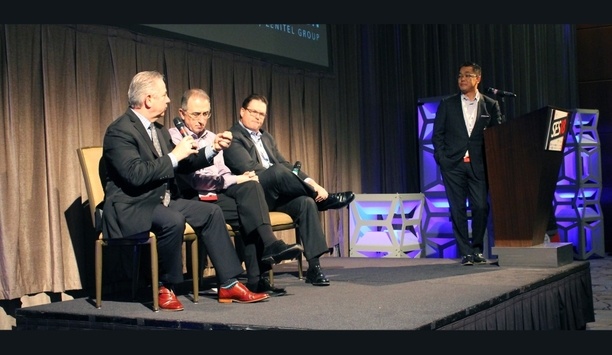
AMAG Technology hosted its annual Security Engineering Symposium in Newport Beach, California, February 23-26, 2018 at the Balboa Bay Resort. Nearly 70 end users, integrators and consultants attended the highly interactive networking event. Threat Analysis AMAG Technology President, Kurt Takahashi and Vice President-Global Sales and Business Development, Jody Ross kicked off the conference with opening remarks and introductions of honored guests and AMAG staff. Chief Operating Officer, Howard Johnson presented Threat Analysis Through Machine Learning, and updated attendees on AMAG’s product roadmap and vision for the future. Breakout sessions educated attendees about Symmetry GUEST Visitor Management, Symmetry CONNECT Identity Management, the Symmetry Solution and RISK360 Incident management. Keynote speaker, Michael Gelles, managing director and security expert, Deloitte, LLP, presented Challenges to Building an Insider Threat Program where he outlined the program pillars to prevent, detect and respond, and how creating a program is a team sport. Every year I am amazed at the collaboration and networking that occurs at the Security Engineering Symposium" Security Energy Symposium “Every year I am amazed at the collaboration and networking that occurs at the Security Engineering Symposium and this year it was fantastic to see end users, integrators and consultants sharing ideas and interacting with the technology partners to learn about the latest technologies,” said AMAG Technology, Director of Business Development, Kami Dukes. “We had a record number of technology partners attend, which speaks for itself. The cutting-edge technologies demonstrated were on target with the trends we are seeing in the industry. Seeing those technologies close up and having the opportunity to ask questions was invaluable.” “This is my first SES and I was very impressed with the setup,” said Craig Vollman, a computer expert who works for a large health care insurance company. “As an end user, I especially enjoyed the break-out sessions being paired with integrators, manufacturers and consultants. It was a great experience to hear everybody’s perspective on deployment strategies and to learn about the new software and technologies being developed and implemented.” Seventeen certified technology partners demonstrated their products and solutions throughout the weekend Multiple Technology Partners Seventeen certified technology partners demonstrated their products and solutions throughout the weekend. Platinum and Gold level sponsors presented small breakout sessions. Silver sponsors shared a breakout session and associate sponsors setup booths. The impressive list of sponsors includes: ASSA ABLOY, Zenitel, Arrow, FST Biometrics with Gunnebo, HID Global, Hoverfly, NEC, Winsted, Flir, Idemia, SMI, Ticto, Arecont Vision, Barco, Life Safety Power and Wavelynx. “This is the first time I’ve participated in an event where you have so much interaction with the guests,” said Ticto Chief Marketing Officer, Bart Vansevenant. “The formula of combining end users, integrators, consultants and AMAG Technology partners is so powerful, and when combined with the small interactive breakout sessions, it is just wonderful.” The SES brings everyone to the same forum and creates an open dialog where the end users get to voice what they want to do in their business" End-Users and Integrators “The SES brings everyone to the same forum and creates an open dialog where the end users get to voice what they want to do in their business. The integrator exposes himself to what the consultants can bring to the table, and the consultants can see what the integrators are capable of,” said Automation Integrated, Director of Engineering, Ron Free. “It’s a great gathering of the minds that provides input and guidance for attendees to take back to their companies and make decisions about the direction they want to go in the market.” During the closing banquet, a representative from St. Jude’s Research Hospital presented about the mission and advances St. Jude’s is making in pediatric cancer research. Thanks to the generosity of the attendees and AMAG’s matching program, over $2000.00 was raised to support St. Jude’s. “I couldn’t be prouder,” said Dukes.

The prestigious Judges' Choice Award was presented to Thermal Imaging Radar for Hydra CrucialTrak's Biometric Access Control System (BACS) took top honors as Best New Product in the SIA New Product Showcase (NPS) at ISC West 2017, announced the Security Industry Association (SIA). Four Biometric Identification TechnologiesBACS is the world's first multi-biometric authentication technology, providing the highest security measures by layering four different biometric authentications into one terminal, according to CrucialTrak. In each BACS module, up to four biometric identification technologies are considered: touchless fingerprint, iris patterns, vein patterns and facial recognition authentication. Guests of ISC West 2017 at the Sands Expo Convention Center can witness CrucialTrak BACS in action at Booth #14059 through the end of the trade show on April 7."Many returning companies entered the SIA New Product Showcase this year, and many new entrants also competed in the showcase," said SIA CEO Don Erickson. "New and familiar faces did very well in the 2017 showcase. I congratulate CrucialTrak for distinguishing itself as Best New Product overall in a very competitive year." Thermal Imaging Radar HydraSince its inception in 1979, SIA NPS has been the security industry's premier awards-based marketing program. This year's NPS Program had 120 entries from small, medium, and large companies in the security industry. This number represented roughly a 20 percent increase overall last year and set a record for entrants in recent years. In addition, the prestigious Judges' Choice Award was presented to Thermal Imaging Radar for Hydra. The Thermal Radar Hydra provides wide area intrusion detection through continuous 360° thermal intrusion detection combined with 360° targeted surveillance from a 30X zoom laser IR starlight PTZ, said the company. Attendees of ISC West 2017 can check out Hydra in Booth #4122. The NPS judges presented awards in 29 product and service categories. The full SIA NPS Award Winner's List appears below. 2017 SIA NPS Award Winners 1. Access Control, Devices and PeripheralsHES1500/1600 Electric Strike Platform 2. Access Control, Devices and Peripherals, WirelessHID Global (Booth #11063)Location Services 3. Access Control, Software and ControllersTyco Security Products (Booth #20005)Istar Ultra Video 4. Anti-Terrorism/Force ProtectionPatriot One TechnologiesNforce CMR 1Honorable Mention:Shooter Detection SystemsGuardian Indoor Active Shooter Detection System 5. Cloud SolutionsFeenics (Booth #22135)KEEP 6. Commercial Monitoring SolutionsSecure Global SolutionsNext StageHonorable mention:Christie Digital SystemsFHD553-XE LCD 7. Convergence and Integrated Software and SolutionsRightCrowd (Booth #31097)Software Essentials 8. Emergency Communication/Mass Notification SystemsV5 Systems (Booth #32087)Acoustic gunshot sensorHonorable mention:TextSpeak DesignTextSpeak One-Box 9. Fire/Life SafetyHoneywell (Booth #14025)1500 Combo Smoke CO2 Detector 10. Green/Sustainable Solutions ProductsASSA ABLOY Americas (Booth #8061)IN220 "Many returning companies entered the SIA New Product Showcase this year, and many new entrants also competed in the showcase” 11. Hosted Solutions/Managed ServicesSureID (Booth #14127)Certified Edge 12. Intrusion Detection and Prevention SolutionsOptex (Booth #22015)Redscan RLS2020S 13. Intrusion Detection and Prevention Solutions, WirelessBosch (Booth #11053)Zigbee Multi-Sensor 14. Law Enforcement/Guarding SystemsSharp Electronics (Booth #3137)Intellios A-UGV 15. Lock Systems and Secure Storage ContainersSecuritech (Booth #20134)Auto-Bolt Max 16. Loss Prevention and Article Surveillance SolutionsMarch Networks (Booth #25041)Search Lights 17. Mobile AppsSTid (Booth #6134)Mobile ID 18. Network Support SolutionsKBC Networks LimitedThruLink 19. Outdoor Perimeter ProtectionOntech (Booth #27091)Wardium Perimeter 20. Residential and Monitoring SolutionsNAPCO (Booth #12043)Starlink Connect Z-Model 21. Tools and HardwareAxis Communications (Booth #14051)Site Designer 22. User Authentication, Identification, Credentialing and ManagementFST Biometrics (Booth #24103)iMiD Access 4.0 23. Video AnalyticsUMBO Computer Vision (Booth #15121)UMBO Light 24. Video Surveillance, Advanced Imaging TechnologiesThermal Imaging Radar (Booth #4122)Hydra 25. Video Surveillance, Cameras HD (Megapixel)Wireless CCTV (Booth #30091)Body Camera Connect 26. Video Surveillance, Cameras IPAxis Communications (Booth #14051)Q6155E PTZ Dome 27. Video Surveillance, Data StorageQuantum Corp. (Booth #26117)Quantum StorNext 5.4 28. Video Surveillance, Hardware and AccessoriesV5 Systems (Booth #32087)Camera Agnostic Platform 29. Video Surveillance, Management SystemsFLIR (Booth #20060)United VMS
Insights & Opinions from thought leaders at FST Biometrics Corporation
Biometric identification technologies today are becoming pervasive. Many smartphones offer fingerprint unlock options, and most organizations have at least considered the technology as a solution for their identification and access needs. While biometrics have dramatically improved in the past several years to deliver faster, more efficient and more secure solutions, not everyone is ready for the change. New York MTA Case Study But does that mean that organizations need to hold off on implementing biometric solutions? Or do they need to ‘force’ it upon users? A historic case study provides an excellent example of how to implement a new technology with millions of people, under pressure, allowing users to adapt slowly and the organization to reap the benefits. In 1953, New York Metro Transit Authority (MTA), one of the world’s largest mass transit systems, began using tokens as payment for subway rides – a solution to engineers’ problem of creating a machine that could accept different types of coins for the new 15-cent fare. This technological advancement that may seems almost archaic today, served the MTA well for 40 years before the introduction of the MetroCard - a lighter, more automated solution. Technology Adaption Works Yet, the MTA, despite positive results from its first implementation in 1993, had both the older tokens and the new MetroCards in place, simultaneously for a full decade until 2003. This allowed “early adopters”, who understood the advantages of the MetroCard, to switch over, while allowing those that preferred their ‘trusty’ tokens to continue using them. In 2003, when tokens were finally phased out for a MetroCard-only system, only a small percentage of commuters were still using tokens; most had realized the significant benefits to the card and had switched over of their own volition. The MTA example serves as a model for how technology adoption works. From tokens to MetroCards, fax to email, landlines to cellphones –there is a distinct process new technologies go through as they are introduced and ultimately adopted by the public. Biometric technologies are no different. Yet, organizations must find way to implement new biometric systems that simultaneously provide organizations with the significant advantages biometrics offer, while ensuring that users are given time to adapt to and adopt the new technology. Let’s look at a few practical strategies for biometric adoption: 1. Optional, With Added Value Many facilities, such as airports, stadiums and theme parks, already use biometric technology to create ‘express lanes’ to save time and improve efficiency. Frequent fliers, VIPs and season ticketholders can enjoy faster and more personalized service with biometric identification solutions. These users can still opt to be identified the old-fashioned way, with an ID card or ticket, but doing so means they will have to line up and wait their turn as the old methods are much less efficient than biometrics technologies. Airports, stadiums and theme parks already use biometric technology to create ‘express lanes’ to save time and improve efficiency Biometrics can also be used to improve the customer experiences, or create more tailored, personalized programs. For example, the ICER (Industry, Culture, Education and Recreation) Innovation Center in the Netherlands implemented biometric visual identification technology to create customized experiences for museum visitors that were fun and interactive. Visitors could choose not to take part in the biometrics-enhanced visit and experience the baseline version of the museum, but by utilizing the biometric system, museum goers are offered a tailored experience where exhibits and information are presented based on what a visitor has already seen in the museum. 2. Start With Biometrics In Optional Locations Not all services or locations in a corporate setting are mandatory for employees to visit. For example, employee centers or health and wellness facilities are social settings for individuals to relax and connect. Implementing biometrics-based identification solutions in these types of settings allow employees to interact with the new technology in a low-stress environment and only if they choose to. For example, companies can provide an option for employees to pay for meals at corporate cafeterias using biometric identification, saving break time for those who choose to adopt the technology and enabling them to skip longer payment lines. This has the added benefit of reducing fraud resulting from lost or stolen ID cards. 3. Educate Users In Advance To ensure smooth deployment and adoption of biometric technology – whether partial or full – it is important to ensure that new users are educated on the new technology in advance of its deployment. For example, employees may have privacy or data security concerns. It’s critical that organizations clarify that the data being collected is kept private and secure. This information can be imparted in several ways. Organizations should be as transparent as possible and provide employees with enough information to address concerns. A Town Hall meeting can be held to explain benefits of the technology and answer questions that new users might have. Providing educational materials to new users, such as letters or videos that explain the new technology can put employees at ease. Make sure to outline how data privacy will be ensured as well as the benefits that employees stand to gain. Have management lead by example and be the first to enroll in the biometrics system. This can help inspire confidence and trust in the system. Make implementation competitive and fun. This can help users who aren’t as excited about the technology take part and learn about it. Implementation of biometric technology can still allow individuals in an organization a choice of whether or not to partake. Over time, most people tend to adopt new technology by choice if it saves time and makes life easier. When considering biometric systems, keep in mind that it doesn’t necessarily require full adoption now and can coexist with other systems until users feel comfortable with the system, and recognize the benefits it provides.
Multi-modal biometrics refers to a technology that combines a number of biometrics working together as a multifactor solution Global terrorism is on the rise. For many years, the West felt immune to these incidents, often asserting that these were problems felt only in countries with heated conflicts, such as Syria, Iraq, Israel and Nigeria. However, recent terror attacks have taken place in both Europe and the United States: Belgium, France (Paris and Nice), Orlando, various cities in Germany, Turkey, and the list goes on.The intelligence community is constantly looking for a single-point “source” to help prevent the next terror attack. However, in my experience serving as Head of Military Intelligence of the Israel Defense Forces, and through my work with the international intelligence community, I have learned that such a single source does not exist. There is no simple solution to terror prevention.Proactive And Combined ApproachBut taking a proactive approach can help the fight against terror. To be proactive, the intelligence community must create an ecosystem of information—a network of interconnected sensors that combine to provide a clearer picture of the situations that security agencies must assess to prevent attacks from happening. The intelligence community must create an ecosystem of information—a network of interconnected sensors that combine to provide a clearer picture When it comes to preventing terror, this network might include an array of sensors: signal intelligence, cyber intelligence, visual intelligence—not only from satellites—surveillance balloons, drones, special forces, human intelligence, interrogations and others. Any of these sources alone would not get the job done; combined, however, they provided a clear picture of the security landscape. Intelligence agencies collect all these single points of information and fuse them together. Almost in real-time, this fusion creates actionable intelligence for end-users (special forces, air force, any actor who can utilize the intelligence). This combining of sources we employed in my career led me to understand the power of fusion.The power of fusion is the key to effective preventative security.Global Megatrends And Demand For Convenient SecurityThere are two relevant megatrends in the world right now: Urbanisation and the rise of the megacity, which inevitably leads to rising crime rates The need to prevent terrorism With these two relevant trends, increased security has become a necessity. However, there is a misconception that increased security means increased inconvenience for people. As such, there is a need to create systems that provide the high level of security necessary in today’s world, given the aforementioned megatrends, while still maintaining the convenience and pace in our everyday lives. Biometric technology provides an answer to this. If we can quickly and securely identify individuals before they enter a building—or prevent them from doing so—many security crises can be prevented before they take place. Power Of Fusion And Multi-modal BiometricsThis is where the power of fusion comes into play. Any biometric sensor on its own – facial recognition, fingerprints, iris recognition, voice recognition—cannot provide the accuracy, speed, or ease of use needed for strong security that is also convenient for the public.Developing an effective biometric technology for secure access requires us to build a new intelligence ecosystem—a fusion of technologies that provide speed and accuracy, and are simple for the end-user. The most secure and convenient biometric technologies for identity verification must use the power of fusion. We find these types of solutions in multi-modal biometric technologies. Multi-modal biometrics allow people to move freely, yet securely, through their daily lives Multi-modal biometrics refers to a technology that combines a number of biometrics working together as a multifactor solution. This can include software that uses a fusion of biometric technologies, smartphones that require access via a fingerprint and PIN code, or access through voice and facial recognition, to name just a few. The primary advantages of such systems are the heightened levels of accuracy and security, as well as greater levels of accessibility and flexibility for users.The industry is trending towards adoption of multi-modal biometrics. This is because stand-alone biometric technologies, such as iris scanning, face recognition, fingerprinting or otherwise, are exposed to a) questions of accuracy and b) the ability for fraud to attempt to trick the system. But, by fusing a number of technologies such as face, body and voice, we can create a system that is highly accurate. In cases in which in-motion identification is part of the technology, a user may not even be required to stop for identification. This fusion of sensors allows us to identify a person in real-time, with high accuracy and speed. By employing the power of fusion, neither security nor convenience need be compromised. Adoption And Real World Use Of Multi-modal Biometrics The use of multi-modal biometrics is expanding, and is being sought after by some of the largest companies in the world to secure facilities. Market research firm Technavio predicts that the global advanced authentication market (multi-factor and biometrics solutions) will experience a CAGR of 17 percent between 2016 and 2020. Lead analyst Amrita Choudhury commented that threats in the realm of digital security in retail, healthcare and the banking and financial services industry are driving companies toward multi-modal biometrics. According to Choudhury, multi-modal biometrics will likely gain widespread acceptance over the next four years. The use of multi-modal biometrics is expanding, and is being sought after by some of the largest companies in the world to secure facilities While we often see multi-modal biometrics in homeland security, military and law enforcement applications, more often, these technologies are being deployed for consumers. For example, certain smartphones, such as the Samsung Galaxy 5S, utilize face and voice biometrics for greater authentication accuracy. We can also see these technologies in banking apps and cloud platforms focused on the enterprise security market.However, multi-modal biometrics are certainly not limited to the digital/cyber realm. In fact, physical locations – buildings, healthcare facilities, corporations, schools and universities, stadiums and airports could all benefit from more secure and more convenient access made possible by multi-modal biometrics.We live in a world in which we contend with new threats created by rising crime and terror. By applying the power of fusion to physical secure access technologies, we can increase the level of security that is necessary without feeling that we live in a police state. Multi-modal biometrics allow people to move freely, yet securely, through their daily lives, providing access to those we recognize, and allowing the power of fusion to prevent access to those who are unfamiliar. In this way, we can practice proactive preventative security without encroaching on the pace of life.

Proving ROI, setting proper customer expectations and training is imperative tothe success of biometric implementation End user customers increasingly expect their security systems to provide measurable benefits beyond protection of people, facilities and assets. The biometrics sector is undergoing a similar shift in mindset: The benefits of using biometrics to drive business operations and other corporate functions are becoming part of the return on investment (ROI) “equation.” Cost Savings & Efficiencies Influence Biometric Adoption Many customers now recognize that a biometric system saves money in the long run, says Arie Melamed Yekel, CMO, FST Biometrics. The company’s In Motion Identification (IMID) technology uses a combination of facial and body behavior analytics. Yekel says the system can demonstrate cost savings in two ways. First, the system avoids the need to issue or replace cards and keys – potentially a very large expense that is simply not a factor with biometrics systems. Another cost saving is related to time: Both users and administrators continually save time by removing barriers to entry. The associated savings include, among others, the time spent waiting in line to enter a building, time looking for a key or card, time lost when a user can’t enter a building because they don’t have their key or card, and staff time required to issue a new key or card. “Once the biometric system is in place, there are inherent savings of cost and time compared to standard card systems,” says Yekel. “Furthermore, quality biometric solutions such as IMID are far more secure than other identification systems.” Every user of a card-based system needs a dedicated ID card, he says, and the cost of the cards, and of replacing lost/damaged cards, can become a great expense for organizations. For example, a system that supports 1,000 users can expect to spend $3,000 to $5,000 annually replacing lost cards. Improving Efficiency Via Automation And Accurate Identification Automating manual processes is another cost saving. “In many cases, we found that our customer decided to replace the human guard with IMID Access solution” says Yekel, “as the outcome of placing IMID Access will be even more accurate and more secure than using a human guard, and it saves them tens of thousands of dollars annually.” An example is the Granite Club, Canada’s 10,000-member premier family, recreation and athletic club. The club wanted a solution that would ensure only Granite Club members, staff and authorized visitors would be able to access its athletic and children’s centers as well as the dining and meeting facilities. With a health and hygiene focus, the Granite Club also wanted a touch-free solution that would not require users to swipe a card, carry a fob or punch in a code. The Granite Club selected FST Biometrics because it is a non-invasive, secure access solution that does not impede the movements of members and staff, or detract from the Granite Club’s atmosphere. IMID Access is used in various access points throughout the Granite Club, allowing members and staff to freely access restricted areas of the facility. IMID was also deployed in the children’s center, supplying a highly secure level of protection. Once a biometric system is in place, there are inherent savings of cost and timecompared to standard card systems Lower Costs Of Biometric Technology Make ROI Much Easier Prior to the last 10 to 15 years, biometrics primarily existed only in the public sector, where government has both an obvious need and budget for advanced biometric security, says Larry Reed, CEO, ZKAccess, another biometrics company. “Fast-forward 10 to 15 years and the cost of biometric security has been reduced dramatically,” he adds, “and it’s within the budgets of even individual consumers.” Indeed, the proliferation of fingerprint sensors retrofitted into today’s smart phones is all around us. Apart from smart phones, as with any product, the market adoption rate for biometrics is normally consistent with the ROI associated with that new product, says Reed. The most commonly acknowledged ROI for biometrics is when used for lowering payroll expenses, since payroll is often 10 percent or more of any company’s overall operating budget. Biometric time clocks are used to prevent “buddy punching” (hourly-wage employees fraudulently punching in for each other and getting paid for unearned work hours). Another obvious ROI is avoiding fines from the U.S. Department of Labor’s Occupational Safety and Health Administration (OSHA), says Reed. Among other things, OSHA safeguards employees from being injured from the accidental/unauthorized startup of dangerous mechanical equipment (i.e., trash compactors, cardboard balers, forklift trucks, etc.). Without first authenticating to a biometric reader, electricity remains cut off from the machine. “Where you can prove an ROI, you’ll find a customer willing to pay for biometrics,” says Reed. Proving ROI To Encourage Biometrics Adoption Prior to any technology change/refresh, a customer must first be convinced the change will either result in increased revenues or reductions in operating expenses. Reed says ROI can be more easily proven if/when any of the following scenarios are acknowledged by the customer: 1) Buddy punching payroll losses; 2) OSHA fines for non-protected dangerous equipment; 3) Recent break-in or misuse of employee access ID badges; or 4) downtime (accidental lockouts) experienced when employees misplace ID badges and must be reprocessed to gain access to their workplace. Fast-forward 10 to 15 years and the cost of biometric security has been reduced dramatically and it will be within the budgets of even individual consumers “For biometrics veterans, we’re well aware of the inherent security flaws and unnecessary expense of managing a card-based access control system,” says Reed. However, without the customer feeling the “pain” of a security breach, financial loss or inconvenience acknowledged by the customer, it will be more difficult to convince that customer to invest in biometric technology. “Once you’re proven an ROI, the next step is ensuring that time and labor (and total cost of ownership) for the biometric install is minimised,” says Reed. Biometrics that are wireless, battery-operated and/or can utilize existing infrastructure will be most favoured. Lastly, setting proper customer expectations and training is imperative to the success of biometric implementation, says Reed. Without the cooperation and commitment of both the decision-maker and all of their employees to learn and properly operate the biometric solution, the project is doomed to fail, he notes.