Everbridge - Experts & Thought Leaders















Latest Everbridge news & announcements

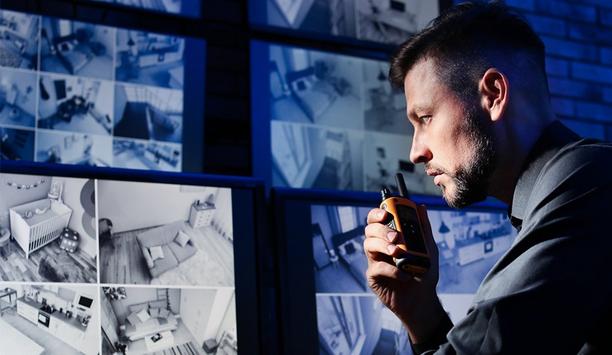
ZeroEyes, the creators of the first AI-based gun detection video analytics platform to earn the full US Department of Homeland Security SAFETY Act Designation, announced a new partnership with Everbridge, Inc., the pioneer in High Velocity Critical Event Management (CEM) and national public warning solutions. The alliance is designed to provide organizations with rapid emergency response and intelligent situational awareness in the event of a gun-related threat. AI-powered risk intelligence Everbridge leverages AI-powered risk intelligence and automated response technology Everbridge leverages AI-powered risk intelligence and automated response technology to help organizations manage critical events with speed and confidence. Its CEM platform and mass notification system enable organizations to anticipate threats, communicate effectively, and recover quickly, minimizing disruption and enhancing resilience in the face of emergencies. The partnership features a product integration that enables both companies to provide complementary safety technologies to mutual customers. Additionally, each organization will act as a referral partner, supporting businesses in strengthening their comprehensive security and emergency response capabilities. Partner with ZeroEyes “We are pleased to partner with ZeroEyes to introduce our clients to a proactive, AI-powered security and intelligent situational awareness platform that we strongly support,” said John Di Leo, Chief Operating Officer at Everbridge. He adds, “Security systems require a layered approach, and this partnership will ensure that organizations are equipped with the right technology to keep their communities safe.” Digital security cameras ZeroEyes' AI gun detection and intelligent situational awareness software layers onto existing digital security cameras. If a gun is identified, images are instantly shared with the ZeroEyes Operations Center (ZOC), the industry's only U.S.-based, fully in-house operation center, which is staffed 24/7/365 by specially trained U.S. military and law enforcement veterans. If these experts determine the threat is valid, they dispatch alerts and actionable intelligence — including visual description, gun type, and last known location — to local law enforcement and security teams as quickly as 3 to 5 seconds from detection. Everbridge’s dedication “We’re proud to partner with Everbridge to advance our shared mission of helping organizations take proactive measures against gun-related violence,” said Mike Lahiff, CEO and Co-Founder of ZeroEyes. He adds, “Everbridge’s dedication to public safety aligns closely with our own, making them an ideal partner to expand the reach of ZeroEyes’ technology and help protect more lives.”
Johnson Controls, the global pioneer for smart, healthy, and sustainable buildings, has announced the renewal of its reseller partnership with Everbridge. The collaboration aims to assist security pioneers with a centralized view of physical assets and external risk factors—such as geopolitical threats or natural disasters—that could impact organizational safety and resiliency. Partnership with Everbridge “Not only do today’s security pioneers face the challenge of staying ahead of new and emerging threats to their physical facilities and cyberinfrastructure, but they also need to consider how public safety events or extreme weather may affect their operations,” said Greg Parker, global vice president of Security and Fire Life Cycle Solutions at Johnson Controls. “Through our continued partnership with Everbridge, we’re helping customers navigate an increasingly complex threat landscape and protect their organizations’ assets.” Mass communication functionality Additionally, two-way and mass communication functionality helps to deliver instructions Data collected by Johnson Controls OpenBlue and Everbridge 360 provides security professionals with information to assess risk and initiate automated security workflow and emergency operating procedures. Additionally, two-way and mass communication functionality helps to deliver instructions and keep employees and company assets safe, regardless of their location. “Our collaboration with Johnson Controls improves the ability of customers to ensure business continuity, life safety, and security across a wider range of scenarios and be better prepared for the unexpected,” said Dominic Jones, SVP Business Development, Partnerships & Alliances, Everbridge. “Our combined technology offers security pioneers the ability to not only identify the security risks that they are facing—both internally and externally—but to also help mitigate or manage them effectively, reducing the impact of an event and protecting their operations from interruption, damage, or loss of life.” Technologies with AI capabilities In FY24, Johnson Controls expanded its security solution portfolio and partnerships to address the common goals faced by security professionals, including investing in technologies with AI capabilities and the need to move to service models to address staffing shortages. In addition to this renewed partnership with Everbridge, Johnson Controls launched its Security Operations Centers (SOC) service offering to the North American market. Building on 50 years of central monitoring and response services internationally, the SOC offering is available to North American customers seeking to improve business continuity and help reduce risk at a predictable as-a-service fee.
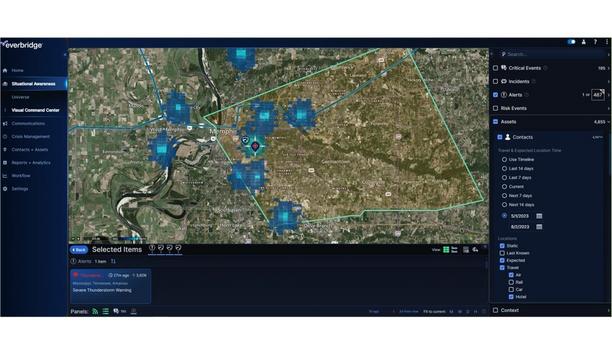
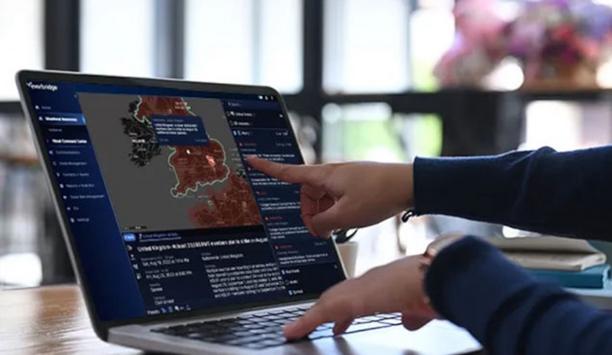
Everbridge, Inc., the pioneer in critical event management (CEM) and national public warning software solutions, announced the launch of Everbridge 360™ at the prestigious Global Security eXchange (GSX) conference in Dallas, TX. Everbridge 360 empowers organizations to more effectively manage critical events, minimize communication delays, and improve overall operational resilience through the industry’s most advanced and unified dashboard. Launch of Everbridge 360 “At Everbridge, our mission is to ensure the safety of people and continuity of organizations in the face of critical events,” said David Wagner, Chief Executive Officer at Everbridge. Mission is to ensure the safety of people and the continuity of organizations in the face of critical events He adds, “With Everbridge 360, we are taking resilience to the next level, providing our customers with a new, unified interface for streamlining critical event response–enabling organizations to know earlier, respond faster, and improve continuously to any crisis, business disruption, or IT incident.” range of benefits Everbridge 360™ combines the company’s risk intelligence, communications, collaboration, and coordination capabilities into a single, modernized platform, streamlining operations and simplifying user experiences. Everbridge 360 introduces the industry’s most comprehensive, unified view, providing unparalleled intelligence and innovative capabilities to manage critical events seamlessly. With its optimized user interface and streamlined workflows, Everbridge customers gain a range of benefits, including: Reduced mean time to communicate: Everbridge 360 accelerates critical communication and operational incident response processes, ensuring vital information reaches the right people in real time, reducing response times during critical events. Faster onboarding for new users: The optimized features and user-friendly interface of Everbridge 360 enable quicker onboarding for new users, allowing organizations to fully leverage the platform's capabilities from the start. Minimized errors in communication: Everbridge 360 mitigates the risk of errors in sending communications, enhancing accuracy and reliability during critical situations. Critical event management solution New interface dramatically reduces training time for getting our resilience response activated Everbridge 360™ will be generally available later this month. Organizations that took part in the early adopter program for Everbridge 360 shared the following feedback: “Everbridge 360 is intuitive and a game changer for bringing discipline to the critical event management process. The new interface dramatically reduces training time for getting our resilience response activated,” stated a multinational aerospace and defense technology company. Other early adopters, including a pioneering global advertising and digital marketing organization, said, “Everbridge 360 sets a new benchmark for efficiency. The streamlined platform intuitively blends power and simplicity, presenting critical information in an accessible, all-in-one manner, and empowering us to make swift and accurate decisions in the heat of the moment.” Launch of Everbridge 360 Bryan Barney, Chief Product Officer at Everbridge stated, “Everbridge 360 represents our relentless dedication to empowering customers to anticipate, prepare for, mitigate, respond to, and recover from critical events using intelligent automation technology." He adds, "As a company committed to keeping people safe and organizations running, the launch of Everbridge 360 is a testament to our commitment to delivering cutting-edge solutions that transform how best-in-resilience enterprises ensure duty of care, business continuity, and IT uptime.” Everbridge ecosystem Everbridge 360 helps organizations optimize their response efforts and achieve a level of resilience “Organizations are looking for an all-encompassing platform that boosts their ability to manage critical events and remain resilient in the face of a crisis,” said Rain Chiang, Analyst at Verdantix, adding “Everbridge has introduced an enhanced user experience on a unified platform that expedites communications creation, reduces manual entry and opportunity for errors, while increasing time to value.” Everbridge 360 helps organizations optimize their response efforts and achieve a higher level of resilience, eliminating navigation delays and streamlining message activation. With Everbridge 360, users can seamlessly transition between applications within the Everbridge ecosystem, providing a cohesive experience that ensures faster, more accurate, and reliable response and communications. Everbridge 360 key enhancements Refreshed User Interface: Everbridge 360 offers a visually appealing, intuitive, and user-friendly interface. Simplified Workflows: Experience the power of streamlined communications and simplified processes with Everbridge 360. Customizable Critical Event Configuration: Tailor critical events to organization's unique needs and leverage Everbridge's pre-defined event categories for seamless incident response to any situation. Improved Platform Experience: Smoothly transition between Visual Command Center (VCC) and Everbridge Suite (EB Suite), unlocking the full potential of both with Everbridge 360. Enhanced Features: Everbridge 360 introduces new features for faster communication and reduced errors. Optimized features make onboarding a breeze, ensuring hit the ground running. The GSX conference provides a prime opportunity for attendees to witness live demonstrations of Everbridge 360 and experience firsthand how the platform can transform organizational resilience. Extend a warm invitation to visit Booth #1933 to interact with experts, explore the features, and learn how Everbridge 360 can elevate the organization’s security and operations.
Insights & Opinions from thought leaders at Everbridge

Governments and corporations face crisis events every day. An active shooter terrorizes a campus. A cyber extortionist holds a city for ransom. A hurricane washes away a key manufacturing facility. Not all critical events rise to the level of these catastrophic emergencies, but a late or inadequate response to even a minor incident can put people, operations and reputations at risk. Effective Response Plan In 2015, for example, the City of Boston experienced several record-breaking snowstorms that forced the city to close the subway system for three days. The extreme decision cost the state $265 million per day and was largely attributed to a lack of preparation and an inadequate response plan by the transportation department. The reputation of the head of the transportation department was so damaged by the decision she was forced to resign. Being able to better predict how the storms would impact the subway system’s aging infrastructure – and having a more effective response plan in place – could have saved the state hundreds of millions of dollars (not to mention the transit chief’s job). A comprehensive critical event management strategy begins before the impact of an event is felt and continues after the immediate crisis has ended. This full lifecycle strategy can be broken into four distinct phases – Assess, Locate, Act and Analyze. Assessing Threats For Prevention Security teams might have complained about not having enough intelligence data to make accurate predictionsIdentifying a threat before it reaches critical mass and understanding how it might impact vital assets is the most difficult challenge facing security professionals. In the past, security teams might have complained about not having enough intelligence data to make accurate predictions. Today, the exact opposite might be true – there is too much data! With crime and incident data coming from law enforcement agencies, photos and videos coming from people on the front line, topics trending on social media and logistical information originating from internal systems it can be almost impossible to locate a real signal among all the noise and chatter. Being able to easily visualize all this intelligence data within the context of an organization’s assets is vital to understand the relationship between threat data and the individuals or facilities in harm’s way. Social Media Monitoring Free tools like Google Maps or satellite imagery from organizations like AccuWeather, for example, can help understand how fast a storm is closing in on a manufacturing facility, or how close an active shooter is to a school. Their usefulness, however, is limited to a few event types and they provide only a very macro view of the crisis. Data from building access systems, wifi hotspots, corporate travel systems, among others, can be used to create a profile Critical event management (CEM) platforms, however, are designed specifically to manage critical events of all types and provide much greater visibility. Internal and external data sources (weather, local and national emergency management, social media monitoring software, security cameras, etc.) are integrated into these platforms and their data is visualised on a threat map. Security teams can quickly see if there are actual threats to the organizations or communities they are protecting and don’t lose time trying to make sense of intelligence reports. The more they can see on a ‘single pane of glass,’ the faster they can initiate the appropriate response. Locating A Threat Once a threat has been deemed a critical event, the next step is to find the people who might be impacted – employees/residents in danger, first responders and key stakeholders (e.g., senior executives or elected officials who need status updates). Often, this requires someone on the security team to access an HR contact database and initiate a call tree to contact each person individually, in a specific hierarchical order. This can be a time-consuming and opaque process. There is no information on the proximity of that person to the critical event, or if a person has skills such as CPR that could aid in the response. Ensuring ahead of time that certifications, skill sets, or on-call availability is included with contact information can save valuable time in the middle of a crisis response. Going even further, data from building access systems, wifi hotspots, corporate travel systems, among others, can be used to create a profile of where a person just was and where he or she might be going in a CEM platform. This information can be visualized on the threat map and help determine who is actually in danger and who can respond the fastest. The emergency response then becomes targeted and more effective. Security teams can quickly see if there are actual threats to the organizations or communities they are protecting Acting And Automating The third step is to act and automate processes. If there is a tornado closing in on a town, for example, residents should not have to wait for manual intervention before a siren is activated or a message sent out. Organizations can build and execute their standing operating procedures (SOPs) fully within a CEM platform. Sirens, alarms, digital signs and messages can all be automatically activated based on event type, severity and location. Using the tornado example, an integration with a weather forecasting service could trigger the command to issue a tornado warning for a specific community if it is in the path of the storm. Summon Security Guards Warning messages can be prepared in advance based on event type so there is no chance of issuing a misleading or unclear alert Warning messages can be prepared in advance based on event type so there is no chance of issuing a misleading or unclear alert. All communications with impacted individuals can be centralized within the platform and automated based on SOP protocols. This also includes inbound communications from first responders and impacted individuals. An employee confronted by an assailant in a parking garage could initiate an SOS alert from his or her mobile phone that would automatically summon security guards to the scene. Conference lines can also be instantly created to enable collaboration and speed response time. Additionally, escalation policies are automatically engaged if a protocol is broken. For example, during an IT outage, if the primary network engineer does not respond in two minutes, a designated backup is automatically summoned. Eliminating manual steps from SOPs reduces the chance for human error and increases the speed and effectiveness of critical event responses. Analysis Of A Threat Looking for ways to better prepare and respond to critical events will not only improve performance when similar events occur again It’s not uncommon for security and response teams to think that a critical event is over once the immediate crisis has ended. After all, they are often the ones pushing themselves to exhaustion and sometimes risking life and limb to protect their neighbours, colleagues, community reputations and company brands. They need and deserve a rest. In the aftermath of a critical event, however, it’s important to review the effectiveness of the response and look for ways to drive improvements. Which tasks took too long? What resources were missing? How many times did people respond quickly? With a CEM platform, team performance, operational response, benchmarking data and notification analysis are all captured within the system and are available in a configurable dashboard or in after-action reports for analysis. Continuously looking for ways to better prepare and respond to critical events will not only improve performance when similar events occur again, but it will also improve response effectiveness when unforeseen events strike. Coordinate Emergency Response Virtually every organization has some form of response plan to triage a critical event and restore community order or business operations. While many of these plans are highly effective in providing a structure to command and coordinate emergency response, they are reactive in nature and don’t account for the full lifecycle of a critical event – Assess, Locate, Act and Analyze. Whether it’s a large-scale regional emergency or a daily operational issue such as an IT outage, a comprehensive critical event management strategy will minimize the impact by improving visibility, collaboration and response.

Our most popular articles in 2017 reflected changing trends in the U.S. security market, from deep learning to protection of mobile workers, from building automation to robotics. Again in 2017, the most read articles tended to be those that addressed timely and important issues in the security marketplace. In the world of digital publishing, it’s easy to know what content resonates with the market: Our readers tell us with their actions; i.e., where they click. Let’s look back at the Top 10 most-clicked articles we posted in 2017. They are listed in order here with the author’s name and a brief excerpt. 1. Las Vegas Massacre Demands Reevaluation of Hospitality Sector Security The Oct. 1, 2017, sniper attack from a 32nd-floor room at Mandalay Bay, overlooking 22,000 people attending a country music festival, has been compared to “shooting fish in a barrel.” When the bullets rained down, there was nowhere to hide. The attack came from outside the “perimeter” of the event, so any additional screening of attendees would not have prevented it. There are also implications of the Las Vegas massacre for the hospitality industry. Hotels and resorts such as Mandalay Bay have not generally embraced technologies like the explosives scanners or X-ray machines used at airport terminals, at least not in the United States. 2. Deep Learning Algorithms Broaden the Scope of Video Analytics [Zvika Ashani] Until recently there have been minimal applications of Machine Learning used in video analytics products, largely due to high complexity and high resource usage, which made such products too costly for mainstream deployment. However, the last couple of years have seen a tremendous surge in research and advances surrounding a branch of Machine Learning called Deep Learning. The recent increased interest in Deep Learning is largely due to the availability of graphical processing units (GPUs). GPUs can efficiently train and run Deep Learning algorithms The last couple of years have seen a tremendous surge in research and advances surrounding a branch of Machine Learning called Deep Learning 3. Home Security Systems: Why You Need to Upgrade From 3G to 4G Technology [Missy Dalby] The current communication method for most home security systems is via CDMA and 3G (GSM) technologies. With the emergence of faster, better, and stronger 4G LTE technology, carriers are migrating away from old technology standards and methods towards new, more efficient ones. As such, the older technology is going dark, and soon. Manufacturers of cellular modules have stopped making them. At the end of 2018 they will stop letting customers add systems utilizing 3G radios to their channels. 4. Diving into AI and Deep Learning at NVIDIA’s San Jose Conference [Larry Anderson] Video analytics applications fall under NVIDIA's “AI City” initiative, which they describe as a combination of "safe cities" (video surveillance, law enforcement, forensics) and "smart cities" (traffic management, retail analytics, resource optimization). Depending on the application, AI City technology must function in the cloud, on premises and/or at the edge. NVIDIA’s new Metropolis initiative offers AI at every system level, from the Jetson TX2 "embedded supercomputer" available at the edge, to on-premises servers (using NVIDIA’s Tesla and Quadro) to cloud systems (using NVIDIA’s DGX). 5. Physical Security Evolves to Protect Mobile Workers [Annie Asrari] With an increasing number of employees traveling and working remotely, the days of a dedicated worker who commutes to and from a single location every day of the week are just about over. Security professionals must take a second look at their policies and procedures for employee safety. To protect employees in this new mobile world, where people, assets and brand reputation threats may face higher than normal levels of safety and security risks, businesses must focus less on securing physical, four-wall perimeters and instead take a global approach to security that focuses on protecting traveling, remote and lone workers. Businesses must take a global approach to security that focuses on protecting traveling, remote and lone workers 6. New Security Technologies Driving Excitement on Busy ISC West Day One [Larry Anderson] ISC West in Las Vegas kicked off April 5 with an expanding focus on new technologies and new applications, including some that go beyond any narrow definition of security. “Technology is disrupting the market and executives are taking our solutions beyond security,” says Moti Shabtai, CEO and President of Qognify. “They are starting with security and quickly moving to other risk and business continuity issues in the organizations. They want a clear return on investment (ROI), which we can deliver if we move from covering a limited island of ‘security’ issues and give them the value of also managing risk, safety, and operations.” 7. Optimizing Building Automation for Good Return on Investment [Minu Youngkin] Smart buildings are on the rise around the world, not only because a growing number of companies are considering their environmental impact, but also because of the dramatic cost savings that can be realized through integration. In every building that has an integrated security and access control system, an opportunity awaits to also integrate the building’s energy use, water use, ventilation and more. The key is to effectively convey the tremendous potential of this new technology to the end user. 8. ISC West 2017: How Will IT and Consumer Electronics Influence the Secuirty Industry? [Fredrik Nilsson] A good way to predict trends [at the upcoming ISC West show] is to look at what’s happening in some larger, adjacent technology industries, such as IT and consumer electronics. Major trends on these fronts are the most likely to influence what new products will be launched in the electronic security industry. Proof in point is H.264, an advanced compression technology ratified in 2003 and adopted as the new standard by the consumer industry a few years later. By 2009, it became the new compression standard for the video surveillance industry as well. Violence will continue to challenge the healthcare sector in the future 9. The Future of Healthcare Security: Violence Response and Emergency Preparedness [Ben Scaglione and David LaRose] Violence will continue to challenge the healthcare sector in the future. Domestic violence, child abuse, behavioral health, drug and alcohol abuse will all continue to challenge hospital staff in the Emergency Department, Women’s Health, and behavioral health areas. The Hazard Vulnerability Assessments (HVA) along with facility wide risk assessments helps in defining risk severity and identifying historical patterns of violence. 10. Robot Revolution: Uncovering the Real Value of Security Robots [Steve Reinharz] The security coverage that a robot offers in the case of a shopping mall can be easily overshadowed by the fact that the machines seem to serve to entertain the population. Instead, security robots can best be utilized for more high-level roles, such as in critical infrastructure sites, corporate campuses and educational facilities, where wide, expansive spaces require continuous protection. In these locales, security can be difficult to achieve, as cost, location and lack of resources make the logistics of deployment difficult.

In today’s world, businesses face a growing threat landscape. Looking back on just the past few months, there have been increased incidents of workplace violence (e.g. the recent New York city hospital shooting), terrorist activities (e.g. London Bridge attack, Manchester attack), and cyberattacks (e.g. Petya and WannaCry). While critical events have become more frequent, more complex, and costly to businesses, organizations’ emergency communications systems, plans and processes have remained surprisingly siloed and constrained by an inability to holistically manage the lifecycle of a critical event—from assessment, to communication, to analysis. The reality is that organizations today find themselves tasked with maintaining multiple, separate emergency, security, and IT command centers that each require 24x7 availability and utilize a different set of siloed tools and processes to monitor and triage threats. Situational Awareness For The Modern Workplace Siloed processes aren’t desirable because they result in individual departments conducting their own threat assessment, which can lead to inconsistent responses to critical events. Without situational awareness, response to operational risks is delayed, leaving an organization’s employees, facilities, travelers, and other critical assets vulnerable. Current event management processes can severely impact employee safety while also harming business operations The fluidity of the modern workplace is also a challenge for businesses. With 72 percent of workers projected to be mobile by 2020, and spending significant time away from a traditional office facility, locating and protecting workers, sharing critical information and directives, and activating the right responders becomes an even more complicated task. For example, it can take hours – and even days – for companies to determine if all their people, including traveling and remote employees, are safe after a terrorist event. The bottom line is that the way current event management processes are set up is inefficient, ineffective, and – most importantly – can severely impact employee safety while also harming business operations. Centralized Incident Management To better communicate with their people and protect them from harm, organizations must adopt a holistic approach to critical event management inclusive of crisis communications and incident management. This includes consolidating physical and digital tools that are traditionally siloed under multiple disciplines and operations centers. Combining these functions enables organizations to develop a common operating picture of a situation and implement an effective resolution plan complete with predefined communication paths to senior management, on-site and remote workers, customers and any other effected parties. Having a single platform that combines employee safety capabilities with threat assessment and visualization capabilities allows organizations to better manage the full array of intelligence, coordination, collaboration, and execution required to speed response times, reduce risk, and, above all, keep their employees safe in any critical event. How Security Teams Can Manage Critical Events With a consolidated Critical Event Management platform, security teams within an organization can dynamically do the following to keep their people safe and the business running effectively: 1. Assess critical events Leveraging a more integrated operational approach in lieu of the disparate systems used today allows organizations to better asses what is happening in their offices, on their campuses, or near their traveling and remote employees. By integrating physical and digital tools, such as front line, social, trusted threat, and weather intelligence, organizations have an end-to-end view integrating threats, operational impact, and response status information on a “single pane of glass.” When all information is housed in a centralized location, it is far more effective and efficient for an organization to determine the likelihood, severity, and impact of a specific event on its people. Linking access control and badging systems, biometric systems, and Wi-Fi access points provide information on an employee’s static, last known, or expected location 2. Locate employees in harm’s way and communicate in a timely manner The increasing regularity of critical events worldwide necessitates the need to locate and alert employees of any nearby risks at a moment’s notice. Organizations need to first identify who is in harm’s way, and then notify those affected on what action to take. Aggregating data across multiple systems allows for dynamic location tracking and alerting of impacted personnel, response team members and key stakeholders. This includes employees, executives, emergency responders, Boards of Directors, and others who require detailed information of the response effort. For example, linking access control and badging systems, biometric systems, and Wi-Fi access points provide information on an employee’s static, last known, or expected location to a master database that an organization’s security personnel can use for triggering automated incident communication. This information allows security teams to provide critical information – including site evacuation directions – while an event is occurring to ensure the safety of employees based on their targeted geographic region (e.g. a specific building, floor, neighborhood or zip code) and coordinate the efforts of responders. If an active shooter is seen approaching from the western half of an organization’s campus, for example, the targeted alert may tell all employees on east campus to get off the property and go across the street, while all employees on west campus may be told to barricade themselves behind locked doors, as they might not have time to run. Visitors who are expected to arrive on campus later that day would be warned to stay away until police secure the premises. With a centralized system that houses all location information and communication processes, the right messages will be sent to the right people in a matter of seconds. 3. Identify decision makers and automate action A huge part in managing a crisis is not only identifying who is in danger, but who can help, and how. This process needs to be as streamlined as possible so there’s no question about who should be contacted and who is responsible for doing what. Leveraging an integrated critical event management system in which all information is centrally located allows organizations to initiate instant communications that share all relevant information and status updates with key stakeholders – there’s no confusion as to who should send out the communications, and no one is waiting on important information that is essential to convey. Each critical event can be analyzed to identify which tasks took too long or what resources were missing In addition to identifying team members who need to act, an integrated system distributes targeted alerts based on specific scenarios. Taking the same active shooter scenario, an organization’s security team can share incident details, collaborate with, and activate separate response teams, such as the police, SWAT team, and emergency responders, in a single platform – all while following standard operating procedures, escalation policies, and best practices for responding to that particular event. 4. Analyze the aftermath Once a critical event is over, benchmarks related to an organization’s notification responses and incident time-to-resolution can be recorded, measured and assessed. Each critical event can be analyzed to identify which tasks took too long or what resources were missing in order to learn from and improve response rates for the next major incident. Critical events should be managed as any major business function—through a single process with clear lines of responsibility, common situational understanding, accountability, and visibility of performance. Currently, processes are focused on the use of too many overlapping tools which only create noise and impedes an organization from following a prescribed procedure for assessing and resolving threats. It’s time for all organizations to take a careful look at how they approach critical event management and opt instead for a centralized system that offers a holistic view – siloed processes are simply no longer effective in today’s threat landscape.