DeterTech - Experts & Thought Leaders
















Latest DeterTech news & announcements

DeterTech is pleased to confirm its attendance at the Solar Careers Hub Glasgow, taking place on 25th February at the Technology & Innovation Centre, University of Strathclyde. UK solar sector Organized by Solar Careers UK, the event brings together employers, students and industry professionals to address skills development and workforce growth across the UK solar sector – one of the fastest growing and most future-proof industries in the world. Supporting protection As a leading site security partner to the renewables industry, DeterTech’s attendance reflects its continued focus on supporting the protection of renewable energy infrastructure, including solar farms and associated assets, which are increasingly vulnerable to theft and organized criminal activity. Next generation stepping in “The number of reported offences against solar farms, onshore wind and battery storage facilities increased by 59% in 2025,” says Matthew Uttley, Head of Renewables from DeterTech. “It’s so exciting to see the next generation of talent stepping into the solar industry. We look forward to showing them how we can support them in protecting their assets and maintaining renewable energy generation’s sustainable growth.”

DeterTech is advising members of the public to take sensible precautions following a sharp increase in metal prices that is driving increased rates of catalytic converter theft across the UK. The increase in the price of precious metals found in catalytic converters has risen by 37% over the past six weeks, driving more opportunists and Organized Crime Groups (OGCs) to target vehicles for these valuable materials. The reports indicate car parks at hospitals, train station, and shopping centres are hotspots for these crimes. Forensic marking solutions How to Reduce the Risk: Park in well lit, CCTV monitored areas wherever possible. Position vehicles close to walls or other obstructions to make access to catalytic converters more difficult. Use forensic marking solutions such as SmartWater HT to deter thieves and support police identification and recovery. Report suspicious behavior promptly to local authorities or site security teams. Richard Crisp, Intelligence Analyst at DeterTech, says: “We urge everyone to be alert but not alarmed; catalytic converter theft may be on the rise but taking simple precautions goes a long way in deterring criminals. Any suspicious activity should be promptly reported to ensure these offenders are caught and minimal disruption is caused to the public.”
DeterTech, the official site security partner of Brentford FC, is proud to support an accredited Safe Haven established by the club at Gtech Community Stadium, reinforcing both organizations’ commitment to community safety and wellbeing. Located in Brentford FC’s west stand security hub on Lionel Road South, it will provide support 24 hours a day, seven days a week, 365 days a year. It will be managed by trained security staff and is open to any member of the public who feels vulnerable or needs help. Contacting emergency services Safe Havens are dedicated spaces of support that help people with their onward journey by providing various forms of assistance, such as contacting emergency services, phone charging facilities, calling a taxi, or reaching friends and family. Accredited by the Safer Business Network, shops, cafes, pubs, libraries, and other venues can also become a registered Safe Haven. “Our purpose at DeterTech is always to bring greater peace of mind to people and communities, every day. The Safe Haven campaign is one of many powerful examples of how we put that into action,” said Sarah Craig, Chief Marketing Officer at DeterTech. Various forms of assistance Brentford’s chief executive Jon Varney said: “We are a club that sits in the heart of the community and it is vital that we are able to support our fans and those living in the local area. In creating a Safe Haven space at our stadium, we are ensuring there is help available for anyone at any time of day.” “This builds on the wide-ranging work we are doing with fans and partners as part of our continued commitment to create inclusive and safer environments for women and girls, not just on a matchday but everyday.” Crime prevention sessions As the official site security partner of Brentford FC, this initiative is another way for DeterTech to assist Brentford FC’s commitment to fan safety and community wellbeing, following other events such as crime prevention sessions and free bike marking for fans on matchdays. Drawing upon DeterTech’s experience in risk management and deterrent technologies, DeterTech will support the Safe Haven team with resources and guidance to help Brentford FC deliver a safe and inclusive experience for all.
Insights & Opinions from thought leaders at DeterTech
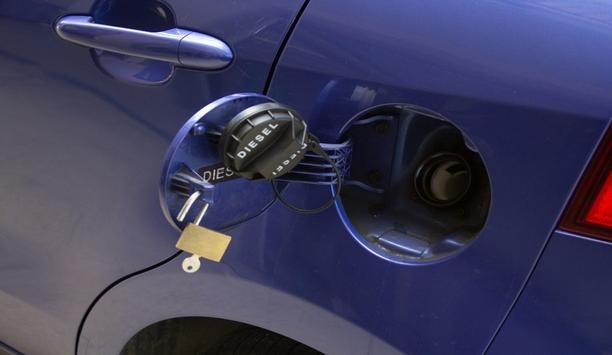
Although inflated fuel prices have somewhat settled since the summer, recent changes in legislation mean construction sites are particularly vulnerable to attempted fuel thefts. Read on to find out what’s changed, and what’s proving effective in mitigating the threat. What are the changes? As of April, this year red diesel can no longer be used in a range of vehicles, including those in construction. That means fuel bowsers are now filled with the same white diesel available to members of the public at petrol stations across the country. In contrast to red diesel, white diesel is not illegal to use in vehicles on public roads and it also attracts a higher rate of fuel duty. As such, it is a much more lucrative entity for thieves to steal and is vulnerable to both internal and external pilfering. It also makes it more challenging to trace perpetrators who can no longer be identified through the presence of red diesel in their fuel tanks. Who is most at risk? Rural and unmanned sites A rise in attacks has been reported in Thames Valley and Cumbria, areas with a large amount of countryside Rural and unmanned sites are particularly vulnerable, with sites in remote spaces seen as ‘easy money’ for thieves. Indeed, a rise in recent attacks has been reported in regions such as Thames Valley and Cumbria, areas with a large amount of countryside. Construction vehicles and fuel bowsers Construction vehicles and fuel bowsers are both at risk where they are more remote. Often, these sites are poorly lit and barely protected, making them particularly susceptible to larger-scale thefts. By June of this year, a reported 167 cases of fuel thefts had been reported in Cumbria alone, around eight a week. Smaller, temporary construction sites Comparatively, smaller, temporary construction sites are often located in more densely populated and busier areas. These are more likely to be easily seen and well-lit by surrounding street lamps. Sites like these are less vulnerable to heavy siphoning. However, they can still be targeted and, further, face restrictions on the kind of security solutions that can be installed. For example, tall physical barriers may not be permitted in city areas and there may be a limit on the kinds of CCTV that can be erected. All kinds of construction sites, therefore, face a threat to their fuel security. Understanding these differences in risk level is the first step to creating a bespoke solution to fuel theft. What next? 1) Deterring entry: A primary and basic line of defense would be installing physical gates and barriers to dissuade criminals from entering Criminals can first and foremost be deterred from a site by its physical appearance and the presence of deterrent infrastructure. A primary and basic line of defense would be installing physical gates and barriers to dissuade criminals from entering the premises. Although simple, deterrents such as these are often all that is needed to discourage and decrease theft. Restricting key entrances to sites also restricts the size of containers or vehicle potential thieves can get onto sites, minimizing the financial impact of the theft. Access control systems More sophisticated access control systems can fortify this first line of defense. These allow owners to have greater control over who enters their premises by protecting entrances with a passcode, for example. This can be tailored to specific areas of the site or cover the area as a whole. Access can also be time-restricted, deterring theft during darker hours, a time when it is most likely to occur. In doing so, the flow of authorized personnel can continue while unwanted visitors are restricted. 2) Detecting criminals: The threat of detection and potential conviction is perhaps the biggest deterrent to those wishing to carry out fuel theft. This can be achieved in multiple ways, including: Surveillance CCTV is one of the most effective ways to deter criminals from entering a site. It is important that CCTV cameras are visible, and therefore that the threat of identification is evident to thieves. With good lighting and extensive coverage, CCTV-ed areas are often avoided by criminals looking to steal fuel. Intrusion detection and monitoring 24/7 surveillance and verified visual monitoring systems should be placed in strategic locations to deter thieves You might also consider more fortified versions of surveillance such as rapidly deployable self-monitored camera systems and intrusion detection units for 24/7 surveillance and verified visual monitoring. These systems should be placed clearly and visibly in strategic locations to deter thieves who are unlikely to try their luck against units with both low lighting capabilities and vocal warning systems. With this imposing presence, sites can be safely secured against temporary threats. Alarm Receiving Centre (ARC) For site managers seeking further protection and reassurance, intrusion detection and video surveillance units linked to an in-house Alarm Receiving Centre (ARC) are a great way to further bolster fuel security on-site. In the ARC, a team of SIA licensed operatives provide around-the-clock monitoring, thus ensuring rapid response to alarm activations and faster on-site action to prevent and detect intruders. In this way, if a theft does occur, it can be dealt with swiftly and its potential impact reduced as much as possible. Forensic marking The threat of identification can also be achieved via forensic marking. Fuel stores, bowsers, pumps, and tanks can be protected with unique forensic marking solutions to provide forensic trace evidence linking a thief to the scene of the crime. Signs and stickers As with CCTV, forensic marking systems must be made visible and signposted to enhance deterrent properties Only needing a sample the size of a speck of dust to test, DeterTech scientists can provide police forces with powerful trace evidence. The more traceable fuel is, the less likely criminals will want to seize it. As with CCTV, forensic marking systems must be made visible and signposted to most effectively enhance their deterrent properties. Labels such as signs and stickers can be used to signal the presence of SmartWater, thus deterring criminals who are familiar with the technology and know that the forensic liquid has a 100% conviction rate in tried court cases. Preventative strategy The rise in fuel theft can be symptomatic both of personal desperation and malicious external criminal organizations. However, it is important to be protected against it regardless of the cause, particularly in the construction industry, where the completion of projects risks being derailed. Understanding the insecurities of different sites makes it possible to build a preventative strategy that can both deter and reduce the impact of criminal attacks.