DataDirect Networks (DDN) - Experts & Thought Leaders


Latest DataDirect Networks (DDN) news & announcements
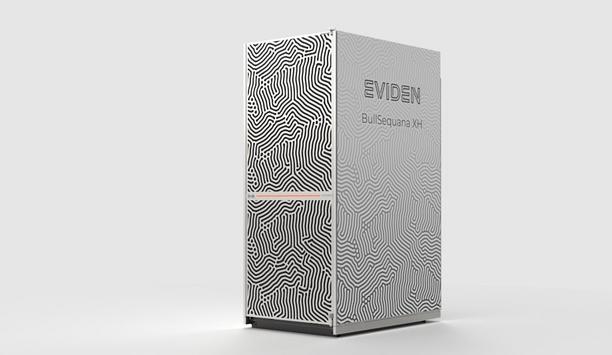
Eviden, the Atos Group product brand pioneering in advanced computing, and AMD announced their selection to build Alice Recoque, a next-generation supercomputer to support the need for scientific computing (HPC) and artificial intelligence (AI), serving as an AI Factory. Alice Recoque will be France’s first and Europe’s second Exascale supercomputer, a machine to expand Europe’s AI and research capabilities while ensuring energy efficiency and sovereignty. This project, led by France GENCI, operated by CEA, will have the capacity to surpass one Exaflop per second (i.e. a billion calculations per second) for scientific simulation. Funded by EuroHPC JU This extreme performance, equivalent to more calculations than humanity could accomplish in four years of relentless mental computation, will mark a fiftyfold an increase in the computing capacity compared to the previous system, while only multiplying by 5 the electrical power. This project, representing an overall cost of 554 million euros over 5 years of operation, is funded by EuroHPC JU, with budget stemming from the Digital Europe Programme (DEP), and by the Jules Verne consortium, led by France through GENCI and CEA with the participation of Netherlands with SURF and Greece with GRNET. Alice Recoque will be installed within France’s CEA’s Very Large Computing Center (TGCC), which already hosts Eviden-built systems such as GENCI’s Joliot-Curie machine and CEA’s Topaze machine. Combining traditional HPC and AI workloads Alice Recoque will tackle Europe’s most pressing societal, scientific, and industrial challenges by combining traditional High-Performance Computing (HPC) and Artificial Intelligence (AI) workloads from large-scale simulations, data analysis, and AI models. Alice Recoque covers the entire computing lifecycle, integrating cutting-edge hardware and advanced AI software to deliver scalable high-impact solutions. This project is a live implementation of the strong collaboration and commitment from Eviden and AMD to accelerate research and industrialization of HPC-AI use cases, with a major investment in both human and technological resources. Powered by next-gen AMD EPYC CPUs The acceleration partition of the Alice Recoque system will be powered by next-gen AMD EPYC CPUs, codenamed “Venice,” AMD Instinct MI430X GPUs—a new MI400 Series accelerator engineered for sovereign AI and scientific computing— and AMD FPGAs. In addition, Alice Recoque will welcome a scalar compute partition based on the European Rhea2 processor developed by SiPearl. The entire system will be interconnected by Eviden’s network solution (BXIv3) into its newest BullSequana XH3500 platform, along with storage solutions provided by DDN. This powerful ecosystem will enhance climate modeling, accelerate innovation in materials and energy, enable digital twins for personalized medicine, and support next-gen European foundational AI models. It will also address the vast amount of data generated by scientific instruments such as telescopes, satellites as well as IoT devices, and AI applications, driving breakthroughs across multiple domains. Committing to a sovereign and controlled supply chain As a result of a shared ambition for technological sovereignty, the Alice Recoque system will integrate various European technologies, including some critical components. The entire system will be interconnected through the Eviden’s BXIv3 networking technology, an efficient European alternative for interconnecting converged HPC/AI systems. On top of the Exascale system, an additional partition will integrate European SiPearl Rhea2 CPU to increase the system computation capacities. With nearly three-quarters of the production of the BullSequana XH3500 components relocated to Europe, Eviden ensures full traceability, regulatory compliance, and reduced geopolitical risks – aligning with Europe’s climate goals and reinforcing digital sovereignty through secure, sustainable, and high-performance AI-HPC technologies. Exceptional memory performance Composed of 94 racks, Alice Recoque is expected to be one of the top supercomputers in Europe for double-precision HPC workloads. Building on this foundation, it will also offer exceptional memory performance enabling deeper insights, faster simulations, and more scientific breakthroughs. To achieve these capabilities, Alice Recoque will encompass future-ready, modular and scalable components into Eviden’s recently unveiled BullSequana XH3500 architecture to address the growing demands of HPC, AI and quantum computing. With 25% less racks and components than other Exascale systems and up to 50% better energy efficiency per GPU, Eviden’s architecture will enable Alice Recoque to deliver maximum performance at minimum cost and power, to meet Europe’s demanding green computing goals. Powered by AMD Instinct MI430X GPUs Powered by AMD Instinct MI430X GPUs, Alice Recoque supports advanced AI data types, including FP4 and FP8, providing leadership AI FLOPs. Each GPU integrates 432 GB of HBM4 memory and 19.6 TB/s of bandwidth which will enable Alice Recoque to deliver leadership capacity and throughput per GPU. To enable the AMD Instinct GPUs to operate at full capacity and to boost distributed communication efficiency, the Alice Recoque system will be connected through Eviden’s in-house interconnect technology, BXIv3. Guarantee of sovereignty, this European network solution will seamlessly connect all components of the system, delivering faster application performance and optimized resource utilization. Eviden’s integrated hardware and smart software Eviden’s integrated hardware and smart software will deliver pioneering computing power with improved application workload energy efficiency, which is expected to reach about 20%, compared to equivalent exascale systems, a major step towards frugal AI. Real-time monitoring and energy optimization are enabled by Eviden’s Argos intelligent software, while its unique 5th generation Direct Liquid Cooling technology uses warm water to cool 100% of all-in-one rack components, delivering efficiency and sustainability at scale. Key figures: Overall project cost of 554 million euros over 5 years Peak performance of 1 exaflop (i.e. 1 billion calculations) per second for double precision workloads The equivalent of more calculations than humanity could accomplish in four years of relentless mental computation The equivalent of 10 million modern desktop computers Increase by 50 in CEA’s supercomputing center (TGCC) computing capacity, while only multiplying by 5 the electrical power 94 racks, 280km of cabling, 280 tons over 174 square meters (racks + services + cabling) Weight equivalent to 140 electrical vehicles or 28 city buses 25% less racks and components than other Exascale systems Reduced energy consumption: Improved application workload energy efficiency, expected to reach about 20%, compared to equivalent exascale systems, Up to 50% better energy efficiency per GPU, compared to existing exascale system 100% of the rack components cooled with warm water Comments Philippe Baptiste, French Minister for Higher Education, Research and Space: “The selection of Eviden to build Alice Recoque, Europe’s new exascale supercomputer, is a major step forward for France and Europe. This project embodies our shared ambition in the field of high-performance computing, AI, and quantum technologies, while reinforcing our technological leadership.” “Hosted at CEA’s TGCC, Alice Recoque will empower researchers and industries to address critical challenges—from climate modeling to healthcare innovation. It is a cornerstone for what we will achieve together, for science, progress, and the French and European digital future.” Anne Le Hénanff, French Minister of State for AI and Digital Affairs: “On the occasion of the Summit on Digital Sovereignty on the 18th of November, we reaffirm with other European member states our ambition: to strengthen our European digital champions. The selection of Eviden to equip the Alice Recoque supercomputer is a concrete example of Europe acting collectively to make digital sovereignty a reality.” “Alice Recoque will become a key pillar for the future of quantum computing and artificial intelligence. It is a source of pride to see French companies play a central role in this advancement.” Dimitris Papastergiou, Minister of Digital Governance of Greece: “Europe’s experience shows that technological sovereignty is achieved through cooperation and long-term vision. Greece’s participation in the Alice Recoque supercomputer project reflects our commitment to a strong, competitive European tech ecosystem and aligns with our National AI Strategy implemented under Prime Minister Kyriakos Mitsotakis.” “Alice Recoque opens new opportunities for collaboration and innovation, giving Greek startups, researchers, and academic institutions access to cutting-edge tools and positioning Greece at the forefront of global AI developments.” Anders Jensen, EuroHPC JU Executive Director: “As Europe has officially entered the exascale era, I am delighted to soon welcome Alice Recoque to our EuroHPC fleet. This groundbreaking exascale supercomputer, powered by pioneering European technologies, will elevate scientific discovery, industrial innovation, and technological sovereignty to the next level, while ensuring exceptional energy efficiency.” Philippe Lavocat, CEO of GENCI: “In the global race to harness computing power as the engine of scientific discovery and innovation, EuroHPC’s decision to select Eviden and embrace sovereign technologies for the Alice Recoque Exascale supercomputer marks a defining milestone for Europe and France.” “Building on a collaborative journey that began three years ago, GENCI and all members of the Jules Verne consortium are extremely proud in their pivotal role in bringing this groundbreaking Exascale system to life—a true game changer for research and industry.” “By paving the path toward post-Exascale services, Alice Recoque will propel Europe “Beyond HPC,” federating high-performance computing, artificial intelligence, and quantum technologies to empower science, accelerate innovation, and strengthen our technological sovereignty and global competitiveness.” Anne-Isabelle Etienvre, General Administrator of the CEA: “As a key player in supercomputing, CEA and its teams are ready, eager and proud to host and operate the Alice Recoque exascale supercomputer at TGCC. This is a strong recognition of our expertise in building major research infrastructures and of our teams skills throughout the value chain.” “The CEA welcomes EuroHPC's selection of a machine integrating numerous European technological and software components for this project, including Eviden's BXI network and SiPearl's Rhea2 processor, which have long been supported by the CEA.” “We congratulate Eviden on winning the tender for this new European Flagship for research. Europe is thereby demonstrating its unity and reaffirming its leadership in the field of HPC and AI, a strategy that is in line with the CEA's vision.” Valeriu Codreanu, manager Compute Services at SURF: “We are proud to be part of this extraordinary project. Alice Recoque will not only help our scientist with access to cutting edge compute power, but will also strengthen the European sovereignty.” Emmanuel Le Roux, Group SVP, global head of Advanced Computing and AI, Eviden at Atos Group: “Alice Recoque represents another critical step toward Europe’s digital future, defined by a sovereignty, sustainability and scientific excellence. As a catalyst for scientific and industrial breakthroughs, from climate modeling and healthcare to advanced materials and AI innovation, it will empower researchers and industries across Europe.” “Born from a shared European vision, this AI Factory reflects on what we can achieve collectively toward a common goal. Eviden is fully dedicated to its success, bringing deep expertise, a collaborative spirit, and a long-term dedication to responsible technological leadership.” Dan McNamara, senior vice president, Compute & Enterprise AI, AMD: "We are committed to enabling the next generation of innovation across AI and HPC. The Alice Recoque supercomputer represents a major step forward for European sovereign AI, uniting national ambition, regional collaboration, and AMD’s high-performance and AI compute technologies.” “Through our continued collaboration with EuroHPC JU, the Jules Verne Consortium, and Eviden, we are proud to support Europe’s scientific and industrial leadership with a platform purpose-built for scale, efficiency and discovery.” Philippe Notton, CEO and founder of SiPearl: “With the Alice Recoque supercomputer, we are taking a major step forward in our mission to provide sovereign microprocessor technologies to the European AI and HPC ecosystem through our cooperation with our strategic partner Eviden.” Paul Bloch, President & Co-Founder, DDN: “DDN is privileged to support the Alice Recoque Exascale supercomputer with the EuroHPC Joint Undertaking, GENCI, CEA, Surf, GRNET and Eviden. This deployment reinforces DDN’s leadership in data-intelligence infrastructure for advanced HPC and AI.” “By delivering extreme performance, efficiency and data insight at massive scale, we help accelerate discovery, strengthen European competitiveness to tackle high-impact challenges.”
DataDirect Networks (DDN) announced its acquisition of Intel’s Lustre File System business and related assets for undisclosed terms. This important acquisition reinforces DDN's presence as the global market leader for data at scale, while providing Lustre customers with enhanced field support and a well-funded technology roadmap. The acquisition also enables DDN to expand Lustre’s leading position from high performance computing (HPC) and Exascale into high growth markets such as analytics, AI and hybrid cloud. DDN has spent the past decade developing and bringing to market some of the most advanced technologies for data processing at scale targeted at on premise or hybrid cloud environments, including DDN's SFA OS Big Data embedded software, its distributed cloud and object technology, and more recently its IME software suite for flash, NVMe and GPU acceleration. The acquisition of Intel’s Lustre file system capability is a bold move that combines the most advanced file system technology with DDN’s already substantial HPC, analytics and cloud product portfolio Enhancing Lustre’s Usability The acquisition of Intel’s Lustre file system capability is a bold move that combines the most advanced file system technology with DDN’s already substantial HPC, analytics and cloud product portfolio. “We are very pleased to acquire from Intel all assets related to the open-source Lustre file system and to welcome into the DDN family an experienced software development team for which we have always had tremendous respect and admiration,” said Alex Bouzari, DDN Founder and CEO. “Over the next few years, we are going to invest significant resources to enhance usability and to broaden Lustre’s capabilities and feature set in the direction of flash-enabled performance, analytics, enterprise and hybrid cloud.” Best-in-class Parallel File System Technology Deployed in thousands of data centres in healthcare, energy, manufacturing, financial services, academia, research and HPC labs, and consistently earning the number one spot as the file system of choice for the world’s fastest computers, Lustre has long been recognized as the industry's most advanced parallel file system technology. “Over the past few years, Intel has enhanced the Lustre technology and contributed to a now thriving Lustre open-source ecosystem,” said Rajeeb Hazra, Intel Corporate Vice President and General Manager of Enterprise and Government, Data Center Group. “DDN has the expertise to provide continued development and seamless support for existing customers. Intel will continue to participate in the Lustre community and collaborate on open source technologies that enable our strategies and products.” Lustre underpins leading deep learning and AI environments for autonomous vehicle development, supports the most demanding workflows in the life sciences and energy sectors" Powerful Commercial Cloud Analytics DDN will operate the Lustre team as an autonomous division within DDN, ensuring full and sustained support of the Lustre customer and partner ecosystem. The division will be run by industry veteran Robert Triendl, Senior VP at DDN, who has been instrumental in growing DDN’s involvement in Lustre over the past decade. “Lustre users today are running some of the most critical and complex workloads in the industry. Lustre underpins leading deep learning and AI environments for autonomous vehicle development, supports the most demanding workflows in the life sciences and energy sectors, and enables powerful commercial analytics workflows in the cloud,” said Triendl. “This acquisition, and our continuing cooperation with Intel, will ensure that Lustre remains the world’s leading platform for compute and data-intensive workloads, scaling from small clusters running enterprise analytics to the world’s most powerful computer systems with tens of thousands of clients, while further expanding its capabilities in AI and Cloud.”
Genetec will also demonstrate the security solutions portfolio alongside its industry hardware and software partners at the event Genetec™, a manufacturer of unified IP security solutions, will attend the ASIS 2015 seminar in Anaheim, CA (Sept. 28—Oct.1) on Booth # 2639. The company will demonstrate its full product portfolio of security solutions alongside its many industry hardware and software partners, and will unveil new features for Security Center 5.4, its unified security platform that combines access control, automatic license plate recognition (ALPR) and video surveillance. This latest release will introduce advanced logical security and video encryption mechanisms, support for the H.265 video compression standard and the next-generation of the Plan Manager mapping module. Security Center 5.4 is expected to be available in Q4 2015 through Genetec™ Channel Partners. Enhanced Security Authentication And Access Security Center 5.4 will introduce industry-leading security threat countermeasures, including new authentication and encryption methods to ensure that only authorized personnel can access their security system. To mitigate the risk of cyber-threats, such as man-in-the-middle attacks, organizations will be able to implement digital certificates to guarantee trust within the system and implement new levels of encrypted communications between all Security Center components. By establishing a secure and trusted connection, Security Center will be able to authenticate communications within the system, validating and ensuring that data and video are not exchanged with outside sources. This latest release will also allow organizations to leverage specialized third-party claims services, including Active Directory Federation Services, to authenticate and manage Security Center user credentials. New video encryption methods in Security Center 5.4 will offer advanced capabilities to ensure that live video streams and archived video can only be viewed by authenticated users, and cannot be shared with unauthorized individuals. Leveraging either AES-256 or RSA encryption standards, Security Center 5.4 will protect recorded streams, maintaining no unencrypted data, with enforced viewing permissions through the use of digital certificates. Reduced Bandwidth Consumption With H.265 Integration This latest release will introduce advanced logical security and video encryption mechanisms, support for the H.265 video compression standard and the next-generation of the Plan Manager mapping module As organizations evaluate methods to reduce surveillance system costs and storage needs, the advent of the H.265 video compression standard promises to reduce bandwidth consumption by up to 50 percent, while also allowing them to leverage higher resolution cameras more efficiently. Security Center 5.4 is one of the first video management platforms that will offer support for H.265, and will provide integration to the Vivotek IP9171 H.265 camera. Additionally, through support for H.265-compatible video graphics cards, Genetec customers are able to benefit from the graphic processing unit (GPU) decoding to render H.265 streams more efficiently and reduce the processing load on workstation performance. Redesigned Map-Based Command And Control When responding to an incident, navigating through a large number of devices within a security system can be time consuming, particularly for operators overseeing multi-level buildings or distributed sites. Security Center 5.4 will launch a completely redesigned version of its native mapping module, Plan Manager, to assist operators in their day-to-day tasks, via a highly intuitive and visual experience. The new “Map Monitoring” task will offer a map-centric user experience, allowing operators to rapidly navigate their security environment, monitor devices and alarms, for easy system-control actions. In security operations command centers and control room environments, Plan Manager will be optimized to leverage video walls by enabling operators to span maps across multiple monitors. Genetec™ will welcome many of its hardware and software ecosystem partners in Booth #2639 at ASIS including: Camera partners: AXIS Communications, Arecont Vision, Bosch, Dahua, Oncam Grandeye, Panasonic, Pelco, Samsung, Sensity, Sony, and Vivotek; Access Control partners: ASSA ABOY, HID, Mercury Security, Salto and Suprema; Body-worn Camera partners: B-Cam and Zepcam; Infrastructure partners: BCDVideo, EMC, Pivot3, NetApp, Veracity and DDN; Analytics Systems partners: Kiwi Security, Briefcam, Agent VI and Prism Skylabs.
Insights & Opinions from thought leaders at DataDirect Networks (DDN)

Strategic management of costs is important when considering video storage systems Costs are at issue when considering any component of a video system. Strategic management of costs is especially important when considering video storage systems because storage accounts for such a large cost component of networked systems. Gartner’s Total Cost of Ownership (TCO) As enterprise products begin to dominate the video storage market, more attention needs to be addressed to Gartner’s Total Cost of Ownership (TCO), says Jeff Burgess, president and CEO of BCDVideo. This concept takes it beyond the initial purchase costs, and also factors in management and support, the opportunity cost of downtime, and other productivity losses. “It’s especially true these days as more and more, video data is being analyzed for business purposes,” says Burgess. “After all, they are counting on it to run their project. The video doesn’t get recorded if the recorder is not working or continually freezing up.” ‘Cost Of Power, Pipe, And People’ Burgess urges integrators and end users to ask themselves: What is the video recorder really costing me over the course of the five-year project? It’s likely a racked solution, so in IT terminology that “costs power, pipe, and people.” “Take the people out of the mix,” Burgess says. “You should not need to roll a truck to the site every time there is an issue. Especially after a warranty service call. The system should automatically accept the replacement drive and bring the data over to it within the existing RAID settings, without the integrator’s on-site presence needed. The integrator really needs to look under the hood to see what else the system can provide other than simply being a storage box or a box of parts from multiple brands, not meant to work together.” Finding the right balance of control, performance, scalability and availability to keep up with and effectively exploit the surveillance data deluge allows organizations to avoid painful and costly upgrades Today’s intelligently-built video solutions provide the integrator with an easy-to-track cost savings over the lifespan of the project versus buying boxes on the cheap, says Burgess. “Today’s savvy integrator realises it doesn’t take many truck rolls to lose all those front-end savings, which are now eating away at their profits.” Camera With SD Cards Another cost factor is to focus more on the utilisation of the SD cards in the camera. Utilising cards within the cameras creates a very inexpensive way of adding redundancy to a solution, says Burgess, who notes that most VMS companies can pull the video from the SD cards should there be an interruption in the network or at the head end. Educate Yourself Veracity recommends asking a lot of questions to guide system design and minimize costs. What retention time do you need? What would you wish? Do you want to relay on video motion detection, or would you prefer to find a system that allows you to record low frame rate 24/7 and then increase frame rate on motion? Does your storage choice allow you to use low cost drives? Does it use a huge amount of power? Is it overly complex? “Educate yourself about the choices,” says Scott Sereboff, CEO of Veracity USA. “Look around. Consider the alternatives. You have a choice that does not include a RAID storage system with an $800-plus per terabyte price tag.” "Starting with a solution that takes minimal install and tuning, and is proven to scale well beyond current needs, future proofs the system for the short- and long-term for the customer and the integrator", says Jeff Adams, director of sales, surveillance solutions, DDN Storage solutions Balancing Performance, Capacity And Availability Finding the right balance of control, performance, scalability and availability to keep up with and effectively exploit the surveillance data deluge allows organizations to avoid painful and costly upgrades, says Jeff Adams, director of sales, surveillance solutions, DataDirects Network (DDN) Storage solutions. “Performance needs to scale to allow for increasingly demanding playback and/or analytics features. Capacity needs to scale non-disruptively as cameras are added, while resolutions and retention periods may increase over time. Availability at scale is tricky; something as simple as slow rebuild times becomes critical in larger systems – endangering availability and system data integrity.” In addition to new installations, DDN does a healthy business in replacing underpowered infrastructures that deliver on the initial requirements but fail on scaling, says Adams. The most frequent culprits when a video surveillance site fails and needs a significant replacement/upgrade include: single controller architectures, silent data corruption, data loss from secondary failures during drive rebuilds, performance impact of rebuilds, alternates to RAID6 data protection, and lack of experience scaling into the petabyte or multi-petabyte range. Many mid-range video surveillance storage “solutions” take more than a week to install and tune, and cannot handle significant scale, adds Adams. For end users, this limits the ability to add cameras, capacity and demand (playback, analytics and system consolidation). For integrators, this means a lot of “care and feeding,” and frequent completion delays up front, as well as increased support considerations throughout the life of the project. “Starting with a solution that takes minimal install and tuning, and is proven to scale well beyond current needs, future proofs the system for the short- and long-term for the customer and the integrator,” says Adams. It also keeps costs low.

The fundamental value of data is widely apparent in modern society, and its loss may have significant consequences Video data is critical to today’s enterprise. The latest video storage systems must offer dependable operation that doesn’t risk loss of that critical data. DDN - When Performance Matters “Not only is bandwidth very important, but functionality cannot be lost when a storage system is having a bad day,” says Jeff Adams, director of sales, surveillance solutions, for DDN (DataDirects Network) Storage solutions. That importance is reflected in DDN’s motto: “When performance matters.” “If you pull a drive out of a running DDN system, the system monitoring tools will show you that the video data destined for those particular drives is actually being captured or journaled – not lost forever as with competing storage solutions,” says Adams. “When the drives come back online, the journaled data is written in a partial rebuild state as normal operations continue. This dramatically increases overall system performance, reliability and dependability in comparison to competing storage solutions that need to perform full rebuilds from parity each time a drive fails.” DDN systems are architected to continue delivering maximum performance even in adverse conditions, Adams adds. With DDN, entire drive enclosures can go offline while remaining operational with zero data loss. Importance Of Data Recovery Service The storage industry must work to communicate the available options in a way that clearly demonstrates how they fulfill the vast and specific needs of surveillance storage A critical area that can be overlooked in video storage relates to the reliability and rescue capability of storage drives, according to Seagate Technology. The fundamental value of data is widely apparent in modern society, and its loss may have significant consequences; this is particularly true in an area where the maintenance of data is often strictly regulated. “It is crucial, then, that end-users take steps to ensure that the storage solution in their surveillance system is covered by a data recovery service,” says Henk Van Den Berg, Seagate’s European sales director. To ensure that such opportunities are exploited, the storage industry must work to communicate the available options in a way that clearly demonstrates how they fulfill the vast and specific needs of surveillance storage, he says. Intelligent Video Recorders Dependability relates not only at the system level, but at the internal component level as well, says Jeff Burgess, president and CEO of BCDVideo. The integrator should not only expect, but demand, a scalable, stable solution that can be remotely managed, comes pre-imaged, ready-to-rack, and fully covered, he says – “and a manufacturer who’s got his back.” The technology capabilities of today’s intelligent Video Recorders (IVR) have turned the storage unit from a JBOD (just a Box of Disks) to a complete management and notification center. In addition to capturing and redirecting the video streams, the system can alert the administrator on system fluctuations based on thresholds set by the administrator. This includes both those within the system – CPU temperature, cooling fans, and memory usage – as well as active peripherals attached to the network, such as network switch ports, camera activity, client viewing stations and video streams. “We relate to all those insurance commercials promising a lower rate within 15 minutes,” says Burgess. “Notice how they never tout the quality of their service, just the fact that they can save you money in 15 minutes. But is that why you buy insurance? Don’t you really want it for if/when something happens? In that regard, what do you do when something catastrophic happens and you need to find that frame sequence, or restore and view the video from a certain date, yet you can’t because the data is corrupt or simply not there? Bet you wish you had those 15 minutes back.”

One key misconception is that solid-state drives (SSDs) are going to replace hard disk drives (HDDs) Like many areas of the security market, the field of digital video storage systems has its share of misconceptions and missed opportunities. We called on manufacturers of these systems to set the record straight. Hard Disk Drives (HDDs) Will Continue To Rule One key misconception is that solid-state drives (SSDs) are going to replace hard disk drives (HDDs), says Henk Van Den Berg, European sales director at Seagate Technology. While it is true that the pricing for SSD is dropping, cost-per-gigabyte for HDD actually goes down as capacity increases – so a 3 terabyte drive is only $30 more expensive than 2 terabyte, for instance, while 2 terabytes costs almost $40 more than 1 terabyte. With SSD, because of the different economics of the device, twice the capacity typically means twice the cost. Due to these economies of scale, HDD will continue to win in the foreseeable future as the technology of choice, says Van Den Berg. “There also persists a widespread misconception that all HDDs are the same, which means that digital storage solutions are often selected based on cost alone rather than suitability – the storage equivalent of putting bicycle wheels on a Ferrari,” says Van Den Berg. “The bottom line is that without the proper drive, even the most sophisticated surveillance system could be rendered ineffective. “As the function of video surveillance evolves, so too must the technological specifications of video surveillance storage solutions,” he adds. An outcome of the one-storage-solution-fits-all misconception is that end users are missing a major opportunity to optimize the efficacy of surveillance systems One-Storage-Solution-DOES-NOT-Fit-All An outcome of the one-storage-solution-fits-all misconception is that end users are missing a major opportunity to optimize the efficacy of surveillance systems, says Van Den Berg. As the uses of surveillance have expanded, the storage solutions available have similarly evolved, tailored to these new functions, he says. “The very first decision [you make] ought to be retention time and storage provider,” says Scott Sereboff, CEO of Veracity USA. “How many specifications are written with little or no thought? The end user needs to be educated on the way one choice impacts another. After all, if you choose 5 megapixel cameras and desire 30 days of retention, this selection may gut your budget. So you can only afford seven days of storage. You may wish you had understood the result of the decision prior to having made it.” Knowing retention times, having an understanding of the effect that camera choice has on it, means that camera selection can be done with the overall goal (i.e., “30 days retention at 7 FPS”) in mind and achievable, he adds. Sereboff adds: “All storage is not created equal, and you don’t have to spend 50 percent of the budget to store your video. Each missed opportunity to educate, to sell with a consultative bent, is a missed opportunity at a wider sale.” Veracity’s COLDSTORE NAS Device Veracity’s COLDSTORE is a NAS device, which comes out of the box and into the system as usable storage in 30 minutes to an hour. It uses off-the-shelf hard drives, requires very little power, and even a hard drive failure can be handled with no panic required, says Sereboff. “Storage has followed IT into the complex when it has needed to remain simple,” he says. “The users wants one thing – a reliable storage system that protects data when not needed and produces it when it is needed. As cameras and video management systems become more and more complex, storage needs to be simple, straightforward and something that the end user can point to and say ‘now that I understand.’ This gives the user license to accept more complexity in other areas, to maximize the use of complex technology, while knowing that the storage systems, the foundation of the whole enterprise, is utterly solid and totally reliable.”It is surprising how many people still think that any network attached storage will work for video, says Jeff Burgess, President and CEO, BCDVideo. “Same with those using traditional IT servers for video,” he adds. “Storage of video is more intensive on the server or storage than traditional IT data. Video servers need to be built in a proper way to manage the bandwidth. Network attached storage needs to be held to the same standard.” "All storage is not created equal, and you don’t have to spend 50 percent of the budget to store your video. Each missed opportunity to educate, to sell with a consultative bent, is a missed opportunity at a wider sale", says Scott Sereboff, CEO of Veracity USA More Drives Doesn’t Mean Better Performance Just because a storage system can physically expand to much larger capacities, doesn’t mean it can do it well, inexpensively, and with low management overhead, says Jeff Adams, director of sales, surveillance solutions, DDN (DataDirects Network) Storage. “Something we run into a lot is surveillance systems that fail because of scaling issues,” he says. “Anyone can add drives, but adding linear performance, availability and management scaling is something that requires a lot of performance-drive technology behind the scenes.” When video surveillance storage systems fail, Adams says the following reasons are most often cited: Drives kept failing and overall system performance tanked during rebuilds. More/higher resolution cameras are added. Playback requirements increased. Retention times increased. Video analytics are added. Local storage at each site was too expensive to maintain and scale. “All of it can be avoided by going with a consolidated storage platform that delivers full performance, even in outage conditions, and is proven to scale performance and capacity to accommodate increased workloads as well as data growth,” says Adams.