Consort Architectural Hardware - Experts & Thought Leaders





Latest Consort Architectural Hardware news & announcements
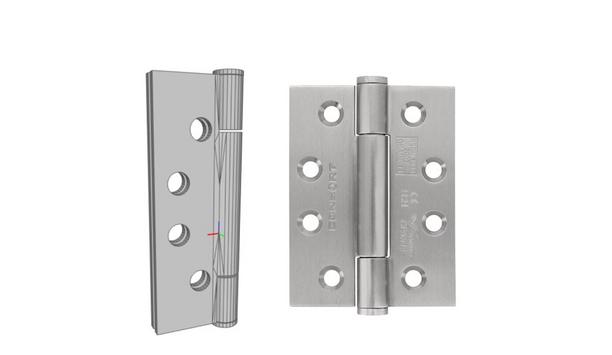
Consort Architectural Hardware has announced the first phase of a strategic rollout of Building Information Modelling (BIM) and CAD capabilities across its range of ironmongery products, with an aim of supporting customers and enhancing digital collaboration throughout the construction supply chain. In this initial phase, Consort has released BIM and digital assets for more than seventy of its high-demand ironmongery products, including levers, door closers, concealed bearing hinges, backset locks, and panic and exit devices. This milestone marks the start of an ambitious program to provide BIM and CAD files for its entire portfolio of product categories, reinforcing the manufacturer’s commitment to transparency, digital integration and customer support. Rising demand for accessible product information BIM continues to play a central role in the design, delivery and maintenance of modern construction projects, and Consort’s initiative responds directly to the rising demand for accurate and accessible product information across the built environment. Daniel May, Director at Consort Architectural Hardware discusses the ongoing project: “As construction standards evolve and regulations advance, the architectural hardware sector must continue to innovate and adapt to meet the needs of a progressive, digital-first industry.” “We recognize the call for reliable, detailed digital product information is growing louder, and the first step of our BIM rollout reflects Consort’s ongoing support to specifiers, contractors and architects as they navigate compliance, efficiency and coordination at each stage of the project lifecycle.” “By offering structured BIM files that cover all compliance, certification and performance data across our growing library of products, we’re empowering professionals to meet both practical and regulatory requirements whilst supporting faster specification, cleaner scheduling and improved collaboration.” Phase two of Consort’s BIM rollout Phase two of Consort’s BIM rollout is scheduled for release in early 2026 and will expand the digital library into deeper hardware categories, covering narrow profile hardware and less-represented mortise items such as flush bolts and thumb turns. This continued development will further support customers throughout the door scheduling process and ensure professionals have access to comprehensive, compliant digital product information.

Consort Architectural Hardware is proud to announce its debut appearance at the London Build Expo 2025, marking a major milestone in the company’s growth and presence within the UK construction industry. The two-day event, taking place between the 19th - 20th of November at the Olympia London, welcomes the best innovation, technology and services across the construction sector, with visitors of stand P40 able to find a wide-ranging display of Consort’s leading ironmongery products and cutting-edge access control solutions for the first time. Transparency, integration and customer support Following a period of investment, Consort will showcase what has been a transformative year for the business, comprising of a strategic headquarters relocation, the launch of a global product brochure and the synchronized roll out of Building Information Modeling (BIM) capabilities across its products - reinforcing the manufacturer’s commitment to transparency, integration and customer support. These recent developments underpinned Consort’s submittal for Supplier of the Year at the London Construction Awards 2025, where they were shortlisted as a finalist. Latest solutions and recent business developments Daniel May, Director at Consort Architectural Hardware comments on their first UK exhibition: "For over 35 years, Consort has worked closely with key industry professionals in support of the latest design and construction projects, and as we continue to grow as a manufacturer and supplier, we have watched the London Build Expo develop into one of the pioneering events on the UK calendar." He adds, "Our latest solutions and recent business developments are a testament to our continued dedication to quality, service and innovation in architectural ironmongery, and this year’s landmark event is the perfect platform for us to share our expertise as we connect with a network of the UK’s biggest contractors, architects, developers and construction professionals." New and existing customers Daniel May continues, "We’re excited to engage with both new and existing customers in what will be our first time exhibiting at the London Build Expo 2025, and we welcome visitors to stand P40 as we celebrate a year of growth and share our vision for what’s to come." The London Build Expo is the UK’s largest construction show and will welcome upwards of 38,000 attendees, with this year’s event marking 10 years of the show.

Consort Architectural Hardware has unveiled its most comprehensive product brochure yet, reflecting the latest updates to its hardware portfolio in support of architects, interior designers, door manufacturers, ironmongery suppliers, contractors, and specifiers worldwide. At 395 pages, Consort’s new product catalogue has been expanded significantly, with a refined layout showcasing more of the latest designs across its range of door controls, exit devices, and Premium Range of pull handles, lever handles, and bathroom turns. The ‘one stop shop’ brochure also displays Consort’s growing collection of hardware finishes, including over 20 Premium PVD finishes which have been carefully developed to match universally across a variation of ironmongery categories. Newly updated product listing Each newly updated product listing includes a complete list of features, finishes, fire certifications Each newly updated product listing includes a complete list of features, finishes, fire certifications, BS EN standards and Environmental Product Declarations (EPDs). Specifiers can also find detailed notes on the different standards and finishes to consider when choosing architectural hardware, helping to ensure the most appropriate products are selected for commercial, residential, hospitality, and healthcare projects. Daniel May, Director at Consort Architectural Hardware, discusses the launch: “Following a focused development cycle, we’ve scaled our product portfolio and certifications considerably over the past five years, and we felt a new main brochure was key to supporting our customers throughout the specification process.” Global product brochure “Our new global product brochure will act as a complete guide to our full architectural hardware range, offering clear and up-to-date information on features, certification, finishes, and even project insights,” continued Daniel May. “With one central resource, we’re now able to showcase our newest lever designs, certified solutions, and popular finishes all in one place - making product selection simpler than it’s ever been before.” “We’re proud to invite both new and existing customers to receive our 2025 catalogue and look forward to seeing our latest architectural hardware solutions making a statement in a variety of design projects worldwide.”
Insights & Opinions from thought leaders at Consort Architectural Hardware

Biometrics today provide better security and frictionless user experiences. Biometric identifiers like fingerprints, facial recognition, and iris scans are unique and difficult to forge. They eliminate the vulnerabilities of traditional authentication and streamline secure access control. Identity verification reliably protects sensitive digital information and physical entry. We asked our Expert Panel Roundtable: How is the role of biometrics evolving in physical access control?

Across many sectors, AI is transitioning from an experimental process to a trusted tool, but how will construction - and architectural ironmongery specifically - balance this technological opportunity with traditional practice? Artificial intelligence was once considered the trend of tomorrow, but it’s now here, and already it’s impacting the design, specification and management of the built environment. Following a period of refined development, the technology is emerging as a valuable tool for architectural professionals, with its growing role signifying far more than a passing industry trend. Passing industry trend According to the Royal Institute of British Architects’ (RIBA) Artificial Intelligence Report 2025, 59% of architectural practices now use AI on at least some projects, an increase from 41% in 2024. Furthermore, a global survey led by the Royal Institution of Chartered Surveyors in 2025 found that 56% of investors planned to increase AI investment, suggesting that the rate of adoption will continue to accelerate over the coming years. However, whilst innovation typically creates opportunity, there are challenges to address These findings represent a cultural shift, one where AI is firmly embedding itself into workflows and influencing the decision making process. However, whilst innovation typically creates opportunity, there are challenges to address. As more professionals equip themselves with an arsenal of AI-driven tools, are we in danger of becoming overly reliant on technology? Or are those reluctant to adapt likely to be left behind? Daniel May, Director at Consort Architectural Hardware, shares insight: Repetitive administration tasks “The development of the built environment has always relied on technical precision. Specifications naturally contain large volumes of product information and technical data, with professionals managing document-heavy tasks in the form of specification writing, door scheduling and BIM coordination in order to meet project requirements and compliance obligations. All of this data must be analyzed and processed accurately - often in line with demanding timescales - and it is here where AI can offer the greatest value.” “Where time was once consumed by repetitive administration tasks and information processing, professionals are now embracing AI as a means of working more efficiently. For architectural ironmongery specifically, where specification accuracy is critical, AI has the potential to support architects and specification professionals as they navigate the product selection process. As a tool, AI can streamline documentation by rapidly processing performance data and certification requirements, whilst also identifying inconsistencies and absent compliance information within schedules.” Complex project requirements “AI systems are helping professionals navigate increasingly complex project requirements quickly, accurately and consistently. As machine learning and autonomous models continue to advance, these tools may further reduce the administrative burden associated with architectural work models whilst improving accuracy and minimizing the risk of human error in the process. With that said, the effectiveness of AI software is very much reliant on the quality of the information it receives.” “With the sector so deeply tied to fire safety, accessibility, security and regulatory standards, the caution around adopting AI as common practice is of course justified. Historically, much of the construction industry has been measured in its adoption of new technology, partly due to the critical nature of compliance and the significant consequences of error. Though, AI feels somewhat different because of its pace and potential, and as such, organizations must be measured in their approach to it, ensuring that professional knowledge remains central to delivering safe, efficient and compliant building projects.” The human element As industry standards and the legislation surrounding the built environment continues to evolve, so too will the methods used to achieve high level design and compliance. Seemingly, AI looks set to have an increasingly prominent role, but it should be viewed as a collaborative partner capable of enhancing professional expertise as opposed to a system that can, or should, do it all. Daniel continues: “At this stage, AI alone simply can’t understand the nuances of individual projects and that has implications for both design and compliance. This is particularly relevant in the post-Grenfell regulatory landscape, where accountability, traceability and evidence-based decision-making have become fundamental to product specification and delivery.” Building greater trust “Although AI can assist with information processing, the technology is not ultimately responsible for the decisions being made. Accountability has rightly become a major focus point in construction, and as AI continues to disrupt practices, the industry must ensure that responsibility remains clearly defined. AI-driven errors could lead to serious penalties in relation to compliance, safety and project delivery, proving human expertise remains critical.” “Moving forward, greater transparency within AI systems will be key. If professionals are able to understand how or why AI recommendations have been generated, they can assess them with confidence, building greater trust in the technology.” Architectural design solutions “When it comes to architectural design, the emotional intelligence, contextual understanding and creative balance offered by a team of professionals far outweighs the speed that AI can offer. Already, AI is being used to support visualization and concept development for multi-layered projects in hospitality, healthcare and commercial environments to name a few, helping teams to explore ideas and communicate concepts at a quicker rate.” “However, can AI effectively develop architectural design solutions based on the bespoke requirements of a project, the operational needs of its users or even the general character of the building? Most would argue that it’s not conceivable, because AI lacks the lived experience and contextual understanding that comes from being present in the project itself.” Architectural ironmongery products “For architectural ironmongery products, professionals must regularly assess how products will function in real environments. Human intuition is impossible to replace and those informed design decisions, made by human professionals, will always be essential. Whilst some question whether AI could one day plan and deliver a project from concept to completion, perhaps the more important question should be whether future generations of professionals could lose the critical design and specification skills that are needed, should the industry become too dependent on AI.” “There is a growing sense of inevitability surrounding AI’s influence on architectural ironmongery and the wider built environment. As the industry continues to embrace this new wave of technological development, it is important to remember that innovation must complement the knowledge, judgement and accountability of the professionals who create safe and functional buildings, not replace it.”

In the simplest terms, technology modernization accelerates when older systems become too expensive to maintain or fail to support modern standards. Market competition pushes businesses to update their technologies to meet rising customer demands. Additionally, the rapid shift toward cloud-based infrastructures and artificial intelligence creates a fear of missing out, forcing companies to adapt or risk irrelevance. Focusing on the physical security market, we asked our Expert Panel Roundtable: What factors are accelerating technology modernisation in security?









