Codelocks Ltd - Experts & Thought Leaders











Latest Codelocks Ltd news & announcements

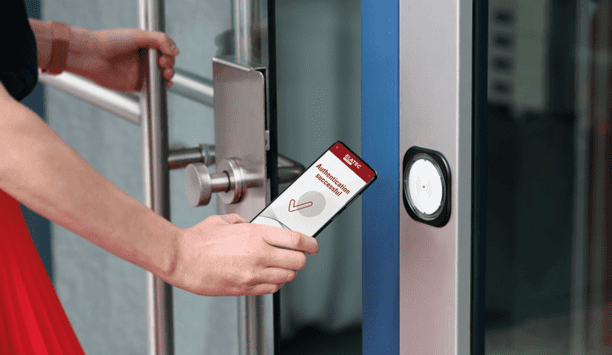
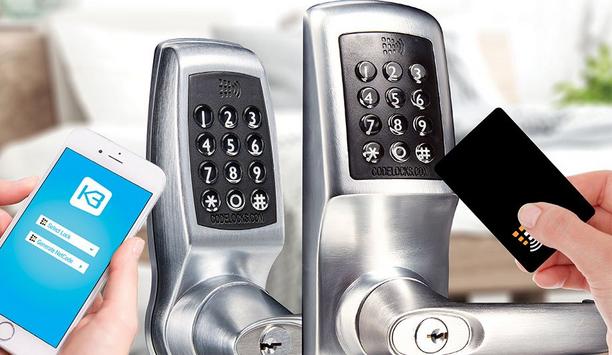
Codelocks International Ltd, the global access control specialist, launches ConnectShare, a new range of smart locks that use mobile phones to make access and management easy. Part of the Connect by Codelocks solutions, these latest locks build on the success of Codelocks’ existing range of connected locks, adding several new features and enhanced connectivity. ConnectShare locks have three access modes – user code, RFID card and mobile phone. They are managed through the easy-to-use Codelocks Connect App, which allows complete remote management of the locks from a mobile device. Simple standalone lock “One of the standout features of this release is the mobile phone access sharing,” said Joanne Milne-Rowe, Managing Director at Codelocks International Ltd. “Administrators can send a time-bound credential directly to a user's phone, give them access to a lock, and revoke it at any time. The process is entirely device-to-device, with no hidden subscription fees like other products often have, and with no reliance on an internet connection at the lock itself. Users simply download the free app, and admins can remotely give them access with a few simple clicks.” “The Codelocks Connect App is central to the products too. Deep down, this is a simple standalone lock that’s easy to install and maintain. But paired with our app, it becomes the flexible and powerful solution that modern shared spaces need.” Time-sensitive codes Key features that can be enabled using the app include Codelocks NetCode® Technology for generating date and time-sensitive codes, GuestCode functionality that lets guests and temporary users set their own access code for the duration of their stay, and Do Not Disturb mode, which gives occupants privacy control – ideal for private spaces and changing rooms. The new features also include Multi-Admin functionality, which allows operators to assign shared management of individual locks, and Dual Authorization, which adds an extra layer of protection for higher-security applications by requiring two valid credentials to be presented to unlock. ConnectShare locks introduce an activity log, a first for the Connect by Codelocks range of products. Unlike many other standalone locks, ConnectShare can log who has accessed a door and when, making it well suited to regulated environments in which sensitive materials or data may be present. Independent fire testing "We spent a lot of time listening to customers during the development of ConnectShare, and making sure what we built reflected what they actually asked for,” said Joanne Milne-Rowe. “It's backed by the same award-winning customer and technical support Codelocks is known for, so people aren't just getting a product; they're getting a service too." ConnectShare locks are available now: the CL4500CC, a medium-duty option with latch and mortice configurations, and the CL5500CC, a heavy-duty option supporting latch, lock and panic access. Both are available in Brushed Steel, with Solid Black also offered on the CL5500CC. ConnectShare locks have completed independent fire testing to BS EN 1634-1 for 30-minute and 60-minute timber door sets when installed with a Codelocks FireKit and performance testing to BS EN 12209.

Global designer and manufacturer of coded locks, Codelocks International Ltd, has announces a new partnership with CES Security Solutions Ltd, a specialist in patented key systems. The collaboration makes selected Codelocks products compatible with CES Security’s patented key cylinders, combining two established access control technologies within a single, integrated solution. Bringing them together in this first line of products gives users the convenience and flexibility of coded access, along with the security and reliability of patented master keys. Access control technologies Colin Campbell, CEO at Codelocks International Ltd, said: “We’ve worked with CES on an ad hoc basis to give the customers who ask for it the ability to include their digital locks as part of their master key system. In addition, we receive regular enquiries – for a key that cannot be easily copied, and we can integrate these with our digital locks to provide a fully combined access control solution.” The CES Security key system is patented until 2038, meaning keys cannot be duplicated without authorization. Each override key is individually registered with CES Security and is fully traceable, providing complete auditability of who was issued a key and when – a requirement increasingly expected in regulated environments such as healthcare, education, and government facilities, and in commercial offices. Providing complete auditability Three Codelocks products are the first to launch with this new functionality: the mechanical CL500 Key and CL600 locks, and the electronic CL5000. In addition to their existing features, these locks can now be configured into a CES Security master key system. Master key systems allow a single key to operate multiple locks while restricting individual keys to designated doors. This creates a tiered access structure that simplifies key management across large or multi-occupancy sites. Unlike other master systems, the CES Security Solutions provides a patented cylinder adapted to specifically operate Codelocks digital locks. Managing complex environments CES Security’s patented cylinders are also drop in, retrofit friendly, meaning existing Codelocks customers can easily upgrade their CL500 Key, CL600, and CL5000 locks. This gives existing customers the chance to create a master lock system or integrate their coded locks into their existing hierarchy. Mario Del-Signore, Managing Director at CES Security said: “This partnership will help larger users – whether in co-working offices, education or healthcare – manage their complex environments with reduced numbers of keys, greater confidence and security, and the simplicity of coded access.” Key cylinder range “We’re especially excited about the added value for locksmiths and installers, who can now add a patented master key system to an existing Codelocks installation and offer customers a more sophisticated solution as a result.” “The partnership itself grew naturally out of working together on several sizeable projects that were, in effect, an incredibly successful proof of concept. Dan Rising, our National Sales Manager, was instrumental in turning that into something formal, and I think what we can now offer reflects the strength of the CES-Codelocks relationship.” The Codelocks and CES Security Solutions Ltd registered key cylinder range is available now. They carry CE marking across the latch and lock variants and have been tested in accordance with BS EN 1634-12 for fire door applications when fitted with a Codelocks FireKit.

Codelocks, the global access control specialist, announces the launch of its Codelocks Connect App, giving users an easier way to remotely manage their connected locks from a mobile device. Now, business owners, building managers, and any personnel responsible for managing access to a site can create access codes and share them via email or SMS directly from the app. The new mobile functionality makes it even more convenient to manage building and locker access, without compromising on features or performance. Generating time-sensitive codes The Codelocks Connect App features Codelocks NetCode® Technology allowing users to generate time-sensitive codes, to create NetCodes that have a specified start date, time and duration after which they will automatically expire. With over an excess of 10,000 users of NetCode® locks, this form of scheduled temporary access is ideal for a range of applications, including sports facilities, event hire spaces, parcel delivery lockers and more. Matt Welty, Vice President at Codelocks Americas, said: “Across the US and Canada, we're seeing NetCode® being put to work in new ways. From wellness retreats to music studios, through to short-term rentals and tennis courts, the range of businesses building it into their operations is remarkable. The use cases go beyond simply making access control easier, too. Customers are using time-sensitive codes to create new revenue streams, giving customers on-demand, self-service access to spaces and storage that previously couldn’t be easily shared or needed staff to manage.” Time-sensitive codes “The Codelocks Connect App is a significant step forward for those customers. Generating a code, sharing it, and managing access takes seconds from a phone. For businesses with multiple locations or high turnover of users, that adds up to a substantial reduction in admin.” The new app builds on the success of the desktop-based Codelocks Connect Portal. It embodies the same features and functionality in a mobile-optimized format that can be used anywhere and on the go. This means responsible personnel can generate, communicate, activate, and manage NetCodes wherever they are, rather than being limited to their office. Configuring new devices New locks can be added and registered from a mobile device, which is particularly useful for installers and facilities managers configuring new devices during an installation. Any locks that are already registered in the Connect Portal are easily imported into the app without duplication, and all changes – whether made in the app or in the portal – are automatically synchronized across both platforms. Multiple managers can also be assigned to a single lock or group of locks, which enables teams to share access responsibilities without relying on a single administrator. The Codelocks Connect App works with the a range of NetCode®-equipped lock solutions, including several KitLock lines, such as the KitLockClassic and KitLockMax, and selected models from the CL5000 electronic lock. range It is compatible with both iOS and Android mobile devices, and is available to download now on the Apple App Store and Google Play.
Insights & Opinions from thought leaders at Codelocks Ltd
As the vaccine roll-out proceeds, people across the UK are counting the days until we can get back to some kind of ‘new normal’. Just as we’ve seen in education and healthcare, the return to the workplace and other public spaces will be accompanied by enhanced sanitization and social distancing measures. To make the return as swift and safe as possible, those of us involved with managing, building and constructing buildings should consider how we can help facilitate and support those measures. Regardless of how rigorously we impose social distancing measures, there will always be some areas where we can’t help coming into contact with each other. Sanitizing door handles Doors, for example – and door locks and handles in particular – are shared by nearly everyone in a building. Even in large, open spaces, we all need to pass through a single entrance. We all use the same door handles and locks – and they provide ideal surfaces for bacteria to breed and transfer. Another solution is for staff to regularly sanitize door handles and locks One solution to this problem is to provide hand-sanitizer dispensers at each door and insist on their use. But this can be difficult to manage in larger buildings where there may be multiple doors and entrances used by both staff and visitors. People could ignore the sanitization rules too. Another solution is for staff to regularly sanitize door handles and locks – but this is a resource intensive option and, again, is dependent on everyone maintaining good practice. Potentially harmful chemicals A longer-lasting way to deal with the risk of locks and door handles spreading disease is to treat them with an anti-viral coating. These coatings come in various forms. Some, for example, slowly release anti-bacterial chemicals, while others have antiviral properties actually built into the material or the coating. Those coatings with built-in antiviral properties tend to be longer-lasting and more effective, and also avoid the issue of releasing potentially harmful chemicals into the environment. A number of different solutions with built-in protection are currently in development, and some already available. Northumbria University, for example (as reported in last Month’s PSB Magazine), is working on a ‘super-hydrophobic’ coating for use on high-contact areas such as handrails and trolleys. Optional antiviral coating Codelocks is working on a coating that attaches biocides to nanoparticles Another British company, Smart Separations, is working on a coating that attaches biocides to nanoparticles, and can be applied to a wide variety of surfaces. While these anti-viral coatings are either still in development or only available to large corporate clients, others are already readily available. Access control solutions provider Codelocks, for example is currently offering an optional antiviral coating with all of its products. Clean by Codelocks is clear coating that uses nanotechnology that can kill bacteria in a matter of minutes. Clean by Codelocks utilizes a process called photocatalytic oxidation. The surface of the coating reacts with light and converts harmful bacteria and germs into a non-toxic compound, resulting in a clean and hygienic surface. Chemical cleaning products The coating has been proven to eliminate the SARS-CoV-2 coronavirus (COVID-19) from surfaces within minutes and is resistant to chemical cleaning products, humidity, and UV exposure – all issues that can cause problems for traditional slow-release type coatings. It’s been said that COVID-19 has been a great technology accelerator. This has been proven true, not only in the areas of vaccine research and development, or in cloud and digital technology but even in everyday objects that we take for granted such as locks and door handles. By building anti-bacterial protection into access control solutions, we can make schools, surgeries, workplaces, leisure centers and other public spaces safer for all.
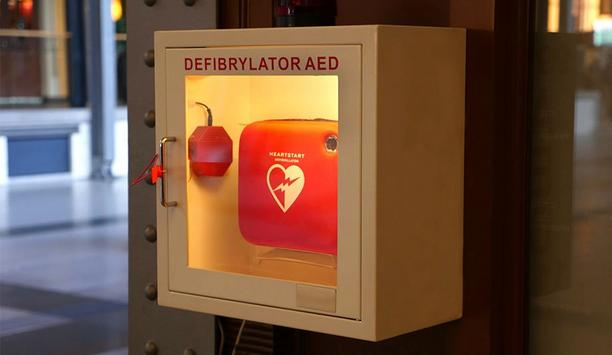
A defibrillator can save the life of a person suffering from cardiac arrest – but it is most effective when used in the first few minutes of the patient collapsing. Studies have shown that a shock given within the first three minutes provides the best chance of survival and even one minute of further delay can substantially lower the chances of recovering. Public Access Defibrillators (PADs) were created to allow untrained members of the public to deliver life-saving treatment in those precious minutes before an ambulance arrives. There are currently over 10,000 in the UK, located in parks, offices, high streets and sporting venues, and they are especially popular in rural communities, where ambulance response times are longer. Every second counts Over the years there has been a long-running debate as to whether PADs should be kept openly accessible or locked. Leaving them open could lead to theft, vandalism or misuse. Leaving them locked could mean that precious moments are lost waiting for a local guardian to arrive – and could even cost a life. To save as many lives as possible, it’s clear that PADs need to be available 24/7, fully operational and easily accessible to users and local guardians. But there is a solution that can meet all these conditions – a lock that can protect against vandalism while providing convenient instant access when required. Life-saving solutions Over the years there has been a long-running debate as to whether PADs should be kept openly accessible or lockedDigital locks are ideal for securing PADs because they don’t require a key, and anyone can be given access over the phone. In the case of a cardiac arrest, the user calls 999 and the ambulance controller provides them with a simple, easy-to-remember code. The ambulance controller can then advise them, step by step, what to do. Local guardians, who have responsibility for the PAD, can be provided with an override key to enable them to monitor and maintain the defibrillator. The PAD cabinets built by Duchy Defibrillators show exactly how this works in practice. Based in rural Cornwall, Duchy Defibrillators manufactures, supplies and installs monitored PAD cabinets. To provide public access to the defibrillators, it needed a lock that could keep its cabinets secure, make them easily accessible and withstand the stormy Cornish weather. Codelocks recommended a digital electronic lock that could operate on a standalone battery, making it especially suitable for remote areas. As well as offering flexible access, digital locks come with a range of varying options and functions to suit different applications. As Duchy Defibrillator cabinets are installed in a wide variety of locations and sometimes need to withstand outdoor exposure, it opted for a robust electronic digital lock that is both affordable and easy to set up. A digital-access revolution Using smart locks in combination with a dedicated app or portal allows operators to send time-sensitive codes to end-users The example of Duchy Defibrillators shows how digital locks can be used to keep defibrillator cabinets secure while affording instant access to users when they are needed. But the flexibility of digital locks also makes them suitable for securing property and equipment in a wide variety of situations, especially for shared and public facilities. This is why you’ll increasingly see digital locks used to secure restricted areas in hospitals, schools and offices, as well as shared facilities like hotel and gym lockers, public restrooms and more. Digital locks are available for a number of specific applications, including doors, lockers and cabinets. They can range from simple mechanical locks through to more sophisticated electronic locks and state-of-the-art smart locks. Using smart locks in combination with a dedicated app or portal allows operators to send time-sensitive codes to end users – making them very popular for contactless entry and with facilities managers that need to manage access to buildings and campuses. One thing is certain – whatever your access control requirements are, there’s a keyless lock solution to suit. The digital access revolution is here.