Oosto - Experts & Thought Leaders











White papers from Oosto

The Rise of Ethical Facial Recognition
DownloadLatest Oosto news & announcements

On the banks of the Arkansas River in Tulsa, Oklahoma, the River Spirit Casino Resort is the second largest of nine casinos owned by Muscogee Nation Gaming Enterprises where, on any given day, an enormous amount of money exchanges hands - requiring a comprehensive security framework to protect those who are playing with, handling, transferring, and protecting such large sums. From a security posture, it is a complex, cross-site operational challenge that needs to follow a simple set of procedures: Deter, detect, notify, and ultimately, defend. As large, wide-open environments with many entry and exit points, casinos create a particularly difficult landscape to comprehensively secure - it is humanly impossible to monitor everything at all times for a multitude of threats. Moreover, Muscogee Nation Gaming Enterprises operates multiple properties, so managing the number of people they have to watch while consolidating all relevant information into a centralized location is challenging. Large resort environment Some of the challenges facing River Spirit Casino included: Thefts - Theft and fraud in casinos are rampant. Increasingly sophisticated mechanisms of theft are challenging casino operations teams to get ahead of crime in order to effectively protect guests, staff, and assets. And the River Spirit Casino team was having difficulty recognizing faces of persons of interest (POIs), which included banned patrons, known criminals, and self-excluders amidst the sheer volume of people traversing through the casino’s vast property each day. Reputational Risk - In a large resort environment, casinos have a reputation to uphold so they work hard to identify self-excluders, advantage players, and bad actors as soon as possible and ban them in order to preserve their brand and ensure that their guests feel safe and comfortable. Compliance - Money laundering threats, ever-changing regulations, and compliance with the Anti-Money Laundering Act of 2020 heighten the necessity of maintaining the integrity of operations. Labor shortages - Labor shortages are only adding to the complexity. According to the U.S. Bureau of Labor Statistics, approximately 165,000 openings are projected for security guards and gambling surveillance officers annually, on average, over the next decade. Human limitations - River Spirit has a watchlist of close to 1000 individuals. Having security guards memorise the faces of all the people on a watchlist of that size is impractical given the number of patrons streaming into the various entrances at any given time. Investigations - Casinos require security technology that has the ability to monitor activities both in real-time and retrospectively – software that incorporates analytics to track behavior patterns and alert teams as an event is happening, and after it’s happened. Successful daily operations “That’s why we looked for an AI solution to actually help us control those faces and say this is the person I’m looking for. Tell me if they’re here or they’re not.” –Travis Thompson, Director of Compliance, Muscogee Nation Gaming Enterprises. Muscogee Nation and its systems integrator, Orion Security Solutions, turned to Oosto to take their casino’s enterprise security systems to a new level and solve their existing challenges. OnWatch quickly became an instrumental tool in the successful daily operations of River Spirit Casino. Oosto’s facial recognition technology indexes every face coming in from seven different entrances from several different angles on 25 different cameras for BOLOs (“be on the lookout”), banned patrons, known criminals, and advantage players. The company’s proprietary module, Centralized Intelligence Dashboard, helps run reports and share information easily across the organization with an easy-to-implement workflow. Facial recognition solutions The human eye alone is imperfect, and most facial recognition solutions underperform in real-world conditions. Casinos are especially challenging environments because: The facial recognition system needs to recognize banned patrons when the cameras are positioned high on the walls and ceilings (creating acute camera angles), People are entering in large groups, Visitors are not looking directly at the camera, and They're often wearing face coverings (e.g., masks, glasses, hats, etc.). Addressing compliance risks The ability to spot bad actors in real-time under these conditions and to do it accurately is a challenging task. That’s why Oosto’s technology is an essential security tool for gaming operations. “The key is being able to identify people of interest accurately and to do it in a way that is proactive and allows the property to respond in an appropriate manner.” – Sean Crain, President, Orion Security Solutions. Oosto OnWatch quickly and accurately recognises persons of interest for casino security teams – from VIPs to banned players – to improve the player experience, address compliance risks, and make casinos safer, more enjoyable destinations. Oosto can identify a person of interest and the people they have come in contact with through both face and attribute recognition in real-time or in historical footage, and get an alert instantly on any device. Historical video footage “Knowing your customer is an extremely difficult task in the casino industry,” says Mr. Thompson. “But this is how we leverage Oosto’s technology to help identify and show that we are doing our due diligence in getting to better know our customers.” If a crime happens on the property and River Spirit Casino’s team needs to look retrospectively at historical video footage for information on activity leading up to, during, and after the crime, OnWatch can ingest video from multiple sources and quickly analyze the footage to inform teams about the full context of a perpetrator’s actions. With Oosto, River Spirit can expedite investigations by searching through hours of offline video footage for persons of interest in a matter of minutes. Facial recognition providers According to Mr. Thompson, “The investigations tool is a critical piece to how we use Oosto - it’s one of the areas I really enjoy the most about it. We can backward search or we can forward search from the point we put in and so we know when people have been on our property and I think that’s extremely helpful to us.” Oosto OnWatch allows for tracking of POIs and criminals who've committed crimes in other properties, and River Spirit Casino staff are thus able to work with law enforcement to more effectively keep them out. OnWatch is also leveraging River Spirit Casino’s existing camera (CCTV) infrastructure and VMS system. Thus, Oosto’s solution did not require the purchase of new cameras or even the repositioning of existing cameras to identify individuals on a watchlist in real-time, which differentiates Oosto from other facial recognition providers. Improving operational efficiency Ultimately, “It ended up being a fantastic solution for us, very effective in the areas we want to be effective,” said Jeff Brooks, Chief Information Officer, Muscogee Nation Gaming Enterprises. “Not overly intrusive to our guests, but also keeping bad actors out of our facilities.” Oosto’s facial technology software has helped the River Spirit Casino shape a stronger security posture in the face of daily threats while improving operational efficiency. With fewer false positives than anyone else in the industry, Oosto’s software is prized for its unparalleled accuracy. That means when OnWatch triggers a detection, River Spirit Casino’s security knows with a high degree of certainty that the person that has been identified is, in fact, the person on the watchlist - leading to far fewer false alarms that allow the security team to take any alerts coming in very seriously. Five positive detections As a result, River Spirit Casino’s security team sees “Anywhere from three to five positive detections per day now that we are actually 100% positive by the process of identifying them and IDing them, “ says Mr. Thompson. “That person is escorted off property or based on their history they could have warrants and our tribal police can arrest them at that time.” Moreover, says Mr. Thompson, “I've had several outside agencies that we’ve worked with that come back in and say, man I wish we had this and you’re talking about at a government level they don’t have this. We’ve got something they don’t have and we use it in a very ethical and responsible way.” Strong client service Oosto’s Vision AI technology is helping gaming organizations like Muscogee Nation Gaming Enterprises stay focused on the fundamentals of strong client service while remaining resilient as the marketplace continues to shift. As forward-thinking casino companies look to stay competitive, grow revenues, solve business challenges, gain greater operational efficiencies and ensure safer, more secure spaces, they look to Oosto - and then never look back.

Israel offers one of the most advanced medical systems in the world where cutting-edge treatments and patient care are provided by some of the best medical professionals using high-tech equipment in modern facilities. As such, medical tourism is growing exponentially in Israel. The country’s Ministry of Health shows that more than 50,000 medical tourists travel to Israel for treatments every year and consistently ranks in the Top Ten in the globe for health tourist destinations. Raphael Hospital is Israel’s newest and most advanced hospital. It is a state-of-the-art private hospital recently opened in Tel Aviv. Advanced medical systems A team of experts, drawing from best practices around the globe, designed Raphael Hospital to be technologically advanced and to provide a premium standard of care and services. It is staffed by senior doctors who are some of the most experienced in their respective specialties. Everything about its construction, for example, was thoughtfully planned for — even the types of tiles used on the hospital flooring: they come with “an integrated antibacterial shield that is 99.9% effective against bacteria, 24 hours a day, in all light conditions.” Special emphasis is placed on a patient’s overall wellbeing, mentally and physically, and thus the physical space is designed to appeal to patients from both an aesthetic sense (to promote an inviting, welcoming feel much like a luxury hotel), and a high-tech approach, in order to maintain maximum patient safety, efficiency, and the finest level of medical care. Physical security risks Hospitals are among the most essential and vulnerable spaces worldwide. In terms of security, hospitals are often considered “soft targets” — along with shopping malls, schools, and sports arenas — because they are high-density locations with large, vulnerable crowds. Soft targets have many access points, increasing certain physical security risks. Security professionals are thus tasked with “hardening” hospitals as part of a holistic security protocol. Raphael Hospital’s operating rooms are some of the most technologically advanced in the world; they are specially equipped with advanced medical technologies for surgeries including the Mako robotic arm-assisted technology for joint surgery and the Da Vinci robotic surgical system. Touch-free environments Such advanced technologies, and the people operating them, require an extra level of security in order to protect the most sensitive areas of the hospital where delicate surgeries are performed. Moreover, even before the pandemic, maintaining sterilisation in operating rooms was challenging. COVID-19 only heightened the need for touch-free environments to help limit the spread of germs. The hospital’s advanced access control and video monitoring technologies were incorporated from the very start of its operations, using the hospital’s existing CCTV cameras. According to Raphael Cohen, Operating Room Manager for Raphael Hospital, “We had a lot of challenges. We wanted to build the most updated hospital.” Facial recognition based technology Raphael Hospital wanted to incorporate facial recognition based technology for a few reasons, including protecting people, patients, and physical assets. Face-based access control plays an essential role in infection control protocols while keeping highly sensitive areas of the hospital, such as operating rooms, restricted to authorized personnel at all times. Hands-free and automated access allows hospital staff to not be required to touch any buttons to open doors while reducing contamination as much as possible and defining exactly which staff could travel within specific areas of the hospital. "Oosto’s OnAccess solution gives the staff, doctors, and nurses a sense of belonging in the hospital…they’re an essential part of the hospital, and when the hospital recognises them, and the doors open - it’s effortless for them to get about," said Raphael Cohen, Operating Room Manager, Raphael Hospital. Facial recognition technology Now, with Oosto’s facial recognition technology, surgeons and support staff can benefit from gaining frictionless access to the most sensitive areas of the hospital without having to touch any surfaces. Contamination is avoided, patients and staff are kept safe from unauthorized access to restricted areas of the hospital, and the frictionless, face-based access control in the hospital contributes to the overall perception of Raphael Hospital as a world-pioneer and cutting-edge healthcare provider.

Large entertainment venues offer opportunities for memorable experiences enjoyed by many attendees. With such breadth and scope of operations comes great operational complexity in managing a massive amount of foot traffic which exponentially increases risks for the safety and security of patrons. Increasingly, entertainment operators are looking to technology to help solve some of the most pressing challenges in managing these environments in real-time. Facial recognition technologies Facial recognition technologies among sports venues, casinos, and corporate buildings are increasing because of their ability to quickly and accurately recognize people — whether they are bad actors (e.g., felons, hooligans) or authorized personnel. This capability is increasingly being leveraged across a broad range of use cases from watchlist alerting, access control, and forensic investigations. It’s not surprising that the market is facing explosive growth and is expected to quadruple by 2026, according to Global Market Insights. Challenges for the racecourse included issues with identifying and managing evictions of bad actors across multiple entries and exits throughout the massive property. Theft and fraud are rampant in such large crowds, and it is humanly impossible to monitor everyone at all times. Security personnel needed to identify bad actors who had caused trouble on one property and to be able to recognize them again at another time, and in another one of the ATC racecourses. Maintaining data protection Coupled with a challenging and evolving risk landscape, more than 500 staff, including up to 300 security officers (and over 2000 casual staff) needed to be accounted for and kept safe on 120 major race days. Moreover, with an ever-changing set of regulatory requirements, ATC needs to comply with a strict set of regulations in order to maintain the integrity of operations while maintaining data protection. Finally, ATC needed security technology that would enable real-time monitoring as well as the ability to analyse video footage retrospectively for post-event investigations to track behaviors - especially during high-traffic times. Essential security tool And the final requirement? A solution that needed to be user-friendly as the head of security knew all too well that if a system were too complicated, it wouldn’t get used and would be money not well spent. The human eye alone is imperfect, and most facial recognition solutions underperform in real-world conditions (i.e. when there are crowds, facemasks, and POIs looking directly at the camera). This is even more challenging when the cameras are positioned on ceilings or high on walls, which makes facial recognition even more challenging (especially if the lighting is less than ideal). That’s why facial recognition technology is an essential security tool for entertainment venues and gaming operations. Video analytics software The Australian Turf Club and its systems integrator, Quorum Systems, turned to Oosto to take their venue’s enterprise security systems to a new level and solve their existing challenges. “Positioned at key entry points, our passive cameras were turned into smart cameras with Oosto’s video analytics software nearly instantly,” said Gary Colston, Head of Security and Access at Australian Turf Club. “We didn’t have to invest in a bunch of brand new cameras or a massive amount of servers and things like that. It was easy for us to implement it on our system.” Moreover, said Mr. Colston, “We needed something that was user-friendly. If it’s too complicated, [security teams] won’t use it and it becomes a waste of money.” Biometrics-based technology Once The Australian Turf Club implemented Oosto OnWatch real-time watchlist alerting to recognize potential security threats, the solution delivered vast efficiencies in operations by ensuring that evicted and banned patrons were immediately refused entry, while security teams were able to better track persons of interest throughout the venue without disruption. Since OnWatch can identify a person of interest through both face and attribute recognition in real-time or in historical footage, security personnel can receive alerts instantly on any device, without having to rely solely on memory or manual comparison of images between systems. With the world’s pioneer-edge biometrics-based technology in use, ATC was empowered to identify individuals a lot quicker than traditional methods allowed and manage their operations more efficiently and safely. Addressing compliance risks Oosto OnWatch quickly and accurately recognized persons of interest for security teams – from VIPs to banned players – to help improve the player experience, address compliance risks, and make ATC ultimately a safer, more enjoyable destination for patrons and a safer place to work for employees. "Positioned at key entry points, our passive cameras were turned into smart cameras with Oosto’s video analytics software nearly instantly. We didn’t have to invest in a bunch of brand new cameras or a massive amount of servers and things like that. It was easy for us to implement it on our system. We needed something that was user-friendly. If it’s too complicated, [security teams] won’t use it and it becomes a waste of money," said Gary Colston, Head of Security and Access at Australian Turf Club. Context of a security incident Since working closely with the ATC and Quorum to implement Oosto’s OnWatch solution, ATC has significantly improved in the rate of detection, finding individuals, and being more proactive than reactive with potential threats. The ability to search backward in video footage at a rapid speed to find POIs’ locations historically has been a welcome tool and a key point of differentiation for ATC; Oosto’s technology has dramatically improved ATC’s ability to perform forensic investigations and understand the full context of a security incident or crime scene. Forward-thinking venues Oosto’s cutting-edge technology is also in use at the Club to help protect guarded points of entry for authorized employees. According to Mr. Colston, this proved especially beneficial recently: “One of our staff members was assaulted and we were able to obtain a photo of the person we thought had done it and run them through the facial rec system here and we were able to locate him at the event at the time and have that person banned.” Oosto’s Vision AI technology is helping entertainment destinations like the Australian Turf Club stay focused on the fundamentals of strong client service while remaining resilient as the marketplace continues to shift. As forward-thinking venues look to stay competitive, grow revenues, solve business challenges, gain greater operational efficiencies and ensure safer, more secure spaces, they look to Oosto - and then never look back.
Insights & Opinions from thought leaders at Oosto
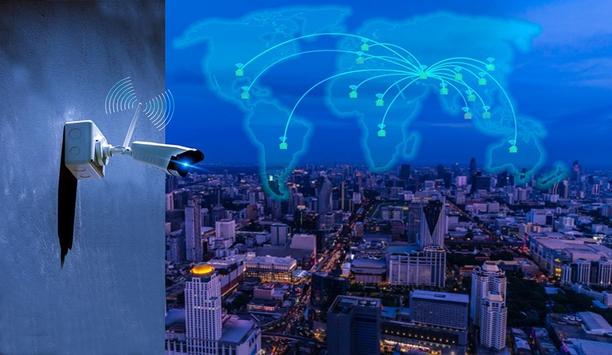
New buzzwords were abundant in the articles that generated the most clicks on our website in 2022. From the metaverse to the Internet of Things, from frictionless access control to artificial intelligence (AI), the topics most popular among our site’s visitors were at the cutting edge of change and innovation in the physical security marketplace. Here is a review of the Top 10 Articles of 2022, based on reader clicks, including links to the original content: Metaverse will promote collaboration and enable more efficiencies for security Metaverse is a familiar buzzword currently, but few people grasp what it means. In the simplest terms, the metaverse is an online “place” where physical, virtual, and augmented realities are shared. The term, Metaverse, suggests a more immersive online environment that combines elements of augmented reality (AR) and virtual reality (VR). For the physical security industry, the looming creation of a complex online environment offers possibilities and challenges. Establishing identity will be a central principle of the metaverse, and various biometrics are at the core of ensuring the identity of someone interacting in the virtual world. Cybersecurity elements are also key. On the benefits side, the security market is already taking advantage of technologies related to the eventual evolution of the metaverse. For example, the industry has deployed AR to provide information about a door lock’s status on a screen, headset, or smart glasses as a patrolling guard walks by. What are the security challenges of the transportation industry? Because transit agencies rely on several IoT devices, they get exposed to higher cybersecurity risks Rapid technological advancement, increasing urbanization, and the growing expectations of commuters and governments are pressuring transit industry players to modernize. Commuters, urban planners, first responders, and other stakeholders want to use transit data to support their decision-making. Transit agencies’ security and operations teams need closer collaboration to stay ahead. However, for many years, most transit agencies have relied on siloed, proprietary systems. Because transit agencies rely on an ever-growing number of Internet of Things (IoT) devices, they also get exposed to higher cybersecurity risks as there are more network access points to manage. The future is here: ADT’s innovation lab evaluating robots and indoor drones New robots and indoor drones for security applications are on the horizon, based on the work of ADT Commercials’ Innovation Lab, which is evaluating the latest technologies’ value to customers and some typical use cases. The ideal use of humanoid robots is to perform jobs that are considered repetitive, dirty, dangerous, and/or mundane. In security, that describes most security guard positions. As the name implies, autonomous indoor drones are focused on flying indoors versus the outdoor environment, which is heavily regulated by the U.S. Federal Aviation Administration (FAA). Flying autonomously indoors not only eliminates FAA oversight but also will enable ADT Commercial to offer another choice to customers to further reduce their dependencies on and costs of human guards. Innovative security: the key to business efficiency, cost savings, and more Organizations have shifted business focus countless times since the onset of the pandemic. While many leaders have been primarily concerned with the immediate health and safety of their customers and employees, 2022 has given rise to a new trend. More than ever, business leaders are seeking security solutions that increase operational efficiency and cost savings as well as improve logistics and business insight. As working environments become more complex, organizations looking to drive higher productivity and profitability margins should consider security upgrades that prioritize integrated analytics and automation. Shoplifting today is more sophisticated, and so are the tools to fight it One tool to fight shoplifting is analytics, which can be used to determine where shrink is occurring Shoplifting is often viewed as petty theft by individuals, but that is not always the case. Overall, shoplifting is becoming more sophisticated and coordinated. Traditional “shoplifting” has two major differences when compared to organized retail crime (ORC). The differences are numbers and motivation. ORC consists of groups working together to monetize theft, very different than an individual taking an item they need. One tool to fight to shoplift is analytics, which can be used to determine where shrink is occurring. Understanding where crimes take place helps retailers make strategic decisions about where to place their loss prevention efforts. Oosto offers 10 reasons to switch to frictionless access control in commercial buildings Access control for buildings is nothing new. It’s only in recent years that the urgency to implement smarter, more efficient, and more convenient forms of access control has increased, in the context of public and private sector digital transformation. Upheavals from the COVID-19 pandemic have forced organizations to re-think, pivot, and invest in new technology solutions that will incorporate Artificial Intelligence (AI) and Machine Learning, to gain speed in their operations, glean actionable insights from their video analytics, and enhance productivity with their teams. Which security trend is here to stay? Technologies and trends in the security marketplace come and go with some regularity. But how can you tell which trends are gaining traction and which amount to “the flavor of the month.” For example, while many physical security departments were hesitant to consider cloud-connected solutions in the past, they now better understand the benefits these solutions bring and how they can help them utilize their resources to achieve business goals while minimizing overall operational complexity. Other technologies mentioned in the article include mobile credentials, AI-based analytics, video management systems, cybersecurity, and a new emphasis on data. What do these technology trends have in common? They are opening new possibilities for greater system efficiency and functionality. In short, they are playing a role in transforming our industry. GSX 2022 reflects changing technologies and evolving role of security The role of the security director increasingly will encompass facets of cybersecurity and physical security GSX 2022 in Atlanta highlighted the changing role of security in the enterprise. The role of the security director increasingly will encompass facets of cybersecurity as well as physical security. Transitioning to an operation that incorporates both disciplines requires a workforce that embraces education and building new skills. Education and the opportunity to build new skills are evident everywhere at GSX, including in the hundreds of education sessions and also in the knowledge shared on the show floor in the exhibit hall. Consolidation changing the face of the security market Consolidation is a dominant trend in the security marketplace. Large companies typically swallow up smaller companies as a means of expanding both their technology portfolios and their geographic reach. Sometimes a big fish is swallowed up by an even bigger fish. Despite the pandemic and resulting economic challenges, the security market has continued to be a desirable environment for both big players and startups, which then provide abundant acquisition targets for larger companies. This article highlighted recent mergers and acquisition news. Six trends at the intersection of video and AI Video has evolved beyond the capabilities of advanced imaging and performance to include another level: Artificial Intelligence. Video imaging technology combines with AI, delivers a wealth of new data, not just for traditional physical security applications, but for a much deeper analysis of past, present, and even future events across the enterprise. This is more than a big development for the physical security industry; it is a monumental paradigm shift that is changing how security system models are envisioned, designed, and deployed. Much of the heightened demand for advanced video analytics is being driven by six prevalent industry trends.

We must leverage existing technologies like social media monitoring, gunshot and weapons detection, and real-time watchlist alerting. We owe it to our children. The recent news of the Dallas elementary school shooting absolutely gutted me. It’s a tragic and incomprehensible loss of life. A question I hear being asked again and again – could technology have made a difference? From my experience, modern technologies can help schools mitigate some of the damage and provide an early warning to law enforcement so they can mount a faster and more effective response. Early warning technologies The fact is technologies exist – and are in production – that can provide an additional safety net and potentially slow a would-be attacker and at least give law enforcement a few more moments of notice to mount an effective response. Naturally, people will argue for stronger gun controls and better mental health programs Seconds are precious. And they’re being lost because schools often don’t have the requisite early warning technologies to trigger the alarm. Naturally, people will argue for stronger gun controls and better mental health programs. They’re absolutely needed, but schools and law enforcement need real-world tactical solutions that exploit the power of today’s technologies. Real-World tactical solutions Social media monitoring: The shooter apparently made three social media posts, about 30 minutes before the shooting. The FBI and local police can monitor public social media posts in real-time to identify threats and respond quickly. Gunshot detection: Gunshot detection systems use acoustic sensing technology to identify, discriminate, and report gunshots to the police within seconds of the shot being fired. A gunshot detection system usually involves a number of sensors to detect the sound of a gunshot and transmitters to send a message to the police dispatch center. Weapons detection: Weapon detection systems use high-performance object detection algorithms using deep neural networks. These AI algorithms work with your existing video surveillance systems to automatically detect automatic knives, guns, and firearms using deep learning models. Watchlist alerting: Many schools in the U.S. have lists of known security threats. This often includes ex-students, parents, and faculty who were prone to violence in the past and sexual predators who live in the immediate vicinity. Watchlist alerting works with a school’s video surveillance system to identify persons of interest (POI) through both face and attribute recognition in real-time and sends instant alerts instantly when a POI approaches school property. Watchlist alerting solution If someone is not watching that camera at that time - the camera is almost worthless" After a tragic event on one of their campuses, a public-school district in Santa Fe, Texas invested in a watchlist alerting solution, an AI-based face recognition security solution to create a safer environment for the thousands of students, teachers, and staff who populate their schools and facilities. This was in 2019. According to Kip Robins who was then the Director Technology at the Santa FE ISD: “We have almost 700 cameras throughout the district, but if someone is not watching that camera at that time - the camera is almost worthless.” Metal Detectors: Once dismissed as something only needed for schools in areas with a high crime rate, many schools across the U.S. are now considering the use of metal detectors. It should be obvious by now that living in a ‘nice neighborhood’ is not an insurance policy against school shootings. They can strike any community - large or small, rural or suburban. Use of metal detectors To be clear, there is no single technology that will prevent this type of tragedy. But, let’s act now and at least have the technologies in place to help expedite a better response – while we simultaneously debate the deeper questions about the nature of education, mental health and guns in American society. We owe it to our children. Avi Golan is CEO of Oosto, a Vision AI pioneer enabling organizations to better protect their students, customers and employees by identifying security and safety threats in real-time.

Technology is driving new opportunities in the security industry. Innovation trends include artificial intelligence (AI), edge-based systems, mobile systems, a greater focus on software, and efforts to simplify operation of security systems, even as capabilities become more complex. ISC West 2022 reflected these changing trends. “In addition to emphasizing technology innovation, ISC West also reflected an industry that is resilient, dedicated and passionate,” said Mary Beth Shaughnessy, the Event Director of ISC Security Events. ISC West 2022 “Almost 12,000 dealers, installers, integrators, end users and consultants reconnected at ISC West 2022, and there were nearly 20,000 total industry professionals in attendance (including manufacturers),” adds Mary Beth Shaughnessy. The 550 exhibitors and brands on display reflected an industry that has come through the COVID-19 pandemic in better shape than ever, poised for even greater success in the years ahead. Turning video and access control into knowledge Deployment of AI to ‘watch video’ can inform users of what’s happening in real-time Motorola Solutions emphasized several themes that were heard repeatedly throughout the show. “One trend is fulfilling the need to turn video and access control into sources of knowledge, inside the enterprise,” said John Kedzierzski, Motorola Solutions’ Senior Vice President of Video Security and Access Control. Deployment of AI to ‘watch video’ can inform users of what’s happening in real-time, while monitoring access control yields the equivalent of an operating system inside a building. Using the Cloud offers consumer ease-of-use to systems The second trend listed by Motorola Solutions is working to bring the consumer ease-of-use experience into enterprise security solution applications. Professional security systems were previously complicated to buy, install, manage and upgrade. However, using the Cloud, even distributed enterprises can bring consumer ease-of-use to systems, from improving the out-of-box installation experience to boosting the ability to manage the system. Transition to ‘mobile first’ interfaces The third trend emphasized by Motorola Solutions is transition to ‘mobile first’ interfaces, reflecting the need for busy security executives to be on-the-go, but with full access to their systems, without being chained to their desks. Since the last springtime ISC West show in 2019, Motorola Solutions has grown rapidly, both organically and through acquisition of IndigoVision, Pelco, Openpath, Envysion, and Ava Security. Cloud-based Orchestrate system Integration is simple through a ‘drag-and-drop’ approach that doesn’t involve writing code In addition, the company is making it easier to integrate video and access control systems with Motorola’s radio systems, typically carried by security guards. The cloud-based Orchestrate system translates ‘events’ from access control and video, to trigger notifications on a mobile radio. Integration is simple through a ‘drag-and-drop’ approach that doesn’t involve writing code. Simplifying implementation of AI Artificial Intelligence (AI) has traditionally been associated with the use of large servers or even intelligence in the Cloud. Several exhibitors at ISC West helped to change that misconception. For example, Oosto offers a simpler and more economical approach. They supply edge appliances for AI. The purpose-built Vision AI appliance, a small box, puts intelligence at the ‘near edge’, by connecting to up to five cameras. Easy and dependable ‘failover’ ensures redundancy without a big investment, and the system can work with any IP camera, including an end user’s installed base of cameras. Oosto’s TCO (total cost of ownership) calculator Oosto’s TCO (total cost of ownership) calculator spells out how much a customer can save versus using a big server, including lower costs such and power and cooling. AI was probably the biggest buzzword at ISC West, but there was also emphasis on the practical results of applying AI to physical security. Artificial Intelligence (AI) - the biggest buzzword at ISC West I believe our purpose is to bring buzzwords, like Cloud and AI together in a way that is useful to end-users" “What surprises me (at the show) is that there is a lot of generic marketing of AI, but we are trying to step back from our analytics and look at applications that serve certain end-users,” said Jeff Corrall, Vice President - Product Management at March Networks, adding “As an industry, we are still at the stage of AI as a buzzword.” Jeff Corrall further said, “I believe our purpose is to bring buzzwords, like Cloud and AI together in a way that is useful to end-users. We have to live with the buzzwords, but what we really want is to apply them. That creates a stickiness with the end-user — when high technology is making a difference.” March Networks Labs address specific end-user problems and then apply their systems to provide a solution. Jeff Corrall adds, “A lot of AI is responding to what the customer is asking for, and we are stepping back and making sure the end-user will use it on a consistent basis.” ‘Edge versus cloud’ was a common theme at ISC West Edge versus Cloud ‘Edge versus cloud’ was a common theme at ISC West, pondering where in a system the ‘intelligence’, such as AI and machine learning, as well as other functionality, should reside. Among the companies addressing the quandary was Axis Communications, which focused on the issue using a racing theme at their presentation to the industry press. The winner of the ‘race?’ - The combination of both approaches working together as a team, of course. AXIS Speed Monitor on exhibit One introduction at the show was the AXIS Speed Monitor, a speed detection app available using ACAP Axis Communications also highlighted the deep learning analytics of the ARPEC 8 camera chip (introduced during the COVID-19 pandemic), which will be deployed across their camera line. One introduction at the show was the AXIS Speed Monitor, a speed detection app available using ACAP (Axis Camera Application Platform), the capability to load ‘apps’ onto camera chips at the edge. They also introduced the D4100-E Network strobe siren (a smart edge device), the Audio Manager Pro (a cloud-based software system enabling zoning and callouts for specific areas in a building), the W101 body worn cameras with GPS capabilities, and a Barcode Reader for doorstop applications (another ACAP app). ‘App Store’ approach to expanding applications Azena is at the center of expanding applications at the edge, promoting new applications through an ‘App Store’ approach that sells software apps that can be loaded onto cameras that are equipped with Azena’s operating system. In the last couple of years, the company (formerly known as Security and Safety Things) has expanded its offerings. There are currently 108 apps in the store from 30 to 40 app developers. There are 14 camera models (from six manufacturers) that are commercially available and run their operating system. The newest camera is a fisheye model from Vivotek. “What we have seen is that a lot of the use cases are pretty unique,” said Fabio Marti, Vice President - Marketing for Azena. Two examples are an application that monitors a flame to ensure it is burning cleanly (no smoke). Another system monitors nets covering fish farms to avoid birds getting tangled up in the nets. Fabio Marti said “A challenge is to find new business avenues for integrators. Everybody is not eager to look beyond their comfort zone.” Focusing on software to ensure user experience Software systems are one of the major focal points for innovation in security systems Software systems are one of the major focal points for innovation in security systems and Verkada is focusing on how software innovation can improve systems. “For decades, innovation was on the hardware front,” said Filip Kaliszan, Verkada’s Founder and Chief Executive Officer (CEO), adding “We saw an opportunity for more innovation on the software side. The customer experience revolves around software.” Ensuring an end-to-end experience “We want to guarantee an end-to-end experience,” adds Filip Kaliszan. As a new company with a ‘hybrid cloud’ approach, Verkada focused on appealing to end users to convince them of the value proposition. Once an end user was convinced, Verkada brought in an integrator partner to deliver the solution. In effect, Verkada finds demand and brings that demand to the integrator. Software-centric operation of a modern building Verkada is broadly focused on ‘software-centric operation of a modern building.’ After starting out in video, Verkada has since expanded into systems for access control, alarm systems, and other categories. They use a combination of third-party hardware and equipment that is custom designed to work seamlessly with their software systems. Verkada’s end goal is to put the various systems together into a platform. They will continue building each product category, which will eventually be unified into ‘the operating system for the building of the future.’