Amulet - Experts & Thought Leaders




Latest Amulet news & announcements

The S12 Security Guarding Leadership Group (S12) is delighted to welcome five new members to its core committee. The S12 brings together security leaders to work as a collective with the Government, Security Industry Authority, and the Security Minister. Their mandate is to address and elevate critical industry issues, promote higher standards and professionalism, enhance public safety, and positively shape the perception of the security guarding sector. Latest round of nominations While the group was initially seeking two new members in its latest round of nominations, the strength and breadth of candidates led to four being invited to join. It is strengthened by the appointments of: Keith Middleton, Managing Director of Bidvest Noonan (UK) Ltd Steven Moore, Managing Director of OCS Kieran Mackie, Managing Director of Amulet Security Simon Alderson, CEO of First Response Group Ltd Representatives from five large companies It was stated that preference would be given to representatives from large and medium companies in this nomination round to help provide a more balanced committee. As nominations were received from two large and two medium firms, all four have been offered a place. These appointments provide complete balance to the S12, which will now be made up of representatives from five large companies, three medium, and five small businesses. New appointments are a major win for the S12 Paul Evans, Chair of the Security Guarding Leadership Group, said: “We thank all those who put themselves forward to give up their time and resources to help drive positive change in the security industry." “The appointments of Keith Middleton, Steven Moore, Kieran Mackie and Simon Alderson are all a major win for us, and between them they have a wide range of skills and experience that will be invaluable in helping the S12 achieve its goals. We welcome them all to the team and look forward to them getting stuck in – there’s a lot to do. These latest appointments also help balance out the committee in terms of the type and size of businesses represented." “Finally, we also warmly welcome Abbey Petkar of Magenta Security Services, who joins the committee following a resignation from the previous nomination round. Abbey was the next runner-up in the small business category in that initial voting round, and I equally look forward to benefiting from his years of experience and expertise in the Security Guarding industry.” Non-ACS representation The S12 has also confirmed plans to introduce two non-ACS board seats in the New Year. This will help ensure even broader inclusivity and representation as the group continues to engage with Government, the Home Office and the Security Industry Authority on critical issues such as Mandatory Business Licensing, Martyn’s Law, labor exploitation and raising professional standards across the sector. About the S12 The S12 meets regularly with the Security Minister, the Home Office and the SIA to drive the highest professional standards across the industry. The core committee lead a number of workstreams across a variety of areas, including MR8, Labour Exploitation, Training Malpractice, SIA Business Approval Scheme, Martyn’s Law and Integrated Policing and Private Security. The committee is so far being supported by more than 400 people from across the industry who are helping to represent the interests of the industry with one united voice, while working to raise standards, shape policy and improve public safety.
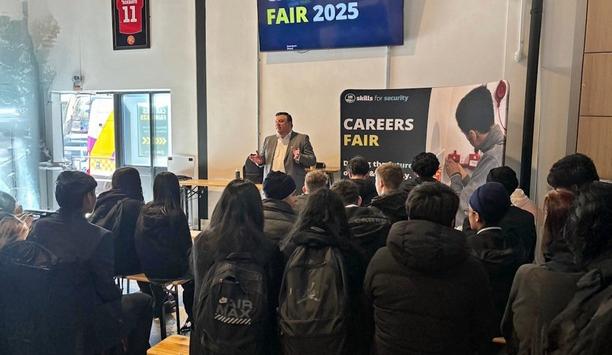
Fire and Security Apprenticeship Specialist, Skills for Security proudly marks the success of an inaugural Careers Fair, taking place near its Walsall training branch at The Bescot Stadium Locker Room. The event, designed to introduce local school leavers to career opportunities in the fire and security industry, welcomed an enthusiastic turnout of students, educators, and industry professionals. Fire and security sector The event provided a unique platform for students aged 14 to 18 to explore potential career paths As the first careers fair of its kind dedicated solely to the fire and security sector, the event provided a unique platform for students aged 14 to 18 to explore potential career paths. Says David Scott, Managing Director of Skills for Security: "We asked, and the industry responded. With the support of our sponsors, the overwhelming response, as the first careers fair dedicated to fire and security highlights the enthusiasm and curiosity of young people when presented with clear career pathways." Fire and security apprenticeships Scott added: “The industry offers rewarding and long-term opportunities, and the event has provided a vital local platform to showcase the many ways students can build a successful future in the sector. Seeing so many students, teachers, and employers come together to engage in meaningful conversations has been truly inspiring." Organized by Skills for Security, the UK’s pioneering provider of fire and security apprenticeships, the fair aimed to bridge the industry’s skills gap by offering hands-on insights into apprenticeship pathways, career opportunities and real-world industry engagement. Latest technological developments Attendees had the option to interact with keynote speakers and explore live apprenticeship vacancies Featuring industry-pioneering sponsors, including a dedicated speech from Steve Riley, Division Director at Comelit-PAC on inclusivity in the workplace, exhibitors included Ajax, CSL, Fenix Monitoring, HKC, Orisec, RISCO, Pyronix, HID Global, Honeywell, Cento, AddSecure, Deep Alert, Smoke Screen, Videcon, Yuasa Battery, Obsequio, Protec, Marlowe, EDSB, Amulet and the Skills for Security Talent Acquisition team. Each was on hand to offer career guidance, CV-building support, and insight into the latest technological developments in the sector. Attendees also had the opportunity to interact with industry keynote speakers and explore live apprenticeship vacancies. Networking opportunities The event successfully connected students with potential employers, offering valuable networking opportunities and first-hand insights into the fire and security profession. Teachers and career advisors also benefited from the event, gaining a deeper understanding of the industry’s career prospects to better guide their students. Next generation with the skills and knowledge David concluded: “Following the success of this event, we are already planning future careers fairs to continue supporting young people in their career journeys." "We remain committed to raising awareness of the exciting opportunities within the fire and security sector and equipping the next generation with the skills and knowledge needed to thrive.”
Amulet, the specialist security arm of The Churchill Group, launches a new Temp & Vacant service. The nationwide service will provide 24/7, 365 security solutions and has been launched to support businesses that have temporary and vacant properties – an existing problem that has been exacerbated by the pandemic. When the first work from home order was given in March 2020, thousands of properties became vacant overnight. Last June commercial office space had a vacancy rate of 4.5 percent, and a center for London report found that one in seven shops were unoccupied at the end of 2020. Vacant property security These figures may fluctuate as restrictions ease, but it’s highly likely with a new way of work that many properties that were formerly occupied will remain vacant or only be used on a temporary basis. Amulet’s new service will address the security challenges posed by temporarily occupied and vacant space. Some of the key risks are vandalism, burglary, and fires. The range of Amulet solutions includes: On-site security provided by highly trained professionals Canine services for an additional layer of security and strong visual deterrent Mobile patrol visits for random checks and rapid response Vacant property security and inspections Perimeter protection, such as emergency fencing and razor wire Standalone video verification alarm systems that don’t require a power supply Rapid deployment CCTV solutions Temporary fire alarm systems Steel doors and screens for secure boarding Anti-loitering sound devices to prevent loitering Emergency lighting Security landscaping Eviction support The entire range of solutions can be provided on a short-term or ad hoc basis, at any location Amulet will also offer emergency deep cleaning and pest control for when a vacant property needs to be reoccupied at short notice. The entire range of solutions can be provided on a short-term or ad hoc basis, at any location, and can integrate seamlessly with client timescales. Intelligent monitoring and reporting The service will be backed by Amulet’s Command, Control and Intelligence Center (CCIC). Key features of the CCIC include intelligent monitoring and reporting, a 24/7 major incident response capability, lone worker protection, and twin-layer backup resilience. A holistic solution like this is why Amulet is one of the UK’s most highly regarded security providers. Darren Read, Managing Director at Amulet, said: “Temporarily occupied and vacant buildings present a different set of security challenges to a typical building. We have created a service that addresses those challenges, is flexible, and can be rolled out at very short notice. We’re confident that our range of solutions will meet the needs of the market and are excited to launch this comprehensive new service.’’
Insights & Opinions from thought leaders at Amulet

The advantages of security systems as forensic and investigative tools are well understood and demonstrated in the market. However, the new trend is toward systems that are useful in real-time and that even predict a security event, before it happens. We asked this week’s Expert Panel Roundtable: Which security systems are becoming more proactive than reactive?
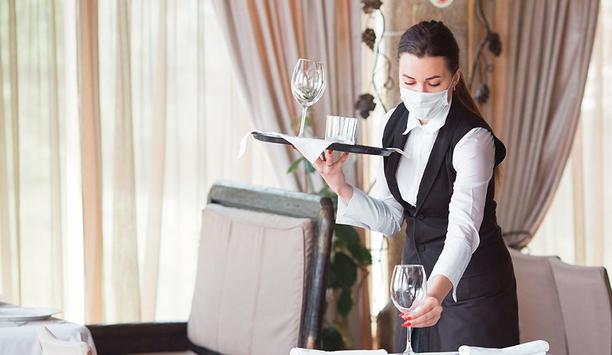
The return to the workplace is a focal point for many in the built environment but one of the most important elements is easy to overlook. Guest services will be vital in the return to the workplace. Front-of-house teams will be responsible for welcoming building users back and reassuring them as they negotiate shared spaces in the post-Covid era. The workplace will inevitably look different after Covid. We have become more aware of our spaces, how clean they are, and what spaces building users share. Employees have also become more conscious of the pros and cons of the workplace. For some, a year of working from home has been a welcome break from the stress and time taken by a commute. Many organizations are considering moving to hybrid workplace approaches, downsizing their corporate real estate portfolio, and using shared spaces more consciously, be that for focussed quiet work or collaboration. We will also see heightened care in workplace cleaning and more data-led solutions. Front-of-house teams will be at the center of helping building users get used to these changes. The role of technology Front-of-house personnel will likely be responsible for ensuring buildings do not exceed safe occupancy levels and will be aided by visitor management systems. Another change to look out for in the workplace will be the use of technology. Tech-led organizations have long reminded us that gut instinct and trusting our senses is not enough anymore, but Covid-19 has forced us to come to terms with this. Now that adopting technology has become crucial in cleaning, we will see a reticence to adopt it elsewhere fade too. A survey from McKinsey suggests that the pandemic has accelerated the adoption of technologies by several years. Why is this important for guest services? Much like other workplace changes, new technologies will alter how building users interact with their environment. Tech will also enable front-of-house teams to focus on the key ingredient of their role – human interaction. This will be vital in helping occupants feel comfortable, safe, and happy. Occupancy and visitor management systems These systems have been around in the workplace for many years, and pre-Covid were used to help us maximize our space and utilization. These systems are even more important as we are likely to see some return to the workplace before everyone has been vaccinated. We may see systems that contact only those occupants in an affected area of a building, rather than a whole workforce, to limit worry and ensure most people can remain confident in the hygiene of their workspace. For the rest of 2021 at least, precautions such as social distancing will need to be in place. Workplaces will continue to function at limited occupancy for some time to keep people safe. Front-of-house personnel will likely be responsible for ensuring buildings do not exceed safe occupancy levels and will be aided by visitor management systems. These may be used by individual organizations or by multi-tenanted buildings. Temperature checks and identity verification systems Organizations are mitigating risks where possible. Handheld digital thermometers have been in high demand. The use of such devices has reshaped the role of security officers over the past year. Officers have become familiar faces in shops and shared spaces, keeping people safe and acting as the first point of contact. The security sector has been placed under immense pressure, balancing the need to enforce precautions with responding to stressed building users in an empathetic way. Officers have demonstrated agility that security technology cannot replace. Post-pandemic, we will likely see a greater appreciation for what manned guarding can offer and a greater potential for officers in front of house roles. Front-of-House staff are becoming responsible for temperature verification. Some organizations may choose to increase the collaboration between their front-of-house and security teams. This could include implementing identity verification systems, as well as touchless systems. This will allow the focus of front-of-house teams to remain on the people and giving a warm welcome to users as they return to the office. Using monitoring to make guest services more available Monitoring solutions may be the first things that come to mind when discussing security technology. We have seen an increasing trend toward integrating remote monitoring with manned guarding since before the pandemic. Such a move may be even more important now.Beyond keeping employees safe, guest services are going to play a central role in making the workplace an attractive option. For many organizations, the pandemic has forced a rapid switch in focus. Organizations have had to face the security challenges of caring for vacant premises and the additional complications of managing cybersecurity for remote work. Rebalancing the cost and focus of security may feel as though it has left some businesses without the capacity to utilize front-of-house officers. Yet when employees return to the workplace, front-of-house teams will be more important than ever. For those that did not do so during the pandemic, now is the time to be investing in effective monitoring solutions. The falling cost of technology means such a solution can be combined with manned guarding and front-of-house roles. Organizations may need to invest in fewer officers, but their roles can be more focused upon the occupant experience. Encouraging employees back Beyond keeping employees safe, guest services are going to play a central role in making the workplace an attractive option. Remote working has had both pros and cons but many of those downsides will be diminished with the end of the pandemic. Loneliness will no longer be such a challenge when seeing friends and neighbours is an option, and the return of children and partners to school and work will relieve distractions. It may be tempting, then, for many employees to continue working from home. As a result, many opportunities for collaborative work will be lost. For employers looking to encourage their workforce to return, creating an amazing workplace experience is key. Technology alone can’t offer this. Rather, too much tech could create an environment that feels clinical and impersonal. Use technology to streamline the boring or stressful elements of the workplace and invest in friendly faces who will welcome your workforce back.
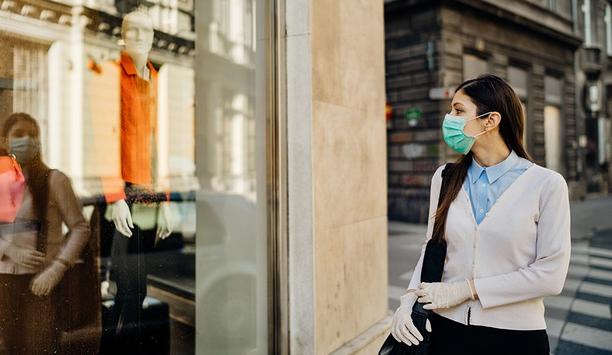
This year has brought about changes in virtually every sector. As with other frontline industries, the security sector has been tested more than those able to move entirely to remote working. While the promise of a vaccine means an end is in sight, the post-COVID era will not bring with it a return to the ‘normal’ we knew before the pandemic. Organizations have adapted, becoming more resilient and agile and this will have lasting effects. The coming months will continue to be testing. The tiered system will see the precautions in place fluctuate with the situation. Initial lockdown period At the same time, a gradual return to normal as the vaccine is rolled out will require adaptive measures. The security sector will be at the heart of keeping people safe throughout this process. The initial lockdown period and the first wave of panic buying might seem like a lifetime ago. However, the introduction of the second lockdown in November was accompanied by another wave of stockpiling despite organizations trying to reassure their customers. It is uncertainty that breeds anxiety, and we continue to see this as the restrictions fluctuate across the country. The tier system depends upon a number of factors: case detection rate, how quickly case numbers are rising or falling, positive COVID-19 test numbers in the general population, pressure on the NHS in that region, and local context and exceptional circumstances. Social distancing measures For the sector to meet demand, technology will be needed to work alongside the manned guarding role While travel is allowed in all tiers if necessary for work, government advice still recommends that those able to work from home should do so. This means that throughout the country, many buildings will remain empty or at minimal capacity for some time to come. Security risks vary with the restrictions in each area. Although shops are largely open, tier three still requires the closure of many premises. Vacant premises are more vulnerable to theft and damage, meaning officers and security technology remain in higher demand than usual. As more premises are allowed to open, the need for officers to implement social distancing measures increases, stretching the sector like never before. For the sector to meet demand, technology will be needed to work alongside the manned guarding role. Temperature checking devices It will continue to be important in providing security when officers cannot be present in person through CCTV and sensors. But it will also be integrated into the manned guarding role to streamline processes. We are already seeing the start of this as many officers are using handheld temperature checking devices to reduce the spread of COVID-19. We’ll also see temperature scanners installed into buildings to allow security guards to focus on other priorities. Those businesses that are open will need to continue to adapt to the changing regulations in the coming months. Christmas is a busy period that stretches the retail sector. Unpredictability results in heightened stress levels and makes it more difficult for people to reliably take in and recall information. Security officers are a key first point of contact both to enforce measures and reassure anxious staff and members of the public. Enforcing one-Way systems Security staff will need to keep members of the public safe and prevent disruption Some shops are enforcing one-way systems and limiting the number of customers allowed inside. Over Christmas, many more may choose to do so. Security officers will be responsible for ensuring these precautions are followed. With the heightened pressure of the festive period, it can be hard to predict how members of the public will respond to officers enforcing measures. Security staff will need to keep members of the public safe and prevent disruption. Doing so will require tact and empathy in dealing with customers. Within shops, too, officers will be tasked with ensuring social distancing and other measures are followed effectively. Doing so, they must work closely with clients to understand what protocols are in place and how to handle a breach. They must also be able to enact discretion. For example, clients may not take issue with protocols being broken momentarily or accidentally. Extensive government guidance There is extensive government guidance on the precautions that should be taken on various premises. They include the introduction of one-way systems and limiting building capacity. Measures such as one-way systems may be broken by those that don’t notice or don’t care. Officers must be able to judge what responses are appropriate while maintaining a calm and reassuring presence. The security officer role has long been moving toward a more front of house position as, for many visitors to a building, they are the first point of contact. The pandemic has accelerated this trend. Working on the frontline of the pandemic, officers have had to play a more multifaceted role than ever before. Officers still act as deterrents and manage security issues, but they must also use empathy and strong communication skills to inform and reassure customers and staff onsite. Adapting to new technology They will need to be able to learn quickly on the job and adapt to new technology and practices Being able to demonstrate this flexibility and to read a situation and react appropriately will be some of the skills most in demand in the industry in the future. Officers will need to build close working relationships with clients. In addition, many will have new roles, such as taking temperatures with handheld devices. They will need to be able to learn quickly on the job and adapt to new technology and practices. Technology, too, will be more important. If the global pandemic has driven any point home, it is that we cannot always see or sense threats. Data-Driven insights Temperature checks and occupancy sensors will be the norm in protecting from COVID, while security technology and data-driven insights will continue to grow in popularity. The security sector specializes in adapting to the unexpected and the threatening. It continues to demonstrate incredible value through the pandemic. While the coming months will undoubtedly be trying, the sector is adapting. Lessons have been learned from the pandemic that will affect business globally. Security specialists are taking these on and creating a stronger and more effective industry.









