Alibaba Cloud - Experts & Thought Leaders




Latest Alibaba Cloud news & announcements

Alibaba Cloud, a global provider of AI infrastructure and the intelligence backbone of Alibaba Group, today announced its latest global infrastructure expansion plan at the 2026 Apsara Conference, alongside a series of new AI capabilities designed to help enterprises build, deploy and scale AI applications more efficiently. The technology company has also announced its comprehensive collaboration with global enterprises including Panasonic Digital, Unity China, Lion Parcel, Loomi Entertainment Group and SHAKE to accelerate enterprise innovation via its advanced AI and cloud technologies. Accelerate enterprise innovation Over the next 12 months, Alibaba Cloud will establish its first cloud regions in Türkiye, Finland and the Netherlands, while expanding its data centre footprint in Malaysia, Germany, the United Arab Emirates, France and Hong Kong. The expansion will further increase Alibaba Cloud’s global computing capacity and strengthen its ability to provide localised cloud and AI services to customers across key markets. The cloud leader currently operates 107 availability zones in 31 regions around the world. “As Alibaba Cloud has advanced from AI-native infrastructure to an Agent-Native Cloud architecture, AI is also moving rapidly from experimentation to real-world deployment, creating demand for both scalable infrastructure and more accessible AI capabilities,” said Dr. Feifei Li, Chief Technology Officer and President of International Business of Alibaba Cloud Intelligence. Accessible AI capabilities “We are expanding our global cloud footprint to bring computing resources closer to customers and partners, while continuing to evolve our AI technologies to help enterprises deploy models, optimize multi-model workloads and create new AI-powered applications. At the same time, our growing ecosystem of customers and partners demonstrates how these capabilities can translate into tangible business value across industries and markets. We are committed to working closely with our global ecosystem to make AI more scalable, practical and accessible for businesses.” At the conference, Alibaba Cloud launched three new AI solutions to help international businesses build and scale production-grade applications. Smart Studio, an out-of-the-box product designed to help businesses build dedicated Model-as-a-Service (MaaS) platforms in minutes. It provides everything needed to package, price, meter, and bill model APIs under their own brand. Its advanced inference architecture delivers up to 505% higher throughput than standard open-source frameworks on the same hardware. Multi-model deployment Smart Fusion serves as an intelligent engine that helps users and businesses achieve state-of-the-art model performance at low cost through a unified standard model API. The engine supports multi-model collaboration within one task, selecting the best-suited available models to work together by analyzing real-time dimensions. By abstracting multi-model deployment into a single endpoint, it can help reduce token spending by around 50%. Smart Video is an AI video agent designed for short-drama studios and advertisers to automatically create videos up to one hour long. With a single prompt, creators can turn an idea into a finished cut, while continuously refining it through natural language. The platform supports multiple video models, including Wan, and offers seamless support for more than 20 languages. Diverse business needs Alibaba’s cloud and AI technologies are helping customers and partners across industries address diverse business needs, from digital transformation and enterprise applications to logistics, gaming and AI-powered content creation. Through collaborations with enterprises including Panasonic Digital, Unity China, Lion Parcel, Loomi Entertainment Group and SHAKE, Alibaba Cloud is enabling businesses to enhance efficiency, accelerate innovation and explore new opportunities with cloud and AI. Panasonic Digital (Shanghai) has partnered with Alibaba Cloud to accelerate its comprehensive digital and AI transformation. Leveraging Alibaba Cloud’s Bailian (Model Studio) to securely access the Qwen models, alongside advanced data management tools like DataWorks, MaxCompute, and Hologres, Panasonic has built a custom capability hub that powers specialized AI agents across manufacturing, supply chain, and corporate functions. Significant operational benefits This collaboration has delivered significant operational benefits. It has achieved an 80% reduction in documentation time through automated meeting minutes, a 10-fold increase in contract review efficiency using the “Smart Compare” agent, and enhanced data-driven decision-making by empowering non-technical staff to perform complex inventory analyses using natural language-all while ensuring strict data security and compliance through Alibaba Cloud’s robust governance features. "We are very grateful for our strategic collaboration with Alibaba Cloud, which has been instrumental in accelerating Panasonic Digital's enterprise-wide AI transformation. By seamlessly integrating their world-class AI models and robust data infrastructure into our operations, we have successfully moved beyond isolated IT optimisations to build a highly scalable, secure, and unified intelligence platform,” said Yueming Li, Head of GenAI Innovation & Workforce, Panasonic Digital (Shanghai). Supporting cross-team collaboration Unity China, a pioneer game engine and real-time 3D development platform that operates the Tuanjie Engine, has leveraged Alibaba Cloud’s Model Studio to deploy Qwen and third-party foundation models for Tuanjie AI-Codely, its AI-native engineering platform. Unity is a leading game engine and real-time 3D development platform. The platform streamlines production-scale game development by automating mission-critical workflows, including code comprehension, real-time editing, and debugging, while supporting cross-team collaboration. “Game development is becoming increasingly complex, and our goal with Tuanjie AI is to remove technical friction so creators can focus on innovation and gameplay,” said Junbo Zhang, CEO of Unity China. “Alibaba Cloud’s Model Studio and the Qwen model family provide the performance, flexibility, and low latency our developers require. By integrating these advanced AI capabilities directly into the development pipeline, we are enabling studios to debug, iterate, and bring ambitious game projects to life faster than ever before." Manual data transcription Lion Parcel, a pioneer Indonesian logistics and delivery provider, has leveraged Alibaba’s Qwen model to improve its finance and document processing workflows. To eliminate time-consuming and error-prone manual data transcription, Lion Parcel deployed the Qwen-VL-Plus model through Alibaba’s Model Studio platform to automate routine workflows. Supported by Alibaba Cloud's fully managed platform and predictable pay-per-token pricing, Lion Parcel has significantly accelerated processing efficiency, maximized data accuracy, and established a centralized digital repository that boosts overall business scalability. “Alibaba Cloud’s OCR solution powered by Qwen helped us accelerate Document Order processing in Finance. It’s improving accuracy while saving both time and operational costs," said Probosetyo Krishna, Head of IT, Lion Parcel. AI-generated content Loomi Entertainment Group (LEG), a Malaysia-based entertainment company, has partnered with Alibaba Cloud to accelerate the adoption of AI-generated content (AIGC) among creators and businesses in Malaysia and the wider region. LEG has integrated Alibaba’s visual generation models, including Wan and HappyHorse through Model Studio, into Imaginary, its proprietary cinematic AI engine. The integration enables high-quality video and visual generation, streamlines content production workflows, and helps reduce production costs. Additionally, the two companies have hosted two AIGC hackathons and trained more than 100 local content creators through online and offline workshops, providing creators with practical exposure to the latest generative AI tools and applications. Alibaba Cloud and LEG are also exploring the use of Wan in Loomi’s micro-drama production pipeline, alongside joint go-to-market initiatives and talent development programmes. “Alibaba Cloud’s advanced AI models give creators new ways to turn ideas into engaging content more efficiently. Through this partnership, we look forward to bringing AIGC capabilities to more creators in Malaysia and the wider region, while exploring new possibilities for AI-powered content production,” said Ivan Tan, CTO of Loomi Entertainment Group. Proprietary AI model SHAKE, a pioneer in agentic resource planning (ARP) for small and medium-sized businesses (SMBs), is leveraging Alibaba Cloud’s powerful compute resources and Qwen models to expand its services across APAC markets. Through this partnership, SHAKE is building a proprietary AI model based on Qwen to deliver highly optimized ARP solutions. Additionally, SHAKE’s ARP services will be featured on the Alibaba Cloud Marketplace, supporting SMBs across industries to seamlessly transition into and thrive in the agentic era. “By fusing SHAKE’s pioneer expertise in Agentic Resource Planning with Alibaba Cloud’s world-class compute infrastructure and cutting-edge Qwen models, we are unlocking unprecedented value for our customers. This collaboration serves as a powerful catalyst for our regional growth across APAC and marks a monumental milestone in our journey. Together, we are accelerating our vision to empower SMBs with the intelligent tools they need to thrive and scale in the agentic era,” said Sean Hinton, CEO of SHAKE. Multi-model AI architecture AnyMind Group, a BPaaS company for marketing, e-commerce and digital transformation, has today announced a strategic agreement with Alibaba Cloud to integrate Qwen, a family of large language and multimodal AI models developed by Alibaba, into AnyLive, AnyMind Group’s AI-powered live commerce platform. The integration is designed to improve how AnyLive understands customer questions and delivers accurate, contextually relevant responses in real time. Qwen will be added as one of the models within AnyLive’s multi-model AI architecture, utilized and delivered through lifelike AI avatars. Its language understanding capabilities will help AnyLive better interpret customer intent, including conversational or ambiguous questions, and generate more natural and relevant responses across Asian languages. Akinori Kubo, Managing Director, Global E-Commerce, AnyMind Group, said: “The quality of a live commerce experience depends on how well brands understand customers and respond to their needs in the moment. Adding Qwen to AnyLive’s multi-model stack will strengthen intent analysis and response accuracy across Asian languages, helping brands create live rooms where customers feel understood and can make more informed purchase decisions.”

Alibaba has released Qwen3.6-Plus, the latest iteration of its flagship series of large language models, delivering a significant advancement in agentic coding, as well as multimodal perception and reasoning. Qwen3.6-Plus is designed to empower the latest market demand to shift towards agentic AI: building models that move beyond passive assistance to ones capable of autonomously navigating complex, repository-level engineering and real-world visual environments. AI-native enterprise platform The latest Qwen3.6-Plus model will be integrated into Alibaba’s ecosystem, including Wukong, an AI-native enterprise platform that automates complex business tasks using multiple AI agents, and Qwen App, Alibaba's flagship AI application. While the Qwen series established a strong foundation for the development of AI solutions, Qwen3.6-Plus is optimized for the "capability loop" - the ability to perceive, reason, and act within a single workflow. By incorporating developers’ feedback, the model offers a stable, production-ready framework designed to bridge the gap between initial code concepts and deployed products. Production-ready solutions In frontend website development and repository-level engineering, Qwen3.6-Plus autonomously plans, tests, and iterates on code to deliver production-ready solutions. By managing the full execution loop from objective breakdown to final refinement, the model functions as an end-to-end partner in the development lifecycle. To support complex, repository-level engineering, Qwen3.6-Plus provides a 1-million-token context window by default. Across a broad set of benchmarks, Qwen3.6-Plus demonstrates strong performance across agentic coding and multimodal reasoning capabilities. Qwen3.6-Plus’ strategic advancement in multimodal reasoning, moves beyond simple recognition toward sophisticated analysis and decision-making. The model is engineered to integrate cross-modal information to solve complex challenges, including high-density document parsing, physical-world visual analysis, and long-form video reasoning. Multimodal reasoning capabilities This progress also extends to visual coding, where the model interprets visual designs and prototypes to generate functional code, effectively bridging the gap between perception and execution. The model can now interpret user interface screenshots, hand-drawn wireframes, or product prototypes and instantly generate functional frontend code. To ensure practical utility, Qwen3.6-Plus has been optimized for the stability and precision required in professional business environments. It delivers high-accuracy performance in instruction following, complex text recognition, and fine-grained visual perception. These improvements make the model a reliable solution for demanding real-world scenarios - such as retail intelligence and automated inspections - where consistent, multi-step task execution is necessary to move AI from experimental pilots into broad production. AI development platform Users can access and deploy the model through Model Studio, Alibaba Cloud's AI development platform, and experience it through Qwen Chat. For integrated development, it is compatible with leading third-party coding assistants - including OpenClaw, Claude Code, and Cline - enabling automated, context-aware workflows that translate complex project requirements into functional code. In addition, Alibaba will continue to support the open-source community with selected Qwen3.6 models in developer-friendly sizes.
Alibaba now unveiled the latest evolution of its visual generation models, the Wan2.6 series. It enables creators to appear in AI-generated videos as themselves and in their own voices with flexible multi-shot storytelling – new features designed to unlock creative possibilities for professional-grade content production with enhanced multi-person dialog and extended duration for richer narratives. new reference-to-video generation model The Wan2.6 series features a new reference-to-video generation model as well as comprehensive upgrades to its four existing models. Wan2.6-R2V enables users to upload a character reference video with both appearance and voice, utilising text prompts to generate vivid new scenes starring that same character. Users can create videos featuring a person, animal or object, or even multiple subjects together, while preserving the distinctive look and sound of the original reference. Multimodal reference generation capabilities Powered by multimodal reference generation capabilities, Wan2.6-R2V is China’s first reference-to-video generation model that makes it possible for users to insert themselves or other subjects into AI-generated scenes with consistent visuals and audio. This changes the way short-form drama creators tell stories and streamlines their production process. The Wan2.6 series also includes enhancements to its text-to-video model (Wan2.6-T2V), its image-to-video model (Wan2.6-I2V), and to its two image generation models (Wan2.6-image and Wan2.6-T2I). Intelligent multi-shot storytelling capabilities The new models introduce intelligent multi-shot storytelling capabilities that allow for richer, more expressive narratives with visual consistency throughout. Its improved capabilities in audio-visual synchronization and audio-to-video generation deliver more realistic scenes with richer sound effects. Supporting video outputs of up to 15 seconds, the models give creators more room to develop their stories. Combined with enhanced instruction-following precision and improved visual quality, they enable creators to produce cinematic-style content with professional-grade results. Advanced logical reasoning capabilities For image generation, the Wan2.6 series enables users to create interleaved text-image output with advanced logical reasoning capabilities, to further support coherent visual storytelling. It also demonstrates outstanding capabilities in precise artistic style control, generating realistic portraits with remarkable fidelity and image editing. Advanced understanding of lengthy Chinese and English text prompts enables creators to produce high-quality, expressive visual content that captures nuance and artistic intent. Alibaba Cloud's AI development platform Users can access and deploy the models through Model Studio - Alibaba Cloud's AI development platform - and Wan’s official website. The models will also be integrated into Qwen App, Alibaba's flagship AI application. First unveiled earlier this year, the Wan series has undergone continuous upgrades, reflecting Alibaba’s leadership and innovation in AI-driven multimedia technologies.
Insights & Opinions from thought leaders at Alibaba Cloud
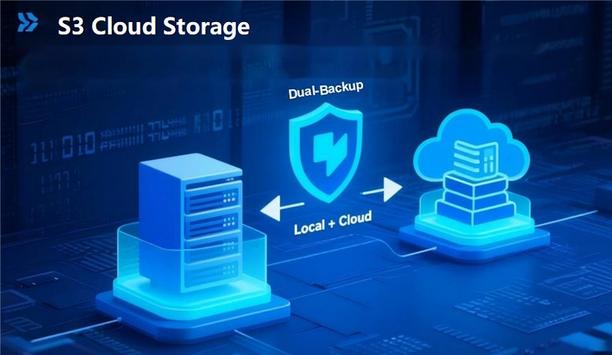
Where and how to store security camera footage usually depends on the scale of the video surveillance project, the way you are using to record the video and how long you want to keep the recordings. If there are only few IP cameras, say 2~3 IP cameras for example, and you don’t need to keep the recordings for the month, usually using SD card which is installed in the camera is enough. Video management software A VMS provides a unified platform to manage all cameras and record footage onto centralized local storage servers If there are more than four cameras, even up to 128 cameras, NVR or CVR become the practical choice for managing and storing recordings reliably. However, if there are hundreds or thousands cameras, which need to managed and recorded, in this way video management software with centralized recording storage becomes essential. A VMS provides a unified platform to manage all cameras and record footage onto centralized local storage servers. S3-compatible cloud platforms Critically, if the VMS supports the S3 object storage protocol, users gain the flexibility to store recordings on S3-compatible cloud platforms (public or private), offering significant hardware cost savings and enhanced scalability. For such demanding environments, selecting a VMS built on an open platform architecture is strongly advised, ensuring the system can expand infinitely to meet future project growth. Video surveillance management system Users can seamlessly add subordinate servers (or disk groups like IPSAN/NAS), disk arrays, and network bandwidth Take the video surveillance management system SVMS Pro as an example. Its foundation is an open 1+N stackable architecture, enabling unlimited expansion of recording storage servers. Users can seamlessly add subordinate servers (or disk groups like IPSAN/NAS), disk arrays, and network bandwidth. This achieves extended recording durations and boosted storage performance while maintaining system stability during sustained operation (assuming environmental requirements are met). Key architectural advantages Each centralized storage module based on a Linux OS, supports up to 200 front-end video channels per server. Its N+1 stackable expansion capability utilizes a distributed architecture, forming clusters of storage servers. Scaling the project involves simply adding subordinate storage modules – no modifications to existing deployments are required. Seamless S3 object storage integration Furthermore, SVMS Pro features deep integration of the S3 object storage protocol Furthermore, SVMS Pro features deep integration of the S3 object storage protocol. This allows seamless connection to major public cloud services like Alibaba Cloud OSS, Tencent Cloud COS, and Amazon S3 cloud, as well as private S3-compatible object storage solutions. This integration delivers truly limitless capacity expansion, leveraging the inherent elasticity of the cloud to effortlessly accommodate petabyte-scale video growth. Dual insurance: Multi-layered data protection The critical value of security data comes with inherent risks; losing video footage can lead to immeasurable losses. To mitigate these risks comprehensively, SVMS Pro innovates with its "Local + Cloud" Dual-Backup mechanism, leveraging S3 features to build multiple security layers: Real-Time Dual-Writing: Recordings are first written to the local disk (acting as a cache buffer). Upon local persistence, data is simultaneously replicated to cloud-based S3 storage, guaranteeing instant failover if either node fails. Smart Hot/Cold Tiering: Frequently accessed ("hot") data remains on high-performance local storage, while historical footage is automatically archived to low-cost cloud tiers, optimizing storage expenses. Cross-Regional Disaster Recovery: Utilizing the multi-replica and cross-region replication features of carrier-grade S3 storage inherently protects against physical disasters like earthquakes or fires. Additionally, the platform ensures comprehensive data protection through integrity verification and encrypted transmission, safeguarding data integrity and confidentiality across its entire lifecycle – from storage and transmission to access. Conclusion In essence, selecting the optimal storage solution for security footage hinges on a fundamental understanding of scalability requirements, retention needs, and data protection imperatives. As surveillance deployments grow from a few cameras to enterprise-scale systems, the underlying architecture must evolve: Localized storage (SD cards/NVRs) suffices for limited scope and short retention. Centralized VMS platforms become essential for unified management at scale, with open, modular architectures providing critical future-proofing for expansion. S3 object storage integration represents a paradigm shift, decoupling storage capacity from physical hardware and enabling truly elastic, cost-efficient scaling – both on-premises and in the cloud. Ultimately, successful large-scale video surveillance storage relies on architecting for flexibility, embedding data protection intrinsically, and strategically leveraging object storage protocols to balance performance, cost, and resilience – principles essential for safeguarding critical security data now and in the future.