March Networks Corporation

March Networks Corporation Overview:
March Networks
March Networks® helps enterprises of every size improve their security and competitive advantage with practical and innovative solutions for video surveillance and business intelligence. March Networks' solutions are scalable for the evolving needs of even the largest organizations, proven over decades in the most challenging environments and pragmatic in leveraging technological innovation to deliver concrete business value.
Our customers use our solutions to integrate video with POS and other data, to gain breakthrough business insights. We are leading the global tranformation of enterprise video to the cloud, but we help our customers make that move intelligently and cost-effectively as their core business needs demand and as their bandwidth availability across locations allows.
March Networks serves more than 600 financial institutions and more than 300 retailers, in addition to hundreds of other commercial and industrial customers, and we have more than 300 employees around the world.
- Products
- Video Surveillance
- Cloud Video Surveillance
- IP Video Cameras
- Network Video Recorders (NVRs)
- Video Management Software (VMS)
- Cloud Storage
- VSaaS
- Video Encoders
- Video Analytics
- Business Intelligence
- Industries
- Retail
- Finance
- Transit
- Transportation
- Commercial
- Industrial
- Cannabis
- Quick Serve Restaurants
- Convenience Stores
- Data Centers
White papers from March Networks Corporation

How Video Technology Is Transforming Loss Prevention, Operations, And Customer Experience In The Retail Sector
Download
How Intelligent Video Is Transforming Banking And Financial Institutions
Download
Securing Your Growth With Video Surveillance
Download
A Focus on Video Surveillance Cybersecurity
Download
How To Get Buy-In From IT Departments On IP Video Installations
Download
Is The Cloud Ready?
Download
March Networks Corporation news

Since Copenhagen-based Danske Bank began using March Networks® video surveillance systems in 2007, the risks facing the banking industry have changed dramatically. In 2012, according to Thomas Johansen, director of the bank’s Physical Security and Risk Group, Danske Bank had 36 robberies in Denmark alone. In 2018, as consumers performed more of their banking online and the number of branches decreased, there were only three bank robberies recorded. Video surveillance system However, during the same time span, ATM crime increased dramatically — so much so that according to sources, the gross losses on Danish-issued credit cards amounted to more than $60 million US in 2018. Now the bank uses its video surveillance system as much to help combat fraud and money laundering as it does for physical security, said, Johansen. Now the bank uses its video surveillance system as much to help combat fraud and money laundering The March Networks Searchlight™ for Banking software, in particular, has become an essential tool for protecting the bank’s assets. The Searchlight software, which integrates surveillance video with transaction data from Danske Bank’s ATMs, alerts fraud investigators to transactions involving withdrawals just short of the daily threshold limit, and high-value withdrawals from newly activated accounts. Its daily reports include bank card numbers, which fraud investigators can use to identify cards that have been reported lost or stolen. Deter fraudulent activity The reports also enable investigators to easily link to the recorded video to see the individual conducting the transaction. If the card owner is listed as a woman, for example, but a man is seen using the card in the video footage, it’s a further indication that the transaction could be fraudulent. Investigators might then freeze the account, contact the bank card owner, and use the recorded video evidence to help build their case. In total, more than 50 Danske Bank operators use the software daily to detect and deter fraudulent activity. Danske Bank also plans to eventually use Searchlight to detect instances of money laundering, by configuring the software to report on a range of transactions indicative of suspicious behavior, such as high-value multiple deposits and transfers. Retail banking branches Danske Bank operates 102 retail banking branches in Denmark, 32 in Norway, and 35 in Sweden In the Nordic region, Danske Bank operates 102 retail banking branches in Denmark, 32 in Norway, and 35 in Sweden. In Denmark alone, it operates approximately 500 ATMs. Overall, the bank records video from approximately 4,000 cameras and has more than 500 March Networks video recorders, including 8732 Hybrid NVRs in its retail branches and head offices, and either 8704 or 8508 Hybrid NVRs in its ATMs. In addition, Danske Bank has a presence in Kuala Lumpur, Germany, Poland, Latvia, Lithuania, India, and the United Kingdom, where it provides banking services to Nordic companies or has technology centers and back office operations — all of which are also equipped with March Networks video surveillance systems. Monitoring meeting rooms Johansen estimates that approximately 500 Danske Bank employees have access to live and recorded March Networks video. They include branch employees, fraud and anti-money laundering departments, ATM operations staff, security guards, health and safety personnel, and receptionists. Even kitchen staff and waiters use the system to monitor meeting rooms in the bank’s head office in Copenhagen, so they know when to serve the next course and clear up following meetings. This ensures that each user sees only the video they need to do their job, and meets key security To accommodate this broad access to video, system administrators use March Networks Command™ Enterprise Software to restrict access to cameras based on each employee’s job description or department. This ensures that each user sees only the video they need to do their job, and meets key security and General Data Protection Regulation (GDPR) requirements for the bank. Law enforcement authorities As video surveillance proliferates across cities, law enforcement authorities make more and more use of the vast array of archived video captured by banks, retailers, schools, and other organizations. No exception, Danske Bank is regularly asked to hand over video for police investigations involving robberies and other crimes, said Johansen. During a terror attack close to one Danske Bank branch in 2015, for example, Johansen was personally involved in supplying police with video footage. “Fortunately, in most cases, I can find the video needed in a few minutes and deliver it to police in a folder with the Command Client reviewer. That has really helped us out because three or four years ago, we would have to deliver the video on CDs or USB sticks, which was a lot more time-consuming.” Precise video evidence March Networks’ Smart Search functionality enables users to quickly search for motion March Networks’ Smart Search functionality enables users to quickly search for motion in a specific area of the archived video by generating a list of all recorded events detected within that area. Additional March Networks search features — such as motion histograms, video indicators, and visual finders — also help users zero in on the precise video evidence required. Johansen is happy to help law enforcement with investigations, but hopes to come up with a solution that reduces the burden on Danske Bank personnel by giving police secure, limited access to video from select cameras during specific timeframes. Avoiding false alarms Currently, Danske Bank’s alarm monitoring company has 24/7 access to the March Networks system and is able to pull up video from all branches remotely to verify the cause of an alarm activation. This makes it possible to dispatch police immediately if necessary, while avoiding false alarms. The banking industry has changed dramatically since 2007 when Danske Bank first selected March Networks as its video surveillance partner. March Networks technology has also evolved, delivering ever-better performance as well as the video-based business intelligence capabilities customers like Danske Bank need to keep their assets secure.
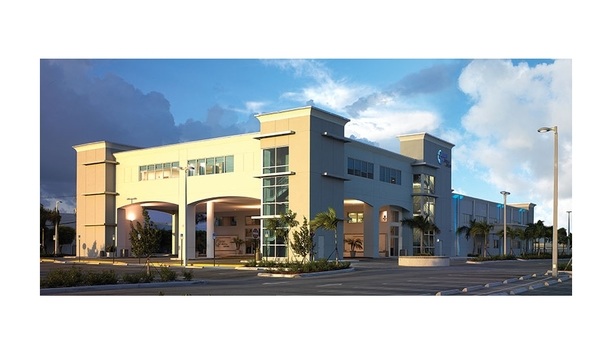
Leon Medical Centers is a privately-owned healthcare organization with seven state-of-the-art facilities serving over 46,000 elderly and Medicare patients in Miami and neighboring communities in Dade County, Florida. Established in 1996 by Benjamin Leon Jr., Leon Medical Centers is one of the largest and most prestigious primary healthcare organizations in the state. However, what really sets it apart is its rigorously enforced service philosophy of ‘personal attention at all times’ and its commitment to treating its patients with the ‘dignity, respect, compassion and human kindness that they deserve.’ Mobile video recorders Leon Medical Centers began deploying previous-generation March Networks mobile video recorders in 2011 In keeping with its commitment to exceptional service, Leon Medical Centers operates a fleet of 230 buses that pick up patients, take them to their appointments and return them home. To ensure their safety in transit and monitor compliance with its service philosophy, it relies on an integrated March Networks® RideSafe™ video surveillance solution. Leon Medical Centers began deploying previous-generation March Networks mobile video recorders in 2011. “We had another vendor’s equipment up to that point, but the system couldn’t support IP video,” said Erick Martinez, Leon Medical Centers’ Security Systems Manager. “At the time, we were using analog cameras and wanted to upgrade to higher definition video. We were also experiencing a lot of issues with hard drive failures.” Hybrid network video recorders In 2014, Martinez began upgrading to RideSafe GT Series Hybrid Network Video Recorders (NVRs), and now has 120 of the new mobile recorders in addition to almost 200 older March Networks mobile DVRs. The RideSafe GT Series recorders are available in 8, 12, 16 or 20-channel models with hybrid capability allowing end users to migrate from 100 percent analog to 100 percent IP video. An embedded Linux-based operating system, ruggedized design offering protection against shock, vibration, dust and moisture, solid state electronics, and internal battery backup make the RideSafe GT Series recorders ideal for reliable operation in punishing mobile conditions. A hard drive mirroring capability ensures redundancy and storage flexibility, while health monitoring proactively alerts system administrators to hard drive failures, irregular temperatures or synching issues with cameras. Safety of our passengers Our patients are elderly, so if there’s a slip and fall incident, we want to have evidence of what happened" Each Leon Medical Centers bus is equipped with six March Networks cameras. Five of the cameras are mounted to capture interior views and the last is used externally to capture video of passenger entry and exit points. “Our focus is on the safety of our passengers,” said Martinez. “Our patients are elderly, so if there’s a slip and fall incident, we want to have evidence of what happened. We also use the system to confirm compliance with our service standards. Our drivers are the first and last points of interaction with our patients, so if there’s an issue, we want to be able to review and rectify it.” In the event of an incident in transit, the driver is able to push a button on the dashboard to tag the associated video. Diagnostic imaging services When the bus arrives at one of the clinics, the tagged video automatically down-loads through a Wi-Fi hotspot to a server for immediate review by Leon Medical Centers risk management personnel. While in range of a Wi-Fi hotspot, the system also downloads health alerts and can also upload any scheduled software updates or new device settings. For routine video downloads, there’s hardly ever a need for Martinez’s staff to board a bus. “Wireless downloading saves us a lot of time,” he said. “It makes incident reporting much more efficient when we need to have an issue resolved. It helps a lot.” The seven Leon Medical Centers are one-stop-shop facilities with onsite labs, pharmacies, diagnostic imaging services and dental clinics. Traveling to multiple locations Leon Medical Centers operates four Healthy Living Centers with modern gyms, exercise and yoga classes This convenient service model enables patients to see their family doctor or a specialist, have blood work done, get an X-ray and fill prescriptions without having to spend time traveling to multiple locations. Each center has a café, where patients can have a coffee and socialize. And to help patients stay fit, Leon Medical Centers operates four Healthy Living Centers with modern gyms, exercise and yoga classes, seminars and other programs. Patients who require surgery or a hospital procedure are picked up and delivered by Leon Medical’s bus transportation service. On arrival, they’re greeted and escorted to their destination by staff from Leon Medical’s Hospital Service Centers, which are located within all of the major Miami-Dade County hospitals. Aside from the seven centers and four Healthy Living Centers, Leon Medical operates a fleet maintenance garage and a 300,000 square-foot corporate headquarters. Video management software Martinez says that the fixed facilities are also being equipped with March Networks 8000 Series Hybrid NVRs, which are managed using the same March Networks Command video management software powering the mobile recorders. Having a single software solution to access and manage video - regardless of whether it’s recorded on a bus or in one of the medical centers - means that Leon Medical Centers doesn’t have to train staff on multiple software systems. It also provides the organization with complete oversight of its clients and operations. Once again, it’s all about patient safety and service excellence. “If a patient loses a purse or a wallet, for example, we’ll be able to find it for them on one of our buses or in a clinic. Or if they have an issue with an employee, we’ll be able to review the video and take care of it,” said Martinez. Video surveillance infrastructure Martinez and his staff are trained to take full advantage of all the Command software functionality A Microsoft certified engineer, Martinez heads up a department solely focused on overseeing Leon Medical’s video surveillance infrastructure. “This department didn’t exist four years ago,” he said. “I was part of the IT department responsible for PC support. Mobile security was handled by transportation at the time. I thought it would be a good idea to create a separate department with IT expertise to look after mobile security, and senior management agreed.” Martinez and his staff are trained to take full advantage of all the Command software functionality. For example, they’re able to manage video viewing privileges to ensure users have access only to those cameras corresponding to their roles or responsibilities. They’re also able to take advantage of Command’s support for Microsoft Active Directory integration, which collects established user account information from Leon Medical’s corporate network directory. Patient safety and service excellence This allows them to select users from the company directory, assign a profile and customize their user interface to display the tools needed for their role. Looking ahead, Martinez and his team will be busy this year, as Leon Medical Centers continues to expand. We have four construction build-outs planned, including a four-story, 80,000 square-foot building" “We have four construction build-outs planned, including a four-story, 80,000 square-foot building and two parking garages - one six-floor and one seven-floor garage - so there will be opportunities for additional fixed video surveillance systems. Because we lease our buses for three years, we’re also always adding to our transportation fleet, so we’ll continue swapping out our 5308 recorders in favor of the newer GT Series.” “March Networks has served us well,” said Martinez. “Without a high-quality, reliable video surveillance system, we would have a much more difficult time fulfilling our commitment to patient safety and service excellence. It’s that simple.”

Two of the most important priorities in a manufacturing environment are safety and productivity. Failure to follow safe work practices around machinery on a factory floor can result in serious injury, while poor productivity can erode profits and ultimately threaten the viability of the business. At WCCO Belting, a Wahpeton, North Dakota-based manufacturer of custom rubber products for agriculture and light-industrial conveyor equipment, a March Networks® video surveillance solution plays a key role in enhancing both safety and productivity. Monitor Work Processes “Recently, for example, we had a minor safety incident on one of our machines that was captured by the system,” said Michael Marsh, Senior Technology Administrator. “The video not only allowed us to determine the cause of the incident, it also helped us create a proprietary piece of equipment to ensure that the accident would never happen again.” Safety was the main reason WCCO Belting acquired a March Networks system in 2015 Safety was the main reason WCCO Belting acquired a March Networks system in 2015, but the company soon discovered it could use the technology for other equally important priorities. “We found that we could use the video solution for time studies, to be more effective and efficient,” said Marsh. WCCO engineers use the video to monitor work processes and then tweak them to speed production, while ensuring optimum quality. Security System Integrator The company selected Marco Technologies as its security system integrator in 2015, and acquired March Networks 8000 Series Hybrid NVRs shortly thereafter. Two years later, when WCCO Belting decided to also equip a second production facility in Arlington, Texas, it upgraded to a March Networks Command™ Recording Software (CRS) solution in North Dakota and moved the 8000 Series Hybrid NVRs to its Texas facility. At the same time, the company deployed March Networks Command Enterprise Software to tie all the video from its geographically-dispersed facilities together, said Marsh. The software enables WCCO Belting “to oversee everything and manage the entire system from a single point of entry.” In addition, approximately 50 March Networks IP cameras — including indoor domes with wide dynamic range and outdoor IR bullet cameras — provide crystal-clear video of activity on the company’s factory floors, loading docks and parking lots. Remote Configuration Marsh cites ease of use and outstanding support as the main reasons for selecting the video solution. “The technology is easy to implement, easy to use and easy to navigate. Support has also been great. When we ran into some early issues, they responded quickly to help resolve the problem.” We didn’t have to uproot a lot of the architecture already in place" “More recently, when we decided to expand the system to include our second location, it was Marco that recommended the CRS solution and the redeployment of our NVRs to Texas. It was really plug and play. That was the winning piece for us. We didn’t have to uproot a lot of the architecture already in place.” A system that was easy to rollout was important because WCCO Belting’s IT department does the physical camera install themselves, while partnering with Marco Technologies for remote configuration. Command Mobile App “It’s one of the reasons we like March Networks, because we’re a hands-on IT department,” explained Marsh. “We like to make sure we’re always on top of things and that we understand the equipment we’re working with. If we can’t install it ourselves and need someone to come in and do it for us, it just creates future costs.” Aside from the IT department, which has administrative access to the system, authorized supervisors and managers at WCCO Belting are able to audit video for safety and security purposes. Temporary access is also provided to engineering staff for time studies. Marsh and several supervisors also have access to video through the Command Mobile app on their smartphones. Available as a free download from the Apple Store and Google Play, Command Mobile runs on iPhones, iPads and Android devices. Track Offending Vehicle Remote, after-hours access to video proved valuable during the previously mentioned safety incident, for example, “by allowing managers to pull up video from home and use it to make decisions quickly,” said Marsh. The video solution has also proven useful to local law enforcement, as some of the bullet cameras covering the employee parking lot at the North Dakota facility also have a clear view of North 9th St., a busy artery in the town of 8,000. The video resolution was so good that we were able to quickly track the offending vehicle" “One day, I was called to the front desk and met by two police officers and three sheriffs,” recalled Marsh. “They wanted to come to my office but didn’t say why. I was never so nervous in my life. Once in my office, they explained that they wanted to see if we had any recorded video to help them solve a hit and run a block and a half down the road. We did, and the video resolution was so good that we were able to quickly track the offending vehicle.” Rubber Belting Solutions “We’ve had two law enforcement visits since then, so now when they show up, I know I’m not in trouble,” joked Marsh. A family-owned business, WCCO Belting was founded in 1954 by Ed Shorma, a Korean War veteran who mortgaged the family car and borrowed $1,500 to buy a shoe repair shop. Propelled by Shorma’s strong work ethic and talent for ingenuity, the business grew and evolved as a manufacturer of rubber belting solutions, leading to Shorma’s recognition as Small Business Person of the Year by U.S. President Ronald Reagan in 1982. WCCO Belting is currently led by president and CEO, Tom Shorma, Ed’s son, and has 270 employees — 200 in North Dakota and 70 in Texas. The company’s rubber product solutions are sought after worldwide, and exported to customers in more than 20 countries. The company won North Dakota’s Exporter of the Year award in 2003, and in 2010 and 2016 it was the recipient of the Presidential ‘E’ Award and ‘E-Star’ award for its export promotion efforts.
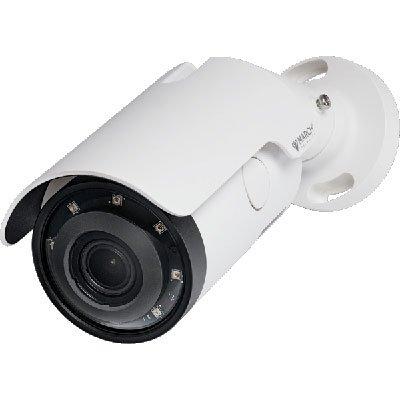
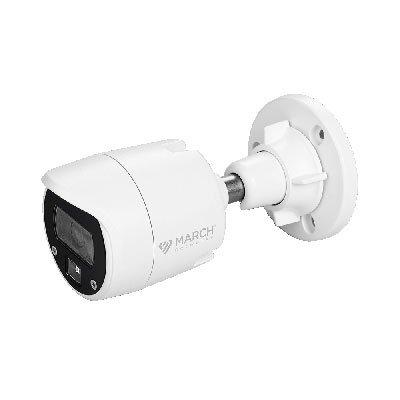
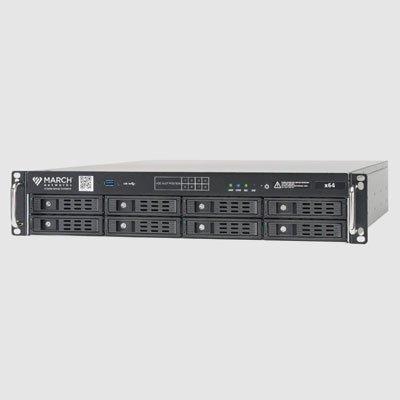
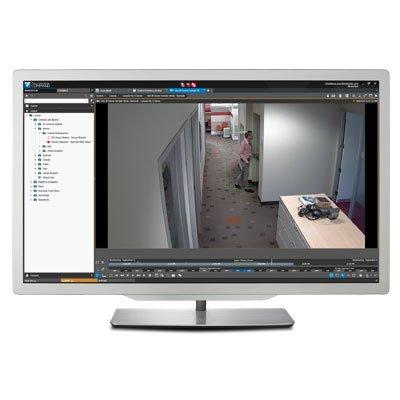
Latest March Networks Corporation products